
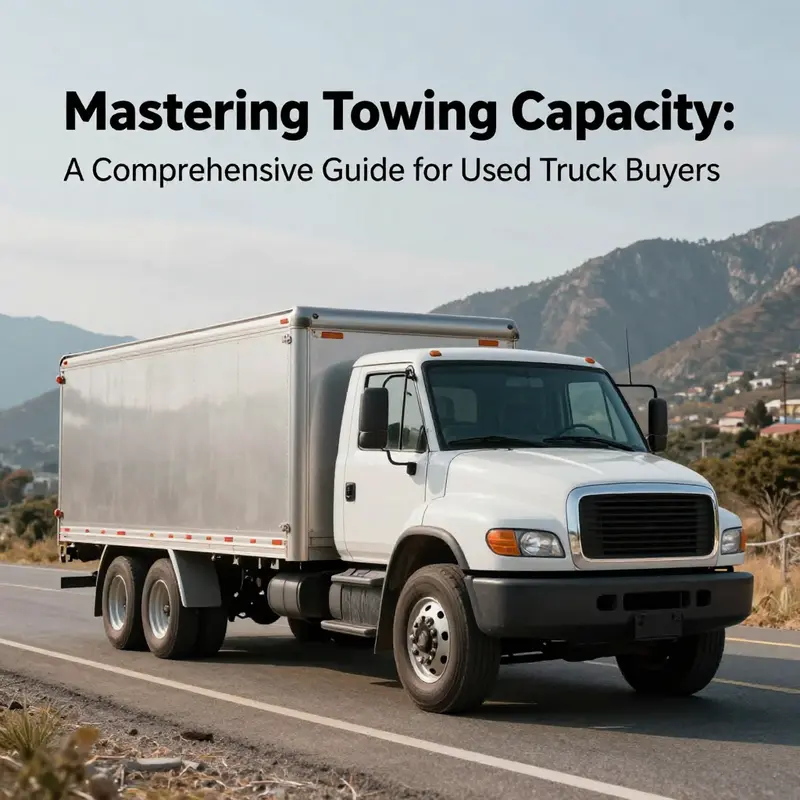
When it comes to purchasing a used truck, understanding its towing capacity is paramount for local drivers, property managers, and dealership representatives. Towing capacity not only affects how much weight a truck can safely tow but also influences user safety and compliance with legal standards. By utilizing reliable sources—including registration certificates, vehicle identification plates, and the owner’s manual—buyers can make informed decisions that align with their needs and responsibilities. Each chapter will delve into these essential verification methods, equipping readers with the necessary knowledge to assess towing capacity accurately and safely.
Cracking the Towing Code: Vehicle Registration Insights for Verifying a Used Truck’s Capacity
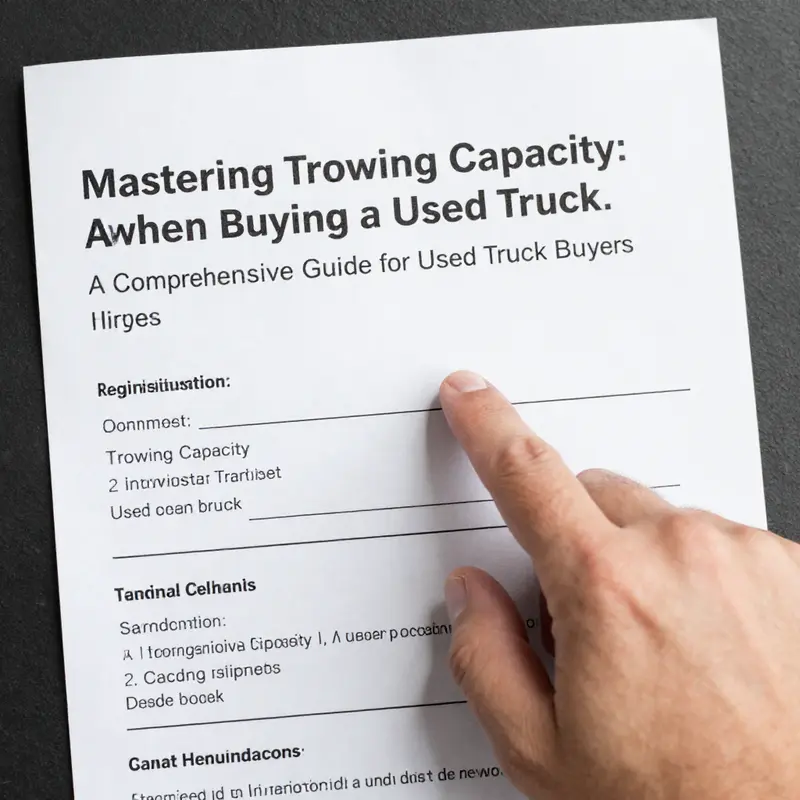
When you’re eyeing a used truck for a specific towing job, the number that really matters is not horsepower alone or the size of the hitch in the buyer’s guide. It is the vehicle’s proven ability to pull what you intend to haul, safely and legally. Towing capacity is a precise specification rooted in official weight limits and engineering tolerances. Without confirming it, you risk overloading, braking problems, or worse, liability if a trailer you tow exceeds what the vehicle can manage. A clear, reliable path to the truth begins with the registration documents. In many markets, the registration certificate holds the official, legally recognized limits for a specific vehicle. The document is not a flashy sales sheet; it is a legal record that ties the truck you’re considering to its exact weight class and towing envelope. The first realization is simple but powerful: the maximum permissible total mass, often abbreviated as MTM, on the registration is the starting point for any towing calculation. This figure is typically presented in kilograms and represents the greatest weight the vehicle can legally bear when fully loaded in combination with a trailer. It is the bedrock from which you determine what you can pull without crossing regulatory lines. In practical terms, MTM encompasses the vehicle’s own weight, its cargo, and any passengers that would be on board when you are towing. To interpret MTM correctly, you also need the kerb weight, or unladen weight, of the vehicle. This is the baseline mass of the truck itself with no passengers, cargo, or fuel. The difference between MTM and kerb weight yields the towing margin—the weight you can legally attach as a trailer. When you subtract the kerb weight from the MTM, you obtain the maximum trailer weight under standard road-use conditions for that particular vehicle. This simple arithmetic is the crux of the registration-based method and a surprisingly robust way to verify towing limits before you commit to a purchase. Of course, numbers on a page do not exist in a vacuum. For a complete, trustworthy picture, you should cross-check MTM and kerb weight with other authoritative sources that relate to the same vehicle. The chassis plate, often called the manufacturer’s identification plate, is the next layer of verification. Located on the driver’s side door jamb, or sometimes on the frame or under the hood, this plate carries essential specifications: the gross vehicle weight rating, GVWR; the gross combined vehicle weight rating, GCWR; and, in some cases, the maximum trailer weight. The GVWR defines how heavy the truck itself can be when loaded to its limit, while the GCWR captures the total weight of the vehicle plus any trailer in motion. A quick, reliable rule of thumb is: towing capacity, as stated by the manufacturer, is GCWR minus GVWR. If you know GCWR and GVWR from the plate, the subtraction gives you the factory’s measured towing allowance, independent of MTM. Seeing both MTM and GCWR on the same vehicle creates a powerful cross-check. If the MTM on the registration aligns with the combination of GVWR and GCWR on the plate, you have a coherent, traceable trail from official documentation to the practical towing limit. The interplay among these numbers is not merely academic. Regional terminology may vary, but the logic remains: the vehicle’s own mass, its permissible loaded mass, and the weight of any towed trailer are inextricably linked through these core metrics. Reading the numbers carefully helps you avoid the common trap—the mistaken belief that “towing capacity” on a brochure equates to what you can legally haul with that exact used truck. In reality, a used truck may have been lightly towed during its previous life or, conversely, may carry modifications that alter the rating. That is where documentation and verification converge. The owner’s manual is another indispensable compass. The factory handbook consolidates the manufacturer’s intended use and limitations, including the official maximum towing capacity, the recommended hitch class, tire load ratings, and the engine-transmission compatibility with towing tasks. It is not merely a guide; it is a map of the manufacturer’s tested limits. Relying on an up-to-date digital copy from the manufacturer’s site is crucial because printed manuals may become outdated as new service campaigns or revisions come into effect. The original VIN or model year can unlock the current, correct data. To corroborate everything you see on the vehicle, you can reach beyond the physical documents with trusted online tools that tie the VIN to factory specifications. Reputable VIN-decoding platforms and vehicle history services allow you to pull factory ratings that align with the manufacturer’s data. The National Highway Traffic Safety Administration’s VIN decoder is a widely used, free resource that can reveal exact factory specs, including towing limits, by parsing the VIN. This layer of verification is powerful because it reduces the risk of misinterpretation that can occur when data is transcribed across papers or websites. When used correctly, the VIN decoder helps confirm whether the truck’s documented MTM and GCWR/ GVWR tighten back to the same towing capacity you derived from the registration and plate. If any discrepancy exists between sources, the prudent course is to defer the purchase or bring the vehicle to a trusted mechanic for a deeper audit. A professional with ASE certification can read the vehicle’s electronic control unit to verify whether the engine, transmission, suspension, and braking systems align with the stated ratings. They can also inspect for modifications that could have altered the towing capacity without appropriate documentation. Any aftermarket changes—such as an upgraded suspension or altered braking system—can compromise towing safety and legality. A mechanic’s note on these matters is not merely cautionary; it is a safeguard against unsafe operations that could result in loaded-vehicle instability, accelerated wear, or regulatory penalties. The value of this layered approach becomes clearer when you step back and consider the practical implications. Let’s imagine you are evaluating a used truck with an MTM listed at 49,000 kg and a kerb weight of 8,500 kg on the registration certificate. By the straightforward MTM minus kerb weight calculation, the theoretical towing capacity would be 40,500 kg, or about 40.5 tons. This illustrative arithmetic demonstrates how the numbers translate into real-world capability. It is, however, essential to translate kilograms into more familiar terms for planning purposes. In many cases, commercial operations or private heavy-haul tasks revolve around tonnage. Converting 40.5 metric tons into pounds or short tons helps you communicate with a lender, insurer, or dispatcher and ensures your trailer specifications align with legal and safety expectations. Yet the chapter’s emphasis remains anchored in accuracy and lawful operation. A misstep—such as using a wrong MTM value, misreading kerb weight, or neglecting to account for occupants and payload—can cascade into a miscalculated towing plan. That is why the collaborative checks across the registration document, the VIN plate, the owner’s manual, and an independent VIN-based specification source matter so much. They create a redundancy that catches discrepancies before they become a problem on the road. It is also worth noting that the terminology and the exact data fields can differ by region. Some markets refer to the same concept with slightly different labels, and some vehicles have multiple weight ratings that vary with trim, drivetrain, or country of origin. Regardless of nomenclature, the underlying principle remains stable: the MTM, GVWR, GCWR, and the kerb weight collectively define the envelope of what a specific used truck can safely and legally tow. Recalls or safety notices linked to towing systems are another layer to check. NHTSA and similar national safety agencies maintain recall databases that can reveal if a vehicle’s towing system or related components have safety campaigns. If there is an active recall affecting the hitch, braking assist, or suspension, the vehicle should not be judged solely by its original numbers; it must be re-evaluated against the current safety status and corrective actions taken by the manufacturer and dealer. This is an area where due diligence is never wasted. When you combine information from the registration document, the chassis plate, the owner’s manual, the VIN decoder, and a qualified mechanic, you create a robust, defensible picture of the truck’s towing capacity. You also preserve a safety margin that protects you, your load, and other road users. It is one thing to understand a number in a manual or an online listing. It is another to verify that every piece of information lines up with the vehicle you are inspecting. That alignment is the foundation of responsible used-truck buying, where safety, legality, and practicality intersect. If you want a concrete, practical path you can use as you evaluate trucks, start with the registration document to obtain MTM and kerb weight, then cross-check with the VIN plate to confirm GCWR and GVWR. Read the owner’s manual to corroborate engine and hitch recommendations, and finally consult a trusted mechanic or dealer if anything looks unfamiliar or inconsistent. For ongoing context and deeper discussion about how these pieces fit into fleet planning and emergency-readiness considerations, you can explore more of our practical resources at our blog. santamariatowtruck.com/blog/.
As you move through the buying process, remember the critical distinction between towing capacity and payload. The payload figure tells you how much you can carry in the bed or cab, which is a separate constraint from what you can tow behind the vehicle. Exceeding either limit can compromise braking performance, handling, and safety, and it can expose you to penalties or liability in certain jurisdictions. The guidance from official sources emphasizes that these limits are set to protect both the vehicle’s structure and the people on the road. If a used truck has a towing rating that seems substantial, you still need to account for how much weight is already in the vehicle when you drive it. That means considering fuel, fluids, passengers, and cargo as part of the vehicle’s weight, especially on long trips or when you require frequent towing. In practice, the owner’s manual often provides a recommended step-by-step approach to calculating payload and towing load for common scenarios, including surge braking situations and dynamic weight transfer during acceleration and deceleration. The calculations are not designed to be theoretical exercises; they are real-life tools that help you stay within safe operating limits. The end result of this careful verification is a buy decision that you can stand behind with data: MTM, kerb weight, GVWR, GCWR, and the recommended towing guidance from the manufacturer. When all of these elements align, you have not only a number on a page but a verifiable, legally consistent cap on what you can tow. It is this alignment—between registration data, plate specifications, official manuals, VIN-based verification, and professional assessment—that yields the confidence to move forward with a used-truck purchase. For more practical context and deeper exploration of related topics, you can visit our broader resources on the blog. See the internal link above for a concise portal into relevant discussions, case studies, and guidelines. And for those who want to dive into the official regulatory framework surrounding vehicle weight and towing limits, consult the government guidance on vehicle registration requirements, which summarizes how these ratings are established and enforced across jurisdictions: https://www.gov.uk/vehicle-registration-requirements.
Reading the VIN Plate to Validate Towing Capacity Before You Buy: A Practical Guide for Used-Truck Hunters
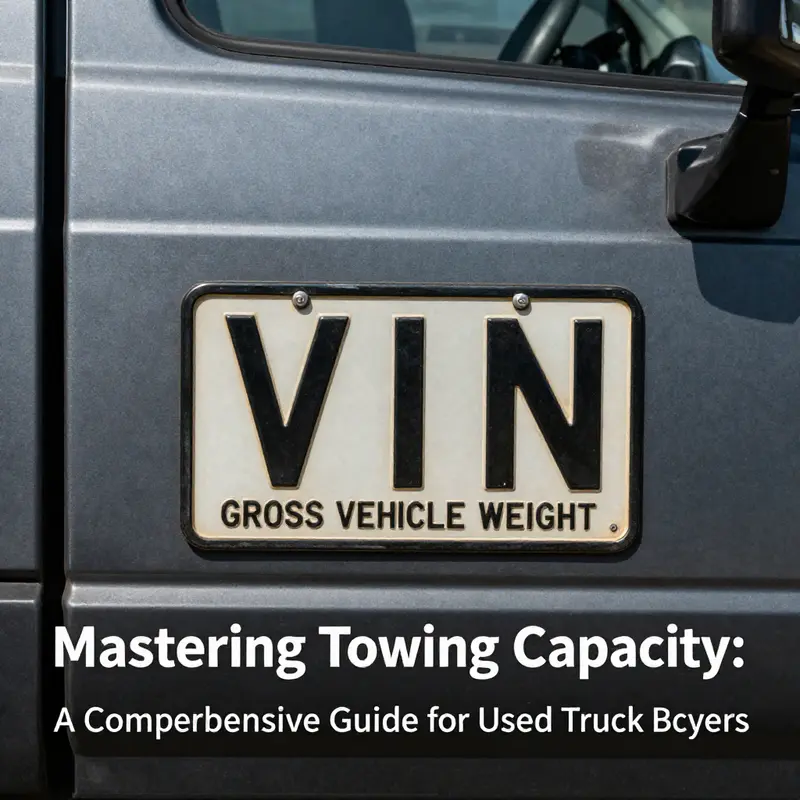
Towing capacity is one of the most consequential numbers you’ll encounter when evaluating a used truck, yet it’s also one of the most misunderstood. In the moment you’re weighing a deal, a glossy description or a quick glance at “max trailER weight” can beguile you into assuming a truck will handle the loads you plan to tow. The truth is more nuanced: the towing capacity you need is rooted in a precise weight equation and cross-checked against several official references, with the VIN plate serving as the first, most reliable touchstone. In practice, the VIN plate is a compact repository of critical numbers that tell you what the truck is designed to handle at the factory. The challenge for a careful buyer is to translate those numbers into real-world towing capability, accounting for hitch type, ballast, payload, and the realities of used-vehicle wear and potential modifications. The journey begins with locating the VIN plate and reading its data, then broadening the check through the owner’s manual, the vehicle’s title or registration, and trusted online resources. It’s a path that rewards patience and cross-checking rather than quick assumptions. The goal is to avoid underestimating the load you intend to pull, which can have safety, regulatory, and financial consequences if the vehicle is pushed beyond its designed limits.
On most trucks, the VIN plate sits where the vehicle’s weight ratings are permanently stamped for quick reference. You’ll typically find it on the driver’s side door jamb, sometimes near the B-pillar, or, occasionally, on the frame rail or within the engine compartment. The plate is not a mere sticker; it’s a factory specification sheet condensed into metal. Two numbers on this plate are central to towing calculations: the Gross Vehicle Weight Rating (GVWR) and the Gross Combined Vehicle Weight Rating (GCWR). The GVWR is the maximum weight the vehicle can be loaded to when you factor in the weight of the vehicle itself, plus cargo, passengers, and fluids. The GCWR, on the other hand, is the total weight the vehicle can carry when it is towing a trailer, including the weight of the trailer itself. In many guides, you’ll see the towing capacity expressed as GCWR minus GVWR, which yields the maximum weight the truck can tow behind it while still maintaining its legal and engineered compliance. This simple arithmetic is powerful, but it relies on precise numbers from the plate and a clear understanding of the conditions under which those ratings are valid.
The practical truth is that the VIN plate data is not the end of the story. While it provides a foundation, the actual towing capacity you should rely on for planning and safety often resides in the owner’s manual or the manufacturer’s technical specifications. This is because the true towing capacity is not simply a fixed subtraction of two weights; it reflects engineering margins, drivetrain differences, braking performance, suspension strength, and the hitch system the vehicle is equipped to handle. In a used-truck context, those details can vary widely, depending on whether the truck was originally configured for heavy hauling, whether it has undergone modifications, and what accessories have been added or removed since it left the factory. For this reason, the process should be layered: start with the VIN plate, confirm with the owner’s manual, and, if needed, corroborate with official manufacturer documentation or a trusted technician. A deliberate, multi-source check protects you from a mismatch between the plate’s numbers and what you can safely tow in real life.
When you locate the GVWR and GCWR on the VIN plate, you’ll often see a third weight-related metric that is equally important for towing planning: curb weight. The curb weight is the vehicle’s weight without passengers, cargo, or fluids. Subtracting the curb weight from the GVWR gives you the maximum payload the vehicle can carry—passengers, cargo in the bed, and any after-market accessories. This payload figure is not the same as towing capacity, but it is inextricably linked. A vehicle with a heavy payload rating may still be limited in how much it can tow because the engine, transmission, braking system, and suspension are all designed within certain performance envelopes. For a used truck, this nuance matters because wear and tear can erode those margins, and undocumented modifications can shift the weight balance in ways the original ratings did not anticipate. In other words, the plate gives you the math of what the truck was designed to carry, but the actual towing reality may require you to look beyond the plate to ensure you’re staying inside safe and legal limits.
To translate the plate data into a reliable towing number, a good starting point is the classic formula many buyers expect: towing capacity equals GCWR minus GVWR. This equation is widely accepted as a straightforward method to estimate the maximum trailer weight the vehicle can safely tow, assuming the vehicle is configured as delivered by the manufacturer, with the hitch and trailer properly matched to the truck’s ratings. It is an elegant, built-for-practical-use calculation, and it aligns with the guidance you’ll find on official sources cited by government and safety organizations. Still, there is a caveat. The numbers on the VIN plate assume standard equipment and typical configurations. If the truck has been altered—such as a heavier aftermarket suspension, a modified drivetrain, or a non-standard hitch or braking system—the simple subtraction may no longer reflect reality. In such cases, rely on the owner’s manual as the definitive source for the vehicle’s towing capacity with its current configuration. For a used truck, the manual may still be available in digital form or from the manufacturer’s website keyed to the vehicle’s VIN or model year. It’s time well spent to confirm that the plate-derived number and the manual’s rating agree, and to note any deviations that could affect the towing limit.
The broader context also matters. Some buyers expect the title or registration to disclose the trailer-towing rating, but this is not always consistent across jurisdictions or brands. The most direct source remains the plate for the raw weight limits and the manual for the actual towing capacity under current configuration. In cases where the plate lists GCWR and GVWR without a clearly stated “Maximum Trailer Weight,” you can perform the calculation or consult the manual to determine the practical limit. If you’re unsure, a call or email to the manufacturer’s support line, using the VIN to verify specifications, is a prudent step. This is especially true for trucks that might have seen field maintenance or repairs that could influence rating, such as brake upgrades, transmission tuning, or suspension work. The aim is to verify whether the vehicle’s towing capability remains within safe, certified boundaries for the loads you intend to pull.
The conversation around VIN plates should also gratitude towards the significance of documentation. The title and registration can, in some cases, confirm GCWR or indicate the permissible trailer weight for certain regions or vehicle classes. However, these figures can be less precise or less up-to-date than the manufacturer’s formal data. For buyers, that means cross-checking the plate’s numbers against the most current official sources. You can verify official data through the manufacturer’s own manuals, which are increasingly accessible online by model year and VIN. Free digital copies are common, and they will spell out the towing capacity in a clear, vehicle-specific section. When possible, download the exact manual for the model and year you’re considering and search for “towing capacity” or “trailer weight” to confirm the approved limits under the precise configuration you’re evaluating.
In addition to these sources, modern buyers can turn to trusted online tools that pull factory data directly from the VIN. Online vehicle history and specifications services offer the ability to enter the VIN and retrieve factory-standard numbers, often alongside information about recalls or prior modifications. Tools such as Carfax and AutoCheck can provide a consolidated snapshot, while free VIN decoders provided by safety organizations can return exact factory specs, including towing limits, based on the VIN. When you use these tools, it’s critical to verify that the pulled numbers match the plate and the manual. This multi-pronged verification guards against the rare but real risk of outdated or misapplied information showing up in a report from a third party.
If you discover that the documentation you’re relying on is incomplete, damaged, or inconsistent, don’t let a sale pressure you into accepting uncertain numbers. A professional mechanic or a qualified dealer can be an invaluable ally in this moment. ASE-certified technicians, in particular, bring the experience to interpret complex weight and performance data. They can read the vehicle’s Electronic Control Unit (ECU) for specifications that relate to the engine, transmission, and braking system, and they can perform a physical inspection to confirm there are no unauthorized modifications that could alter towing safety. They can also validate whether the frame, hitch mounting points, and suspension can support the specified towing weight with the current configuration. Their assessment provides a practical, field-verified opinion that complements the plate-and-manual checks. This kind of due diligence is especially important if the vehicle has had components replaced or altered previously, whether for commercial work, off-road use, or a prior owner’s customizations.
Beyond the mechanics of the number itself, there is a broader safety and regulatory framework to consider. Exceeding the towing capacity has consequences that go beyond the chart on the VIN plate. Overloading can strain braking systems, cause excessive wear on suspension components, and reduce steering control, particularly in emergency or evasive maneuvers. It can also trigger recall or safety-notice obligations if a component underperforms under load. Regulators take these concerns seriously, and the penalties for transportation of loads beyond rated capacity can be substantial. For this reason, the prudent buyer treats the rating with the respect it deserves, using it as a guardrail rather than a ceiling you casually brush against. The goal isn’t to push any limit but to ensure your towing plans have a sturdy, verifiable basis in official data and engineering reality.
To bring the discussion back to practical steps, here is a concise, buyer-facing sequence you can follow when you’re at the lot with a used truck in hand. First, locate and read the VIN plate to capture GVWR and GCWR. If available, note the curb weight as listed or use the plate’s data to infer payload capacity by subtracting curb weight from GVWR. Next, consult the owner’s manual, ideally the exact copy for the model year and configuration you’re considering. Look up the official towing capacity there and verify whether it aligns with the plate-derived calculation (GCWR minus GVWR) or presents a different figure based on current equipment. If the plate or manual indicates a precise “Maximum Trailer Weight,” use that value as your baseline. If the two sources disagree, or if the manual provides multiple values depending on hitch type or trailer mass, ask the seller for official documentation or contact the manufacturer with the VIN to confirm the correct rating for the truck’s current setup. Then, cross-check the same data through a reputable VIN-based online tool to confirm consistency across sources. If any discrepancies surface, or if you notice signs of modifications, bring the vehicle to a qualified technician or dealer to validate the rating under its existing condition. Finally, confirm how the intended trailer’s weight, including tongue weight and payload from passengers, cargo, and gear, stacks up against the certified limit. A well-structured plan that accounts for both the trailer’s gross weight and the vehicle’s payload gives you a reliable, safe basis for a used-truck purchase decision.
This approach—grounded in the VIN plate, reinforced by the owner’s manual, and cross-checked with official sources—offers a robust path to understanding towing capacity before you buy. It also feeds into broader practical considerations for responsible ownership. When you’re budgeting for ownership, include not only the towing rating but the required hitch class, the trailer’s braking needs, and the overall weight balance you’ll manage on the road. Plan for fatigue margins in the towing setup and remember that highway conditions, weather, and terrain can all influence performance. A good rule of thumb is to allow a buffer between the maximum rated weight and the actual load you tow, so you maintain consistent performance even as road conditions demand more from the truck’s engine and brakes. The balance between safety, legality, and functionality is delicate but achievable when you base your decision on careful reading of the VIN plate, thorough consultation of the manual, and an honest appraisal of the vehicle’s current condition. For more on practical paperwork workflows and buyer checklists, see the related resources on the Santamariatowtruck site, which offers a clean, real-world perspective on how to translate ratings into everyday decisions. Santamariatowtruck.com blog.
In reviewing the chain of sources—VIN plate data, the owner’s manual, online VIN tools, and professional diagnostics—you’ll have a clear, defensible picture of a used truck’s towing capability before you sign. This disciplined approach protects not only your investment but the safety of everyone on the road with you. It helps ensure that your tow plans, whether for a weekend camper, a utility trailer, or a boat, stay within the engineered boundaries of the truck you’re buying. And as you prepare to move from the lot to the open road, remember that the most trustworthy towing number is the one confirmed by multiple, authoritative sources working in concert: the VIN plate, the manual, and, when needed, a qualified technician’s assessment. The other elements—the registration certificate’s figures, the possibility of recalls, and the trailer’s own weight and tongue load—are all parts of a larger, coherent system that makes towing both safe and legally compliant.
For readers who want to explore more formal data sources and verification tools, the National Highway Traffic Safety Administration (NHTSA) remains a central reference. Their VIN decoding resources provide a free, real-time link to the factory-supplied specifications behind many light- to mid-duty trucks. This can be especially useful for double-checking a model year’s official ratings when the vehicle’s history is complicated by changes in ownership, repair, or apparent modifications. While the VIN plate and owner’s manual should be your primary anchors, NHTSA’s VIN decoder can serve as your fast, authoritative cross-check in moments of doubt, helping you translate a VIN into a single, transparent towing capacity picture. External resource: https://vindecoder.vincheck.info
Decoding Tow Readiness: Using the Owner’s Manual as Your Compass When Buying a Used Truck
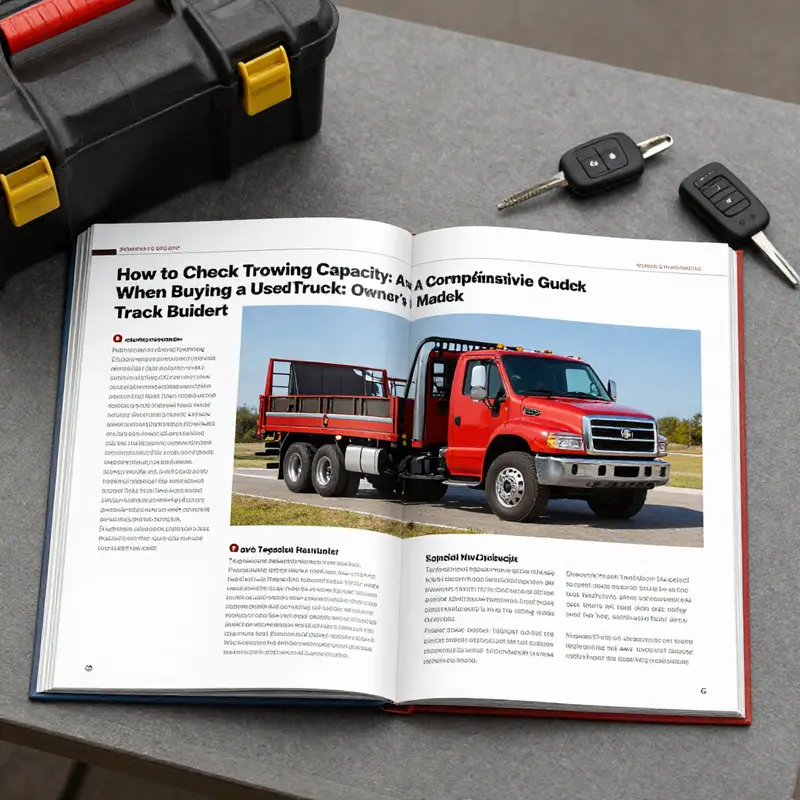
When you’re evaluating a used truck, towing capacity isn’t a peripheral concern. It isn’t enough to be impressed by horsepower or the size of the bed. If you plan to pull a trailer, a camper, a boat, or equipment, the vehicle must be able to handle the load safely, reliably, and legally. The towing capacity is not a guess, a rumor, or a rough guideline. It is a specification handed down by the manufacturer, and in many cases it is the final word on what the truck can actually move behind it. In the rush of a used-truck purchase, buyers can overlook this critical number or, worse, confuse it with related figures like payload. The owner’s manual sits at the center of the decision-making process because it is the official, factory-approved source of towing specifications. It is where you find the numbers that describe how the truck behaves when a trailer is attached, under a variety of conditions, and with the particular drivetrain and configuration that came from the factory. Relying on the manual helps you avoid misinterpretation, recalls, or alterations that could undermine safety and legality in the field. The manual is not a marketing brochure. It is not a one-size-fits-all claim. It reflects the vehicle’s true engineering, testing, and intended use, and it translates the technical language of engineering into practical limits you can apply to your own needs.
To use the owner’s manual effectively, you start by locating the section that deals with towing. Vehicle manuals are structured so that towing information is grouped under headings such as “Towing,” “Trailer Towing,” or “Specifications.” This is typically toward the end of the manual, sometimes in an appendix. The exact layout varies by manufacturer, but the logic is constant: the manual creates a bridge between the truck’s own weight, its engine and transmission capabilities, and the demands of a trailer. In this sense, the manual is a safety brief in print, a compact guide to what the truck can safely carry behind it and how it should be configured. When you locate the section, you’ll encounter several key parameters, each telling a different piece of the towing story.
First, you’ll find the Gross Vehicle Weight Rating (GVWR). This figure defines the maximum weight the truck can carry itself, including the weight of the vehicle, passengers, cargo in the bed, and fuel. It is a ceiling for everything that stays inside the vehicle’s frame and body. You’ll also see the Gross Combined Weight Rating (GCWR), which defines the maximum combined weight of the truck and the trailer it is pulling. GCWR is an overarching figure that accounts for the strain on the braking system, suspension, tires, drivetrain, and frame when the trailer is attached and the vehicle is moving as a single unit. The third essential figure is the Maximum Trailer Weight, sometimes listed explicitly in the manual’s towing section. This value represents the direct towing limit, the weight you should not exceed when you’re pulling a trailer, regardless of how the rest of the truck is loaded. Each of these numbers is measured under specific test conditions set by the manufacturer and may vary with transmission choice, axle ratio, and drivetrain configuration.
The relationship among these numbers is crucial. The towing capacity—the maximum weight you can tow safely—emerges from a simple but frequently misunderstood calculation. In many manuals, it is presented as GCWR minus GVWR. That subtraction yields the maximum weight of the trailer and its load that can be added to the truck without exceeding the combined weight limit. If a manual lists a separate figure for Maximum Trailer Weight, that number should align with the GCWR/GVWR relationship, and it is the practical number you’ll use when planning a tow. As a rule of thumb, the internal logic is straightforward: the trailer’s weight, plus the vehicle’s own weight and payload, must stay within GCWR. If you know the GCWR and the GVWR from the manual, you can compute the towing capacity in a single, reliable step. The manual’s values are the guardrails you rely on before you hitch up and head out. This approach keeps you aligned with the manufacturer’s safety design and testing, which is especially important if you plan to do any level of regular towing.
But the manual is not a static numberbook. It’s a living document that reflects the truck as it left the factory. If the vehicle has undergone modifications—such as an upgraded suspension, larger tires, engine tuning, or a different hitch system—the factory specifications may no longer apply in the same way. The manual’s figures assume the original equipment, balanced and integrated by the manufacturer. When modifications are present, you should treat the owner’s manual as a starting point, not the final word. In such cases, a qualified mechanic or towing specialist can reassess the safe towing limit for the altered vehicle. They can examine how the modifications affect weight distribution, braking efficiency, steering stability, and the efficiency of the cooling system under load. This is especially important if the modifications alter GVWR or GCWR indirectly by changing how weight is distributed or how the suspension behaves under load. A professional assessment provides a practical, field-tested answer about what the truck can pull safely, given its current state.
Beyond simply extracting numbers from the manual, you can use the owner’s manual to guide broader, more nuanced questions about towing. Look for the recommended hitch type and hitching specifications. Some manuals specify the class or rating of the hitch best suited to the vehicle’s design, and they may include guidance on wiring, braking systems, and trailer electrical connections. The manual may also outline the tire load ratings and how they interact with towing. When you tow, you’re not just dealing with a weight limit; you’re dealing with how the weight affects braking distance, steering response, and the vehicle’s ability to accelerate enough to pass safely on the road. The manual’s guidance about tires, wheel torque, and lug-nut specifications is not extraneous. It is part of ensuring that every ounce of the tow load is supported by a correctly matched and maintained platform.
In practice, you’ll cross-check the owner’s manual’s values with other sources to ensure consistency and to confirm there have been no discrepancies in the documentation you receive. A reliable approach is to compare the manual’s figures with the VIN-based data you obtain from official manufacturer portals and trusted databases. The VIN is a unique fingerprint for the vehicle and can be used to pull the exact factory specifications that apply to the truck you’re considering, including its towing-related numbers. A mismatch between the manual’s values and VIN-derived data should prompt closer scrutiny rather than blind trust. This cross-check acts as a practical safeguard against misprints, outdated reprints, or dealer-specific listings that may not reflect the factory configuration. It also helps you verify that no recalls or safety notices have altered the recommended towing practices since the truck left the assembly line. In this way, the owner’s manual, when used in tandem with VIN-based verification, becomes a comprehensive authentication process rather than a single data point.
To integrate this process into your purchase workflow, consider a sequence that values the manual as the primary source, then uses secondary sources to confirm and, if needed, correct. Start by opening the owner’s manual and navigating to the towing or specifications section. Note the GVWR, GCWR, and any stated maximum trailer weight. Perform the simple calculation of GCWR minus GVWR to derive the towing capacity, unless the manual already provides a direct “Maximum Trailer Weight” figure. If the truck has not been modified, this calculated number should align with the manual’s stated maximum trailer weight. If modifications exist, treat the calculated figure with caution and seek professional validation.
Next, verify that the manual’s data is consistent with the VIN-derived data you can obtain from official or highly trusted sources. Enter the VIN into a reputable VIN decoder or the manufacturer’s website to pull the precise factory specs for your model year and configuration. Cross-check the GCWR, GVWR, and any explicit towing ratings. If the numbers align, you gain confidence that the truck’s claimed towing capacity reflects its original design intent. If there is any discrepancy—perhaps a different GCWR in a used truck’s listing or a variation due to a regional specification—investigate further before towing anything near the limit. Remember, the difference can matter as much as a few hundred pounds, especially when you factor in trailer tongue weight, passengers, cargo, and fuel. The manual’s numbers assume a certain distribution and a certain hitch setup; the VIN-derived data helps verify that those assumptions hold across the truck’s life as it is presented for sale.
As you weigh the truck’s suitability for your needs, the manual should also remind you to consider practical margins. Even if the math yields a maximum trailer weight of, say, 6,000 pounds, you will typically want to tow well under that threshold in daily use for safety and performance headroom. Weather, road grade, wind, and trailer design all influence the effective towing limit. The owner’s manual often includes cautions about operating near the redline of the engine or within certain temperature ranges during towing. It may also provide guidance on brake controller requirements for larger trailers and on proper load distribution between the trailer and hitch. All of these notes reinforce the concept that towing capacity is a structural limit, not a license to push the vehicle to the limit under every condition. The manual’s guidance helps you plan trips with confidence, avoid situations where you might overextend the vehicle, and maintain a margin that supports both safety and longevity.
In a broader context, the owner’s manual is part of a larger discipline that professional operators apply to ensure safety and compliance. Fleet managers, for example, rely on this type of information to standardize equipment and ensure every vehicle in a fleet can tow the required loads under controlled conditions. The idea is to establish a common framework for what each vehicle can do and how it should be used. This broader perspective can be instructive for individual buyers as well. When you think about towing in terms of a set of rules that governs how and when you hitch up, you approach the purchase with a strategy rather than a reaction. You’re not simply reacting to a number on a page, but you are validating it against the vehicle’s built-in capabilities and the regulatory environment that governs trailer operation.
To tie this approach to practical steps you can act on, consider the simple, primary takeaway: the owner’s manual is your primary guide to official, factory-rated towing capacity. Use it as the anchor for your decisions, then corroborate with official VIN data and, if needed, a professional assessment in cases where modifications or ambiguous documentation exist. This strategy minimizes the risk of overloading and ensures that your purchase aligns with safety, legal, and performance expectations. It also helps you approach negotiations with clarity. If a seller presents a towing figure that differs from the manual, ask for the manual’s specific section and the exact figures. If the figures do not align with the VIN-derived data, request a detailed explanation or a professional evaluation. A careful, methodical approach can prevent a costly mistake and protect you and others on the road.
For readers who want a broader view of how towing specs influence operational readiness in professional contexts, the concept of standardized data and documented capacity aligns with fleet management principles. In such contexts, fleets often rely on documented specs to ensure consistent performance across multiple vehicles and use cases. You can explore related discussions about standardized readiness and emergency response for fleets at the linked resource on fleet standardization and emergency readiness.
When you finish this part of the evaluation, you will have a solid, manufacturer-backed understanding of the truck’s towing capacity. You will also have a clear sense of how changes to the vehicle could alter that capacity and what additional steps you should take to validate it. This is the anchor of responsible, informed used-truck buying. It is not about chasing a single number in a vacuum; it is about understanding how that number is produced, what it relies on, and how you will apply it to your real-world towing needs. The owner’s manual, complemented by VIN-based verification and professional input when needed, gives you a robust, defensible basis for deciding whether a particular used truck is suitable for your tow plans, now and in the years ahead.
To close the loop, remember that while the manual provides the factory-approved guidance, it is the practical application that determines success on the road. If you intend to tow frequently or with heavy loads, you should also factor in maintenance realities, such as brake condition, transmission health, cooling system capacity, and tire ratings. The manual helps you identify the baseline requirements, but ongoing inspection and maintenance are essential to keep performance within safe limits over time. In other words, you start with the owner’s manual, verify with official VIN data, and then supplement with professional assessment and diligent maintenance. Following this sequence reduces risk and increases the likelihood that your used truck will serve you reliably as a towing partner for years to come.
Internal link for broader context: fleet standardization and emergency readiness.
External resource: For an external reference that supports how to validate factory specs using VIN data from official sources, see the NHTSA VIN Decoder, a free tool that helps pull exact factory specifications, including towing limits: https://vindecoder.vincheck.info
Final thoughts
Understanding how to accurately check a used truck’s towing capacity is critical for anyone looking to make a safe and knowledgeable purchase. By validating information from registration certificates, inspecting VIN plates, and consulting owner’s manuals, buyers can confidently confirm the truck’s towing potential. This not only fosters responsible vehicle ownership but also helps ensure compliance with safety regulations. Equip yourself with these verification tools and drive forward, knowing that you’ve taken the necessary steps to secure a reliable vehicle that meets your towing needs.