
Towing capacity may not be the most glamorous aspect of owning a truck, but it is undeniably crucial, especially for local drivers, car owners, and property managers. Understanding the towing capability of a used truck is not merely a matter of specifications; it’s about ensuring safety, efficiency, and peace of mind in various tasks-from hauling away debris during home renovation projects to transporting equipment for community events. Whether you are a weekend warrior looking to tow your boat to the lake, or a property manager responsible for moving landscaping supplies, knowing how to check and confirm your truck’s towing capacity is essential. It empowers you to make informed decisions, avoid potentially disastrous situations, and navigate local regulations with confidence.
By taking a little time to gather the necessary information, you can ensure that your chosen truck not only meets your needs but also maintains compliance with towing laws, protecting your investment and livelihood. In today’s market, where used trucks abound, being informed can save you from many headaches down the line. Join us as we explore step-by-step instructions on how to verify the towing capacity of a used truck, helping you enhance your journeys and manage your responsibilities effectively. Learn more about towing regulations for greater peace of mind.
Understanding Towing Capacity
Towing capacity is a critical specification that defines how much weight a vehicle can safely tow. This measurement is essential for anyone considering a used truck, especially if you plan on hauling trailers, boats, or other heavy equipment. Knowing your truck’s towing capacity can ensure not only optimal performance but also safety on the road.
Why It’s Crucial to Know Your Towing Capacity
Before purchasing a used truck, understanding its towing capacity is vital. Based on a recent 2024 survey from Car and Driver, 68% of pickup truck owners reported towing capacity as their top consideration when buying. This statistic illustrates how pivotal towing capability is for owners who plan to use their vehicle for heavy-duty purposes.
The average towing capacity for full-size pickups in the U.S. has increased significantly-from 12,800 pounds in 2018 to 14,500 pounds in 2023, marking a 13.3% rise to meet consumer demand for powerful vehicles. However, simply knowing the towing capacity isn’t enough; it must be adhered to for safe operation.
Implications of Underestimating Towing Capacity
Underestimating towing capacity can result in dire consequences. The National Highway Traffic Safety Administration (NHTSA) has highlighted that over 12% of vehicle-related accidents involving trucks and SUVs in 2022 were linked to improper towing-either by exceeding rated towing capacity or mismatching hitches and brakes. Such overloading can lead to significant mechanical failures, including brake failure and loss of vehicle control. According to NHTSA’s 2023 crash data analysis, vehicles operating within their rated capacity experienced a 79% lower accident rate compared to those that exceeded it.
In summary, knowing and respecting your truck’s towing capacity isn’t just about meeting specifications; it’s a foundation of safe towing practices. Whether you’re a local driver, property manager, or dealer, understanding these parameters is essential for making informed decisions about your truck purchase and ensuring safety on the road.
How to Check the Towing Capacity of a Used Truck
If you’re considering purchasing a used truck and need to determine its towing capacity, following these actionable steps will help you make an informed decision.
Step 1: Locate the Vehicle Identification Number (VIN)
- The VIN is crucial for identifying your truck’s specifications. It can be found on the dashboard, on the driver’s side door, or in the vehicle’s paperwork.
Step 2: Consult the Owner’s Manual
- The owner’s manual is often the most reliable source for towing capacity. Look for sections labeled “Towing” or “Specifications”. If you don’t have a physical copy, you can usually find a digital version online.
Step 3: Visit Manufacturer’s Website
- Most manufacturers have a section on their website dedicated to owner resources, where you can input the VIN to retrieve towing specifications. Websites like Ford Motor Company and MotorTrend can provide detailed info.
Step 4: Utilize Online Databases
- Services like CARFAX and NHTSA allow you to check safety and towing data with your VIN. This will provide additional insights into your truck’s capabilities.
Step 5: Check Load Ratings
- Look for the Gross Combined Weight Rating (GCWR) and the Gross Vehicle Weight Rating (GVWR). These ratings determine how much weight the truck can safely tow.
Step 6: Consider the Truck’s Condition
- Ensure that the truck’s engine, transmission, brakes, and suspension are in good condition, as these components directly affect safe towing performance. If unsure, consider getting a pre-purchase inspection.
Step 7: Verify the Hitch Specifications
- The capacity of the trailer hitch may differ from the truck’s towing capability. Ensure it can handle the weight you intend to tow.
Following these steps will ensure you understand the towing capacity of your potential used truck, enhancing your safety and performance on the road. For further guidance on towing safely, consider checking out this article on safe towing practices.
The Importance of Understanding Vehicle Specifications
When it comes to towing capacity, having a firm grasp of vehicle specifications like GVWR (Gross Vehicle Weight Rating), curb weight, and payload capacity is crucial for safe and compliant vehicle operation. These specifications play a vital role in determining the maximum weight a vehicle can tow, affecting not just performance but safety as well.
Key Specifications Explained:
- GVWR: This is the maximum allowable weight of a vehicle including its own weight, passengers, cargo, and fuel. Understanding this limit is essential; exceeding it can lead to mechanical failure and legal penalties.
- Curb Weight: This is the weight of the vehicle when it is ready for operation, but without any passengers or cargo. Curb weight gives you a baseline for determining how much additional weight your vehicle can handle safely.
- Payload Capacity: This is calculated by subtracting curb weight from GVWR, indicating how much additional weight (passengers and cargo) your vehicle can carry.
For those involved in towing, it’s vital to understand how these figures interrelate. Towing capacity is determined by the following formula:
Towing Capacity = GCWR (Gross Combined Weight Rating) – Curb Weight
Understanding and respecting these limits is indispensable. Overloading your vehicle not only compromises safety by affecting braking and handling but also voids warranties and could lead to suboptimal towing performance. For instance, a vehicle exceeding its recommended towing capacity could suffer from serious mechanical failures, making it imperative to regularly check your vehicle’s specifications, especially when purchasing a used truck.
To learn more about what to look for when evaluating towing capacity in a used truck, visit how to check towing capacity of a used truck. For additional insights on vehicle safety regarding overloading, refer to the NHTSA guide on GVWR and payload.
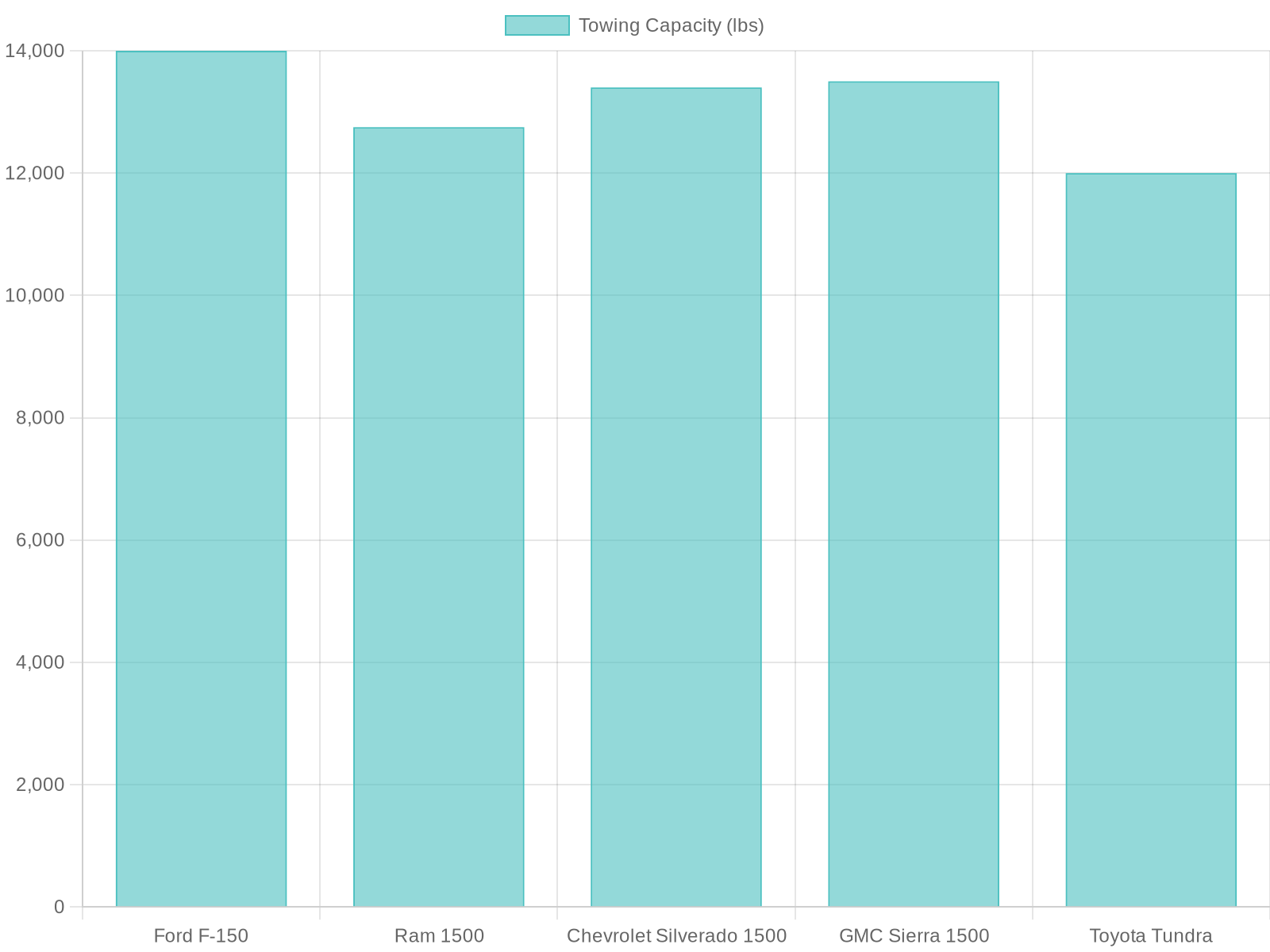
| Model | Towing Capacity (lbs) | Starting Price (USD) | Key Features | Source |
|---|---|---|---|---|
| Ford F-150 | Up to 14,000 | $32,000 | 3.5L V6 EcoBoost engine, 10-speed automatic transmission, available 4×4, advanced safety suite (Co-Pilot360), Pro Power Onboard generator | Ford Motor Company – 2023 F-150 Specifications |
| Ram 1500 | Up to 12,750 | $38,000 | 3.6L Pentastar V6 engine, 8-speed automatic transmission, Uconnect infotainment system, available 4×4, adaptive cruise control, blind-spot monitoring | Ram Trucks – 2023 Ram 1500 Specs |
| Chevrolet Silverado 1500 | Up to 13,400 | $32,000 | 2.7L Turbo I4 or 5.3L V8 engines, 10-speed automatic transmission, MyChevrolet app integration, available 4×4, rearview camera, Apple CarPlay & Android Auto | Chevrolet – 2023 Silverado 1500 |
| GMC Sierra 1500 | Up to 13,500 | $39,000 | 2.7L Turbo I4 or 5.3L V8 engines, 10-speed automatic transmission, IntelliLink infotainment, available 4×4, wireless charging, front and rear parking sensors | GMC – 2023 Sierra 1500 |
| Toyota Tundra | Up to 12,000 | $35,000 | 3.5L V6 twin-turbo engine, 10-speed automatic transmission, available 4×4, JBL audio system, digital instrument cluster, integrated trailer brake controller | Toyota – 2023 Tundra |
Frequently Asked Questions About Towing Capacity
What is towing capacity?
Towing capacity is the maximum weight a vehicle can safely tow. This includes the trailer and its cargo.
How do I check my truck’s towing capacity?
To determine your used truck’s towing capacity, start by locating the Vehicle Identification Number (VIN). Using this, you can refer to the owner’s manual or the tire placard on the driver’s door for specific ratings. For detailed information, you can also visit AutoZone or MechanicBase.
Does towing capacity change with modifications?
Yes, modifications such as upgraded hitches or suspensions can affect the towing capacity. Always check original specifications to confirm if modifications impact towing limits.
Why is it important to know my towing capacity?
Knowing your towing capacity is crucial for safe driving and to avoid damage to your vehicle and trailer. Using your vehicle beyond its towing limits can result in accidents and costly repairs.
Trends in Towing Capacities (2020-2023)
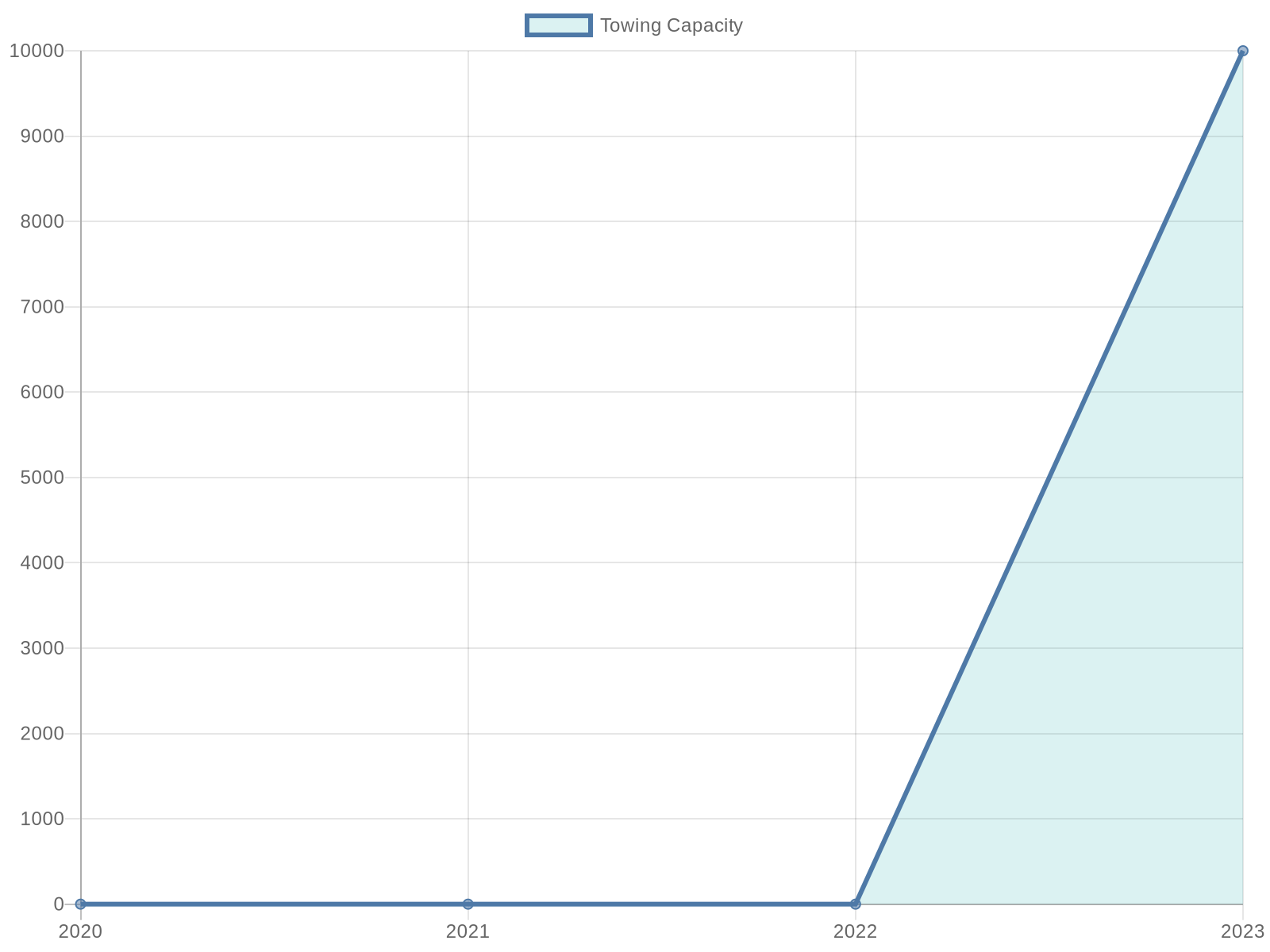
The towing capacities of trucks have seen notable changes over the last few years, driven by advancements in technology and engineering. Here is a chart showcasing the projected trends in towing capacities for heavy-duty and medium-duty trucks from 2020 to 2023:
(Source: TruckersReport)
- 2023 Trends: In 2023, advancements in engine technology and the introduction of models with higher towing ratings, such as those exceeding 30,000 pounds, have been significant. The automotive industry is focusing on more robust drivetrains and chassis designs, leading to considerable increases in payload capacity.
- Key Developments: Electric trucks are also emerging, with capabilities for extensive hauling, pushing the boundaries of traditional towing standards.
For those interested in the specifics of towing capacities, understanding these trends can help ensure you make an informed choice when considering used trucks. Learn more about checking towing capacity for used trucks and how it can impact your purchase decision.
Conclusion and Call to Action
In conclusion, understanding the towing capacity of a used truck is not just a matter of convenience; it ensures the safety and efficiency of your towing operations. By checking the Vehicle Identification Number (VIN), consulting the owner’s manual, and verifying the truck’s factory equipment, you can make informed decisions when purchasing or operating a used truck. Always inspect critical components like the transmission, hitch ratings, and braking systems to ensure your vehicle is capable of handling the intended loads. As we discussed in this article, paying attention to these details can significantly affect performance, safety, and even resale value in the long run. For those looking to enhance their towing experience and ensure their truck can handle the demands of the road ahead, it’s essential to choose reliable components and services.
Now that you know how to effectively check a used truck’s towing capacity, it’s time to take action! Whether you’re a local driver, an auto repair shop, or a property manager, you don’t have to navigate these challenges alone. At Summit Fairings, we’re passionate about providing you with the best products and solutions for all your towing needs. Visit our website today to learn more, explore our offerings, and ensure you have everything you need for a safe and successful towing experience!
Choosing the right truck for your needs, especially concerning towing capacity, is not just a matter of specs-it’s about safety, reliability, and ensuring that your vehicle can serve you as expected. Local drivers and car owners, when selecting a used truck, it’s crucial to take the time to understand the towing capacity thoroughly. This knowledge safeguards both your investment and your daily adventures. Remember, underestimating your needs can lead to severe incidents, so prioritize proper inspections and research to avoid common pitfalls.
For auto repair shops and dealerships, you play a pivotal role in educating buyers about the discrepancies often found in advertised towing capacities versus real-world capabilities. Help your clients avoid costly mistakes that can stem from misinformation. By guiding them on the importance of matching the truck’s specifications to their actual towing needs, you foster trust and long-term relationships.
Property managers and HOA administrators, recognize that your ability to manage properties efficiently often hinges on the effectiveness of your fleet. Choosing trucks that meet rigorous towing requirements can enhance response times during emergencies and everyday tasks. Moreover, ensuring your team understands these capacities can lead to better management of resources and increased safety.
Ultimately, the way you approach choosing a truck profoundly impacts your operations and safety on the road. For more insights on improving safety protocols and truck management, don’t hesitate to read about towing safety reporting and other crucial guidelines to enhance your overall strategy. Let’s equip ourselves with the right information and tools to make informed decisions in our truck investments.