
Navigating the world of roadside assistance often brings up more questions than answers, particularly around the topic of tipping tow truck drivers. While many may assume that tipping is customary for any service, the towing industry presents a unique scenario where expectations can vary widely. Understanding whether you should tip a tow truck driver not only enhances the interaction between drivers and companies but also brings clarity to local customs. In the chapters that follow, we will dissect tipping norms within the towing profession, analyze situational factors affecting decisions, explore regional variations, and reflect on the critical role of customer service in determining gratuity. By the end of this journey, you’ll be equipped with a comprehensive understanding of when and how to express appreciation through tipping in the towing industry.
Tow, Tip, or Neither: A Practical Guide to Towing Etiquette When Help Arrives
A roadside crisis rarely comes with a manual, and when the tow truck arrives, the moment can feel frenzied: headlights glare, engine coolant fogs the air, and the sound of a winch whirs in the distance. In that tense hush, a simple decision often sits at the edge of the scene: should you tip the tow truck driver? The instinct to show gratitude is natural, but the etiquette around tipping a tow operator isn’t universal, and the answer depends on a blend of local norms, company policies, and the specific service delivered. In most parts of the United States, tipping a tow driver is not expected as a standard practice. The fee you’re paying is typically determined by the company or by local regulations, and the driver is compensated through a wage or hourly pay that already accounts for the service. In that sense, tipping functions more as a personal gesture of appreciation than a required portion of compensation. The rider in the situation—the driver—has already earned their paycheck for the job, and the interaction is, at its core, a professional business transaction rather than a service in which a gratuity is anticipated. Yet the ordinary rule is nuanced by what the driver actually does once the scene unfolds. If the driver arrives swiftly in an emergency, if they walk you through the paperwork with calm efficiency, or if they go out of their way to offer helpful advice about next steps, the moment becomes a little more personal. The driver’s role often blends technical skill with a steady presence under stress, and that combination can merit a token of gratitude. A small gesture, such as a five- to twenty-dollar tip, may feel appropriate in the wake of exceptional effort. The key is that such a gesture remains discretionary and never feels like a payment for poor service, nor should it be demanded by the driver or by the company. The generosity of one person in a difficult moment should never become a binding expectation for another, especially when safety and procedure are at stake. The practical reality is that many tow companies have policies that discourage or limit tipping. Some firms explicitly tell customers to avoid tipping the driver, directing tips to be given to the office or withheld altogether to maintain policy consistency. This is not a moral judgment but an organizational choice, and it reflects how a service industry often operates when price transparency and labor costs are prioritized. It is essential to be aware of this possible constraint before you reach into your wallet. Local norms can also shape whether tipping feels appropriate. In several Canadian regions, tipping tow operators is less common or discouraged, aligning with broader norms in some parts of North America where the service is treated more like a paid professional interaction rather than an occasion for gratuity. The variability across locales means a quick check of the local customs or a call to the company can save a moment of awkwardness. For travelers or drivers unfamiliar with a particular area, a courteous inquiry at the outset can prevent miscommunications. To ground these considerations in authoritative guidance, many people turn to recognized resources on service industry norms. The guidelines discussed by the U.S. Department of Labor clarify that tips are a form of wages in some circumstances and are subject to particular rules for tipped employees. This framework helps explain why tipping is not universally expected for towing services, while also acknowledging that discretionary gratuities can reflect customer satisfaction when earned. In practice, a respectful approach is best: assess the service first, consider the circumstances, and decide in the moment rather than pre-committing to a fixed expectation. The most important principle is that gratuity should never be a condition for receiving essential help. If you feel gratitude, a discreet tip can be a meaningful expression, but it should be offered with courtesy and without pressure or insistence from the driver, company, or anyone overseeing the encounter. The aim is to preserve dignity for both parties and to maintain a professional boundary that respects the service relationship, the immediate safety concerns, and the broader norms of the community. When you decide to tip, the form of the gesture matters as well. Cash in hand is the most direct and unobtrusive method, and it can be delivered after the person has completed the service or once you’ve reached a safe and stable location. A tip presented in front of others or in a way that interrupts the workflow can feel uncomfortable or misinterpreted, so a simple, private, and respectful handoff is usually best. Some people prefer to recognize the driver’s excellence in other ways, such as leaving a positive review, providing a compliment to the company, or recommending the service to friends who might need assistance in the future. These alternatives can be powerful because they support the driver’s reputation and the company’s accountability without introducing a cash element into a potentially delicate situation. It is worth noting that the full picture includes the company’s own stance on tipping, which can vary not only by location but by the policy of the specific branch. If a driver has gone above and beyond—perhaps guiding you through a complex insurance claim, coordinating paperwork under pressure, or staying with you through a tense moment and clarifying instructions—your response should reflect the quality of the service rather than a rigid rule. In such moments, a modest tip can serve as a tangible sign of appreciation for the extra effort, while still acknowledging that the core service is already compensated. To connect these ideas to the broader landscape of towing work, consider how professional norms intersect with emergency readiness and standardization. The industry’s emphasis on safety, reliability, and clear communication means that the driver’s value is often measured in outcomes—whether you reach a safe destination, whether your vehicle is protected from worsening damage, and whether the incident is resolved with minimal stress. This is where the idea of gratuity becomes a personal signal rather than an obligation. When deciding, you should also consider the company’s public stance and any posted policies. If a policy prohibits tipping, follow that rule with respect for the driver’s role and the company’s operational priorities. If there is no explicit policy, your discretion remains valid, provided it is appropriate to the service level delivered. The most sensible approach is to treat tipping as a potential closing gesture rather than a mandatory act. If you feel compelled to recognize the driver’s professionalism, do so with a small, thoughtful amount and in a manner that respects boundaries and safety. In the end, the question “Do I tip the tow truck driver?” hinges on a blend of local practice, company policy, and the personal experience of the service you received. A blanket answer would oversimplify a situation that depends on context. A rough rule of thumb might be this: tipping is not expected for standard towing services but is reasonable for exceptional, above-and-beyond service delivered in a respectful, client-centered way. The best path is to check the policy if it’s visible, trust your own judgment about whether the service went beyond the call of duty, and remember that gratitude can take several forms, not just cash. For readers seeking a broader frame on how towing practices are evolving and how industry standards are evolving in real time, one resource worth exploring is available through the industry’s own informational channels. You can learn more about the standards that govern emergency readiness and fleet operations by visiting the resource on fleet standardization and emergency readiness. This material provides context for how tow operators approach urgent scenarios, how they coordinate with clients, and how professional norms shape the interactions you experience on a roadside incident. For direct reference to related guidance and to see how these norms fit into a larger picture, consider consulting the detailed overview linked here: Fleet Standardization and Emergency Readiness. This link offers insight into how a well-organized operation handles the pressures of a roadside emergency, which in turn helps explain why tipping remains optional and situational rather than mandatory. In practice, your decision should anchor itself in courtesy, clarity, and consideration for the driver’s safety and the company’s policies. If you choose to tip, do so with discretion and only after the service has been completed, ensuring that your gesture is clearly voluntary and not a condition of receiving help. The most effective gratitude, however, may come from sharing a positive experience with the company and others who may need their services in times of stress. The broader discourse about tipping, compensation, and service quality is not confined to tow trucks alone; it is a reflection of how society values labor, fairness, and transparent workplace norms. Research and official guidance remind us that tips are a form of compensation for some workers and a discretionary gesture for others. The dynamic is nuanced, and drivers themselves often navigate it with professionalism that emphasizes safety and efficiency first. In a high-stakes situation, the fastest route to resolution is respect for the process, patience with the driver’s guidance, and appreciation expressed in a way that preserves dignity and safety for everyone involved. If you want to expand your understanding of the broader service-ethics landscape, you can consult the U.S. Department of Labor’s official guidance on tipped employees to see how tips interact with wages and regulatory expectations. This information helps frame tipping as a practice that is not universal but is subject to legal and policy contexts that vary by job, location, and company culture. In closing, the question remains: tip or no tip? The simplest answer is that tipping is not inherently required, but it can be a meaningful, optional gesture when the service has met or exceeded expectations in a way that aligns with local norms and company policy. The emphasis should always be on safety, calm communication, and a respectful appreciation for the driver’s skill and dedication during a difficult moment. For more practical perspectives on related towing practices and the everyday realities of roadside assistance, you may find additional context in related discussions about how tow operations maintain readiness and how emergencies are managed across fleets. As you consider the nuance of tipping, you will likely find that the best practice is to prioritize clear communication, safety, and fair treatment of the professionals who help you when you need them most.
Beyond the Tow: Reading Etiquette and Earned Gratitude in Tow Truck Service
When you suddenly find yourself stranded, the next twenty minutes can feel like a test of nerve as much as a test of how to get moving again. A tow truck arrives, a driver steps out with practiced calm, and a complex dance begins: securing the vehicle, diagnosing the immediate needs, coordinating with dispatch, and guiding you through the next steps. In that moment, tipping is more than a perfunctory gesture. It becomes a signal about the quality of care you received, the presence of professionalism under stress, and the social contract that binds a service task to personal trust. The question Do I tip the tow truck driver is not merely about money. It is about recognizing competence, courtesy, and consideration when fixes are imperfect and time is short. This chapter looks at the professional norms in towing services and what counts as a fair, thoughtful gesture without turning a routine service into a transactional expectation. It is a reflection on value, not a declaration of obligation, and it invites readers to weigh their experience against the norms that govern the road side of the service economy.
Towing, at its core, is a regulated trade. Drivers are licensed and insured, and the operations follow protocols designed to protect both the vehicle and the person behind the wheel. The fee charged for towing is typically set through contracts, insurance claims, or pre negotiated rates; it is the price of the service, not a separate impulse buy that guarantees better treatment. In many parts of the country, tipping is not expected and is not built into the standard compensation structure. That fact can feel strange in moments of heightened stress, when a driver goes out of their way to make a difficult situation a little easier. Yet the absence of a tipping expectation does not imply a lack of appreciation. It simply reframes how gratitude is communicated and what constitutes a meaningful acknowledgment of service.
The decision to tip, when appropriate, rests on the driver’s performance in the most human of terms. Think of the moment as a sequence of small actions rather than a single transaction. Prompt arrival during an emergency matters; the speed of response can reduce anxiety and prevent the situation from escalating. But speed without care can be worse than slow but careful handling. A tow truck driver who arrives quickly and then proceeds to handle the vehicle with meticulous attention demonstrates both efficiency and respect for the customer’s property. The care in handling extends beyond simply towing the car from one place to another. It includes the way the driver secures the vehicle, prevents additional damage during loading, and communicates what will happen next, including any paperwork that might be required for insurance claims or road service protocols.
Communication deserves its own spotlight in this evaluation. A driver who explains the steps, answers questions without rushing, and keeps you informed about delays or changes in plans helps you regain a sense of control that is often lost when a breakdown interrupts a routine day. In the heat of an emergency, it is not unusual for nerves to fray. A driver who remains professional, calm, and clear in explanations contributes not only to a smoother technical process but also to the emotional relief you rightly seek in a stressful hour. The professionalism behind the wheel—training, adherence to safety standards, and a respectful demeanor—creates a foundation upon which a tip can become a sincere token of appreciation rather than an obligation.
Why then do many tow companies not emphasize tipping as part of the service? The industry operates with a wide spectrum of practices. Some companies explicitly discourage tipping to prevent perceived bias and to keep service quality consistent across customers. Others simply maintain a policy that gratuities, while not prohibited, are not expected. The range of norms reflects regional variation, company policy, and the realities of a service that blends the urgency of roadside assistance with the routine mechanics of vehicle recovery. If you are unsure, a quick call to the dispatcher or a look at the company’s policy before you engage the service can save confusion later. In many rural or regionally diverse markets, tipping habits diverge even more from metropolitan expectations, and what is considered appropriate in one community may feel unusual in another. A practical approach is to treat tipping as a discretionary signal of value added by the driver and not as a mandatory component of the bill.
When is a tip most appropriate? The typical scenario involves a driver who has gone above and beyond the expected level of service. They might assist with paperwork related to an insurance claim, take extra steps to secure an unstable vehicle, or provide guidance about the next best steps if you need additional roadside help. They might also stay late to ensure that a family member can be transported safely, or help you coordinate with a tow to a trusted shop rather than the first available option. In these moments, a small gratuity can feel like a fair expression of appreciation for effort that goes beyond the basic contract. A modest cash tip within a reasonable range—commonly five to twenty dollars—can acknowledge attentiveness, careful handling, and the personal care shown during an anxious episode. Some drivers may prefer to avoid tips that might create a perception of favoritism; in such cases, a sincere thank you, a detailed positive rating, or a referral to friends and neighbors can substitute for cash.
A useful rule of thumb is to calibrate your gratitude to the quality of the interaction and the outcome. If the service was routine, the vehicle was handled with standard care, the paperwork was straightforward, and you felt supported, a tip may not be necessary. If the service included problem solving beyond the call of duty—such as assisting with complex paperwork, coordinating with a third party, or providing reassurance during a stressful incident—a small tip becomes a natural extension of the service a customer feels was well-executed. If the experience was subpar on fundamental counts—lateness, careless handling, poor communication—the gesture of tipping is not mandatory, and in some cases the driver or company policy may advise against tipping altogether or suggest offering feedback through formal channels instead. In all cases, informed and respectful behavior matters more than the amount.
The question of how to deliver a tip can be as important as the decision to give one. Cash remains the most common and straightforward means, allowing the driver to receive gratuity discreetly and immediately. When possible, present the tip directly to the driver with a brief note of thanks for the specific part of the service you appreciated. If cash is not readily available, some drivers accept tips via cards or digital payments, though less commonly in the field. If you must opt for a noncash method, it is prudent to confirm with the driver or the company in advance, since policies vary and some drivers may prefer not to handle card transactions in the field. In addition to cash or digital tips, a well-placed review or a personal referral to others can be equally meaningful, particularly when the driver has made a stressful event substantially easier to navigate.
For readers seeking a broader perspective on tipping etiquette in service industries, the conversation does not end with towing. It is useful to situate this practice within wider norms that apply to professionals who serve during emergencies, travel, and repair work. A dependable reference point is to consider tipping as a token of appreciation for service that surpasses ordinary expectations, rather than a requirement dictated by the price tag on a bill. If you want practical context beyond the towing world, the Santa Maria Tow Truck Blog offers insights on industry standards, safety practices, and client interactions that illuminate how professionals balance compensation with customer care. You can explore those discussions here: Santa Maria Tow Truck Blog.
Ultimately, tipping is a personal choice anchored in your assessment of the service you received, the driver’s conduct, and the policies of the company you engaged. The aim is to reward genuine care and competence while respecting local norms and any explicit company guidelines. The same moment that prompts you to consider a gratuity can also prompt you to share feedback with the company, file a constructive review, or recommend the driver to others. The core principle is simple: gratitude should reflect what happened in the moment, not what you wish had happened. Treat tipping as a flexible, context dependent gesture—one that honors the expertise and dedication of the driver, while aligning with the social and regional expectations surrounding tow truck services. For readers who want a broader frame on tipping etiquette, see Consumer Reports tipping etiquette guide: https://www.consumerreports.org/tipping-etiquette/.
Do I Tip the Tow Truck Driver? Reading the Roadside Moment with Situational Wisdom
When a breakdown crashes into your plans, the roadside moment tugs at your sense of fairness and gratitude in equal measure. A tow truck arrives, wheels crunch on gravel, and the driver steps into the scene with practiced calm. The question that lands with a soft clink in your wallet is not just whether to tip, but how to read the situation and respond with appropriate appreciation. For many in the United States, tipping is an informal ritual that signals thanks for effort, skill, and the extra miles a driver may go under pressure. Yet the context matters as much as the gesture. Tipping is not universally expected, and local norms, company policies, and the specifics of the service all shape what feels right in the moment. This chapter explores the factors that influence tipping decisions, offering a coherent framework rather than a simple rulebook. It invites you to consider the service you received, the effort expended, and the broader customs that guide roadside support. The aim is not to pressure readers into tipping, but to illuminate when a tip can meaningfully acknowledge a driver’s hard work and when it is better to express appreciation through other means.
The most immediate factor is the quality of service. A driver who handles a stressful situation with courtesy, clear explanations, and steady hands earns more than a mechanic’s handshake and a nod. If the driver offers reassurance on a dangerous shoulder, communicates what will happen next, and keeps you informed while arranging the safest possible outcome, a tip can be a natural continuation of that effort. It is not simply about physical labor, though that remains a core component. Tow work often involves heavy lifting, careful securing of the vehicle, and protective decision-making in traffic or inclement weather. When these elements are performed with skill and poise, a gratuity becomes a tangible recognition of that value. The goal is to mirror the level of service you received; a modest tip for solid work, or a more generous gesture if the driver went beyond the call of duty.
Distance towed is another practical consideration. The longer the trip, the more fuel, time, and labor the driver commits to delivering your vehicle to a chosen destination. A tow across dozens of miles may justify a larger tip than a short, local pull. Drivers frequently balance time on the road against other assignments, and their effort is not only in loading and towing but in managing routes, traffic conditions, and the logistics of safe transfer. The amount you tip can reflect that extended effort without turning tipping into a rigid calculation. If the distance is considerable, a flat tip in the range often cited—between twenty and fifty dollars—may feel proportionate to the extra hours and risk involved. When the tow involves a simple hop from one shoulder to a nearby lot, a smaller amount can still convey appreciation for the driver’s professionalism.
The presence of additional services multiplies the justification for tipping. If the driver jump-starts a car, changes a tire, secures loose cargo, or assists with paperwork such as arranging a repair shop or documenting the tow for insurance, these are tasks that go beyond the core tow operation. Each extra service adds value and time to the encounter. In such moments, a tip communicates gratitude not just for arriving on scene, but for the thorough, hands-on help that removes friction and uncertainty from an already stressful situation. The stronger the sense that the driver is a practical ally—someone who helps you regain mobility and peace of mind—the more natural it feels to show appreciation through gratuity.
Local norms cannot be ignored. Tipping conventions vary across regions and even within communities. In some parts of the country, drivers expect tips more readily, while in other areas tipping is modest or uncommon. There are places where gratuity is discouraged by company policy or by local business customs. The variability means there is no universal number that fits every scenario. A tip that feels appropriate in one city could be out of place in another. When in doubt, observe the mood of the interaction, listen to any cues from the driver or the dispatch team, and consider the broader cultural context. If you have a chance to ask discreetly or check a local practice guide, that can spare discomfort later. In essence, tipping becomes a barometer of local etiquette as well as service quality.
Company policy plays a quietly influential role in deciding whether to tip. Some towing firms build gratuity into the invoice, while others explicitly discourage tipping or state that tips should be given directly to the driver only if the customer chooses. The policy angle matters because it reflects how the business positions the service in the market and how it frames compensation for drivers. If a policy exists that discourages or prohibits tipping, you can still express appreciation through a positive review, a note to the company, or a commendation that reinforces respectful service. Conversely, if the policy invites tipping as a way to acknowledge exceptional work, your gesture can align with the company’s framework and reinforce a standard of customer care.
Guidelines for tipping are often offered by industry observers and consumer guidance. A widely cited range suggests tipping ten to twenty percent of the total service charge, or a flat amount between twenty and fifty dollars, depending on the circumstances. When you are uncertain, starting with a twenty-dollar tip can be a prudent baseline for most standard towing jobs. That starting point is not a mandate but a practical anchor that can be adjusted up or down based on the factors already discussed: service quality, distance, additional help, and local norms. In emergencies—where time is critical and the driver’s composure helps keep you safe—many people extend a larger tip as a direct display of gratitude for the calm, competent handling that reduces risk and fear.
There is also a social and relational dimension to tipping. People often tip to acknowledge the human element of the encounter—the driver’s patience, the respectful way they explain options, and the willingness to go the extra mile to ease the customer’s burden. A tip can serve as a bridge between professional service and personal recognition, reinforcing that the driver’s effort is seen and valued. Even in a moment when you may feel overwhelmed, a concise expression of thanks paired with a tip can crystallize a positive memory of the experience. If you choose not to tip, consider complementing your response with a written compliment to the company or a sincere thank-you that communicates appreciation for the driver’s demeanor. It is possible to recognize excellent service without tipping if local norms or company policies warrant a different form of acknowledgment.
In practice, you can prepare for tipping in advance so the moment does not become awkward. If you carry cash, you can have a small, clearly labeled amount ready. If digital payments are acceptable, you might offer that option when appropriate. The key is discretion and respect: hand the tip after the job is completed, with a short, direct expression of gratitude, and without any implication that the driver should perform additional tasks in exchange for gratuity. The roadside environment is not a stage for negotiation; it is a moment to honor the effort and the care shown under pressure. If the situation involves a language barrier or a highly stressful scene, a calm, appreciative tone matters even more than the amount you tip.
An important practical note concerns how you respond if tipping is not appropriate. If the company policy discourages tipping, or if regional norms suggest otherwise, you might still convey appreciation. A sincere thank-you, a brief note to the dispatcher complimenting the driver’s professionalism, or an online review highlighting specific acts of help can be powerful tokens of recognition. The aim is to acknowledge value and effort in a way that respects the context and the guidelines you are operating within. Tipping is just one conduit for expressing gratitude, not the only one. In every case, the underlying principle remains the same: acknowledge the human effort that helped you regain safety and mobility, and do so in a manner that aligns with local norms and the company’s stance.
To further ground this discussion in practical context, consider the way readers might explore related topics within the broader article series. For readers seeking additional practical guidance on towing, emergency readiness, and the standards that shape professional response on the road, a nearby resource offers a complementary perspective: santamariatowtruck.com/blog/. This internal reference connects readers to broader discussions about how tow operators prepare for emergencies, standardize practices, and support customers through challenging incidents. It serves as a practical extension to the tipping conversation, reminding readers that the quality of response often hinges on preparedness and professional conduct as much as on the momentary gesture of gratitude.
Despite the variations in practice, the core message remains consistent: tipping is situational, not mandatory, and its appropriateness rests on service quality, additional effort, distance, local norms, and company policy. The most reliable approach is to assess the encounter in real time, rely on your own sense of fairness, and choose a gesture that feels proportionate to the driver’s work and the context you faced. In every case, the roadside moment offers a chance to acknowledge competence, composure, and care—qualities that deserve recognition regardless of the final dollar amount.
For readers who want a broader lens on tipping behavior in service industries, including transportation services, further reading can illuminate why people tip and how expectations evolve across different settings. See this external resource for a scholarly perspective on tipping dynamics and consumer behavior: https://www.tandfonline.com/doi/abs/10.1080/13689470.1999.9672249
Tow Truck Etiquette Across Regions: When a Small Tip Signals Good Service
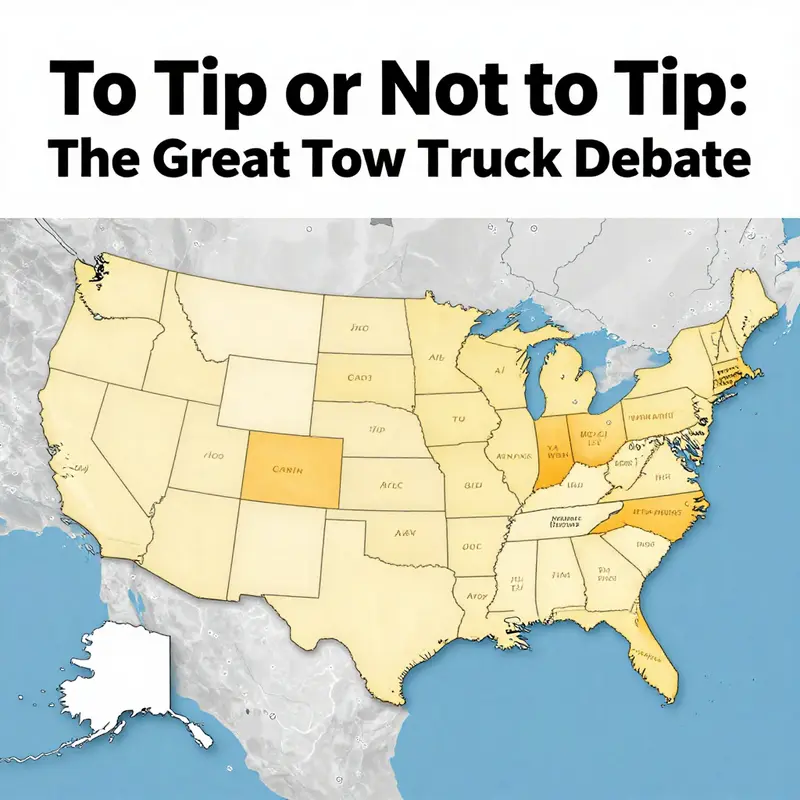
Tow trucks arrive in moments of stress, and the interaction is usually brief but meaningful. In those moments, the question of tipping circles among drivers and customers: do you tip the tow truck driver? The answer isn’t a simple yes or no. It depends on where you are, what the driver did, and what to expect from the service you’ve hired. The general pattern in many U.S. locales is that tipping is not expected because drivers are paid by the job or by an agreed hourly rate, and the fee is largely determined by regulations. In professional terms, the tow is a service rendered, and the fare you pay is meant to compensate the driver for that service, not to function as a tip pool.
Yet the social script around tipping remains alive and well in many communities. The practice isn’t static; it shifts with time, with the weather, with the urgency of the moment, and with the perceived effort the driver has extended beyond the call of duty. The differences aren’t only about dollars. They are about perception of value. In some regions, tipping culture is more ingrained in everyday service experiences, and a small gratuity is seen as a natural expression of appreciation for reliable, efficient help in challenging circumstances.
In the Northeast and the West Coast, tipping tends to be more common for exceptional service. A driver who arrives promptly during a snowstorm or a downpour, who calmly explains the options and the process, or who coordinates the tow with a calm, professional demeanor, may be met with a modest tip—often in the range of ten to twenty dollars. Those figures reflect not only the person’s effort but the regional expectation that service industries are backed by a culture of tipping that acknowledges extra care and personal attention. The driver who offers practical advice about what to do next, who helps locate the right paperwork or consolidates details that reduce your stress, often earns more than just thanks. And if the tow involves a long stretch, difficult access, or a nonstandard situation, the appreciation may be expressed with a little more generosity.
The Midwest and the South present a different rhythm. In these regions, tipping for towing is generally considered optional rather than expected. A driver who is courteous, efficient, and thorough may be thanked with a verbal expression of gratitude and, if you feel moved, a small amount—more commonly within the five to ten dollar range. In many communities here, the fixed cost of the service is viewed as covering the work, the travel, and the risk, making a larger gratuity less common. However, as with any service encounter that goes beyond the bare minimum—such as a driver who stays to answer questions after a tow, assists with a paperwork-heavy process, or steps in to arrange an alternate plan during an emergency—the decision to tip is more about the quality of the engagement than the geography. If the driver goes the extra mile, a token of appreciation in the five to twenty dollar bracket can be entirely appropriate, reflecting a sense that the service was delivered with care and competence.
Several practical factors help tilt the decision, often more than the geographic label on a map. First is transparency about the pricing structure. If the company stipulates that tipping is unnecessary or explicitly discouraged, that policy should weigh heavily in your choice. Transparent pricing that shows the labor, the mileage, the hook-up fee, and any additional charges is a sign of a professional operation, and it reduces the pressure to compensate with cash on the spot. Some customers prefer not to tip simply because the system already binds the cost of the service to a regulated or contracted rate. In other cases, there are situations where tipping makes sense despite a formal policy against it because the driver has delivered something beyond the call of duty. In such moments, a discreet, respectful gratuity can acknowledge the extra effort.
The context of emergencies often redefines the etiquette. When a tow is needed after a crash, or when a vehicle is stranded in bad weather or a dangerous location, the driver’s demeanor and willingness to arrange safe, efficient alternatives can matter as much as technical skill. Here, the human element—calm communication, patience, and the ability to reduce anxiety—can justify a modest tip as a gesture of appreciation for competence under pressure. It’s important to remember that even in high-stress moments, tip decisions should be guided by whether the driver’s approach made a real difference in your experience. If you feel the driver provided comfort, clarity, and practical help in the moment, a tip in the five-to-twenty dollar range is reasonable and proportionate to the service.
The social script around tipping also intersects with practical realities about payment methods and company policies. Some firms operate with strict cash-handling protocols or electronic payment systems that discourage or temporarily bar tips. In these situations, a tip may still be feasible in a non-monetary form, such as a positive online review or a concise commendation to the company’s leadership. Feedback matters; it helps buildings and fleets learn what went right and what could be improved. If you find yourself in a scenario where tipping feels appropriate but cash isn’t handy, asking the driver whether a card or digital tip is acceptable demonstrates respect for the driver and the business’s preferred practices. The key is to keep communication open and considerate, never coercive or transactional in tone.
To add texture to the regional conversation, consider how weather, geography, and the type of tow influence the tipping decision. An urban tow with a fast response during a blizzard may prompt a tip because the driver is juggling safety, visibility challenges, and the coordination of multiple moving parts. A rural tow that requires careful maneuvering over rough terrain, with limited access and a longer drive, might also justify extra appreciation when things go smoothly. A local difference that deserves attention is the way paperwork is handled. Tow operations often require signatures, releases, or notices that can be time-consuming. If the driver provides help with paperwork—especially in the aftermath of an accident—that added service can justify a small gratuity. This is a practical area where regional norms intersect with professional expectations. Assistance with the administrative side of things, which many drivers can undertake as part of their job, can nonetheless feel like an additional service that merits acknowledgment.
In many conversations about tipping, people worry about crossing the line into impropriety or creating pressure for someone who may rely on a regulated fee. The best approach is to treat tipping as a voluntary gesture that reflects genuine satisfaction rather than a requirement attached to the service. If you decide to tip, consider it a token rather than a fixed expectation. A simple, respectful amount—typically a bill-friendly five to twenty dollars depending on the service quality and the region—can convey gratitude without suggesting that the price was insufficient or that the driver was underpaid. It is not about signaling wealth or social status; it is about recognizing a job done well under sometimes arduous conditions. In this sense, tipping becomes part of a broader culture of courtesy that respects the complexities of roadside assistance work.
If you want to understand the regional landscape more deeply, you can explore resources that sketch out the etiquette in different parts of the country. While the specifics vary, the principle remains consistent: the value you place on the driver’s help should match the service you experienced, and you should respect any local norms or company policies. The key is communication and respect. When you acknowledge the driver’s competence, you create a moment of trust and relief amid a potentially stressful situation. To connect with practical, localized guidance, readers can visit the Santa Maria Tow Truck blog for perspectives drawn from real-world experiences. Santa Maria Tow Truck Blog.
For a broad view that situates tipping in a wider etiquette framework, consider additional perspectives that discuss whether tipping is appropriate in various service contexts. An external resource offers a concise framing of tow-truck tipping practices, highlighting when a tip is appropriate and when it is not. https://www.thespruce.com/should-you-tip-a-tow-truck-driver-4157896
Gratuity in Motion: How Customer Service and Context Shape Tipping Tow Truck Drivers
You pull to the shoulder of a dimly lit highway, the hum of traffic fading as you assess the situation. The tow truck arrives, reliable and unhurried, and the driver steps out with a calm, practical confidence. He asks a few clear questions about what happened, checks your identification and the vehicle’s paperwork, and explains the plan for getting you to safety or to a shop. In moments like these, the work behind the wheels becomes more than a mechanical service; it blends problem solving, risk management, and people skills that keep you informed in a tense moment. A driver might help you read a form for insurance or roadside assistance, guide you through what paperwork is needed for a claim, or offer directions to the quickest route to a repair facility. Some drivers even go beyond the bare minimum—checking the tires and lights, helping to secure the vehicle on the flatbed, or offering practical tips about your next steps after you reach safety. Those small acts of thoughtfulness can shift a routine tow into a smoother, safer, and more human experience, and they often shape the gratitude you feel when the moment passes.
The question of tipping, in this context, is rarely a simple yes or no. The prevailing reality is that tipping is not universally expected for standard towing services. Most tow companies compensate their drivers by the job or by the hour, and the stated price of the tow generally covers the core service. In many cases, the tip would be a separate gesture rather than a component of the service charge. This is why many people walk away from the scene with a sense that tipping is optional rather than obligatory. Yet the same moment that makes a tow feel routine—the precise handling of a potentially stressful situation—also creates an opportunity to recognize effort. If a driver communicates clearly, remains professional under pressure, or goes out of the way to assist with paperwork, vehicle issues, or safety concerns, a tip can feel like a meaningful token of appreciation. It becomes a signal that the driver’s skill and demeanor truly matter to you in that moment, and it contributes to a broader sense of trust in a service industry built on reliability and customer care.
From a broader perspective, tipping practices for tow truck drivers are shaped by local norms, company policies, and the realities of how drivers are paid. In many regions, including large parts of the United States, tipping is not the norm for routine tows. The financial structure of many towing operations relies on the base fee for the tow, plus any added charges for mileage, after-hours service, or extra labor. Because the base price already covers the core service, a tip is not expected to influence the driver’s ability to be paid fairly for their work. Still, there is a persuasive argument for tipping when the service goes beyond the call of duty. If the driver remains patient while you juggle a stressful situation, offers clear explanations, helps with the paperwork, and calmly handles hazardous conditions, that extra effort often warrants a small gratuity. The points of contact—how the driver communicates, how they manage expectations, and how they handle the unexpected—become the most meaningful factors in deciding whether a tip is appropriate.
The guidance on tipping is nuanced by regional variation and company policy. There are places where tipping is not customary, or where tipping may even violate a shop’s policy. In some communities, tipping remains less common or is discouraged, reflecting cultural norms about service compensation. The prudent approach is to check local customs and, just as important, to verify the company’s policy before deciding. A quick call or a glance at the company’s website can clarify whether tips are welcomed, discouraged, or neutral. When in doubt, a polite question at the outset can prevent an awkward moment after the service is complete.
Even when tipping is not expected, the impact of excellent customer service extends beyond a single transaction. A tow driver who communicates with dignity and competence, who explains what is happening, and who respects your time can influence how you view the entire process. This is not merely about satisfying one moment of need; it is about how the service experience translates into trust, future business, and the likelihood that you will recommend the company to friends or family in a similar bind. Industry observers and roadside-service professionals consistently point to the link between strong customer service and higher customer satisfaction. When a driver makes the experience smoother, it reassures customers that the service is reliable, enabling them to feel confident about their choice in what is often a stressful or even frightening situation. The idea of tipping, then, is less about inflating a paycheck in the moment and more about acknowledging a performance that enhances the entire encounter.
There are practical guidelines that people often use when deciding whether to tip and how much. A common rule of thumb is to consider tipping between 15 and 20 percent of the total service cost for exceptional performance. If the total tow fee is modest, a larger percentage might still be appropriate, but many customers find it reasonable to scale the gesture with the service’s impact. When the service is straightforward but the driver has been courteous and helpful, a smaller tip—around 5 to 10 dollars—can still convey appreciation without creating expectations for future interactions. This scale makes sense especially for independent operators or drivers who work long shifts in challenging conditions; in those cases, a modest gratuity can have a meaningful impact on a worker who is navigating fatigue, complex traffic, and time pressure.
The context matters as well. An emergency tow from a storm-wracked highway or a late-night call from a stranded driver in an unfamiliar city may justify a larger gesture than a routine tow in familiar surroundings. In emergencies, drivers often shoulder more risk and more stress, and their ability to communicate clearly while prioritizing safety becomes a crucial part of the service. If a driver calms you, coordinates with your insurer, helps with a claim form, or offers useful information about the next steps, these actions can be reason enough to offer a gratuity that reflects the extra effort involved. The key is to assess the overall impact of the service on your safety and peace of mind, not just the length of time the tow takes or the tightness of the price tag.
A practical acknowledgment beyond cash exists as well. If tipping is not appropriate or possible due to company policy or local norms, consider sharing positive feedback with the company and on any relevant review platforms. A quick note about the driver’s professionalism, the clarity of their explanations, and their safety-conscious approach can influence the driver’s reputation and a company’s ability to recruit and retain quality staff. In some cases, customers also report that a kind word to a dispatcher or a manager about the driver leads to improved service for others in the future. Feedback acts as a form of social capital that complements the monetary gesture, reinforcing a culture where customer care is valued as part of the service standard.
For readers who want to explore the practical dimensions of towing etiquette and how gratuity can fit into a professional standard, a broader perspective is available in industry-focused resources. The Santa Maria Tow Truck Blog offers real-world insights into how drivers manage daily operations, emergencies, and customer expectations. Reading such reflections can help you calibrate your own response to a tow call, especially when you are trying to decide whether a tip is warranted and, if so, how much. You can learn more by visiting the Santa Maria Tow Truck Blog, which provides context and examples from drivers who operate in similar settings. Santa Maria Tow Truck Blog.
Of course, every situation is unique, and tipping remains a personal choice. If you decide to tip, doing so with a brief note of thanks and a clear sense of what impressed you can feel equally meaningful to a driver who has invested in your safety and comfort. If you opt not to tip, a direct thanks and constructive feedback can still acknowledge the service’s value while respecting any policy constraints. The aim is to recognize quality service and to foster a culture in which drivers feel valued for their professional conduct as much as for the service they provide. In the end, tipping is a micro-gesture that reflects a larger dynamic: the degree to which a roadside encounter is handled with care, competence, and consideration for the person at the wheel who is keeping you safe on a difficult day.
For readers seeking a concise, consumer-focused outline of tipping etiquette for tow truck drivers, consider this external resource that delves into the etiquette and practical implications of gratuity in roadside assistance: https://www.thespruce.com/tip-tow-truck-driver-4781936. This source reviews common expectations, discusses when tipping is appropriate, and offers guidance on how to balance appreciation with local norms and company policies.
Final thoughts
Determining whether to tip your tow truck driver is far from a straightforward decision. It encompasses understanding the nuances of professional norms, situational contexts, regional customs, and the importance of customer service. By being informed and empathetic, you can navigate this tricky terrain with confidence, ensuring that you show appreciation in a manner that’s acceptable and appreciated. Remember that your gesture may not only uplift the driver but also contribute to a positive perception of the industry.