
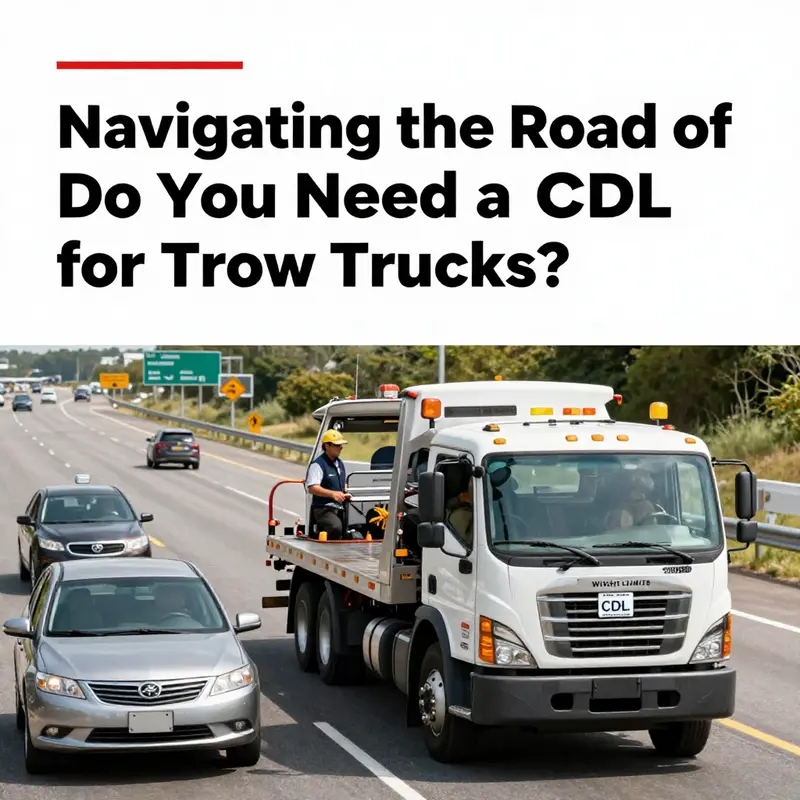
Operating a tow truck involves significant responsibility, not just in handling vehicles but also in adhering to legal requirements. Understanding whether a Commercial Driver’s License (CDL) is necessary is essential for local drivers, auto repair shops, dealerships, and property managers. This guide will delve into CDL requirements and regulations, emphasizing their importance in ensuring safe operations. Furthermore, we’ll explore variations in CDL requirements tailored to different tow truck classes and discuss the legal consequences of operating without the proper credentials. By the end, you’ll have a comprehensive understanding of why a CDL is not just beneficial but crucial for tow truck operations.
Tow Truck CDL Realities: Weighing the Thresholds, Rules, and Road-Ready Compliance
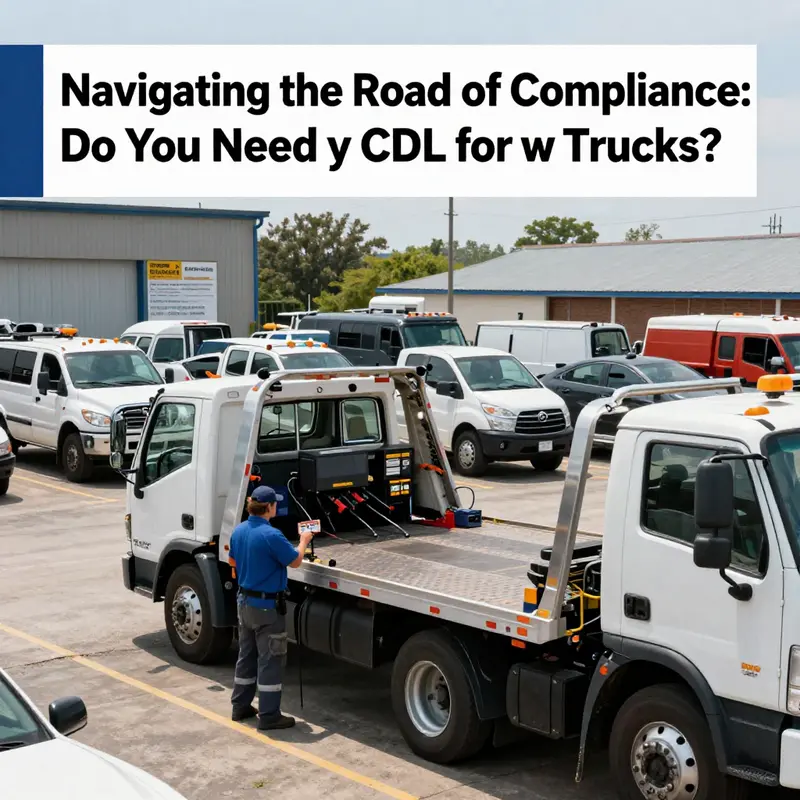
In the fast lane of roadside assistance, the tow truck is more than a machine that hooks, hauls, and clears a lane. It is a moving support hub for safety, commerce, and everyday life. Yet the question that many operators ask is deceptively simple: do you need a CDL to operate a tow truck? The short answer hinges on weight, configuration, and the kind of duty you perform. The longer answer, which is essential for anyone on the job, turns on a precise understanding of the Federal Motor Carrier Safety Administration’s rules and how they apply to real-world towing operations. A tow truck is not a one-size-fits-all vehicle, and the license you need depends on how heavy your truck is and what it’s carrying. When fleets and drivers get this right, they reduce legal risk, enhance safety, and keep their operations from grinding to a halt at a scale or a roadside checkpoint.
At the core is weight. Federal law defines a gross vehicle weight rating (GVWR) to determine whether a CDL is required. If a tow truck has a GVWR of 26,001 pounds or more, a CDL is required. This threshold is not arbitrary; it is designed to ensure that drivers handling heavy, potentially unstable loads have the training, medical clearance, and testing that come with operating vehicles capable of causing significant harm if mismanaged. For many heavy flatbeds and traditional wreckers, this GVWR is surpassed, and a CDL becomes a standard part of the job. The logic is straightforward: heavier vehicles demand greater control, more extensive braking systems, longer stopping distances, and often more complex equipment and handling characteristics when towing or loading a disabled vehicle.
But weight alone does not tell the entire story. The duty you perform on the road matters too. If the tow truck is used to transport more than eight passengers, including the driver, or if the vehicle is designed or used to transport hazardous materials, a CDL becomes mandatory regardless of the GVWR in some circumstances. This nuance matters for operators who provide specialized services—think of emergency response units, roadside assistance fleets that shuttle technicians between sites, or operators who regularly transport hazardous substances as part of their tow operations. In those cases, the type of CDL needed may shift, and the rules can intersect with state-level regulations that add another layer of complexity. The FMCSA lays out these conditions in its CDL information resources, which serve as the baseline for how agencies interpret the need for a license.
When a vehicle falls under the lighter end of the spectrum, below the 26,001-pound GVWR threshold, a CDL is generally not required. Still, the story does not end there. States may impose more stringent requirements or additional training for specific uses of lighter tow trucks. A tow operation that involves heavy loading, specialized equipment, or repeated on-road towing in congested urban environments can trigger state-level rules that require driver qualification, medical fitness, and periodic testing—even if the GVWR is under the federal threshold. This is why many operators start by confirming the GVWR with the vehicle manufacturer’s plate and then cross-checking state DMV or transportation authority guidance. The goal is not just compliance on paper but ensuring that drivers are prepared to handle the unique safety challenges that towing can present, from sudden stops caused by a heavy vehicle to the precise maneuvering required when attaching a vehicle at an awkward angle.
The classification of CDL types further clarifies what an operator needs for different tow configurations. Class A CDL is required for combination vehicles where the tow truck pulls a trailer with a GVWR over 10,000 pounds. This class typically fits operators who run tows with a heavy trailer attached to a powerful truck, often used for long-haul recoveries or multi-vehicle incidents. Class B CDL applies to single vehicles with a GVWR of 26,001 pounds or more, such as large flatbed tow trucks. A Class B license recognizes that the driver must manage a substantial vehicle with substantial payload and require robust vehicle-control skills, but without the additional complexity of a trailer. Class C CDL may come into play for smaller tow trucks designed to transport hazardous materials or for vehicles designed to carry 16 or more passengers, including the driver. The Class C category is more nuanced and often triggers specific endorsements and safety training, reflecting the vehicle’s intended use rather than its pure weight alone. It is not uncommon for a tow operation that occasionally moves hazardous materials or operates near passenger-service contexts to land in Class C territory, even if the baseline GVWR would otherwise indicate Class B or A would be sufficient for typical towing activities.
Understanding these classes is not a dry exercise in taxonomy. It translates into practical decisions about training, scheduling, insurance, and daily risk management. A driver with a Class A license who tows a heavy trailer must be conversant with trailer inspection procedures, coupling techniques, brake and electrical systems, and the dynamics of towing a long combination vehicle. The same driver, if operating a Class B vehicle without a trailer, confronts a different but equally demanding skill set—maneuvering a large, heavy vehicle with tight turning radii, managing sight lines, and understanding how the load shifts during braking and acceleration. For Class C, the focus shifts toward compliance with hazardous materials handling rules, or toward passenger safety considerations when the vehicle is configured to move more people than simply the crew. In practice, most tow operators work within a patchwork of duties that may require occasionally stepping into a different CDL category, depending on the service contract, local regulations, or the specifics of a given call.
The line between a license and a permit to operate in a fleet is often bridged by testing and medical requirements. In addition to the appropriate CDL class, drivers are typically required to pass both knowledge and skills evaluations. The knowledge test covers general CDL fundamentals and vehicle-specific rules, while the skills test assesses the ability to perform a pre-trip inspection, demonstrate basic vehicle control, and complete an on-road driving segment that mirrors real towing scenarios. These tests are not mere formalities; they ensure that the driver can spot mechanical issues that could become safety hazards during an intricate tow, such as a faulty winch, a compromised tow bar, or a braking system that might not hold under load. The medical requirement is another pillar of the program. Commercial drivers must meet medical fitness standards and carry a medical certificate. Depending on state practice and the exact CDL class, periodic medical examinations may be required to maintain eligibility. This emphasis on medical readiness reinforces the broader policy aim: keeping drivers who handle heavy and potentially dangerous equipment in sound physical condition, given the demanding nature of their work.
For operators and fleets, the practical implications ripple outward. Before bringing a tow truck into service, a company must confirm the GVWR figure on the vehicle’s certification plate and then verify whether any ongoing operations would push the driver into a different CDL class or endorsement. This due diligence shapes hiring practices, training budgets, and insurance quotes. A heavy tow operation that regularly transports other vehicles or hazardous materials will need not just a CDL but also endorsements and a robust safety program to satisfy regulators and customers alike. In addition, fleets may need to align on maintenance regimes that support the reliability of the equipment while the driver remains compliant with licensing and medical requirements. These layers of compliance often intertwine with operational realities: long shifts, unpredictable roadside conditions, urban traffic, and the unpredictable nature of weather and incidents that require towing and recovery services. The result is a professional environment where licensing is not a one-time formality but an ongoing component of safety culture and operational integrity.
For drivers navigating this landscape, the path toward compliance starts with a careful assessment of the vehicle’s GVWR and the intended duties. If a truck falls into the heavier category, a CDL is likely necessary, and the operator should prepare for both the written examinations and the practical skills assessment. The process is typically incremental: study the CDL manual, complete a medical exam, pass the knowledge tests, obtain the appropriate endorsements if required, and then schedule the skills test. The timeline can vary widely depending on the driver’s prior experience, the availability of testing slots, and the state where licensing is pursued. The costs, too, are variable—licensing fees, medical exam costs, and potential training programs add up, but the investment is offset by greater market eligibility, better insurance terms, and reduced risk of regulatory penalties.
In the broader narrative of fleet readiness and regulatory compliance, it helps to recognize that CDL requirements are not merely bureaucratic barriers. They function as a signal of professional capability. A tow operator who holds the appropriate license demonstrates, in a tangible way, that the driver can control a heavy vehicle, manage complex hitching and loading operations, and respond safely to the unexpected events that routinely arise in roadside environments. This credential also feeds into insurance calculations and risk assessments, helping fleets demonstrate their commitment to safe practice and regulatory adherence. A driver who understands the weight distribution of a vehicle under tow, who can anticipate how a heavy load behaves on a downgrade, or who can execute a precise hook-up while the vehicle remains secure, contributes to a safer roadway ecosystem.
As you read this, you might wonder where to turn for the most current and authoritative guidance. The Federal Motor Carrier Safety Administration (FMCSA) maintains detailed information on CDL requirements, including weight thresholds, vehicle configurations, and endorsements. It is the official reference point for operators who want to ensure their interpretation of the rules aligns with national standards. While state departments of motor vehicles (DMVs) often issue the practical, day-to-day instructions for applicants, the FMCSA site provides the framework that unifies the rules across state lines and clarifies when a license is necessary versus when a standard operator’s license might suffice. Keeping a finger on the pulse of FMCSA updates helps fleets anticipate changes in the regulatory landscape and adjust training and hiring practices accordingly.
For readers seeking a practical resource to explore more about fleet readiness and emergency standards in the towing sector, the Santa Maria Tow Truck blog offers thoughtful coverage on how fleets approach standardization and readiness in real-world operations. It provides context on how regulatory changes intersect with daily practice, and how crews adapt their procedures to ensure consistent, safe service on the road. This kind of industry insight can be especially valuable for smaller operators who manage everything from dispatch to maintenance, because it underscores that licensing is part of a larger ecosystem of safety culture and operational discipline. You can explore that perspective at the Santa Maria Tow Truck blog to see how others frame the relationship between compliance, training, and day-to-day performance on the job.
Where does that leave the reader who wants to act on these insights today? Start with your vehicle’s GVWR and the specifics of your towing work. If your tow truck sits above 26,001 pounds GVWR or routinely carries more than eight people including the driver, this is a signal to pursue the appropriate CDL class and endorsements. If your operations involve transporting hazardous materials or carrying a larger crew, expect to engage with Class C or Class A/B configurations as dictated by the exact setup and use case. Then map out a realistic training plan: study, apply, schedule the medical certification, and prepare for the knowledge and skills assessments. Keep in mind that the path may require coordination with your state DMV or licensing authority, and it may involve insurance considerations that reflect the increased risk profile of heavier, more complex tow operations.
In the end, the question is less about a single license and more about a comprehensive practice of safety, compliance, and professional readiness. A tow operator who understands the weight thresholds, who recognizes when a particular job requires a more advanced CDL class, and who commits to the medical and testing requirements, is better equipped to protect the public, safeguard the vehicle being towed, and sustain a career in a field where high-stakes decisions are routine. As the road unfolds, the license you carry should reflect not just a numeric threshold but a commitment to dependable, safe service that reaches from the call to the scene and beyond, into the hands of those who rely on a tow truck to restore mobility and order.
For readers who want to anchor these ideas in a broader context of industry practice, consider following the linked resource on the FMCSA’s CDL information page for the latest regulatory details. And for ongoing practical perspectives on how fleets manage readiness and standardization in emergency response, the internal link to the Santa Maria Tow Truck blog can offer concrete examples of how licensing intersects with day-to-day operations, training programs, and the safety culture that keeps tow work effective and responsible on the road.
External resource: For official, up-to-date details on CDL requirements and endorsements, consult the Federal Motor Carrier Safety Administration’s CDL information page: FMCSA CDL information.
CDL Lines and Heavy-Wheeled Responsibility: The CDL as the Backbone of Safe Tow Truck Operations
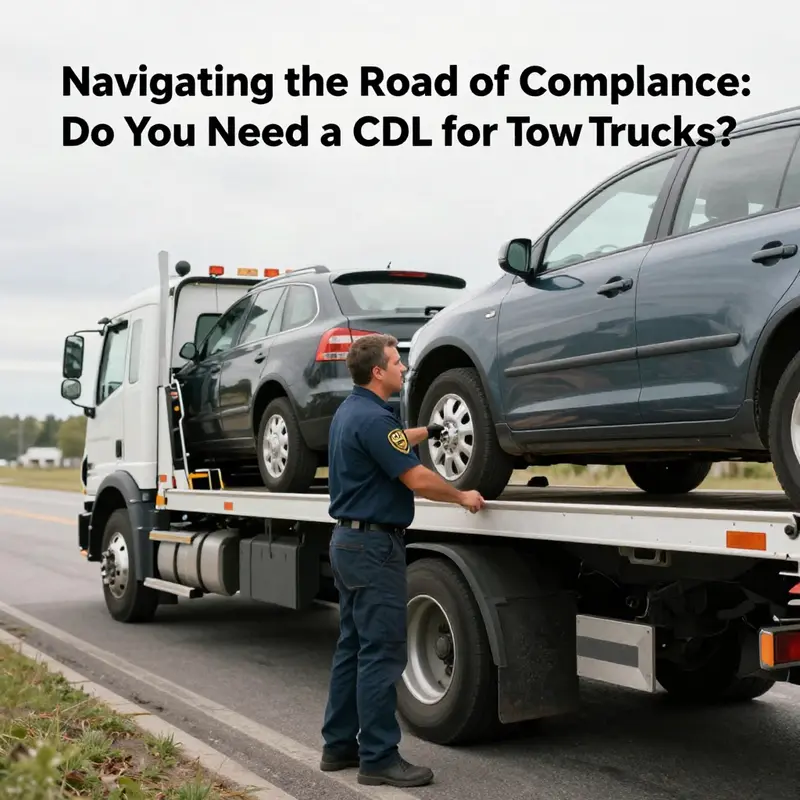
When you ask whether you need a CDL to operate a tow truck, the honest answer is: in most commercial settings, yes, you do. The Federal rules around CDL eligibility are clear in principle: a driver must hold a Commercial Driver’s License to operate any vehicle with a gross vehicle weight rating (GVWR) over 26,000 pounds. Tow trucks, especially those built to recover, lift, and move other vehicles, routinely exceed that threshold. The weight threshold exists for a reason. Heavier vehicles demand more control, more skill, and more attention to the physics of a huge, often unwieldy machine. This isn’t about prestige or paperwork; it’s about safety for the driver, the towed vehicle, and everyone else on the road. And it matters whether the tow operation is a one-man roadside assistance call or a fleet-based recovery operation in urban density, interstate traffic, or storm-wet highways. In practice, most commercial tow operators will be operating under one of the CDL classes because the scope of work tends to push the vehicle beyond the basic passenger-car weight class, making the license not a luxury but a necessity.
To understand why the CDL becomes essential, it helps to connect the weight threshold with the kinds of responsibilities a tow truck operator faces. A heavy wreckers’ work involves dynamic vehicle control in unfamiliar and risky environments. A driver must execute precise maneuvering in tight spaces, often with a vehicle that is not only heavy but also awkward to steer when it is attached to winches, rigs, and hitches. The truck’s own mass interacts with that of the towed load in ways that can surprise even seasoned drivers. A sudden stop, a sharp turn, or a miscalculated pull can lead to rollover, property damage, or injuries. These risks are not theoretical: they are inherent to the physical realities of moving large masses under unpredictable conditions, such as icy roads, dimly lit shoulders, or crash scenes with other responders present. A CDL program is designed to prepare drivers for precisely these contingencies through structured training, standardized testing, and disciplined safety practices. The knowledge base covers vehicle dynamics, load securing, emergency procedures, and defensive driving—areas especially critical when the job involves heavy towed loads, roadside hazards, and the chance of encountering hazardous materials or multiple emergency responders.
Among the core competencies emphasized in CDL training are how to read and respect the weights involved in a tow operation. A tow truck may itself weigh well over 26,000 pounds even before it hooks up a vehicle. When a towed vehicle adds to the load, the combined weight—the GVWR of the tow vehicle plus the GVWR of the towed vehicle—can exceed the limits that keep traction and steering predictable. The theory translates into practice as a driver who can anticipate how the rig will respond under acceleration, braking, and cornering. CDL holders are drilled in the critical sequence of securing a load, which involves understanding the chain and binding equipment, the proper use of winches, and the best practices for anchoring the towed vehicle in a way that prevents shifting or detachment during transit. Without such training, the risk of a load shifting mid-journey, or mechanical failure during a difficult recovery, rises sharply.
The licensing system also embeds a robust testing and verification process. A CDL applicant faces written examinations that confirm knowledge of federal and state driving rules, plus a practical road test that evaluates real-world maneuvering under load. These tests are designed to stress-test judgment under conditions the average light-vehicle operator rarely encounters: sudden lane changes on crowded highways, controlled recoveries after minor collisions, and the coordination required at the scene of an incident where multiple agencies may be present. Beyond the tests, CDL holders often undergo background checks and medical fitness evaluations to ensure that they can perform at high safety standards over long hours and demanding shifts. The emphasis on safety is not merely about compliance; it translates into more predictable and controlled operations, which, in turn, helps lower the risk of injury to bystanders and to the operators themselves.
For tow truck companies, the presence of CDL-certified drivers carries tangible benefits beyond compliance. Insurance providers frequently view CDL-certified fleets as lower risk because the drivers have demonstrated knowledge in handling large equipment and managing hazardous or delicate recoveries. Employers benefit from standardized training outcomes, which support consistent safety performance across a fleet rather than a patchwork of varying skill levels. In addition, regulatory compliance reduces the likelihood of fines or shutdowns due to violations, which can be costly in both time and reputation. The alignment between a company’s safety culture and its licensing standards encourages a professional image that resonates with customers and insurance partners alike. In short, the CDL becomes a foundation for safe, efficient, and responsible tow operations that can weather the scrutiny of regulators and the pressures of high-stakes recoveries.
The landscape of CDL classifications adds nuance to the question of whether a tow operator needs a license. The most common framework distinguishes Class A, Class B, and Class C CDLs, tied to vehicle weight and towed-vehicle characteristics. A Class A CDL is required to operate a combination vehicle with a gross combined weight rating over 26,001 pounds, provided the towed vehicle’s GVWR is over 10,000 pounds. In practical terms, many heavy wreckers that tow other large vehicles fall into Class A territory because the towed vehicle—such as a large van, SUV, or truck with significant weight—meets the 10,000-pound threshold. If the towed load stays under 10,000 pounds, a Class B license can be sufficient for a heavy single vehicle that itself exceeds 26,001 pounds. Class C applies to vehicles that carry 16 or more passengers or hazardous materials under certain conditions, but in the tow-truck domain these triggers are less common unless the operation involves special transports or specific routes.
The implications for a prospective tow operator are practical and immediate. If you intend to operate a tow truck that routinely lifts or tows vehicles well beyond the 26,000-pound mark—and especially if you will be moving vehicles whose GVWR exceeds 10,000 pounds—prepare for Class A. If your operation centers on lighter heavy-wrecker configurations where the towed load remains modest, a Class B can suffice for the vehicle itself, with the understanding that any shift toward heavier recoveries would necessitate reevaluation and potential upgrade to Class A. And regardless of the class, certain additional endorsements and state-specific requirements may apply, such as endorsements for hazardous materials or passenger transport under rare circumstances. These are not universal but are worth confirming through official channels before enrolling in a program or purchasing a fleet.
Beyond the licensing mechanics, CDL training emphasizes the practicalities that every tow operator must navigate. Securement is not a one-size-fits-all step; it is a disciplined process that demands knowledge of a vehicle’s balance, the weight distribution of the load, and how weather can affect grip and drag. Drivers learn to inspect the winch lines, chains, and binders for wear, to verify that all rigging points are intact, and to confirm that the towed vehicle is immobilized in a way that prevents movement during transit. They learn when to use wheel-lift versus flatbed configurations, when to deploy stabilizing outriggers, and how to align the tow truck to minimize the risk of collateral damage when approaching a scene. The procedural depth extends to emergency procedures: how to respond if a tow line slips, if a vehicle becomes unstable, or if the driver encounters a scene that requires coordination with law enforcement, fire departments, or platform authorities. The CDL curriculum also reinforces communication protocols, a factor that becomes critical at a crash site or a blocked highway where clear, concise information sharing can reduce confusion and speed up safe, lawful operations.
All of this matters because tow work, by its nature, sits at the intersection of mobility, risk, and responsibility. A fleet that relies on CDL-certified drivers is signaling to customers and the community that it prioritizes safety and professionalism. This does not mean the work is devoid of risk, but it does mean that there is a standardized approach to how those risks are managed. The licensing requirement helps ensure that a driver has the baseline competence to operate in complex traffic conditions, manage heavy towed loads, and respond to incidents in a way that protects lives, property, and the integrity of the vehicle and equipment involved. It also establishes a common standard that can be audited and improved over time, which is especially important for fleets that operate across city streets, on interstates, or in regions prone to severe weather. Fleet managers, in turn, can rely on CDL requirements to structure training, schedule maintenance, and assign drivers to jobs that match their certified capabilities. The result is not simply compliance, but a more predictable, safer, and more professional service closer to the standard customers expect when they call for help on a roadside or during a heavy recovery operation.
As you consider the big picture, it is useful to connect the licensing framework with broader safety and readiness practices that influence day-to-day operations. For example, a fleet that aligns its standards with the best-practice guidelines for emergency readiness will be better prepared to handle sudden demands—whether it is a winter storm that immobilizes parts of a region, a multi-vehicle collision on a highway, or a breakdown that requires a rapid, controlled recovery. Having CDL-trained operators as the backbone of the fleet supports these efforts because the drivers bring a standardized skill set to every incident, from securing loads under adverse conditions to communicating with other responders and coordinating with dispatchers for efficient resource deployment. It also simplifies compliance with state and federal reporting requirements, reducing the likelihood of violations that can arise from inconsistent training or misapplied procedures.
For readers seeking more on how fleets standardize procedures around heavy-duty operations and emergency readiness, one resource that illustrates the kind of systematic thinking that supports this approach is the discussion on standardization in heavy-duty rescue operations. This material foregrounds how structured training, consistent equipment standards, and clear protocols contribute to safer, faster responses in demanding environments. It is a reminder that CDL requirements are part of a larger safety mosaic, one in which licensing is a foundational piece that interfaces with equipment standards, maintenance practices, and coordinated responses to incidents. You can explore that broader framework here: standardization in heavy-duty rescue operations.
Despite the strong case for CDL-based safety, it is essential to acknowledge that regulations can vary by state, and there are nuanced exceptions. Some operations employ light-duty tow trucks or perform limited towing tasks that fall under non-CDL licensing or under smaller GVWR thresholds. In these cases, drivers may still be required to meet certain commercial-licensing standards and pass professional testing, even if the vehicle itself does not trigger the federal CDL threshold. Navigating these differences requires direct consultation with state motor vehicle departments or the jurisdiction that governs commercial motor vehicles. The federal baseline provides a robust framework, but the realities of state enforcement, local ordinances, and operator-specific duties mean that a prospective tow operator should verify the exact requirements for their situation before purchasing a vehicle or enrolling in a training program. The safest approach is to treat CDL eligibility as a starting point for planning and budgeting, rather than a question to be answered by a single policy statement.
In the end, the CDL is less a bureaucratic hurdle than a practical investment in safety, capability, and reliability. Operators who pursue CDL certification are not merely complying with a rule; they are committing to a disciplined practice that elevates the standard of tow services. This commitment benefits drivers through professional recognition and better job prospects, supports fleet managers with clearer compliance pathways, and protects the public by ensuring that those behind the wheel can manage large, potentially hazardous loads with confidence and competence. For readers planning a career in heavy-duty recovery or operators expanding a fleet’s reach into more demanding recovery jobs, the CDL is a critical foundation—one that aligns with the physics of heavy vehicles, the realities of roadside emergencies, and the higher expectations of modern, safety-conscious infrastructure.
External reference for official CDL requirements and classifications can be found at the Federal Motor Carrier Safety Administration: https://www.fmcsa.dot.gov
Tow Truck CDL Variations: Navigating Class A, B, and State Endorsements in a Weight-Driven Landscape
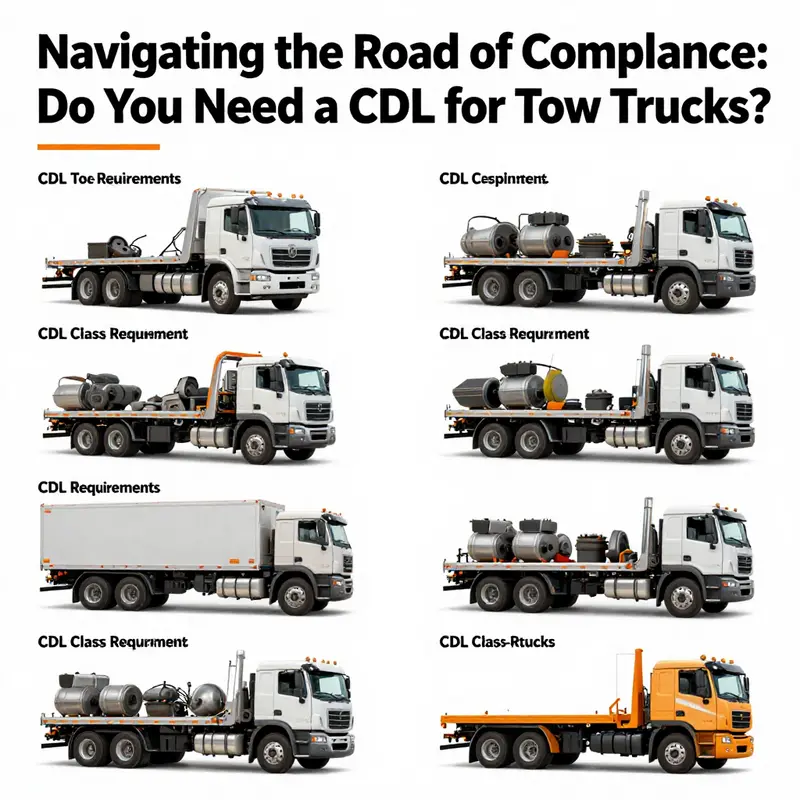
The question of whether a CDL is required to operate a tow truck does not have a single, simple answer. It hinges on a careful reading of weight, configuration, and how the vehicle is used. In the United States, federal rules establish a baseline based on the vehicle’s gross vehicle weight rating, or GVWR, and its ability to tow or haul weight. Tow trucks are often built to meet demanding recovery needs, frequently pushing the scale past 26,000 pounds. That threshold matters because federal law makes CDL requirements mirror the vehicle’s potential to impose heavy-duty duty on the road. Yet the story does not end there. The exact license class you need can change depending on what you tow, how you tow it, and where you operate. This makes the licensing landscape for tow operators more nuanced than a single checkmark on a driver’s license. The consequence is clear: for many operators, understanding the interplay between GVWR, GCWR, and the type of tow equipment is essential to staying compliant and safe on all shifts and over all routes. If you want a concise entry point into these ideas, a trusted starting place is to consult the official guidance on CDL requirements, which lays out the federal framework and the scenarios in which endorsements become necessary. This framework serves as the backbone for how individual states implement and adjust rules, adding layers of specificity for private towing services, municipal fleets, or law-enforcement-assisted operations. Within this landscape, the topic of variations for tow truck classes emerges as a practical guide for operators who seek to match the right license to the job at hand, rather than assuming a one-size-fits-all solution.
Weight is the central lever in this system. The federal standard sets a landmark at 26,001 pounds as a key threshold. When a tow truck’s combined weight with the vehicle it tows (the GCWR) crosses that line, many operators will need a CDL. But the exact class of CDL matters. The classification is designed to capture the realities of different towing configurations: some operators work with heavy-duty wreckers, some with medium-duty vehicles, and some with smaller units that rarely haul large trailers. This is where the first distinction appears: Class A CDL, which generally covers towing combinations with a GCWR over 26,001 pounds. In practical terms, Class A is the ticket for the larger, heavier tow trucks that participate in complex recoveries or move significantly heavier loads. The risk of misalignment is not abstract. A wrecker that routinely lifts heavy vehicles or combos that include a large tow can place the operator in a role that demands the highest level of training and responsibility, including stringent testing across knowledge and skills components, and a track record of safe operation. The responsibility is not merely regulatory compliance; it is about ensuring that every recovery operation, every highway call, and every roadside service is conducted with the kind of competence that protects drivers, passengers, bystanders, and the vehicle being towed.
For tow operators whose equipment sits on the edge of the heavy threshold but does not routinely involve multi-vehicle towing with a heavy GCWR, Class B serves as the common path. A Class B CDL is typically required for vehicles with a GVWR over 26,001 pounds that are not towing a trailer with a GCWR over 10,000 pounds. In everyday terms, many medium-duty tow trucks fall into this category. They are heavy and capable, yet their towing configuration does not involve a heavy trailer with a large GCWR. The line between Class A and Class B in practice often mirrors the difference between a tow truck that acts as a standalone power unit and one that operates with a trailer that adds substantial weight to the overall combination. Operators of Class B vehicles must pass the standard CDL knowledge and skills tests, and they may also need endorsements that align with the truck’s features—such as air brakes, which are commonly required for heavier vehicles and are tied to the safety systems that tow trucks rely on for stabilizing loads and managing braking performance under varying road conditions.
There is also the more familiar lane for operators who drive lighter tow trucks that do not push the GVWR past the 26,000-pound line. In many cases, these operators can work with a standard non-commercial license, particularly if they are operating a unit that remains under the federal GVWR threshold. However, realism matters here: even when a non-commercial license is technically permissible, the work often calls for additional training and specialized endorsements to reflect the unique hazards that tow operations introduce. Hydraulic lift systems, wheel-lift mechanisms, and integrated recovery gear add complexity to the job. Operators may be required by the state or by their employer to complete targeted training, introductory courses on load securement, or operation-specific endorsements that attest to the worker’s ability to manage equipment safely. The aim of this pathway is to ensure that a vehicle under 26,001 pounds is not treated as simple transportation but as a carefully managed operation where the operator’s awareness and maneuvering of the vehicle and its equipment are critical to safety.
Amid these federal classifications, one must account for state-level variability. State Departments of Motor Vehicles are the gatekeepers for licensing in their jurisdiction, and they frequently refine or augment federal rules to address local traffic patterns, road conditions, and the needs of private towing operators, fleets, or municipal agencies. Some states, for instance, require certain endorsements that reflect specialized equipment used on tow trucks. An N endorsement, for example, can be necessary if the vehicle is equipped with hydraulic lifts and similar apparatus. An P endorsement might be needed if the tow operation includes transferring passengers as part of the service. Such endorsements accumulate as the equipment configuration and service model become more intricate. This is not merely a formality; it is how states translate the complexity of real-world tow work into driver capability. If you operate in a state that prioritizes passenger transport alongside towing duties, an endorsement for carrying passengers becomes a practical necessity. If your operation includes hydraulic or other specialized lifting equipment, an N endorsement may be the difference between compliant practice and a regulatory breach. The exact requirements can vary, but the underlying principle remains stable: the licensing path for tow trucks is a weight-driven map that is colored by the truck’s configuration and the operation’s context.
The operational context itself shapes how licensing plays out. A tow operator working in private towing services for a regional plan may encounter a cluster of state-specific rules that differ from a municipal fleet tasked with rapid response or a law enforcement-assisted recovery. In a private service scenario, the operator might need to meet a certain threshold for endorsements or additional training to handle complex loads or hazardous materials, depending on the nature of the loads typically transported and the routes covered. In contrast, a fleet that provides emergency response to accidents or incidents may operate under tighter requirements to ensure uniform competency across a team. These differences underscore the importance of an operator not only holding the appropriate CDL class but also understanding the particular endorsements that apply to their equipment and the jurisdictions they serve. The operator must anticipate not just the immediate call but the cadence of work across multiple districts, which may involve varying regulatory expectations and a spectrum of training prerequisites. In this light, being prepared means more than satisfying the minimum license; it means maintaining a working awareness of how changes in a state’s rules could affect whether a driver is legally allowed to participate in specific tow operations.
In practice, this means that a prospective tow operator should begin with a clear tally of two kinds of questions: What is the GVWR and GCWR of the equipment I intend to operate and tow? And what endorsements, if any, does my state require for the equipment I use and the job I perform? A constructive approach is to verify the truck’s specification plate and to consult the DMV or state highway patrol for guidance on endorsements tied to hydraulics, passenger transport, or hazardous materials, if applicable. A practical step in this process is to review the state’s DMV site, which typically provides a pathway to determine the exact license class and endorsements needed for specific tow truck configurations. For operators who want further context drawn from field practice and industry discussion, it helps to explore industry-focused resources that discuss fleet standardization, training, and readiness—areas closely aligned with how licensing translates into day-to-day operations. A representative, industry-oriented resource that offers practical insight into how teams prepare and maintain readiness is the Santa Maria Tow Truck Blog, which serves as a useful touchpoint for operators dealing with real-world scenarios and evolving regulations. You can explore insights and lessons from that community here: https://santamariatowtruck.com/blog/.
Beyond the licensing itself, there is an important reminder about the regulatory architecture that governs tow work. The federal level provides a consistent baseline, but states tune the machinery to fit local road networks and operational realities. This means that a driver who is certified in one state might need adjustments or additional endorsements to operate legally in another. It also means that a tow operator’s knowledge must extend beyond the license into the realm of safe load management, securement practices, and awareness of how equipment interacts with road conditions, weather, and traffic. For example, the same hydraulic lift system that makes it possible to recover a vehicle from a ditch or median may introduce a risk profile that regulators want to see mitigated through training and procedural discipline. The operator’s daily routines—pre-trip inspections, load securement checks, and adherence to speed and braking protocols—are the practical manifestations of the licensing framework in action. These routines are not merely compliance artifacts; they are the operational spine of reliable, safe, and efficient tow services.
To close this loop, it is essential to recognize that the licensing map for tow trucks is not a static diagram. It evolves as technology, equipment configurations, and road safety expectations shift. Operators who stay engaged with the regulatory landscape—by checking federal guidance and engaging with state DMV resources—position themselves to respond to changes without disruption to service. The federal FMCSA site remains the central authoritative resource for CDL basics, the weight thresholds that trigger licensure, and the list of standard endorsements tied to common heavy-vehicle operations. For those who want to frame their practical understanding around a broader industry lens, following industry conversations and case studies about standardization and readiness can illuminate how licensing translates into safer, more efficient tow operations on the ground. If you want to explore authoritative guidance from a national perspective, you can consult the FMCSA’s official website for the latest requirements and updates: https://www.fmcsa.dot.gov.
In the end, the question of do you need a CDL for a tow truck is not answered by a single checkbox. It is answered by a careful assessment of the truck’s GVWR, GCWR, the kind of load it tows, and the state-specific rules that apply to the operation. A heavier recovery unit pulling a heavy vehicle with a sizeable trailer will typically require a Class A license, reflecting the complexity and risk of the operation. A medium-duty tow truck with a lighter towing arrangement will more commonly fall under Class B, while smaller trucks may be operable under a standard non-commercial license with room for targeted endorsements. Endorsements for specialized equipment, like hydraulic lifts, or for passenger transport, reflect the equipment’s role in the work and the safety considerations that go with it. And regardless of the class, ongoing training and proactive engagement with regulatory updates are essential to maintaining compliance and delivering dependable service across all conditions and jurisdictions. The path is nuanced, but it is navigable with a deliberate, informed approach to licensing, equipment, and safety discipline.
External resource for official guidance: For the most authoritative and up-to-date information on CDL requirements, consult the FMCSA’s official site: https://www.fmcsa.dot.gov.
When Risk Becomes Liability: Legal Consequences of Driving a Tow Truck Without a CDL
Operating a tow truck without the proper Commercial Driver’s License (CDL) is more than a simple paperwork oversight. It shifts liability, jeopardizes insurance coverage, invites civil and criminal penalties, and can end careers. Tow trucks are powerful, heavy, and often operate in high-risk conditions. Because of that, regulators treat them as commercial vehicles. When a driver lacks the required credentials, every outcome of an incident is scrutinized differently — from traffic stops and collisions to routine enforcement checks. This chapter walks through the legal exposure a driver and operator face, the ways unlicensed operation undermines insurance and business risk, and the practical steps that reduce exposure for individuals and fleets.
Licensing thresholds are the first legal hurdle. In many jurisdictions, including the United States and parts of Australia, the requirement to hold a CDL depends on vehicle weight, passenger capacity, and the cargo being carried. Vehicles with a gross vehicle weight rating (GVWR) above specific thresholds fall squarely into the CDL regime. When a tow truck meets or exceeds these thresholds, the operator must hold the appropriate class of CDL and any endorsements required for special loads or passengers. Failing to meet those licensing standards is a regulatory violation, and that violation alone can trigger penalties that go beyond a ticket.
Fines are often the most immediate consequence. They vary by state and territory, but they can be substantial. Administrative fines are levied against the driver and, in some cases, the company that employs them. Repeat offenses or violations discovered during roadside inspections typically carry higher fines. But financial penalties are only the visible tip of the legal iceberg. Authorities may also impound the vehicle, especially if the tow truck is operated in a condition that endangers public safety or if the absence of a CDL is coupled with other serious violations.
Vehicle impoundment disrupts business operations and increases costs. A towed, impounded truck means lost revenue, storage fees, and potential contractual penalties if the operator cannot fulfill towing commitments. For small businesses, an impoundment can be devastating. For commercial operators, repeated impoundments signal regulatory non-compliance that can lead to progressive enforcement actions, including restrictions on operating areas and additional audits.
Suspension or revocation of driving privileges is another severe consequence. When authorities discover a driver operating a commercial vehicle without proper licensing, they can suspend the person’s driving privileges or revoke them altogether. This is especially likely if the unlicensed operation contributed to a crash or if the driver has a history of non-compliance. Suspension harms employability and may disqualify a driver from future commercial roles. For companies that fail to verify employee credentials, enforcement can target the employer as well, sometimes resulting in fines or formal notices that must be addressed before operations resume.
Criminal liability should not be ignored. While a single instance of driving without a CDL may be treated as an administrative matter, circumstances such as reckless operation, serious injury, repeat violations, or operating while disqualified can escalate the matter into criminal charges. Manslaughter, negligent driving causing serious injury, and similar criminal offenses have been applied in cases where unlicensed operators caused significant harm. Criminal convictions carry jail time, probation, and long-term impacts on personal and professional life.
Insurance consequences magnify the risk. Most commercial auto insurance policies include strict conditions requiring that drivers hold the necessary licenses and that vehicles are operated within the bounds of law. If an accident occurs and the driver lacked a CDL, insurers may deny coverage based on policy violations. A denied claim exposes the driver and the business to full liability for damages, medical costs, and legal fees. Even if an insurer opts to defend initially, the discovery of unlicensed operation can lead to denial after the fact, subrogation actions, or cancellation of the policy. That exposure often dwarfs the initial fines and can lead to bankruptcy for small operators facing large claims.
Civil liability follows closely behind. In the aftermath of a crash involving an unlicensed tow truck driver, injured parties and property owners can bring civil suits for damages. Plaintiffs’ attorneys often point to the absence of a CDL as evidence of negligence or unfitness. Courts and juries may view a lack of proper licensing as a failure to meet industry standards, increasing the likelihood of adverse verdicts and higher damages awards. Employers may also face direct liability for negligent hiring, retention, or supervision if they failed to verify that their drivers held required credentials.
Regulatory records and reputation are affected permanently. Many transportation authorities maintain public records of enforcement actions. Repeated violations can lead to a company being flagged for enhanced scrutiny. Public-facing consequences include lost business, strained municipal contracts, and community distrust. Tow operators often rely on relationships with law enforcement, property managers, and roadside assistance networks. Those relationships are fragile; regulatory non-compliance undermines trust and can reduce referrals and contracted work.
Specific jurisdictions add layers of complexity. For example, in some Australian states and territories, tow trucks are subject to detailed licensing and inspection regimes. Operators and drivers must comply not only with CDL-equivalent licensing but also with vehicle inspections, safety equipment mandates, and local registration rules. Non-compliance with these layered rules triggers penalties under local transport legislation. These systems differ from state to state, so an operator working across regions must be aware of each jurisdiction’s rules to avoid unintended violations.
Enforcement practices vary. In some places, regulators focus on roadside inspections and targeted audits; in others, enforcement is complaint-driven. Municipalities may also use business licensing and permit regimes to police tow operations. For instance, a city might require tow operators to hold a local permit to remove vehicles from public streets. Operating without that permit — or with unlicensed drivers — can result in municipal fines, revocation of local privileges, and even injunctions preventing the company from conducting business in that locale.
Practical risk management reduces exposure. The simplest protective step is to ensure all drivers have the appropriate CDL class and endorsements, and to maintain meticulous records verifying licenses and renewal dates. Employers should implement routine audits, driver training programs, and a clear policy for verifying credentials before assignment. Robust hiring practices, including background checks and license history verification, can prevent inadvertent non-compliance. For companies with mixed fleets, classify vehicles by GVWR and assign drivers according to license qualifications to avoid mismatches that invite penalties.
Documentation is crucial. Keep copies of licenses, training certificates, inspection records, vehicle registrations, and insurance documentation in an organized, accessible system. During enforcement actions or claims, this documentation demonstrates good-faith compliance efforts. If a violation does occur, evidence of proactive compliance steps can mitigate penalties and show regulators that the company prioritizes safety and lawful operation.
When violations happen, respond strategically. Engage legal counsel with experience in transportation law, notify insurers promptly, and cooperate with authorities while protecting your legal rights. Quick corrective action — such as removing unlicensed drivers from service and retraining staff — can persuade regulators to apply administrative remedies rather than pursuing harsher sanctions. For serious incidents, specialized legal defense is often needed to navigate criminal exposure and complex civil litigation.
Education and industry standards help prevent issues. Participate in industry associations, attend training sessions on regulatory changes, and stay current with vehicle classification rules. Because rules change, regular review of local transport authority guidance is essential. Operators who work across state or international lines should check requirements in each operating area to avoid unexpected violations.
Finally, consider the broader consequences for community safety. Tow trucks often work in hazardous environments: highways, incident scenes, and poorly lit lots. Ensuring drivers are properly licensed is not merely compliance—it is a public safety measure. Regulators design licensing requirements to match vehicle complexity and operational risk. Respecting that framework protects the driver, the employer, and the public.
For region-specific licensing and inspection rules that apply to tow trucks, refer to official transport authority guidance. In Western Australia, for example, detailed information about tow truck licensing and vehicle inspection requirements is provided by the Department of Transport and outlines inspection and compliance obligations for operators.
For additional resources on recognizing problematic towing practices and protecting your rights, see this guide on spotting illegal towing operations: https://santamariatowtruck.com/spot-illegal-towing-key-signs-to-know/
External reference: https://www.transport.wa.gov.au/vehicles-and-drivers/vehicle-licensing/tow-trucks
Final thoughts
In the world of towing, a Commercial Driver’s License is not merely a regulatory requirement but a critical component of safety and professionalism. Adhering to CDL regulations ensures that operations are conducted legally and safely, protecting not only the operator but also the vehicles being towed and the general public. Understanding the nuances of different CDL classes and the legal implications of non-compliance can save you from severe financial and operational repercussions. The journey toward responsible towing begins with proper licensing; equipping yourself with the right tools and knowledge will pave the way for successful operations.