

For many local drivers, auto repair shops, and property managers, understanding Commercial Driver’s License (CDL) requirements is crucial, especially when it comes to operating a tow truck. This article delves into the nuances of CDL requirements, emphasizing why they are often necessary for those involved in towing operations. With insights tailored to various stakeholders—from car owners needing assistance to auto repair shops managing their towing needs—we will discuss the significance of vehicle weight, the legal aspects of obtaining a CDL, and projections on future regulations that impact the towing industry. Each chapter aims to build a comprehensive understanding, guiding you in making informed decisions in your personal or professional towing needs.
The CDL Equation for Tow Trucks: Understanding When a Commercial License Is Required
Tow trucks sit at a crossroads of urgency, safety, and regulatory compliance. They move in a space where a split-second decision can prevent a multi-car pileup or clear a lane so a stranded motorist can get back on the road. In that high-stakes environment, the license you hold matters as much as the tow rig you operate. The central question many operators ask is deceptively simple: do you need a CDL to drive a tow truck? The answer, like most practical questions in the world of commercial driving, is nuanced. It rests on the vehicle’s weight, its configuration, how it’s used, and the evolving regulatory framework that governs who may operate a commercial motor vehicle (CMV) on public roadways. To fully grasp the CDL equation for tow trucks, let’s walk through the core criteria and how they translate into the daily realities of towing work, maintenance, and safety responsibilities.
At the heart of the CDL determination is weight—the vehicle’s Gross Vehicle Weight Rating (GVWR) and, for combinations, the total combined gross vehicle weight rating. When a tow truck is a single vehicle and its GVWR reaches 26,001 pounds or more, the rules shift in a fundamental way. In that scenario, a Class B CDL is typically required. A single heavy tow truck, such as a heavy-duty wrecker, often falls into this category, because its chassis and bed assembly contribute to that higher GVWR. If, however, the tow truck is part of a combination vehicle—meaning it is pulling another trailer, or a heavy recovery module attached to a separate vehicle—the calculation changes. If the combined weight of the tow truck and trailer is 26,001 pounds or more, the operator generally needs a Class A CDL. In some cases, when the tow truck itself weighs 26,001 pounds or more but the trailer’s GVWR is modest, a Class B license may still apply, depending on the exact configuration and the regulatory interpretation at the state level. The nuance here is not merely about the weight figures; it’s about how the vehicle is used on the road, what loads it carries, and whether those loads push the vehicle into the CMV category. These are the practical lines that determine whether a tow operator must carry a CDL at all and, if so, which class.
To extend the framework, a Class C CDL comes into play when the vehicle’s design is oriented toward specific passenger or hazardous materials duties. A tow truck that is used to transport 16 or more passengers, including the driver, triggers a Class C requirement. The same is true if the vehicle is designed to haul hazardous materials that require placarding under federal regulations. While many tow trucks are primarily focused on towing and recovery rather than passenger transport or hazardous materials, the Class C designation remains a critical possibility for certain specialized operations. The regulatory logic is consistent: if the vehicle’s mission brings it into operations that pose different safety considerations or regulatory obligations, the licensing requirement adjusts accordingly. This framework helps prevent complacency—operators who assume a given license covers all tow work may misstep when the vehicle’s role expands or changes.
The sticker price of compliance is not simply about passing a knowledge test once. A CDL is a credential that signals proficiency across several domains: pre-trip inspection discipline, on-road vehicle control, safe driving practices, and the ability to manage the vehicle’s weight, braking, and turning dynamics under demanding conditions. Even within the same class, the details matter. For example, if your tow operation uses an automatic transmission, the license issued often carries an “E” restriction. That restriction means you are authorized to operate only vehicles with automatic transmissions. The practical consequence is clear: if your fleet shifts toward vehicles with manual transmissions, you must obtain the skill to drive a manual, which requires a skills test in a manual-equipped vehicle that has at least eight forward gears and a high/low range. Removing the E restriction is not automatic; it requires a successful demonstration of proficiency in a manual-transmission CMV. This nuance—transmission type—highlights how a CDL is not a single, one-size-fits-all credential but a set of capabilities that aligns with the particular equipment in use.
Beyond the machine, the operator’s status matters in the regulatory landscape. The recent developments from the U.S. Department of Transportation add a consequential dimension to the licensing process. As of September 2025, the DOT issued an emergency rule prohibiting individuals without legal immigration status from obtaining a CDL. This policy strengthens the framework for verifying identity and eligibility, making valid documentation essential for applicants. For people planning a career in tow-trucking, this means that the practical pathway to a CDL begins not only with training and testing but also with ensuring that one’s legal status and documentation are in order before pursuing the credential. The rule underscores a simple truth: licensing authorities operate at the intersection of safety and legality, and both must be satisfied to place a CMV on the road.
In practice, this means a would-be tow-truck driver must navigate both federal and state requirements. The federal framework sets the broad categories and the safety standards for testing, while state departments of motor vehicles translate those standards into state-specific licensing procedures. States may have additional endorsements or restrictions, and they often tailor the testing sequences to reflect local traffic patterns, road conditions, and the operational demands of local towing markets. This mismatch between federal categories and state execution is not a flaw but a feature of a federation that seeks to balance nationwide safety goals with regional realities. When a trainee studies for a Class A, B, or C CDL, they are not merely memorizing a list of prohibitions; they are internalizing a culture of responsibility—about pre-trip checks, about securing loads properly, about understanding how a vehicle too heavy for a non-CDL operator behaves under the limits of speed, fatigue, and weather. The fabric of safety in towing is woven through practice, judgment, and compliance—every day, with every tow.
From a practical standpoint, the weight and configuration thresholds that trigger CDL requirements explain why tow operators often pursue specialized training. Heavy-duty wreckers, rotators, recovery vehicles, and gooseneck or combination units frequently exceed the GVWR thresholds and, accordingly, demand a Class A or Class B license depending on whether the operation is a solo vehicle or a combination. The training path reflects this complexity: a prospective driver must prepare for the knowledge tests that cover regulatory requirements, safe driving practices, and the specifics of vehicle inspection. They must also master the practical skills tests, which evaluate the ability to handle the vehicle in controlled environments and on public roads. The driving test, in particular, is not a mere demonstration of steering; it is an assessment of risk management in real-world scenarios. A tow operator must demonstrate control on tight turns, controlled deceleration when approaching incidents, and precise backing when positioning on a curbside scene. These maneuvers are not trivial; they underscore the specialized skill set that CDL holders bring to the tow-truck world.
Given the stakes, some operators also pursue endorsements beyond the base CDL. A hazardous materials (HazMat) endorsement, for instance, is necessary if the tow operation involves transporting hazardous materials that require placarding. Similarly, a passenger endorsement could become relevant if the fleet’s scope includes transporting passengers under certain conditions, even if the primary mission is towing. Each endorsement adds layers of testing and documentation, but for many operators, the additional credentials reflect a broader capability to handle a wider range of recovery and support scenarios. The decision to seek these endorsements is not merely about potential revenue; it’s about safety, regulatory compliance, and the resilience of the operation during emergencies when diverse capabilities may be needed.
The practical implications extend beyond licensing numbers and endorsements. The licensing landscape interacts with fleet management, maintenance planning, and workforce development. A towing business that deploys a fleet of heavy wreckers will often standardize its operations around Class A drivers who can handle the most demanding recoveries. The same business must ensure that its training programs emphasize not only the mechanics of operation but also the legal and procedural safeguards that accompany every tow. This includes proper documentation, adherence to weight limits, securing vehicles and loads, and understanding the rules around placarding and hazardous materials. In this sense, the CDL is not merely a permit to operate; it is a framework for consistent, safe, and legally compliant practice across the entire operation.
Amid this regulatory tapestry, the question of “Do I need a CDL to drive a tow truck?” remains answerable in the affirmative for most operators, but with caveats. The caveats are not meant to deter aspiring drivers; they are meant to guide them toward the right training, licensing path, and documentation. For those who operate within weight and configuration bands that fall under Class A or Class B, the CDL is a professional passport that opens access to heavy-duty towing work and the more complex recovery tasks that define the industry. For those whose duties are lighter in scale, Class C or even operating under a non-CDL framework may be possible in certain jurisdictions, but that path is increasingly at odds with the broader safety ethos that governs CMVs.
For readers who want to explore more about the broader context, a writer’s note on industry resources can be helpful. Our blog serves as a repository of established practices, case studies, and operational insights that connect theory to field experience. You can find a range of strategic discussions and practical considerations in the Santa Maria Tow Truck blog, which offers perspectives on fleet standardization, readiness, and the nuances of heavy-duty operations. This resource complements the regulatory framework by translating rules into real-world decisions and workflows. Santa Maria Tow Truck Blog
In sum, the CDL equation for tow trucks is a function of weight, configuration, and mission. It is a decision that weighs safety first, followed by regulatory compliance and operational efficiency. For the aspiring operator, the path is clear: study the weight thresholds, understand the class structure, anticipate the potential for endorsements, and keep abreast of regulatory changes—especially those touching licensing eligibility and documentation. The DOT’s recent changes reflect a broader commitment to ensuring that those who drive CMVs are legally authorized to do so, reinforcing the principle that licensing is inseparable from legitimacy and safety on the road. As tow work continues to evolve with new equipment, evolving recovery techniques, and changing weather patterns, the CDL remains a central axis around which professional practice turns. The more thoroughly a driver understands the rules and the more diligently they pursue the appropriate class and endorsements, the more capable they become at delivering timely, safe, and compliant service in even the most demanding recovery situations. For readers seeking the official, up-to-date criteria, the U.S. Department of Transportation remains the authoritative source to consult, as does each state’s DMV for any state-specific adaptations to the federal framework. While the licensing path may appear complex, the payoff is straightforward: a well-credentialed driver can perform critical work with greater confidence, contribute to safer roads, and sustain a career built on expertise rather than expedience.
External resources and ongoing policy developments are integral to this conversation. For the latest official CDL criteria and updates, refer to the federal guidance and regulatory outlets. External reference: https://www.dot.gov
Weight Thresholds and the Tow Truck Law: Understanding CDL Requirements for Heavy-Duty Recovery Vehicles
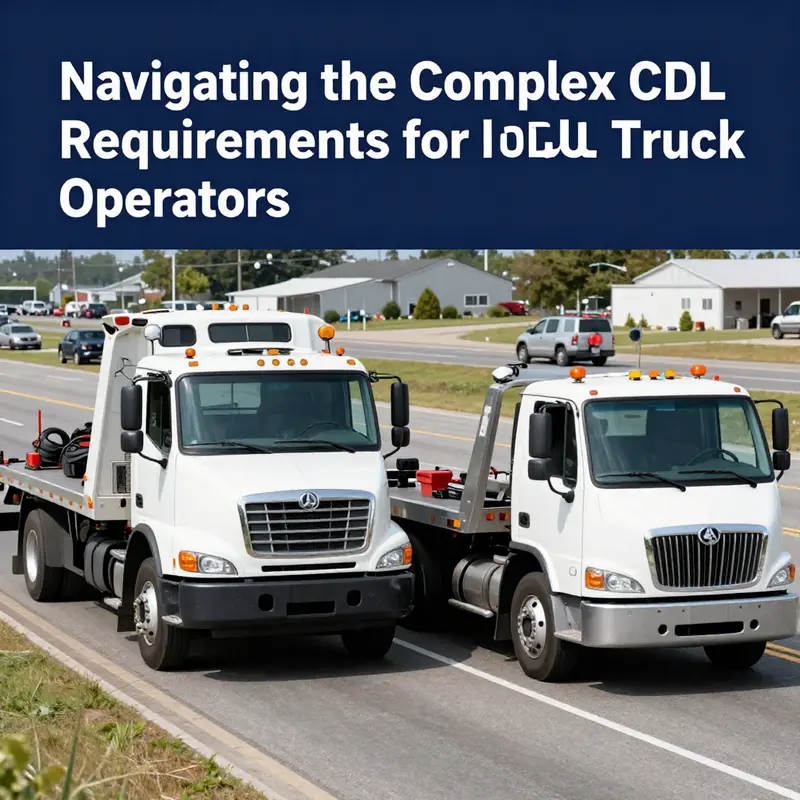
Tow trucks sit at a critical intersection of service and regulation. The rules that govern their operation hinge on weight—the gross vehicle weight rating, or GVWR. The federal threshold most often used is 26,000 pounds. If a tow truck’s GVWR exceeds 26,000 pounds, the operator generally needs a Commercial Driver’s License (CDL). This threshold reflects the vehicle’s designed capacity, not the payload it carries on any given job.
Tow trucks vary in design, including flatbeds, wheel-lift wreckers, hydraulic carriers, and crane-equipped units. When GVWR crosses the threshold, FMCSA rules typically require at least a Class B CDL, and certain configurations may require Class A. The exact license class depends on the vehicle’s configuration and whether the tow body is part of a heavier chassis or a standalone unit. Heavier tow trucks require trained operators who can safely steer, brake, and back up large vehicles.
Beyond the base rule, other factors can trigger CDL requirements. Hazardous materials endorsements may be needed if the vehicle hauls hazardous materials. If the vehicle is designed to carry more than 15 passengers, the driver may need additional endorsements. While many tow operations do not carry passengers, some service fleets may, on occasion, transport crew members, which requires attention to passenger-vehicle rules.
Key practice is to check the data plate on the driver’s side door jamb for the GVWR. If the plate shows 26,001 pounds or more, the vehicle is CDL territory; the licensing class depends on configuration. If below the threshold, a non-CDL approach may apply, but states can have stricter rules depending on use, so verify local policies.
Compliance is ongoing: keep GVWR up to date, monitor federal and state changes, and align training with the regulatory landscape. FMCSA provides guidance on vehicle weight and dimension requirements; consult resources in the trucking and driving sections when assessing licensing needs.
For fleets with heavier assets, recruiting CDL-licensed drivers becomes important, and training should cover weight distribution, braking systems, maneuvering large vehicles, and safe load handling. The cost is real, but the safety and liability benefits are meaningful.
As rules evolve, stay current with federal guidance and state implementations. Licensing and documentation matter too: ensure workers have the right to work and residency where required, and keep paperwork in order.
If you operate a mixed fleet, establish clear policies for who can drive which vehicle types and under what conditions, aligned with regulatory compliance and public safety. Finally, for those seeking a broader perspective, regulatory standards and industry best practices help shape safer, more reliable towing operations.
The Legal Road to Tow Trucks: Navigating Weight Thresholds, CDL Classes, and Compliance
Is a CDL required to drive a tow truck? The answer depends on weight, configuration, and cargo. In the United States, many heavy tow trucks and towed loads fall under CDL requirements when the GVWR is 26,001 pounds or more, or when a towed vehicle exceeds 10,000 pounds. This chapter explains how weight-based thresholds determine the CDL class (Class A for combinations over the thresholds; Class B for heavy single vehicles) and how endorsements such as Hazardous Materials or Double/Triple Trailers can apply to tow operations. It also outlines the state-by-state process to obtain a CDL, including age, medical certification, knowledge and skills testing, and licensing fees. The consequences of non-compliance—fines, license suspensions, and potential penalties—are discussed, along with the broader policy context and ongoing regulatory updates. Finally, the chapter highlights practical steps for operators and fleets: identify the needed class and endorsements based on your typical loads, plan training and medical exams, and stay current with federal and state requirements. For current rules, consult federal resources, such as the DOT, and your state licensing authority.
The CDL Equation for Tow Trucks: Weigh, Roles, and Regulators in a Shifting Landscape
The question of whether a CDL is needed to drive a tow truck sits at the intersection of vehicle weight, purpose, and the evolving patchwork of federal and state rules. It is not simply a matter of a single number on a placard or a single class designation. Instead, it is a dynamic equation shaped by the Gross Vehicle Weight Rating of the tow truck, how it is used, and the broader regulatory environment that governs commercial driving in the United States. To understand what this means in practice, a closer look at the weight thresholds, the different CDL classifications, and the emerging regulatory currents is necessary. At the core is a straightforward premise: many tow trucks that perform heavy duty recovery or road service exceed the 26,001 pound GVWR threshold that commonly triggers the need for a CDL. Yet the specifics matter just as much as the number. A light to medium duty wrecker, with a GVWR under the 26k line and primarily towing passenger vehicles, can sometimes operate with a standard non CDL license, depending on jurisdiction. But when the vehicle itself is heavy, or when it is designed to haul an additional vehicle or heavy load, the CDL becomes not only likely but often required. The distinction is not just about the machine; it is about the risk profile the operator presents on busy highways at 2 a.m. during a breakdown or after a major collision. The weight threshold, while critical, interacts with vehicle configuration and the nature of the load being transported. The rule of thumb for many operators is clear: if the tow truck’s GVWR is 26,001 pounds or more, the operator will usually need a CDL. If the vehicle is used to transport hazardous materials or more than 15 passengers, the CDL requirement expands to cover those special circumstances as well. These guidelines, which originate with the Department of Transportation, are designed to ensure that the driver has the training and the operational discipline to manage a large, dynamic vehicle in complex traffic situations. The practical realities, however, are nuanced. Tow trucks come in a spectrum, from compact wheel-lift units to heavy wreckers built to handle the largest jobs. The most capable are commonly deployed in scenes that demand precision under pressure: securing a vehicle, stabilizing a load, and coordinating with law enforcement, tow supervisors, and roadside assistance teams. In many fleets, a single heavy-duty wrecker can easily surpass the 26k GVWR mark, pushing the operator into CDL territory. In those cases, the class of CDL—whether Class B for single, heavy vehicles or Class A for combination configurations that involve towed units—depends on the exact setup. A tow truck that tows another heavy vehicle over 10,000 pounds introduces an additional layer of regulatory consideration under Class A. Conversely, if the tow truck itself exceeds the weight threshold but tows light vehicles consistently, Class B might be the necessary credential. The nuance is not merely academic. It governs who can legally operate the vehicle on interstates, who is eligible for certain professional assignments, and who bears the responsibility when a wheel-lift shift goes wrong. The regulatory landscape does not stop at the weight. It also flags the transport of hazardous materials and passenger transport as situations that demand heightened credentials. The DOT and its federal partners view these use cases as high hazard, requiring additional training and verification to safeguard the driver, other motorists, and the people who depend on tow services during emergencies. In practical terms, this means a driver seeking to operate a tow truck for heavy-duty work should anticipate a CDL path that aligns with the vehicle’s design and the mission it is designed to perform. From there, the conversation extends into the broader ecosystem of compliance, which includes medical qualifications, knowledge of vehicle inspection standards, and the ability to demonstrate the capacity to perform pre-trip, on-route, and post-incident procedures consistent with federal and state expectations. The regulatory framework is not static. It evolves with the fleet’s needs, the changing face of the industry, and the legitimate concerns that accompany operations on crowded roadways. An important update that has added a new dimension to CDL eligibility concerns the immigration status of applicants. As of September 2025, the Department of Transportation issued an emergency rule prohibiting individuals without legal immigration status from obtaining a CDL. This rule emphasizes the importance of lawful documentation in pursuing CDL credentials and underscores the broader administrative realities behind who can access these critical licenses. For applicants, this means the path to a CDL must be navigated with attention to legal status, in addition to the standard checks of driving history, medical certification, and knowledge and skills testing. The requirement for valid documentation—whether it will be a standard visa or other paperwork that confirms lawful presence in the United States—serves as a gatekeeper to the CDL process. While the rule is framed around immigration status, it is also a reminder that the CDL is a credential tied to compliance and accountability across many domains, from safety to labor regulation. The practical implication for tow operators is that the permit to drive a heavy tow vehicle is not a given anymore; it is earned through a combination of weight classification, intended use, and lawful status. The policy underscores a broader point about professional driving in the United States: the credential is a signal of competence, but it is also a signal of the operator’s capacity to meet the legal and procedural requirements that keep everyone on the road safer. For the most up-to-date information, consult official sources such as the U.S. Department of Transportation’s website. The rules and interpretations may vary with state and local jurisdictions, and updates can occur in response to new safety data, evolving truck technology, and shifts in enforcement priorities. The conversation around CDL requirements for tow trucks is not purely about the letter of the law but about how the law translates into safer roads, more reliable roadside responses, and better coordination during emergencies. In tandem with the weight and material risks, technology is reshaping the CDL landscape. Tow operators increasingly find themselves navigating a suite of advanced tools, from load stabilization systems to real-time performance monitoring and enhanced communication platforms. These technologies aim to reduce human error and speed response times in critical incidents. They also open the door to new kinds of oversight and training. Telematics, for instance, can track driver behavior and vehicle maintenance in real time, potentially informing future CDL requirements or supplemental certifications. The interplay between technology and regulation is not simply about adding new hoops to jump through. It is about building a data-informed safety culture where every tow operation can be documented, reviewed, and improved. This shift raises foundational questions about how training will adapt. Federal and state agencies have already begun exploring updates to CDL training to emphasize hazard recognition, secure towing techniques, and emergency vehicle handling. The National Highway Traffic Safety Administration has initiated pilot programs to assess the impact of such training on accident reduction and response effectiveness. If these pilots show positive results, they could catalyze broader changes in driver qualification standards, training curriculums, and possibly even periodic recertification focused on evolving tow operations. The emergence of electric and hybrid tow trucks introduces another layer of consideration. Powertrain systems, regenerative braking nuances, and battery management dynamics can affect how a tow truck behaves, particularly during heavy pulls, tight maneuvers, or incident scene operations. It is plausible that regulatory frameworks will evolve to recognize these distinct operational realities, potentially creating additional classifications or certifications to ensure drivers understand the characteristics of electric or hybrid tow vehicles. In practice, the shift toward standardized safety practices across jurisdictions is likely to become more pronounced as tow operations become more professionalized and as emergency response demanda grows. The value of standardization becomes clear when one considers the spectrum of scenarios a tow operator may face: a highway crash on a windy night, a stranded vehicle in snowy conditions, or a congested urban corridor requiring rapid, precise positioning of a recovered vehicle. In each case, the operator’s ability to perform a secure tow, protect bystanders, and coordinate with public safety is shaped by training, equipment, and regulatory clarity. The broader implications of these changes touch not only drivers but fleets, customers, and the communities that rely on tow services. Fleets are increasingly embracing formalized standards for equipment, maintenance, and crew readiness. A strong emphasis on emergency readiness translates into better planning, more reliable incident response, and a higher degree of accountability. This trend toward standardization and preparedness is reflected in ongoing industry discussions, including resources that explore fleet standardization and emergency readiness. For a deeper look at how these principles are applied in the field, see the resource focused specifically on fleet standardization and emergency readiness. fleet standardization and emergency readiness. These conversations matter because they directly influence who is eligible to drive what kind of tow vehicle, how quickly a crew can mobilize, and how well a team can collaborate with police, highway patrol, or dispatch during a crisis. The evolving regulatory regime also invites operators to think beyond licensing to encompass comprehensive safety culture. A driver who knows how to secure a hazardous load, or who can perform a precise, safe winching operation, contributes to a chain of safeguards that begins with proper credentialing but extends into ongoing training, maintenance discipline, and adherence to standard operating procedures. As the landscape shifts, a driver’s career path in tow operations may look different than it did a decade ago. The CDL remains a gatekeeper of sorts, but it is also a signal of readiness to work in a high-stakes environment. For towing professionals, the challenge is to navigate the weight thresholds, meet the licensing and documentation requirements, stay abreast of regulatory updates, and continuously cultivate the technical skills that keep roads safer and assistance moving quickly. The trajectory now points toward a more integrated approach to qualification, one that recognizes the interdependence of licensing, training, technology, and operational standards. The result is not only compliance on paper but a tangible improvement in how tow services respond when every minute counts. For those exploring the policy and practice, it is worth noting that federal guidance continues to evolve and that state implementations often reflect local traffic patterns, incident histories, and the readiness of emergency services to coordinate with tow operators. The best path forward for prospective drivers is to assume a conservative approach: plan for the CDL if your vehicle design and use case place you within the weight or configuration boundaries that typically demand it, and prepare for the likelihood of additional training or documentation as part of a forward-looking credentialing process. The future of tow truck operations will likely hinge on a combination of precise weight classifications, disciplined training, and transparent, technology-enabled safety practices. In this sense, the CDL is both a credential and a compass—pointing toward safer practices, more reliable service, and a regulatory environment that seeks to align license verification with real-world driving risk. For readers seeking further context, the FMCSA maintains a comprehensive hub of rules, proposed changes, and compliance guidelines that can help translate these broad trends into concrete steps toward certification and ongoing professional development. External resource: https://www.fmcsa.dot.gov
Final thoughts
Navigating the CDL requirements for driving tow trucks is essential for ensuring safe and legal towing operations. As we’ve explored, factors like vehicle weight and legal documentation play a crucial role in obtaining the right credentials. Whether you are a local driver needing towing assistance, an auto repair shop owner, or a property manager, staying informed about these regulations not only enhances your operations but also contributes positively to safety and compliance within the industry. By understanding the current landscape and anticipating future changes, all stakeholders can better prepare themselves for a successful towing experience.