

Navigating vehicle troubles can be a daunting experience, making the role of a tow truck driver critical for many drivers and car owners. Yet, as we find ourselves dealing with stress and uncertainty, the question arises: should you tip a tow truck driver? This piece delves into the intricacies of tipping in the towing industry, examining varying service standards and the exceptional situations that may merit extra appreciation. Throughout the discussion, we will explore the guidelines that govern tipping, how local customs influence expectations, and what situational factors—like the driver’s communication and efforts—should weigh into your decision. By the end, you’ll feel equipped to make an informed choice about whether to express gratitude to that driver who just came to your rescue.
Beyond the Fee: Navigating Tow Truck Tipping Etiquette in Roadside Emergencies
A tow is rarely a quiet, simple transaction. It arrives as part of a shaken, unsettled moment on the road, when a car won’t start, a chain of events has stalled a trip, or the weather turns a routine drive into a scramble for safety. In those moments, the question about tipping can feel like a side street you didn’t intend to turn onto. Do you tip a tow truck driver, and if so, how much, and under what conditions? The straightforward answer is that tipping is not expected in most cases, because tow services are generally priced to cover the labor, equipment, and risk involved. The fee you see often reflects distance, vehicle type, urgency, and the company’s standard rates rather than a gratuity for a job well done. Yet the nuance lies in the service itself and the human connection that happens in the middle of a crisis. This chapter invites you into that nuance with practical guidance, framed by the realities of budgeting, regional variation, and the realities of roadside emergencies. It is not a universal checklist but a mindful approach to showing appreciation when the circumstances warrant it, without creating expectations that could complicate a stressful situation. In the end, tipping, like many acts of kindness, should be a voluntary acknowledgment of exceptional effort, not a forced obligation.
The prevailing guidance across reputable sources aligns with a cautious posture toward tipping tow truck drivers. The services involved are commonly viewed as a commercial or emergency service, and the fee structure is designed to compensate for the work performed in often difficult conditions. Professional drivers operate under company policies that set rates based on distance, vehicle type, urgency, and operational costs, and those rates tend to be non negotiable once the service is dispatched. In practical terms, that means most drivers are not counting on tips as part of their income, and tipping remains optional rather than expected. This framing matters, because it helps maintain a fair dynamic in which the driver is paid for the service rendered, while still leaving room for occasional expressions of gratitude when the service truly shines.
That said, there are occasions when a tip can feel appropriate. When a driver goes above and beyond in ways that materially improve the outcome or the experience, a small tip can convey appreciation without pressuring the driver or the company. Consider a moment when the situation is especially challenging. If a driver navigates a narrow alley, lifts a vehicle onto a flatbed with precision in bad weather, or provides clear, calming communication during a tense moment, those efforts may justify a token gesture. Exceptional customer service—like offering practical advice on next steps after the tow, helping with paperwork, or staying patient and supportive while you gather information or contact a family member—has a way of transforming a stressful episode into a managed, humane experience. In such cases, a tip can signal recognition without implying that the driver bears sole responsibility for the outcome.
Regional norms also influence tipping behavior. Local customs can vary, and there are places where tipping within service industries is more common, especially where family owned or smaller, community-oriented operations are the norm. In those regions, a tip may be viewed as a courteous gesture rather than an unusual exception. The variability across geography means that a one size fits all rule does not exist, and it is reasonable to consult local guidelines or simply ask the company if tipping is customary in your area. The important principle remains the same: tipping is not mandatory, and a driver should not feel pressured or expected to receive gratuity as a condition of good service. If in doubt, a direct check with the towing company can provide clarity on their policy and any company-wide stance on tips.
When formulating a tipping decision, a practical rule of thumb emerges from the consolidating threads of experience, policy, and humane consideration. If the service is routine and the fee already covers labor and risk, skip the tip. If the driver devotes extra time to your situation, explains options clearly, or helps you manage a difficult scenario with patience and skill, a small tip may feel appropriate. A common range to consider—when a tip is appropriate—rests between five and twenty dollars. The amount should reflect the level of effort and the conditions under which the tow took place. For a straightforward tow on a clear day, a tip might not be necessary. For a complex recovery in foul weather or in a tight space, a tip toward the higher end of the range can convey appreciation for the extra work and the hazard involved. The choice ultimately expresses gratitude for service quality rather than a contractual obligation.
If you decide to tip, the most practical approach is to give cash directly to the driver at the end of the service, providing it discreetly and with a simple thank you. Cash tips avoid accounting complications and can be delivered with a brief, sincere note of appreciation written on a receipt or a friendly word spoken in the moment. The manner of giving the tip matters as much as the tip itself. A brief expression of thanks can reinforce the positive impact of the driver’s actions without creating awkwardness or pressure to perform beyond standard expectations on future visits. If the situation requires digital payment for safety or logistical reasons, you can discuss the possibility of a tip in that context, but be mindful that some drivers or their employers may prefer cash. In any case, accept the driver’s lead on this, do not insist, and do not imply that the tip is a bargaining chip for better or faster service.
There is another, often overlooked, dimension to tipping: how to handle the conversation during a tense event. Roadside crises are rarely graceful, and the driver’s tone and approach can set the emotional temperature for everyone involved. Clear, respectful communication reduces stress and can reduce the perceived length of the tow or the risk associated with the operation. If the driver communicates well, explains the process step by step, and responds to questions with patience, those behaviors alone can merit recognition beyond a cash gesture. An appropriate response is a concise acknowledgment of the driver’s help, followed by a decision about tipping that aligns with your own assessment of service quality and your ability to tip. It is not necessary to validate the tip with a price tag or a detailed account of the driver’s performance. A simple, genuine word of thanks paired with a thoughtful amount, if you choose to give one, keeps the exchange respectful and straightforward.
The possibility that a company might prohibit tipping is another reality to consider. Some tow operators publish policies that either discourage or explicitly prohibit tips, arguing that the quoted rates should cover all services rendered. If a driver or company communicates such a policy, you should respect it. It is perfectly acceptable to decline tipping in that context and to express appreciation for the service in non-monetary ways, such as acknowledging the driver’s professionalism, providing constructive feedback to the company, or sharing a positive word with peers or online reviews. When you are unsure of the policy, the simplest and most respectful approach is to ask at the outset, before the tow begins, or to verify after the service is completed. In the chain of decision making, the policy should guide your actions, followed by your own appraisal of the service quality and your capacity to tip.
A practical, real-world approach to tipping emerges when you balance several factors: the complexity of the job, the weather and road conditions, the driver’s communication, and the emotional state you bring to the encounter. If you are dealing with an emergency that is under control thanks to the driver’s skill, a small tip is a tangible way to acknowledge that effort. If the circumstances are routine and the driver completes the job efficiently with no additional help beyond what is expected, tipping is less justified. The aim is to preserve the integrity of the service relationship while honoring moments when the driver truly went beyond the call of duty. In this sense, tipping serves as a signal of gratitude rather than a payment for a service that should already be complete and adequate.
Consider the broader context in which tips exist. The economic reality for towing professionals can be difficult. They often operate in demanding environments, bear exposure to hazards, and face irregular hours, including nights and weekends. Acknowledging their work through a tip can feel meaningful to a person who has given time, effort, and care when the rest of the scene is chaotic. Yet the same reality underscores the central message: tipping is not a requirement, and the higher priority is to ensure safety, fair pricing, and clear communication. For readers seeking more practical considerations and real-life examples, the Santa Maria Tow Truck blog offers community perspectives and discussion that can illuminate how different households approach tipping in their locale. Santa Maria Tow Truck blog
As you move through the decision about tipping, keep in mind that the guiding principle should be respect for the driver, the company, and the situation at hand. If you decide not to tip, you can still show appreciation by writing a brief, courteous note to the company or by giving a positive online review that highlights the driver’s communication, timeliness, or problem-solving. If you decide to tip, do so in a way that is proportionate to the complexity and stress of the job, and ensure your gesture does not place an unfair burden on a driver who may be working under company policies or local norms you may not be aware of. The overarching aim is to acknowledge good service without turning a single encounter into a standard you expect every time you call for a tow.
In the end, the question of whether to tip a tow truck driver is less about a fixed rule and more about a thoughtful, situation-specific judgment. The discussion begins with a simple premise: tipping is not required, and most drivers do not count on tips as part of their income. It matures into a more nuanced understanding of when a tip might be appropriate and how to deliver one in a way that respects the driver, the company, and the emotional load of the moment. The choices you make should be guided by the quality of service, the conditions under which the tow occurred, and your own ability to express gratitude in a manner that preserves the dignity of all involved. If you ever need a concise reference when you are unsure what to do, a quick check with the local operator or a look at the company policy is a practical step that keeps the interaction straightforward and humane. And if you want a resource that frames these considerations within a wider discussion of roadside assistance, the referenced external source below provides authoritative context you can trust.
External resource: https://www.aaa.com
Tow Truck Etiquette: Reading Service Quality and the Right Moment to Tip
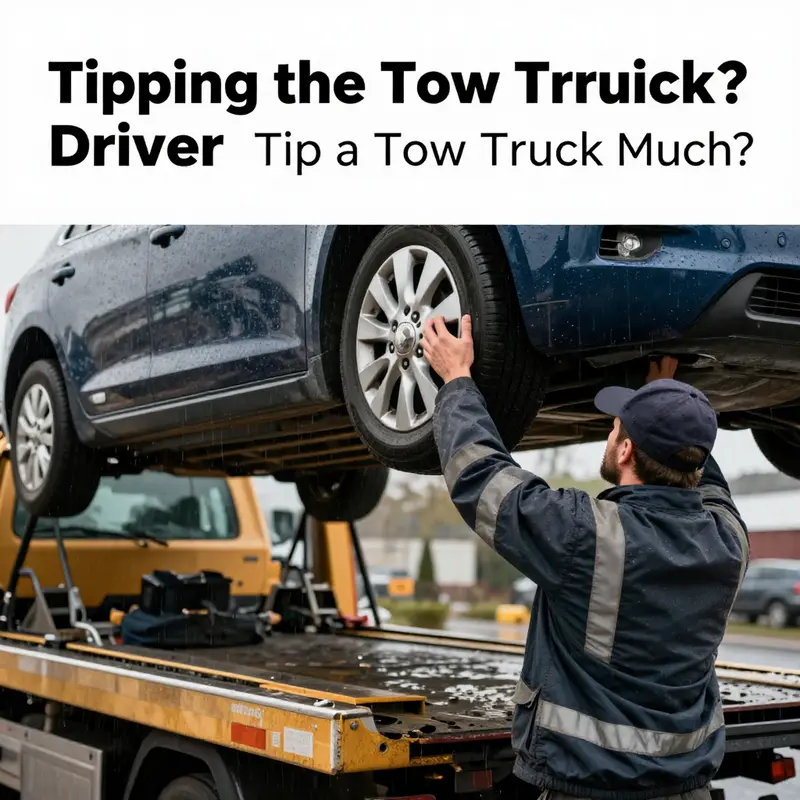
A roadside scene unfolds in two acts: the moment you realize you are stranded, and the moment the tow truck arrives to help. The first sensation is stress, with traffic noise, dashboard warnings, and the sense that time is running out. The second moment comes when a professional arrives with tools, expertise, and a plan. In the space between alarm and resolution, etiquette matters as much as the mechanics. Tipping a tow truck driver sits at the intersection of generosity and judgment, signaling appreciation without implying obligation.
The general rule in the United States is that tipping is not expected, since the fee is meant to cover labor, equipment, and vehicle operation. This is not a service where gratuities are routinely part of compensation the way they are for waitstaff or baristas. Yet service is rarely uniform, and the line between routine and exceptional can blur. A driver who dispatches quickly, communicates clearly in a tense moment, handles a vehicle with care, or goes out of their way to ease anxiety can deserve recognition beyond the stated fee. In those cases, a small tip can feel like a meaningful acknowledgment when words may fall short.
The decision to tip, like calling for help in the first place, rests on context. A straightforward tow that simply requires moving a vehicle a short distance to a safe location may not warrant tipping beyond a courteous expression of gratitude. But if the situation is more demanding, such as driving in bad weather, navigating a tight alley, winching a car onto a flatbed, or recovering a vehicle from an awkward angle, the driver’s extra effort can justify a tip at the higher end of the range. A practical guideline many people follow is a range, not a rule: consider tipping five to twenty dollars, with the upper end reserved for unusually challenging, dangerous, or time-consuming work. This mirrors broader service-industry practices that recognize effort, care, and reliability as factors that deserve tangible thanks. It’s important to understand that tipping should never be used to pressure a driver into offering a better price, and it should never compensate for unsafe conditions, shoddy work, or neglect of duty.
The right moment to tip is after the service, not before. The tip is a response to the quality of the interaction and the execution of the job, not a payment to unlock a service that should have been delivered in the first place. A tip given in cash at the scene can be convenient, but it’s equally acceptable to offer a tip after you have seen the final bill and confirmed the quoted price. If you are unsure about tipping norms in your area, or you want to avoid any awkwardness, a quick call to the dispatch center or the answering service before the driver arrives can clarify expectations. In some towns tipping is more customary than others, and company policies may vary. When in doubt, ask politely whether tipping is customary in your locale. This small step can prevent discomfort and ensure that gratitude, not miscommunication, drives the moment.
A critical piece of the tipping decision is transparency about cost. If the tow fee has already been clearly quoted and agreed upon, a tip becomes a separate gesture of appreciation rather than a hidden surcharge to cover the bill. If the fee is uncertain or if the driver quotes a price after a diagnostic assessment, you might want to consider whether the service exceeded what you expected given that quote. It is reasonable to reward a driver who provides reliable information, calm communication, and a sense of control in a chaotic moment. A driver who explains the process, outlines what will be done, and sets realistic expectations can reduce a passenger’s anxiety. In difficult weather, at odd hours, or in confined spaces, this composure paired with careful handling of the vehicle often justifies a thoughtful tip. This is not payment for the act of towing alone but for the professionalism that makes a stressful experience safer and more manageable.
In the spirit of prudent generosity, tipping can acknowledge the human element of the service. A tow truck driver often navigates not just physical obstacles but emotional ones as well: fear for the vehicle, concern about accessibility, and the urgency of returning to a routine. A tactful tip conveys more than money; it communicates trust in the driver’s skill and appreciation for their restraint and courtesy under pressure. When the driver communicates clearly about what they can safely do, how long it might take, and what you should expect next, that clarity is a service in itself. The value of that communication should not be underestimated. In situations where the driver goes beyond the basics, offering practical tips for safe handling, providing useful advice about next steps, or helping you think through insurance considerations, the reward is more than a momentary gesture. It becomes a practical acknowledgment that someone helped restore a sense of control amid disruption.
The practical mechanics of tipping also matter. If you choose to tip, cash is the most direct and universally appreciated method, though many drivers will accept a tip via electronic payment if offered. Present the tip in a respectful, discreet manner, handing it to the driver with a brief expression of thanks rather than waving money from a distance or making a display that could put them in a difficult spot with others nearby. A quiet, sincere thank you often goes further than a large sum in a crowded or tense environment. Some people even choose to combine a tangible tip with a written note of appreciation or a positive review online. A few sentences of gratitude can reinforce the positive impact of the driver’s professionalism and leave a lasting impression that benefits the company’s reputation as well. If you have a moment to spare, consider sharing how the driver’s approach helped you through a difficult moment. This kind of feedback is invaluable for service providers who rely on word of mouth and client testimonials to sustain their business.
From a broader perspective, tipping practices in the tow industry intersect with standards across the service sector. The emphasis in many professional contexts is on performance and outcomes rather than gratuities as a baseline expectation. A driver who demonstrates efficiency, safety, and empathy may deserve a tip as a token of appreciation, but tipping remains a voluntary gesture rather than a contractual obligation. The customer feedback dynamic in a roadside incident often hinges on composure as much as on horsepower or a sturdy chain. When a driver answers questions, explains options, and keeps you informed while executing precise maneuvers, you are experiencing service quality in action. Those moments of reassurance can turn an otherwise fraught situation into something more manageable, even if the overall cost remains the primary financial consideration. In those moments, tipping becomes a personal decision tied to the perceived value of the service, not a universal rule that governs every call.
To recognize how this kind of service quality fits into larger industry practices, consider the role of a well prepared fleet in emergency response. In times of crisis, the efficiency, reliability, and coordination of a towing fleet can make a tangible difference in outcomes. The driver you encounter on the shoulder or in a parking lot is part of a larger system whose readiness and standards shape the entire experience. For those who want to learn more about how fleets structure their emergency readiness and standardize procedures, resources like Fleets Emergency Response offer a window into this broader landscape. This is not a commercial plug, but a reminder that exceptional service is rarely a solitary achievement; it is the product of training, coordination, and a culture that values safe, efficient outcomes for customers in distress.
While tipping is optional, and while the base price covers the essential elements of labor and equipment, the decision to tip should reflect the quality of service you received and the circumstances surrounding the tow. If speed was essential due to a hazard, if the driver navigated treacherous conditions with care, or if they offered guidance that helped you avoid further risk, a tip at the higher end of the range can be a meaningful way to acknowledge that effort. If the situation was ordinary and the driver performed as expected, a modest tip or even a simple thank you note can be a fitting measure of gratitude. Even when you do not tip, you can still convey appreciation through a straightforward compliment to the driver, a courteous word to the dispatcher, or a posted review that highlights what went well. In all cases, it is wise to verify that you understand the charges and that you are comfortable with the total before the driver leaves. When this clarity exists, the tipping decision can feel like a genuine continuation of a respectful interaction rather than an awkward add-on to a stressful event.
Finally, a word on boundaries and safety. The urgency of a tow call should never be exploited as leverage for extra tips. The driver’s primary responsibility is to perform the task safely and professionally. If a driver requests a tip as part of the service or attempts to pressure you into tipping more than you are comfortable with, that should raise a flag and prompt you to seek assistance from the company or client support channels. Likewise, never feel compelled to tip more than you are able; your financial capacity and personal boundaries matter. If you are dealing with a situation where tipping feels inappropriate or if you are uncertain about the etiquette, returning to the basics—clear pricing, transparent communication, and respectful conduct—will guide you toward a fair and compassionate response. In the end, tipping is one small, human gesture within a larger framework of professional service. It rewards the elements that elevate a routine call into a constructive and somewhat comforting experience amid disruption.
In sum, tipping a tow truck driver is not a fixed rule but a flexible courtesy guided by service quality, the complexity of the task, and the stress level of the moment. The driver is paid to perform a particular service, yet the human dimension of that service—calm communication, careful handling of your vehicle, and the ability to restore a sense of safety—can merit a gesture of appreciation. Keep your expectations aligned with the realities of the work: pricing is negotiated in advance, safety comes first, and gratitude is best expressed in a respectful, timely manner. If you decide to tip, do so thoughtfully and discreetly, and consider pairing the gesture with feedback that helps the company recognize employees who exemplify best practices under pressure. If you are still unsure about tipping norms in your area, a quick inquiry with the local towing company can save you from miscommunication or discomfort. In this sense, tipping becomes less about a ritual and more about a mindful expression of gratitude for help received during a moment of need.
External context can illuminate the boundaries of tipping within the broader service environment. While the exact customs may vary by region, the principle remains consistent: tipping is a voluntary acknowledgment of outstanding effort, not a payment for essential service. For a wider frame of reference on tipping standards across service industries, consult official guidance from the U.S. Department of Labor: https://www.dol.gov/agencies/whd. This resource offers a broad view of how tipping is perceived and regulated in contexts that include restaurant service, hospitality, and other customer facing roles. The key takeaway is to approach tipping as a discretionary gesture, one that honors genuine care and competence while respecting the practicalities of fair pricing, clear communication, and personal boundaries. When you keep those principles in mind, tipping a tow truck driver becomes less about a rule and more about a mindful expression of gratitude for help received during a moment of need.
Tipping Tow Trucks: Reading Local Customs, Recognizing Exceptional Service, and Respecting the Moment
When a tow truck arrives, the scene often centers on urgency, confusion, and relief all at once. A vehicle is disabled, a street is clogged, or a driver is stranded in a weather-churned stretch of road. In those moments, tipping can feel like a small gesture that acknowledges the driver’s skill, courage, and the emotional weight of the situation. The question—do you tip a tow truck driver?—has no one-size-fits-all answer. It rests instead on a blend of local custom, the specific service provided, and the driver’s conduct in the moment. What unfolds is less a rigid rulebook and more a practical ethic: tip if the service goes beyond what is expected, tip modestly if the circumstances demand extra effort, and remember that tipping is never an obligation, but a possibility to express appreciation when it feels right. In the broader arc of service tipping, tow operators occupy a nuanced space. They perform work that is already priced into a fee structure, but they also stand between a person in distress and a sense of resolution. A driver who arrives quickly, explains options calmly, or assists with a tense transition can transform a chaotic hour into something that feels more manageable. That is where a tip, framed as a token of gratitude, becomes meaningful rather than mandated.
The practical guidelines people often cite—roughly five to twenty dollars—capture a spectrum of scenarios without prescribing a rigid amount. Five dollars might be appropriate for a straightforward jump-start in calm conditions, while twenty dollars may be fitting after a complex winching onto a flatbed under rain, ice, or heavy traffic. But even those numbers are suggestions, not rules. The most important qualifiers are service quality and local norms. Tipping on the spot communicates appreciation without complicating payment later. It is not about buying better treatment or altering a contract; it is an acknowledgment that someone acted with care under pressure. In places where tipping culture is less common, some drivers may genuinely appreciate a visible sign of thanks, while others may prefer that you simply express your gratitude verbally and leave a positive review for the company or driver. The nuance matters, and readers should be mindful of the local social climate.
Regional variation often plays a decisive role in deciding whether to tip and how much. In some parts of the country, people regularly tip service professionals across industries as a reflection of broad cultural habits. In others, tipping is reserved for exceptional circumstances and felt more as a courtesy than a customary expectation. If you are uncertain, a quick, respectful check can save awkwardness. A phone call to the local towing company or a glance at community etiquette guides can yield clearer guidance for that area. And when in doubt, err on the side of generosity only to the extent that you feel comfortable and that the service warrants it. The goal is to honor the driver’s effort, not to press against their company’s official policy or your own budget constraints. This is where the tension between policy and practice becomes most visible. Many tow operators are paid by the hour or by the job, with tipping not baked into the base rate. A tip, then, becomes a voluntary recognition rather than a required fee, a badge of appreciation that acknowledges hard work, not a penalty for the company to avoid paying better wages.
From a practical standpoint, consider the context of the tow itself. If a driver arrives promptly to an emergency scene—the clock is ticking, the traffic is dense, and the driver still manages to secure the vehicle with professionalism and clear safety guidance—that is a moment that often deserves a gesture beyond the standard service. If the tow involves a vehicle onto a flatbed or into a difficult alignment, and the driver handles it with skill and a calm, methodical approach, a higher tip can be justified. Weather can also tilt the scale. A frosty night, a rain-slicked street, or a remote roadside situation amplifies the driver’s challenge and can justify a tip at the upper end of the range. Conversely, if the service feels routine, safe, and uneventful—no extra miles, no complex maneuvering, no additional guidance provided—the decision to tip may lean toward a modest token or none at all. The underlying principle remains straightforward: tip as a show of appreciation for notable effort or service that exceeds ordinary expectations.
The question of company policy deserves careful attention. Most towing firms do not factor tips into their base rates, and drivers generally rely on their hourly wages or flat fees. This means tipping rests on your discretion and your judgment of the interaction experienced. Some drivers are employed by firms that discourage tips, or whose policies redirect gratuities toward the company rather than the individual driver. Others welcome cash tips and value the personal acknowledgment that tips convey. When possible, you can clarify politely at the outset whether tipping is appropriate in that location or with that company. If a driver provides a particularly memorable level of care—clear communication, empathetic listening, transparency about options—consider acknowledging that care with a tip, but without pressuring the driver or creating an awkward moment if a tip is declined or if the policy suggests tipping is not expected. The most constructive path is to treat tipping as optional rather than mandatory, a way to honor service rather than a test of the driver’s willingness to perform better for the sake of gratitude alone.
Local customs, too, shape tipping expectations in essential ways. In some communities, a tip is viewed as a simple token of appreciation that accompanies any service provided under stressful circumstances. In others, a tip may be rare or even viewed as unnecessary. Because the landscape shifts by town, county, and even neighborhood, a practical approach is to tap into nearby conversations—talk to neighbors, check regional etiquette guides, or follow local forums where people discuss everyday courtesy. If you want to ground your decision in a tangible local signal, consult a local resource or the towing company’s own guidance. An easy starting point is to explore a local industry blog that captures regional practices and recent shifts in tipping culture. For readers seeking a concrete local resource and a sense of how this plays out day to day, consider visiting the Santa Maria Tow Truck Blog, which offers insights into the local towing scene and service norms. Santa Maria Tow Truck Blog.
Even with a sense of local practice, there are other strategies to show appreciation that do not hinge on tipping. A sincere thank-you, a brief note about the driver’s professionalism, or a positive online review can amplify the good work without adding financial pressure. If the driver has gone above and beyond, offering guidance about where to park, how to handle insurance paperwork, or what to expect in the next steps of the process, a verbal acknowledgment can be just as meaningful as a monetary gratuity. Some people also carry a small, portable token of thanks—an energy bar, a bottle of water, or a handwritten note with a few kind words. These gestures can feel just as personal as cash in a pinch and may be especially appropriate when local tipping norms are ambiguous or if you are traveling and unfamiliar with regional expectations.
The mechanics of giving a tip in the moment deserve practical attention as well. Cash is often preferred because it leaves no ambiguity about the amount and goes directly to the driver who performed the service. If cash isn’t available, some drivers accept tips added to a payment card, but that is less common and can require asking the driver to process a separate tip or to confirm how it will be handled. In many cases, a discreet, respectful approach works best: hand the tip directly to the driver after the service is completed, with a brief expression of thanks and a smile. If a tip is offered at a time when the driver is busy securing the vehicle or guiding you through next steps, a polite note that you’ll leave a tip later or in cash can reduce the potential for awkwardness while still recognizing their effort. The key is to be authentic, respectful, and mindful of the driver’s safety and workload.
What about the moment when the driver declines a tip? This can happen for several reasons: policy restrictions, personal choice, or a preference to avoid any potential misperception about the service. In such cases, a respectful response is to acknowledge the driver’s position with gratitude and, if you wish, to leave a verbal compliment or a positive online review. If you believe the service truly deserved a bigger gesture, you can follow up with a note to the company or a social post that highlights the driver’s professional conduct and the helpful information they offered. The broader takeaway is that tipping should never be perceived as coercive or as a test of loyalty; it is a voluntary act of appreciation where appropriate.
In the larger arc of a chapter that explores tipping across services, tow truck work sits at an intersection of emergency response, professional skill, and personal support in stressful times. The decision to tip is influenced by how urgently help is needed, how well that help is delivered, and how well the driver communicates under pressure. It is also shaped by local norms and company policy, which can confound a blanket rule even as the general practice remains to tip for exceptional service. The chapter that follows will place this discussion in a broader context, drawing connections to how tipping practices vary across service industries and what readers can carry from the tow-truck experience into other everyday encounters. For now, the takeaway is clear: tip when you feel a genuine sense of appreciation for an effort that exceeded ordinary expectations, and do so with discretion, respect, and attention to the local rhythm of generosity.
For readers seeking a quick anchor on regional nuances and practical tips, a local perspective can be instructive. The Santa Maria Tow Truck Blog provides a window into how tipping is interpreted in certain communities and how drivers respond to casual questions about gratuities. Engaging with a local resource can help you calibrate your response to a tow in your area and avoid misreading a driver’s expectations in unfamiliar settings. If you want to learn more about the regional context, you can visit the blog here: Santa Maria Tow Truck Blog.
In closing, the core question—Do you tip a tow truck driver?—yields a nuanced answer. There is no universal obligation, but there is a practical courtesy that can brighten a difficult moment. A tip is most appropriate when the service is marked by speed, clarity, and courtesy, or when the operation is complicated by weather, terrain, or time constraints. It is an expression of human reciprocity in a moment of vulnerability, a small act that can offer reassurance to someone who has just shouldered a heavy responsibility. And while tipping remains optional, it is worth understanding how local norms and company policies shape the gesture. Keeping that context in mind helps readers navigate the moment with confidence, respect, and a sense of what truly constitutes thoughtful appreciation.
External reference for broader context and broader debates on tipping in service industries: https://www.consumerreports.org/tips/should-you-tip-a-tow-truck-driver-1496378117
Tow Truck Etiquette: Reading the Moment, Honoring Extraordinary Service on the Road

A tow arrives in the middle of a tangled mishmash of stress and fatigue, where every decision feels underscored by urgency and the faint hum of distant traffic. The roadside becomes a temporary stage for human interaction, and the question of tipping rises not as a rule but as a moment for judgment about service, safety, and the simple human impulse to acknowledge someone doing a difficult job well. The reality is that tipping a tow truck driver is not a standard expectation across the industry. The driver’s fee is typically fixed by distance, vehicle type, and the scope of the service. Yet in moments when the experience goes beyond the basic maneuver of towing a car from point A to point B, a small gesture of appreciation can feel like a natural extension of courtesy rather than a transactional add-on. In those moments, the decision to tip becomes less about a universal rule and more about reading the situation with honesty and empathy.
To understand when a tip might be appropriate, it helps to anchor the discussion in how these services are priced and delivered. The core fee for tow work covers the essential task: the vehicle is hooked up, transported, and delivered to a chosen destination. The cost components can include the distance traveled, the type of vehicle involved, and any additional services such as unlocking doors, supplying gas, or assisting with paperwork after the tow. The driver’s compensation is built into that fee, and in many regions the paycheck for roadside assistance is calibrated around standard duties rather than a tip-driven wage. This is not to frame tipping as a moral obligation; rather, it is to acknowledge that the service economy around towing operates with different norms than, say, a restaurant where tipping is woven into the wage structure. The distinction matters because it shapes the expectation customers bring to the moment and the way drivers perceive a thank-you that goes beyond the bill.
Yet the same service context that makes tipping optional also creates opportunities for meaningful pockets of goodwill. When a tow driver navigates a tight driveway, slides a vehicle onto a flatbed with precision in blustery weather, or offers calm, clear guidance in the midst of a stressful situation, the value of that extra effort becomes tangible. A driver may stay late due to a delayed arrival window, maneuver through heavy traffic with patience, or take substantial time to explain what is happening, what options are available, and what the next steps might be. These elements—efficiency under pressure, clear communication, and a demeanor that steadies a frightened passenger—do not disappear with the arrival of the bill. They deserve recognition, even if the industry does not universally expect tips as a standard practice.
From a practical standpoint, the most common guideline among drivers and service communities is to view tipping as an optional gesture of appreciation rather than a required supplement. In situations where the weather is hostile, the terrain is unforgiving, or the job demanded a precise, high-skill touch—such as lifting and setting a vehicle onto a flatbed while keeping adjacent property undamaged—a tip at the higher end of a modest range can reflect the extra effort. The literature on tipping suggests a typical range, and in many discussions customers settle on a nominal amount—often starting around a modest five dollars and extending toward ten dollars or more if the service was notably challenging or the driver went out of their way to be helpful. Where the lines blur is in interpreting the difference between excellent customer service and the baseline expectations of a professional who is doing their job. The decisive factor is not the size of the tip but the degree to which the service exceeded what was promised or required by the scenario.
An important nuance is how to calibrate the tip to the specifics of the moment. A tow in bad weather, with the vehicle in a compromising position or requiring a complicated hook-up, justifies careful consideration of a tip that signals appreciation for skill and persistence. If the driver not only completes the tow but also helps navigate insurance questions, offers practical advice about next steps, or provides reassurance during a stressful event, those extra touches can justify a tip toward the higher end of the range. Even when the work itself is straightforward, if the driver demonstrates exceptional courtesy, patience, and professionalism, a tip is a reflective acknowledgment of the customer experience. In other words, tipping becomes a proxy for recognizing the human effort that accompanies a technically demanding service.
In discussing amounts, the conversation should remain grounded in reality and feel organic to the encounter. For many, a tip of five dollars is a polite token when the service is straightforward and the interaction is courteous but routine. If the tow involved more complexity or the driver went above and beyond in handling paperwork, advising on next steps, or calming a tense passenger, a tip toward ten dollars is reasonable. In cases of extreme challenge—late-night arrivals, rough weather, or a demanding lift where the vehicle’s weight and balance require meticulous handling—a tip of twenty dollars, while not expected, can be seen as a meaningful recognition of effort and risk taken on behalf of the customer. The key is that the tip should reflect the level of service received, not the perceived difficulty of the moment alone. And while a higher tip can be appropriate in exceptional circumstances, it remains optional and contingent on the customer’s resources and the driver’s conduct.
Beyond the question of how much to tip, consider the manner in which the gratuity is given. Cash remains the most direct and universally accepted method, placed discreetly in the hand of the driver or left in a known, safe location if the exchange is happening at a distance from the vehicle. A card payment can also include a tip, but some customers worry about the immediacy of the personal touch when tips are processed digitally. In any case, the aim is to avoid creating discomfort or awkward pressure. A calm, respectful approach—something as simple as, “Thank you for your help—this was a stressful situation, and you handled it well”—paired with the tip, reinforces that the gesture is about appreciation, not compensation. If a driver declines a tip, or if tipping feels unusual in a given area, respect that boundary. Expressing gratitude with kind words or a favorable note to the company can still contribute to a sense that the service was valued, even without a monetary gratuity.
The conversation around tipping can also be informed by professional norms within the towing industry and by the realities of compensation structures. The research suggests that tipping is not a standard expectation and that drivers are typically compensated through the service fee itself. However, exceptional service—such as assisting in an emergency, offering practical guidance, or presenting themselves with remarkable courtesy—creates a moment in which a customer’s gesture seems appropriate. In those moments, tipping can function as a social signal that acknowledges effort safely and respectfully. It is also worth noting that some customers choose to tip not only for the immediate service but to recognize the driver’s assistance through challenging circumstances that extend beyond a single call. A driver who stayed past the scheduled end time to ensure a successful tow or who provided clear and calm communication during a crisis may deserve a tangible thank-you that echoes long after the immediate problem is resolved.
The decision to tip, like many etiquette questions, benefits from a bit of practical wisdom. A customer who contemplates tipping might start by considering the three Cs: Complexity, Care, and Communication. If the tow was complex and required careful handling, if the driver exhibited care through patience and safety-conscious behavior, and if the driver communicated options clearly and calmly, then tipping aligns with the value delivered. The customer can also think about the surrounding context: the time of day, the weather, the emotional state of the person needing the tow, and the potential stress the driver faced in performing the service promptly and professionally. These factors help translate a subjective impression of “good service” into a tangible gesture that reinforces positive expectations for both the driver and the company in future encounters.
To connect this discussion with a broader understanding of safety, readiness, and professional standards, consider how standardized practices influence the way drivers perform their duties in high-stress environments. Some resources explore how standardization in heavy-duty rescue operations shapes outcomes, training, and reliability on the road. You can explore related discussions about process standardization and emergency readiness in this context: standardization-in-heavy-duty-rescue-operations. This link points to a framework that emphasizes consistency, safety, and communication in critical roadside scenarios, which in turn underlines why tipping remains a personal choice tied to perceived service quality rather than a universal protocol.
Beyond tipping itself, there are other ways to express appreciation that may feel more comfortable in some circumstances. A sincere word of thanks delivered directly to the driver can carry weight, especially when delivered with a brief acknowledgment of the driver’s skill or diligence. A constructive note to the towing company praising the driver’s professionalism can have a lasting impact on the worker’s morale and on the company’s recognition programs. Sharing a positive experience publicly, when appropriate, can also help steer future customers toward recognizing and rewarding excellent service. If you do choose to tip, it is prudent to deliver it discreetly and respectfully, and to avoid tying the gratuity to any expectation of preferential treatment in the future. The goal is to reward genuine excellence without creating a transactional atmosphere that could compromise safety or comfort for anyone involved.
In contemplating how best to approach this topic within the arc of an article on tipping a tow truck driver, it is useful to acknowledge regional variations and company policies. Local customs may differ, and some companies may have guidelines about accepting tips or may encourage alternative forms of feedback instead. When in doubt, a quick, courteous inquiry—before or after the service—can clarify what is customary in a given area. This practical step helps align personal expectations with industry norms and reduces the risk of awkward interactions on the roadside. In short, tipping should feel like a natural, well-considered choice made in the moment, anchored in the specifics of the service received rather than the generalized assumption that gratuities are mandatory in any roadside context.
In closing, the question of whether you tip a tow truck driver is best answered not by a universal rule but by an honest assessment of what occurred during the service. If the driver delivered a straightforward tow with professional conduct and clear communication, a modest tip is not inappropriate, but it is not required. If the service included exceptional effort, guidance through complicated steps, or a demeanor that reassured you in a stressful situation, a tip in the range of five to ten dollars—or more if the circumstances demanded it—serves as a meaningful acknowledgment. The underlying principle is simple: gratitude should be proportional to the value you feel you received, expressed in a way that respects the driver’s professionalism and the realities of the roadside environment. And while the tipping choice remains optional, the road test of good manners—courtesy, clarity, and consideration—transcends the moment of payment and helps foster a service culture that benefits drivers and customers alike.
External reference: https://www.nytimes.com/2021/01/25/dining/tipping-etiquette.html
Final thoughts
Making the decision to tip a tow truck driver isn’t always straightforward. However, understanding the guidelines, assessing service quality, recognizing local customs, and evaluating specific circumstances can help you navigate this delicate situation. Remember, while tipping may not be mandatory, it can serve as a heartfelt gesture of appreciation if the service has been exceptional. Embrace this knowledge as you find yourself in a towing situation, and you’ll be prepared to act with confidence and gratitude.