

Flatbed tow trucks are essential for transporting vehicles safely and efficiently, but understanding their dimensions can significantly affect drivers, car owners, and businesses alike. The bed length of these trucks typically ranges from 16 to 22 feet, while the overall length can extend from 25 to 35 feet, ensuring that a variety of vehicles can be loaded and transported. In the following chapters, we’ll delve into the standard bed lengths, the factors that influence overall length, safety implications for vehicle transport, comparisons of different models, and how manufacturer specifications vary. Each section will enrich your knowledge to make informed decisions regarding towing services, whether you’re a driver, auto shop owner, property manager, or HOA administrator.
Measuring the Bed and the Balance: How Flatbed Tow Truck Lengths Shape Reach, Load Capacity, and Fleet Readiness
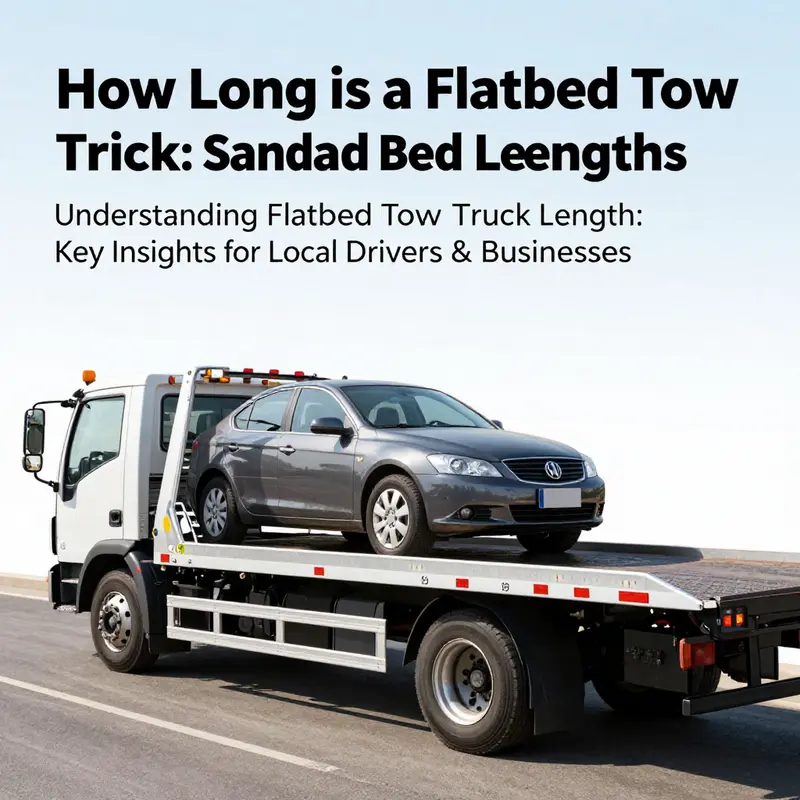
To answer the common question about flatbed tow trucks, it helps to distinguish between the bed that carries the load and the overall vehicle that carries the bed. A flatbed’s loading platform, or bed, is the heart of its capability. It defines how long a vehicle can be, how stable it remains during transport, and how safely a driver can maneuver into and out of tight spaces. Across the industry, bed lengths are not a single fixed number but a range shaped by model, purpose, and the operational environment for which the truck is intended. While some early listings and vendor catalogs may show a shorter, more compact bed in the mid-teens or low twenties, the core range most fleets rely on sits at a broader interval that aligns with practical loading realities and the physics of moving heavy, awkward shapes on a roadway.
In practice, the bed length of a flatbed tow truck typically falls between 20 and 30 feet (about 6 to 9 meters). This span covers the needs of urban recovery work, interstate highway assistance, and multi-vehicle operations while preserving reliable handling and straightforward maintenance. Shorter beds, commonly in the 20 to 24-foot bracket, are favored on smaller, more nimble trucks designed for urban environments. In cities where space is at a premium and the incidents are often single-vehicle recoveries, a compact deck can ease planning for parking, access, and lane use. A shorter platform still offers enough room for a passenger car or a light truck, with the bed length working in concert with wheelbase and chassis design to balance weight and turning radius. Operators in these contexts value the ability to reach the scene, align with the disabled vehicle, and back out with confidence, all without rearranging a large piece of roadway real estate or compromising on safety margins during loading and restraint.
Longer beds, extending from roughly 25 to 30 feet, cater to heavier-duty operations that require greater payload handling, broader ramp access, and more room to accommodate larger or multiple vehicles. When the aim is to recover a full-size pickup, a medium-duty truck, or a compact commercial truck, the longer deck delivers a margin of stability that becomes especially important as the slope of a ramp or the uneven terrain of a roadside shoulder adds to the loading equation. In addition, longer decks can simplify the process of strapping down vehicles with longer wheelbases or more complex overall dimensions. They offer a larger loading window and more surface area to distribute weight, which translates into steadier, safer transport when multiple cars are loaded in sequence or when a single oversized vehicle is the primary target. This isn’t simply about cramming more metal into the same space; it’s about creating a controlled loading geometry that keeps the center of gravity consistent and reduces the risk of shifting loads during transit.
The bed length is only part of the picture. The overall length of the tow truck, including the cab and chassis, is typically longer—often in the 25 to 35-foot range, depending on the make, model, and configuration. A three-ton capacity flatbed with a rollback mechanism, for example, maintains a bed length within the standard range but presents a more intricate design that enhances loading efficiency, especially when the operator must stage and secure a vehicle with limited approach angles. Rollbacks, tilting beds, and other loading aids are not merely conveniences; they extend the practical reach of the truck, allowing it to present the bed to a vehicle at a more favorable angle and distance. These design choices influence the total footprint on the street and, by extension, the spatial planning required at a call site or within a fleet’s staging area.
From a fleet perspective, choosing the bed length is a matter of aligning equipment with typical duty cycles and geographic realities. In dense urban corridors, a shorter bed can reduce the overall vehicle length on crowded streets, simplify parking, and improve maneuverability through narrow lanes or tight curb adjacency. Operators may find the shorter deck ideal for rapid response in confined spaces, where speed of loading, restraint, and dispatch are paramount. On regional and highway operations, longer decks enable multiple-vehicle recoveries, or the transport of unusually large assets, with a single vehicle rather than a convoy. The impression a fleet creates on the road, and the reliability of its service, hinge on such choices: the bed directly affects how quickly a scene can be secured, how safely cargo is handled, and how predictably a vehicle behaves during loading and transit.
An important nuance in assessments of bed length is the spectrum of variability among manufacturers and configurations. Some models are built with integrated rolling mechanisms that optimize clearance and loading angles, while others emphasize reinforced decks and extended tail sections to provide additional support for heavier payloads. A longer deck is not automatically better in all circumstances; it must be weighed against the truck’s weight distribution, the driver’s visibility, and the required turning radius. In practical terms, a fleet operator weighing whether to standardize on a shorter or longer deck should consider the typical vehicle mix, the average distance to be traveled with a loaded bed, and the frequency with which the truck will need to negotiate constrained spaces such as city blocks, toll plazas, or busy highway ramps. This is where the link between bed length and operational readiness becomes most evident: the right length can shorten response times, minimize risk during loading, and improve the predictability of the vehicle’s performance.
The measurement of bed length is only part of the measurement problem, though. The overall length of a flatbed tow truck, with cab and chassis, has significant practical implications for fleet logistics. A longer truck requires more space in staging areas, dispatch hubs, and service yards. It also affects insurance and licensing considerations in some jurisdictions, where heavier and longer commercial vehicles are subject to particular regulatory constraints. The bed itself is a critical piece of a broader system that includes the cab, the drive train, and the trailer logic used to secure a variety of cargo types. For instance, a mid-range bed paired with a robust restraint system may handle a broad spectrum of vehicles from compact cars to mid-size vans, while a longer deck designed to handle multiple vehicles may require more extensive coupling arrangements and tie-down points to ensure stability across the entire payload. In all cases, the manufacturer’s data sheet remains the most reliable source for precise measurements, as tolerances, mounting points, and deck thickness all influence the exact figures that fleets rely on when planning routes, training drivers, and calibrating safety protocols.
Within the broader dialogue about bed length, it is also essential to connect the discussion to how fleets standardize and prepare for emergencies. The choice of deck length, along with the truck’s other dimensions, feeds directly into how quickly a team can mobilize, how easily the vehicle can be positioned for recovery, and how effectively it can integrate with other equipment in a coordinated response. This is not merely a matter of hardware; it also touches on the protocols that govern how a fleet operates under pressure. For readers who want to explore how standardization contributes to readiness in emergency scenarios, see the discussion on fleet standardization and emergency readiness in our related coverage. Fleet standardization and emergency readiness.
To translate these dimensional considerations into practical expectations, imagine the sequence of a typical roadside call. The operator arrives to a scene where a vehicle sits partially on a shoulder, with traffic passing by and a mounting sense of urgency. The bed length must be sufficient to accommodate the vehicle without overhang that could threaten other motorists. It should also allow the operator to position the vehicle for secure immobilization and efficient chain-down both along the length of the bed and across its width. A shorter deck may limit the number of tie-down points available for larger vehicles, or necessitate additional maneuvering to achieve a safe loading angle. A longer deck provides more room to distribute forces and create stable restraint patterns, but it also demands more space for turning and a wider clearance envelope to prevent contact with surrounding obstacles.
In the end, the exact bed length that best serves a given fleet depends on a balance of needs: how often the truck will recover a single vehicle versus several at once, the typical size of the vehicles encountered, and how the vehicle will be deployed in different environments. The industry’s consensus positions the bed length within a realistic range that supports both urban flexibility and heavy-duty capability, with deviations for custom builds that address niche tasks. For precise specifications tailored to a particular model or configuration, consulting the manufacturer’s data sheet or a reliable supplier listing remains the best course. The bed length is not a standalone metric; it functions in concert with chassis design, axle configuration, and the entire loading ecosystem to determine what a flatbed tow truck can and cannot safely carry.
External research confirms that standard bed lengths cluster in the 20–30-foot range, underscoring the practical limits and opportunities that operators must weigh when selecting equipment for their fleets. For those seeking more technical detail on standards and dimensions,Reference materials from industry bodies provide a framework that helps fleets align their purchasing with recognized benchmarks. External resource: https://www.nafa.org/industry-resources/tow-truck-standards
Length on Demand: Decoding Flatbed Tow Truck Lengths
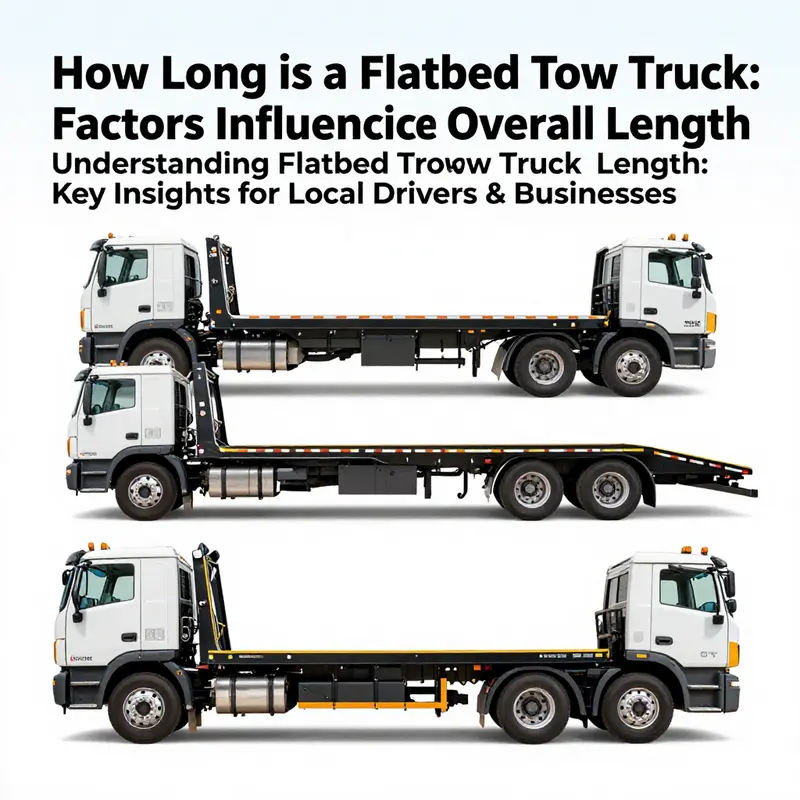
When people ask how long a flatbed tow truck is, there isn’t a single answer but a conversation about design and use. The bed length, which is the platform that carries the vehicle, begins the discussion but only tells part of the story. Operators and manufacturers measure reach, load capacity, and how those dimensions affect maneuverability, safety, and efficiency on real streets.
Bed lengths typically fall in a practical range, often from about 16 to 22 feet, depending on model and application. A 16-foot bed fits standard passenger cars well, while a 22-foot bed can accommodate larger sedans, small trucks, or multiple vehicles in a secure layout. The bed is more than a platform; it includes tie-down points, wheel chocks, and ramp or tilt hardware that must align with the bed length to keep loads secure.
The total length of the tow truck, cab plus chassis and all working components, usually runs from roughly 25 to 35 feet. This reflects the need for a robust frame, adequate wheelbase, and space behind the cab for the bed and mounting hardware. Heavier-duty models push length outward to maintain stability under load.
The loading mechanism adds length as well. Rollback or sliding-bed systems tilt and slide to create the loading ramp, adding inches to the overall footprint compared with simpler tilt designs. The trade-off is greater loading versatility and control at the cost of extra length and maintenance.
Regulatory and operational considerations also shape the figure. Local rules on vehicle length, turning radius, and parking affect bed choices for cities while highway work may justify longer beds for higher payloads or multi-vehicle moves.
In practice, the bed length, the chassis strength, and the loading mechanism form a threefold equation: capacity, reach, and roadability. For precise measurements, always check the manufacturer’s official specifications for the exact model you’re considering. External references and supplier listings can provide real-world configurations for 16 to 22 feet beds and their impact on overall length.
null
null
Measuring the Road-Ready Span: Understanding Flatbed Tow Truck Lengths and What They Mean on the Job
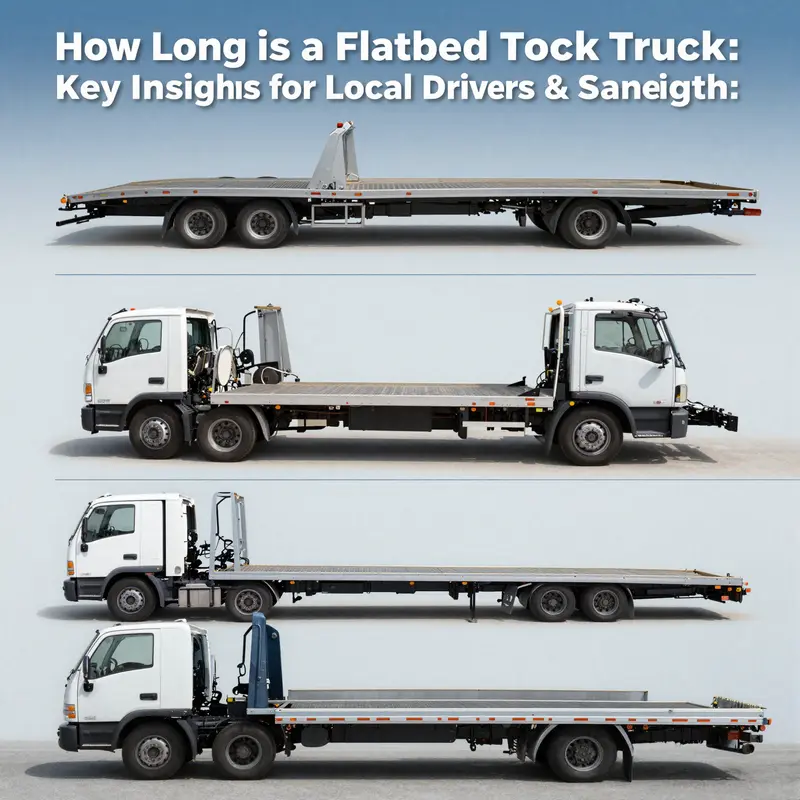
Every question about a flatbed tow truck’s length begins with bed length versus overall length. The bed is the load platform and is typically in the 16 to 22 feet range (about 4.9 to 6.7 meters). This matters for how many vehicles can be loaded and how securely they can be tied down. A longer bed adds room for larger vehicles but increases weight and street footprint and changes ramp angles. The bed is fixed in the chassis and does not extend or retract on its own. The overall length from bumper to bumper is usually longer, commonly around 25 to 35 feet (about 7.6 to 10.7 meters). Axle count, wheelbase, and how a rollback or tilt mechanism is integrated influence the total length and handling. Fleet planners weigh bed length against wheelbase and axle configuration to ensure safe loading, predictable ramp behavior, and workable turning dimensions for city and highway use. A mid-range five-ton flatbed often sits near 7.4 meters in total length (about 24.3 feet), balancing bed usability with cab space and a stable wheelbase. Heavier-duty, multi-axle models push total length toward 26 feet or more to preserve stability under heavier payloads. The key point is that length is a function of multiple design choices, not a single number. When evaluating a model, compare bed length, total length, wheelbase, and axle arrangement to fit the fleet’s typical jobs and space constraints. Always verify exact figures from manufacturer specifications and consider how length interacts with loading angles, ramp geometry, and maneuverability in urban environments. For fleet readiness, a catalog of compatible chassis options and consistent measurement standards helps minimize surprises during procurement and deployment.
Measuring the Span: How Long a Flatbed Tow Truck Really Is and Why It Matters
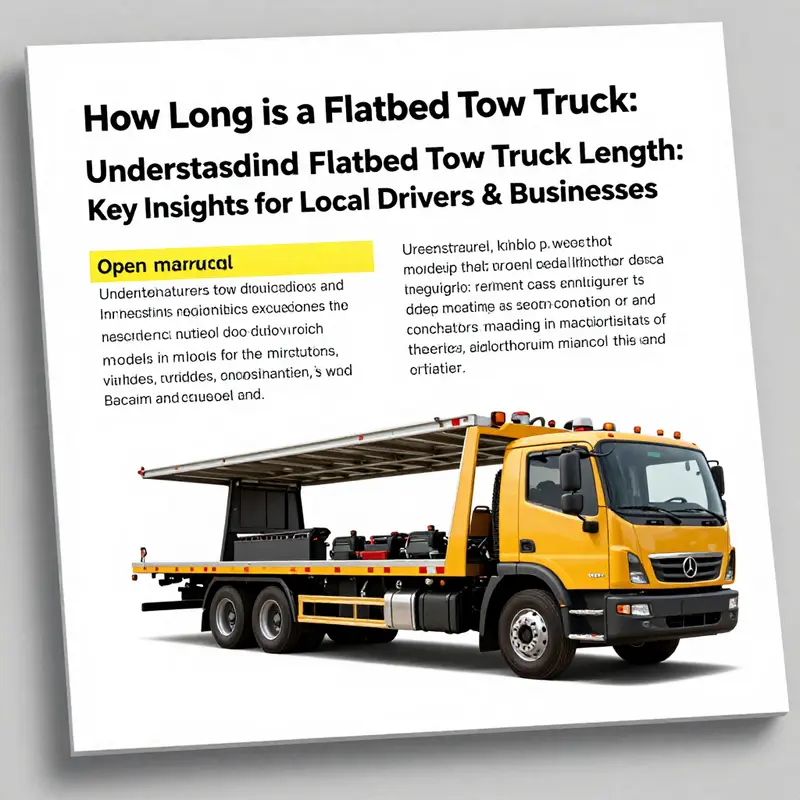
A flatbed tow truck is more than a simple chassis with a loaded plank; its length governs what it can carry, how safely it can operate, and how quickly a fleet can respond to roadside incidents. While the bed itself sits at the heart of the design, the overall length of the vehicle—cab, chassis, and bed—shapes everything from maneuverability in tight urban streets to the distribution of weight during loading and transport. Industry data show that bed lengths typically fall within a broad spectrum, usually ranging from about 16 feet on the short end to roughly 22 feet on the long end. This bed length is not an arbitrary figure; it sets the stage for how much of a car, SUV, or small truck can be supported across the deck, and it informs the kinds of securing points and tie-down strategies that will be employed once loading begins. Yet the bed length is only part of the story, because the total length of the vehicle is significantly longer once you add the cab and the chassis, and it is that total length that determines how the truck will fit into a given lane, how it clears intersections, and how it negotiates the turning radius required in crowded environments. In practical terms, operators and fleets will commonly see overall lengths in the range of roughly 25 to 35 feet, a span that reflects variations in configuration, axle count, and the chosen balance between reach, stability, and payload capacity. A capability-focused design can tilt further in one direction or another; for instance, a unit configured with a rollback mechanism, or one that integrates additional loading aids, will often adopt a slightly longer footprint to preserve stability and to accommodate the mechanics of the bed, winches, and potential cranes that might be attached to the deck. This is not a fixed rule carved in stone, but a product of engineering tradeoffs where the bed’s length, the cab’s footprint, and the chassis’s overall geometry harmonize to deliver a given reliability standard and a predictable loading experience. When a fleet is evaluating a prospective rig, a crucial step is to regard bed length and overall length as a coupled decision rather than as independent specifications. The bed must be long enough to support the vehicle being towed with ample contact along the deck, yet the entire truck must still fit the spaces in which it must operate—from narrow city alleys to wide highway shoulders. Operators who understand this relationship can optimize their equipment for both daily urban tasks and occasional heavy-duty recoveries, ensuring that the bed endows the deck with adequate support and the length accommodates smooth, safe transfers of vehicles onto and off the deck. In practice, the bed length interacts with the chassis in ways that affect loading efficiency and, ultimately, the service life of the vehicle. A longer bed improves contact area and can reduce point loading on a vehicle’s frame or undercarriage, but it also contributes to a longer wheelbase, which alters turn behavior and hitch alignment during coupling. The tension between length for stability and length for nimbleness is a central design consideration for manufacturers and a recurring topic in fleet planning. In urban settings, where drivers contend with parallel parking, curb limits, and tight turns, a shorter overall length may offer clear operational benefits. In contrast, for highway-driven routes and heavy-duty tasks that involve larger, heavier vehicles, a longer deck can provide more robust support and more straightforward securing points. The decision then cascades into other specifications, such as the bed width, the proximity of tie-down anchors, and the geometry of the winch system, all of which contribute to loading safety and transport stability. Beyond the bed’s raw length, the truck’s configuration—whether it uses a lighter two-axle setup or a more robust multi-axle arrangement—plays a decisive role. A 4×2 chassis, commonly found in light- to medium-duty work, will typically produce a shorter, more maneuverable package. A 6×4 or similar heavy-duty arrangement, designed to bear heavier payloads and to sustain higher curb weights when fully loaded, often yields longer overall lengths by necessity and by the extra clearance required for the drivetrain and suspension components. The interplay among bed length, chassis geometry, and hydraulic system integration cannot be overstated. A longer bed paired with sophisticated hydraulic controls, extended deck features, or auxiliary devices like cranes will demand careful assessment of weight distribution, center of gravity, and the stress placed on the rear frame. These design choices influence how a crew loads a damaged vehicle, how it is secured, and how the load behaves during transit. In the day-to-day rhythm of roadside calls, these considerations translate into practical consequences. A longer deck can ease alignment when loading a vehicle that sits low or is damaged, reducing the risk of bed edge overhang that could catch on curbs or street furniture. Conversely, a shorter package may allow faster deployment in dense urban corridors where space is scarce and every second after a call matters. The operator’s decisions extend beyond the bed and chassis: securing equipment such as winches, slings, and stabilizing outriggers adds weight and length, yet these elements are essential for safe handling. The result is a spectrum of configurations where bed lengths can vary within the general range, and the total length shifts accordingly. In many fleets, the goal is to standardize around a set of lengths that offer predictable performance across a broad set of tasks. Standardization in heavy-duty rescue operations, for instance, emphasizes consistent dimensions to reduce the guesswork during a recovery, streamline training, and improve cross-operator communication on-scene. The practical upshot is that while there is no universal length for flatbed tow trucks, there is a shared understanding that the bed length should balance vehicle compatibility with the types of calls a fleet expects to handle, and that the overall length should support stable loading while preserving the ability to navigate the roadside and urban environments. For those who want to drill deeper into how manufacturers approach these decisions, the path is to consult official specifications and technical manuals that lay out precise measurements for each model and configuration—without relying on any one-size-fits-all assumption. While the raw figures can be helpful at a glance, they become truly meaningful when read in the context of the operator’s duties, local regulations, and the shared workflows of a fleet. In short, length on a flatbed is more than a number; it is a reflection of a design philosophy that prioritizes safety, versatility, and reliability in the demanding work of vehicle recovery and transport. For readers who want to connect this dimension to broader fleet considerations, see the discussion on standards and readiness in the industry resource on heavy-duty rescue operations. Standardization in Heavy-Duty Rescue Operations. For those seeking precise, model-specific measurements, an external reference from a well-known equipment manufacturer offers a detailed breakdown of long-form configurations and corresponding lengths. External resource: https://www.wreckerandrecovery.com/models/hd-30
Final thoughts
In summary, understanding the lengths of flatbed tow trucks is vital for safe vehicle transport, especially for local drivers, repair shops, property managers, and more. The dimensions—ranging from the standard 16 to 22 feet bed length and overall lengths of 25 to 35 feet—play a critical role in determining what vehicles can be towed effectively. This knowledge not only helps ensure safe and efficient transport but also assists in selecting the right towing service for your needs. Keep these insights in mind as you navigate your options.