
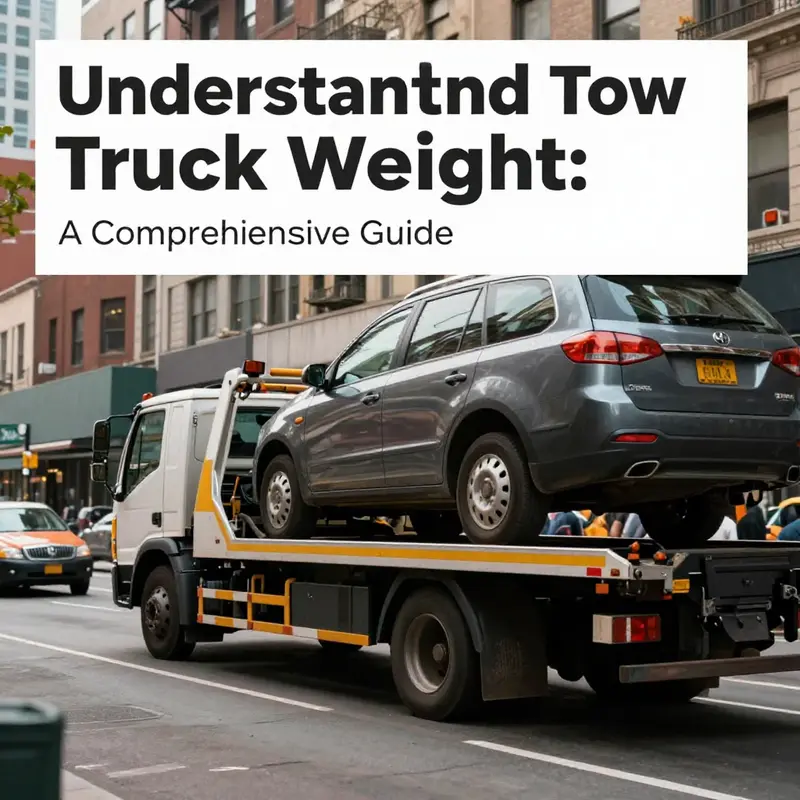
Tow trucks play an essential role in roadside assistance and vehicle recovery, but have you ever considered their weight? The weight of a tow truck is not just a number; it affects everything from towing capacity to fuel efficiency. This guide delves into the curb weight and gross vehicle weight ratings of tow trucks, exploring how different types and lifting capacities influence their overall weight. Join us as we unravel the intricacies of tow truck weight, providing valuable insights to drivers, car owners, auto repair shops, dealerships, and property managers alike.
Baseline Mass and Recovery Power: Understanding Tow Truck Curb Weight and Its Role in Answering ‘How Much Does a Tow Truck Weigh’
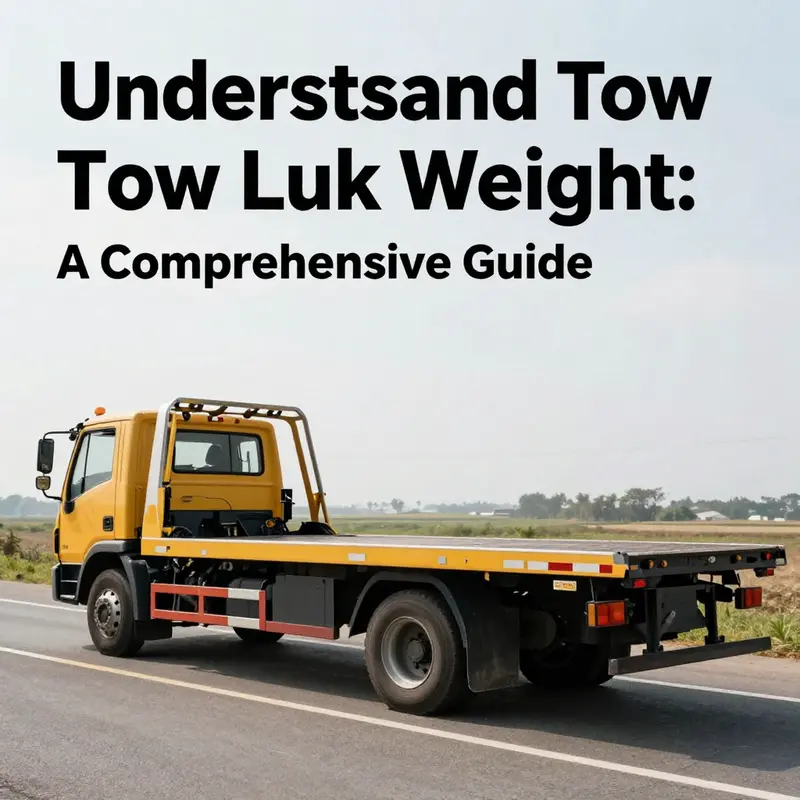
Weight is not just a number on a specification sheet. In the world of tow and recovery, curb weight establishes the baseline from which every decision about performance, safety, and efficiency flows. Curb weight is the vehicle’s own mass when it is fully prepared with standard equipment, fluids, and a full fuel tank, but without passengers or any additional gear beyond what the manufacturer considers part of the standard build. It is the denominator in the equation of capability, and it interacts with the vehicle’s Gross Vehicle Weight rating to shape how much it can lift, tow, or recover, while still staying within legal and practical operating limits. The distinction between curb weight and GVW matters deeply for operators who must balance speed, reach, and reliability against fuel costs, road rules, and the realities of day-to-day emergencies. When a reader asks, “how much does a tow truck weigh?” the answer is never a single figure. It depends on size, design, and intended duty. Yet the curb weight remains the essential baseline, the figure that anchors a spectrum from nimble urban recovery to heavy, high-capacity operations on highways or at airports and ports.
Across the spectrum of tow trucks, curb weight varies in step with the scale of the machine. In lighter, more compact recovery units designed for quick response and urban maneuverability, curb weights cluster in a mid-range that still carries substantial mass for stability. A representative light-duty class might present a curb weight in the neighborhood of about 5,500 kilograms, with some models just under 5,500 kg and others edging toward 6,500 kg as standard equipment and chassis design add mass. In pounds, that range is roughly 12,125 to 14,330 lb. These numbers reflect chassis robustness and the need for a solid, stable platform to manage the dynamic loads of lifting and winching without excessive flex or compromise to handling. By contrast, as a tow operation steps up to medium-duty roles—models designed to recover larger vehicles or to operate in broader, more demanding service windows—the curb weight climbs. A typical medium-duty 20-ton wrecker, built to haul heavier payloads and to integrate more energetic lifting systems, often registers an approximate curb weight around 11,300 kilograms. That figure translates to about 24,900 pounds, underscoring how the mass of the base vehicle scales with the capacity to lift and tow significant weights.
The heaviest, most capable class of tow trucks, built for extreme recovery operations, pushes curb mass into the upper tens of tonnes. A heavy-duty class—designed to recover large construction equipment, multi-axle trucks, and other heavy machinery—can exhibit curb weights in the vicinity of 32,000 kilograms or more. To put that into perspective, 32,000 kg equals roughly 70,500 pounds. This is not merely a question of heft; it reflects the need for a chassis and structure that can withstand the forces generated during high-load lifts, combined with the stability required when the vehicle itself must remain controlled under substantial dynamic loads. Users looking at the upper end of the market should anticipate that curb weights in this range accompany GVWs measured well beyond the curb, expanding the available payload capacity and the operational envelope. The gap between curb weight and GVW—commonly called payload capacity—illustrates how much additional mass can be carried or how much weight can be added to the vehicle for a given mission. For instance, a modern flatbed chassis with a curb weight of 4,800 kg and a GVW of 7,800 kg accommodates a payload of about 3,000 kg, or roughly 6,600 lb. That payload is what remains available for fuel, crew, recovered vehicles, tools, and other mission-critical load after accounting for the vehicle’s own mass. In another comparable example, a GVW around 7,400 kg translates to approximately 16,310 pounds of gross capacity. These relationships matter for planning safe, compliant operations, where the total weight across roadways, bridges, and scales must be observed and respected.
The practical implications of curb weight extend into performance, efficiency, and safety. The heavier the curb weight, the greater the demand on the engine, transmission, and drivetrain to deliver the same level of acceleration or to maintain speed when fully loaded. In recovery missions where stability matters as much as lift capacity, the extra mass can contribute to smoother handling under heavy loads, reducing the risk of trailer-like sway or abrupt weight transfer when winching and loading a vehicle onto a bed. Yet this same heft can erode fuel efficiency and raise operating costs, particularly in urban environments with frequent starts and stops. The relationship between curb weight and fuel use is not simple; it depends on mass, powertrain tuning, aerodynamics, and the load profile during a shift. In general terms, heavier curb weight tends to mean higher fuel consumption and greater emissions, all else equal. The more mass a tow truck carries, the more energy it requires to move that mass, accelerate, and stop. Operators must weigh the benefits of a sturdy, stable platform against the long hours spent in fuel burn and maintenance of a heavier machine, especially in fleets that respond to routine city incidents.
Safety considerations also intertwine with mass. Research indicates that curb weight contributes to crash protection. A larger, heavier vehicle can offer better intrusion resistance and occupant protection in a collision, simply by absorbing and distributing impact energy differently than a lighter counterpart. The proportional relationship observed in some studies suggests that even modest increases in curb weight can correlate with reductions in injury risk for drivers in certain collision scenarios. The magnitude—approximately a 3.2 percent reduction in injury risk for every additional 100 kilograms of curb weight, while not universal across all configurations or crash types—points to a broader principle: mass matters for protective capacity. This does not excuse reckless operation or neglect of safety systems; it simply highlights one axis along which heavier, more robust platforms can behave differently in the real world. For fleets operating in regions with strict load and weight regulations, the curb weight also interacts with regulatory status, as curb weight is defined in many national or regional guidelines as the weight of the vehicle excluding the driver or passengers. This standardization helps ensure fair comparisons across models and assists with compliance checks, especially when routing through weight-restricted corridors or bridge limits.
The choice between a lower or higher curb weight is rarely about a single attribute. It is about the mission profile, the typical surfaces, and the types of failures the crew is trained to handle. A lower curb weight can translate to greater agility, quicker acceleration, and easier maneuvering in tight urban environments. It also leaves more room for payload, potentially letting crews carry extra tools, rigging, or spare parts without hitting GVW limits. A higher curb weight signals a platform designed for steadier, more controlled recovery under heavy loads. It implies a robust chassis, reinforced frames, and heavy-duty components that can withstand repeated high-load cycles and extended idling in challenging conditions. In practice, fleets blend both approaches across a spectrum of units to cover diverse operational needs. A light-to-medium recovery unit with a curb weight in the mid-five-thousand-kilogram range can serve as a fast-response support vehicle, while a heavier, high-capacity unit with a curb weight exceeding 30,000 kilograms can perform the most demanding recoveries without compromising stability.
From a planning perspective, the relationship between curb weight and operating capacity is crucial for budgeting, route planning, and risk management. When a dispatch team evaluates a call, the curb weight helps estimate how much load the truck can safely carry on arrival, how much ballast is necessary to stabilize the platform, and whether additional equipment might be required to distribute the load effectively. It also informs fuel budgeting, service intervals, and maintenance planning, since heavier machines can impose greater wear on tires, suspensions, and brakes, particularly in conditions that involve frequent braking, heavy towing, or extended operation in hot climates where thermal loads compound the mechanical stress. The practical takeaway is simple: curb weight is the baseline that reveals how the entire recovery system will perform under real-world demands. It influences not only the raw capability to lift or tow but also the safety margins, the efficiency of operations, and the regulatory compliance envelope within which the fleet must operate.
For readers seeking a concise frame of reference within the field, consider the real-world balance between weight and capability. A smaller, nimble recovery platform with a curb weight around 5,500 kg provides a responsive tool for city streets, offering favorable power-to-weight characteristics and potentially better fuel economy in urban duty cycles. When the mission shifts toward heavy-duty recovery—emerging from the highway into the world of large trucks, construction equipment, and multi-axle vehicles—the curb weight climbs, often accompanied by a proportional rise in GVW and a marked expansion in payload capacity. A heavyweight class with curb weight in the vicinity of 32,000 kg delivers a stable, high-leverage platform that can sustain the heavy loads required in extreme recovery scenarios. Each step up in curb weight corresponds with a recalibration of risk, efficiency, and readiness: the operator must be prepared to manage larger energy requirements, longer stopping distances, and more substantial maintenance needs, all while remaining within legal limits and maintaining a focus on rapid, safe response.
In the practical sense, understanding curb weight helps connect the dots between a tow truck’s shape, its muscle, and the outcomes it delivers. It explains why a unit with the same GVW might feel different on the road if the curb weight is adjusted by design choices, material thickness, or the inclusion of additional safety systems. It explains why two units with similar lifting capacities might have different fuel economies and handling characteristics depending on their mass distribution and chassis stiffness. And it anchors the discussion for readers who seek a direct answer to the everyday question: how much does a tow truck weigh? The answer is nuanced; the baseline mass is not a standalone number but a lens through which we view performance, reliability, and the safety of every recovery mission. For operators and planners, the takeaway is clarity: begin with curb weight, then consider GVW, payload, energy use, and the operational environment to determine the most suitable tool for a given job. When we interpret weight figures, we must always translate them into action—into safer roads, more reliable recoveries, and a fleet that can meet the demand without compromising on readiness or responsibility. For readers who want to explore practical reflections on how fleets prepare and standardize for emergencies, a deeper discussion can be found in the Santa Maria Tow Truck Blog, which provides context on fleet readiness and emergency response practices. Santa Maria Tow Truck Blog
External resources offer a broader, standards-based perspective on how curb weight is defined and measured. A widely recognized reference is the ISO standard for road vehicles—the method for determining curb weight that helps ensure consistency across manufacturers and markets. This standard underpins how manufacturers report mass figures and how regulators compare and enforce mass-related rules. For readers seeking technically grounded guidance, the ISO resource provides the formal method and definitions that anchor all the numbers discussed here: https://www.iso.org/standard/14394.html
Mass, Margins, and the Mechanics: Understanding Tow Truck Weight and What It Means for Capacity
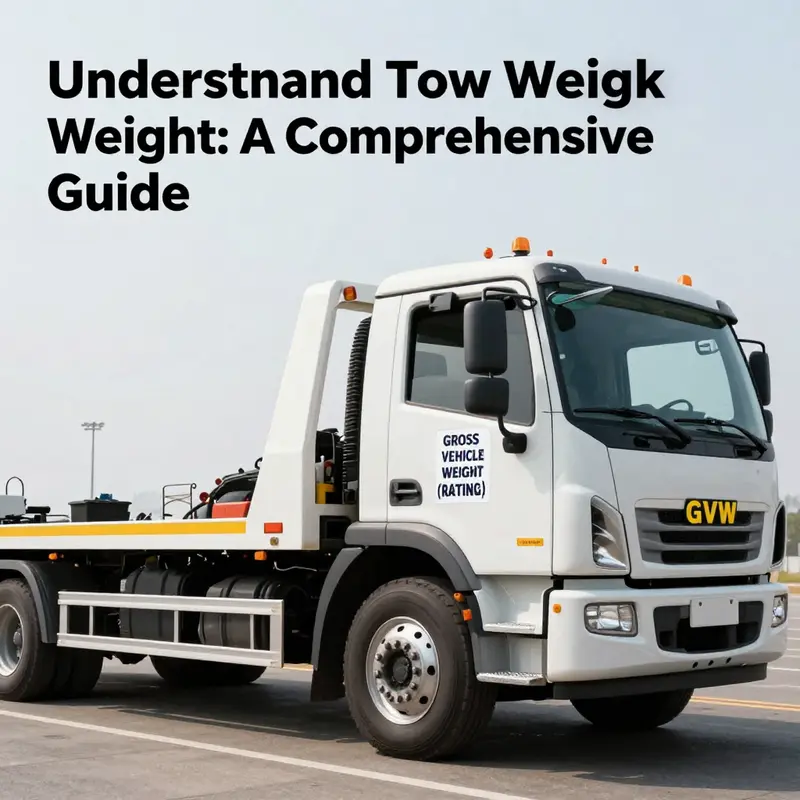
When people ask how much a tow truck weighs, they are really asking about two intertwined figures that govern every rescue, recovery, and road operation: curb weight and the vehicle’s gross weight rating. Curb weight is the vehicle’s own mass with fluids and standard equipment, but no passengers or cargo. Gross Vehicle Weight Rating, GVWR, on the other hand, is the maximum weight the truck is allowed to carry as a fully loaded vehicle. In common practice, that means the sum of the truck’s own weight, passengers, fuel, cargo, and any towed vehicle. This distinction matters not just for arithmetic, but for safety, legality, and the realities of choosing the right tool for a given recovery job. A chapter in the field’s technical literature makes this plain: the weight of a tow truck is not just about its chassis, but about how that chassis is rated to bear load and how that rating translates into what can be hooked up, lifted, and moved on a busy highway or during a storm response.
The numbers can feel abstract until you translate them into real-world figures and consequences. In one flatbed chassis example, the curb weight sits around 4,800 kilograms. That is roughly 10,580 pounds of vehicle that sits on the pavement with no payload. The same example lists a GVWR of about 7,800 kilograms, which is about 17,200 pounds. Those two numbers imply a curb weight plus the payload and fuel mix to reach the vehicle’s maximum safe, fully loaded mass. A different data point notes a GVWR in the mid-7,000 kilogram range for another model, which translates to about 15,000 pounds in loaded condition. While these numbers cover a subset of the market, they illustrate a truth: even among similar-looking tow rigs, the capacity to carry or tow changes dramatically with the rating, and the actual empty mass can differ by substantial margins depending on the chassis design and equipment, such as the presence of a robust boom, winches, or a heavy-duty wheel-lift system.
From there, the landscape broadens into the heavier end of the spectrum. For larger, heavy-duty wreckers designed to recover buses, trucks, or other heavy equipment, the weight can escalate well over 25,000 pounds when empty, and the permissible loaded weight climbs accordingly. The scale grows quickly when the equipment adds up: hydraulic lifts, strong subframes, multiple axles, and reinforced structures meant to handle repeated forceful lifts. In some scenarios, the specification set can approach or exceed 30 tons, 50 tons, or even 100 tons in payload capacity. When the device itself carries that much mass, the GVWR—the maximum allowable fully loaded weight—rises to reflect the greater structural demand. The practical implication is straightforward: higher GVWR typically means a sturdier chassis and stronger lifting apparatus, enabling the recovery of heavier vehicles. Yet it also means a heavier truck on the road, with more braking distance required, and a greater challenge to stay within per-axle weight limits and regulatory constraints.
Weight measurements are not just numbers on a spec sheet; they determine where a tow truck can operate. Weight restrictions are common on bridges, roadways, and certain work zones, and operators must know the exact curb weight and GVWR to assess whether a given recovery plan fits within legal limits. A heavier machine doesn’t automatically guarantee a better outcome in every scenario. It brings more lifting power and payload capacity, but also more mass to slow and stop, more fuel consumption, and more leverage needed to maneuver in tight spaces. The tension between power and control is a core reason why GVWR matters so much in the selection process for a particular job.
The interplay between weight and capability is also central to how operators plan responses and maintain safety during emergency work. In the context of fleet readiness and standardization, the weight profile of each tow truck influences how crews approach recoveries, how they distribute loads on the vehicle, and how they coordinate with other equipment on the scene. A fleet with a mix of lighter and heavier units can cover a broad range of scenarios, from on-scite light-duty removals to multi-vehicle, heavy-duty recoveries. When planning a response, teams weigh several factors: the likely vehicle classes encountered, the condition of the roads, the roadbed’s load-bearing limits, and the probable value of a quick, controlled lift versus the risk of a delay caused by maneuvering a heavier unit into position.
A practical takeaway lies in the relationship between curb weight, GVWR, and actual towing tasks. The curb weight represents the baseline mass that the truck itself contributes to weight on the road. The GVWR, in turn, constrains how much additional mass the truck can safely carry on board and, in the broader sense used in the field literature, towed weight in combination with the truck’s own weight. For a light-duty tow truck, you might see curb weights around 4,000 to 6,000 kilograms and GVWRs in the 7,000 to 16,000-kilogram range, depending on the build and equipment. For heavier-duty work, the numbers scale up—curb weights grow, and GVWRs rise to reflect the heft of the lifting gear, twin-axle designs, and reinforced chassis that enable secure hoisting and controlled release of heavy loads.
To speak plainly about the relevance to everyday practice: the heavier a tow truck is, the more you can lift and tow, but the more attention you must pay to per-axle limits and braking capacity. The GVWR is a ceiling that should guide planning, not a target to chase. Operators must ensure that the actual loaded weight, including any towed vehicle, never arrives at or above the GVWR. Exceeding the rating invites mechanical failures, degraded braking performance, and a higher risk of accidents—precisely the outcomes that responders want to avoid when lives and property are at stake.
The Federal Motor Carrier Safety Administration (FMCSA) provides a regulatory backbone for these concepts, reinforcing that weight ratings are not decorative numbers but safety thresholds grounded in engineering. The FMCSA’s standards outline how weight classifications interact with vehicle design, load distribution, and highway safety. While the exact numbers will differ by model, the principle holds across the industry: a heavier-duty chassis requires deliberate planning, more robust mechanical systems, and careful adherence to weight limits to ensure safe operation under load and along a public right of way. For readers who want to explore the formal framework, the FMCSA site offers the official guidelines and definitions that frame how GVWR should be interpreted in practice on the road.
Within this landscape, the practical question—how much does a tow truck weigh? lands on a spectrum rather than a single figure. The smallest, simplest flatbeds can start in the neighborhood of 10,000 pounds of empty mass, rising quickly as equipment is added or as the chassis is reinforced for heavier recovery tasks. A mid-range, more capable setup might sit in the 15,000- to 20,000-pound empty range with a GVWR in the high teens or low twenties in thousands of pounds. The heavy-duty workhorses, necessary for large vehicle recoveries, often carry GVWRs well beyond 30,000 pounds and can push the combined, fully loaded mass into the 40,000- to 70,000-pound territory or higher depending on the configuration. In kilograms, this translates roughly to curb weights from 4,500 kg up to well over 25,000 kg for the largest units when empty, with GVWRs that reflect the same upward trajectory. The exact numbers are model- and configuration-dependent, but the logic remains constant: GVWR scales with the structural and lifting capabilities of the truck, while curb weight establishes the baseline mass that the vehicle contributes before any load is added.
A crucial implication for anyone selecting a tow truck for a specific job is to consider both the likely loads and the road environment. If a task is expected to involve heavy-duty recovery or the transport of multiple vehicles, a higher GVWR presents clear advantages in capacity and safety margins. But if the operation occurs in urban corridors with weight-restricted bridges or in tight alleyways, the payload capacity becomes less relevant than maneuverability, turning radius, and axle load management. The choice becomes a balancing act: you want enough GVWR to handle peak loads, but you also want a truck that can operate efficiently within the constraints of the job site and the infrastructure it must navigate.
To keep this discussion grounded in how the industry talks about it, consider how fleets plan for readiness and standardization. The weight characteristics of each apparatus influence maintenance schedules, spare parts inventories, and training so responders know exactly how their equipment will behave under load. In these terms, the GVWR is not a solitary specification; it is a guiding parameter that informs incident response strategy, crew allocation, and the sequencing of heavier lifts or multi-vehicle recoveries. In practice, a fleet that aligns its equipment with anticipated demand—mixing light, medium, and heavy units as needed—can respond more efficiently while maintaining safety margins that keep crews protected and roads clear.
To summarize the practical takeaway: the weight of a tow truck is not a single fixed figure. It is two intertwined metrics—curb weight and GVWR—that determine what the truck can carry, what it can tow, and how it will perform in the field. The spread between a truck’s empty mass and its maximum loaded mass defines its versatility and limits. The larger the GVWR, the broader the operational envelope, but the weight penalty on the road grows with it, demanding thoughtful planning around braking, acceleration, turning, and per-axle limits. In studying these dynamics, one sees why weight is a central theme in how tow trucks are designed, deployed, and regulated across the industry.
The narrative of weight also intersects with other aspects of the field, including fleet standardization and emergency-readiness planning. For operators seeking a cohesive approach to equipment selection and deployment, this topic provides a concrete lens through which to view the balance between capability and constraint. For a detailed look at how weight considerations feed into broader fleet standards and readiness practices, see the discussion linked under fleet-standardization-emergency-readiness. fleet-standardization-emergency-readiness.
External reference for regulatory context and standards: https://www.fmcsa.dot.gov
Mass on the Move: How Tow Truck Weight Varies by Type and What It Means for Towing, Safety, and the Road
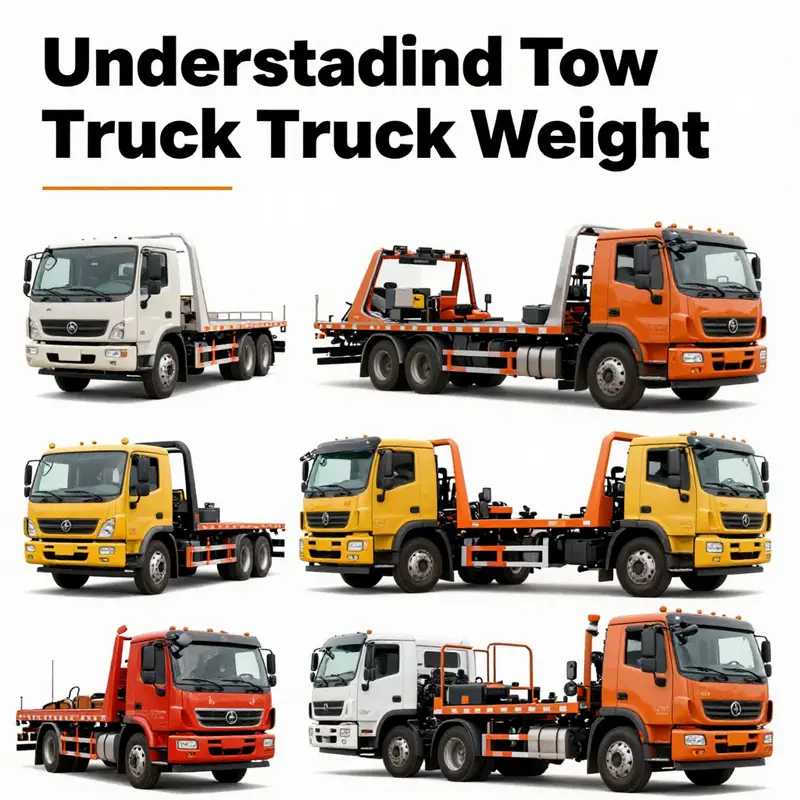
Weight is often the quiet engineer behind every roadside rescue. It governs how a tow truck behaves when lifting, pulling, and carrying loads that can challenge even the stoutest metal and strongest hydraulics. In discussions about tow trucks, people typically ask, how much does a tow truck weigh? The answer is not a single number but a spectrum shaped by class, design, and intended use. Two measurements anchor this spectrum: curb weight and gross vehicle weight. Curb weight is the mass of the truck itself, stocked and ready with fluids, a standard set of equipment, and the vehicle frame fully prepared for work. Gross vehicle weight, or GVW, is the maximum legal combined weight the truck can carry, which includes the curb weight plus passengers, fuel, and payload. This distinction matters because the same chassis can carry very different loads depending on what the operator expects to tow and how the vehicle is configured for a given assignment. In practical terms, lighter work emphasizes maneuverability and speed, while heavier work prioritizes raw lifting and recovery power, often at the cost of fuel economy and road wear. Across the industry, this trade-off is reflected in weight ranges that start in the mid-thousands of kilograms and rise into the tens of thousands, depending on the job the truck is built to perform.
To sketch the landscape, it helps to think in broad classes. Light-duty tow trucks, designed for small tows and quick removing of disabled vehicles, typically operate near the lower end of the mass spectrum. They are capable of towing approximately 3 to 5 tons, yet they arrive on the road with a curb weight that generally falls in the heavier side of light traffic: roughly eight thousand to twelve thousand pounds. In metric terms, that’s about 3,600 to 5,400 kilograms. This weight range is practical for urban environments and tight spaces where nimbleness matters more than brute lifting force. The middle rung, medium-duty tow trucks, are built to handle more demanding recoveries and heavier vehicles but still need to navigate city streets and smaller highways. Their towing capacity usually sits in the 5 to 8 ton range, and they often present a curb weight in the neighborhood of twelve thousand to eighteen thousand pounds, or roughly 5,500 to 8,100 kilograms. These machines balance power and portability, handling heavier cars, light trucks, and mid-size vans with greater confidence than their lighter kin.
At the top of the spectrum stand the heavy-duty tow trucks, where the scale tips decisively toward lifting capacity and recovery capability. These are the giants built to haul buses, big commercial vehicles, or wrecks involved in serious incidents. Towing capacity commonly exceeds eight tons in this category, and the total vehicle mass becomes substantial. A typical heavy-duty configuration can weigh more than twenty thousand pounds (over 9,000 kilograms) when empty and can rise much higher once winches, booms, additional stabilization gear, and recovery tools are added. In some kinds of operations, especially those designed for heavy wreckage or industrial tows, overall mass can push well beyond thirty thousand pounds (around 13,600 kilograms) and reach into ranges that challenge even the most robust braking systems and road infrastructure. This is not mere curiosity; weight governs how the truck accelerates, how quickly it stops, how the hydraulic systems respond under load, and how the vehicle interacts with the road when a heavy towed piece is swinging or being realigned during a recovery.
Concrete examples from real-world practice illuminate the spectrum without getting lost in the abstraction. A flat, modular chassis designed for heavy service may show a curb weight near 4,800 kilograms, with a GVW that climbs to about 7,800 kilograms when fully equipped and loaded for typical urban-to-suburban recovery work. Add or subtract payload or auxiliary equipment, and the GVW shifts accordingly, along with the demands placed on the braking system, the suspension, and the tires. Another reference point is a GVW in the mid-7,000-kilogram range, which underscores how even seemingly modest increments in equipment or payload can push a vehicle from one regulatory class into another, potentially triggering different licensing, permitting, and inspection requirements. These numbers, while specific in some cases, are representative of a broader industry pattern: curb weight tends to stay within a relatively narrow band for a given chassis family, but GVW can swing widely based on how the vehicle is outfitted and used. For readers who prefer pounds to kilograms, these figures translate to roughly 10,500 to 15,500 pounds for the lower end of the spectrum and well over 15,000 pounds for the higher end, with the heaviest duty trucks moving comfortably past 30,000 pounds when loaded for maximum recovery work.
This weight narrative is not merely about the numbers themselves. It is about how the mass of a vehicle shapes every decision on the fleet floor and on the road. The weight of a tow truck is a driver of performance. A lighter curb weight can improve acceleration, improve fuel economy, and reduce tire and brake wear during routine towing. Yet the ability to haul and stabilize heavier loads depends on strengthening the chassis, upgrading the hydraulic winches, bolstering the boom arms, and equipping specialized recovery tools. Each of these enhancements adds mass, transforming a nimble vehicle into a heavy-duty machine capable of difficult lifts. The physics are straightforward: more weight generally means more inertia to overcome, greater energy to dissipate, and an increased need for precise distribution of mass across axles to preserve steering response and braking effectiveness. Operationally, this means a crew must consider not only the tasks at hand but also the road conditions, weather, and the structural constraints of bridges, parking structures, and loading docks.
The interplay between weight and safety becomes especially evident as you move from the curb to the GVW. A truck that is nearly maxed out on payload and equipped with a robust recovery system will require a correspondingly capable braking system, tires rated for higher load, and a suspension tuned to keep the vehicle stable under heavy lifting and during dynamic towing maneuvers. Operators in heavy-duty contexts often encounter stricter maintenance regimens, more frequent inspections, and tighter margins for weather-related hazards or road stress. The legitimacy of these concerns is not about policing; it is about preserving safety margins for crews who operate in unpredictable environments where the difference between a controlled recovery and a dangerous incident can hinge on a few inches of stability or a fraction of a second of response time. As the weight profile shifts with equipment and mission, so too do the regulatory and logistical considerations. In many jurisdictions, vehicles above certain weight thresholds fall under commercial vehicle classifications with distinct licensing, vehicle inspection, and driver qualification requirements. Those thresholds often lie in a range near ten to twelve thousand pounds, though local rules vary. The practical consequence is that a single tow truck family can span multiple regulatory categories depending on how each unit is configured and what it is carrying on a given shift.
Weight also informs planning and safety protocols beyond regulatory compliance. When fleets standardize equipment packages to match typical tasks, they create predictable mass profiles that help plan everything from maintenance schedules to fuel procurement and tire rotation strategies. The mass distribution across axles matters for safe loading and towing dynamics. Heavier, multi-axle configurations distribute load in ways that can reduce tire stress on individual wheels and can improve braking efficiency by spreading mass more evenly. Yet the same configurations impose heavier demands on cooling systems, powertrains, and transmission packs. In urban operations, where frequent stops and starts are the norm, a higher curb weight can translate to more robust daily wear. In longer, highway-based tasks, the advantages of a heavier GVW—such as better control during long lifts or the ability to bring larger loads into service areas without multiple transfers—can outweigh the downsides of increased fuel use and higher dynamic braking requirements.
The broader implications of weight extend into the planning and preparation for emergencies and critical operations. A fleet that understands the weight capacities of its various units can assign the most appropriate tool for a given incident, preventing overburdened vehicles from attempting tasks beyond their engineered limits. This kind of discernment feeds into fleet standardization and emergency readiness, a topic that encompasses training, maintenance, and operational protocols designed to maximize uptime while preserving safety. Fleet Standardization and Emergency Readiness serves as a useful reminder that mass is not a mere statistic. It is a constraint and a capability that informs how a team plans, responds, and recovers from incidents.
In the real world, even within the same class, two trucks can weigh differently because of accessorial gear. A light-duty unit parked near a busy city service center might carry only the essential winch and a set of basic rescue tools, keeping its curb weight near the lower end of the spectrum. A sister unit, dedicated to heavy urban-to-suburban recovery, may be equipped with an extended boom, stabilization legs, heavier anchors, and a larger instrument panel, all of which add substantial mass. The result is a more capable machine for the right job, but one that demands careful route planning, heavier brake components, and stricter adherence to load limits on bridges and in roadways that carry known weight restrictions. For operators, the takeaway is simple: understand the weight profile of each unit, align it with the task at hand, and recognize that capacity to lift does not automatically translate into unrestricted freedom to operate on every street or highway.
From a market perspective, the spectrum of weights highlights why some operators invest in a range of configurations rather than a single, all-purpose truck. A fleet might include small, nimble units for quick scene clearance in dense neighborhoods, mid-weight units for standard recovery tasks, and heavy-duty rigs reserved for the most demanding scenarios. Each category serves a purpose, and together they create a versatile capability that reduces downtime and enhances safety. As with any asset that moves people and heavy loads, the economics track closely with the weight story: heavier trucks require more powerful engines, stronger braking systems, larger fuel tanks, and more frequent maintenance. They demand higher initial investment and ongoing operating costs but deliver capacity and resilience that lighter units cannot. Understanding where a given vehicle sits on the mass spectrum—curb weight, GVW, and the distribution of mass across axles—helps managers balance readiness with cost, safety with agility, and compliance with performance.
In sum, the weight of a tow truck is not a static attribute but a living parameter that grows or recedes with every choice about design, equipment, and mission. The mass a truck carries through a shift shapes its behavior, defines its optimal role, and sets the stage for how safely and efficiently it can respond to calls. Whether a unit travels in city traffic, negotiates tight industrial corridors, or stretches across highways to reach a distant scene, weight remains a fundamental constraint and a fundamental advantage. As operators continue to refine their fleets, the question of how much a tow truck weighs becomes less about chasing a single number and more about orchestrating a carefully balanced ensemble—one that guarantees speed when speed matters, strength when weight is required, and safety at every mile of the road. For readers following this series, the next chapter will explore how weight interacts with payload, axle configuration, and maintenance schedules to shape long-term reliability and performance in varied climates and terrains.
External resource for further context on market offerings and engineering considerations can be found here: https://www.alibaba.com/product-detail/5ton-to-8-Tons-Winch-Tow-Trucks-Road1600579786457.html?spm=a2700.galleryofferlist.pisp.1.1d6a5b7dRjP3Zn&productId=1600579786457
Mass, Muscle, and Tow: How Heavy-Duty Capacity Shapes Tow Truck Weight
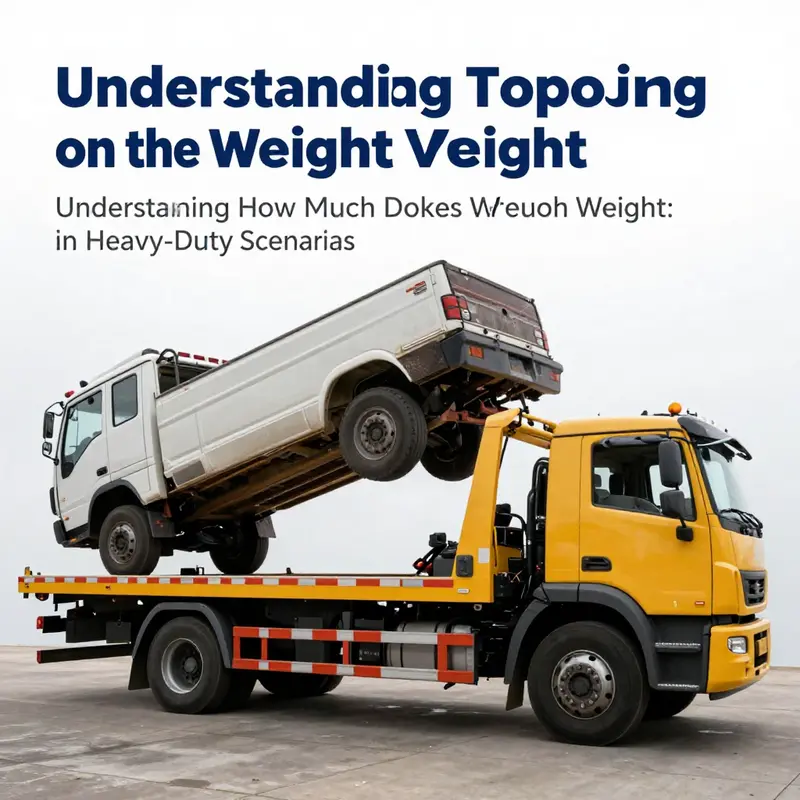
Weight is not a background trait in tow trucks; it is a defining design parameter that determines what the vehicle can safely lift, carry, and tow. In the world of roadside assistance and heavy-duty rescue, engineers select components and build frames with a careful eye toward both performance and stability. The weight a tow truck carries is determined by its intended role, its class, and the engineering required to keep it stable under extreme forces. Two primary metrics anchor the discussion: curb weight and gross vehicle weight, or GVW. Curb weight is the mass of the tow truck itself when it is ready to roll, empty of passengers and cargo but with all fluids and standard equipment included. GVW is the maximum allowable total weight of the vehicle in operation, combining the curb weight, the occupants, any tools and equipment, fuel, and, crucially, the load it is designed to tow. In practical terms, that balance matters because a tow truck designed to move heavy loads must be built heavier to generate and withstand the forces involved, while still meeting safety and regulatory limits on overall mass. A number of real-world configurations illustrate this spectrum. For a smaller, fully equipped flatbed chassis, curb weight can sit around 4,800 kilograms and GVW around 7,800 kilograms, a range representative of compact to mid-size operators focused on flexibility rather than sheer lifting power. Other configurations show GVWs that hover around 7,400 kilograms, underscoring how even modest shifts in design intent—such as a stronger winch, reinforced framework, or larger outriggers—translate into higher allowed gross mass. The contrast between these figures and the weights demanded by larger, heavy-duty wreckers is stark. When an operation requires tens of tons of towing capacity, the mass of the vehicle itself grows accordingly, and in many cases, the overall weight easily climbs into the tens of thousands of kilograms. Heavier-class wreckers, built to handle capacities of 30 tons, 50 tons, or even 100 tons, require structure, axles, transmissions, and suspensions designed for extreme loads. Each of these elements contributes to a curb weight that is far beyond everyday pickups and standard service trucks. In other words, the more the machine is asked to lift and maneuver, the heavier it must be by design. The takeaway is simple: load capacity and vehicle weight are inextricably linked. This is not merely about raw mass; it is about creating a system that remains stable and controllable under load, with margins for dynamic events such as sudden shifts in a towed vehicle’s center of gravity, wind forces during highway operation, and the stress imposed by long shifts and repeated cycles of winching and loading. The relationship between capacity and weight can be understood as a continuum rather than a fixed dichotomy. At the lower end, a light-duty flatbed may weigh roughly 10,000 pounds when empty, with a GVW in the mid-20,000-pound range. As lift requirements escalate toward 20-, 30-, or 50-ton towing capacities, the curb weight tends to rise correspondingly, and GVW often surpasses 40,000 pounds and climbs even higher depending on equipment and chassis design. In this light, a heavy-duty wrecker is not merely a larger version of a standard tow truck; it is a purpose-built machine whose mass reflects its mission. The structural framework must withstand the rigors of heavy loads, while the drive train must deliver reliable torque and stability, and the suspension must dampen the amplified motions that accompany heavy towing. The result is a vehicle that is inherently heavier, not merely because it carries more hardware, but because it is engineered to maintain control under conditions where a lighter vehicle would be at risk of mechanical failure or unsafe handling. The engineering logic behind these designs extends beyond the obvious want for power. It looks to the distribution of mass, the placement of ballast, and the way the chassis interacts with the towing system during operation. A heavier frame, reinforced axles, and a more robust powertrain are not optional accessories; they are essential to the safety and effectiveness of the vehicle. And weight is one of the clearest indicators of these trade-offs. For contrast, consider a class of trucks built to tolerate high-torque demands and to sustain performance under tough conditions. In practical terms, trucks designed for capacities in the range of 26,000 to 33,000 pounds can be extremely heavy, because the entire system must be capable of withstanding extreme stress. The self-weight of such machines often places them well into the range of 15,000 pounds (about 6,800 kilograms) or more, and when loaded to their rated capacity, the overall weight can push toward or beyond 50,000 pounds (approximately 22,700 kilograms). These numbers reflect not only the mass of the chassis and body but also the heavy-duty components—frames, axles, gear sets, and hydraulic systems—that enable safe, reliable operation when dealing with large towed masses. The practical implication for operators is clear: the weight a tow truck bears is a direct proxy for its potential ability to wrestle with heavy loads without compromising control. It is also a clue about the footprint of the operation and the space required for maintenance, fueling, and storage. Heavier machines demand more robust tires and suspension components, more substantial ground clearance to navigate uneven terrain, and a more capable braking system to manage the momentum generated during winching or when controlling a heavy towed mass on grades and curves. This is why the weight discussion cannot be abstracted from the actual use case. In the day-to-day realities of road service, a light tow truck is quick and nimble, but it will struggle with heavy recoveries, long-distance pulls, or towing a high-contrast load like a wrecked vehicle with misaligned weight distribution. A heavy-duty rig, conversely, brings certainty and safety at the cost of agility and efficiency in lighter tasks. Operators, fleets, and dispatchers make decisions about configuration not merely on price or fuel economy but on the fundamental physics of load management. The principle also bears out in the way fleets plan for emergencies and responses. When a fleet needs to be ready to handle the worst cases—wrecked vehicles, multi-vehicle collisions, or stalled trucks in precarious positions—the weight of the tow truck itself becomes a strategic variable. The heavier the available tow capacity, the greater the potential to stabilize and recover safely; yet that power must be tempered by the realities of road conditions, infrastructure, and regulatory limits on axle weights and overall mass. The field has long recognized this balance, and practitioners emphasize a careful pairing of lifting capability with chassis integrity, wheel arrangements, and hydraulic systems. In other words, the capacity to lift and tow is inseparable from the weight the vehicle carries as part of its operation. It is not merely a metric to be cataloged; it is a design imperative that shapes every other choice—from the type of mounting system and the strength of outriggers to the size of fuel tanks and the configuration of tool compartments. This is where the concept of operational weight comes into play. The total operational weight is the sum of the vehicle’s curb weight and the weight of the payload it is carrying or towing at a given moment. It is also the mass that must be managed by the braking system, the transmission, and the tires. In practical terms, an eight-ton class flatbed with a three-ton lifting apparatus presents a clear example: the lifting gear itself adds substantial mass to the vehicle, which in turn translates into a higher curb weight. With such equipment, the curb weight can already be significant, and the GVW will reflect the maximum load the truck is allowed to carry or tow when fully equipped for a job. This reality underscores a fundamental truth: the lifting capacity of a tow truck is as much about the weight of the machine as about the weight it can move. The weight of the equipment necessary to expose, secure, and tow a heavy vehicle is part of the machine’s mass budget. It also informs maintenance planning, fuel strategy, and operating costs. Fleet managers routinely weigh these variables when classifying vehicles into light, medium, and heavy-duty categories and when configuring responder units for emergencies. A thread that runs through all of this is the need for standardization and consistency in weight management across fleets. The weight implications of capacity are not isolated to a single model or a single use case; they must align with broader practices for training, safety, and response readiness. In this sense, weight becomes a language that ties together engineering design, field operations, and regulatory compliance. For teams focusing on emergency readiness and standardized response, understanding these weight relationships is essential. Striking the right balance between capacity and weight ensures that a unit can perform under pressure without compromising safety or reliability. That is why many operators refer to holistic standards that govern equipment layout, lifting gear, ballast management, and towing procedures. This emphasis on standardization helps ensure that across different units in a fleet, the behavior of a heavy-duty tow truck under load remains predictable and manageable. It also supports training programs and maintenance schedules, ensuring that operators are prepared to handle the most demanding scenarios with a reliable tool in hand. For readers seeking deeper perspectives about how such standards shape practical operations, see the discussion on standardization in heavy-duty rescue operations, which links to industry-wide considerations and best practices. standardization in heavy-duty rescue operations. The broader takeaway is that weight is not a mere numeric label; it is the lived consequence of design decisions intended to keep both operators and the public safe when gravity, momentum, and force converge in complex rescue and towing situations. In light of this, the weight topic connects to broader industry considerations, including how fleets standardize equipment for emergency readiness and how crews respond to heavy-load incidents with confidence and discipline. For readers who want a broader cross-class view of how weight and capacity translate into real-world performance, an industry overview offers a window into the spectrum of towing trucks across classes and capacities, underscoring the practical implications of weight in heavy-duty operations. External resource: https://www.transwest.com/top-towing-trucks-in-every-class/
Final thoughts
Understanding how much a tow truck weighs is crucial for various stakeholders, including local drivers, auto repair shops, and property managers. From curb weight to gross vehicle weight ratings, recognizing the weight specifications ensures better decision-making in towing operations and vehicle management. As truck types and capacities vary, so do their implications for everyday users. By learning about these factors, you can enhance your comprehension of tow truck operations and optimize towing services in your community.