
Leasing a tow truck can be a crucial step for drivers, auto repair shops, property managers, and HOAs. Understanding the various costs involved can empower you to make smart financial decisions and operate effectively. From daily leasing rates to additional expenses, this overview will dissect all financial aspects you need to consider. The following chapters will guide you through daily costs, additional expenses, factors affecting pricing, and how to find the best leasing deals unique to your needs.
Tow Line by Tow Line: Reading the True Daily Cost of Leasing a Tow Truck
Leasing a tow truck for daily use is more than the sum of a sticker price. For anyone building a roadside service, running a small fleet, or just testing the waters as a solo operator, the daily cost becomes a pulse that beats through every call, every mile logged, and every late-night tow. The numbers are rarely a single line on a quote; they unfold as a stack of factors, each influencing what you pay day-to-day. The type of truck you choose, its lifting and recovery capacity, its age and maintenance history, and the geography of your operation all braid together to shape the bill. In a city with high demand and tight availability, the same model can carry a higher price than in a rural town where competition among rental providers keeps daily rates more modest. If you want a clear picture, you have to look beyond the headline daily rate and drill into what each line item actually represents, how it interacts with your expected workload, and how it may change with duration and distance.
The bedrock of cost starts with the vehicle class. Light-duty tow trucks, the kind most often used for personal vehicle recoveries and smaller jobs, typically command a daily rate that sits in a relatively accessible range. You’ll see numbers commonly hovering around a few hundred dollars per day—roughly three hundred to five hundred in ordinary market conditions. This band reflects the simpler lifting gear, the smaller wheelbase, and the lower hydraulic demands that come with moving passenger cars and compact SUVs. When a job requires more agility or the ability to reach tight spaces, the choice might tilt toward a slightly heavier machine, nudging the daily figure upward but not yet into the realm of the heavy-duty beasts. The initial instinct to compare only the base rate can be risky, because what seems like a bargain can accumulate quickly once miles, fuel, and services enter the bill.
Move up a notch to medium-duty and you begin to feel the real shift in economics. Medium-duty tow trucks are designed for larger vehicles, including SUVs with heavier loads or light trucks that stretch the limits of a standard recovery. The daily rental for these machines typically climbs into a range that sits above light-duty, often in the five hundred to eight hundred-dollar band. The justification is not merely heft; it’s the capability. These trucks bring bigger hydraulic systems, more robust winch setups, and the flexibility to handle a broader set of recovery scenarios without forcing a second unit into a call. In a well-placed market, that incremental capacity is what keeps a crew moving through a day with fewer delays and fewer extra rentals.
The gulf becomes even more pronounced when you consider heavy-duty tow trucks. These are the machines built for commercial trucks, municipal fleets, or multiple-vehicle recoveries. The daily rate for heavy-duty gear frequently exceeds the eight-hundred-dollar mark, and it can easily stretch into the range of nine hundred to one thousand dollars per day, sometimes higher. Why so much more? The answer lies in the powertrain, lifting capacity, and specialized equipment that go into these rigs—heavy-duty frames, extended reach, high-capacity winches, and the reliability demanded by larger-scale operations. It’s not uncommon to see a few specialized models flirting with the thousand-and-a-half-per-day threshold in peak demand or with particularly tail-end heavy configurations. If your business regularly encounters heavy-duty calls, the math will heavily tilt toward this category; if not, it may be worth exploring whether you can meet those needs more efficiently with a mixed fleet strategy or by scheduling heavier work with partner providers.
But the headline daily rate is only part of the picture. A complete cost view requires acknowledging several recurring add-ons that can tilt the math in either direction. Mileage charges, for example, are a common way to bill for usage beyond a baseline. It’s not unusual to see per-mile charges around ten dollars or more, depending on the rental agreement and the distance covered during a shift or a longer assignment. If your operation expects a high mile count—say, a heavy rotation through rural routes or cross-town deployments—those mileage fees can become a meaningful recurring line item. Fuel costs, unsurprisingly, are typically not bundled into the base rental fee. The lessee bears the responsibility for fueling the truck to the agreed levels, which means you may need to anticipate a fuel surcharge or a variable cost tied to the trips you undertake and the fuel economy of the vehicle type you select.
Insurance is another prudent consideration. Typically, some level of liability and physical damage coverage is required, and that protection often carries its own daily premium. Even when a company provides insurance as part of the lease, the daily cost can range from a modest sum to a more conspicuous amount, depending on the coverage limits, deductible, and whether optional add-ons like comprehensive coverage or rental reimbursement are included. The precise figures hinge on your risk tolerance, the historical reliability of the vehicle type, and the liability profile of your operation. If you’re running a shop with a larger crew, you may also encounter scenarios where an additional driver is needed for certain shifts, which adds another daily stripe to the ledger. Driver fees, typically in the range of one hundred to two hundred dollars per day, reflect the value of trained personnel who are familiar with the recovery process, the safety protocols, and the paperwork that accompanies each job.
The duration of the lease or rental period often introduces discounts or, conversely, penalties. Long-term rentals—think several days or weeks—can unlock reduced daily rates as vendors anticipate steadier cash flow and lower turnover. Conversely, short-term or ad-hoc rentals may carry premiums that compensate for the flexibility a customer demands. If your schedule includes long deployments or recurring contracts, negotiating a weekly or monthly rate can yield meaningful savings, especially when paired with a capped mileage arrangement and a clear policy on fuel and after-hours service.
Location remains a potent driver of price. Urban hubs with higher demand and scarcity of vehicles naturally push daily rates upward. The complexity of urban operations, with tighter parking, heavier traffic, and more frequent on-route adjustments, can justify higher charges. Conversely, more rural settings may offer more favorable rates due to abundance and lower overhead costs for suppliers. In practice, the same truck type can look very different in price simply because of where you operate, the time of year, and how much competition exists among local providers. For anyone evaluating a lease or rental, this is the element that often surprises new operators: the same model might carry a different price tag as you cross a boundary or as the calendar shifts toward peak seasons.
Putting all of these factors together leads to a practical framework for budgeting. A typical calculation starts with a clear estimate of the average daily usage you expect, the length of the assignment, and the likely mile count. Then you layer in the extras: mileage charges, fuel, insurance, extended rental fees, and any after-hours service costs. A thoughtful budgeting approach doesn’t stop there. It also considers the potential for downtime—days when the truck sits idle due to maintenance windows, weather, or demand fluctuations. Downtime translates to sunk costs if the fixed daily rate continues to accrue without productive use. Skilled operators mitigate this by planning maintenance windows during predictable lulls and by negotiating inclusive terms that reduce or cap certain charges during slow periods.
For operators who want to keep a steady hand on the wheel of cost, several best practices emerge. First, gather multiple quotes from local towing and recovery providers and compare not just the daily rate but the total cost of ownership over a typical cycle of operation. It’s essential to ask vendors to spell out all components: the base rate, mileage charges, fuel policies, insurance requirements, driver fees, after-hours surcharges, and any penalties for extended rental or early return. Second, be explicit about the expected workload. A realistic projection of daily call volume, typical call types, and the average distance per job helps constrain the model toward a realistic cost envelope rather than a best-case fantasy. Third, seek pricing models that align with your operating rhythm. If you anticipate a lot of short, frequent calls in a single day, a lower daily rate with higher mileage could be preferable to a higher flat rate accompanied by stiff mileage caps. If you expect long deployments or continuous coverage, negotiate for a blended rate that offers both a favorable daily price and predictable fuel and insurance costs.
From a operational planning standpoint, a strong resource for establishing standards and readiness can be a valuable touchstone. It helps align the procurement decision with broader fleet strategies, maintenance planning, and emergency response readiness. Integrating a disciplined framework—one that considers equipment age, maintenance history, and readiness metrics—can shield you from snap judgments driven by a single line item and steer you toward a balanced, long-term leasing plan. Fleet standardization and emergency readiness guide provides a useful lens for translating daily cost into a broader, safer, and more reliable fleet strategy. While the guide is not a price sheet, it supports decisions that reduce unexpected costs by ensuring you’re matching the truck’s capabilities to the actual work required and maintaining the fleet in a state of readiness that minimizes downtime.
To translate all this into a concrete action, start by outlining a scenario: a typical week with six to eight shifts, a mix of light- and medium-duty calls, and occasional heavy-duty deployments. Sketch the expected miles and the likely fuel consumption for each truck category you’re considering. Then map those numbers to the cost elements you’ll actually pay day to day: base rate, mileage, fuel, insurance, driver fees, after-hours charges, and any potential penalties. This exercise illuminates how the composition of your workload affects the total daily cost and helps you identify where you can negotiate favorable terms. And because the market can shift with demand, it’s wise to revisit quotes periodically—at least quarterly—to ensure your assumptions still hold and to capture any price adjustments that reflect changes in the operating environment.
In practice, the numbers you’re juggling resemble a dynamic equation rather than a fixed price. A typical day might begin with a base rate for a light-duty truck around three hundred to five hundred dollars. If the day’s schedule includes a couple of heavier calls or a longer cross-town run, you may see the rate climb toward the five hundred to eight hundred range for that vehicle class. A heavy-duty unit, if deployed for a multi-vehicle or commercial truck recovery, will likely hover above eight hundred per day, potentially entering the thousand-dollar zone if special equipment or extended reach is required. Add-ons can push the total into a much higher figure, particularly if you need an on-site driver, expect several hours of after-hours service, or anticipate substantial mileage. The net effect is that, for any given day, there is a cost you can anticipate with reasonable confidence, and a margin of variability that depends on the exact mix of trucks, distances, and services you require.
The bottom line is that the daily cost of leasing a tow truck is not a single line on a receipt. It is a layered figure shaped by vehicle class, utilization, duration, location, and the ancillary terms that accompany possession. If you are building a business on this premise, approach pricing with the same rigor you apply to any other operational cost. Quantify your expected workload, scrutinize every line item in the lease, and, where possible, negotiate terms that align with your actual use patterns. In doing so, you transform a potentially volatile expense into a predictable component of your operating plan. And while no two markets are identical, a disciplined, data-informed approach to pricing can yield a dependable range that keeps your fleet productive without eroding profit margins.
For those who want a broader, data-grounded context, industry pricing studies provide a benchmark for where your local quotes fit within national trends. Access to such data can help you assess whether a quoted daily rate is fair for your region and your truck class. See the external resource linked below for a broader view of current market pricing dynamics and the typical ranges you might expect across the United States.
External resource for broader context: https://www.towingassociation.org/research/daily-rental-pricing
To keep this discussion anchored in practical, day-to-day decision making, consider the value of connecting with a local provider as part of a simple, repeatable procurement process. Ask for written quotes that outline every cost component and request a sample long-term rental or multi-day rate to gauge how rates change with duration. A side-by-side comparison of two or three providers across all cost lines can reveal the true economic picture more clearly than any single quote. And as you refine your approach, you may find that a blended fleet strategy, which pairs lighter, more economical units with a smaller number of heavier, high-capacity trucks, delivers the best balance of flexibility and cost. By treating daily leasing as a variable in a larger operational equation—one that factors workload, geography, and readiness—your business obtains not just the cheapest ride for a day, but the most reliable road map for profitability over time.
Tow Truck Leasing: Uncovering Hidden Costs and How to Budget
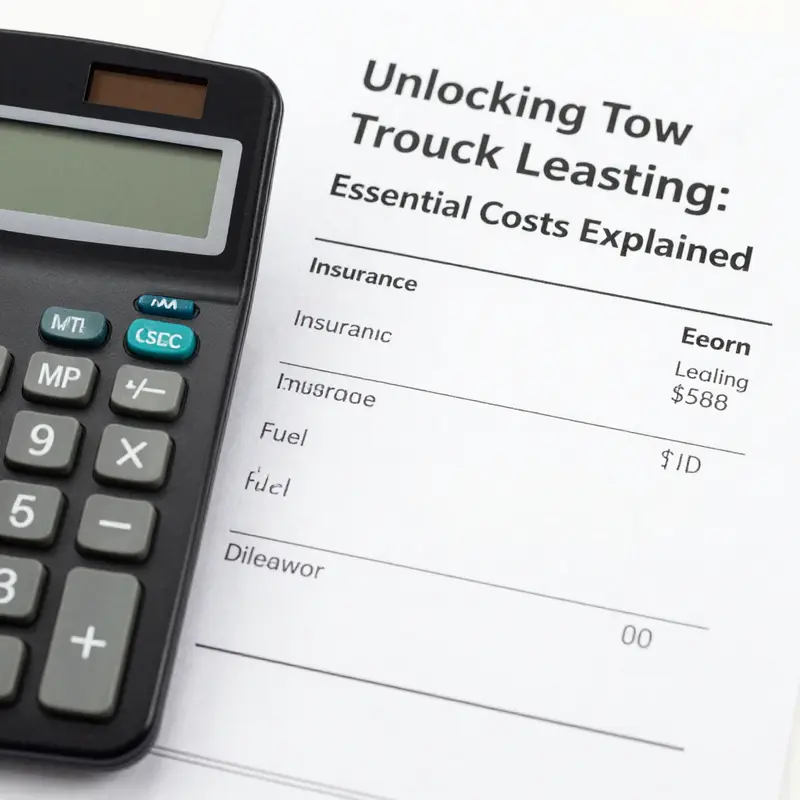
Leasing a tow truck can seem like a straightforward path to capacity. The headline daily rate is only part of the picture. The real cost picture includes fuel volatility, maintenance, insurance, licensing, per-tow fees, depreciation, mileage charges, and the regulatory environment. A disciplined budgeting approach treats these as variable components tied to usage, duty cycle, and service area. Build a monthly forecast that blends historical call volumes with anticipated demand; set aside a contingency reserve for unexpected repairs; review insurance and licensing annually. In practice, model multiple scenarios: short-term leases with greater flexibility, longer terms with predictability, and upgrade options to keep the fleet current. By converting variable costs into a predictable cash flow, operators can maintain pricing integrity for customers and protect margins. Real-world data sources—such as rental marketplaces and industry reports—can help calibrate expectations and prevent sticker shock on new quotes. The central message is simple: the base rate is just the doorway; profitability lives in how you manage the entire cost ecosystem that travels with the truck.
Cost Clarity: How to Budget for Tow Truck Leases
Leasing a tow truck is more than a daily rental. For operators who rely on timely roadside recovery, crash cleanup, or fleet maintenance, total cost of ownership shapes uptime and profitability. The sticker daily rate is only part of the picture because age, mileage, maintenance needs, insurance, fuel, and driver costs all land on the monthly ledger. A newer, more capable truck may carry a higher base rate, but it can also deliver improved reliability and lower long-run downtime. An older model might have a lower base rate yet incur more frequent repairs and higher maintenance costs. Mileage restrictions and overage charges add another layer of complexity for long routes, remote patrols, or high-activity periods. Location and regulatory requirements can push costs up in city markets where incident rates are higher and specialty features are mandated by local rules. When you read a lease quote, look for apples-to-apples comparisons: the same truck type, same expected mileage, same maintenance coverage, and the same driver arrangement. Service packages that include routine maintenance, inspections, and replacement parts can stabilize budgeting but often raise the headline price, so compare total monthly outlays rather than the initial daily rate. The practical approach is to forecast the full operating budget: depreciation and financing, insurance, fuel, maintenance, and driver costs, then add any anticipated downtime costs from potential outages. By modeling these elements, you can choose a lease that maximizes uptime and minimizes surprises, rather than chasing the lowest daily rate. External references and provider quotes can be helpful, but only if they are harmonized to the same assumptions.
Navigating Real Costs and Real-Time Deals: A Practical Guide to Leasing a Tow Truck
Leasing a tow truck is more than a daily price tag. For operators starting out or expanding a fleet, the decision hinges on a web of variables that stretch beyond the meter. The type of tow truck, its size and capacity, the vehicle’s age and condition, the length of the lease, and the market you’re operating in all push the total cost in different directions. In broad terms, daily rental rates run from roughly three hundred dollars for light-duty models to well over a thousand for heavy-duty equipment, with many mid-range options hovering in the seven-hundred to twelve-hundred-dollar range. That spread is a reflection of the capabilities and uptime each class guarantees, and it’s the first clue that a simple per-day price never tells the full story of ownership and operating expenses.
When you break down by class, the landscape becomes clearer. Light-duty tow trucks are typically aimed at personal-vehicle recoveries and short hauls, where the emphasis is on nimbleness and low overhead. Medium-duty trucks carry larger payloads and longer service windows, making them versatile for SUVs, crossovers, and mid-sized fleets that still prize maneuverability. Heavy-duty units, by contrast, are designed to handle large trucks, buses, or multiple vehicles in a single task, and their rental costs reflect the demanding torque, hydraulic systems, and specialized maintenance those machines require. The pricing tailpipe follows these capabilities: light-duty tends to be the most affordable daily option, medium-duty sits in the middle, and heavy-duty anchors the higher end of the spectrum. In practice, a savvy operator weighs not just the sticker price, but the expected minutes of uptime the truck will deliver on the road.
Beyond the base rental, a handful of ancillary costs can dramatically shift the total expenditure. Insurance is frequently required and can add a notable daily bump, often in the range of fifty to one hundred and fifty dollars per day, depending on coverage limits, the operator’s experience, and the risk profile of the routes. Fuel is almost always the lessee’s responsibility, and since tow trucks drink more fuel when they’re loaded with gear and making multiple short trips, this cost can accumulate quickly if trips are frequent or geographically dispersed. If a professional driver is needed, expect to add roughly a hundred to two hundred dollars per day, depending on the skill level, shifts, and on-call requirements. Mileage charges may kick in for high-mileage scenarios, and some agreements impose surcharges when you push beyond a set threshold within a billing period. These fees compound the daily rate, so a contract that looks competitive at first glance can end up less favorable after a few weeks of service if the hidden costs aren’t disclosed up front.
Longer rental engagements often unlock discounts that are not available on shorter terms. Long-term rates can reduce the effective daily price and improve cash flow for a business that needs predictable costs. On the flip side, flexible terms might be more appealing to a startup operation testing a new service area, so the decision often hinges on how predictable the workload is and how quickly the fleet can be scaled up or down. Location, too, shapes value. Urban centers and markets with tight capacity tend to push rates higher because of higher operating costs, driver requirements, and demand spikes during peak seasons. Rural or lower-traffic regions may offer more favorable daily rates, but fleets can encounter longer wait times for availability and maintenance windows that complicate scheduling.
In the practical search for the best value, it helps to look at the ecosystem that these leases inhabit. Specialized rental firms that focus on heavy equipment and tow assets can deliver more consistent uptime and standardized terms, while broader logistics platforms that aggregate fleets across routes tend to offer real-time quotes and a broader slate of options. The latter can be particularly valuable if you’re evaluating a cross-country deployment or planning for seasonal fluctuations in demand. Real-time quotes enable a direct comparison of routes, pickup locations (city or ZIP code), and destination points, helping you gauge both price and lead times without multiple phone calls. This kind of networked approach is not just about cost; it’s about reliability and schedule certainty, which are essential when you’re aiming to keep a fleet ready for the next call.
For individuals or small businesses seeking affordable, dependable options, the landscape still rewards a broad, mixed strategy. A well-positioned national rental chain can provide budget-friendly entry points and predictable terms, especially for light- and mid-weight tasks. These providers often offer transparent pricing models that scale with duration and mileage, making it easier to project monthly costs. It’s also wise to keep a watchful eye on the fine print: some contracts cap maintenance responsibilities, others require you to arrange and pay for fuel, and a few may include or exclude certain roadside assistance benefits. Reading these terms carefully helps avoid surprises that can erode the perceived savings of a lower daily rate.
If you’re hunting for practical, real-world advice and operational context, you can read about relevant topics and experiences on the Santa Maria Tow Truck blog. The site offers insights grounded in daily operations, fleet management, and the realities of keeping a tow service running smoothly. For background and practical operator tips, see the Santa Maria Tow Truck blog. This resource, while regionally focused, provides a useful lens on how pricing intersects with service standards, maintenance planning, and emergency readiness, which all feed back into the decision of how to price and structure a lease.
The pricing puzzle also benefits from looking at platforms that bridge fleets with customers across broader geographies. A large-scale networking approach can deliver price transparency that small, local providers alone cannot match. By connecting thousands of verified fleets with a wide network of warehouses and service points, these platforms enable route-based comparisons that reveal not only the current advertised daily rate but also the practical realities of pickup and drop-off timing, maintenance cycles, and availability windows. While the exact figures will differ by city and season, the principle remains the same: a broader search can expose both better pricing and smarter scheduling, reducing idle time and the risk of a vehicle sitting unused while you meet deadlines.
To close the loop, it’s essential to anchor any leasing decision in a disciplined due-diligence process. Start by contacting multiple local providers to get quotes that include all line items—base rate, insurance, driver (if applicable), fuel, mileage, and any delivery or pickup fees. Ask about maintenance policies: who handles routine servicing, who pays for wear and tear, and whether the lease includes a stipulated uptime guarantee. Clarify terms related to early return or extension, as well as penalties for cancelation or schedule changes. Collect written quotes and compare them not just on daily price but on total cost of ownership over the expected lease period. It’s easy to be swayed by a low headline rate, but the best deals emerge when you see the full cost picture months into the agreement, along with the support structure that accompanies it.
The broader takeaway is straightforward: successful pricing hinges on clarity and comparison. When you’re negotiating, push for itemized invoices and an explicit breakdown of inclusions. Use real-time quote capabilities to test multiple routes and durations. Remember that a lease is not merely a vehicle rental; it is a contract that governs uptime, maintenance, and logistics for a defined period. The most cost-effective choices are often those that balance a reasonable daily rate with reliable availability, straightforward terms, and predictable upkeep that keeps your operation on the road rather than mired in bureaucratic delays.
For those who want a concrete starting point, consider a two-pronged approach: begin with a local, transparent provider to establish a baseline in your region, and then expand into broader networks to benchmark your price against national or cross-regional offers. This dual strategy yields a robust sense of the market and guards against overpayment for a seemingly attractive rate that hides extra charges in the fine print. In short, the best deals are not just about saving a few dollars per day; they’re about ensuring uptime, reliability, and a clear, predictable cost framework that supports steady business growth. For the next chapter, we’ll explore how to translate these leasing insights into fleet readiness, staffing plans, and response-time guarantees that keep a tow operation efficient and ready for the road ahead.
External resource for current rates and availability: https://www.renthut.com
Final thoughts
Understanding the costs associated with leasing a tow truck is essential for making well-informed financial decisions. By considering daily rates, additional expenses, and various influencing factors, you can secure the best deal that aligns with your operational needs. Make sure to compare various offers and reach out to local leasing companies to uncover options that might work best for you. Take your time to analyze all angles before committing to a lease, and you’ll find a solution that benefits your business or personal needs.