
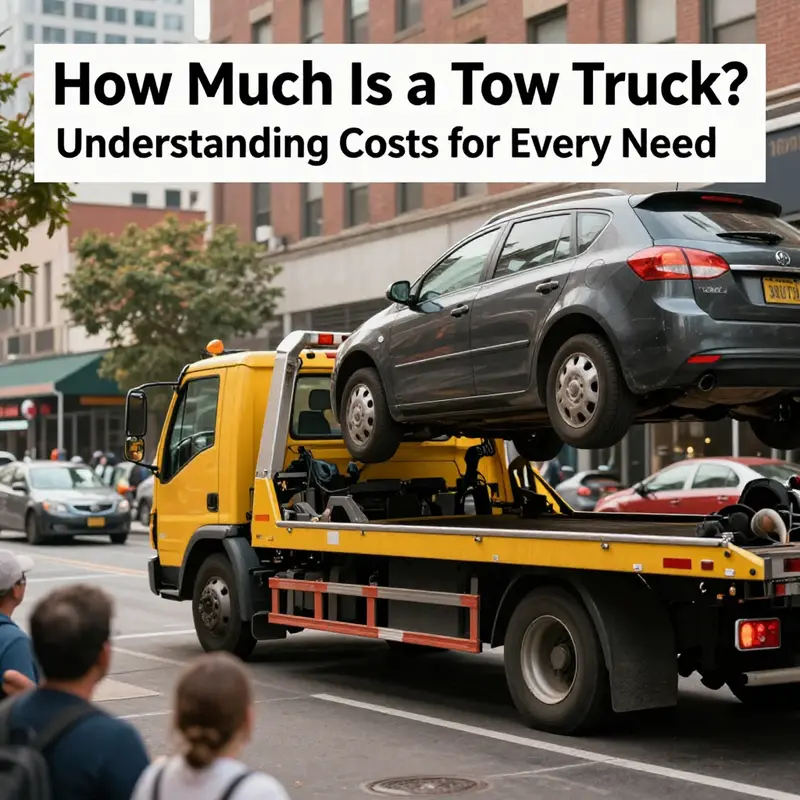
Owning and operating a tow truck involves understanding a range of costs, from the initial purchase to ongoing expenses. Whether you’re a local driver in need of assistance, an auto repair shop looking to expand services, or a property manager responsible for vehicle regulations, grasping the nuances of tow truck pricing is crucial. This article delves into the diverse costs associated with tow trucks, beginning with an overview of new tow truck pricing in 2026. We will investigate the factors influencing these costs, analyze the market trends, and discuss ongoing expenses post-purchase to give you a comprehensive understanding of how much a tow truck truly costs.
Tow Truck Prices in 2026: From Light-Duty Basics to Rotator Investments
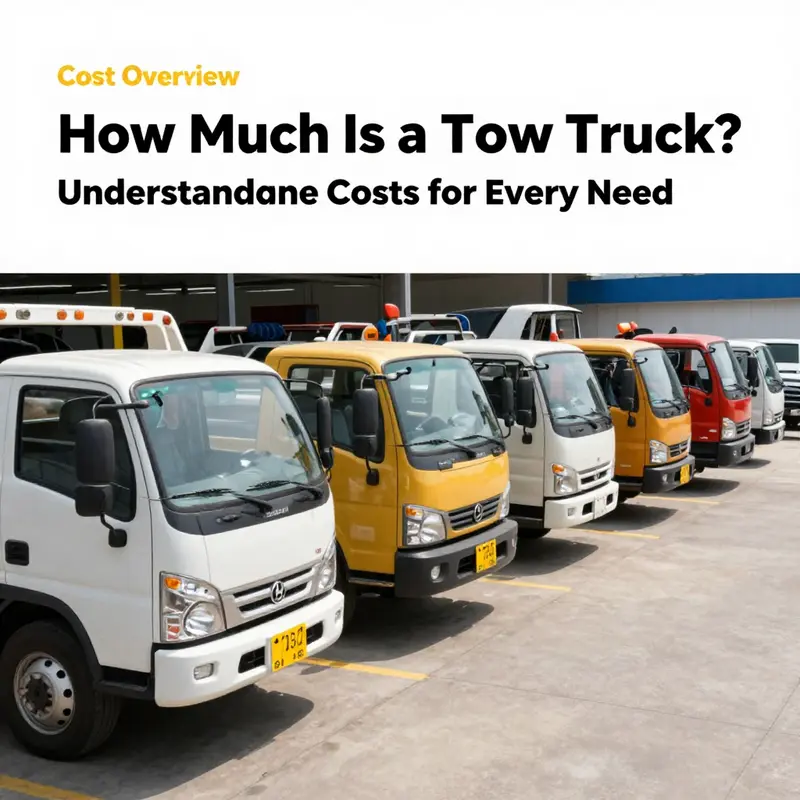
Tow trucks in 2026 span a wide price range tied to size, capacity, and specialty. Light-duty units for small cars typically run from 12,800 to 39,800. Medium-duty 8×4 configurations with about 50-ton capacity range from 40,000 to 70,000. Rotator heavy-duty options start around 150,000 and can exceed 300,000 depending on rotation system and capacity. Flatbeds sit in the mid-to-high price spectrum based on bed length and power. Mini wreckers (about 3-ton) are commonly priced around 20,900 to 21,000 FOB. A typical 6×4, 25-ton road wrecker might be 32,100 to 35,200. These base prices exclude shipping, taxes, and optional packages. The total landed cost depends on freight, insurance, duties, and any add-ons like warranties or training. For budgeting, match the expected workload to the category and compare multiple suppliers to optimize for total cost of ownership. The true cost is a blend of upfront price, delivery terms, and ongoing maintenance, fuel, and insurance.
Beyond the Base Price: Reading the Real Cost of Tow Trucks
Beyond the Base Price: Reading the Real Cost of Tow Trucks
The sticker price on a tow truck is only part of the truth. For anyone evaluating whether to buy, lease, or rent a unit for a fleet, the numbers that matter are the ones that accumulate once the truck leaves the showroom. The price you see in a spec sheet is shaped by the truck’s type, its carrying capacity, the sophistication of its recovery equipment, and the intended line of work. Light-duty units intended for small cars sit in a different part of the market from the rotators that handle overturned vehicles in tough weather, and both sit on a price ladder that climbs quickly as capabilities expand. When you factor in the many real-world uses and the realities of operating a tow business, the base price becomes a starting point rather than a final tally.
In today’s market, new tow trucks cover a wide spectrum. Light-duty models, typically purposed for sedans and small SUVs, generally list somewhere in the neighborhood of roughly twelve to forty thousand dollars. These are compact, often with winch capacities that are adequate for everyday roadside assistance but lean on simplicity for maintenance and efficiency. As the needs grow—tow trucks that can handle heavier loads, more demanding recovery tasks, or more frequent on-site service—the price climbs. Medium-duty configurations, designed for larger vehicles and more robust work crews, tend to range from about forty thousand to seventy thousand dollars. They carry the bite of higher payloads, stronger hydraulics, and more capable stabilization systems, which translate directly into a higher initial outlay.
Ask a shop foreman or a fleet manager about the upper end of the spectrum, and the answer is a world apart from the light-duty class. Heavy-duty and specialized tow trucks, especially those built for severe accident recovery, can demand prices that start around a hundred fifty thousand dollars and easily exceed three hundred thousand. The most capable rotator units, with 360-degree rotating booms designed to lift and stabilize overturned vehicles in challenging terrain, sit at the extreme end of the market. Flatbeds, valued for their ability to transport vehicles with minimal drivetrain wear and to protect low-clearance or AWD models, typically fall in a broad band—from roughly seventy-five thousand up to about one hundred fifty thousand dollars. There are outliers in every market, and in some corners a high-capacity recovery unit might appear in the low thirty-ths of thousands, though such entries are uncommon in fully equipped, new configurations.
These ranges reflect new-unit pricing and may be shaped further by order quantities, optional equipment, and the specifics of the manufacturer’s configuration. They also come with the practical caveat that shipping and freight—costs that vary by destination and supplier—are not included in the sticker. The fact remains: the base price is only one piece of the financial picture. A prudent buyer quickly learns that the real investment runs deeper, especially when one considers the ongoing costs of ownership once the truck is on the road.
The longer you plan to operate a tow fleet, the more apparent the dispersion in cost becomes. A small operation may justify a lighter upfront expenditure if it reduces debt and accelerates break-even, while a larger operation, with a commitment to reliability and a broader service area, may justify the higher price tag of a rotator or flatbed to meet client expectations and to minimize downtime between calls. The math is not merely about sticker price; it is about reliability, uptime, and the ability to safely and efficiently perform the job in a given window of time.
From a business perspective, the decision to acquire a new unit versus exploring the used market also shifts the economics. New units offer the latest safety features, longer remaining warranty, and potentially lower short-term maintenance risk, but they also require a larger upfront cash outlay. Used units may carry a lower initial price but can incur higher maintenance costs or more frequent downtime, especially if their prior service histories are incomplete. A fleet manager has to weigh depreciation curves, tax considerations, financing terms, and expected utilization. The goal is not only to fit the current demand but to maintain a level of readiness that reduces response times and protects vehicle drivetrains during towing operations.
One factor that often gets overlooked in the base-price discussion is the diversity of the tasks that a tow truck is asked to perform. A wheel-lift unit is typically enough for straightforward tows, but for modern vehicles with complex drivetrains or for work that requires safeguarding a damaged frame, a flatbed becomes valuable, albeit pricier. Rotators offer unmatched versatility in complex recoveries but demand heavy training, specialized maintenance, and higher fuel consumption. Because each job has a different set of demands, the daily revenue potential of a given unit should be weighed against its anticipated usage patterns. A rotator might be indispensable in a region with high accident density or difficult terrain, whereas a flatbed could be the best fit for urban markets with a high volume of delicate, AWD, or low-clearance vehicles. This is precisely where the “beyond the base price” calculus reveals its true form.
Beyond purchase price, there are ongoing costs that shape the total cost of ownership. Fuel efficiency is a practical concern: larger engines and heavier chassis demand more fuel, especially during lengthy recoveries or complex on-site compositions. Maintenance and wear on hydraulic systems, winches, booms, and stabilizers can accumulate quickly, particularly in fleets that operate around the clock. Insurance premiums tend to be higher for specialized equipment and for fleets that carry the risks associated with accident recovery and heavy-duty operations. Tires, recurring service intervals, and spare parts inventories all contribute to monthly and annual expenditure. Training costs, licensing requirements, and certifications for operators—especially for rotators and other high-spec units—are not negligible and should be budgeted as part of workforce development.
The arrival of a new unit also influences the length and shape of a fleet’s depreciation curve. In many markets, the tax and accounting approach to depreciation rewards investment in newer equipment, but it also means planning for a shorter write-off period if the unit is expected to stay in service only for a few years before replacement. Leasing arrangements can offer predictable budgeting, while rental agreements might deliver flexibility for seasonal surges or multi-vehicle deployments. The financial answer to whether to purchase, lease, or rent hinges on utilization, capital availability, maintenance philosophy, and the expected life cycle of the fleet, rather than on a single price tag.
For reference and broader context, a reader can explore industry discussions about fleet readiness and standardization in emergency operations, which ties into how a shop assesses capability alongside cost. Santamaria Tow Truck Blog
The decision framework also benefits from understanding the different service profiles that come with these trucks. A wheel-lift or standard boom unit costs less to acquire and offers straightforward use for routine incidents. A flatbed adds the protection of the vehicle’s drivetrain and is favored for delicate or low-clearance vehicles, though it adds maintenance and upfront cost. A rotator, the most capable and complex option, carries the hallmarks of emergency readiness—faster, more versatile, but also more expensive to own, operate, and train for. Each choice translates into different scheduling, response capabilities, and, ultimately, different pricing dynamics when a customer calls for assistance. The service side of the business, therefore, is inseparable from the purchase side. A fleet built to meet peak demand must balance the promise of rapid response with the reality of labor costs, fuel burn, equipment wear, and the reliability that keeps drivers safe and customers satisfied.
In practice, customers rarely see the full accounting behind a tow, but they do feel the effects in the invoice. Short, urban hops with quick, light-to-medium heavies tend to be less expensive per mile, but they accumulate when call volume spikes or when traffic snarls intensify the time on scene. Rural long hauls drive travel time and fuel costs up, while the use of a rotator or specialized setup can magnify those figures dramatically. The cost becomes a function of distance, weight, complexity, and the demand for a high level of readiness. The result is a layered cost structure where the base price sits at the bottom of a long staircase that includes transport time, equipment wear, labor hours, and regulatory compliance.
In sum, the base price of a tow truck is a snapshot of capability, not the full budget forecast. The job you need the truck to perform, the environment in which it operates, and the operational discipline of the fleet all shape the total cost of ownership. When planning a purchase, fleet managers do well to model scenarios: a light-duty response in a city with moderate demand, a flatbed solution for a mixed urban-suburban territory, or a rotator for a region prone to severe weather and difficult recoveries. Each scenario carries a distinct price trajectory, and each trajectory affects the bottom line in different ways. The practical takeaway is clear: know your expected workload, map it to the right level of capability, and build a cost model that accounts for both the upfront investment and the ongoing expenses that determine true cost of ownership over time. For those who want to deepen their understanding of industry standards and best practices, external resources offer additional benchmarks and guidance. Industry standards and best practices are outlined by the Towing Industry Association: https://www.towingindustry.org/.
The Price of Towing Power: A Practical Guide to What Different Tow Trucks Cost and How It Shapes Your Operations

Pricing the machinery that backs a tow company or a fleet operation is never just about sticker price. It is a careful balance between capabilities, reliability, maintenance, and the kind of jobs you anticipate. In the current market, the price spectrum for new tow trucks spans a wide range, driven by differences in size, load capacity, and the specialized features that each kind of truck brings to the scene. For light-duty work, suitable for sedans and small SUVs, new units generally fall somewhere in the mid tens of thousands to the upper three-figure thousands. A practical spread you’ll encounter runs from about 12,800 to 39,800 per unit, with winch capacities that can handle a couple of tons and the agility needed for quick deployments. The range reflects not only whether a truck can pull a vehicle off a curb or highway shoulder but also how quickly it can respond to back-to-back calls, how much equipment it carries, and how robust its hydraulic system and chassis are for smaller but more frequent recovery tasks.
When the scope shifts toward larger vehicles and more demanding recovery work, the price moves decisively upward. Medium-duty tow trucks, including those configured as 8×4 or capable of around 50 tons in a heavy-duty role, typically run from about 40,000 up to 70,000. These machines are designed for commercial fleets and longer hauls, where efficiency matters as much as muscle. A truck in this category may be called upon to recover commercial vehicles or to operate in environments where a higher degree of stability, reach, and multi-axle towing capability is necessary. The difference between a light-duty and a true medium-duty unit often lies in the breadth of its toolset, the complexity of its hydraulics, and the sheer bulk of its structural frame.
Then there are the specialized giants—heavy-duty and rotator variants that define the upper end of the market. Rotator tow trucks, with 360-degree rotating booms and the ability to manage overturned or severely damaged vehicles, command prices that begin around 150,000 and can exceed 300,000 in many configurations. The appeal of a rotator lies in their versatility during complex recoveries, where the vehicle must be reoriented or extracted from tight spaces without further damage. Such capability, however, comes at a premium that reflects the engineering precision, maintenance demands, and the safety features that a crane-style system requires when operating in precarious conditions.
Flatbed tow trucks occupy a different niche. They are valued for their safe transport of a wide range of vehicles, including AWDs and those with low clearance or sensitive drivetrains. Flatbeds are praised for reduced chance of further damage during loading and transport, which can translate into lower maintenance costs over time compared with some other configurations. The initial investment for a flatbed is typically lower than that of a rotator or a high-end heavy-duty wrecker, though exact pricing depends on the bed length, hydraulic system, and added safety features.
There is also a category that broadens the lens beyond the classic heavy-duty platforms—the high-capacity recovery trucks, such as a 25-ton class road wrecker. In some markets, these new builds sit in a price band that can be surprisingly approachable for what they deliver, with reported ranges clustering around the mid-30,000s to mid-30,000s in recent listings. These machines are engineered to perform serious recovery work with a focus on durability and uptime, often including extended reach booms, robust winch systems, and multi-axle platforms that tolerate long shifts and tough loads. The important takeaway is that the cost signal across these categories is not linear. Each jump in capacity or specialization brings not only a higher price but also a step change in potential earnings, especially for fleets that pursue volume.
One practical caveat that accompanies all new-truck pricing is the reality of minimum order quantities and the absence of shipping in the base price. Dealers frequently present a cradle-to-gate quote that omits transport to your yard, and sometimes the MOQ is framed around a fleet purchase rather than a single unit. That nuance matters if you are scaling a fleet or planning multiple acquisitions to standardize your equipment. For buyers evaluating the math of ownership, shipping, delivery timelines, and the possibility of bundled warranties or service contracts should factor into the bottom-line budget.
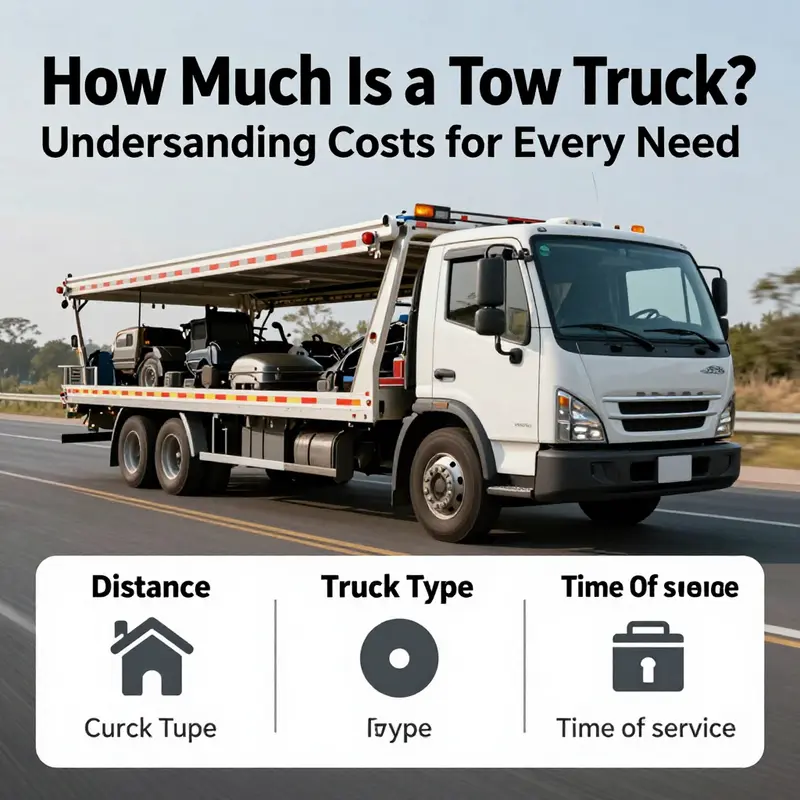
The decision to buy also involves a comparison with the cost of hiring a tow truck when needed. The service cost landscape includes its own set of determinants. Distance traveled is the most influential factor: short hauls of roughly five miles can cost around seventy-five dollars, while longer trips of fifty miles or more can climb well above three hundred dollars depending on the vehicle type and the challenge of the tow. Vehicle weight remains a significant driver; heavier tows require heavier equipment, which can raise per-call costs due to fuel, wear and tear, and crew hours. The time of day is another lever—emergency calls outside regular business hours routinely incur premiums. Rural settings may also edge rates upward to compensate for longer travel distances to reach a client. Finally, the service type—whether a hook-and-roll, a flatbed, or a specialized rotator—is a direct price lever, as each service demands different levels of rigging, safety protocols, and crew expertise.
For someone weighing the decision to purchase a tow truck, these service-cost dynamics matter less in a vacuum and more in a lifecycle calculation. A flatbed, while offering protection for more fragile vehicles and a straightforward loading process, may reduce maintenance costs over time due to fewer mechanical wear points compared with some surface-wrecker configurations. A rotator, while capable of handling extreme scenarios and reducing the need for external recovery teams, imposes higher maintenance, insurance, and operator-training costs. A light-duty unit, inexpensive upfront, may become a constraint if your call mix skews toward larger vehicles or if you want to maximize the uptime of a fleet with diversified requirements. In other words, the real-world dollar figure is not solely the sticker price; total cost of ownership, uptime, and the revenue-generating potential of the equipment when deployed across a busy schedule all contribute to the financial equation.
An additional factor worth considering is the potential for dual-use or cross-training within a fleet. When a company standardizes on a particular class of trucks, it can streamline maintenance, parts procurement, and technician training. This is where the internal resources of a fleet and the capacity to plan ahead become as important as the purchase price itself. For operators who want to ground their pricing and maintenance strategies in practical, field-tested realities, a resource on fleet standardization and emergency readiness can provide valuable guidance on how to align equipment with response protocols and staffing capabilities. Learn more about this through our internal resource on fleet standardization and emergency readiness.
The cost landscape also invites a careful look at how gear supports a business plan. A light-duty or mid-range unit may be ideal for a new entrant seeking a steady flow of routine calls and predictable maintenance, with the cushion of lower upfront investment. A growing operation that handles larger pickups, heavy-duty recoveries, and more complex incidents might justify the higher upfront price of a rotator or a multi-axle wrecker, especially when the fleet’s schedule includes regular on-site recoveries, accident scenes, and remote locations. In such cases, the higher capital outlay can be offset by increased job acceptance, faster response times, and enhanced safety, which in turn can reduce insurance costs and damage-related liabilities.
For readers seeking additional context on how these price dynamics play out in real-world pricing, a credible external resource lays out the factors that determine towing costs in practice. This coverage helps connect the dots between what a truck costs to purchase and what a tow service might charge on a typical job. You’ll find a detailed discussion of pricing factors and scenarios in the external resource cited at the end of this chapter.
To keep the discussion grounded in practical steps, consider the broader implications for a fleet that aims to balance readiness, reliability, and cost. The path from purchase to deployment involves not just selecting the right chassis and bed type but also aligning with maintenance schedules, spare parts availability, and operator training. A well-planned fleet can reduce downtime, improve safety on the scene, and protect the vehicle assets you rely on when urgent help is needed. For decision-makers who want to see how these variables fit into a larger strategic picture, our internal guide on fleet standardization and emergency readiness offers a structured approach that can help harmonize equipment choices with response protocols and staffing plans.
In sum, the price tag attached to tow trucks reflects more than an initial outlay. It signals capabilities, resilience under demanding conditions, and the ability to convert a call into a timely, safe recovery. As you evaluate light-duty versus heavy-duty options, as well as the optional reach of a rotator versus the proven dependability of a flatbed, you are also weighing how many jobs the equipment can sustain, how quickly it can be mobilized, and how well it integrates with the rest of your operation. The right balance is not about picking the cheapest option but about aligning your equipment profile with your service mix, your geographic footprint, and your long-run business goals. For a broader sense of how pricing factors into consumer or client decisions, you can consult external resources that explore what drives towing costs in the market.
External resource for pricing context: https://www.aa.com/insurance/towing-costs-factors-affecting-pricing.jsp
Tow Truck Pricing in Flux: Reading the Market from Light-Duty Bargains to Rotator Premiums
Prices for tow trucks do not sit still. They move with shifts in demand, the weight of the vehicle being recovered, the sophistication of the equipment, and whether the unit is fresh from the factory or rebuilt for reuse. For buyers weighing a purchase, the path toward a budget is not just about sticker price. It is about the total package: the capacity, the reliability, the warranty, and the long-term maintenance costs that come with different configurations. In early 2026, this market shows a broad spectrum. Light-duty units that can haul sedans or small SUVs sit in a comfortable range for many fleets looking to replace aging gear or expand into routine roadside assistance. Medium-duty machines, designed to recover larger vehicles and handle more demanding tasks, sit higher on the price scale, reflecting both capability and the need for sturdier components. The heavy end of the market stretches into specialist territory: rotator tow trucks, with their 360-degree rotating booms, command premium prices that can stretch well into six figures. Between these poles lies a range of configurations that cater to certain niches—flatbeds for safe transport of low-clearance vehicles, and high-capacity recovery trucks that can mobilize large fleets after a major incident. These categories and the prices attached to them illuminate how buyers decide what is worth paying for a given mission profile. In practical terms, the cost of ownership begins with the apparent price, but it extends through maintenance, downtime, and the ability to complete a job without adding risk to the vehicle being towed or to the operator. The numbers are not simply a matter of inflation; they reflect the evolving needs of fleets, communities, and responders who rely on these machines to keep moving after a breakdown, a crash, or a climate-driven event. For someone surveying the market, a good starting point is to distinguish between new and used units, because the price delta over the life of the machine can be substantial. New units come with the latest safety features, the longest warranties, and the assurance that the truck will perform when it matters most. Used units offer another kind of value: lower upfront costs and the potential for rapid deployment, provided the vehicle has been well maintained and inspected. The balance between new and used often hinges on the buyer’s risk tolerance, the availability of skilled technicians, and the cost of potential downtime during a conversion or retrofitting process. When buyers quantify a budget, they frequently map out a tiered approach by capacity. Light-duty tow trucks, typically in the two to four ton range, are designed for smaller cars and light SUVs. Their price band, in regions where such costs are tracked and cataloged in 2026, typically spans from roughly twelve thousand eight hundred dollars to just under forty thousand dollars per unit. That broad spread reflects variations in frame design, winch capacity, and the inclusion of options that improve off-vehicle performance, such as enhanced electrical systems or more robust hydraulic components. Importantly, these figures do not include shipping, taxes, or the costs of any required regulatory modifications, all of which can tilt the final invoice upward before the first mile is even logged. Medium-duty tow trucks, characterized by eight-by-four configurations and recovered capacity in the vicinity of fifty tons, generally fall into a higher price envelope. Buyers commonly see ranges from about forty thousand dollars up to seventy thousand dollars. In this class, the emphasis is on greater stability, longer service intervals, and the ability to handle heavier vehicles and more frequent recoveries in a commercial environment. The value proposition here rests on uptime: how quickly the operator can respond to incidents, load capacity margins, and the efficiency gained from a truck that can perform a wider array of tasks without multiple specialized rigs. For the high end of the market, heavy-duty and specialized machines occupy a sphere where the cost is driven by complexity and capability. Rotator tow trucks, prized for overturn recoveries and difficult-to-reach scenes, command prices that can begin around one hundred fifty thousand dollars and extend well beyond three hundred thousand dollars. The rotating boom, combined with hydraulic reach and rotation control, enables operators to tackle scenarios that would otherwise require multiple pieces of equipment or even more extensive shuttling of vehicles. Those who envisage recurring, high-risk job assignments may find the rotator a justifiable investment, particularly when downtime and the risk of additional damage are at stake. Flatbed tow trucks represent another path within the heavy-duty category. They excel in safely transporting vehicles of all types, including all-wheel-drive models and those with low ground clearance. While the price specifics for flatbeds are not always spelled out in every price sheet, their utility and the potential for lower maintenance costs over time make them a popular option for fleets seeking gentle handling and broad versatility. Finally, high-capacity recovery trucks, such as those configured for substantial weight and industrial-scale operations, show that a segment of buyers is balancing enterprise-level demand with a willingness to invest in redundancy and rapid response. A representative example in this tier can offer a price point in the low-to-mid thirty-thousands for certain configurations intended for large-scale recovery, though configurations for more robust tasks will sit higher on the spectrum. The overall message remains clear: the market rewards the right match between capability and need, and buyers must weigh the immediate price against the longer-term returns from uptime and serviceability. Beyond sticker price, the 2026 landscape is also shaped by broader market dynamics. In the United States, early-year data describe a typical range for new medium-duty tow trucks—from roughly thirty thousand dollars up to one hundred fifty thousand dollars—depending on the sophistication of the equipment and the intended use. The same dataset notes that specialized models, such as wreckers or low-bed trailers, can push prices into higher ranges. For buyers considering used units, the spectrum narrows to roughly fifteen thousand to eighty thousand dollars, with condition, mileage, and installed equipment steering the final tally. These figures reflect not only the equipment itself but the attached responsibilities of ownership: maintenance, tires, hydraulics, and the potential costs of spare parts over time. The market’s vigor is underpinned by several drivers. Infrastructure projects, which often require rapid response teams and reliable transport assets, sustain demand. The growth in e-commerce has also increased the volume of both routine deliveries and on-demand roadside assistance, nudging fleets toward more capable equipment and better service contracts. In tandem, rising vehicle ownership adds to the pool of roadside incidents, enhancing the case for robust, well-maintained fleets. When planning a purchase, prudent buyers look beyond the initial invoice. Total cost of ownership includes insurance, routine maintenance, possible upgrades to electronic control systems, and even the time spent by operators in training to maximize efficiency and safety. Shipping costs, where applicable, and any import duties also influence the final cost for buyers procuring units from distant suppliers. Those who want a clear, evidence-based picture can turn to the data-driven resources that track commercial vehicle pricing and usage. For readers seeking a broader context that supports these price ranges and trends, a data source such as the NHTSA provides a useful, if high-level, backdrop for understanding how these machines are financed, operated, and deployed in real-world settings. As you weigh options and consider a purchase, you may also want to consult industry resources that discuss fleet standardization and readiness, which can help a buyer align equipment selection with operating procedures and training regimes. A comprehensive starting point can be found in the Santamaria Tow Truck blog, which offers guidance on fleet decisions and readiness considerations for a wide range of towing operations. Santamaria Tow Truck blog. The path from sticker price to usable capability is navigated best with a plan that prioritizes uptime, safety, and the capacity to scale as demand grows. For many operators, that means choosing a configuration that lowers long-term maintenance costs while preserving the flexibility to service a broad array of incidents. In practice, this balancing act often leads fleets to invest in modular equipment or add-on options that extend life and expand function without forcing a second purchase. The market, with its blend of new and used options, also rewards buyers who pursue due diligence: thorough inspections, service history reviews, and a careful evaluation of potential downtime. Even small optimizations—such as allocating more resources to preventive maintenance or selecting a model with a robust parts ecosystem—can translate into a smoother, faster response during emergencies. The conclusion is not simply about selecting the cheapest unit, but about selecting the right unit for the job, the climate, and the expected workload. With the right mix, a tow fleet can maintain reliability, improve response times, and keep the trucks out of the shop at moments when every minute counts. For those who want to dive deeper into pricing and performance benchmarks, external data sources remain valuable, linking buyer expectations to market realities and helping to anchor prices in documented usage trends. External data resources, such as the National Highway Traffic Safety Administration, offer a data-backed view of pricing and usage that complements the practical guidance discussed here. https://www.nhtsa.gov/
Beyond the Sticker Price: Calculating the True Cost of Tow Truck Ownership
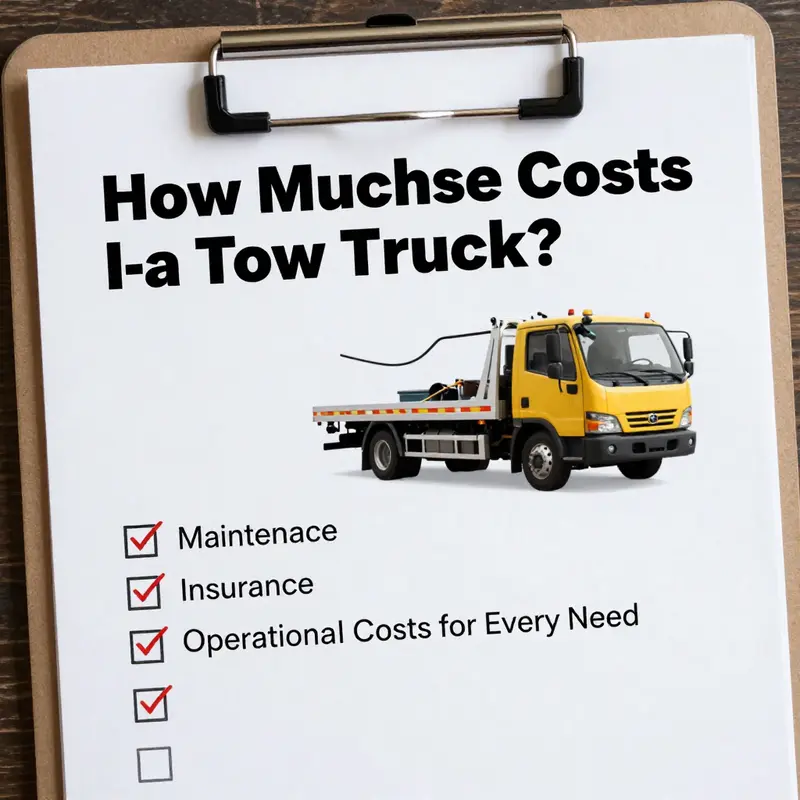
Owning a tow truck means committing to more than a single purchase. The initial price is only the first line in an ongoing ledger of expenses, obligations, and decisions that determine whether the investment pays off. Understanding the full cost picture helps operators budget accurately, set service rates, and choose the right vehicle class for long-term goals.
A clear starting point is the purchase price. New tow trucks can range widely in cost. Light-duty units sit at the lower end of the scale. Medium-duty and high-capacity wreckers command mid-range prices. Specialized rotators and heavy-duty recovery trucks sit at the top. That base figure sets financing needs and insurance costs. Yet the majority of ownership expenses accumulate after sale.
Maintenance and repairs are the next major category. Tow trucks face severe operational demands. Daily winching, heavy loads, and repeated road work accelerate wear. Regular servicing is non-negotiable. Oil changes, brake inspections, suspension checks, and hydraulic fluid replacements must be scheduled. Tires wear quickly under heavy loads. Hydraulics and winches need inspection and occasional replacement. When a boom or winch fails, repair bills can climb fast. Preventive maintenance reduces unexpected breakdowns and downtime, but it also requires a steady cash flow.
Fuel is a constant and often underestimated cost. Larger tow trucks typically have more powerful engines. Heavy-duty models and rotators consume more diesel. Idle time during recovery operations and long-distance runs increase fuel burn. Fuel price volatility directly affects operating margins. Efficient route planning, driver training in fuel-conserving techniques, and choosing models with better fuel economy help. Still, fuel remains a recurring expense that must be forecasted as part of everyday operations.
Insurance premiums for tow truck operators are higher than for standard commercial vehicles. The risk profile of towing is elevated. Operators transport third-party vehicles, work roadside, and sometimes perform complex recoveries. Policies must cover vehicle liability, cargo damage, on-hook coverage, and possibly environmental liability. Premiums depend on vehicle class, operating region, driver history, and the scope of services offered. Higher limits and additional coverages reduce financial exposure but increase monthly premiums.
Training and certification are essential investments. Tow truck operation is technical and potentially dangerous. Proper training protects staff and equipment. Certification programs cover safe rigging, hydraulic system operation, vehicle recovery tactics, and local regulatory compliance. Advanced units require specialized instruction. Employers should budget for initial training and periodic refreshers. Skilled operators reduce accidents, lower insurance claims, and extend equipment life. However, training costs and lost billable time while technicians attend courses must be factored into financial planning.
Licensing, registration, and regulatory compliance add another steady expense. Towing is regulated at local and state levels. Special permits, commercial vehicle registrations, and periodic inspections are common. Fees vary by jurisdiction and can include additional costs for oversized or heavy-duty vehicles. Compliance with hours-of-service rules and other transport regulations may require investments in telematics or logging systems. Noncompliance can lead to fines, impoundments, and reputational damage, so these expenses are preventive as well as mandatory.
Specialized tools and accessories represent a smaller, but significant, outlay. Chains, straps, winch accessories, safety lights, cones, and traffic control equipment are necessary. Recovery-specific gear such as snatch blocks, choker chains, and tree savers may be needed for certain recoveries. Safe storage and periodic replacement of these tools should be planned. Investing in quality accessories improves safety and efficiency, reducing the likelihood of costly damage to towed vehicles.
Depreciation affects the long-term economics of ownership. Tow trucks lose value with age and usage. Heavy-use units depreciate faster than fleet-kept light-duty trucks. Resale value depends on condition, mileage, service history, and market demand. Certain configurations retain value better. Versatile platforms and well-maintained flatbeds may fetch a higher resale price. Depreciation impacts tax deductions and lease decisions. Operators must consider expected resale values when modeling total cost of ownership.
Operational downtime is an indirect but impactful cost. When a truck is out of service, it generates no revenue. Repair time, parts lead times, and availability of qualified technicians influence downtime. Maintaining a backup unit or arranging partnerships for mutual assistance can reduce lost earnings. Similarly, downtime caused by driver shortages or administrative delays harms profitability. Effective scheduling, preventative maintenance, and cross-training help minimize these hidden costs.
Financing and interest are part of the purchase calculus. Many operators finance their trucks. Loan terms, interest rates, and down payments shape monthly obligations. Lower interest rates reduce lifetime cost. However, longer loan terms can increase total interest paid. Leasing is another option that changes balance sheet treatment and affects cash flow differently. Choice of financing impacts tax treatment, asset management, and long-term capital planning.
Pricing strategy for services must reflect all these costs. Operators should calculate per-hour and per-mile break-evens that include fuel, insurance, maintenance reserves, and salary. Transparent pricing helps maintain profitability during slow periods and peak demand. Some operators include surcharges for after-hours calls, long-distance tows, and complex recoveries. Communicating fair and well-justified pricing builds client trust and protects margins.
Risk management completes the financial picture. Safety programs reduce accidents and claims. Regular driver assessments and equipment audits lower liability exposure. Contingency planning for large, unexpected repairs keeps operations afloat. A reserve fund sized to cover major repairs or replacement down payments prevents emergency borrowing.
Bringing the elements together shows why calculating the true cost of a tow truck matters. The purchase price may be a headline number, but fuel, maintenance, insurance, training, licensing, tools, depreciation, downtime, and financing shape the ongoing financial commitment. Operators who take a holistic approach can set realistic rates, choose vehicles that match their workload, and maintain profitability across market cycles.
For fleet operators, standardizing equipment and procedures reduces complexity and lowers unit costs. Guidance on standardization and preparation for emergency operations can provide operational and financial efficiencies. See this resource on fleet standardization and emergency readiness for practical steps and considerations: fleet standardization and emergency readiness.
For industry benchmarks and further guidance on licensing and best practices, consult the National Association of Tow Truck Operators: https://www.natto.org
Final thoughts
Understanding how much a tow truck costs goes beyond the initial purchase price. Each factor—from the type of truck and features it offers, to ongoing costs like maintenance and repairs—contributes to the total financial commitment. For local drivers, auto shops, and property managers, being informed about these costs not only aids in budgeting but also ensures a smoother operation. Whether you decide to purchase or hire, knowledge is your best asset in navigating the towing landscape.