
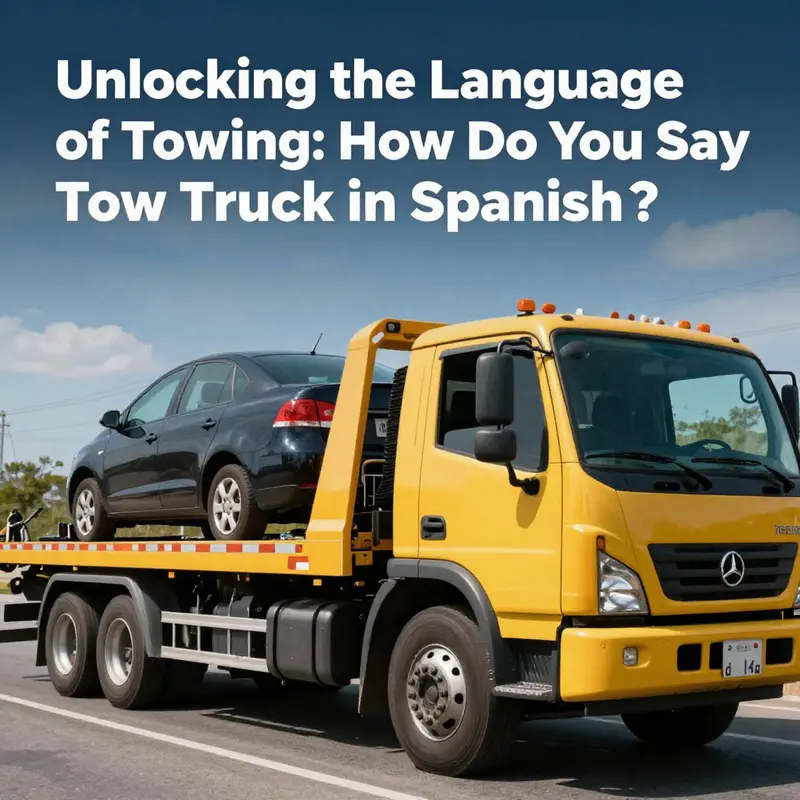
For local drivers and car owners, as well as auto repair shops, dealerships, property managers, and HOA administrators, understanding how to communicate effectively in different languages is critical. Spanish, a prevalent language across many regions, especially in the automotive sector, necessitates clarity when discussing services like towing. This article delves into how to say ‘tow truck’ in Spanish, exploring the standard terminology, its cultural context across various Spanish-speaking countries, and practical usage examples for everyday conversations. By the end, you will be equipped with the knowledge needed to navigate this essential automotive term with confidence.
Tow Trucks in Spanish: The Descriptive Power of Camión Grúa and the Quiet Flex of Its Cousins
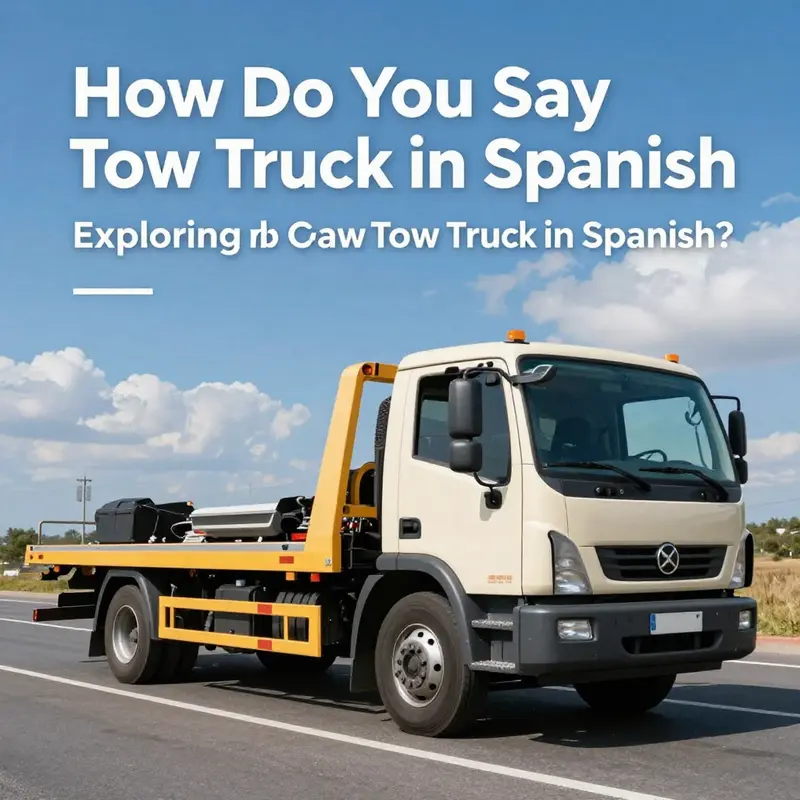
The highway hums with the steady rhythm of tires, mirrors catching glints of sun, and a moment later the scene shifts to a curb, hazy with exhaust and the faint buzz of a radio. A driver’s voice crackles over the phone, and in that exchange you hear more than a translation task. The speaker wants help, not just a word, and the word they reach for matters. In Spanish, the most exact way to name the vehicle that arrives to pull a disabled car is camión grúa. It is a name that carries meaning baked into its form: camión, the truck, paired with grúa, the crane or lifting apparatus. Together they describe a purpose-built machine designed to lift, attach, and tow. Saying camión grúa in the moment of distress is not mere vocabulary; it is a precise reference to a very specific tool with a defined role on the road. And that precision matters—not only for accuracy, but for clarity in communication that can hasten help when time and safety are critical.
But language is rarely one word, and the everyday reality of how people talk about this vehicle broadens the palette well beyond the strict technical term. In casual speech, many español speakers simply say grúa. That single word, concise and versatile, can evoke the same service in many contexts. It is the most common, the most understood, and in routine conversations it often stands in for camión grúa when the precise mechanical description isn’t necessary. A driver who’s stranded might say, Tengo que llamar a una grúa. The phrase is immediate, familiar, and widely recognized across Spain and Latin American countries alike. Grúa has a simplicity that makes it practical in ordinary life. It is the kind of word that travels easily across regions, tying together cities, towns, and rural lanes in a shared linguistic habit.
Yet the difference between camión grúa and grúa is more than a matter of length or formality. Camión grúa emphasizes the vehicle’s dual identity: a truck with a crane-like apparatus built for towing. The term leans into the engineering image—steel, hydraulics, lifting arms—so when a technician or dispatcher uses it, the listener can picture a specific kind of machinery. In many service contexts, that precision matters, not just to describe the job but to set expectations about what equipment will arrive, how it will operate, and what kind of access or space it requires on the scene. The word camión itself anchors the phrase in the world of road transport. It signals a vehicle large enough to command a certain presence, capable of carrying out more than a simple pull. The crane element implied by grúa conjures an immediate image of lifting and control, a reassuring sign that help will be equipped to handle a range of emergencies.
A third option that occasionally appears in conversation is coche de remolque, literally a “towing car.” It is less common and more literal, echoing the idea of a device designed to pull. In practice, coche de remolque can feel a touch more formal or descriptive, and it may be preferred in contexts where the speaker wants to avoid ambiguity about whether the speaker is referring to a speed- and maneuver- constrained roadside vehicle or a general towing service. Still, this term is not the default choice in most everyday exchanges and is far less likely to be used in urgent phone calls to a tow service. The broader family—camión grúa, grúa, coche de remolque—gives Spanish speakers a flexible toolkit. Each term carries its own shade of meaning, its own register, and its own local flavor. The challenge for a learner is not simply to memorize the words, but to sense when to deploy which one in conversation with a dispatcher, a repair shop, or a fellow traveler who needs directions.
The regional texture of usage adds another layer. In Spain, camión grúa tends to be the go-to formal reference among professionals and in official instructions. In many Latin American countries, grúa often stands as the everyday headline term, with camión grúa occasionally appearing in more technical documents or in media language. The diversity across the Spanish-speaking world is not a stumble to be avoided but a map to be understood. A driver who hears camión grúa on the roadside announcement in Madrid may still instantly recognize the more casual grúa in a street-side conversation in Buenos Aires or Bogotá. The fluidity here reflects a shared need: to be understood quickly and accurately when care and support are required.
Language, in this sense, is a practical instrument. It helps coordinate the human and the mechanical, the dispatcher and the driver, the worried passenger and the technician who will shoulder the task of recovery. It is also a reminder that Spanish does not confine itself to a single, monolithic label. Instead, it offers a spectrum of terms that can be tuned to situation, audience, and formality. For a student learning the language, the right approach is not to chase one perfect word but to listen for the cues in real conversations and to practice the associated phrases that accompany each term. The phonetic harmony of camión grúa—the rolling cadence of camión, the crisp g-l-u-a sequence—carries a certain weight, almost a professional cadence, that might be heard in a garage or on a dispatch channel. Grúa, by itself, carries an everyday warmth, a tone that invites familiarity and trust. The distinction becomes meaningful when ordering services, describing what went wrong, or comforting a passenger in a moment of frustration.
To speak with confidence about the tow service, one also learns the verb that describes the action at the heart of it: remolcar. The verb remolcar means to tow, to haul, to pull a vehicle along behind another. It is a practical, action-oriented word that often accompanies those noun labels. You might say, Mi coche necesita ser remolcado. The structure follows a familiar pattern: a subject, a verb of action, and the object that receives the action. A dispatcher will appreciate the clearness of phrases built around remolcar: Quisiera que viniera una grúa para remolcar el coche. The respectful form, polite and direct, is natural in professional calls and is especially important when there is worry about time, safety, or vehicle damage.
The interplay of noun and verb in these phrases mirrors a daily reality where technicians, drivers, and pedestrians share information across lanes, borders, and dialects. A tow truck operator may describe the scenario with precise terms, while a driver conveys the need with straightforward sentences that reflect immediate urgency. The learner who understands camión grúa and grúa can adapt the language to the moment, choosing the level of detail that helps the other person respond quickly and correctly. It is a pragmatic dance: name the tool, state the need, request the service, and confirm the location. In this rhythm there is both clarity and calm, an essential balance when you are stranded or assisting someone else who is stranded.
Consider a few commonplace exchanges. A driver might call a garage to report a breakdown and request assistance: Hola, necesito una grúa para mi coche, que está en la avenida Central. Or, if the scene demands more specificity, the driver might say: Hola, por favor envíen un camión grúa al número 27 de la calle Mayor; el coche no puede moverse. The first version uses the broad, widely understood term grúa, easy to grasp in the moment. The second adopts camión grúa to telegraph the exact type of vehicle that will arrive and how it will operate, potentially affecting how the tow is carried out and what equipment is available. A different angle appears when speaking with a roadside assistance service or insurance provider: Deben enviar un camión grúa para el coche que se quedó atascado en una pendiente. Here the formality is more measured, and camión grúa again signals a request for a specific kind of apparatus, reducing room for misinterpretation about the needed capabilities.
The gentle art of choosing between these terms is part of what makes travel and language engaging rather than mere rote learning. The learner who absorbs these choices also learns to read the room, to sense when a phrase should be crisp and technical or when it can be light and conversational. Even within the same country, the register can shift with context: a word that would be perfectly natural in a casual roadside chat might feel too casual in a formal estimate with a service provider. The subtlety is not a barrier but a resource for effective communication—a tool to make road emergencies more manageable, less chaotic, and more human.
For those who want to anchor this knowledge in real-world practice, the best approach is to observe and practice in context. Listen to how professionals use the terms in dispatches, garage updates, and roadside conversations. Notice how grúa often appears in urgent requests, while camión grúa signals a specific machine profile. And keep in mind how remolco-related phrases fit into the larger linguistic ecosystem of vehicle recovery. The process of learning, then, becomes a matter of listening first, then repeating with intention, and finally building the confidence to adapt your language to varying situations. In more formal writing, or professional documentation, camión grúa holds its ground as the most exact and descriptive choice. In everyday speech, grúa often takes precedence for speed and familiarity, with camión grúa available when precision matters.
As you move through this vocabulary, you may also encounter slight regional flavors that color the simple act of asking for help. In some places, a single word may suffice to convey a complete service expectation: “La grúa ya viene” might be enough to reassure a passenger that assistance is on the way. In others, you might hear a longer, more precise sentence that mentions the kind of equipment involved or the required route. The beauty of this language is that it accommodates both forms, letting you tailor your speech to the moment. The same sentence can ride on a spectrum—from brisk and practical to detailed and formal—without losing its core meaning.
In weaving together camión grúa, grúa, and coche de remolque, Spanish speakers demonstrate a practical linguistic versatility that mirrors the versatility of the machines themselves. These terms serve as routes to quick understanding, safety, and mutual aid on busy highways and quiet byways alike. For a language learner, embracing this range is not an obstacle but a doorway to more confident, effective communication in real-life emergencies. The next time you hear a tow truck announced on a Spanish-speaking channel or you find yourself needing one, you will not only recognize the term; you will sense the intention and the appropriate tone that accompanies it. You will know when to use camión grúa to convey the exact type of vehicle, when grúa will carry the weight of everyday conversation, and how coche de remolque, though less common, might emerge in more technical or descriptive contexts.
To continue exploring how this topic threads into broader language use on the road and in service sectors, you can visit the Santa Maria Tow Truck Blog for perspectives on everyday operations and vocabulary in practice. It provides a grounded sense of how terminology translates into real-world service and what drivers and dispatchers expect from language on the move. https://santamariatowtruck.com/blog/
For further confirmation and additional examples, consider the official reference that has long guided learners and translators alike. Collins Dictionary offers a concise entry on tow truck that aligns with the distinctions outlined here and provides practical usage notes and translations to help you verify and expand your understanding. External reference: https://www.collinsdictionary.com/dictionary/english-spanish/tow-truck
Tow Truck Talk in Spanish: Mastering Grúa and Its Variants Across Spanish-Speaking Roads
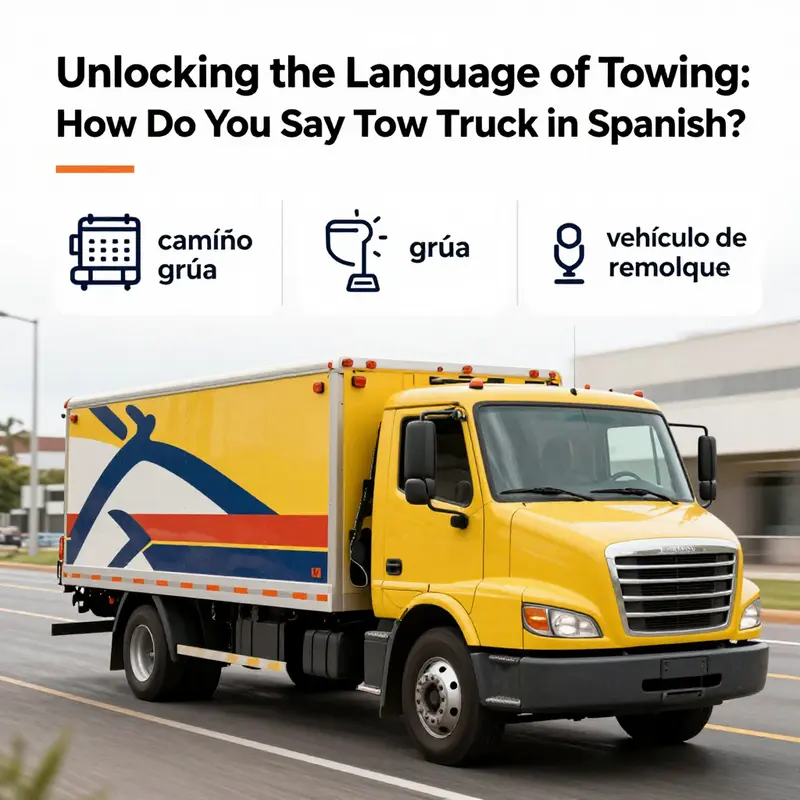
Language is a tool as much as a map. When you talk about pulling a stranded car from the side of a highway, or lifting a wrecked vehicle onto a carrier, the words you choose guide action as surely as your hands do. In Spanish, the core term for a tow truck is grúa, a word that travels across Spain and the Latin American world with a practical clarity. Yet beyond that simple, everyday label lies a family of expressions that reflect different contexts, degrees of formality, and regional habits. Understanding grúa in its primary sense and tracking its variants helps anyone who works with vehicles, manages a fleet, or navigates roadside incidents communicate with accuracy and confidence. It also makes the landscape of cross-language conversations more predictable, which matters when every minute counts on a tow or recovery operation.\n\nAt its most basic level, grúa is a feminine noun that refers to the tow vehicle itself. In everyday speech, people say La grúa llegó para retirar el coche accidentado. This phrase captures both function and the physical vehicle, and it reflects how Spanish speakers commonly think about towing: the machine that performs the lifting and pulling is the grúa. The plural form grúas is used when speaking about more than one tow truck or when the operator wants to signal that several units are involved in an operation. The straightforwardness of grúa is part of its strength; it is the term you will hear in gas stations, on the street, and in casual conversations when someone describes a roadside incident.\n\nBut the Spanish language also has a way of layering specificity onto plain terms, especially when the scale of the operation or the role of the vehicle is under discussion. If you want to emphasize the vehicle’s lifting mechanism or engineering function, you can add a descriptor to create phrases such as grúa de remolque or grúa de recuperación. The construction grúa de remolque literally means a recovery crane—a phrase that highlights the vehicle’s core purpose: to recover or extract a disabled car from a difficult position and bring it to safety or to a repair facility. In professional or technical contexts, this precision is valuable. Roadside technicians, insurance assessors, and fleets that track asset types often prefer such formulations because they leave little room for misinterpretation about what kind of equipment is involved and what its job will be.\n\nA closely related variation is grúa de recuperación, which shifts the emphasis to the recovery aspect of the operation. This phrase is particularly common in emergency or roadside assistance settings, where responders are thinking in terms of restoring mobility and safety as quickly as possible. It signals not just the act of towing but the broader goal of recovering a vehicle from a vulnerable or hazardous position. In some regions, people might hear or use this term in dispatch communications, where the language needs to be both precise and efficient under stress. The parallel with other fields becomes clear when you consider how aviation, maritime, or manufacturing sectors describe their heavy-duty equipment with purpose-built phrases rather than generic labels.\n\nAnother viable, though slightly less precise, variant is camión de remolque. Here camión simply means truck, and when paired with remolque, which translates to towing or trailering, the phrase designates a heavy-duty towing vehicle. Camión de remolque is common in several regional dialects and can appear in media or late-night traffic reports, especially when the speaker wants to convey the idea of a large tow vehicle without delving into the technicalities of its lifting apparatus. It’s worth noting that this term can sometimes be read more broadly than grúa and might refer to the towing vehicle in a more general sense, not always to the specialized crane-equipped machine that many people associate with a traditional tow truck. This nuance matters in contexts like fleet procurement, insurance, or legal documentation, where the precise type of equipment has implications for coverage, liability, and service protocols.\n\nA broader, more general label is vehículo de remolque. This phrase translates literally to towing vehicle and can encompass a range of equipment, from small manual tow carts to heavy-duty recovery trucks. In everyday conversation, some people use this term interchangeably with grúa, especially in regions where the distinction between a crane-equipped recovery unit and a plain pulling device isn’t as pronounced in common speech. However, for formal writing, fleet management logs, or regulatory paperwork, vehículo de remolque may feel too broad. The key is to match the term to the context: a dispatcher coordinating a formal recovery operation will benefit from grúa de remolque or grúa de recuperación, while a casual street-side description might comfortably settle on la grúa.\n\nThe practical differences among these variants become most visible when you translate dialogue from road-side encounters, incident reports, or training materials. Consider two contextual examples in Spanish and their English equivalents. First, a simple roadside call: Cuando mi coche se averió, tuve que llamar a una grúa. This translates to When my car broke down, I had to call a tow truck. The choice of grúa here signals a familiar, everyday service—the vehicle and its operator are understood without elaboration. Now, a police or emergency response scenario: La policía ordenó retirar el vehículo con una grúa de remolque. This becomes The police ordered the vehicle to be removed using a tow truck with a loading crane, or more naturally in English, The police ordered the vehicle to be towed with a tow truck. The second version hinges on the more explicit function and gear, which is why grúa de remolque or grúa de recuperación can be preferable in formal reports or technical summaries.\n\nRegional variation adds another layer to the picture. In many parts of Spain, grúa is the dominant term for the vehicle itself, used across urban and rural contexts. In Latin American countries, grúa is equally common, but the surrounding vocabulary can shift subtly. In some places you will hear grúa de recuperación in roadside assistance announcements, while in others camión de remolque might appear on signage, especially in more industrial or fleet-oriented environments. These differences aren’t about right or wrong terms; they are about the audience and the situation. A driver describing a local event to a neighbor will likely choose grúa, as this word is short, direct, and widely understood. A fleet operator briefing technicians about the different classes of equipment may prefer the longer, more formal grúa de remolque or grúa de recuperación. Understanding that spectrum helps avoid miscommunication and ensures that everyone—from drivers to dispatchers to service managers—speaks the same language when time matters.\n\nThe masculine or feminine gender of related nouns can subtly influence how people refer to the vehicle in conversation. Grúa is feminine, so you will hear phrases like la grúa and las grúas in everyday talk. This gender alignment matters when composing notices, signage, or official documents where agreement with adjectives and determiners matters for clarity and correctness. The agreement also extends to compound terms like grúa de remolque, where the feminine form grúa governs the entire phrase. In contrast, camión de remolque treats camión as masculine, aligning with a different pattern of noun-adjective agreement. These small grammatical details help ensure that professional writing remains precise and natural to native speakers.\n\nFor those who manage fleets or coordinate emergency response units, navigating this terminology is more than a matter of leaning on a single word. It involves choosing the right label for the situation, the audience, and the technical level of the document or communication. A dispatcher describing a routine pickup might simply say we are sending a grúa. In the same vein, a technical report detailing the capabilities of a vehicle might note that the unit is a grúa de remolque capable of lifting and stabilizing a disabled vehicle. These distinctions, while subtle, help crews communicate swiftly and avoid confusion during a critical operation. When writing training materials or standardized procedures, the precision offered by grúa de recuperación or camión de remolque can help align expectations across a mix of drivers, technicians, and coordinators.\n\nA practical takeaway for learners and professionals alike is to treat grúa as the core concept and then add a descriptor when the situation demands specificity. If the emphasis is on the mere act of towing, grúa suffices. If the focus is on lifting or crane-like mechanics, grúa de remolque or grúa de recuperación clarifies the equipment’s function. If the scene calls for heavier, road-transport scale or regional variation in equipment class, camión de remolque marks the heavier end of the spectrum, while vehículo de remolque signals a broader category. These guidelines help maintain clear communication, whether you are writing a report, drafting a dispatch note, or simply describing a roadside event to a friend.\n\nIn a broader sense, the ability to navigate these terms also reflects the way professional communities standardize language around complex operations. The idea of standardization, in both the language we use and the equipment we deploy, emerges as a thread that runs through how tow trucks are described in manuals, training curricula, and fleet protocols. The language you select isn’t just about semantics; it carries implications for safety practices, regulatory compliance, and the efficiency of response during emergencies. As fleets expand across regions with different dialects, and as roadside assistance services scale to meet growing demand, consistent terminology helps operators coordinate, dispatch, and recover vehicles with fewer misunderstandings. If you are compiling a glossary for a training program or drafting a set of dispatch templates, grounding your terms in common usage while incorporating precise variants can create a bridge between everyday speech and formal documentation.\n\nFor readers who want to see how these terms function in real-world materials and to connect this topic with practical guidance, there is value in exploring related resources that discuss fleet management, emergency readiness, and standardization in heavy-duty operations. A good starting point is the broader discussion of fleet standardization and emergency readiness, which provides context for how terms like grúa, grúa de remolque, and camión de remolque fit into larger workflows. This chapter thus links language with practice, showing how vocabulary choices map onto the tasks of dispatch, on-scene recovery, and post-incident reporting. You can explore more about this topic in related materials dedicated to fleet operations and emergency response, which will help deepen understanding of both terminology and procedures. Fleet Standardization and Emergency Readiness. In any case, if you want a definitive lexical anchor, consult the authoritative dictionary entry that Spanish speakers rely on when they want a precise definition. The Real Academia Española confirms grúa as the standard term for a tow truck, reinforcing its central role in everyday usage as well as formal contexts. The entry also helps navigate the related variants by clarifying how each form is constructed and used in modern Spanish. For those who want to cross-check the core term with a trusted reference, the dictionary entry for grúa is a reliable starting point to understand the nuances of gender, plurality, and related forms that appear in professional writing and everyday speech. As the chapter closes, the takeaway is clear: grúa is the core, most reliable label for a tow truck in Spanish-speaking regions. Its variants grúa de remolque grúa de recuperación camión de remolque and vehículo de remolque offer precise signals about function, context, and equipment scale. The distinction between everyday usage and formal terminology matters in dispatch, training, and documentation. The fluidity of regional speech adds texture, reminding us that language adapts to the needs of a multilingual, mobile world where every tow can involve different crews, different tools, and different roads. By embracing both the universal core and the carefully chosen variants, writers, drivers, and operators can communicate with clarity, reduce the potential for misinterpretation, and keep roads safer for everyone. For deeper exploration of this topic and related issues in fleet management and emergency response, see the internal resource linked above, which expands on how standardization supports consistent, effective operations across diverse regions. And if you want to verify the base term directly, the Real Academia Española’s grúa entry remains the dependable lexicon in the broader Spanish-speaking community. https://dle.rae.es/gr%C3%BAa
Tow Trucks Across the Spanish-Speaking World: How ‘Grúa’ Travels Across Countries
The question “how do you say tow truck in Spanish?” sounds simple, but it opens a doorway to a broader conversation about regional usage, historical shifts, and the everyday tongues spoken by drivers, dispatchers, and roadside technicians. The word you choose to describe the vehicle that hauls away a broken car is more than a vocabulary item. It is a reflection of where you are, who you are talking to, and what you are trying to accomplish in that moment. In Spanish, the core term that most accurately captures the function of a tow truck is camión grúa. This phrase literally translates to “crane truck,” a nod to the lifting and pulling mechanics that empower tow trucks to lift, drag, and transport disabled vehicles from the scene of an accident or a ditch to a repair shop or a safe lot. The precision of camión grúa matters in professional contexts, where clarity about the vehicle’s capability reduces miscommunication during emergencies and on busy highways. But language is never that simple in the wild of the real world. In everyday use, across different Spanish-speaking regions, people gravitate toward terser, more versatile words that still convey the essential meaning of the service being requested or described.
In Mexico and in many Latin American countries, the single syllable grúa dominates as the everyday shorthand. When a driver finds themselves stuck on the shoulder or needs help extracting a car from a ditch, a call for a grúa is the natural, efficient choice. It is a term embraced by roadside assistance operators, insurers, and everyday drivers alike. The sentence can be brisk and direct: “Necesito una grúa para sacar mi carro del pozo.” The word grúa—crane—carries with it a sense of a heavy lifting vehicle whose job is to lift and move, and in many contexts, it is perfectly unambiguous. The simplicity of grúa makes it especially practical for signage, radio conversations, and quick dispatch messages where speed matters more than taxonomy.
Across the Atlantic, in Spain, the same service is described with a slightly different emphasis: camión grúa. Here the phrase underscores that the vehicle is not only a crane-like machine but a large truck equipped with a lifting mechanism designed for interventional towing. The distinction is subtle but meaningful in professional conversation: camión grúa signals size, capacity, and a particular kind of heavy-duty work that distinguishes it from a smaller crane or a generic tow vehicle. In everyday speech, you might also hear grúa used alone, but with a speaker or listener who understands the context. For instance, a traveler on a Spanish highway might say, “La grúa ya está en camino,” and most listeners would grasp that a tow truck is en route, even without the fuller phrase.
This regional spectrum—grúa in many parts of Latin America and camión grúa in Spain—does not end the story. Language fills the gaps with other options that various communities employ, often reflecting local fleets, regulations, or historical habits. In some areas, particularly where smaller or more specialized vehicles are common, you may encounter camión de remolque. That term translates to “trailer truck” and carries a looser connection to the exact towing function. It is less precise, and it can invite confusion if the speaker needs to clarify that the vehicle actually performs towing rather than merely moving a trailer. In others, you may still hear simple grúa serving as a blanket term for a wide range of lifting or towing devices, depending on how close the speaker’s world is to heavy equipment or on-site crane operations.
The practical challenge for translators, travel writers, or emergency planners is not just choosing a word, but choosing the right word for the right audience. If you are writing for a predominantly Mexican readership or a Latin American audience where grúa is the common idiom, using camión grúa could feel overly technical or even unfamiliar in casual dialogue. On the other hand, if your readers are in Spain or are more attuned to formal, equipment-specific language, camión grúa might deliver the necessary precision. The same principle applies when the content is intended for signage, insurance communications, or emergency response protocols. The context—the setting, the audience, and the intended tone—drives the selection. This is where the flexibility of Spanish becomes a strength, not a weakness: speakers can lean toward conciseness with grúa, or toward specification with camión grúa when the situation warrants.
A close reading of how these terms behave in the wild also reveals a broader cultural story about authority, infrastructure, and the everyday mechanics of getting help on the road. In countries with robust roadside assistance cultures, grúa functions almost like a universal shorthand for a specific service. Dispatch desks, call centers, and repair yards that serve a broad region often default to grúa because it is immediately recognizable, quick to understand, and easy to pronounce across a variety of dialects. Yet when the audience is more formal—say, in a municipal fleet’s maintenance manual or a cross-border coordination document—camión grúa can appear more appropriate, conveying both the vehicle’s purpose and its capacity. The choice becomes a matter of trust: readers are more likely to interpret the term as the right kind of unit if it aligns with their own professional lexicon.
This linguistic layering has practical implications for travelers and professionals alike. For someone renting a car in Mexico and reading the roadside assistance card, the word grúa on the card or in the phone app should be enough to trigger the correct service. A driver who mutters “necesito una grúa” while pulling onto the shoulder is signaling a call for assistance in a language that resonates with the local operators, reducing the chance of miscommunication. In Spain, where a language traveler may encounter signage, service descriptions, and legal language that emphasize the vehicle’s heft, camión grúa becomes the more accurate descriptor. The same driver, in the same emergency, might adapt in a heartbeat, switching from a formal sign of the mechanics to a more informal, everyday usage in conversation with a local tow operator.
The terminology also reveals how the vehicle is incorporated into public life. Grúa, as a term, travels with urban traffic, with insurance paperwork, and with garage doors. It is the common tongue of the towing industry’s day-to-day operations. Camión grúa, by contrast, appears in official catalogs, road signage, and regulatory documents that need to communicate a certain scale of vehicle and a certain standard of service. It is no accident that the two terms occupy slightly different musical notes within the same language family. They co-exist, each serving a distinct social function while pointing to the same physical thing: a vehicle built to lift, tow, and transport a disabled or stranded car to safety.
For writers and translators aiming to reflect authentic regional voice, there is value in letting the context guide lexicon. If a scene unfolds in a bustling Mexican street where a dispatcher is giving precise directions to a tow operator, the term grúa might be the most natural choice. If the narrative takes place along a Spanish highway during a formal briefing, camión grúa can help convey authority and scale. And if the setting involves someone learning to navigate a roadside emergency, a brief pivot between grúa and camión grúa can show both familiarity with local language and respect for regional nuance. The difference is not merely semantic; it is a palpable texture of everyday speech that helps readers feel the landscape of language as lived experience.
In addition to regional vocabulary, there is room for one more layer of nuance: the way speakers incorporate this term into full sentences that are natural in conversation, not just in dictionaries. A simple exchange can illustrate the point. In Mexico, a driver might say, “¿Puede enviarme una grúa, por favor?” or even, “¿Qué grúa viene?” in a casual moment. In Spain, a driver might say, “Necesito un camión grúa para retirar el coche.” The difference is small on the surface, but it signals a different entry point into the conversation. The person on the other end of the line will respond to the cadence and the register of the request, not just to the words themselves. This is what makes translation and localization so much more than swapping words. It is a practice of fitting language to a social moment, to a geographic community, and to the shared expectations that shape how help is requested and delivered on the road.
When language becomes a tool for safety and reliability, the stakes rise. The wrong term, used in the wrong place, can slow a response or create confusion at a moment when seconds count. That is why many professionals inside the towing and roadside assistance ecosystem prefer to hedge their language with the most precise term they can deploy in a given region, while also remaining flexible enough to communicate clearly with people who may not share the same dialect. In practice, this might mean sending a camión grúa in Spain, but ensuring a grúa is the expected term in a larger Latin American dispatch network. It might also involve standardized operational documents that explain the vocabulary preference to new staff, ensuring everyone from drivers to coordinators shares a common frame of reference.
For readers who want to explore how language travels from term to term within a technical field, the journey of tow-truck vocabulary is a useful microcosm. It shows how specialized meaning travels with the equipment and how everyday speech absorbs technical terms as needed, sometimes simplifying them for quick, everyday use. It also highlights how careful a translator must be when moving between audiences. A phrase that is perfectly suited for a mechanic’s manual can feel stiff or confusing on a roadside call. Conversely, the warmth and immediacy of a colloquial term can be a better fit for a travel article or a customer-facing guide. The right choice depends on who will read the text, where they are, and what they hope to accomplish with the information.
As you navigate this topic in your own work, consider how the term you select shapes the reader’s sense of place. If you are writing about road service across multiple Spanish-speaking regions, you might include a brief note that explains the core term camión grúa while also acknowledging grúa as the more common, everyday usage in many Latin American contexts. Such an approach not only informs but also respects the linguistic diversity that characterizes the Spanish-speaking world. It invites readers to listen for nuance, to notice how a single word can shift meaning depending on the speaker, the situation, and the country surrounding the highway.
For those who want to dive deeper into translation choices and professional terminology, a useful entry point is the broader conversation about how terminology develops in real-world use. This is where the internal resource on fleet organization and emergency readiness becomes relevant. It provides a pointer to how industry participants standardize language to facilitate rapid, reliable communication across jurisdictions, fleets, and teams. See fleet-standardization-emergency-readiness for a practical perspective on how terms are chosen, taught, and reinforced within a professional network. Understanding that framework can help writers and translators balance accuracy with accessibility, ensuring that their work feels both credible and readable to a diverse audience while preserving the precise nuances that matter in critical moments.
In closing, the question of how to say tow truck in Spanish may seem straightforward, but the answer is layered. The core term camión grúa provides the precision needed in many formal contexts, while grúa offers a lean, widely understood option for everyday conversation in many regions. The occasional use of camión de remolque reminds us that language is also context-dependent, and that it responds to the realities of how vehicles are used, named, and discussed on the ground. By staying attuned to regional preferences and by framing translation choices around audience and purpose, writers can convey information with clarity and cultural sensitivity. The road, after all, is a shared space where a single word—spoken or heard—can open or close a corridor of help. External resources, like the translation guidance on DeepL, can illuminate how a simple term shifts across languages, reinforcing the idea that translation is not a static mapping but a dynamic negotiation between languages, cultures, and the urgent needs of those who rely on the tow truck when they need it most. For those who want to explore variations beyond the core terms, the journey continues in the broader literature of regional usage and professional practice, and the chapter you are reading now forms part of a larger map that helps travelers and professionals speak the language of the road with confidence. External reference: DeepL Translate.
Everyday Roadside Spanish: Mastering the Way to Say Tow Truck in Conversation
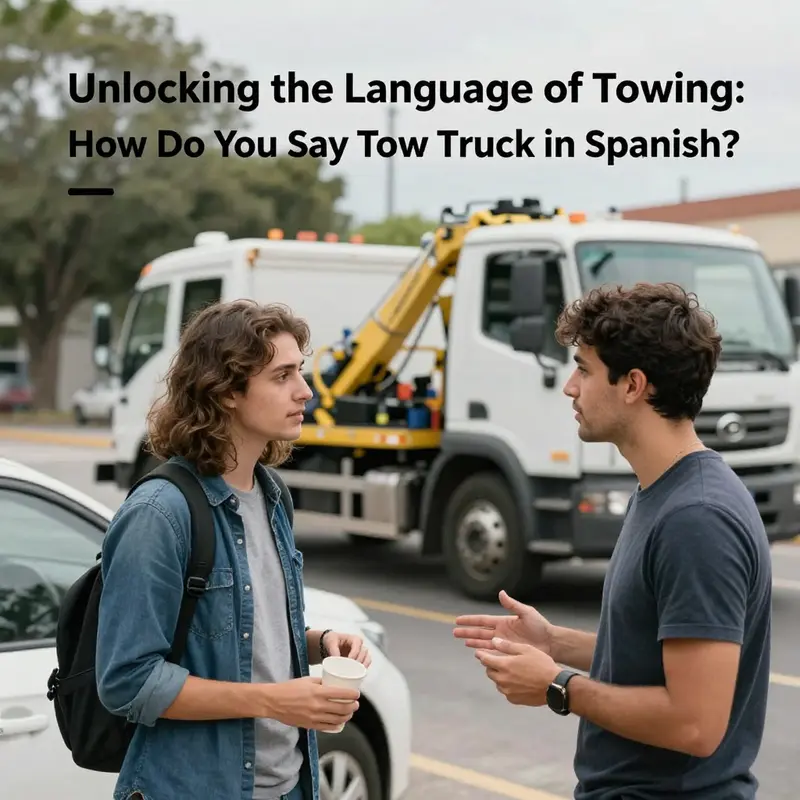
Cuando una rueda se desinfla o un motor se apaga en medio de la autopista, la conversación en español sobre a quién llamar para iniciar el rescate empieza con una pregunta simple pero crucial: ¿cómo se dice tow truck en español? A primera vista, la respuesta parece directa: camión grúa. Esta expresión funciona bien a nivel literal y técnico, refleja la función mecánica de la máquina y es ampliamente entendida tanto en España como en la mayoría de los países de habla hispana. Sin embargo, el lenguaje cotidiano no se queda en la definición técnica. En la conversación diaria, la gente se acostumbra a usar una forma más corta y más flexible: grúa. Esta diferencia entre término técnico y uso coloquial revela mucho sobre cómo los hablantes se relacionan con los escenarios de carretera, con el ritmo de la carretera y con la confianza que sienten al pedir ayuda cuando un coche no arranca. En este capítulo exploramos esa dinámica en detalle, examinando cuándo decir camión grúa que suena correcto y preciso, y cuándo basta simplemente grúa para que la comunicación fluya sin trabas.
El término grúa, entendido como crane o grúa de construcción, viaja desde la idea de levantar y arrastrar objetos pesados hasta la escena de un coche detenido. Es una transferencia semántica natural: un camión que integra un mecanismo para elevar y remolcar. Por eso, en la vida cotidiana, decir grúa se ha convertido en la forma más ágil y humana de referirse al vehículo que llega para auxiliar. En gran parte de España y en muchos países latinoamericanos, esa palabra corta funciona como un puente directo entre la experiencia del taller, la carretera y la llamada al servicio de rescate. La ganancia de naturalidad es enorme: no hay que adornar la frase con múltiples palabras para transmitir la misma idea. Al escuchar grúa, un conductor entiende inmediatamente que se trata de un vehículo de asistencia que llega a retirar o remolcar un coche averiado.
Para aclarar el terreno de uso, conviene distinguir entre grúa y camión grúa. El segundo término conserva un matiz de precisión técnica: implica un camión equipado específicamente para labores de remolque con una grúa integrada capaz de enganchar y levantar la carga. En escenarios formales, técnicos o judiciales, es común insistir en camión grúa para evitar cualquier ambigüedad. En la vida cotidiana, muchos prefieren la versión más breve: grúa. A veces, cuando la conversación es sobre un rescate de mayor envergadura, o cuando el seguro o la autoridad de tránsito mencionan la intervención, se recurre a camión grúa para dejar claro que no se trata de un coche de remolque simple sino de un equipo más complejo. Tampoco hay que confundir grúa con remolque, que designa un remolque o a veces una carga arrastrada por un vehículo, y que en español no es el término correcto para el equipo de rescate que llega para ayudar a un coche averiado.
En el día a día, varias situaciones prácticas muestran cómo funciona este léxico sin fisuras. Cuando un coche se queda sin batería o cuando la avería es de esas que exigen un acompañamiento cuidadoso, la voz de la persona que llama se vuelve sencilla y directa. En la autopista, en una calle de ciudad o en una autopista rural, la llamada se hace a una grúa, y la frase clave no es una oración elaborada, sino una confianza compartida entre quien necesita ayuda y quien llega para prestar ese servicio. Por ejemplo, la frase Mi coche se quedó sin batería en la autopista y tuve que llamar a una grúa funciona porque da cuenta de la situación y del tipo de servicio que se solicita sin necesidad de tecnicismos. Si el contexto es más formal, si se quiere especificar que se trata de un vehículo de gran capacidad para retirar un camión averiado o un remolque de gran tamaño, entonces la versión camión grúa gana terreno; aún así, en la conversación cotidiana, se entiende bien que la grúa es suficiente para describir la ayuda que llega.
El uso de la forma singular también muestra cómo el artículo define el sentido de la palabra. ‘La grúa’ no es solo una máquina; se ha convertido en una figura de ayuda confiable que se espera cuando la carretera se complica. En una visita a la ciudad frontier de un país hispano, alguien podría decir, con naturalidad, que la grúa está en camino, sin especificar que es un camión específico o de gran tamaño. Y cuando la situación se agrava, como en un choque leve que requiere retirada del vehículo, la persona puede decir: El conductor del camión llamó a una grúa para que retirara el vehículo dañado. Aquí se aprecia la interacción entre precisión y economía del lenguaje: la narración cumple la función de describir quién llama y qué se espera que haga la grúa, sin distracciones.
En un tono más ligero o humorístico, la gente no suele evitar la palabra grúa para evitar tecnicismos. En una conversación entre amigos, es común escuchar: ¡Vaya, qué suerte! Tengo que pedirle a mi amigo que me traiga una grúa porque mi coche no arranca. Esa creatividad verbal aporta un alivio social a la experiencia frustrante de una avería. El lenguaje revela cómo las personas humanizan la experiencia de estar parados al costado de la carretera: la grúa no es solo una máquina, es un símbolo de ayuda y de intervención que promete una solución. Cuando el equipo llega, la conversación cambia de miedo a alivio. En cuanto llegó la grúa, supimos que el coche estaba perdido. Ese giro emocional está anclado en el vocabulario cotidiano, que prioriza claridad y velocidad sobre la exactitud terminológica en momentos de tensión.
Una consecuencia práctica de esta dinámica es que, si se viaja entre países hispanohablantes o se negocia con un servicio de rescate en un lugar distinto, escucharás variaciones, pero casi siempre el término fallback será grúa. La gente de distintos países puede entenderse perfectamente con esa palabra corta, siempre que el contexto lo apoye. En algunos lugares, especialmente donde el transporte pesado es común, se puede escuchar o leer la forma camión grúa, que se utiliza para diferenciar vehículos destinados a remolques de gran tonelaje, como camiones grandes o autobuses que requieren un equipo más robusto. No obstante, para la conversación cotidiana, la regla general se mantiene: grúa es la forma más natural y la que menos distracciones provoca. Quien aprende español para viajar o para comunicarse con talleres y servicios de emergencia descubre que una de las herramientas más útiles del vocabulario es precisamente la palabra grúa, adoptada con facilidad por oyentes de todas las edades y niveles de dominio del idioma.
Para quienes se preparan para viajes o para trabajar en contextos donde la seguridad vial y las emergencias son parte del día a día, vale la pena practicar estas sutilezas. La diferencia entre decir grúa y camión grúa no es académica: puede influir en la claridad de la llamada, en la respuesta del operador y en la precisión de la información que se comparte. En España y en muchos países de América Latina, la convicción de que grúa abarca la idea de un vehículo de remolque suficiente para ayudar a un coche averiado se refuerza con el uso repetido en la conversación cotidiana. Pero cuando conviene ser más explícito, por ejemplo en un informe para seguros o para un servicio de rescate que llega con equipamiento específico, camión grúa ofrece ese tono de profesionalidad sin duda alguna. A la hora de responder a un visitante que pregunta cómo se dice tow truck en español, conviene recordar que la conversación real rara vez se queda en la definición lingüística; se despliega en un escenario concreto con vehículos, carreteras y un conjunto de expectativas sobre la rapidez y la eficacia de la intervención.
Más allá de la dicción, la experiencia de usar o entender estas palabras está ligada a la cultura de la carretera. En la medida en que las vías se vuelven más transitadas y la dependencia de servicios de emergencia y rescate crece, comprender estas sutilezas se convierte en una herramienta práctica para la seguridad diaria. Quien domina la pronunciación suave de grúa y, cuando sea necesario, la precisión de camión grúa, no solo se comunica mejor; también evita malentendidos que podrían retrasar la llegada de la ayuda. Este conocimiento no es abstracto: está vivo cada vez que un conductor marca el teléfono para pedir asistencia, cada vez que un técnico llega para evaluar un daño, o cuando un acompañante reza para que la grúa haga su trabajo sin daños adicionales. En ese marco, la palabra grúa se convierte en un puente entre la vulnerabilidad en la carretera y la seguridad que llega con la respuesta adecuada.
Si viajas o trabajas con flotas de vehículos en entornos bilingües o multiculturales, la habilidad de adaptar el registro sin perder naturalidad es una ventaja. En conversaciones informales entre colegas o con un taller local, la mayoría de las personas reconocerán de inmediato que te refieres a un servicio de remolque al decir grúa. Si, por otra parte, necesitas hacer una referencia más formal, por ejemplo, para documentar una intervención en un informe técnico, entonces dirás camión grúa. La diferencia puede parecer sutil, pero en una escena real de carretera, la claridad resulta más importante que la precisión terminológica. El respeto al oyente se manifiesta en elegir palabras que reduzcan la confusión. Sobre el terreno, la mezcla de experiencia y vocabulario crea una actitud confiable hacia la asistencia que llega cuando el conductor se queda varado, y esa actitud, más que cualquier regla gramatical, define lo que significa comunicarse eficazmente en español bajo presión.
Para quien quiera ampliar la comprensión más allá de la conversación, existen recursos que agrupan el vocabulario relacionado con impactos de la carretera y la operación de rescate. En un sentido práctico, entender cuándo mencionar grúa y cuándo insistir en camión grúa puede marcar la diferencia entre un trámite simple y un proceso que requiere documentación adicional. Esa distinción facilita que el equipo de respuesta global, desde la persona que atiende la llamada hasta el conductor de la grúa, coordine la intervención de forma más eficiente. En otras palabras, la elección de la palabra es también una elección de ritmo: grúa abre la conversación, camión grúa puede cerrarla con precisión. La digresión lingüística aquí no es capricho; es una herramienta para mantener la carretera segura para todos.
En el cruce entre idioma, tecnología y seguridad, la manera en que se habla de rescate rodante revela mucho sobre la cultura de la carretera. El simple hecho de que una palabra tan corta como grúa pueda abarcar tanto terreno demuestra que el idioma vivo se adapta a las necesidades de los conductores, los usuarios de la vía y los operadores de rescate. En la práctica, usar grúa es una decisión que facilita la interacción diaria y, a la vez, mantiene la posibilidad de especificar cuando la situación lo exige. Así, si alguna vez te encuentras en la situación de requerir asistencia para retirar un coche averiado, recuerda que grúa es la forma más natural de pedir ayuda, con camión grúa disponible cuando la magnitud de la tarea lo justifique. Próximamente, cuando tú o alguien cercano se pregunte cómo se dice tow truck en español, la respuesta habitual resonará en la calle como un recordatorio de la familiaridad de la escena: una grúa acercándose, lista para restablecer la movilidad y la tranquilidad en la carretera.
Para ampliar la visión, puedes consultar recursos que recogen ese vocabulario de uso cotidiano y su variación regional. Por ejemplo, el blog de la empresa de rescate y remolque de la región ofrece una visión útil sobre emergencias y operatividad, y puede servir como complemento práctico para entender la dinámica de las llamadas y las llegadas a la escena. Puedes explorar recursos y lecturas adicionales en este blog: santamariatowtruck.com/blog/. Este recurso, aunque específico, encarna la idea de que la comunicación de rescate en español se apoya tanto en la claridad como en la familiaridad con el término grúa, que funciona como un comodín lingüístico para casi cualquier situación de remolque. La combinación de terminología, rapidez de respuesta y contexto regional es lo que transforma una pregunta lingüística en una habilidad operativa real.
Para terminar, un recordatorio rápido de recursos externos para confirmar esta terminología y ampliar el vocabulario: grúa, como término general para el vehículo de remolque, aparece y se aprende en diccionarios y guías de uso. Si quieres una confirmación rápida de la traducción y su uso, consulta este recurso externo: https://www.spanishdict.com/translate/gr%C3%BAa. A lo largo de este capítulo hemos visto que la palabra grúa funciona como una llave para abrir la conversación al rescate, y que camión grúa se reserva para momentos en los que la precisión es deseada o necesaria. En ese equilibrio entre familiaridad y exactitud, el lenguaje se adapta a la carretera, y el conductor que llega para ayudar ya no es solo una máquina sino un puente de comunicación que devuelve la movilidad a quien la perdió.
Final thoughts
Understanding how to say ‘tow truck’ in Spanish not only aids in effective communication but also fosters better relationships within the automotive community. By familiarizing yourself with terms like camión grúa and its contextual variations, you can bridge language barriers, enhancing your interactions with clients and other professionals. Whether you’re dealing with a roadside emergency or managing a fleet, this knowledge is invaluable in ensuring that help arrives when it’s needed the most. Language is a powerful tool, and mastering these terms can empower you in the automotive landscape.