
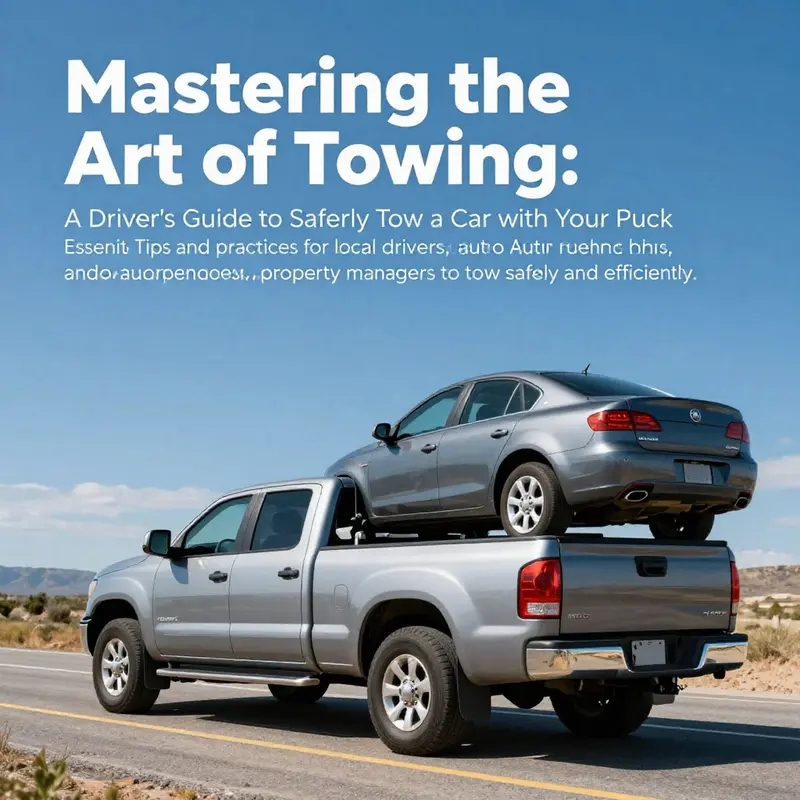
Towing a vehicle with a pickup truck is more than just a task; it involves responsibility, legal compliance, and practical knowledge. Whether you’re a local driver needing help with a breakdown, an auto repair shop looking to assist customers, or a property manager overseeing vehicle compliance, understanding the towing process is crucial. This article will guide you through the legal considerations, selecting appropriate equipment, the safest steps to follow while towing, and best practices for a stress-free towing experience. Each chapter builds upon the last, ensuring a comprehensive understanding of how to tow a car with your pickup truck effectively.
Know the Rules Before You Hook Up: Legal Essentials for Towing a Car with a Pickup Truck
Legal checkpoints to clear before towing
Towing a car with a pickup truck requires more than a secure connection and steady hands. It also demands adherence to laws and standards that protect you, other road users, and the vehicles involved. Ignoring those rules can cause costly fines, void warranties, or create dangerous situations. This chapter walks through the legal essentials you must address before putting a vehicle on tow.
Begin with towing capacity. Every pickup has a published towing limit in its owner’s manual. That number is not a suggestion. It reflects the truck’s engine, transmission, brakes, frame, and suspension limits. Towing a vehicle heavier than the rating can overload the truck. Overload increases stopping distance and risks brake failure. It can also breach local weight regulations, exposing you to legal consequences if stopped. Confirm the combined weight of the carriage and its hitching components does not exceed your truck’s rating. Factor in any cargo in the pickup bed and passengers, because the gross combined weight matters for compliance.
The hitch system is the link between compliance and control. Hitches come in classes, and each class is rated for a maximum tongue weight and gross trailer weight. Use a hitch rated for the full load you intend to tow. A Class III or IV hitch is common for heavier loads, but you should match the precise rating to the calculated towing weight. Authorities may cite improperly rated or incorrectly installed hitches during inspections. A hitch that is too weak can fail, causing property damage, injury, and legal liability. Have hitches installed by qualified technicians when possible. Keep receipts and documentation of the hitch rating and installation. These papers may be useful if an inspector questions the setup.
Lighting and electrical connections are a visible part of legal compliance. Brake lights, turn signals, and tail lights on the towed vehicle or trailer must function. Many jurisdictions require a working wiring harness that links the truck’s lighting system to the towed vehicle or trailer. If the towed car remains connected to its own battery supply, ensure its lights respond correctly to the towing vehicle’s signals. If you use temporary lighting on a trailer or dolly, these lights must meet local specifications for brightness, color, and placement. Nonfunctional lights can lead to traffic stops, fines, and increased crash risk. Carry spare fuses and a basic wiring kit to address minor electrical faults that can make a stop turn into a legal headache.
Drivetrain and manufacturer instructions are more than recommendations. They often reflect engineering limits and warranty terms. Some vehicles cannot be flat-towed without specific procedures. Others require the transfer case to be set in neutral or the driveline to be disconnected to prevent transmission damage. Towing in ways a manufacturer prohibits may void warranties and shift legal liability to the operator if damage occurs during transit. Always consult the vehicle’s owner’s manual for approved towing methods before attaching it to your pickup. If you cannot access the manual, contact the manufacturer or a licensed dealer for guidance. Acting on incorrect assumptions is a common cause of mechanical failure and subsequent disputes.
Local regulations vary and can alter how you tow from one jurisdiction to another. States and provinces set rules for towing length, width, required lighting, and where towing is permitted. Some areas require special permits for towing heavy or long loads, or for crossing state lines with an oversized rig. Towing in a commercial capacity often triggers additional licensing and equipment standards. If your tow will cross municipal or state borders, check the requirements along the entire route. Permit applications can take time, and penalties for noncompliance can be substantial. Knowing the rules in advance prevents fines and logistical surprises.
Insurance and liability deserve careful thought. Not all auto insurance policies cover towing operations the same way. Some personal policies limit liability when another person is being transported on the towed vehicle or when the vehicle is being used for commercial purposes. Before towing, verify your coverage for damage to the towed vehicle and third-party property. Consider obtaining supplemental coverage or a one-time tow policy if a policy gap appears. Keep proof of insurance in the towing vehicle. That documentation is crucial if an incident leads to an exchange with law enforcement or a claims process.
Driver qualifications and permits matter more than many operators expect. In some regions, towing heavier vehicles or trailers beyond certain weight thresholds requires a commercial driver’s license or a special endorsement. Even if not mandated, a driver with professional training is more likely to operate safely and comply with complex rules. If you tow for hire, ensure you meet all licensing, registration, and tax requirements. Operating without the required credentials risks fines and possible suspension of business operations.
Proper documentation makes legal compliance easier to demonstrate. Keep vehicle titles, registration, and proof of ownership accessible. If you are towing another person’s car, carry written permission or a bill of sale that establishes your legal right to move the vehicle. Maintain invoices and installation records for towing equipment. When you must present paperwork to authorities after an incident, having these documents will speed resolution and reduce liability.
Special considerations apply to brake systems and safety chains. Many jurisdictions require trailers beyond a certain weight to have their own braking systems. If your tow setup includes a trailer or dolly, ensure its brakes meet local standards. Safety chains are often legally required even when using a hitch. Chains provide a backup connection if the primary hitch fails. Attach them to the vehicle frame, not to bumper covers or plastic parts. Cross the chains under the coupler to catch the tongue if it detaches. Incorrect chain use is a common violation cited during roadside checks.
When towing a vehicle that is disabled, leaving someone in the towed vehicle is sometimes necessary and advisable. A person inside can steer and operate brakes, reducing the risk of jackknifing or uncontrolled movement. However, laws differ on whether carrying passengers in towed vehicles is allowed. If you plan to have someone ride in the towed car, confirm that it is permitted under local traffic laws. If it is not allowed, make arrangements for an alternative driver or use a flatbed. Balancing practicality and legality protects you and your passengers.
Cross-border and interstate towing introduces additional layers of regulation. Different states and countries have unique requirements for vehicle lighting, signage, and weight distribution. Some require specific markings, such as a clearly visible “TOWING” sign, reflective flags, or oversized load indicators. When planning long-distance moves, map the legal expectations for each jurisdiction encountered. This proactive approach prevents unexpected stops and fines.
Liability after an accident can hinge on compliance. Courts will inspect whether you followed manufacturer instructions and local laws. Using improper equipment, ignoring weight limits, or failing to secure lights can be considered negligence. That negligence can lead to full liability for damages, medical costs, and legal penalties. Maintain records of inspections, equipment checks, and the steps you took to comply. Those notes can demonstrate reasonable care if you must defend your actions.
Learning to spot illegal towing practices is also useful. Being aware of red flags helps you avoid risky setups if you hire third-party towers. Factors like missing permits, poorly rated hitches, or nonfunctional lights indicate potential illegal towing activity. If you see such issues when inspecting a tow provider, decline their service. For further guidance on recognizing unsafe or illegal towing practices, consult this resource: Spot Illegal Towing: Key Signs to Know.
Finally, treat legal compliance as part of your safety routine. Perform a legal checklist before you leave. Verify capacities, confirm hitch ratings, check lights, confirm manufacturer instructions, and carry documentation proving compliance. A methodical pre-tow process reduces the risk of enforcement stops and legal exposure. It also increases the odds that the tow will be smooth and damage-free.
For authoritative federal standards and broader guidance on roadway safety and towing regulations, consult the U.S. Department of Transportation: https://www.transportation.gov
Tow-Ready Decisions: Selecting the Right Equipment to Safely Haul a Car with a Pickup
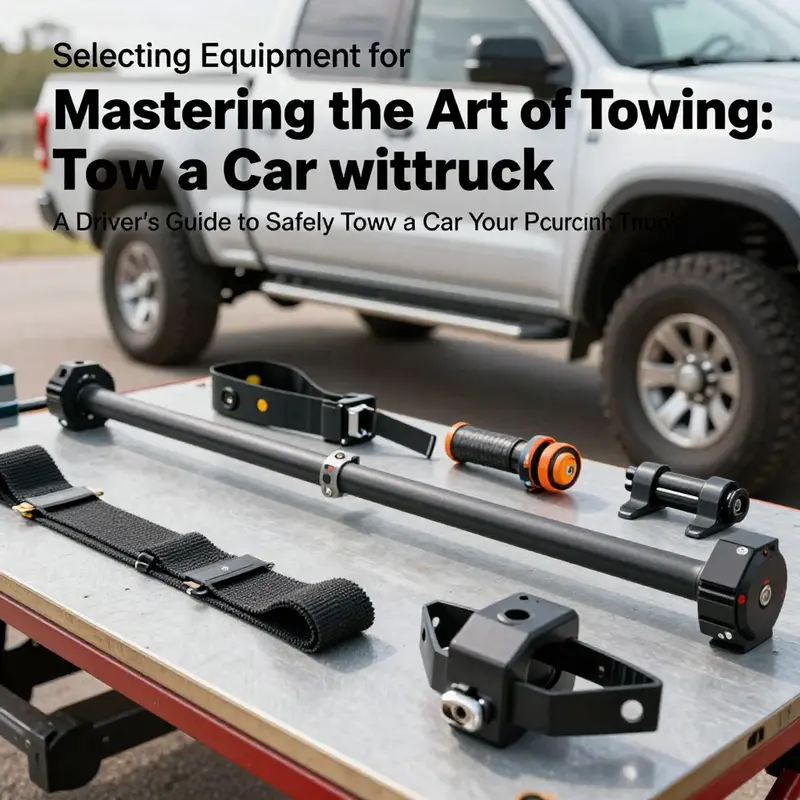
Choosing to tow a car with a pickup truck starts with a clear-eyed assessment of the equipment that will carry the burden and keep everyone safe. It is not enough to know you can hook a vehicle behind a truck; the method you choose, the gear you deploy, and the way you connect everything together determine whether the tow ends with a clear road or a roadside repair bill. The central question is not which tool is easiest, but which configuration respects the towing capacity, protects the towed vehicle, and aligns with the rules that govern the road. The chapter that follows treats equipment selection as a dynamic decision, one that must respond to the type of car being towed, the drivetrain and weight distribution of the pickup, the distance involved, and the legal framework that governs towing in your area. It is a practical, end-to-end consideration that sits at the heart of a safe operation and ties directly into the steps you will take before, during, and after the tow. Three primary methods form the backbone of equipment choices: flat-towing, using a trailer, and employing a dolly. Each method carries distinct demands in terms of the hitch, the way power and steering are managed, and the level of protection afforded to tires and undercarriage. The decision is not a simple preference; it is a calculation that weighs weight, chassis alignment, transmission compatibility, and the potential for damage if standards are ignored. In many ways, equipment selection is the numerator in the equation that yields safe, lawful, and efficient towing. It is the part of the process that shapes every other decision, from how you prepare the vehicles to how you signal your intent to other drivers on the road. As you consider which path to take, the first step is to ground your choice in the pickup’s manufacturer specifications. The owner’s manual will tell you the maximum towing capacity, the payload limits, and the drivetrain constraints that cannot be bypassed. Those numbers are not merely suggestions; they are the boundary conditions for every connection you’ll make and every mile you’ll travel with a towed vehicle behind you. While many pickup trucks offer impressive towing capabilities, pushing past the limits invites a cascade of problems. Overloading a hitch, stretching a frame or suspension beyond its design, or subjecting a transmission to improper conditions can lead to heat buildup, premature wear, and, in the worst case, a loss of control. The careful reader quickly learns that the safest option is to select the equipment that keeps the combined weight within documented limits and that respects the towed car’s own restrictions. The weight of the towed vehicle, including transmission type and wheel configuration, interacts with the trailer’s tongue weight or the dolly’s load to determine whether the chosen method is appropriate. In practice, this means verifying not only the pickup’s hitch rating but also the weight distribution between the tow vehicle and the towed car. A heavy front axle on a dolly might shift more weight forward than a flat-tow arrangement, changing how the towing setup behaves on acceleration, braking, and turning. This is why the equipment selection phase cannot be outsourced to guesswork or past experience alone. Even a well-meaning routine can fail if the gear is mismatched to the vehicle. The choice of method also reflects the nature of the trip. For short, local recoveries or siting a vehicle out of a ditch, a dolly or a short trailer can be efficient and economical. For longer journeys or when the towed car requires better protection from road debris and tire damage, a flatbed trailer, where the car rides on a platform and its tires are not in contact with the road, can be more prudent. The integration of the tow method with the other preparatory steps—checking licensing requirements, confirming the vehicle’s compatibility, and ensuring the presence of the right safety devices—frames a comprehensive approach to towing that prioritizes safety and legality over mere convenience. In this light, the equipment decision also carries a responsibility to maintain visibility and signaling on the road. Regardless of the method chosen, lights, reflectors, and a clearly visible “TOWING” sign become indispensable. The rules of the road demand that other motorists understand immediately that a vehicle is being towed and that there is a special arrangement governing the run. As you navigate through the decision-making process, it helps to understand how the various options align with common situations. Flat-towing, despite its simplicity and the ease with which it can be swapped between vehicles, imposes a requirement on the towed car: the transmission compatibility. Some automatic transmissions require devices that prevent steering or drivetrain damage, and some front-wheel-drive configurations do not tolerate flat-towing at all. If your car is not rated for flat-tow in its manual, attempting to tow it this way may create more risk than reward. A tow bar that is compatible with both your pickup’s hitch and the car’s frame is essential, but compatibility alone does not guarantee success. The installation must be precise, with secure attachment points and lock mechanisms engaged. The same careful approach applies to trailers. When you opt for a trailer, you enter a framework that transfers more responsibility to the operator: lighting, brake synchronization, and reliable braking become critical. A trailer’s GVWR and tongue weight must be matched to the vehicle’s capacity, and a properly wired electrical system must coordinate with the pickup’s systems so that tail lights, brake lights, turn signals, and hazard indications function in concert. This is not merely a matter of compliance with regulations; it is a matter of safety, preventing confusion for other drivers who rely on predictable behavior from vehicles sharing the road. The dollies, while providing a middle ground, require careful consideration of weight distribution and tire contact with the road. A dolly lifts the front wheels of the towed car off the ground, changing steering dynamics and reducing drivetrain wear that flat-towing can cause in some configurations. However, dollies demand that the front axle weight of the towed car be within the dolly’s lifting capacity and that the hitch can support the total mass of the combination. Across all options, the common thread is the need to verify, verify again, and verify one more time before moving. Equipment that is worn, cracked, or corroded becomes a liability the moment you take the first step in a tow. Tow bars, hitch receivers, tow straps, and dolly tie-downs must be inspected for wear, cracks, or deformation. Any compromised component should be replaced rather than risk failure on the highway. The security of connections—whether it is a ball mount or a locking pin, a chain, or a strap—depends on the operator’s diligence and the quality of the equipment. The practical reality of choosing equipment is that it is rarely a matter of a single best solution. Instead, it is a choice among equally viable options, each with its own trade-offs in terms of installation effort, vehicle compatibility, protection for the towed car, and the legal obligations that accompany towing. In many cases, the vehicle’s manufacturer and the equipment manufacturer will each provide critical guidance. The owner’s manual can reveal whether flat-towing is permissible for a particular model, which in turn informs whether a tow bar is a viable path. For trailers, the trailer’s GVWR must be compared against the pickup’s towing capacity, and the electrical harness should be matched to the vehicle’s electrical system and the trailer’s braking arrangement. For dollies, the front-wheel configuration should be compatible with the towed car’s front axle load and wheelbase. The process culminates in a practical check: line up the vehicles so that the hitch points align, secure the connections, and then perform a gentle test pull to confirm there is no slack or drift. This verify-and-test step is where confidence is built or broken. A successful test pull sets the stage for smooth acceleration, steady braking, and predictable handling during the actual tow. It also provides a measurable moment to ensure that the lighting, signaling, and brake systems function as intended under real-world conditions. As the journey progresses, the choice of equipment remains closely tied to the legal framework you operate within. Licensing, vehicle type restrictions, and weight limits are not abstractions; they translate into real constraints that shape the selection process. In some regions, industry bodies provide clear guidelines about which combinations of vehicle, hitch, and towed vehicle are permissible. In others, the rules are more nuanced and require consultation with authorities or a careful review of the owner’s manual, the vehicle’s warranty, and any insurance coverage that may influence the decision. The practical takeaway is straightforward: do not assume. Do not proceed with a method that would violate the vehicle’s official tolerances, and do not ignore the signals that indicate a connection is unsafe. Safety and legality are inseparable in towing operations. If your area requires a specific license or a transport qualification to tow heavier loads, secure those credentials before you attempt any hook-up. If you are dealing with a foreign-made vehicle or a rental, verify that the car’s drivetrain and transmission settings align with your chosen method. Keeping the process transparent and well-documented minimizes risk and supports accountability should anything go wrong. When it comes to practical resources, it is wise to consult authoritative guidance beyond your own experience. The National Highway Traffic Safety Administration (NHTSA) provides comprehensive information about towing safety, configuration, and best practices that apply across many jurisdictions. For a deeper dive into the rules and recommendations, see the external resource at https://www.nhtsa.gov/. If you want to explore a practical, field-focused perspective on towing operations and readiness, you can also follow the guidance and discussions available on the Santamaria Tow Truck blog, which offers ongoing insights into how professionals approach tow scenarios in a variety of contexts. For a concise anchor to that resource, you can visit the internal reference here: https://santamariatowtruck.com/blog/. Returning to the mechanics of equipment, the overarching principle remains clear: the safest tow is the one where the equipment chosen, the configuration set, and the procedures followed all align with the vehicle’s design, the load’s realities, and the road’s demands. The equipment decision is not a single moment of assembly; it is the foundation for a sequence of careful actions that begin long before you arrive at the tow site and continue long after the last strap is removed. It shapes how you communicate with other drivers through lights, signs, and signals; how you distribute weight and manage momentum; how you negotiate curves, hills, and changing weather; and how you recover from the inevitable surprises that occur on the road. In the end, selecting equipment is about stewardship: respecting the capabilities of your pickup, honoring the constraints of the towed car, and paying careful attention to the legal and safety guidelines that govern all towing operations. It is a discipline that rewards thorough preparation, disciplined execution, and ongoing learning. By treating equipment choice as a critical, highly specific decision rather than a casual afterthought, you set a course for a tow that is not only possible but responsible, reliable, and respectful of everyone who shares the highway.
Step-by-Step Safeguards: How to Tow a Car with a Pickup Truck Without Risk
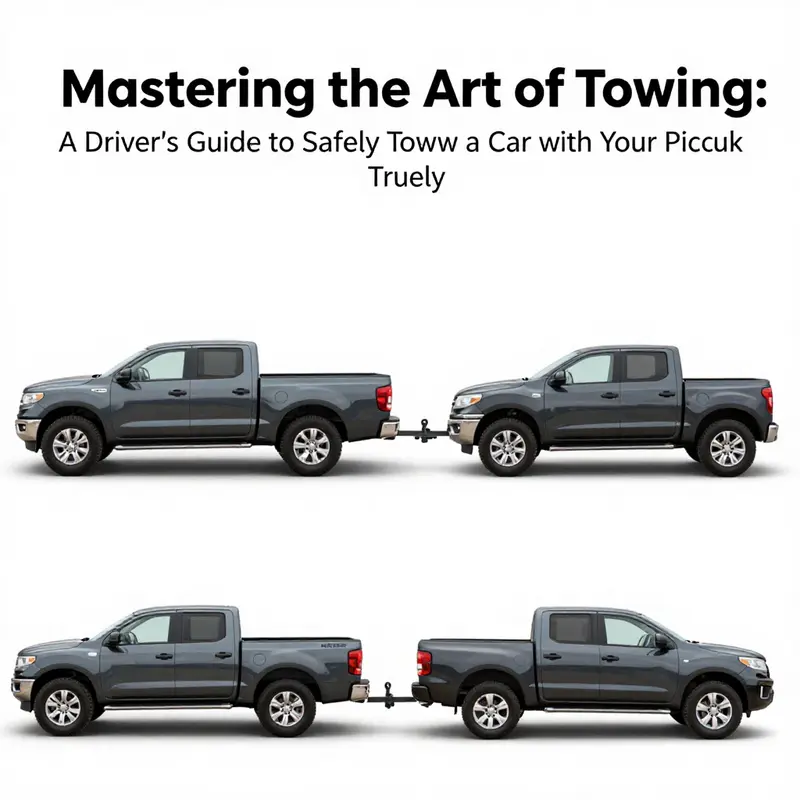
Towing a car with a pickup truck demands more than brute strength. It requires planning, the correct gear, and steady technique. This chapter walks through the essential steps, explained as an uninterrupted process you can apply from first glance to final disconnect. Read it as one continuous procedure that protects vehicles, people, and your legal standing.
Start with a clear assessment. Confirm your pickup’s tow rating in the owner’s manual and compare it to the weight of the vehicle to be moved. Do not estimate—use manufacturer figures. If the combined weight of the towed vehicle, its contents, and any trailer attachment exceeds the pickup’s rating, do not proceed. Also check local rules and licensing requirements that apply to towing. Laws vary; some areas require specific endorsements or a freight qualification certificate. Ignoring these rules risks fines and liability.
Once the legal and capacity checks are done, inspect both vehicles. Walk around each vehicle and note tire pressure, fluid leaks, and obvious damage. A flat or underinflated tire on the towed vehicle can overheat, fail, or alter steering. Ensure the towed vehicle’s steering operates freely; steering that binds will make safe towing impossible. Check that all doors latch and that loose items inside the towed vehicle are secured. Anything that can move and shift during towing can damage seats, glass, or systems.
Match the towing method to the situation. A rigid tow bar is the safest DIY choice for longer moves and heavier cars because it prevents swaying. A tow rope or strap is acceptable for short, low-speed pulls, such as extracting a car from mud or a shallow ditch, but use ropes only when both drivers are experienced. For nonfunctional transmissions, damaged drivetrains, or vehicles with unknown mechanical issues, choose a flatbed. Loading the entire vehicle onto a platform eliminates drivetrain and steering risks.
Choose equipment rated well above the expected load. A good rule is to select a tow strap, chain, or bar rated at least 1.5 times the weight of the towed vehicle. Inspect every piece of gear before use. Look for corrosion, frayed fibers, bent hooks, or cracked welds. If any doubt exists, replace the part. Never jury-rig connections to save time; failure while moving can cause catastrophic damage.
Align the vehicles carefully. Position the pickup and the car to be towed on level ground if possible. This makes coupling simpler and safer. Use cones, triangles, or hazard lights to warn approaching traffic while you set up. Engage parking brakes while working, and place wheel chocks if you have them. Approach at slow speed and make sure tow points line up. Tow hooks or tow eyes are designed to take the load; attach there and not to bumpers or suspension components.
When connecting, confirm each attachment twice. If using a tow bar, follow the manufacturer’s instructions and engage all locking pins. When using a strap, thread it without knots and ensure hooks sit squarely in the tow eyes. Leave a slight sag in the strap; a perfectly taut strap transfers shock loads and risks breakage. Add a highly visible marker to the midpoint of a strap for night or poor-visibility moves. Secure safety chains in an X pattern below the tow connection. These chains catch the towed vehicle if the primary coupling fails.
Electrical and visibility systems matter. If the towed vehicle’s lights do not function while being towed, rig temporary lighting. Many jurisdictions require brake lights and turn signals on the towed vehicle. If you cannot power these lights, consider using a trailer lighting board or keep the move short and off public roads. Place a clear, reflective “TOWING” sign on the towed vehicle if it lacks towing indicators. Both drivers should keep hazard lights on during the move to warn other road users.
Before moving, brief the other driver. Establish simple signals for stop, slow down, and emergency. Agree on the method of communication—two-way radios, mobile phones, or prearranged hand signals if the drivers will be within sight. Both drivers should practice a gentle pull to test the hookup. The towing pickup should begin with a light, steady acceleration. The towed driver must be ready to steer and assist the movement. If possible, have someone in the towed vehicle to manage steering and communicate conditions.
Control speed and braking with patience. Keep speed low; generally, stay well below 50 km/h (30 mph) on open roads and slower in town. Accelerate gently to avoid creating slack that can cause a sudden jolt. Brake early and gradually. The pickup will feel heavier and respond more slowly. Leave extra space for braking and for turning, as the combined length increases your turning radius. Avoid abrupt lane changes. On steep grades, downshift to engine braking where appropriate rather than relying only on the brakes.
Anticipate road hazards. Avoid rough, uneven surfaces whenever possible. Potholes, gravel, and sudden changes in surface height can destabilize the tow. If you must cross such terrain, go slowly and choose the smoothest line. Watch for bridges, low clearances, and weight-restricted roads. Where visibility is poor, reduce speed further and consider stopping until you can proceed safely. Never tow a vehicle across a bridge or structure that exceeds your combined weight without confirmation.
Understand special-case rules. Four-wheel-drive vehicles often require manufacturer-specific procedures. Many 4WDs cannot be towed with drive wheels on the ground. Some modern automatics need the transmission in a specific mode or the key in an accessory position to prevent electronic locks. Electric vehicles often require disabling the parking brake and certain electronic systems before towing. If you do not know the exact procedure for the vehicle you are towing, choose a flatbed or call a professional.
Monitor continuously. Use mirrors and perform intermittent visual checks. Pull over safely every few kilometers to inspect connections and confirm nothing is overheating or rubbing. Listen for unusual sounds. If you feel any sign of instability, slow gradually and stop to inspect. Do not continue if a connection shows wear or if the towed vehicle begins to sway. The best time to act is at the first sign of trouble.
Handle emergencies with calm and clear steps. If the tow strap snaps, put your hazard lights on, slow gently, and signal the towed driver to stop. Move both vehicles off the roadway if possible. If the towed vehicle develops a mechanical problem during transit, both drivers should turn on hazard lights and pull over to a safe location. Call roadside assistance if the situation is beyond quick field repair. Professional help reduces the chance of further damage and protects everyone involved.
At the destination, slow the tandem to a full stop before disconnecting. Set parking brakes and chock wheels. Disconnect safety chains and remove the main attachment last if it is safe to do so. After disconnect, walk around both vehicles and inspect for damage to tires, bumpers, lights, or suspension. Check for fluid leaks that may have begun during towing. Document any damage immediately for insurance or legal purposes.
Throughout the process, maintain an attitude of caution. Towing may be legal and feasible, but it is never without risk. If you have any doubt about the equipment, compatibility, or instructions in a vehicle manual, call professional roadside assistance. They have the right gear and experience to handle complex situations safely. For more guidance on spotting unsafe or illegal towing practices, consult this short primer on how to spot illegal towing: spot illegal towing: key signs to know.
For authoritative safety recommendations and to double-check procedures for your region, consult official guidelines. The China Road Safety Association provides a comprehensive towing guide that outlines responsibilities, equipment standards, and safe methods. Refer to it when you need regulatory clarity or additional safety steps: https://www.chinatransport.org.cn/safety/towing-guide.html
Following these steps ensures a controlled, lawful, and safe towing movement. Keep documentation and the vehicle manuals accessible. When in doubt, prioritize the safety of people over speed or convenience. A careful approach prevents damage, reduces liability, and makes towing a predictable operation rather than a risky improvisation.
Practical Best Practices and Tips for Towing a Car with a Pickup Truck Safely
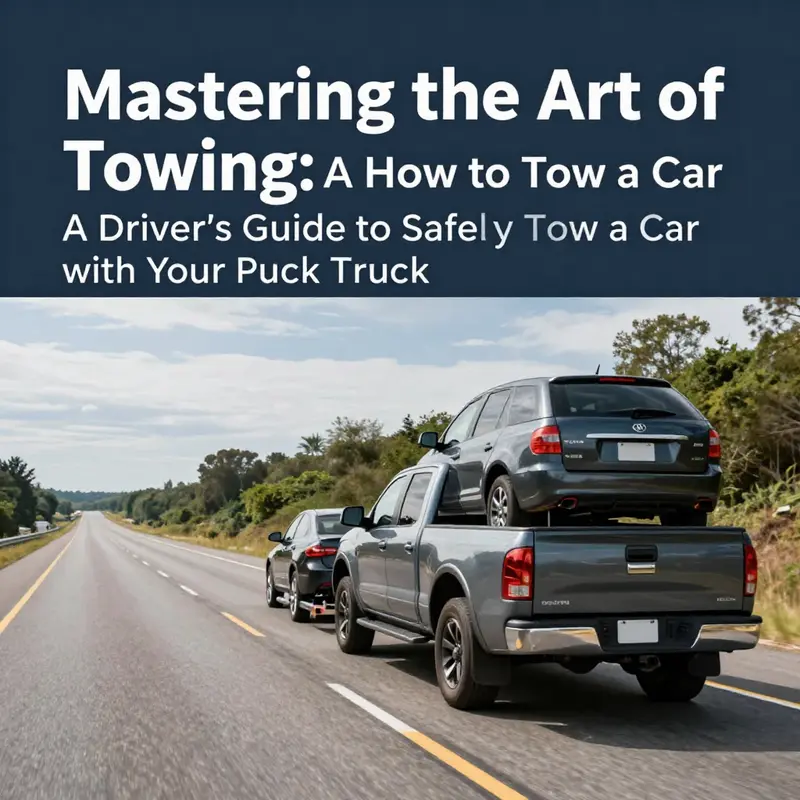
Practical best practices and tips for towing a car with a pickup truck
Towing a car with a pickup truck is more than hooking two vehicles together. It is a sequence of deliberate checks, careful choices, and consistent attention on the road. Start by confirming legal and mechanical compatibility. Know your pickup truck’s maximum towing capacity and compare it to the combined weight of the towed vehicle and any cargo. Exceeding that limit risks brake failure, transmission damage, or loss of control. Check licensing and local regulations where required. If you tow professionally or across jurisdictions, ensure you meet any special licensing or certification rules. Treat these checks as non-negotiable. When the numbers and documentation line up, you can move on to equipment and procedures designed to keep both vehicles safe.
A correct choice of towing equipment is the foundation of safe towing. A rigid tow bar gives the most stable connection for long distances. It minimizes fore-and-aft movement and reduces the chance of jackknifing. Use a tow bar only if both vehicle manufacturers allow hard-bar towing and if the bar fits the designated hitch points. For short, low-speed recoveries, a high-strength tow rope or strap can work. But ropes should be reserved for emergencies. Choose straps with visible reflective threads and a rated strength above the load. Attach them to factory-rated tow hooks or frame points, not to bumpers or suspension components. Always inspect equipment for cracks, frays, or corrosion before each use. A cheap or worn connector is the most common cause of mid-tow failures.
How you connect the vehicles matters as much as the hardware you choose. Align both vehicles carefully so the tow bar or strap connects in a straight line. For a tow bar, secure all pins and bolts and torque them if required. If using a strap, tie a secure knot—avoid temporary loops—and fasten each end to a proper tow point. After connecting, test the setup by gently pulling forward a few feet. Check for free movement without slippage or odd noises. Confirm the towed vehicle’s steering is unlocked and the wheels can track naturally. On manual transmissions, place the car in neutral with the parking brake off. Automatics vary by model; consult the owner’s manual. If the manufacturer prohibits towing with the drive wheels on the ground, do not attempt it. A towed transmission can suffer serious damage if driven improperly.
Visibility and signaling are essential during every mile of towing. Ensure the towed vehicle’s brake lights and turn signals function. If they do not, use an auxiliary light pod or a trailer wiring harness to maintain visibility. Turn on hazard lights while making lane changes or when slowing. Place a clearly visible sign on the rear of the towed vehicle when practical. Maintain constant mirror checks and assign a spotter if possible. If someone rides in the towed vehicle, establish clear hand signals or agree on radio communication. That person can help guide turns, report unusual noises, and control the steering if the connection is not rigid. However, riding in the towed vehicle is not always recommended or permitted—confirm local laws before allowing it.
Driving technique when towing should be deliberate and anticipatory. Accelerate gently and give extra space for braking. The added mass extends your stopping distance; plan at least double the gap you would normally leave. Maintain a lower speed—many guidelines recommend staying under 50 km/h (30 mph) on public roads unless both vehicles and equipment are rated for higher speeds. Avoid sudden lane changes and rapid deceleration. Take wider turns, and use the entire lane if needed to avoid cutting the path of the towed vehicle. On long downhill grades, downshift to use engine braking and avoid riding the brakes. Continuous braking can overheat brake systems on both vehicles. Drive defensively and assume other drivers may not anticipate the added length and reduced agility of your rig.
Consider the road and weather conditions before you tow. Avoid towing over rough, steep, or unpaved roads when possible. If you must cross uneven terrain, reduce speed further and inspect the route first. Rain, ice, or snow demand slower speeds and heightened vigilance. Strong crosswinds can amplify sway; reduce speed and keep both hands on the wheel. If the towed vehicle begins to sway, do not accelerate. Instead, gently reduce speed and, if necessary, have the driver of the towed vehicle apply light braking to stabilize direction. If sway persists, find a safe place to stop and recheck connections, weight distribution, and tire pressure.
Vehicle-specific considerations often determine the safest towing method. For manual transmissions, towing in neutral with the parking brake off is usually safe for short distances. For automatic vehicles, many manufacturers warn against towing with the drive wheels on the ground. Some automatics require the transmission to be locked in Park, or they may need to be lifted entirely. Four-wheel drive and all-wheel drive systems pose special risks. These systems can suffer internal damage if towed incorrectly, because transfer cases and differentials can be driven without proper lubrication. Consult the owner’s manual for step-by-step manufacturer guidance before attempting to tow any 4WD or AWD vehicle. When in doubt, use a flatbed. A flatbed removes risk to the drivetrain entirely by carrying the entire vehicle.
Plan for lighting, braking, and emergency gear before you leave. Carry wheel straps, a soft cloth or flag for the tow strap, basic tools, and a high-visibility vest. Check tire pressures on both vehicles, including the spare. Test lights again after the first few hundred meters; a loose connector can appear secure until tension is applied. If you are towing long distances, stop periodically to recheck fasteners, wiring, and strap tension. Wind, vibration, and temperature changes can loosen connections. Keep a fire extinguisher and first-aid kit within reach. These items are not luxuries; they are essentials for a safe tow.
When you reach your destination, follow a clear disconnection routine. Park on level ground and set the parking brake on the towing vehicle. Turn off engines and lower any transfer supports. Remove bolts, pins, or knots in an orderly sequence to avoid sudden shifts. Release straps or bars from the towed vehicle first, then from the towing pickup. Inspect both vehicles for damage, paying special attention to hitch points, lights, and tires. Store towing gear clean and dry. Damaged straps or bent bars should be retired. A small investment in maintenance now avoids large repairs later.
Insurance and legal awareness should guide your decisions. Verify that your policy covers towing situations. Some roadside assistance plans include towing, while others limit distance or cargo type. If you tow for someone else, clarify liability before you move. Understand that improper towing can void warranties or cause expensive mechanical damage. Keep manufacturer contact information handy for quick guidance. If you’re uncertain about towing a specific make and model, call the manufacturer’s customer support. They can provide model-specific restrictions and best practices.
A final practical tip: train before you need to tow. Practice hooking up, testing connections, and driving short loops at low speed in a quiet area. Familiarity breeds confidence and reduces mistakes. If you perform frequent tows, standardize your equipment and keep a checklist in the truck. A simple checklist removes guesswork during stressful situations. For industry-level practices and seasonal considerations, consult professional resources. One helpful source for safe towing practices and vehicle-specific guidance is the NHTSA site at https://www.nhtsa.gov. For local advice on roadside assistance and towing procedures, see this informative tow truck blog for practical service and operator perspectives: https://santamariatowtruck.com/blog/.
Follow these practical tips to reduce risk and improve outcomes. Prioritize legal compliance, match equipment to the task, drive with foresight, and inspect often. With the right preparation and disciplined technique, towing a car with a pickup truck becomes a manageable, low-risk task.
Final thoughts
Towing a car with a pickup truck involves much more than just the act of moving the vehicle. It encompasses legal awareness, proper equipment selection, following strict safety protocols, and employing best practices to ensure both vehicles remain unharmed. By mastering each of the chapters outlined, local drivers, auto repair shops, and property managers can confidently approach towing tasks and ensure peace of mind on the road. Enhance your driving experience by becoming proficient in the art of towing, and remember, safety should always be your top priority.