
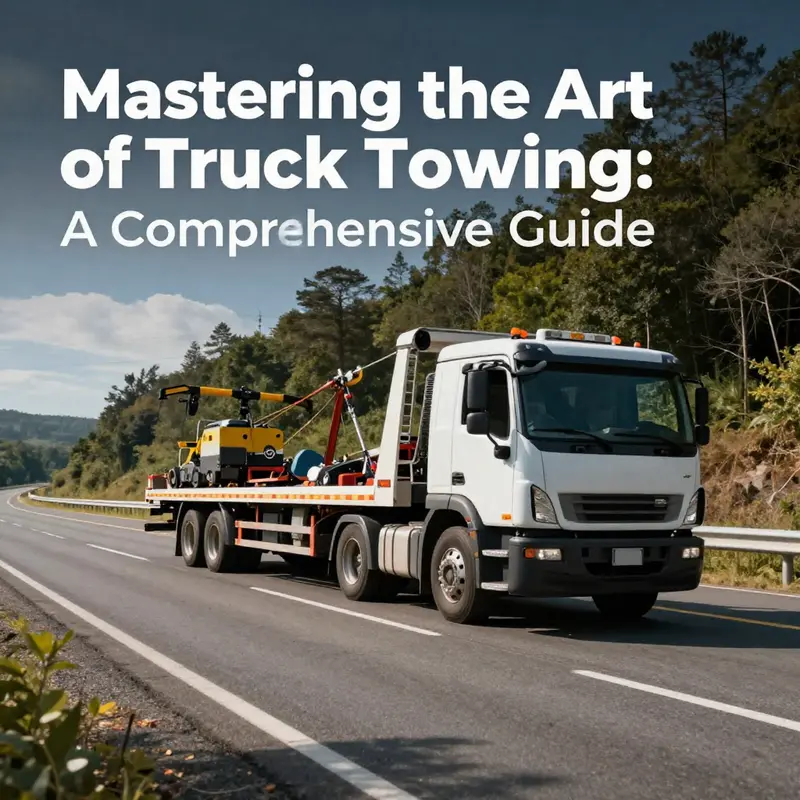
Towing a truck safely is a crucial skill all drivers should master. Whether you’re a local driver needing to help a friend, a property manager dealing with vehicle situations, or an auto shop looking to expand your services, understanding how to tow correctly can save you from unnecessary damages and liability. In this guide, we provide a detailed look into truck towing, ensuring that you are well-prepared from vehicle inspection to securing connections. Each chapter builds upon the last to give you a complete picture of safe towing practices.
null
null
null
null
Nailing the Hitch: How to Secure Connections When Towing a Truck
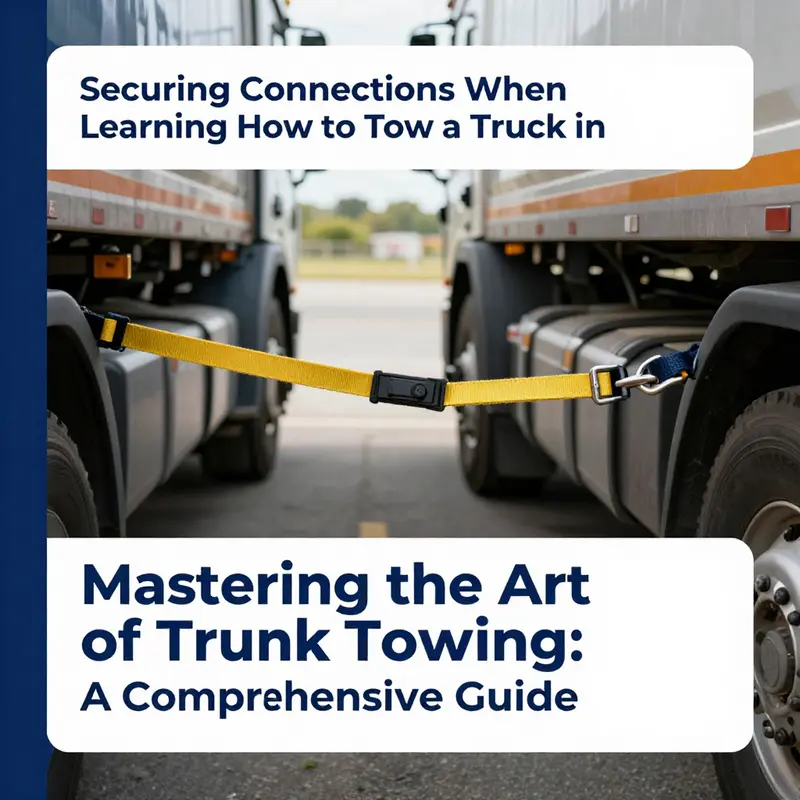
Securing the connection between a towing vehicle and the truck being towed is the hinge on which every safe tow swings. A sound attachment starts with a disciplined pre-connection inspection and ends with a final tug and light check. Every step matters. Missed wear on a hitch, a misaligned kingpin, a frayed safety chain, or a dead trailer light can turn a routine tow into a roadside emergency. This chapter walks through the critical checks and practical steps to make the connection reliable, repeatable, and safe.
Begin with the visible. Inspect the towing vehicle’s hitch or fifth wheel for cracks, deformation, excessive rust, or loose bolts. Confirm the receiver size matches the trailer hitch ball, and verify the rated capacity stamped on each component meets or exceeds the combined weight. On the trailer or truck to be towed, examine the coupler or kingpin for wear, elongation of holes, or missing locking parts. Do not proceed if any component shows damage. Replace or repair it before hitching.
Tire and brake checks are part of the connection routine. Ensure trailer tires are properly inflated and free of sidewall damage. For trailers fitted with electric brakes or air-assisted systems, test their operation before moving the vehicle. On air-brake systems, purge any moisture from reservoirs and confirm the supply pressure is stable. For electric brake systems, power the towing vehicle and apply the brake controller to verify the trailer responds. Faulty brakes compromise the connection by increasing the risk of runaway or jackknifing if the tow must stop suddenly.
Positioning and alignment reduce stress during hookup. Park on level ground and chock wheels on the trailer side if it sits on its own stands. For ball-hitch trailers, lower the coupler until it sits squarely over the hitch ball. The trailer must be level fore-to-aft when the coupler engages. Uneven alignment loads the coupler and can allow the hitch to disengage during turns or bumps. For fifth-wheel towing, back the truck slowly so the fifth wheel aligns with the trailer kingpin. The kingpin should enter the throat of the fifth wheel smoothly. Never force the approach; stop and re-align if you must.
Make the mechanical connection methodical. For a ball coupler, lower the trailer until the coupler fully seats on the ball. Engage the latch and insert a locking pin or coupler lock. If a locking pin is missing or does not seat, do not drive. For fifth-wheel couplings, lower the landing gear only enough to guide the kingpin into place. Once the fifth wheel jaws close around the kingpin, visually confirm the locking mechanism is fully engaged and the safety latch is in the locked position. Pull back on the trailer while the landing gear still supports some weight to test engagement. If you feel movement, recheck the lock.
Safety chains are a mandated and essential secondary restraint. Cross the chains beneath the trailer tongue and hook them to the towing vehicle’s frame or approved anchor points. Crossing prevents the tongue from dropping to the road if the main coupling fails, and it helps guide the trailer back into alignment. Ensure chains are not so tight that they lift the tongue, and not so loose that they drag. Remove any twists and secure the hooks with safety pins or locking mechanisms. Never attach chains to the bumper, axle, or suspension components. Those points can fail under stress.
Electrical connections are the communication link between vehicles. Plug the trailer harness into the tow vehicle socket and test every light. Activate turn signals, brake lights, and running lights. Walk around the rig to confirm each lamp illuminates correctly and that the brake controller modulates trailer brakes. Repair any burned-out bulbs, corroded connectors, or broken wires before departure. Use dielectric grease sparingly on connectors to repel moisture and slow corrosion, but do not mask frayed wires or damaged pins—those need replacement.
Once mechanical and electrical connections are made, perform function tests. With the parking brake on and wheels chocked, have a helper apply the tow vehicle’s brakes while you watch the trailer’s response. Listen for unusual noises while applying and releasing the brakes. Rock the trailer gently to check for play at the hitch and fifth wheel. Any perceptible movement at the coupling indicates an incomplete engagement. Address it immediately.
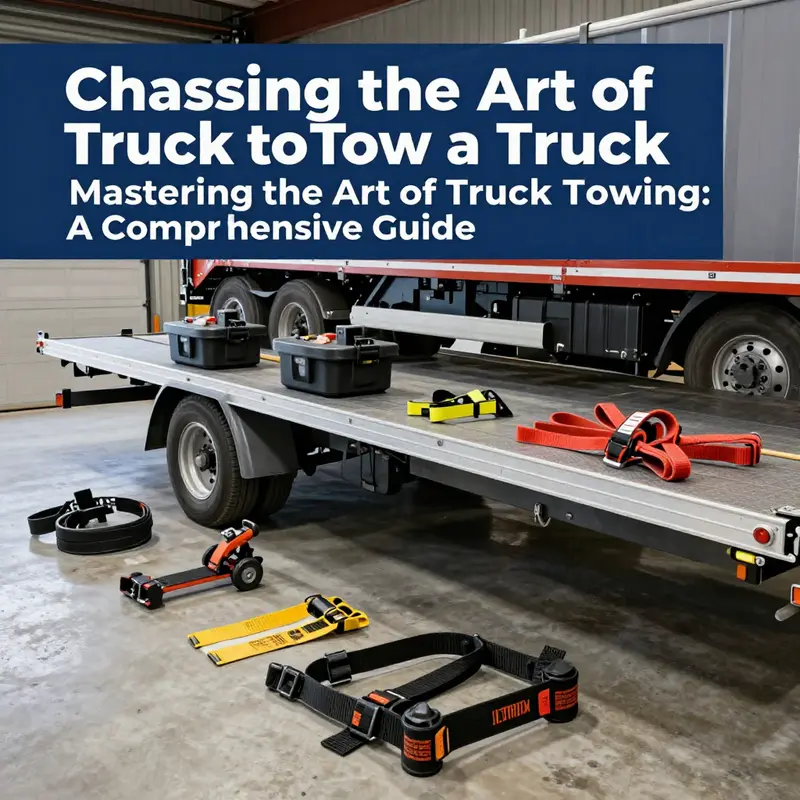
Towing on a dolly or flatbed introduces its own connection checks. If using a tow dolly, secure the towed vehicle’s wheels with straps and chocks, and ensure the dolly’s coupler is locked just like a standard trailer. For flatbeds, use the trailer’s tie-down points and rated straps to secure the truck. Tighten straps in sequence to keep the load centered and level. Use edge protectors over sharp corners to protect straps from abrasion. For heavy trucks, follow manufacturer torque values for winch bolts and anchor hardware.
Some technical details prevent expensive mistakes. For vehicles with electronic stability or traction control, follow the owner’s manual on whether to disable these systems before towing. These systems can detect wheel spin and intervene, potentially causing erratic behavior when a vehicle is being towed. For automatic transmissions, the manufacturer may limit towing distance with wheels on the ground. Check the owner’s manual and, when in doubt, use a flatbed to avoid drivetrain damage.
A final checklist prevents last-minute oversights. Confirm the hitch lock or coupler pin is installed and secured. Ensure safety chains are crossed and attached. Test all lights and brake response. Re-check tire pressures on both vehicles. Verify the trailer’s load is balanced and tied down. Remove wheel chocks only after all checks pass. Perform a short, slow test drive in a controlled area. Re-inspect the connection after a few hundred meters and again after the first few miles. Fasteners and straps settle and may need retightening.
Common errors are often simple to correct. Attaching safety chains to non-reinforced points is a frequent mistake. Failing to cross chains or leaving them dragging invites damage. Using mismatched hitch components or an under-rated hitch is another hazard. Avoid jury-rigged solutions such as using rope or non-rated straps. Electrical connectors left exposed to the elements without protection corrode quickly. Finally, neglecting to test brakes or lights is a preventable oversight that causes many roadside incidents.
Follow-through matters as much as the initial hookup. During a long tow, stop periodically to inspect the hitch, chains, straps, and lights. Heat and vibration can loosen bolts and stretch straps. Check for fluid leaks from either vehicle and listen for new noises. Keep a basic toolkit, extra pins, rated straps, and a portable light in the towing vehicle. Train anyone who might hitch or un-hitch to follow the same steps, and standardize procedures if you manage a fleet. For guidance on fleet practices and readiness, consult resources on fleet standardization and emergency readiness.
When conditions or complexity exceed your comfort, call a professional. If you detect structural damage, suspect a compromised brake system, or need to tow a four-wheel-drive truck, arrange for flatbed towing or specialist handling. A careful, methodical connection process minimizes risk and preserves equipment. Use the checks described here to create a routine you follow every time.
For official checklists and tutorials, refer to authoritative safety guidance from the National Highway Traffic Safety Administration: https://www.nhtsa.gov
Steady Hands, Clear Signals: Mastering Driving Rules and Communication When Towing a Truck
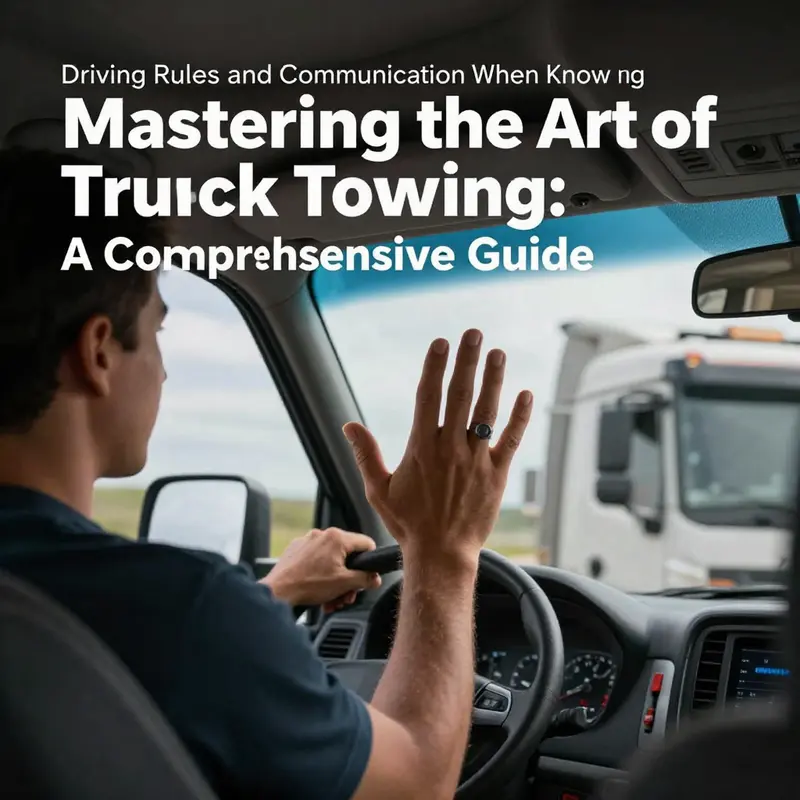
Towing a truck is not just about pulling a vehicle from one place to another. It is a test of steady judgment, disciplined technique, and the ability to communicate clearly with a partner on the road. The work begins long before you turn the key or engage the towing apparatus. It continues through every mile you cover, with a focus on stability, predictability, and lawful operation. In this chapter, we explore the driving rules that keep both vehicles safe and the communication practices that prevent missteps. The emphasis is on a measured, anticipatory approach that protects the towed truck as well as the towing vehicle, while making room for the unexpected situations that can arise on any route. The underlying idea is simple: when the road becomes a shared worksite, your decisions must be deliberate, your signals unmistakable, and your pace slow enough to allow room for error correction without consequence.
A key starting point is the recognition that towing capacity and equipment are the foundation of safe driving. Your towing vehicle must have a capacity that surpasses the weight of the truck you are moving, and the hitch, wiring, and brakes should be matched to that load. This is not optional flair but a safety prerequisite. When the weight on the tow is within the towing vehicle’s limits, you gain a margin that translates into smoother acceleration, more predictable braking, and capable handling through curves and on grades. The same logic governs how you approach the road. If your setup feels strained or reactive, you slow down the process and reassess before you accumulate heat in a drivetrain that was not designed for continuous tow stress.
Legal compliance and visible signaling are the invisible gears of safe towing. In many jurisdictions, the towed vehicle must carry appropriate plate obligations or lighting configurations, and some areas require auxiliary lighting or brake signaling to ensure the towed unit remains conspicuous behind the tow vehicle. These are not bureaucratic niceties; they are essential to keeping the towed truck legible to other drivers in all conditions. Clear signaling becomes crucial when you change lanes, merge, or make a turn. The towed vehicle cannot rely on the towing vehicle’s indicators alone. A shared plan for signaling, including when to use hazard lights and how to sequence turns and lane changes, reduces the chance of misunderstandings that can escalate into dangerous situations on busy roads. In practice, this means a simple pre tow discussion with your passenger or co driver: agree on the signals, the timing of each maneuver, and the expected pace. A lightweight walkie talkie or a phone with a hands free setup adds reliability when noise or distance would otherwise obscure voice cues.
From a driving perspective, the rules of the road take on a specialized flavor when a truck is in tow. Speed must be moderated to a level that preserves control and minimizes sway. The standard guideline—do not exceed about 30 km/h (18 mph)—serves as a baseline, with even lower speeds on steeper grades or in restricted spaces. Braking becomes a matter of anticipation rather than reaction. You brake gently and early, allowing the towed vehicle to slow in a controlled manner rather than forcing a sudden deceleration that could cause the towed car to jackknife or stress the hitch. This is where engine braking and smooth progression matter; abrupt throttle changes or heavy braking at the wrong moment can translate into instability for the towed unit, particularly if the terrain includes hills or long descents. Likewise, turns require a wider radius. Sharp corners not only tax your steering but also compress the vertical and lateral forces on the coupled system. A generous turning circle gives the caravan enough leeway to follow the towing vehicle through the bend without pulling the towed truck into an awkward angle.
The pacing of a tow also hinges on following distance and lane discipline. You maintain a longer following distance than usual because your perception bubbles change when you cannot read the towed vehicle as readily as a vehicle in front. You anticipate the slower braking performance and widen the space for any roadside hazards or sudden changes in traffic. Lane positioning becomes a collaborative exercise: stay centered in your lane, but ensure the towed unit tracks cleanly behind, with enough buffer to maneuver around obstacles. In this context, turns, merges, and entry ramps demand extra caution. You should plan ahead for lane changes well in advance, using signals early, and confirming the maneuver with your co driver. Communication supports this planning. If visibility is compromised or the road is wet, reduce speed further and brief your partner on any adjustments, such as a temporary increase in following distance or a slower ramp entry.
Effective communication is not just about what you say; it is about what both drivers can see and interpret. Hand signals can serve as a backstop when vehicle lighting is limited or when the towing setup renders some indicators less visible. A simple pre agreed code is invaluable: a single horn beep to warn slow down, two beeps to indicate stop, and a clear, external cue such as hazard lights flashing when you need to halt. If you are using electronic devices to stay in touch, keep them simple and fail-safe. The goal is redundancy, not technological complexity. A practical step is to agree on the baseline signals before you depart and to rehearse them briefly at a quiet rest stop or a staging area. This minimizes ambiguity and gives you both a tangible reference when the road becomes chaotic. The value of planning extends beyond the immediate journey; it becomes a template you can reuse on subsequent tows, gradually reducing stress as you reinforce reliable routines.
The dynamic of towing a truck changes with vehicle type and the environment. If the truck you are moving has an automatic transmission, the approach to speed and braking must accommodate the transmission’s heat buildup, particularly on longer stretches or when traversing hilly terrain. In some cases, drivers are advised to cool the transmission by stopping periodically to prevent overheating when towing over longer distances. While this is a practical caution that applies to many real world scenarios, it also reinforces the broader principle: treat the tow as a deliberate, ongoing process of managing energy and momentum rather than a quick pull from point A to point B. When the towed vehicle is a 4WD or AWD system, the stakes rise further. These vehicles can be sensitive to towing configurations, and in many cases the manufacturer guidance explicitly recommends a flatbed or professional intervention for long hauls. If the towed truck is an electric or hybrid vehicle, the rules extend to battery safety and visibility. Disconnecting the high voltage battery or following the manufacturer guidance for electric fault conditions may be necessary to ensure that the vehicle remains safe throughout the tow and does not present a hazard to other road users. In short, while the core ideas of slower speed and careful signaling hold across all types, the specifics can shift depending on the propulsion and drivetrain of the towed truck.
To maintain continuity with the broader operation, consider the practical reference points that appear in professional tows. Before you begin, confirm that your hitch and wiring are secure, your brake lights illuminate on the towed vehicle, and your signals remain visible through the entire journey. Tow straps or ropes should be reserved for emergencies and never used as a primary means of tow on public roads. Proper securing and weight distribution reduce sway and improve control, while consistent signaling reduces the likelihood that other drivers misread your intentions. These considerations are the quiet synchronization that supports the louder elements of towing, such as planning a route that avoids narrow streets, heavy traffic, and steep grades whenever possible. The goal is not to chase speed but to preserve control, compliance, and safety for everyone on the road.
For those seeking broader context or community guidance, engaging with a professional network or a trusted blog can offer seasoning without compromising safety. A quick reference to the broader towing discourse can be found in the Santamariatowtruck blog, where practitioners share experiences and insights drawn from real world tows. You can explore that resource here: Santamariatowtruck blog. While the content there is not a substitute for manufacturer instructions or official regulations, it provides practical angles on signaling, route selection, and teamwork that resonate with the driving discipline described here. Likewise, the overarching safety consensus aligns with the guidance offered by national safety authorities, which emphasize consistent signaling, controlled speeds, and avoidance of risky scenarios such as high speed highway towing or towing on steep grades. For readers who want to dive deeper into formal recommendations, the National Highway Traffic Safety Administration offers detailed safety guidelines on towing practices and vehicle compatibility: https://www.nhtsa.gov
In the end, the craft of towing a truck on the road rests on three pillars: preparation and equipment that ensure the tow is physically feasible, driving discipline that keeps momentum predictable and controlled, and clear communication that coordinates every maneuver between tow vehicle and towed unit. When these elements converge, the tow becomes a measured, transparent process rather than a perilous improvisation. As you move toward the next chapter, you will see how the right decision at the planning stage connects to on road responsiveness, and how professional intervention remains a viable option for more complex or remote tows. The road demands attention, but with steady hands, clear signals, and a shared plan, you can navigate the towing process with confidence and safety.
For more safety guidelines, see the authoritative resources from the NHTSA: https://www.nhtsa.gov
Tailored Tow Tactics: How Vehicle Type Shapes Safe Truck Recovery
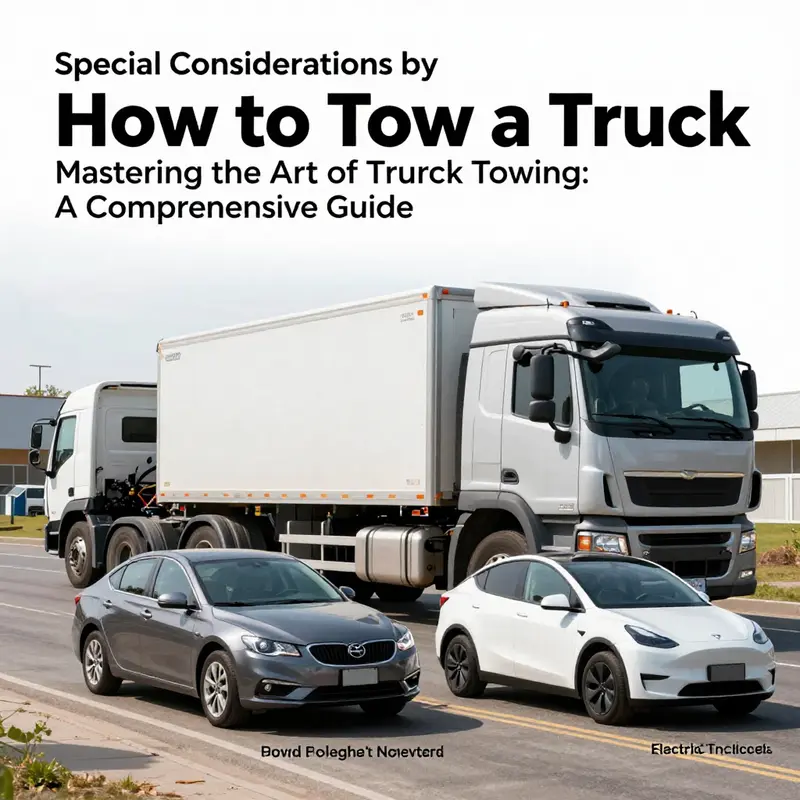
Tow operations are rarely one-size-fits-all. A truck is not just a larger car; it is a machine with its own drivetrain, weight distribution, and electronic complexity. When the goal is to move a disabled vehicle without compounding problems, the first decision is to match the towing approach to the vehicle’s type. This chapter offers a cohesive view of how light-duty pickups diverge from heavy-duty haulers, how drive configurations influence the choice of equipment, and why modern electronic systems demand careful handling. The thread that unites these considerations is a simple premise: use the method and the gear that protect drivetrains, brakes, steering, and fuel systems while delivering the vehicle to safety without creating new hazards on the road. In practice, this means recognizing that the appropriate platform—whether a flatbed, a wheel-lift setup, or an integrated heavy-duty tow unit—depends on the truck’s size, weight, drivetrain, and any active electronics. It also means acknowledging that instruction manuals and official guidelines are not mere suggestions; they are maps to preventing costly damage and dangerous breakdowns during recovery.
For light-duty trucks, such as common pickup models that many drivers rely on daily, the towing decision often centers on whether the vehicle can be safely transported with its drive wheels on the ground. If the truck has an automatic transmission, towing with the drive wheels turning for extended distances can generate lubrication problems, overheating, and accelerated wear within the transmission. In practice, light-duty tow scenarios favor a wheel-lift arrangement or, when possible, a flatbed that fully supports the vehicle. The wheel-lift method can be effective for brief, controlled moves where the front wheels are detached from the road and the rear wheels roll freely. In contrast, a flatbed is the gentlest option for longer hauls or when the engine or transmission remains compromised. It minimizes drivetrain stress by keeping all components off the ground, reducing the risk of internal damage that is not immediately visible. Even for short recoveries, a careful assessment of the transmission type and the current condition of lubrication pathways is essential. When the tow distance must be short and speed extremely limited, a dolly or wheel-lift arrangement can be used with the drive wheels elevated and the transmission left in neutral, but the operator must vigilantly monitor temperature and fluid flow, and avoid abrupt starts or sharp stops.
Heavy-duty trucks, by contrast, demand far more than a basic rig and a cautious attitude. Class 8 semis, large commercial haulers, and other heavy platforms impose significant forces on their drivetrains, suspensions, and tire assemblies. The recovery of these vehicles typically requires specialized equipment and trained personnel. An integral or heavy-duty rollback bed, designed to lift and secure massive weights, is commonly employed because it can both cradle the vehicle and provide robust anchoring points, minimizing the risk that movement during transport will jeopardize the tow or the surrounding traffic. For these machines, simply attaching a strap and pulling can lead to catastrophic outcomes—axle misalignment, suspension collapse, or loss of control. Tow operators must verify that the tow unit’s Gross Vehicle Weight Rating exceeds the disabled truck’s total weight, and that the winch capacity, bed strength, and chain or strap systems are rated for the specific configuration. In many cases, the towing plan also involves wheel safety devices and multiple tie-downs to distribute securing forces evenly across the chassis. The goal is to keep the vehicle stable without stressing drive axles, differentials, or steering links. It is not unusual for heavy-duty recoveries to require staged operations, with the vehicle initially secured on a rollback, then carefully repositioned for final transport. The overarching principle remains the same: respect the weight, respect the drivetrain, and respect the road.
Drivetrain configuration further shapes the approach. Front-wheel-drive and rear-wheel-drive layouts carry distinct considerations. In FWD trucks, the front axle is the primary load path, so if the front wheels are to be elevated, it is generally safer to use a rear-wheel-drive tow setup or a flatbed that keeps the whole drivetrain aligned with the chassis. For RWD platforms, lifting the rear wheels or placing the vehicle on a flatbed can prevent driveline wind-up and lubrication starvation. All-wheel-drive and four-wheel-drive configurations complicate the picture even more. Some AWD/4WD systems include features designed to protect the drivetrain during towing, while others explicitly warn against certain methods. In these cases, the manufacturer’s guidance becomes an essential compass. This is where the manufacturer’s service manual becomes a trusted resource—precisely because it contains model-specific cautions about towing with certain wheels on the ground, or about disengaging certain sensors during transport. It is not a matter of preference but of engineering design and safety margins.
Electronic and sensor systems add another layer of complexity. Modern trucks can be equipped with electronic stability control, anti-lock brakes, advanced driver-assistance features, and immobilizers. In towing scenarios, these systems can misinterpret the external forces acting on the vehicle, triggering fault codes or, worse, creating false alerts that complicate recovery once the vehicle reaches its destination. If the battery is disconnected or the high-voltage system is compromised in an EV or plug-in hybrid, additional protocols apply. In all cases, the goal is to prevent false diagnostics and to avoid accidental activations that may leave the disabled vehicle in a vulnerable state at the roadside. Some operational steps call for sensor grounding, battery isolation, or immobilizer resets only performed by qualified personnel after the vehicle is secured. When in doubt, the safer path is to follow OEM guidelines to the letter and to coordinate with trained tow professionals who have the tools and authorization to manage immobilizers, key fobs, or security integrations.
The practical upshot of these distinctions is that the choice of equipment is never arbitrary. For light-duty trucks, a wheel-lift or a short wheelbase flatbed can deliver a safe, controlled transport when combined with careful speed control and clear communications. For heavier machines, the decision to deploy a proper heavy-duty rollback or integrated tow unit is grounded in a rigorous assessment of weight, platform, and securing strategy. The critical steps—proper attachment, sequential loading when necessary, and a deliberate, steady pace—remain constant across the spectrum, but the specifics vary with each vehicle. Amid all these choices, the operational discipline is unchanged: plan the move, verify the gear, secure the vehicle, and maintain continuous communication between the operator and the driver of the disabled truck. This careful choreography reduces the likelihood of chain failures, wheel hop, or cable fatigue and keeps the tow consistent with road safety obligations.
An additional layer that supports these decisions is the acknowledgement that guidance varies by jurisdiction and by the owner’s manual. In some cases, the manual will require that certain systems be bypassed or that specific towing methods be avoided altogether. In others, the guidance may reflect more general caution but still emphasize the importance of selecting the correct platform for the job. The literature on towing emphasizes that, when faced with a difficult recovery, aligning with OEM recommendations is not merely prudent; it is a practical safeguard against secondary damage. For operators and vehicle owners, the takeaway is simple: know your vehicle, respect its drivetrain and electronics, and select the method of conveyance that minimizes risk. It is also prudent to engage a professional tow service for heavy or technically complex recoveries, a point reinforced across the industry’s best practices.
For operators facing heavy-duty recoveries, a point of reference is available in specialized standards that address how to handle high-capacity towing with consistent procedures. See the discussion on standardization in heavy-duty rescue operations for a framework that emphasizes consistency, verification, and safety protocols in demanding scenarios (internal link). For those seeking official, external guidance, the National Highway Traffic Safety Administration’s towing guidelines offer a broad, authoritative framework that underpins the practices discussed here. They remind readers that improper towing is a leading cause of preventable roadside damage and underscore the value of following proven, research-backed procedures. External reference: https://www.nhtsa.gov/vehicle-towing-safety-guidelines.
Final thoughts
Towing a truck is more than just a task; it’s a responsibility that requires knowledge, preparation, and adherence to safety standards. By following the steps outlined in this guide—from thorough inspections to understanding special vehicle considerations—you can enhance safety for yourself and others on the road. Remember, when in doubt, relying on professional services is always a sound decision. Stay safe and informed while towing.