
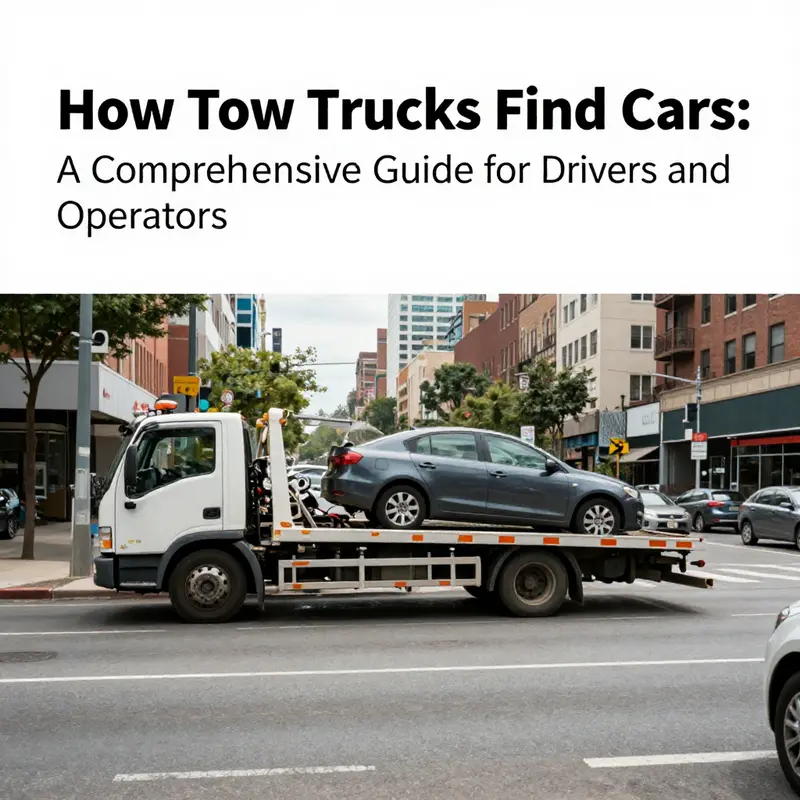
Understanding how tow trucks find cars is crucial for anyone who drives, owns a car, manages a property, or operates an auto repair shop. The journey from an emergency call to the arrival of a tow truck involves several coordinated steps. Each segment, from the moment a driver reports needing assistance to the technology used for dispatch and on-site service, plays a pivotal role in ensuring a swift and effective response to stranded vehicles. In the chapters ahead, we delve into the various dimensions of this process, providing drivers with valuable insights, arming business owners with knowledge for better planning, and outlining the importance of roadside assistance services.
The Dispatch Engine: How Tow Trucks Find Your Stranded Car Through Requests and Real-Time Data

When a car stalls on a winding road, or after a collision leaves a vehicle disabled on a busy highway, the tow truck doesn’t appear by some omniscient instinct. It arrives because someone spoke up and a sophisticated web of dispatch, data, and logistics translated that voice into action. This chapter follows the quiet but crucial chain that turns a roadside crisis into a precise, timely response. It is a process built on cooperation between the person in distress, the systems that capture and relay information, and the crews who navigate to the exact spot using the most up-to-date tools available. In practical terms, tow trucks are not hunters of machines so much as responders in a tightly coordinated relay, where each link strengthens the speed, safety, and reliability of the service we depend on when a vehicle breaks down or is involved in an incident. At the center of this chain lies a simple, powerful truth: tow trucks find cars through requests, but those requests are shaped by technology, protocol, and human decision-making that together create a map of movement across a sprawling urban or rural landscape.
The starting point is the moment someone asks for help. This can come from a driver who has a flat tire, a vehicle that has run out of fuel, a car involved in a minor collision, or a person who is locked out. It can also originate from roadside assistance programs embedded in insurance policies, credit card services, or auto clubs, which offer dedicated support lines and dispatch capabilities. The person who makes the call serves as the first data point in a chain that rapidly expands into a coordinated response. The exact mechanism of that call can vary—some people dial a general roadside assistance line, others contact a towing company directly, and still others rely on law enforcement or highway patrol to report a disabled vehicle they encounter. In all cases, the essence remains: a report is created, and it carries enough information to act on.
Once the report is in, a dispatch center takes the lead role. The dispatch operator is not merely an order taker; they’re a translator and a strategist who must interpret, verify, and optimize. The initial step is to confirm the location. Modern dispatch centers lean on two parallel streams of location data. The caller-provided information often includes a street address or a landmark; the system, in turn, cross-checks this with GPS coordinates when they are transmitted automatically from a mobile device. In many incidents, especially those involving collisions on highways or in poor lighting, the caller may not be able to provide a precise address. Here the magic of technology enters. Cellular networks and mobile apps can automatically share a caller’s approximate location, speed, and direction of travel with emergency or dispatch systems. The operator triangulates these signals, vets them against recent traffic reports, and then translates them into the most actionable instruction for the field.
But location alone does not determine who goes. The dispatch center must gauge availability and proximity. A live map shows where every vehicle in the nearby fleet is at any given moment. The system considers factors that extend beyond mere distance: the type of vehicle requested (a standard tow, a flatbed for a damaged car, a specialty unit for a heavy-duty job), the equipment on board, the driver’s hours and current workload, weather conditions, and even the risk factors associated with the scene. In a well-functioning network, the closest appropriate unit is selected, but the choice is not static. If traffic congestion is heavy on a preferred route, the system may divert to a slightly farther unit that can reach the scene faster or with fewer delays. This balancing act—between proximity, capability, and safety—happens in real time, and it underpins the rapidity of the response.
The integration of GPS and mapping software is the invisible engine behind this triage. Once a unit is designated, a precise route is plotted that accounts for current traffic, road closures, and weather-related hazards. Real-time traffic feeds and digital maps guide the driver along the fastest safe path to the scene, rather than relying on memory or a static road atlas. In many cities, these systems sit at the intersection of public safety and private enterprise. Private towing companies may partner with insurance providers or emergency networks, enabling automated alerts when a member requests roadside assistance. The alerts often include the vehicle’s last known position, accelerating deployment and reducing the time a vehicle sits idle on a shoulder or in a median. This collaboration reflects a broader truth: the efficiency of finding a car hinges not only on the truck’s engine or driver’s skill but also on an ecosystem that shares information swiftly and securely.
A vivid scenario helps illustrate the flow. A driver, after a low-speed slide on a rain-slicked ramp, calls for help. The caller is connected to a roadside assistance service that maintains a pool of responding tow units. The operator sketches the location using the driver’s description and cross-references it with the GPS coordinates transmitted by the caller’s phone. The system identifies a nearby tow unit with the right equipment and assigns it to the case. The chosen unit receives the job, including precise directions, the vehicle’s last known position, and any special notes about the scene. On the way, the driver can receive updated information about prevailing conditions—ongoing road construction, a change in weather, or a shift in available units—which might prompt a reroute or a delay estimate for safety. When the unit arrives, the operator on the scene confirms the vehicle’s identity, assesses the situation, and executes the needed operation, whether it’s towing to a repair facility, kick-starting a stalled vehicle, or transporting a car after an accident to a secure location. The chain is complete because the moment the call is placed, the system has already started turning uncertainty into a mapped course of action.
This continuous feed of information is not merely about speed; it is about safety and accountability. Real-time traffic data helps prevent needless backups that could complicate a scene or endanger pedestrians and other motorists. Live routing reduces the time a vehicle sits on a shoulder, away from the protection of a barrier or guardrail. It also allows for better coordination with law enforcement and highway maintenance agencies when a scene requires lane closures or a temporary traffic shift. The dispatch system’s ability to communicate with multiple stakeholders ensures that the response is not siloed but integrated into the broader management of the roadway. In some regions, this means law enforcement or municipal fleets are connected to the same network, enabling a seamless handoff of responsibility from rescue to recovery. The result is a smoother, safer process for all parties, including the stranded driver who receives help more quickly and with greater predictability.
The human element remains essential. A tow operator’s job begins the moment they receive the dispatch, but the actual on-site service is a blend of technical know-how and situational judgment. The driver must identify the vehicle’s location with competence, verify the owner’s information if necessary, and determine the best method to connect or unload the vehicle without causing further damage. A professional operator considers the environment—busy highways, narrow lanes, or poorly lit areas—adjusting procedures to minimize risk to themselves, the vehicle, and other road users. This is not a mere mechanical task. It is an act of careful risk assessment in dynamic conditions. The dispatcher can supply the best possible guidance for the scene, drawing on a library of prior scenarios, weather patterns, and crew experience. The synergy between the dispatcher’s data-driven decisions and the driver’s on-the-ground observations makes the entire system robust and humane.
A further dimension to this process is the relationship between tow services, insurance providers, and vehicle owners. The modern ecosystem often features partnerships where the insurer or roadside assistance program automatically notifies a preferred towing partner. In practice, this means fewer steps for the driver in distress and a quicker path to the scene. The last-known position of the vehicle and the reported condition feed into the dispatch workflow, enabling the tow operator to arrive with the right tools and the right plan in mind. Such partnerships emphasize reliability and consistency. They also highlight the importance of clear communication with the driver. While the technology can deliver precise data and minimize delay, the human touch remains essential. A calm operator who explains the process, sets expectations for arrival times, and confirms that the vehicle will be moved in a way that does not jeopardize the safety of anyone nearby can turn a stressful moment into a manageable one.
Technology’s role extends beyond the moment of dispatch. After a scene, the data trail becomes a resource for continuous improvement. Companies can analyze response times, route choices, and the success rates of different towing strategies. They can identify bottlenecks in the chain, such as recurring delays caused by particular intersections or times of day, and adjust staffing or routing rules accordingly. It is a feedback loop that strengthens readiness for the next call. For fleet operators, this translates into standardized procedures, consistent service levels, and a culture of readiness. The emphasis on standardization and emergency readiness helps ensure that even when the network is stretched thin—during rush hours, storms, or major incidents—the system remains resilient. It also supports the safety of operators who must work in hazardous environments; data helps to plan safer staging areas, better lighting, and clearer signage, which benefits both the crews and the public.
The whole enterprise rests on a framework of communication and trust. The owner who calls for help, the operator who logs the request, the dispatcher who coordinates the units, and the driver who executes the plan—all are part of an interlocking chain that depends on clarity, timing, and responsibility. Even the simplest details matter: ensuring the vehicle’s exact location is communicated, confirming the type of service requested, and acknowledging any hazards at the scene. When these details are conveyed accurately—and when the systems that process them are kept up to date—the result is faster relief, safer scenes, and fewer secondary incidents. As a result, the public perception of tow services shifts from a last-resort option to an integrated, dependable component of roadway safety.
When we consider the full arc—from the moment a distress signal is sent to the moment the vehicle is recovered or safely relocated—we see that the act of finding a car is not a solitary endeavor. It is a collaborative, data-driven choreography. It involves the caller who initiates the sequence, the dispatch ecosystem that translates a spoken need into a concrete task, the fleet that holds the necessary equipment and personnel, and the on-site crew that executes with technical skill and situational awareness. In this sense, tow trucks do not merely travel to a location; they move within a network designed to reduce risk and restore mobility. The science behind this network is evolving, as new technologies—such as more precise location sharing, smarter routing, and enhanced on-scene safety tools—continue to refine how quickly and safely a vehicle can be recovered. Yet the core principle remains unchanged: every successful tow begins with a request, and every request becomes action through the disciplined application of information, coordination, and human judgment.
For readers who want to explore how this process looks in practice, the linked resources on fleet emergency readiness and standardization in heavy-duty rescue operations offer deeper context on the standards and procedures that keep dispatchers and drivers aligned. You can learn more about fleet emergency response in the related section of the site, where practices and case studies illustrate how agencies coordinate across multiple teams to respond efficiently to roadside incidents. The practical takeaway is clear: the everyday reliability of tow services rests on meticulous attention to information flow, proactive planning, and a shared commitment to safety and timeliness, all of which turn a potentially fraught roadside moment into a manageable, well-supported recovery.
Internal resource: Fleet emergency response
External resource: https://www.nhtsa.gov/road-safety/roadside-assistance
From Report to Roadside: How Modern Dispatch Systems Pinpoint Stranded Cars for Towing
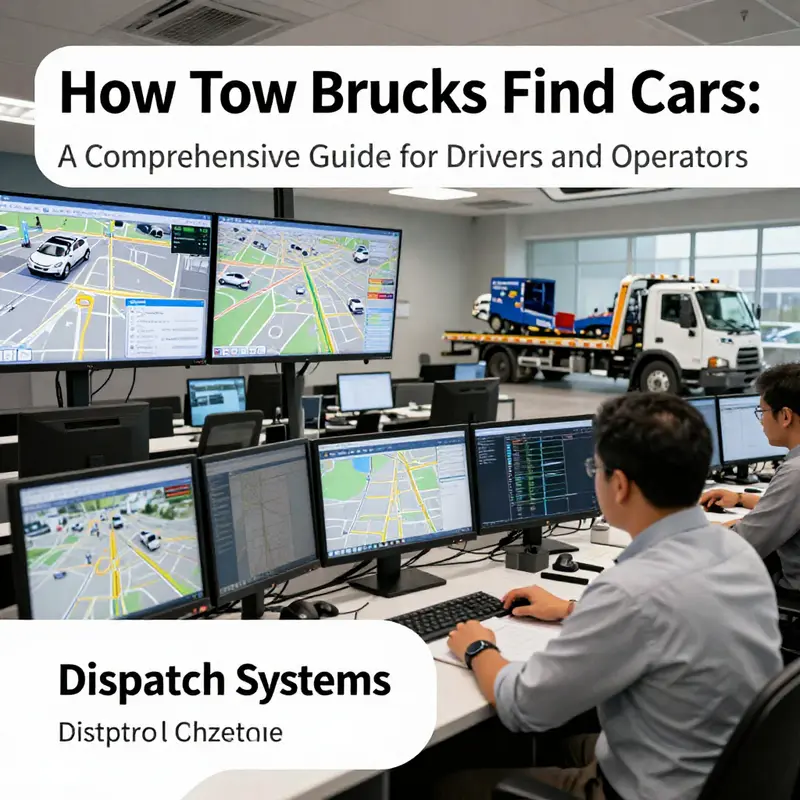
When a vehicle leaves the road for a shoulder, or sits stalled on a busy highway, the scene that unfolds next is less a chance encounter of a wandering vehicle and more a carefully choreographed sequence of signals, screens, and routes. Tow trucks do not wander the countryside scanning for problems; they are summoned, directed, and dispatched. The magic happens not in a single tool that sees every car, but in an ecosystem of reports, data, and decision-making that funnels the right truck to the right place at the right time. This is the heart of how dispatch systems work in the towing industry. They do not merely locate a car; they orchestrate a response that balances speed, safety, service type, and fleet capacity, and they do so with a clarity that travelers can rely on during a moment of stress.
The journey from a stranded motorist to a recovered vehicle begins with a report. People encounter trouble in many forms: a flat tire that won’t seal, a dead battery, a vehicle that has slid onto the shoulder after a collision, or even a driver locked out of the car in a parking garage. In many regions, roadside assistance is a formal contract: a driver calls a service that is part of an insurance policy, a credit-card program, or a regional auto club. In others, the call goes directly to a local tow operator who advertises emergency services. Law enforcement or highway maintenance crews also become sources of information when they encounter a disabled vehicle during patrols. The common thread across these pathways is a single moment of decision—how to move from a request for help to an authoritative, reliable dispatch that arrives with the right equipment and the right crew.
Once the request is in the system, dispatch technology takes center stage. Modern dispatch systems are not static lists of available trucks; they are dynamic, real-time networks that merge a driver’s location, a customer’s location, service requirements, and the operational status of the fleet. The first critical function is locating the stranded vehicle with precision. The reported location may come from a caller typing an address, a smartphone app transmitting GPS coordinates, a police report tied to a highway mile marker, or a vehicle-in-motion ping from the roadway’s traffic cameras and sensors. Within seconds, the system translates that information into a map coordinate—the point on the road where help is needed—and overlays it with the live positions of every nearby tow truck.
This is where GPS and location intelligence become not just helpful but essential. Real-time GPS tracking provides a moving picture of the road network, showing which trucks can reach the scene fastest while also accounting for factors that affect travel time. Traffic conditions, construction zones, weather patterns, and even the road’s grade can influence the chosen route. Rather than sending the closest vehicle without regard to capability, automated dispatching weighs multiple criteria. It asks: Is the vehicle in the most suitable category for the task—light-duty, heavy-duty, flatbed, or wheel-lift? Does it have the proper equipment to handle the scene safely? Can it access the location without obstruction? Is the driver available now or already on assignment elsewhere? These questions are answered by the system, which uses an algorithm to select the best match and to assign the job to the most appropriate unit.
The heart of this decision is not a single rule but a balance of priorities. Speed matters, but not at the expense of safety. If a vehicle is in a high-traffic corridor where a slower truck with better maneuverability can navigate narrow exits or tight spaces, the system will prefer the safer option. If a location is difficult to reach—think a steep driveway or a gated community—the dispatch may prioritize a unit with the necessary clearance and the right locking tools. The result is a recommended plan that is both practical for the scene and oriented toward minimizing risk for the driver, the vehicle, and other road users.
As the system identifies a candidate truck, it immediately initiates a cascade of communications. The driver receives an assignment on their on-board device or mobile terminal. The customer is informed with an estimated time of arrival and the service type, whether it’s a tire change, a jump-start, a tow, or an essential unlock. The communication is two-way. The driver can ask clarifying questions about access points, gate codes, or unusual hazards at the scene, and the customer can confirm the preferred contact method or update the location if they’ve moved. In many operations, the customer receives automated updates—ETA changes, confirmation of the tow type, and a brief description of what will happen when the tow arrives. This transparency helps reduce anxiety and sets clear expectations about what the roadside interaction will entail.
The invisible architecture that makes all of this possible is the dispatch platform’s ability to integrate multiple streams of data into a single operational picture. Real-time vehicle telemetry from the fleet, geographic information systems (GIS), road-condition feeds, and historical service data all feed into the decision engine. The platform continuously reassesses as new information arrives. If weather shifts, if a truck becomes unavailable due to a prior service or a mechanical issue, or if the stranded vehicle’s location changes, the system recalibrates. In effect, the dispatch center becomes a living, responsive cockpit that manages a fleet as if it were a single organism—one with many moving parts but one common objective: to restore mobility and safety as quickly as possible.
Smart dispatching does more than cut response times. It improves how a company uses its resources. A fleet is not a collection of independent trucks but a network of assets that must be deployed with precision. Choices about which truck goes where influence fuel consumption, wear and tear, and operator fatigue. Automated dispatching uses optimization techniques to maximize fleet utilization. It can reallocate a unit that becomes available sooner than expected or re-route a truck already on the road to cover a new report rather than accepting a longer detour. The benefits extend beyond the immediate scene; the ripple effects show up in driver schedules, maintenance planning, and even insurance risk management by reducing exposure and enhancing safety protocols through consistent, data-driven operations.
This is the practical heartbeat of the system: the ability to connect a report with a response that is appropriate, timely, and safe. The process is surprisingly nuanced. A tow operator responds to a call with equipment that has to be deployed in a safe sequence. If a vehicle is in a busy lane, the technician must assess traffic risk, set up warning cones or flare installation, and ensure proper lighting for nighttime operations. The dispatch system feeds the driver the specifics of the scene, including any potential hazards that a caller may not have noticed. These might include a fuel spill, a compromised battery with steam, or the danger of unstable vehicle positioning on a shoulder. In these moments, the human element—driver training, situational awareness, and the ability to adapt—remains indispensable. The technology merely provides the information and the timing that allow the human operator to execute the task with greater confidence and fewer delays.
Inside the dispatch workflow lies a broader narrative about expectations. The modern motorist expects quick, reliable service, transparent communication, and a predictable handoff when the scene is resolved. The dispatch system serves as the bridge between the person needing help and the person delivering it. It captures the details that can shape the service experience: the exact location, the type of service required, any special access instructions, and the preferred contact method. By codifying these details, the system ensures that the receiving party—the towing technician—arrives not only with the right tools but with the right context to perform the job smoothly. The result is a chain of accountability from the first call to the vehicle’s secure handling after the tow is completed.
A key feature of the modern approach to dispatch is its capacity for documentation and traceability. Every assignment creates a data trail: the time the call was received, the operator’s notes, the chosen unit, the route taken, the on-scene actions, and the completion timestamp. When a customer questions the ETA or the service type, the record can be reviewed and clarified. This level of traceability is increasingly important in an industry where speed and safety must be proven as much as demonstrated. It supports not only customer satisfaction but also audits, quality control, and continuous improvement. Fleet managers can mine this data for patterns—seasonal demand spikes, common road hazards, typical access challenges in certain neighborhoods, or recurring equipment needs. Over time, analytics can reveal which dispatch decisions yielded the best outcomes under particular conditions and why.
The experience of a stranded driver and the experience of a dispatcher are connected through a shared language of updates. In practice, this means that a single call can set off a chain of events that feels almost telepathic to the person waiting on the roadside. The motorist texts or calls to report a new location; the system sends the ETA and a brief description of the plan; the driver sees a live map indicating the fastest possible route and any dynamic traffic advisories. If the weather turns, the driver is informed that delays are possible and that safety remains the top priority. If the scene requires a different service than originally anticipated, the dispatcher can reclassify the job and dispatch a more suitable unit. The continuity of information—what was requested, what is being delivered, and what will happen next—becomes a crucial source of reassurance in a moment of vulnerability.
The architecture of these systems also aligns with broader industry practices around readiness and resilience. Fleet operators increasingly emphasize standardization of procedures, training, and emergency-readiness protocols so that every response, regardless of location or operator, follows a consistent, safety-first approach. This emphasis helps reduce variability in service and creates a reliable baseline for performance measurement. For readers seeking to connect dispatch technology to operational practices in a broader context, it is useful to explore the idea of fleet standardization and emergency readiness and how it translates into real-world preparedness. You can explore more about this topic at the resource focused on fleet standardization and emergency readiness.
To ground these ideas in a practical sense, consider how a typical dispatch scenario unfolds on a busy corridor. A driver experiences a breakdown near a congested on-ramp. The caller provides a landmark and an approximate vehicle location, perhaps supplemented by a photo or a short note about the problem. The dispatch system instantly receives the report, checks the availability and proximity of nearby tow units, and weighs factors such as whether wheel-lift equipment or a flatbed is needed. It then selects a unit and pinpoints the route using live traffic data and map overlays. The assigned driver is given precise turn-by-turn directions, the customer’s contact preference, and the expected arrival time. The driver follows the suggested route, reporting progress in real time and adjusting course if the scene location shifts marginally due to traffic congestion or a delayed customer arrival. Meanwhile, the customer receives an acknowledgment and a precise ETA, including a heads-up about any possible delays and the nature of the service being rendered. In cases where the road condition is poor or there is limited access, the dispatcher can preemptively adjust the plan, perhaps sending a smaller, more maneuverable unit or coordinating with roadside technicians to ensure a safe and efficient scene setup.
All of this happens within a framework designed to be resilient and auditable. If the weather deteriorates, the system can alter the route or even reassign the job to a different unit that can reach the scene more safely. If a unit experiences a mechanical issue or becomes unavailable, the platform can quickly re-route to the next-best option without dropping the customer into a void of silence. The impact is measurable: shorter response times, faster service initiation, and a more predictable customer experience. Operators report that the combination of real-time tracking, automated assignment, and constant communication reduces the cognitive load on dispatchers and drivers. They can focus more on safety and service quality rather than on manual coordination and back-and-forth phone calls.
The human element remains essential, however. The best dispatch systems do not replace the driver’s expertise; they amplify it. A skilled operator understands whether a fast arrival is worth risking a risky maneuver at a congested interchange. A cautious driver can choose to take a longer route if that path reduces the risk of a collision or a hazardous scene. The system’s job is to provide the best information in a form that makes these on-the-ground judgments easier, more reliable, and better documented. In that sense, dispatch technology is a partnership between digital intelligence and human judgment, a collaboration that yields speed, safety, and satisfaction for the motorists who rely on roadside help.
For readers looking to connect this discussion to practical resources and to see how such systems are framed within industry practice, there is value in viewing related material on fleet preparedness and emergency readiness. This context helps illuminate how dispatch decisions fit into a larger ecosystem of safety standards, training protocols, and operational resilience. It also reinforces the point that the ability to find cars for towing is not a solitary capability but a coordinated, data-informed practice that reflects a broader commitment to efficient, responsible roadside assistance. In other words, the reason dispatch systems can move so quickly from a report to a safe, effective rescue is that they are built on a foundation of standardized processes, rigorous training, and real-time data that keep pace with the demands of modern roadways.
External research into real-time dispatch systems further illuminates the mechanics behind these capabilities. For readers who want to explore further how technology supports rapid, reliable towing responses, an external resource provides a concise overview of the field and its evolving approaches. External resource: Real-Time Towing Dispatch System overview: https://www.tow4tech.com
As a final reflection, the image of the tow truck doing the work of helping a traveler in distress is complemented by the quiet, continuous motion of data flowing behind the scenes. The system does not remove risk from the road, but it improves the odds that a driver will reach safety quickly and with minimal disruption to other road users. It may be described as a symphony of coordination, where a report triggers a route, a route informs a plan, and the plan evolves with weather, traffic, and new information. In this way, the dispatch ecosystem becomes a critical component of modern mobility—one that transforms a moment of breakdown into a structured sequence of care that respects time, safety, and the dignity of being helped when you need it most.
For practitioners and enthusiasts alike, the practical takeaway is clear: the ability of tow trucks to find cars is less about a single device and more about a robust, integrated system. It is a story of reports becoming action, of GPS becoming guidance in real time, and of data informing decisions that keep people moving. If you want to dive deeper into how these systems intersect with operational standards and emergency readiness in the field, consider exploring the internal resources on fleet readiness and standardization. The link below points to one such resource that aligns with this broader context: fleet standardization and emergency readiness.
fleet standardization and emergency readiness
null
null
Through the Network: How Roadside Assistance Orchestrates Tow Trucks From Call to Car
When people ask how tow trucks find cars, the answer is less a solo scavenger hunt and more a carefully choreographed, tech-enabled relay. A stranded driver is not simply waiting for a truck to stumble upon the problem; they initiate a process that taps into a broad network of services, algorithms, and human judgment. The scene begins with a request for help, but it travels through a system designed to locate the right vehicle, at the right time, with the right equipment. There is a quiet precision to this process, built from decades of field experience and modern software that turns a roadside emergency into a series of calculable steps. The result is not just speed, but predictability, safety, and accountability for everyone involved. The road may be unpredictable, but the dispatch ecosystem seeks to bring order to it, translating a distress call into a mapped route that a tow operator can follow with confidence.
The initial spark can take several forms. A driver in trouble might contact a roadside assistance service through their insurer, a credit-card or membership program, or the automaker’s own support network. Some people may reach out to a local tow company directly, especially if they already have a trusted relationship. In some cases, law enforcement or highway patrol officers report a disabled vehicle they encounter along patrol routes. Each channel serves the same fundamental purpose: to translate a location into action. Importantly, the language of the request becomes the first filter in the chain. The service provider begins by confirming what has happened and where the vehicle is located. Beyond the basic GPS coordinates, the caller may share a landmark, a mile marker, a nearby exit, or other cues that sharpen the scene’s map. In a world with imperfect signals and crowded roads, those human-provided details can be just as critical as the digital ones.
From there, the core of the process takes shape inside the dispatch center, the nerve center of modern towing operations. A dispatcher receives the data and immediately runs through a set of checks designed to protect the motorist and the service provider. The location is mapped against the fleet’s current deployments to determine not only which tow trucks are closest, but which drivers are best equipped for the task at hand. The assessment considers the type of service requested—whether it is a simple battery jump, a tire change, a winch-out from mud, or a full tow to a shop—and the vehicle’s characteristics, such as weight and the presence of a trailer. In the best systems, this is where data quality matters most. If the caller’s information has gaps, the dispatcher will ask clarifying questions to ensure the vehicle can be retrieved without misidentification or miscommunication. This step reduces the risk of sending the wrong truck or arriving at the wrong location, a mistake that could add hours to a stressful situation.
Technology plays a central role in matching the right truck to the right job. Modern dispatch platforms integrate with mapping software, fleet-management systems, and real-time traffic feeds. The result is a dynamic calculation: the dispatcher identifies the nearest available unit with the correct equipment, then routes that unit with turn-by-turn directions that consider current traffic, road closures, and forecasted conditions. Some systems automatically monitor the status of each truck—whether it is en route, on scene, or temporarily unavailable due to a prior call—so the dispatcher can reallocate resources instantly if a new emergency arises. The advantage is obvious: response times shrink, and the driver on the road receives precise guidance rather than vague directions. The driver’s phone or onboard device becomes a conduit for a two-way stream of information: ETA updates, route adjustments, and a steady flow of safety notices that help protect everyone from the moment the map is first tapped.
In this architecture, the roadside assistance network acts as an intermediary, coordinating multiple moving parts. The motorist is the source of truth for the location and the problem; the dispatcher translates that truth into data the fleet can act on. The tow operator, in turn, becomes the physical link—the expert who translates digital directions into on-the-ground action. This triad operates within a broader ecosystem that includes the insurance or service plan, the local towing company, and, often, the vehicle’s ownership records. Verification is not a mere formality; it is a safeguard. Many modern systems incorporate identity checks and match the request to a confirmed policy or account, reducing the risk of errors or fraud and ensuring that the person at the scene is indeed the vehicle’s owner or an authorized driver. These layers of verification matter when a vehicle is disabled on a busy roadway, where a wrong pickup could lead to confusion, safety hazards, or even legal issues.
As the tow truck makes its way toward the stranded vehicle, the scene management continues. The driver receives real-time updates, the ETA re-evaluates with live traffic data, and the dispatcher can relay any notes about the approach. The on-site phase begins with quick situational assessment. The tow operator surveys the setting—whether it is a shoulder, a lane, or a ramp—and selects the appropriate approach. The equipment is chosen to match the vehicle’s configuration: wheel-lift or hook-and-haul methods, the number and type of tie-downs, and the correct rigging to protect both the vehicle and bystanders. The driver also evaluates the surrounding risks: moving traffic, weather conditions, and any hazards at the immediate scene. The goal is not simply to retrieve the car but to do so with a clear plan that minimizes risk while respecting the integrity of the vehicle and the roadway. If the scene is unsafe or if the vehicle cannot be retrieved without additional services, the operator communicates back to the dispatch to adjust plans, perhaps requesting police presence or warning motorists with appropriate signage. This is where technology and human judgment meet: the data can describe a scene, but the on-scene professional must interpret it and execute a safe solution.
On the ground, the actual operation of moving a vehicle often reveals the depth of the system’s sophistication. Tow operators bring specialized equipment that ranges from basic winching tools to more complex dollies and wheel-lift assemblies. The choice depends on the vehicle’s weight, its position, and the surface it rests upon. A certain fraction of rescues involve delicate handling when a vehicle is involved in an accident or is wedged in a tricky spot. In those cases, the operator must balance speed with the vehicle’s structural integrity, securing it before any movement takes place. Once the car is loaded, the journey to its destination begins anew with a new leg of the data-driven voyage. The route is re-checked for safety, and the ETA to the repair shop or back to the owner’s preferred location is updated in real time. This continuous loop of update and adjustment is the heartbeat of roadside recovery. It is not merely about arriving first but about arriving prepared, with the right equipment and a plan that keeps the scene orderly and safe.
A crucial aspect of this ecosystem is the way it communicates with the customer. The best roadside networks deliver more than a simple ETA. They provide status updates as a matter of course, including when the tow truck has picked up the vehicle, when it is en route to the destination, and any delays caused by traffic or road conditions. They also enable direct communication between the driver and the motorist, a feature that can ease anxiety by allowing instructions, clarifications, and confirmation of details. Importantly, the customer experience hinges on transparency. If a call-taker or dispatcher discovers an unresolved question—such as a need for access to a gated community or a complex parking structure—the system flags this and ensures the information is relayed to the operator before arrival. The goal is to minimize the number of trips back to the scene and to prevent misidentification of the vehicle. In a well-run network, this is not an afterthought but a core competence that reduces friction for the motorist and improves safety for everyone on the road.
The role of roadside assistance networks far exceeds the moment of arrival. After a tow is completed, the process transitions into documentation and follow-up. The operator records the service provided, the destination, and any notes about the vehicle’s condition or the scene. This data is not merely archival; it informs billing, warranty considerations, and future service planning. For consumers, the presence of a transparent, audit-friendly process can be a comfort. For fleet operators and providers, it translates into performance metrics that help refine dispatch rules, route optimization, and equipment investments. The more data that flows through the system, the more accurate and faster the next response can be. It becomes a feedback loop: better information leads to better decisions, which makes subsequent calls more efficient and predictable. The end result is a higher level of service that crosses geographic boundaries and urban-w rural divides with consistency.
This is the essence of how tow trucks find cars in the modern era: through a network that binds together a caller, a dispatcher, and a responder with technology that turns a location into a route, and a route into a safe, timely resolution. The network’s strength lies not in any single component but in the whole—where data quality, human judgment, and field expertise converge to convert uncertainty into action. It is a system designed to minimize the time a vehicle sits stranded, to maximize the safety of everyone around it, and to restore mobility with as little disruption as possible. The chain is only as strong as its weakest link, so the emphasis across the industry remains on verification, clear communication, and robust equipment. When a driver makes that single call for help, they are not just summoning a tow truck; they are triggering a complex, coordinated operation that can span multiple agencies, jurisdictions, and service platforms—all aimed at getting the vehicle back on the road and the driver back on course.
For readers curious about how these dynamics play out in professional fleets and emergency readiness, the interplay between dispatch discipline and field execution is particularly revealing. The practice of standardizing procedures, maintaining fleet readiness, and ensuring consistent response across regions are not abstract concerns but practical commitments. They shape how quickly a truck is sent, how safely a vehicle is picked up, and how clearly the motorist is kept informed throughout the experience. In the end, the story of how tow trucks find cars is the story of a network that blends human skill with digital insight—a system made to move when every second counts, while keeping safety, accountability, and service quality at the forefront. This fusion of technology and human care is what makes roadside assistance not just a service, but a dependable lifeline during moments of vehicle failure.
To explore more about how fleets and emergency response practices shape this ecosystem, readers can consider reviewing resources that discuss fleet readiness and standardized rescue operations within the industry. For a broader view of how fleets coordinate during emergencies and what standards guide those operations, see Fleets Emergency Response. Fleets Emergency Response.
External resource: https://www.aaa.com/roadside-assistance/how-it-works
Final thoughts
The intricate process of how tow trucks find cars highlights the importance of effective communication, technology, and the service provided by roadside assistance programs. Whether you are a local driver facing unexpected vehicle trouble, an auto repair shop looking to coordinate with towing services, or a property manager responsible for parking issues, understanding these protocols can lead to a more efficient and supportive environment for all. Embracing this knowledge equips you with the tools necessary for navigating vehicle emergencies with confidence and clarity.