
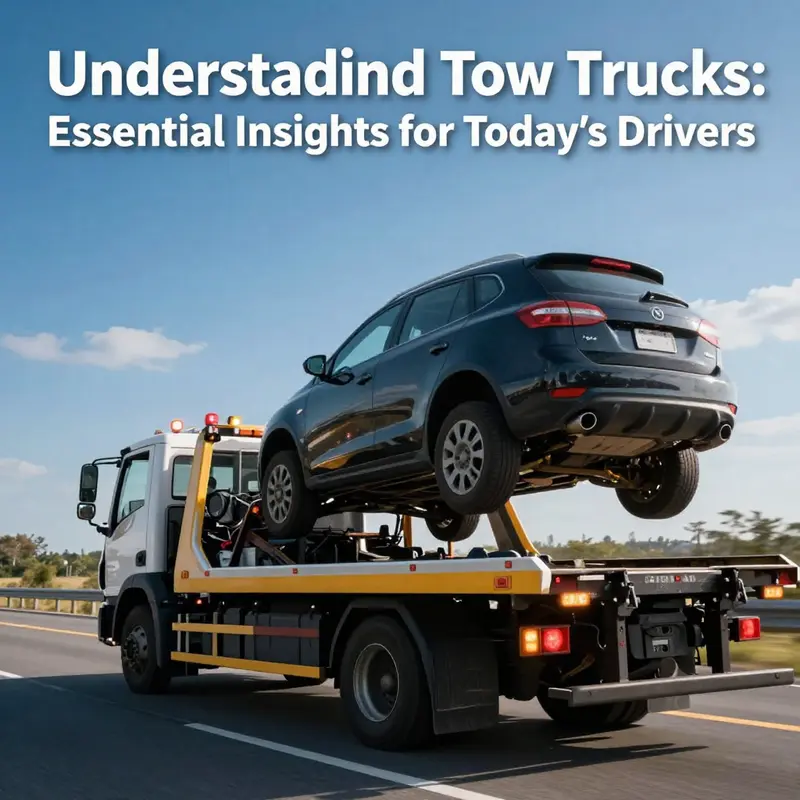
Tow trucks are an essential lifeline for drivers and businesses alike, providing crucial assistance during vehicle breakdowns or accidents. Understanding how tow trucks operate not only enhances your appreciation of these machines but also prepares you to make informed decisions when the need arises. This article delves into the various types of tow trucks, their unique mechanisms, and their applications in different scenarios. Each chapter provides a detailed examination of a specific type of tow truck, illustrating how they work and when to best utilize each one. Readers from all backgrounds—whether local drivers, auto repair professionals, or property managers—will gain valuable insights and practical advice related to towing. Let’s explore the fascinating world of tow trucks together.
Tow Trucks Unfolded: The Machinery Behind Recovery—From Boom to Flatbed and Beyond
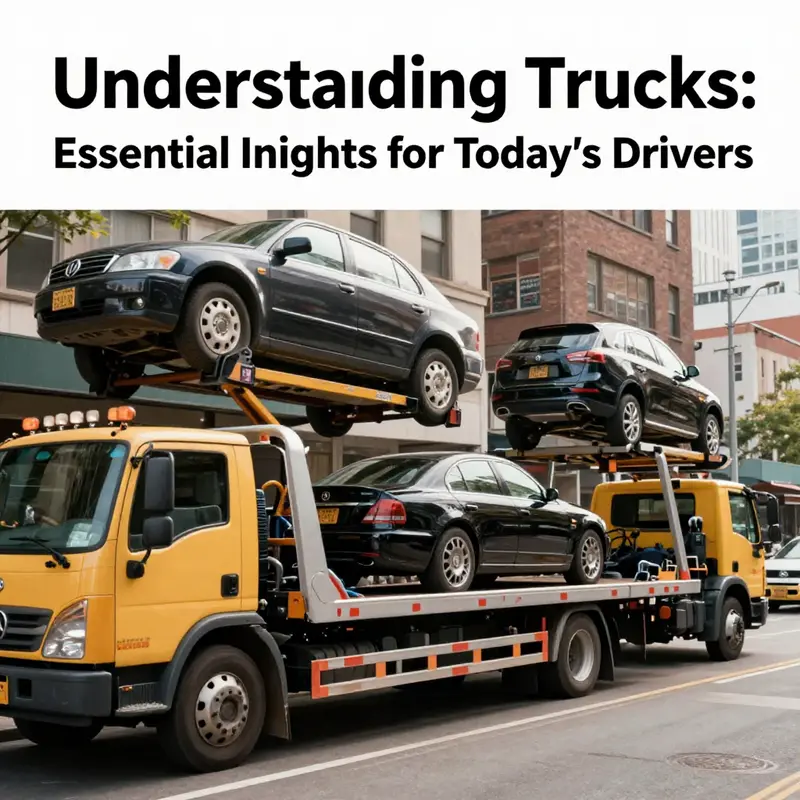
Tow trucks are more than rugged vehicles with a hook. They are compact, purpose-built systems that blend rugged mechanics, precise hydraulics, and intelligent design to lift, pull, and move vehicles that can no longer drive themselves. At their core, these machines rely on a carefully choreographed interaction of structural strength, hydraulic power, and control systems. This fusion enables a tow operator to convert a roadside mishap into a controlled, safe recovery or transport operation. The variety of configurations—boom-equipped units, flatbeds, wheel-lift setups, and integrated combinations—exists because every recovery scenario presents its own demands. A highway incident may demand unusual angles and heavy lifting, while a city street might require nimble maneuverability and minimal vehicle contact. Across these scenarios, the common thread is the ability to apply force precisely where it is needed, while protecting people, bystanders, and the vehicles involved.
The heart of the modern tow truck is the hydraulic system. Fluids under pressure drive cylinders that extend and retract booms, tilt beds, or wind chains onto a vehicle. This approach delivers high force with fine control, essential when operators must position a car on a bed without scratching a bumper, or when a recovery strap must be tensioned just so to avoid further damage. Hydraulic power is also inherently scalable. A small, urban light-duty unit can be built around a compact hydraulic winch, while heavy-duty rotators rely on multi-stage pumps and large-diameter cylinders to deliver tens of tons of lift and rotation. Even when electric motors and electronic controls join the system, the underlying physics remains the same: pressurized fluid converts energy into linear or rotational motion with smooth, repeatable accuracy. In practice, this means a tow operator can manage delicate alignments, stabilize a vehicle on an incline, and apply force incrementally to extract a car from mud, ditch, or a rollover, all while maintaining a clear margin of safety for the crew.
To understand how this translates into real-world performance, consider the broad family of tow trucks and how each design leverages hydraulics to address specific recovery tasks. A boom tow truck uses a telescoping arm that can reach over obstacles and around parked cars. The arm’s segments extend, retract, and angle to reach attach points on the vehicle, while a winch at the base or on the boom provides the pulling force to move the vehicle toward the chassis or bed. In urban towing, this capability is invaluable because it allows the operator to position a car without dragging it across the ground. A flatbed—or slide-bed—system takes a different route. The platform lowers to the ground, and the vehicle is winched or driven onto the bed. Once secured, the bed rises and locks, keeping every wheel off the ground during transport. This approach reduces the risk of frame damage, suspension misalignment, and tire wear, making it ideal for luxury cars, vehicles with low ground clearance, or cars that have suffered mechanical failures that would complicate wheel contact during transport.
Wheel-lift tow trucks take yet another path. They feature a hydraulic cradle that lifts either the front or rear axle off the road, allowing the other wheels to remain in contact with the surface. This design minimizes bodywork contact and preserves delicate undercarriage components. It also keeps the overall height lower than a full chassis lift, which can be advantageous in congested urban environments where space is at a premium. Because only one axle is fully supported, wear on tires and suspension can increase with heavy daily use, especially on long hauls. For short-distance recoveries and quick lane changes, the wheel-lift approach offers a practical balance of efficiency and care.
Integrated tow trucks build on these concepts by combining wheel-lift and boom capabilities into a single, versatile platform. The operator can lift a vehicle for a single-axle recovery, then switch to a winch-and-boom configuration to pull a vehicle out of a ditch or to free a car blocked by debris. This duality is particularly valuable when the recovery environment is unpredictable—on a slope, in a ditch, or in the middle of a crowded intersection. An integrated unit can adapt to complex scenarios without swapping equipment or moving a vehicle to a different platform. In the same mindset, traditional chain-and-hook systems—though less common today in modern fleets—still find a place in certain regions and for specific tasks. A robust chain-and-hook setup offers a straightforward, mechanical method for towing when hydraulic systems are unavailable or when simple, reliable force is sufficient. It is the old backbone of towing practices and remains a reminder of how far the practice has evolved.
A critical thread that runs through all these configurations is the necessity to manage the vehicle’s weight and balance. The load rating of the equipment, the angle of approach, the friction between tires and pavement, and the condition of the vehicle being recovered all influence how a tow operation is planned and executed. A contemporary column on heavy-duty recoveries often highlights units capable of several tens of tons of lifting capacity. For example, rotator trucks, which couple winches with rotating booms, can handle extremely demanding tasks that require multi-axis control. These units can rotate a vehicle to an upright position or maneuver it through tight spaces while under load. The rotation capability is essential when removing a car from a ditch, righting a vehicle after a rollover, or repositioning a damaged car for tow to a shop. The rotational function multiplies the operator’s options but also elevates the complexity of the operation, demanding rigorous training and disciplined safety protocols.
The practical differences among these configurations become apparent in everyday incidents. A highway crash scene may demand a strong, stable platform that can resist sudden movement as weights shift. A flatbed might be chosen to minimize further damage to a fragile frame or to ensure a smooth, controlled ride to a repair facility. A wheel-lift unit could be preferred for a quick roadside recovery of a vehicle with usable tires but limited engine function, where the driver can limp the car onto the bed or onto a flatbed with minimal ground contact. In more challenging terrains, an integrated unit can combine the best attributes of a wheel-lift and a boom system, enabling both extraction and secure loading without changing vehicles. These choices are not arbitrary; they reflect a balance of weight, terrain, vehicle condition, and the recovery mission’s specific goals.
The modern operator’s toolbox is not only about hydraulic force but also about the control interface and the reliability of the mechanical linkages. The operator sits in a cabin that is designed for long days and demanding conditions. Ergonomics matter, because a well-designed cab reduces fatigue and enhances precision during complex operations. Modern safety systems—electronic stability controls, load-sensing mechanisms, cameras, and stable lighting—help the operator keep the recovery within planned tolerances. Each system has to respond predictably when a chain tightens, when a hook seats into a tow point, or when a winch line begins to spool. Even the best hydraulics cannot compensate for poor placement or delayed decision-making. Therefore, training, practice, and adherence to standardized procedures remain central to effective tow operations, a point echoed in industry discussions about heavy-duty rescue operations. See discussions on standardization in heavy-duty rescue operations for a sense of how fleets across regions are aligning their practices to improve safety and reliability on the road. standardization in heavy-duty rescue operations.
In addition to hardware and control logic, the physical realities of real-world recovery drive the evolution of tow trucks. A truck that can lift and stabilize a car on a slope, a vehicle that can reel in a line without jerking the load, or a machine that can safely cradle a damaged vehicle for transport all play into the decisions operators make. The choice of equipment is often a calculation of risk versus reward: a heavier, more capable unit might be necessary for a hazardous scene, but its size, weight, and fuel consumption must be balanced against the urgency of the call and the access available at the site. When roads are slick, or when visibility is limited, even small decisions—where to stand, how to angle the boom, how much tension to apply—become critical. This is why the training that supports the operation is as important as the machine itself. The most sophisticated hydraulic system is only as useful as the person who understands how to deploy it under pressure.
A forward-looking trend in the field is the consolidation of procedures and equipment within fleets so that responders can rapidly select the right configuration for a given scenario. Fleets pursue standardization to shorten decision cycles, reduce the risk of misapplication of equipment, and improve safety margins on the scene. When a crash requires lifting a heavy vehicle while also pulling it free from a ditch, a well-coordinated team with an integrated system can execute the recovery more smoothly than a team with ad hoc gear. This is not a call to buy more gear; it is a reminder that matching the operation to the problem—weight, terrain, damage severity, and the environment—delivers better outcomes for all involved. For readers who want to explore how fleets are aligning their heavy-duty rescue operations, the ongoing discussion about standardization provides a useful lens for understanding evolving practices and the shared language that helps responders communicate during high-stakes recoveries.
As these machines evolve, so too does the emphasis on safety, routine maintenance, and operator training. The hydraulic components require regular inspection for leaks, wear on hoses, and integrity of fittings. The mechanical linkages—booms, winches, and hooks—must be checked for lubrication, alignment, and structural fatigue. A robust maintenance regime helps avert the failures that could turn a routine recovery into a dangerous event. In high-load scenarios, even a small failure, such as a frayed line or a detuned winch, can have outsized consequences. Operators also rely on standardized signaling and communication protocols to coordinate the actions of the crew and to keep bystanders clear of the lift zone. The human factors—the training, the nerves under pressure, the attention to detail—are as central to successful recoveries as the hydraulic power that makes those recoveries possible.
In the end, tow trucks are indispensable because they translate heavy physics into practical outcomes. They are engineering systems designed to execute complex sequences of actions with precision and safety. The choice between a flatbed, a wheel-lift, a boom, or an integrated configuration is not about a single feature but about a balanced synthesis of weight, geometry, terrain, vehicle condition, and the recovery objective. The technology is mature in many respects, yet the work remains dynamic: every scene presents its own geometry, every vehicle carries its own center of gravity, and every tow operator must read the situation and respond with disciplined technique. That is how a broken-down car becomes a vehicle returned to service, how a stalled truck on a busy freeway becomes a controlled removal, and how the road keeps moving even when the unexpected stops a driver in place. The chapter that follows will build on this foundation by examining how fleet readiness and standardization shape real-world outcomes, and how operators translate theory into practice on streets and highways every day. For readers seeking a broader perspective on flatbed configurations and performance, see this external overview. https://www.towtrucknews.com/flatbed-tow-truck-sale-analysis/
Final thoughts
Tow trucks are complex machines designed for a variety of situations, each tailored with specific tools and technology to handle different towing needs. Whether you’re a driver needing assistance on the roadside, an auto repair shop looking for recovery options, or a property manager tasked with ensuring tenant safety, knowing how tow trucks work is invaluable. By understanding the capabilities of each type of tow truck, you can make smarter, safer choices when it comes to vehicle recovery.