
Navigating the process of renting a truck for towing can feel overwhelming, especially for local drivers, auto repair shops, or property managers. Understanding what truck to rent, how to gauge towing capacities, and ensuring safety while towing is critical. This article breaks down each element—choosing the right truck, understanding towing capacity, and prioritizing safety—enabling you to make informed decisions and effectively address your towing needs.
null
null
Tow-Ready Decisions: Mastering Truck Selection and Safety When Renting to Tow a Trailer
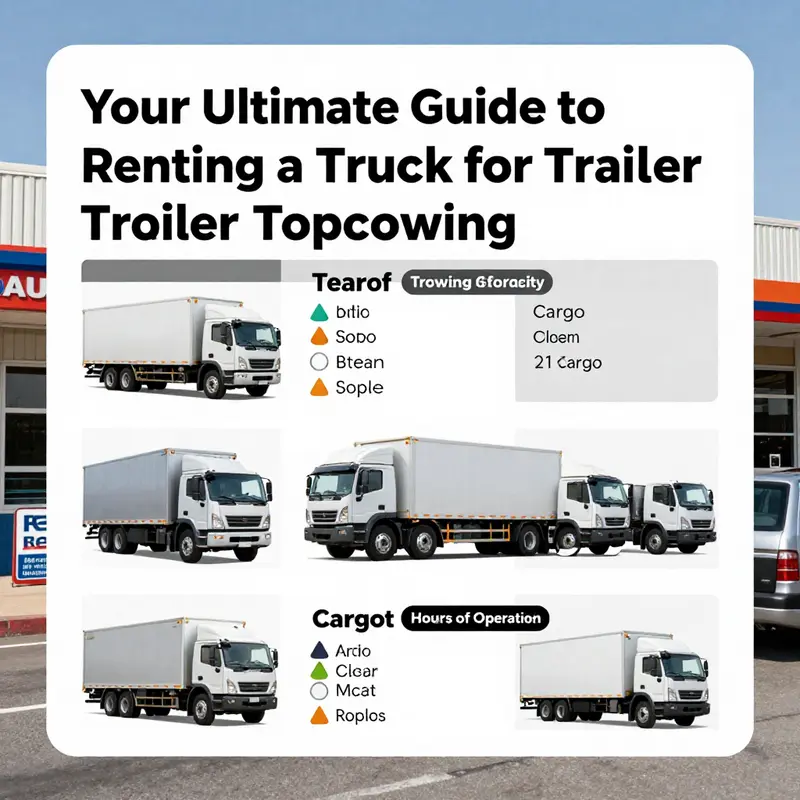
Deciding to rent a truck for towing a trailer is more than picking a vehicle with a hitch. It is a careful, almost technical exercise in matching a machine to a task, balancing capacity, control, and risk. The choice you make—how much truck you rent, what kind of hitch is installed, and how you prepare the rig—will determine whether your trip goes smoothly or ends with a derailment of plans and sometimes a dent in your budget. The starting point is understanding towing capacity, a term that sounds straightforward but carries a few layers of meaning. Towing capacity is the maximum weight a truck can safely pull. That number isn’t just the trailer’s empty weight; it includes the weight of the trailer itself plus all cargo and equipment inside it, and it must be considered in light of the vehicle’s own weight and structural limits. In practical terms, you need to know three things: the trailer’s total weight, the cargo you plan to carry, and the truck’s official towing rating as published by the manufacturer. When you rent, the exact figures will be listed for the specific model you’re considering, and your rental agreement may present them in the form of a rating sticker or a specification sheet. If you feel unsure, ask the rental representative to walk you through the numbers. This is not a formality; it is your first safeguard against overloading, which can lead to brake fade, transmission stress, steering instability, and, in the worst case, loss of control on the highway. To grasp why these numbers matter, imagine the weight distribution that occurs when you pull a trailer. The trailer adds weight behind the rear axle of the towing vehicle. If the load is too heavy for the truck, the engine and transmission must work harder, the brakes have to manage more momentum, and the suspension must handle a longer pull and a different braking dynamic. The driver’s job becomes more demanding: wider swerves in turns, longer braking distances, and a greater need for attention to every signal from the road. The safe path begins long before you leave the driveway. It starts with a clear estimate of the trailer’s gross vehicle weight rating—GVWR—an important figure that represents the maximum loaded weight the trailer is designed to handle. The GVWR includes the trailer’s own empty weight plus the payload the trailer is intended to carry. When you add the towing vehicle, you must ensure that the tow vehicle’s own ratings accommodate both the trailer’s weight and the cargo. In practice, this means calculating the trailer’s weight and your expected cargo, then comparing that sum to the tow vehicle’s documented towing capacity. If the numbers line up, you have a baseline for safe operation; if they don’t, you must either reduce the load, choose a different truck with a higher towing capacity, or reconsider whether the current plan is feasible at all. A simple approach helps keep this straight. Start with the trailer’s empty weight or “dry weight,” add the weight of every item you intend to carry, and then round up slightly to account for the inevitable fluctuations in load during transit. If your load includes heavy items that shift, you may need to distribute weight more evenly or use equipment like load bars and tie-downs to minimize movement. The next step is to translate those numbers into the rental decision. Rental companies categorize towing capacity into practical ranges to help customers select an appropriate truck. For light towing, many renters find that a mid-size or half-ton pickup suffices for loads up to roughly 5,000 to 6,000 pounds, including the trailer and cargo. This range covers many small campers, utility trailers, and box trailers used for moving. If your plans involve heavier loads, exceeding 10,000 pounds, you’ll want a heavier-duty rental. These trucks deliver more robust engines, sturdier suspensions, and greater braking capability. They are designed to handle the increased demands of larger trailers and higher cargo weights, and they come with the kind of reliability that reduces stress during long hauls. While numbers guide the choice, you should never assume that any model within a category can do the job. Always verify the specific towing capacity of the exact model you’re considering, because within a category the numbers can vary. A truck that shares a general class with another might have a different rated capacity due to engine tuning, gearing, axle strength, or aftermarket equipment installed by the rental company. The rental agreement itself is the authoritative source for those figures, and it is worth reading it closely. If you’re unsure how to interpret the numbers on the form, ask to speak with a technician who can explain what the rating means in practical terms. The guidance your rental company provides extends to another important element: trailers. In many cases, the rental agency will offer a trailer along with the truck, ensuring compatibility right from the start. This is a practical advantage because it allows the rental team to ensure hitch type, ball size, and braking connections are matched and tested before you hit the road. Even when a trailer isn’t included, you should confirm the hitching interface on the truck you’re renting. Not all trucks are delivered with the same hitch type, and a mismatched hitch can turn a simple hook-up into a time-consuming problem at the worst moment. When you plan the loading, take a moment to map out how the load will be distributed. A trailer that rides with an uneven weight distribution can cause a tug on the towing vehicle, requiring constant micro-adjustments to steering and braking. To prevent that, a weight-distribution hitch may be necessary for heavier trailers. If you’re unfamiliar with the different hitch types, it’s reasonable to rely on the rental agent for guidance. They can confirm whether the truck and trailer package you’re considering is appropriately equipped or whether an upgrade is needed to handle your planned cargo. Another factor often overlooked by first-time renters is the vehicle’s braking setup. Towing imposes greater demands on brakes because the combined weight of truck, trailer, and cargo increases stopping distance. The truck should have a braking system that is proven to control the load you intend to pull. In some cases, rental fleets will be equipped with trailers that already have their own braking systems connected to the towing vehicle. In others, you may need to ensure the trailer’s brakes are functional and properly wired to the truck’s braking circuit. A quick pre-departure check helps avert surprises. Do a walk-around of both the truck and the trailer, checking lights, wiring, and connections. Confirm that the trailer lights, brake lights, and turn signals synchronize with the truck’s signals. Test the hitch to ensure it is secured, and verify that the safety chains are properly crossed and anchored. Check the tire condition on both the truck and the trailer, looking for correct air pressure and uneven wear. If you notice issues, address them before you depart. The safety checks extend to the operational sides of the rig as well. Ensure your mirrors provide a clear field of view around the trailer, and consider adding extended towing mirrors if the standard ones don’t give you enough visibility. Remember that visibility matters as much as power when you’re driving a line-haul rig on local roads or highways. Once the vehicle is prepared, the actual driving task begins. Towing a trailer changes how you handle the road. You’ll notice a longer stopping distance, a wider turning radius, and a more pronounced sway tendency in windy conditions or when passing large vehicles. These are not quirks; they are physics. Your driving style must adapt. Heeding a few practical rules helps you stay within safe bounds. Maintain a longer following distance to increase reaction time, and pick lanes with consistent traffic flow that allow smoother merges. When you turn, make wider, slower sweeps, and avoid sharp, abrupt maneuvers that can induce trailer sway. If your trailer has its own braking system, you’ll need to account for how it interacts with the truck’s brakes. Synchronize braking points and practice gradual applications of the brakes to prevent a jolt that could unsettle the load. In addition to physical handling, the operational readiness of the rig matters. The trip requires deliberate checks at intervals—ideally every fuel stop or every hour of driving. Check the hitch and connections, observe the trailer lights, and listen for unusual noises that could signal a problem. A light, persistent squeak or a rattle can presage a failing bearing or a loose connection. In some cases, the weight and momentum of the trailer can change your vehicle’s behavior in crosswinds or at highway speed. Taking break periods to mentally recalibrate your route, rest, and recheck the rig can be a lifesaving habit. The logistics of picking the right rental scenario extend beyond the mechanics of towing. You should consider the purpose of your trip and how long you will be on the road. If you are using the truck for occasional, light-duty hauling, it may be worth selecting a rental that emphasizes ease of use, reliability, and straightforward maintenance records. For commercial-level or long-haul use, you may want a truck with a stronger engine, reinforced suspension, and a more robust towing package. The rental company can help you match the truck to your intended use, but the ultimate decision rests with you. A practical approach to this decision is to start by listing the most critical constraints of your trip: the maximum trailer weight, the expected route, the duration of the rental, and the level of trailer braking and sway control you require. With those constraints in hand, you can triangulate a vehicle option that provides adequate capacity, comfortable driving dynamics, and a reasonable margin of safety. It is also wise to consider the broader ecosystem of your trip, including maintenance and insurance. Confirm what your rental agreement covers in terms of roadside assistance, replacement in case of a mechanical issue, and liability coverage. If you plan a long, remote journey, access to service and support can be as important as the刚 right horsepower. As you refine your choice, you may find yourself leaning on the guidance of a trusted resource for towing and driving behavior. For readers seeking deeper, model-specific insights that align with your region and the kind of towing you’re planning, a locally focused resource such as the Santa Maria Tow Truck blog offers region-specific considerations—road conditions, regulations, and best practices that affect towing in a coastal climate. This kind of reference can be a practical counterbalance to the broad guidelines offered by manufacturers and rental companies. As you prepare to make a rental decision, remember that the fundamental goal is not to maximize power but to achieve reliable, predictable performance within the limits of the truck and trailer combination you select. That means choosing the right combination of gross vehicle weight, trailer weight, and cargo, and then confirming that the rental truck’s towing capacity and hitching hardware can safely handle that combination. It also means recognizing when a plan isn’t feasible. If the numbers don’t align with a safe margin, or if you anticipate conditions that push safety beyond reasonable risk, you should either adjust the load, select a different vehicle, or reconsider the feasibility of the trip altogether. The most effective towing outcomes come from a blend of precise planning, careful checks, and disciplined driving. The numbers you confirm on paper and the checks you perform on the road are not mere formalities; they are the quiet foundation that supports safe, predictable journeys. If you want to read further on related towing practices and how to integrate them into your operations or personal planning, consider exploring the broader resources available through the Santa Maria Tow Truck blog, which offers practical perspectives on towing readiness and emergency preparedness that can illuminate the everyday realities of towing beyond a single rental transaction. For a broader, technical perspective on lifting, towing, and vehicle weight considerations in a commercial context, you may also find value in external sources that compile practical supplier information and price ranges for equipment used in towing and transportation. Pick up additional context and specifics with the external resource: Pickup Truck Rentals for Towing.
Tow with Confidence: Safety, Capacity, and Best Practices When Renting a Truck to Tow a Trailer
Choosing to rent a truck for towing is a common and sensible solution for many loads, from a backyard project to a weekend move. The decision carries a set of responsibilities that begin long before you back the vehicle out of the lot. The rental experience can be smooth and secure if you approach it as a careful, layered process that centers on capacity, compatibility, and proactive preparation. The road, after all, is not forgiving when a trailer is misaligned with the pulling vehicle. When you rent a truck to tow a trailer, you are swapping the convenience of a single-vehicle configuration for the complexity of a tow setup that relies on precise balance, clear signaling, and steady restraint. All drivers, even seasoned ones, deserve a framework that anchors decisions in the vehicle’s limits and the trailer’s behavior on the highway. This chapter follows that framework, weaving capacity awareness, hitch compatibility, load management, and disciplined driving into a coherent approach you can apply in real life without turning the process into a guesswork exercise.
At the heart of safe towing is understanding the vehicle’s towing capacity. Every rental truck carries two essential figures: the maximum weight it can pull and the weight it can safely tow when the trailer and its cargo are attached, often expressed as the gross combined weight rating (GCWR) and the maximum trailer weight. The numbers are not merely bureaucratic details; they are the keys to maintaining predictable braking, steering, and stability. The simplest way to approach this is to treat the trailer as an extension of the truck’s weight and to ensure that the combined total never exceeds the GCWR. Exceeding these limits shifts control from deliberate handling to reactive correction, which is a dangerous place to be, especially under stress or at highway speeds. When you rent a truck, the rental agreement or the vehicle’s placard will spell out these capacities. If any doubt remains, call the rental agency and confirm the exact model’s specifications. A prudent rule of thumb is to prefer a truck that can accommodate your trailer’s weight with a comfortable cushion for cargo. If your trailer and its load weigh more than 10,000 pounds, you are not in the light-duty territory anymore. In those cases, you will likely need a more capable truck with a higher GCWR and advanced handling characteristics. The important point is clear: never assume. Verify. The moment you solidify that the truck’s maximum capability aligns with the trailer’s weight, you remove a core risk from the journey and set a foundation for safer practices down the road.
Beyond raw weight, compatibility concerns extend to hitching and braking. The trailer must be compatible with the truck’s hitch system and braking setup. A mismatch in hitch size or a nonfunctional brake controller can render a towing setup unstable. The hitch on the rental truck must correspond to the trailer’s coupler, often requiring the correct ball size and mount or an adapter if the truck’s configuration isn’t the exact match for your trailer. If your trailer has its own brakes, the truck must be equipped with a functioning brake controller and the capacity to apply trailer brakes in a synchronized manner with the truck’s braking system. When in doubt, bring a plan for two critical checks: first, ensure the hitch and coupler couple securely and stay locked; second, verify that the trailer’s braking system, if present, responds to the brake controller and that lights and signals operate in harmony with the tow vehicle. A simple but often overlooked step is to confirm that the trailer’s lug nuts are properly torqued and the hitch pin is fully engaged. These are the small details that prevent large disturbances at speed.
The practicalities of fit and readiness extend to the trailer’s own weight and size. Your passenger license or local regulations may restrict the type or weight of trailers you can legally tow with a given class of vehicle. In many places, smaller passenger cars or light trucks are barred from towing very heavy trailers, even if the vehicle nominally could handle them. Therefore, it is essential to verify both the truck’s capacity and the regulatory allowances in your jurisdiction. The towing equation is not merely about the numbers; it is about how those numbers translate into control when the vehicle and trailer are in motion. A trailer that pushes the rear of the tow vehicle beyond its intended stability can introduce sway and reduced maneuverability, especially during lane changes, stops, and on sloping roads. A careful approach should start with a clear plan for the trailer’s weight, followed by a matching vehicle specification, then the right towing setup. This order matters because it keeps the decision anchored in physical realities rather than assumptions.
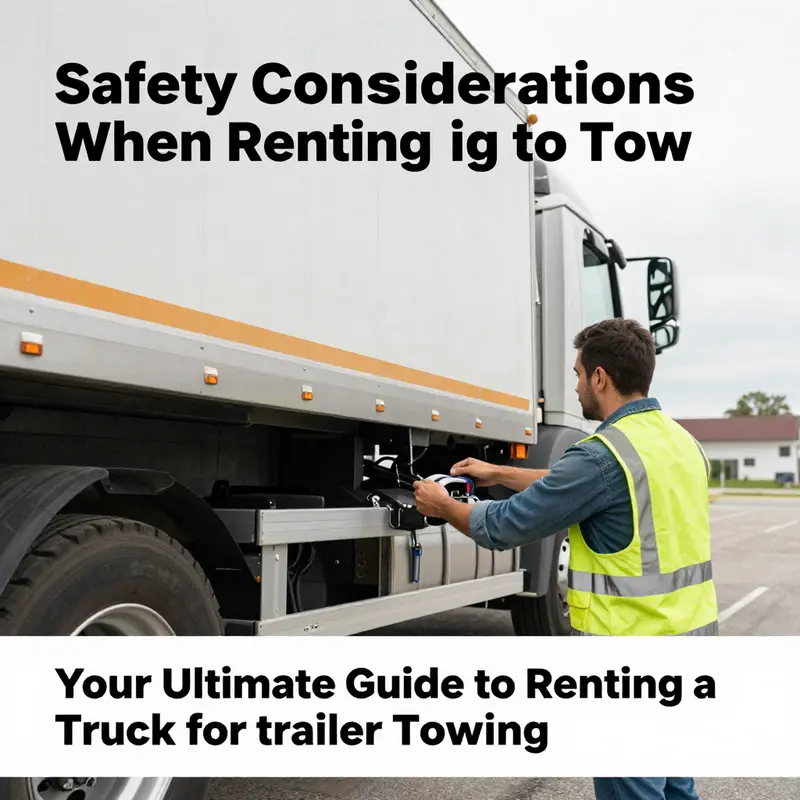
The pre-trip inspection forms the bridge between planning and execution. It is a routine that deserves attention every time you rent a truck for towing. Inspecting the tires on both the rental truck and the trailer is a safety-critical step. Tire condition, inflation pressures, and tread depth together influence handling and braking in all conditions. Underinflated tires increase rolling resistance, heat buildup, and potential blowouts; overly worn tread compromises grip, especially in wet conditions. A tire check should include looking for signs of cracking, bulges, or cuts that indicate hidden damage. The electrical connections between the truck and trailer require equal scrutiny. Test every light on the trailer—tail lights, brake lights, turn signals, and running lights—and confirm that the electrical connection to the truck is secure and functioning. Lights are a primary means of communication on the road, and malfunctioning signaling can confuse other drivers and create dangerous situations. Coupling and safety chains deserve special attention: attach the hitch securely, and connect the safety chains in an X pattern beneath the trailer tongue. The X pattern is a classic safeguard against the trailer detaching from the hitch in the event of a hitch failure. The hitch pin must be fully engaged and locked so that vibration or minor impacts do not loosen it. Load distribution is another essential dimension of safety. The 60/40 rule—placing roughly 60 percent of the trailer’s weight over the axle(s) and the remaining 40 percent toward the front of the trailer—helps maintain stability and minimizes the risk of wheel lift or trailer sway. Equally important is ensuring the load is balanced side to side. An uneven distribution across the width can induce yaw, making the trailer feel as if it is pulling the vehicle in one direction. If you are carrying large or fragile items, secure them with appropriate restraints to prevent shifting during transit. The aim is a stable, centered load that tracks predictably behind the tow vehicle rather than a cargo machine with a mind of its own.
The conduct of the drive itself deserves the same discipline you apply to loading and hitching. Safe towing is not a matter of raw speed or bravado; it is the outcome of deliberate adjustments that give you more time to react and more control over the vehicle and its trailer. The most obvious adjustment is stopping distance. With a trailer in tow, you will require a significantly longer distance to come to a complete stop than you would without a trailer. This is not a suggestion; it is a physical reality driven by added mass and the dynamics of trailer coupling. Allow for this in your planning and keep a generous margin for following distances, particularly in urban traffic or when weather conditions demand extra caution. Speed management is equally important. Reducing speed improves stability, reduces the strain on the hitch and tires, and minimizes trailer sway during curves or on uneven pavement. When turning, widen your path to accommodate the trailer’s additional sweep. A trailer follows a different radius than the tow vehicle, and sharp turns can cause the trailer to intrude into adjacent lanes or clip obstacles. You will also encounter sway if gusts of wind, passing trucks, or rapid steering inputs disturb the system. The best antidote is smooth, gradual steering and a calm, anticipatory approach to lane changes and lane positioning. Avoid abrupt acceleration or braking; deliberate, progressive inputs help the trailer stay aligned with the vehicle’s trajectory and reduce the risk of destabilizing sway.
Route planning and situational awareness are inseparable from safe towing. Before you depart, you should confirm that your route allows for the trailer’s size and weight. This includes checking bridge clearance, tunnel restrictions, and any road segments with weight limits or lane closures that could complicate a tow. Even with a well-matched truck and trailer, you may encounter forks in the road that force you to backtrack or seek an alternate route. Having a clear plan, including an escape route for an emergency stop or a pull-over location, reduces the stress of unexpected events and helps you maintain safety. It is also prudent to understand the regulatory requirements that govern towing in your jurisdiction. Some rules govern how lights must be used during certain times, how long a trailer can be, and at what speed a tow is permitted on specific roads. These guidelines are not only legal requirements; they are practical guardrails that help ensure predictable behavior on shared roadways. For official guidance on towing regulations and safety standards, you can visit the National Highway Traffic Safety Administration’s site at https://www.nhtsa.gov. While the site contains a broad spectrum of information, the towing-specific sections reinforce the essentials of safe operation, including equipment checks, load management, and the importance of matching vehicle capacity to trailer demands.
The process of renting, then towing, can be made smoother by leveraging the resources and policies of the rental company. Many rental outfits offer a practical combination: a truck designed for towing paired with a trailer that is compatible with that truck’s hitch and electrical system. This pairing reduces the chance of incompatibilities and simplifies the verification of the towing setup. When you reserve the rental, take the opportunity to discuss the trailer’s weight and the truck’s maximum towing capacity in the same breath. Ask about any additional equipment that might be necessary, such as a ball mount, hitch adapter, or a brake controller tester, and whether the rental center provides these items or expects you to supply them. If you are unsure about the trailer’s classification or weight, carry documentation or even a rough weight estimate from the trailer’s manufacturer or a certified scale—anything that helps you validate the suitability of the rental configuration before you leave the lot.
Looking beyond the immediate trip, the habit of safety in towing can become a broader practice that informs future errands and moves. The basic principles—respect for weight limits, careful hitching, systematic pre-trip checks, disciplined driving, and route-aware planning—apply across different trailer sizes and across different trucks in your rental history. In many ways, safety becomes a discipline that pays dividends in reduced risk, increased confidence, and the ability to handle unforeseen situations with composure. If you want to explore more practical tips and real-world experiences related to towing, the Santamaria Tow Truck Blog offers insights drawn from years of field work and hands-on towing operations. You can read more at Santamaria Tow Truck Blog. Keeping such reflections in view while you plan a rental can help you translate general safety guidelines into your personal routine on the road. And while every drive has its own variables, anchoring your decision-making in capacity, compatibility, inspection, and deliberate driving habits creates a predictable safety framework you can rely on for almost any tow scenario.
Ultimately, the question of safety when renting a truck to tow a trailer is not a single yes-or-no verdict. It is a continuous practice of verification and restraint—checking capacities, confirming compatibility, inspecting components, and applying cautious driving techniques. It is a practical, repeatable approach that respects the physics of tow operations and the realities of road traffic. When you follow these steps, you transform a rental into a controlled towing operation rather than a rushed, improvised task. You protect yourself, your cargo, and everyone else on the road. The process of renting, preparing, and towing becomes less about chance and more about deliberate, informed mastery of the variables at play. In other words, it is not just possible to rent a truck to tow a trailer; it is sensible to do so when you enter with a clear plan, the right equipment, and a thorough respect for the limits that keep the wheels turning safely.
External reference: For official guidance on towing regulations and safety standards, see the National Highway Traffic Safety Administration at https://www.nhtsa.gov.
Final thoughts
Effectively renting a truck for towing requires thoughtful selection and a solid understanding of capacities and safety practices. With the right truck and proper safety checks, you can tackle any towing challenge securely and confidently. In our community, ensuring seamless towing experiences fosters trust among drivers, businesses, and property managers alike.