
Navigating the world of roadside assistance often raises questions about tipping practices for tow truck drivers. Unlike hospitality, where gratuities are customary, the expectation to tip a tow truck driver can be murky, influenced by local customs, service levels, and specific situations. This article dives into what car owners, auto repair shops, property managers, and HOAs should know about tipping practices in the towing industry. We’ll explore the professional norms around this topic, identify scenarios where tipping may be warranted, discuss the impact of local customs, and provide guidance on evaluating the service you receive. By the end, you’ll be equipped to make informed decisions and express appreciation where it’s deserved.
Gratuity on the Go: Understanding When to Tip a Tow Truck Driver
On a highway shoulder, time slows, and decisions accelerate. A tow truck pulls in with the steady thump of a diesel heartbeat, and suddenly the roadside feels both intimate and transactional. The question that often rides along with the wrenches and the winch is whether a tip is appropriate. The short answer is that tipping a tow truck driver is not expected or required in the same way it is in a restaurant or a hotel. The longer answer is more nuanced, depending on local customs, the level of service, and the policy of the company. Towing work is billed as a professional service with fees that cover labor, equipment, and transport. In many cases, the driver has little discretion over the final price, especially when a dispatch center quotes a rate or when the roadside assistance policy provides a capped fee. Still, there are moments when a small gratuity feels like a clear expression of gratitude, not a pressure tactic.
From a policy standpoint, the norms diverge from hospitality. Tow operators frequently operate under internal guidelines that discourage tips, precisely because money flowing directly from a customer could be perceived as an attempt to influence service quality or to create a sense of obligation. Those policies are not universal, but they are common enough to be part of the practical advice many drivers share with customers who find themselves stranded. If you want to avoid any misperception, you can speak with the dispatcher about what is included in the fee and whether tipping is permissible in your state or at that company’s location. The general takeaway remains the same: tipping is optional.
Yet the road presents situations where a small gesture can feel meaningful. Consider the moment when the tow is delivered late at night after a long day, or when the driver not only retrieves a car but also helps with bags, secures a loose load, or shares a calm, practical explanation in a moment of stress. In those cases, many travelers choose to offer a tip. The amounts typically reflect the added effort and the context. A modest range of five to ten dollars can acknowledge exceptional service without implying a requirement. If the service involved more hazardous work or unusually difficult conditions—extreme weather, off-road recovery, or an emergency extraction—the gratuity can be larger, ten to twenty dollars, depending on the degree of risk and the level of assistance provided. The crucial point is that the decision is personal and should be made only after the driver has completed the job and demonstrated the level of care you judge to be above ordinary expectations.
There is also a broader, sometimes overlooked, cultural frame to consider. In some international locations, such as Hawaii, tipping tow truck drivers is more common, especially when drivers assist with loading or unloading items from the vehicle. In those settings, a five to ten dollar tip aligns with local expectations and can be seen as a fair acknowledgment of extra effort. When translating these practices back to a different locale, it’s wise to calibrate your behavior to what is customary in that region. The bottom line remains consistent across borders: tipping for towing is optional and situational, rather than a standard fee.
The regulatory and policy context adds another layer of complexity. There is a growing recognition, particularly in the United States, that some roadside services are supported by broader programs aimed at improving safety and mobility. Recent developments point toward scenarios where basic roadside assistance can be provided with limited or no out-of-pocket charges for certain vehicles. In practical terms, this means many drivers may not be paying the full price for a tow in the same way they would have a decade ago. Even if the base cost is covered, the question of tipping persists as a personal choice, tied to service quality rather than the price of the service. This nuance is important for travelers who hope to balance fairness with prudent spending at a moment of crisis.
For readers seeking broader context on how towing costs and roadside policy interact with consumer behavior, a sober approach is to separate the service from the sentiment. The service is the professional act of safely transporting a vehicle. The sentiment is gratitude expressed through compensation or other gestures. If you decide to tip, do so discreetly and with cash rather than attaching the tip to a payment method that could complicate accounting or policy discussions. A simple, direct thank-you, a brief note to the employer, or a public review praising the driver can be a meaningful complement to, or substitute for, a cash tip in places where tipping is disallowed by policy.
One practical way to think about tipping is to tie it to a conditional evaluation of the service. If the driver communicates clearly, executes the recovery with care, and reduces your stress in a tense moment, a tip becomes a natural extension of good service. If something about the encounter feels routine, or if the driver adheres to standard safety procedures without going beyond, the decision to tip may rightly stay on the shelf. If you are already asked to tip by someone at the company, it’s reasonable to decline politely and rely on the professional fee that has already been charged. In essence, you are not obligated to tip because a service has been performed; you are invited to tip when the experience demonstrates an elevated level of attention and assistance.
For those who want to learn more about the broader etiquette around tipping and to see how guidelines evolve across industries, resources from reputable organizations can be helpful. These guidelines acknowledge that tipping is culturally nuanced and that the tipping landscape can shift with policy changes, economic conditions, and regional customs. It is worth pausing to consider whether an online review or a kind word to the dispatcher would be more appropriate if tipping is not feasible at that moment. A positive online note can bolster a driver’s reputation and a company’s practice, which can be a form of support that does not run afoul of policies or local norms. When in doubt, ask quietly before offering a tip, and let the driver know that your gesture is optional and not expected.
If you want to explore related topics in greater depth, practical insights about towing operations, emergency readiness, and industry standards can be found in the broader content at santamariatowtruck.com. The site offers a range of posts that illuminate how tow operators navigate complex scenarios, manage emergencies, and uphold safety standards in demanding environments. For readers who want to connect these ideas to real-world experiences, visiting that blog can provide additional context about how professionals balance client needs, safety, and policy in the field. You can access it here: santamariatowtruck.com/blog/.
Ultimately, the decision to tip should reflect a measured response to service quality rather than a universal rule. It is reasonable to treat tipping as a courtesy, not as compensation for a job that has already been paid for in advance or quoted up front. If you choose to show appreciation, a small amount offered with discretion—late in the encounter, after ensuring safety and that the vehicle is properly secured—can convey gratitude without causing discomfort or awkwardness for either party. Appreciation expressed through calm words, a brief note, or a public endorsement can stand alongside a modest gratuity as a way to reinforce positive service culture without undermining professional boundaries.
External resource: For current regulatory context and guidelines, see the Federal Highway Administration Roadside Assistance page: https://www.fhwa.dot.gov/roadside_assistance/
Tow Truck Etiquette: Professional Norms, Exceptions, and the Power of a Small Gesture
A roadside emergency arrives with the blare of a distant siren and the chill of a late-night breeze, and in that moment the question of tipping often lands alongside the blanket and the license plate. The reality of tow services is that most companies bill a set fee for a defined scope of work, with pricing structures laid out in contracts or service agreements. This makes tipping a nonessential add-on rather than a required supplement. In practice, tipping is generally not expected or mandated, and many towing outfits even discourage tips to avoid any perception that gratuity could influence service decisions or emerge as a form of payment to fast-track a vehicle through a queue. Yet the world of roadside assistance is not a place where a rigid rule always fits the moment; the human element—how a driver communicates, manages risk, and handles a difficult recovery—often shapes a different conclusion for the individual stranded motorist. In such moments, a small gesture can feel like a heartfelt thank you for steps taken that significantly ease stress, such as arriving quickly, staying calm under pressure, and guiding a driver through a complex or hazardous scene with clear explanations and practical safety advice.\n\nThe professional norms in towing services sit at the intersection of policy, practice, and regional drift. On one hand, standardized pricing and formal service agreements reduce the perceived need for additional payments. On the other hand, customers who encounter exemplary service may choose to acknowledge it with a gratuity. The industry’s widely accepted stance is that tipping is discretionary: it should be a reflection of exceptional performance, not a mechanism to secure better service or faster attention. The standards promoted by reputable organizations, including the AAA and the broader consumer advisory ecosystem, emphasize that tips are appreciated but not expected, and that they should never influence the quality or timeliness of the service provided. This separation matters because in the high-stakes context of towing—where a delay, a miscommunication, or a misstep could have serious consequences—the integrity of the service must remain intact regardless of any gratuity. When a driver arrives promptly, communicates what they can do, and explains the sequence of steps in a careful, respectful manner, the likelihood of a thoughtful, voluntary tip rises, but the absence of tipping should not be read as a sign of poor work.\n\nSituations that might prompt a gratuity tend to cluster around the positive deviations from the baseline expectations: a response that beats the clock in an urgent moment, a professional demeanor under stress, or additional care taken in a tricky recovery. For instance, late-night dispatches, dense traffic, or limited space for maneuver can push a tow operation into a more demanding scenario. If the driver handles the recovery with meticulous attention to safety—for example, managing tire placement, securing loads, and coordinating with any passengers or bystanders while explaining what is happening—these are the moments where a small token can feel appropriate. Likewise, when a driver offers practical advice that improves your next steps—how to secure the vehicle, what to do if a jump-start is needed, or how to navigate a subsequent route—some customers recognize the value by presenting a modest tip. The point remains that any gratuity is optional, and it does not translate to a warranty of future service or a guarantee of preferential treatment.\n\nBeyond the micro-dynamics of a single tow, tipping etiquette sits within a broader framework of professional conduct and fair pricing. Tow companies frequently publish policies that tipping is not required and should never be expected, preserving a clear boundary between service quality and gratuity. This boundary protects both the customer and the driver from any impression that money could influence the outcome of a service task under pressure. It also aligns with the reality that the driver’s compensation is designed to reflect the work performed, independent of any voluntary extra payment. In this sense, tipping becomes a personal expression of gratitude for a job well done, rather than a conditional payment for basic services. The guiding principle is straightforward: tip only when the service goes beyond the ordinary, and do so in a way that respects the professional boundaries set by the company and by public guidance. The AAA explicitly notes that tips are appreciated but not expected and should not influence the level of service. This emphasis on independence between gratuity and quality is vital to maintaining trust in roadside assistance as a reliable public good rather than a transactional dynamic tethered to cash on hand.\n\nFor those who want to acknowledge outstanding service without traversing the boundaries of policy, a few pathways remain effective and courteous. A discreet cash tip, typically in the range of ten to twenty dollars, can be an appropriate acknowledgment after a job that was executed with extra care or complexity. The act should be performed directly and with a brief expression of thanks, ensuring the driver does not feel pressured or constrained by a policy that might prohibit tips. If tipping is not possible or if the driver has indicated that tips are not accepted, there are respectful alternatives that still carry weight. A positive online review or a written note of appreciation can have a meaningful impact on a small business or independent operator who depends on reputation and word-of-mouth to sustain operations across long hours and variable conditions. These gestures—whether monetary or reputational—signal recognition of professionalism, calm leadership, and safety-conscious practice without eroding the integrity of the transaction.\n\nThe regional texture of tipping norms also matters. Across different cities and states, the cultural expectations around tipping in nonhospitality contexts can vary. Some communities have come to see a modest gratuity as part of the standard courtesy for roadside assistance, while others maintain a stricter stance aligned with policy-focused pricing and professional independence. When evaluating whether a tip is appropriate, consider the overall experience: did the driver arrive promptly, deliver clear explanations, maintain a calm and respectful presence, and demonstrate careful, safety-first handling of the vehicle? If so, the gesture may be warranted. If the service felt rushed, missing crucial information, or performed with little regard to safety, a tip might feel misplaced or even inappropriate. In this nuanced space, tipping should be about recognizing value and the human aspects of service, not about guaranteeing the next service provider’s attention or creating implicit pressure on future calls.\n\nTo keep these considerations practical, many customers turn to trusted resources for guidance on how to approach tipping and what it communicates. For readers seeking a broader window on standards, procedures, and the evolving culture around roadside services, see the Santa Maria Tow Truck Blog for perspectives on practical road service considerations and the realities of emergency readiness. This resource provides a grounded look at how industry professionals balance pricing, service expectations, and customer interactions in real-world settings. You can read more about the field and its evolving norms there. Santa Maria Tow Truck Blog. In keeping with the broader framework of professional conduct, it is essential to remember that tipping remains a voluntary expression of gratitude and should never be treated as a prerequisite for service. The National Association of Auto Clubs and state motor vehicle departments likewise remind customers that gratuities are discretionary, and that the primary contract governing towing services should be honored independently of any additional payment. The AAA’s guidance mirrors this approach, emphasizing that tips should not influence outcomes and that good service should stand on its own merits. For someone facing an unexpected breakdown or a late-night recovery under challenging conditions, these guidelines help anchor the decision in fairness, clarity, and personal discretion. They also underline the broader point that roadside assistance is a public service built on reliability, safety, and professional conduct, not a transactional arena in which every gesture has to carry a price tag. In the end, the most enduring takeaway is that tipping is best viewed as a thoughtful acknowledgment of exceptional service delivered with skill and care, rather than a compulsory component of every tow. And in that framing, a small gesture—when given sincerely and appropriately—can sustain a workforce that keeps people and property safe across long hours and unpredictable roads. For those seeking a broader window on standards, procedures, and the evolving culture around roadside services, see the American Automobile Association (AAA) for official guidelines on tipping in roadside situations: https://www.aaa.com/
Beyond the Fee: When a Tow Truck Driver Deserves a Thoughtful Tip
Tipping a tow truck driver is not a universal expectation like tipping for dining or lodging. Yet a gratuity can reflect appreciation for service quality, timing, and the humane care shown during a stressful moment. The guiding idea is that tipping is a personal gesture, not a mandatory fee, and many companies do not rely on tips to pay the driver. A driver who arrives promptly, handles a difficult situation with care, or offers practical guidance can deserve a gesture of thanks that fits the moment.
The first thread to consider is emergency response. When you are stranded and safety feels precarious, every minute matters. A tow driver who arrives quickly, even in a storm or late at night, can transform anxiety into a plan you can follow. A tip in such moments signals that you noticed the driver’s effort and value the choice to prioritize safety amid weather, traffic, or fatigue. The gesture is a small beacon of gratitude for resilience and professionalism.
Beyond speed, the way the driver goes above and beyond matters. If a driver helps you contact your insurer, explains the steps to file a claim, or offers guidance on next-day logistics, that level of service can justify a gratuity. They may advise on securing cargo, documenting damage, or choosing the best route to the repair shop. Small acts like verifying that the vehicle is loaded and secured or assisting with paperwork can justify a tip when the driver acts as a trusted advisor during a stressful event.
The quality of the interaction also matters. Outstanding service is more than a clean uniform or quick arrival. It includes calm demeanor, clear cost explanations, and respectful, empathetic treatment of you and your property. When the driver communicates well and reduces anxiety, a tip can feel like a natural closing gesture to a service that was made easier by someone who cared about the human side of the moment.
There are times when the job itself warrants more recognition. Picture a tow that requires pulling a vehicle from a ditch, threading through heavy traffic, or solving a mechanical challenge that tests patience and skill. In such moments, the driver’s care and competence deserve acknowledgment. A gratuity can reflect the extra attention to safety, careful handling of the vehicle, and the smooth logistics that keep things moving forward.
If you decide to tip, the form matters too. A small cash tip handed directly to the driver is straightforward, especially when company policies discourage tipping through the firm. If cash isn’t convenient or if tipping is discouraged, ask the driver about acceptable alternatives or politely decline. Respect the policy and recognize that tipping remains discretionary, not required.
The amount is also a sensitive choice. A common guideline is about 10 to 20 dollars, adjusted for service quality, local costs, and the extra effort involved. The key is to tailor the amount to your means and to what you felt you received. If the service was routine, a modest amount may suffice; if the driver faced obstacles or took extra time to ensure safety, a higher tip can be appropriate. Proportionality to the perceived value is the goal, not maximizing the tip.
Finally, consider how you share feedback. A brief note of thanks or a compliment to the company about the driver can reinforce good service. In some cases, a positive online review or direct praise to the dispatcher helps the driver and future customers, complementing the tip with public appreciation.
Tow Etiquette on the Road: How Local Customs Shape When and How We Tip Tow Truck Drivers
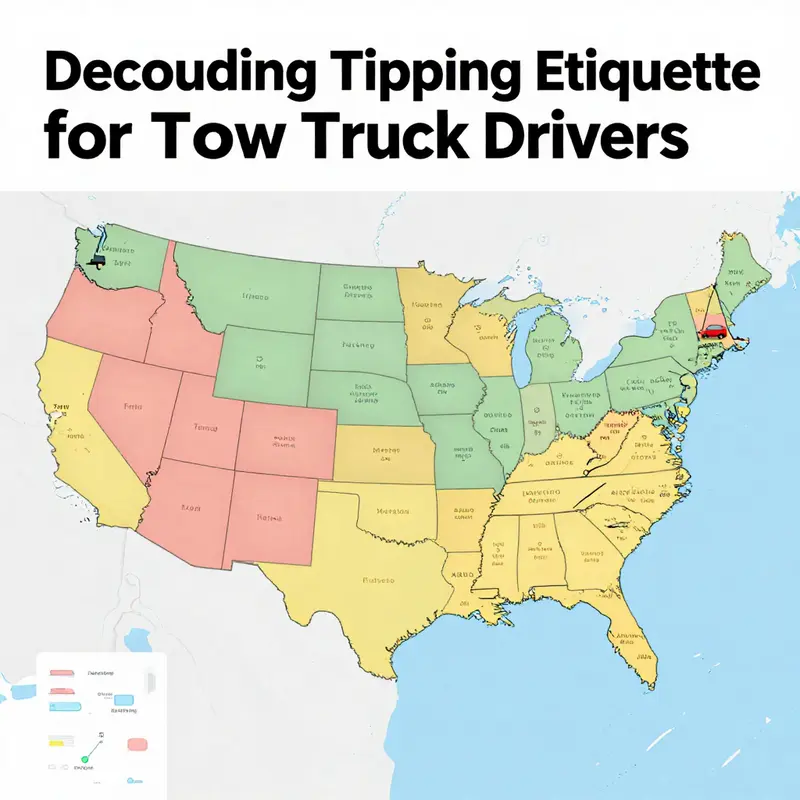
The roadside is not a place where moral patience and courtesy always line up with what the law asks of us, but it is a testing ground for how we handle uncertainty, stress, and the simple question of appreciation. When a tow truck arrives, the scene is already charged: headlights slicing through darkness, the whine of a winch, the ache of a broken plan, and a driver who steps into a space that blends professional duty with human relief. In such moments, tipping is not a universal script so much as a social cue that carries different meanings in different places. The practical answer to whether you should tip a tow truck driver is not a single rule, but a contextual reading of local norms, company policies, and the quality of service you receive. It is a reminder that tipping is less about financial calculation than about communication—how you acknowledge help, how you respect a worker’s guidelines, and how you maintain trust in a difficult moment.
In the United States, tipping has become a linguistic currency in service encounters. The default expectation can tilt toward a gratuity when performance feels exceptional or when the situation demands more effort than a standard call-out might. In tow situations, that extra effort often looks like prompt arrival during an emergency, clear explanations of what’s happening, safe and careful handling of vehicles in tricky spaces, or practical, non-technical help—such as coordinating with a disabled or anxious driver, guiding traffic safety, or offering resources about next steps after a roadside incident. If the driver has to work through a complicated maneuver—think of a difficult winch in rain, on a slope, or under time pressure—the instinct to show appreciation through a tip grows stronger for many people. The typical guideline you’ll hear in U.S. conversations is a range of about 15% to 20% of the service fee when service stands out. In some cases, a straightforward cash tip of $10 to $20 is suggested for those moments that feel particularly humane, patient, or protective under stress. Yet even within the United States, this practice is not uniform. Some companies discourage tipping to avoid conflicts of interest or to keep service decisions cleanly professional. Individuals who work in roadside assistance may also have internal policies, and these policies are increasingly common in an era where tip expectations are being re-examined in light of “tipflation” and inflation-driven social pressure.
Beyond the United States, the picture shifts markedly. In many European countries, tipping for towing services is not a routine expectation. In places where service charges already roll in as bundled labor costs, adding a tip can be unnecessary or even seen as inappropriate. Observers emphasize that tipping should reflect local norms rather than one’s own country’s habits. This is not merely a cultural wrinkle but a practical one: tipping in a region where the base fee already covers labor could accidentally imply the driver was underpaid or that the standard service was inadequate. The consequence is not just embarrassment but a potential misread of intent. When you travel, the best practice is to observe local behavior or ask directly, if it’s feasible, what is appropriate. In many areas of Europe, Scandinavia, and parts of Eastern Europe, the cultural script leans toward understated generosity rather than conspicuous gratuities. The message to carry from these contexts is simple: let the local norm guide you, not your hometown expectations.
The broader phenomenon of tipflation adds another layer to this conversation. Across the United States, tipping amounts have drifted upward as consumer expectations evolve and wages in some service sectors adjust, sometimes leading to confusion about whether a given interaction deserves additional compensation. Tow operators respond in varied ways: some explicitly state whether tips are welcome or discouraged, while others leave it completely to the customer’s discretion. For the traveler or the driver in a storm, this shift creates a need for clearer signals and better communication. When in doubt, asking directly whether tips are accepted or discouraged is respectful and practical. If a policy exists, following it preserves professional boundaries; if there is no policy, a modest gratuity remains a personal choice grounded in the level of service received.
Regional nuances are another vital piece of the puzzle. In regions where tipping is not customary, offering money can cause confusion or discomfort, or it may be politely declined. In such contexts, a sincere thank-you, a positive review, or a note of appreciation to the company can be meaningful forms of recognition. Conversely, in locales where roadside workers are accustomed to gratuities, a well-timed tip can reinforce a sense of value and acknowledgment for specialized labor performed under demanding conditions. The challenge is to calibrate your response to the specific moment: the driver’s professionalism, the complexity of the towing task, the safety considerations involved, and the emotional toll on the person waiting with a disabled vehicle.
Where the tipping decision becomes most nuanced is in the space between professional boundary and personal gratitude. A tow truck driver’s job can extend beyond simply moving a car from point A to point B. It can involve risk assessment on slippery pavement, guidance through unfamiliar errands, or endurance through late hours or high-stress emergencies. In these moments, a small gratuity can be a humane acknowledgment of the care and competence demonstrated. The question of how much to give should reflect the service’s quality, the driver’s conduct, and your own financial capacity. It should not be treated as a mandatory tax on the driver’s performance nor as a reward for anything less than the extraordinary effort that went into ensuring safety and clarity for the customer.
As you navigate these choices, practical steps can help you act with confidence and respect. If you are in the United States and the service stands out, a tip at the higher end of the customary range is appropriate, accompanied by a verbal thank-you that specifies what impressed you—speed, safety, or clear guidance for next steps. If you are in a country where tipping is rarely expected, you can still express appreciation in ways that align with local norms. A polite compliment, a brief note to the company about the driver’s professionalism, or sharing a positive online review can be just as meaningful as cash in a culture that frowns on tips.
For readers seeking a grounded, practice-focused perspective, the towing community’s own discussions and reflections can illuminate how these norms are lived out on the ground. The industry conversation often emphasizes that tipping, when it occurs, should accompany a straightforward, respectful interaction. It should never attempt to pressure a driver into accepting more than is comfortable for them or to compromise professional judgment. In turn, customers should feel empowered to decline a tip if a company prohibits it or if the service did not meet reasonable expectations, and to seek guidance from the service provider about what to do in such cases.
In this sense, tipping becomes less about a fixed rule and more about a shared etiquette—a way to acknowledge skill and care while honoring the local context that shapes every roadside encounter. If you are ever unsure, a practical rule of thumb can help: observe the room, so to speak. Watch how locals respond in similar situations, listen to the driver’s cues about tips or policy, and base your choice on the actual service delivered. A simple thank-you and a clear statement of appreciation can sometimes offer more value than a tip, especially when company rules or regional customs call for restraint. And if you want to explore this topic further through community voices and practical examples, the Santa Maria Tow Truck blog offers a space where readers discuss real-world tipping experiences, policies, and norms in the towing world: Santa Maria Tow Truck blog.
Ultimately, the question of tipping a tow truck driver is not a binary yes or no. It is a negotiation between personal gratitude and public norms, conducted in a moment of distress that can color the way a driver’s effort is perceived. Framed this way, tipping becomes a humane instrument—one that helps maintain trust, reinforces respectful exchanges, and reduces the friction that can accompany roadside misfortune. The more you understand the local customs, the more you can tailor your response to reflect both your appreciation and your respect for the rules that govern service in that place. In the end, it is not about how much you tip, but about how well you honor the balance between gratitude and discretion when you need a tow and a hand.
External resource: for broader tips on tipping norms while traveling abroad, see the U.S. Department of State travel information resources at https://travel.state.gov/content/travel/en/international-travel/International-Travel-Information.html.
Beyond the Fee: Reading Service Levels and the Subtle Choice of Tipping Tow Truck Drivers
Tow requests arrive at moments when plans falter and roads feel less certain. A tow truck is not a restaurant server or a concierge; its work is built into a different economic structure, one that blends emergency response, specialized equipment, and the continuous, sometimes hazardous, labor of roadside mobility. Yet even within this professional boundary, the impulse to show appreciation in a tangible way surfaces. The core question—whether to tip a tow truck driver—deserves a careful, context-aware answer that respects both the industry’s realities and the individual experience on the curb or shoulder. In weighing this, it helps to read service levels as a form of communication that transcends the simple exchange of money. The driver who arrives promptly, communicates clearly, explains options, and prioritizes safety communicates something just as real as the invoice that lands in your glove compartment: you were heard, you were protected, and you were guided through uncertainty. That kind of service can be what elevates a difficult event into a manageable, if not less stressful, moment.
To begin with, the practical framework of towing is different from consumer-facing hospitality. Towing services are professional, on-demand operations that bill for time, equipment, and expertise. The fee structure commonly covers the driver’s labor, the vehicle’s operation, fuel, and the overhead of running a service that must be ready to respond at any hour. Because of this, tipping is not something most towing companies expect or encourage. In fact, it is not unusual for a company to have policies that discourage gratuities, precisely to avoid potential conflicts of interest or perceptions that a tip could influence the quality of service. The professional contract is the service itself: the safe transport, the assessment of risks on the road, the secure handling of your vehicle, and the navigation of paperwork when the vehicle is moved from one place to another. When you’re facing a flat tire, a broken-down truck, or a vehicle that won’t start in a perceived danger zone, the last thing you want is uncertainty about how the service is paid or whether a gratuity could be interpreted as leverage.
Still, human beings in high-stress, time-sensitive situations respond to kindness and recognition. The question then becomes not, “Do I owe a tip?” but rather, “Did the driver deliver an experience that went beyond the basics?” The answer in most cases will be that tipping is optional and situational. If the driver offered extraordinary, above-and-beyond assistance—such as maintaining calm communication in a tense moment, taking extra steps to ensure your safety, staying with you through the process, or helping with documentation and straightforward explanations—many people feel a small gratuity is a meaningful way to acknowledge that effort. This aligns with a broader, common-sense etiquette that values service excellence, especially in emergencies when emotions are high and decisions feel consequential. A modest gesture, typically a small amount rather than a large sum, can acknowledge genuine care without altering the core transaction.
In practice, a range tends to emerge in conversations about tipping tow operators. Some experiences call for a minimal nod—often a few dollars—as a sign of appreciation for kindness or extra effort in an unlikely, difficult moment. Others may justify a slightly larger gesture when the service meets or exceeds expectations in ways that significantly reduce stress or risk. The key is to calibrate the tip to the level of service and to the local culture. Regions differ in their tipping norms, and companies themselves may set policies that influence what is considered appropriate. An important caveat is to verify local customs and, if possible, policy with the specific company involved. A roadside encounter is not the place to press a universal standard; it’s a moment to respond thoughtfully to what you experienced rather than what a broad rule would prescribe.
When the clock is ticking and the driver is doing everything possible to get you out of harm’s way, the subtle distinction between “need” and “gratitude” becomes clearer. If the service is routine—your vehicle is loaded onto the tow truck, you’re given a straightforward explanation of costs, and the driver completes the job efficiently—there is generally no obligation to tip. If, however, the driver goes further—staying with you through a night-hour waiting period, offering practical safety tips, coordinating with dispatch to secure a safer pickup location, or helping you understand the paperwork that follows—your discretionary response might lean toward a small gratuity. In those moments, a tip in the neighborhood of a modest amount can feel like fair compensation for additional care, especially when the incident carries personal risk or significant emotional strain.
The act of tipping, at its best, remains a personal choice rooted in appreciation rather than a contractual obligation. It should be driven by perceived value and fairness, not by fear of offending the driver or triggering unfair expectations. It’s also wise to be mindful of the broader ethics and business practices within the towing industry. Some drivers or companies value their policies against tips as part of maintaining professional boundaries. If you do decide to tip, presenting the gratuity discreetly and using cash can avoid any potential misunderstandings that might arise with credit transactions. You can offer the tip directly to the driver after the service is completed, or place it in a card-imprint envelope only if the company’s policy allows. In any case, the timing and manner matter as much as the amount. A tip delivered with appreciation after a successful outcome has a far different impact than a tip offered in the heat of a stressful moment when the transaction is still unsettled.
For readers seeking broader context about tipping etiquette beyond towing, the conversation is well-framed by established guidelines that emphasize discretion, consistency, and respect for service workers across industries. These guidelines remind us to differentiate between essential services and discretionary acts of appreciation. They also highlight that some service fields may discourage tip-acceptance for practical reasons, including safety, insurance, or policy concerns. The takeaway is not a one-size-fits-all formula but a flexible framework: know the policy, assess the service quality, and consider a modest, discretionary gesture when warranted by exceptional care or safe handling under challenging circumstances. If you want a broader primer on how tipping works in service industries, a reliable reference point is the National Restaurant Association’s etiquette resources, which offer widely applicable guidance on moderation, timing, and appropriate amounts for various contexts.
As you weigh your options, it can be helpful to anchor your decision in a simple set of personal criteria. First, assess the policy: does the company explicitly prohibit tipping, or is there room for discretion? Second, evaluate the service: did the driver communicate clearly, prioritize safety, and help you navigate the situation with competence and calm? Third, consider your own capacity and surroundings: is it safe and appropriate to offer a tip in cash, or would a post-incident online review or a written compliment be a more suitable form of recognition? Fourth, reflect on regional norms and your emotional response to the event. If you feel grateful but unsure about the etiquette, err on the side of restraint and seek alternative channels for expressing appreciation, such as sharing a positive word with the company or posting a favorable review. These steps help ensure that your gesture, if given, aligns with both personal values and professional boundaries, while avoiding unintended consequences for the service provider or the business.
Within the broader narrative of towing as a critical infrastructure function—one that people rely on during emergencies and moments of impecunious timing—the question of tipping sits at a crossroads of human connection and professional boundaries. It is not about transactions alone but about recognizing care, safety, and the quiet competence that gets a person and their vehicle from point A to point B when options feel limited. In the end, the decision to tip a tow truck driver should reflect the service level received, the company’s policy, and the customs of the local community. It is possible to opt out without guilt when the service is routine and the policy clear. It is equally possible to offer a modest gratuity when the driver has demonstrated exceptional consideration, particularly in stressful, high-stakes circumstances. And it is always acceptable to use other channels—like a thoughtful review or a recommendation—to acknowledge a job well done when a tip does not fit the situation. The guiding principle remains straightforward: let your response honor the quality of the service and the context in which it was delivered.
For those seeking broader insight into the discussions that frame this topic, a visit to a general industry blog can provide a sense of audience expectations and professional standards. The following link offers a space where practitioners and clients alike discuss service norms and experiential feedback, contributing to a more informed takeaway when faced with a tow-related decision: santamariatowtruck.com/blog/.
As you keep these considerations in mind, you’ll find that tipping a tow truck driver is less a universal rule and more a nuanced choice rooted in service quality, safety, and mutual respect. In most cases, tipping is not expected and not necessary. In exceptional moments, a small gesture can be a meaningful mark of appreciation. The key is to remain grounded in policy, stay attuned to the service you receive, and choose a response that feels right for you, the driver, and the situation at hand.
External reference: tipping etiquette guidelines across service industries can offer broader perspective on appropriate amounts and timing. See the National Restaurant Association’s guidance for a foundational overview of etiquette standards: https://www.restaurant.org/industry-resources/tipping-etiquette
Final thoughts
Understanding the nuances of tipping tow truck drivers involves more than just the act of giving money. By weighing local customs, specific situations, and the overall service level received, car owners can make informed decisions. Tipping is not universally expected; however, recognizing exceptional service can foster goodwill and appreciation. As you consider your next interaction with a tow truck driver, remember that your choice reflects your values and recognition of the assistance you received. Apply this knowledge prudently across your engagements with towing services.