
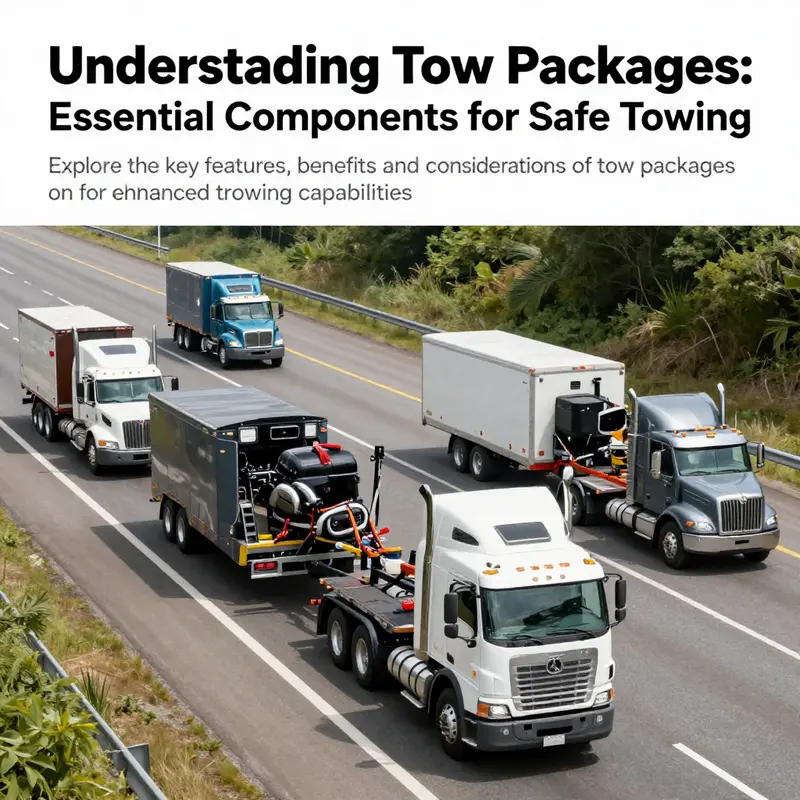
For many local drivers and businesses, having a truck that can tow heavy loads safely and effectively is crucial. A tow package is more than just a simple add-on; it’s a comprehensive system designed to enhance your truck’s performance during towing tasks. Whether you’re managing properties, running an auto repair shop, or assisting with community services, understanding what a tow package includes will equip you to make informed decisions. Each chapter of this article will dive deeper into the essential components, towing capacity details, installation and upgrading processes, and the overall benefits of having a tow package, ensuring you’re well-prepared to make the best choices for your needs.
Tow Package Unpacked: The Hidden Architecture That Turns Heavy Hauls Into Safe, Confident Towing
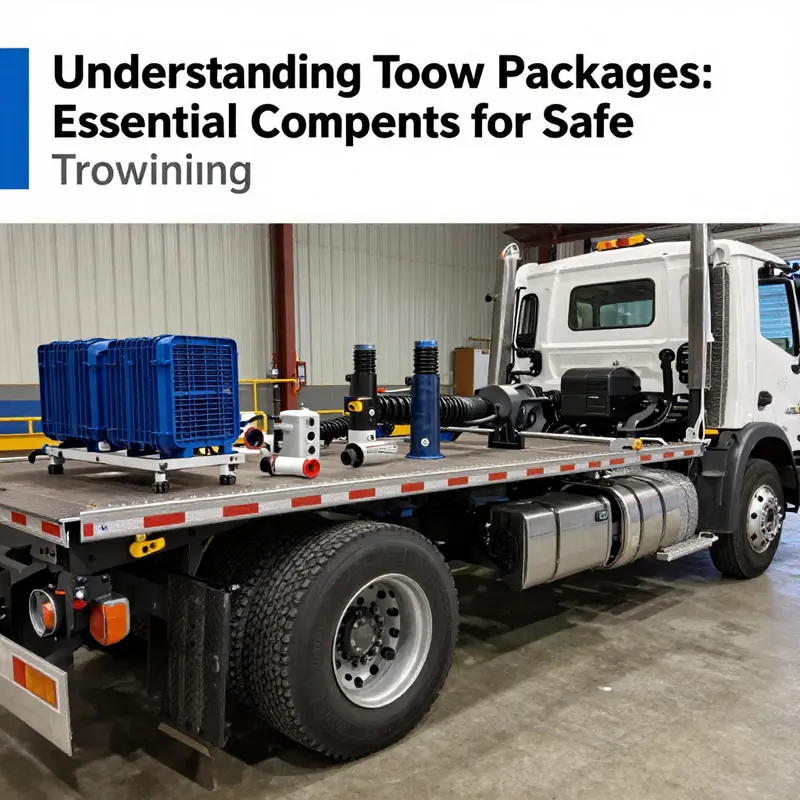
A tow package on a truck is more than a single accessory slapped onto the rear of a vehicle. It is a carefully coordinated set of upgrades designed to meet the added demands of pulling a trailer, a camper, or a boat behind a heavy-load workhorse. When you hear the phrase “tow package,” think of it as a built-in system that aligns the truck’s core strengths—power, control, cooling, and braking—with the realities of towing. The goal is not merely to move weight from point A to point B but to do so with predictable, stable handling, reliable electrical signaling, and a margin of safety that considers long hours on the road, rolling hills, and changing weather. The result is a coordinated package that makes towing feel like a natural extension of daily driving rather than an afterthought bolted onto a chassis. To understand why such a package matters, it helps to walk through its components as an integrated whole and to see how they reinforce one another under load.
At the center is the tow hitch, a heavy-duty receiver that forms the visible anchor point for any trailer connection. This isn’t just a metal peg; it’s a frame-mounted component engineered to bear the multi-thousand-pound push and pull that occurs in real-world hauling. The hitch must be securely fastened to the truck’s frame with mounting hardware that resists fatigue over miles of towing and through the fatigue of rough roads. The hitch choice—class III or class IV in many configurations—reflects a balance between the trailers you intend to pull and the truck’s own weight. A factory-installed tow package tends to be better integrated with vibration dampening, wiring routing, and chassis reinforcement, ensuring the receiver remains a trustworthy link in the trailering chain.
Beyond the hitch lies a more hidden, but equally essential, layer: reinforced frame and mounting points. When a vehicle is asked to pull, the frame experiences bending, twisting, and localized stress where the hitch connects. A tow package strengthens those mounting points and, in some designs, the frame itself. The reinforcement is subtle but real; it reduces fatigue over time and keeps alignment consistent. The maintenance of geometry matters because even a small deviation in hitch alignment can alter tongue weight, steering feel, and braking response. This structural backbone makes the rest of the system function as a cohesive unit rather than as disjointed upgrades that happen to share space on the chassis.
The cooling system is another critical pillar when towing becomes a regular activity. Prolonged pulling of heavy loads generates sustained heat in the engine, transmission, and, in some configurations, the axle housing. An upgraded radiator, a dedicated transmission cooler, and often an oil cooler work together to keep operating temperatures within safe bounds. With a trailer connected, the engine and transmission carry a higher thermal load than they would during ordinary driving. Coolant flow is optimized to shed heat efficiently, and the transmission cooler is sized to reject the heat accumulated during climbs or repeated stopping and starting on grades. This cooling trio is not a luxury but a shield against heat soak, which, if ignored, can degrade performance, shorten component life, and reduce towing confidence on long hauls.
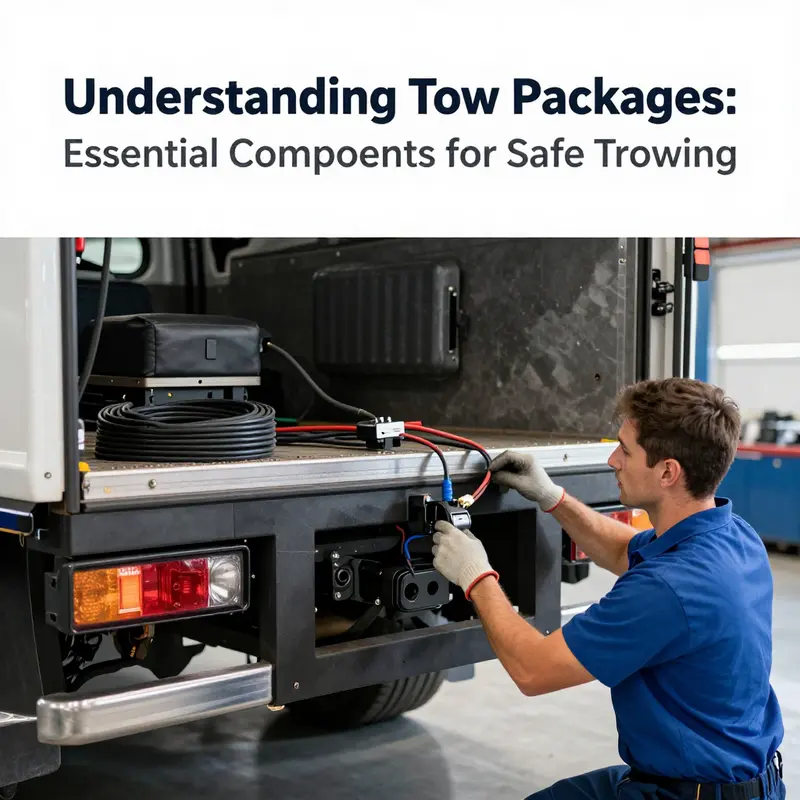
Electrical systems receive a parallel upgrade through the heavy-duty wiring harness. A reliable trailer wiring harness is the nervous system of towing. It ensures that trailer brake lights, turn signals, and running lights are synchronized with the truck’s signaling and lighting. The wiring path is engineered to withstand environmental exposure, constant coupling and uncoupling, and the pull and tug of road curvature that can stress connectors. In many tow-ready trucks, the harness is matched with a dedicated connector configuration (such as a seven-pin or four-pin arrangement) tailored to common trailer electrical needs. This attention to wiring prevents a simple bulb failure from becoming a safety hazard on the highway and contributes to predictable, law-abiding signaling for following motorists.
Suspension components receive a more robust treatment in a tow package. Heavier loads demand a stiffer, more controlled ride to maintain wheel contact and stability. Upgraded springs, heavier-duty shocks, and, in some cases, reinforced leaf springs or even air-suspension options, work to keep the ride height and balance stable when a trailer is attached. The idea is not to create a ride that feels rigid but to preserve tire contact and minimize sway, yaw, and pitch. A well-tuned suspension helps the truck to absorb road irregularities without transferring too much movement to the trailer, which can otherwise increase the risk of jackknifing or trailer sway in gusty winds or uneven pavement.
Inside the cabin, towing-specific instrumentation and software translate the physical realities of hauling into actionable information for the driver. A built-in trailer brake controller is often part of the package, allowing the driver to modulate the trailer’s braking force from the truck’s controls. This feature is especially valuable when commanding longer or heavier trailers whose momentum can linger after you lift off the accelerator. Tow mode in the transmission is another common element. It adjusts shift patterns, engine response, and torque management to optimize power delivery and cooling while maintaining predictable control when the trailer is in tow. The dashboard can display data such as trailer brake status, battery voltage, and other vital cues that help the driver assess the integrity of both vehicle and trailer during the tow. These screens and monitors do more than inform; they provide the driver with a sense of how the combined system is performing, which in turn encourages smoother, safer driving practices.
The braking system itself often receives attention beyond the trailer brakes. Some tow packages include an integrated or optional trailer brake controller that coordinates the trailer’s braking with the truck’s system. This coordination matters on downhill slopes or when braking in curves, where a mismatch between the weight behind the hitch and the truck’s braking can invite sway or instability. Properly calibrated trailer brakes reduce strain on the truck’s own brakes and help maintain straight-line control. In vehicles equipped for heavier tows, the axle ratio is another decisive factor. A higher numerical gear ratio can improve pulling power and acceleration when climbing grades with a heavy load, while still maintaining acceptable highway efficiency when running light. The choice of axle ratio hinges on the typical towing profile—short trips up and down hills, long highway hauls, or a mix of both—and the truck’s overall power curve. The result is a drivetrain that feels more domesticated and capable under load, not forced into the performance envelope by a single bolt-on accessory.
Taken together, these components create a cohesive system rather than a collection of add-ons. The tow package is designed to ensure that the truck’s essential life-support systems—to keep the engine cool, the frame stable, the brakes responsive, and the electrical signaling consistent—are all aligned around the task of towing. This alignment matters because towing introduces complexities that ordinary driving does not. Tongue weight, trailer sway, wind gusts, and the extra drivetrain load all change the way a vehicle behaves at speed. A factory-installed tow package has the advantage of careful engineering, testing, and integration. It anticipates how each piece works with the others and designs connections that minimize vibration, maintain alignment, and preserve reliability over many miles of towing duty.
All of this carries practical consequences for anyone who plans to tow regularly or who wants to carry heavy cargo with confidence. A tow package is not a guarantee of effortless towing, but it is a structured framework that makes the act safer and more predictable. When choosing a truck with a tow package, it helps to consider the overall mission: the kind of trailers most often used, the typical routes and terrain, and whether the intent is occasional light towing or a steady cadence of heavy-duty pulls. It is not just about the maximum weight the setup can pull; it is about how the components interact to maintain control, preserve equipment, and deliver a driver’s sense of certainty on the road. In that sense, the tow package functions as a form of insurance against heat, fatigue, and misalignment that can arise when heavy loads are encountered day after day.
For readers who want to connect broader experience with specific guidance, industry discussions and case studies often emphasize the same themes: strength through integration, the importance of an upgraded cooling chain, and the role of robust, reliable signaling. The overarching principle is clear. Tow packages are designed to give the truck a tow-ready demeanor that remains confident and composed under load. They help the driver stay in control by providing more information, more predictable behavior, and more capable hardware to manage what towing adds to the driving equation. This is not about overpowering a trailer with raw torque alone; it is about balancing that torque with cooling, braking, steering, and stability, so the combination produces a dependable, pleasant towing experience rather than a test of patience and nerves.
As you explore options, you may encounter the guidance found in practical, long-form discussions about towing operations and readiness. For readers who want to see how the ideas translate into real-world practice, a trusted resource offers deeper context on how fleets standardize equipment and how emergency-readiness considerations shape towing decisions. Santa Maria Tow Truck blog provides an approachable view of how towing knowledge is applied in practice, reinforcing that robust hardware choices across hitching, wiring, and frame reinforcement pay dividends when it matters most. This is not a commercial plug; it is a reminder that the engineering behind a tow package is meant to support drivers in the moment of truth when a trailer is connected and the road ahead must be navigated with precision. The chapter’s takeaway is straightforward: you don’t buy a tow package for the moment you hook up a trailer—you buy it for the countless miles before and after that moment, miles that demand consistent, predictable performance in a broad range of conditions.
In a broader sense, the tow package reflects a philosophy of engineering that prioritizes the realities of heavy-duty use. The components are chosen and tuned to anticipate genuine obstacles—heat buildup on long climbs, frame flex during acceleration, brake fade on steep descents, and the electrical quirks that can upset signaling in damp or rough environments. The narrative of a tow package is thus not just about added hardware; it is about a system that acts in unison to deliver a more reliable towing experience, with a focus on safety, durability, and driver confidence on the open road. When a vehicle arrives with a factory tow package, it signals to the owner that the manufacturer has anticipated the demands of towing and has equipped the truck with the necessary tools to meet them. The result is a more seamless integration of towing into the vehicle’s everyday use, where heavy responsibility is matched with dependable performance, and where the line between pleasure and practicality remains intact even as the trailer test begins.
External resource: https://www.fueleconomy.gov/feg/towing.jsp
Tow Package Power: How Towing Capacity and Performance Shape Modern Trucks
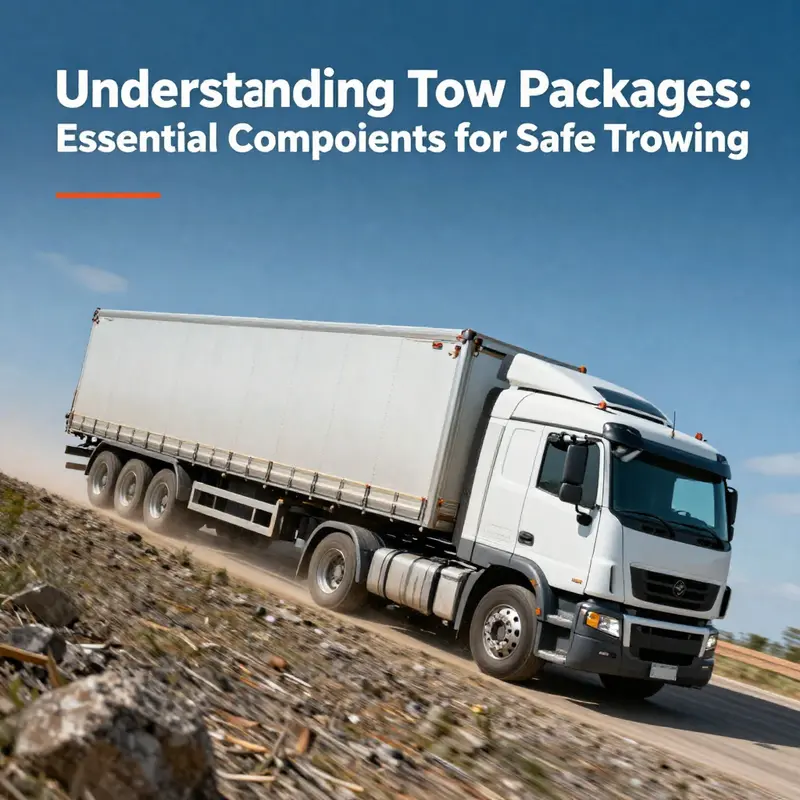
Tow packages are best understood not as a single widget but as a carefully coordinated system that equips a truck to carry heavier loads with greater control and reliability. When a buyer looks at a tow package, they are not simply comparing extra chrome or a larger hitch; they are evaluating a bundle of interdependent upgrades designed to keep the vehicle cool, stable, and responsive as the weight behind it grows. The essence of this chapter is to explore how these upgrades—ranging from cooling and suspension to gearing and electronics—work together to transform a capable pickup into a towing-ready platform. In this sense, a tow package is a holistic upgrade rather than a checklist item. It ties together the engine’s appetite for fuel and fuel economy, the transmission’s appetite for torque, the suspension’s appetite for stability, and the braking system’s appetite for control. The result is a more predictable, safer, and more efficient towing experience, one that can handle everything from a light trailer to a mid-sized camper or boat with confidence. To understand how this works in practice, it helps to start with the core idea: capacity is not a fixed number carved in stone by the engine alone. It is the product of a system that includes cooling, the drivetrain, the axle configuration, the suspension, and the trailer integration hardware. A factory tow package does not merely add a hitch; it optimizes the pathway from power generation to wheel-ground contact so that when demand rises, the vehicle’s fundamentals remain within healthy limits. A heavy-duty cooling system, for example, prevents heat from building up in the engine, transmission, and oil under sustained load. Heat is the enemy of performance; in tow scenarios, the cooling system must swamp the increased heat produced by towing, especially on long grades or hot days. An upgraded radiator, a transmission cooler, and an oil cooler are common, and their combined effect is that the engine and drivetrain can sustain higher torque outputs for longer periods without overheating. This is not just about staying within a number on a sticker; it’s about preserving the efficiency and responsiveness of the system so that the truck does not have to compensate for heat with reduced power or harsh operating modes. The reinforcement extends beyond cooling. ATow packages often bring a reinforced suspension that can better handle the added weight and the dynamic forces that trailers exert on a moving vehicle. Heavier springs and tuned shocks help keep the rear end from sagging, maintain tire contact with the road, and promote steadier steering under load. The chassis gains rigidity to resist twisting when turning with a heavy hitch attached, which translates into more precise steering and smaller chances of a tail-end wag or sudden instability if a crosswind or uneven road surface appears. Between the springs and the shocks lies the geometry of the axle and the transfer of load from the hitch to the tires. An upgraded axle ratio can make a dramatic difference in towing performance, particularly when pulling uphill or accelerating from a stop with a full trailer in tow. A higher numerical ratio, in practical terms, tends to keep the engine within an efficient rev range where torque is available and the engine does not hunt for power. Yet this is not a one-size-fits-all choice. Different models and configurations pair different axle ratios with different engines to balance raw pulling power against fuel economy and driveability. It is common to see packages that optimize the gearing to maximize on-road performance without sacrificing the ability to bridge a long grade or maintain highway speeds with a heavy load. The integration of these mechanical components is complemented by the hitch and the electrical system. The trailer hitch receiver remains the physical anchor for towing, but the electrical wiring harness and connectors are what make the trailer a true extension of the truck’s systems. The standard 7-pin or 4-pin wiring harness connects lights and signals, while more advanced harnesses and controllers enable brake signals, battery status, and other vital data to be monitored in real time. In extreme conditions, a trailer brake controller becomes essential, allowing the driver to modulate the trailer’s brakes as a function of the truck’s own braking system. The equipment list also often includes a towing-specific monitor that displays trailer brake status, battery voltage, and other critical data, turning raw capability into actionable information at a glance. All of these components work in concert to deliver a towing experience that feels stable rather than strained, especially when weight shifts as the trailer climbs a grade or negotiates a windy road. The story of capacity is, in many ways, the story of choice. Modern manufacturers offer multiple towing packages with progressively higher capacities, enabling buyers to tailor the system to their anticipated loads. A higher-capacity configuration typically bundles stronger cooling, reinforced suspension, upgraded axles, and a more aggressive gearing strategy, all designed to move more weight with more assurance. The interplay between engine power, transmission strategy, and gearing is central to this. An engine that generates substantial torque can do the heavy lifting, but without matched transmission tuning and cooling capacity, that power can become a heat source that must be managed by the truck’s protective systems rather than by the driver. In other words, a loaded trailer is as much about the drivetrain’s layout as it is about the engine’s raw numbers. Several real-world dynamics influence how these choices translate into on-road performance. First, the drivetrain configuration—the pairing of engine and transmission—has a direct impact on towing capacity. In some configurations, a lighter-duty or more flexible transmission setup can cap towing capacity. In other setups, a more robust transmission with additional torque-handling capacity can unlock extra weight that would otherwise be limited by the drivetrain’s ability to sustain torque under load. As one example drawn from industry experience, a configuration featuring a 5-speed automatic can yield roughly 1,000 pounds more towing capacity than a similar truck outfitted with a 5/6-speed manual arrangement. The takeaway is not to worship any single number but to recognize how the transmission’s design and operation shape how much weight can be pulled with composure and safety. The axle ratio modifications often accompany these choices. A high-capacity pack might be paired with a 3.55 or 4.10 axle ratio, values that shift the balance toward greater performance when pulling heavy loads rather than maximizing fuel economy on sunny commutes. When uphill grades or strong headwinds come into play, the higher gearing helps maintain adequate engine revolutions to sustain momentum without forcing the engine to labor excessively. This is not merely about torque or horsepower in isolation; it is about the synergy of torque delivery, gearing, and traction under load. In some cases, manufacturers push the envelope by optimizing the combination of engine, transmission, and axle to achieve a maximum towing capacity for the whole package, all while keeping emissions, economy, and daily drivability in check. And it is important to note that even within the same model line, buyers can encounter different tow packages that yield different performance envelopes. The practical consequence is that choosing a tow package requires a careful assessment of anticipated trailer weight, driving terrain, and daily driving needs. A truck that tows a mid-sized travel trailer regularly will benefit from a package designed for sustained load handling—cooling, brakes, and suspension tuned for long sessions on a highway climb—whereas a model intended for occasional boat towing down scenic byways might prioritize a balance between capacity and ride comfort. Beyond the mechanical envelope, the regulatory environment plays a pivotal role in how far a vehicle can push its towing envelope. The theoretical maximum towing weight of a given package is not a license to haul anything that seems close to the number on the spec sheet. Real-world towing must respect the vehicle’s rated capacity, the load-bearing limits of the hitch, tires, and brakes, and, in many locales, the licensing category that governs what a driver is allowed to tow. The vehicle’s rating is a ceiling, not a target; the actual safe towing weight must be chosen with careful consideration of trailer weight distribution, tongue weight, and braking requirements. The interplay of braking capacity and trailer braking is another dimension of performance that is specific to tow packages. A robust trailer brake controller, integrated with the truck’s braking system, improves stability by ensuring the trailer’s brakes coordinate with the truck’s own deceleration. Without this coordination, stopping distances extend, and the tongue can push the back of the tow vehicle, increasing the risk of sway. The driver’s confidence grows when the braking system keeps pace with the demands of the load, and the tow package makes this feasible by providing the hardware and software that deliver responsive, proportional braking control. It is worth recognizing that towing performance does not stop at the highway ramps. Real-world use includes trailer sway management, weight distribution, and hitch alignment. A properly installed weight distribution hitch combined with the right tow package can maintain proper tongue weight and keep both the truck and trailer stable during acceleration, deceleration, and cornering. The result is a towing experience that feels predictable and controllable, rather than precarious or hurried. The broader context also includes efficiency considerations. Advancements in design have enabled trucks to sustain high towing capacity while improving fuel economy relative to earlier generations. Modern configurations emphasize thermodynamic efficiency, aerodynamics, and drivetrain optimization, all intended to reduce the incremental fuel penalty of towing. The message here is nuanced: high towing capacity does not automatically equate to poor fuel economy if a package is well engineered to manage power delivery and heat, and to exploit efficiency opportunities in the drivetrain. For commercial applications, the scale of the towing challenge grows dramatically. Heavy-duty industrial transport depends on a different class of machines and a different balance of power, braking, and chassis strength. In these contexts, the logic of a tow package expands to embrace longer duty cycles, higher duty factors, and the need for durability under extreme conditions. The principle remains the same: a well-constructed tow package aligns engine output, heat management, suspension rigidity, gearing, and braking control to maintain safety and reliability when weight is at stake. The practical takeaway for those planning to tow regularly is clear. Start by estimating the loaded trailer weight and tongue weight, then match those figures to the most appropriate tow package configuration. Confirm that the package includes robust cooling, a reinforced suspension, an appropriate axle ratio, and a reliable trailer brake controller, plus wiring and monitoring that provide real-time feedback during the pull. Consider how your typical routes—whether steep climbs, hot days, or long highway stretches—will test the system, and choose a configuration that keeps the engine in its efficient sweet spot while ensuring the drivetrain remains within safe thermal limits. The interconnected nature of these components means that a single upgrade can ripple through the entire towing experience, enhancing stability, braking response, and engine management. It is this orchestration that differentiates a dedicated tow-package truck from a standard model with a few added accessories. When you approach a dealer or a manufacturer’s options list with this perspective, you can see why the choice matters. The right package translates into a smoother tow, a braver climb, and a vehicle that handles as confidently when empty as it does under load. For readers seeking broader perspectives on towing capacity and its determinants, a detailed external resource provides insights into the nuanced calculations behind these ratings and how drivers can interpret them in everyday driving. If you are exploring these ideas further, see https://www.cars.com/articles/truck-towing-capacity-explained-what-you-need-to-know-112023/. Additionally, industry conversations and practical guidance can be found in broader online discussions and informational hubs, including perspectives shared on santamariatowtruck.com/blog. These references help ground the technicalities in real-world experience, emphasizing that capacity is a function of engineering choices, driving discipline, and the specifics of the load being towed. As the chapter moves from theory to practice, the underlying message remains consistent: a well-chosen tow package is not merely about pulling heavier loads; it is about preserving control, protecting the vehicle’s integrity, and delivering reliable performance under the varied demands of the road. The result is a towing experience that is safer, more predictable, and more enjoyable, whether the destination is a quiet lakeside cove or a crowded job site. The path to that experience starts with understanding how each component of the tow package contributes to a larger system designed to meet the rigors of real-world towing. From the radiator to the hitch, from the gear ratios to the brake controller, every piece plays a role in shaping how much weight can be moved and how effectively that movement can be managed. This integrated approach is what sets modern tow packages apart and explains why the decision to invest in one is often framed not as a luxury but as a prudent step toward safer, more capable, and more efficient hauling.
null
null
Tow Packages Demystified: Gains, Risks, and Real-World Reliability for Safe Hauling
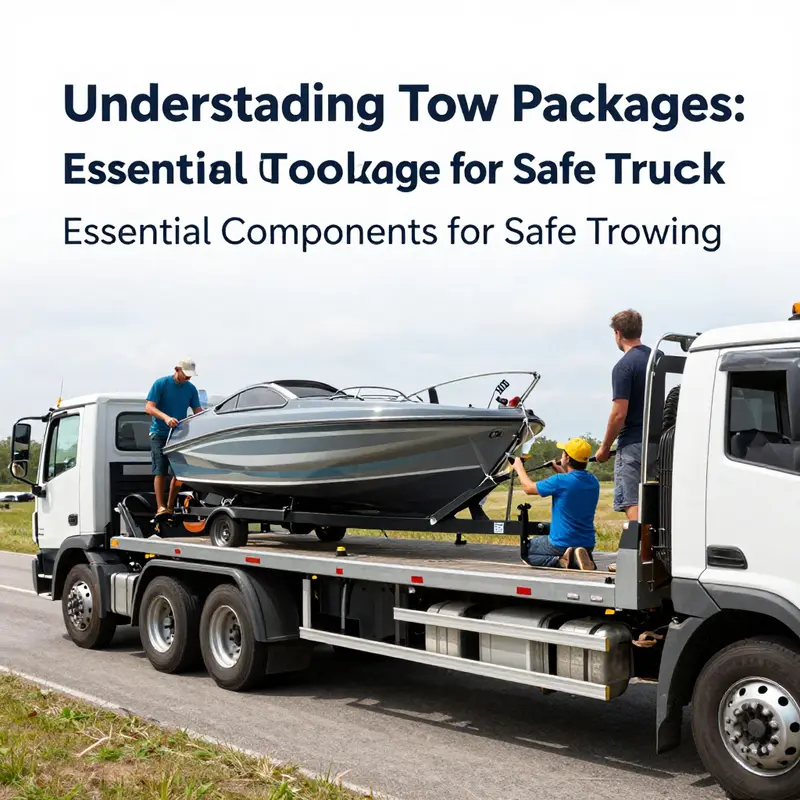
A tow package is not a single bolt-on or a marketing label. It is a thoughtfully assembled upgrade that aligns a truck’s mechanical and electronic systems with the demands of towing. When a manufacturer or a dealer bundles components together—from a beefier cooling system to a reinforced suspension, from a sturdy trailer hitch to a reliable wiring harness—it signals a shift in how the vehicle behaves under load. The goal is to preserve performance, protect the drivetrain, and maintain safety as the scale of weight and torque grows beyond everyday use. This is not about turning a pickup into a race car; it is about engineering a balanced, predictable platform where the truck, trailer, and road act as a single system rather than as separate, conflicting forces. For anyone who plans to tow regularly, this integrated approach matters more than any individual piece, because towing applies steady stress across multiple subsystems at once—cooling, braking, steering, suspension, and even the electrical network must all respond cohesively to keep everything under control.
The benefits of such a package extend beyond simply being able to pull a heavier load. A well-designed tow package broadens a truck’s practical range. Enhanced towing capacity is the most obvious gain, and it comes from several converging upgrades. An upgraded cooling system helps prevent overheating of the engine, the transmission, and related fluids during long pulls or hot-weather days when the engine must work harder to maintain speed and stability. A reinforced suspension, with stronger springs and more robust dampers, keeps the chassis from sagging under load and helps the tires maintain traction and steering feel. An appropriately matched axle ratio can improve torque delivery and overall propulsion when climbing grades with a trailer. A purpose-built hitch and a wiring harness ensure that the trailer’s lighting and braking systems synchronize with the truck’s signals, so the towed load communicates clearly with other drivers on the road.
But the advantages are not limited to raw numbers on a spec sheet. A tow package delivers improved flexibility in real-world tasks. When a job calls for transporting a heavy trailer, a boat, or a piece of equipment, the truck behaves with more composure. The combination of stronger chassis elements and a tuned powertrain makes acceleration feel steadier, braking more controlled, and steering more predictable, even as the weight on the hitch shifts with terrain and wind. The overall driving experience becomes less about compensating for weight and more about focusing on the task at hand. This is especially valuable in work environments where time matters, and downtime is costly. The driver can maintain a steady rhythm—hook up, tow, and return to base—because the vehicle is designed to handle the load without surprising the operator.
Within the broader category of tow design, there are design features that illustrate how varied this field can be. Some applications use hydraulic or mechanical assistance to aid certain recovery or lifting tasks. For example, in the world of flatbed tow operations, hydraulic telescoping arms can enable efficient vehicle placement and winching with precise control. In other contexts, a more limited feature set is deliberately chosen for everyday highway towing, focusing on reliable braking, lighting integration, and stable handling rather than high-end lifting capability. A key concept that appears across many tow configurations is the idea of a partial-tilt approach during initial vehicle contact or recovery. In such designs, the wheels of the towed unit may remain in contact with the ground during the early phase of lifting. This reduces sudden torque spikes on the drivetrain and minimizes the risk of drivetrain or transfer-case stress when a vehicle is in minor mechanical distress. It is a reminder that towing is not merely about torque and traction; it is about managing sequences of motion in a controlled way to protect all components involved.
Cost considerations naturally accompany these benefits. A tow package, especially when it includes multiple upgrades such as upgraded alternators, enhanced radiators, transmission coolers, and stronger braking support, can require a larger upfront investment. However, the long-term financial logic can be favorable. When components are selected to work in harmony, wear and tear on the engine, transmission, and brakes typically declines relative to an identical load drawn with a non-tow-optimized setup. In practical terms, this means less maintenance downtime, fewer emergent repairs, and more predictable maintenance cycles. In many fleets and contractor operations, the reliability gained from a cohesive tow package translates into faster deployment, simpler scheduling, and ultimately lower operating costs per tow. The payback is not merely measured in gallons saved or minutes gained; it is observed in steadier throughput and fewer late deliveries caused by mechanical hiccups on the road.
Yet the story of tow packages is not one of unmitigated positives. A careful assessment must acknowledge the potential downsides. For one, there can be supply limitations when standard configurations do not align with a specific use case. The market may offer only a few configurations that match a particular trailer length, weight, or task profile, which can lead to procurement delays or the need for customizations. In addition, safety and reliability hinge on the quality of the components and the installation. A tow package is only as strong as the weakest link in the chain; a subpar hitch, improper wiring, or a poorly tuned brake controller can undermine the advantages the package is meant to deliver. This is why proper selection, professional installation, and careful testing are essential. Given the higher loads involved, any misstep in mounting, wiring, or calibration can have amplified consequences, from erratic braking behavior to electrical faults in the trailer’s lighting circuit.
Engineering scrutiny also plays a central role in ensuring long-term safety. The structural integrity of towing hardware matters because the hitch and its mounting points are subjected to cycles of load that can stress welds, bolts, and frame members. Finite Element Analysis and related simulation techniques provide a window into how a tow system behaves under realistic driving and loading scenarios. A notable example from the technical literature shows how a tow hitch can experience significant localized stress when loaded. In a controlled simulation, a commercial truck hitch under a specific load demonstrated von Mises stresses in the weld region approaching hundreds of megapascals. The simulation validated against experimental measurements with errors in equivalent strain around 19 percent and permanent displacement within a tenth of a percent. While the exact numbers depend on geometry, materials, and boundary conditions, the underlying takeaway is universal: structural joints must be designed, validated, and validated again, preferably with thermo-mechanical coupling that captures temperature effects on material properties. This level of validation matters because towing loads are not constant. They vary with speed, incline, wind, trailer tongue weight, and dynamic maneuvers. If a package is tuned only for peak capability in a lab, it may behave differently in the real world, and those differences can escalate under repeated use.
From the materials perspective, selection of alloying and heat-treated steels, along with attention to weld quality and fatigue life, becomes a central concern. The dynamic loading characteristics of towing—where weight shifts with acceleration, braking, and road imperfections—demand materials that resist not just static yield but also cyclic fatigue. Thermo-mechanical coupling analyses take this further by considering how temperature changes during long pulls influence material stiffness, ductility, and fracture resistance. The upshot is clear: a robust tow package is built on more than a high-rated payload number or a flashy electrical harness. It rests on validated structural strength, dependable materials, and verified integration of all subsystems.
For readers weighing a tow package against a non-package setup, a pragmatic approach helps. Start with a clear definition of tow needs: What is the typical trailer weight? What distances are involved? Are there backcountry conditions, hills, or crosswinds? Then examine the core components the package adds and how those pieces interact with the vehicle’s baseline design. Confirm that the axle ratio and gearing align with your payload, that the braking system offers appropriate trailer braking capability, and that the electrical harness is designed to minimize risk of shorts or unused circuits. Pay particular attention to the installation path: a skilled installation ensures proper torque on bolts, correct alignment of a hitch receiver, and clean routing of wiring with robust protection from road debris. In short, the value of a tow package lies less in a single feature than in the coherence of the whole system—a coherent architecture that preserves control, predictability, and margin under load.
The discussion would be incomplete without acknowledging how practical knowledge travels beyond the dealership or workshop. For readers seeking a broader context about towing technology and industry practices, many operators rely on engineering-focused discussions and practical field insights that are captured in industry blogs and technical resources. One such resource weaves together the experience of towing professionals with the science of structural safety, offering a deeper look at how fleets manage routine loads while safeguarding personnel and equipment. For readers who want to explore more about towing operations and readiness, a visit to a trusted industry blog can provide ongoing updates and case studies tied to real-world use. Santamaria Tow Truck blog offers a repository of practical considerations, decision-making guidance, and scenarios that connect the theory of tow packages to everyday towing tasks. This kind of resource helps bridge the gap between the engineering rationale behind a tow package and the decisions a driver or fleet manager makes when equipment must perform reliably under pressure.
In the end, choosing a tow package is about balancing gains with constraints. The benefits—enhanced towing capacity, improved handling under load, and longer-term cost efficiency through reduced wear—are tangible. The considerations—supplier availability, upfront cost, installation quality, and the necessity of rigorous engineering validation—are equally real. The most successful outcomes come when buyers treat the package as a system that requires deliberate matching to the intended use, rather than as a generic upgrade meant to push numbers higher. That mindset keeps towing safer and more predictable, which is what every responsible driver, operator, and fleet manager ultimately seeks.
For those who want to examine the technical underpinnings more closely, the broader literature on towing hardware provides technical insights into how stress and strain are distributed in hitch assemblies under realistic loads. The study cited earlier, published in a peer-reviewed venue, highlights how simulation results align with experimental validation and why weld integrity and joint design deserve particular scrutiny. Understanding these findings helps move the conversation from entertainment-value numbers to practical, safety-oriented engineering. It reinforces the idea that a well-considered tow package is not merely a convenience, but a careful investment in reliability, safety, and long-term performance on the road.
External resource: https://www.sciencedirect.com/science/article/pii/S235274652600042X
Final thoughts
Understanding the significance of a tow package is essential for anyone involved in towing—local drivers, auto repair shops, and property managers alike. A properly equipped truck not only ensures safety and performance but also adds versatility to your vehicle, enabling it to handle a variety of hauling tasks with ease. By investing in a tow package, you’re equipping your truck to face the challenges of towing effectively, allowing you to focus on what matters most: getting the job done safely and efficiently.