
When your vehicle breaks down, one of your biggest concerns is how long it will take for help to arrive. Understanding the factors that affect response times can empower drivers, auto repair shops, and property managers to make informed decisions during roadside emergencies. Whether in bustling urban streets or remote country roads, the arrival time of a tow truck can differ significantly. This article delves into four critical aspects: urban response times, rural challenges, the role of technology, and the variability among service providers. Each chapter provides actionable insights that can help you manage expectations and reduce stress in high-pressure situations.
Understanding Tow Truck ETA in City Streets
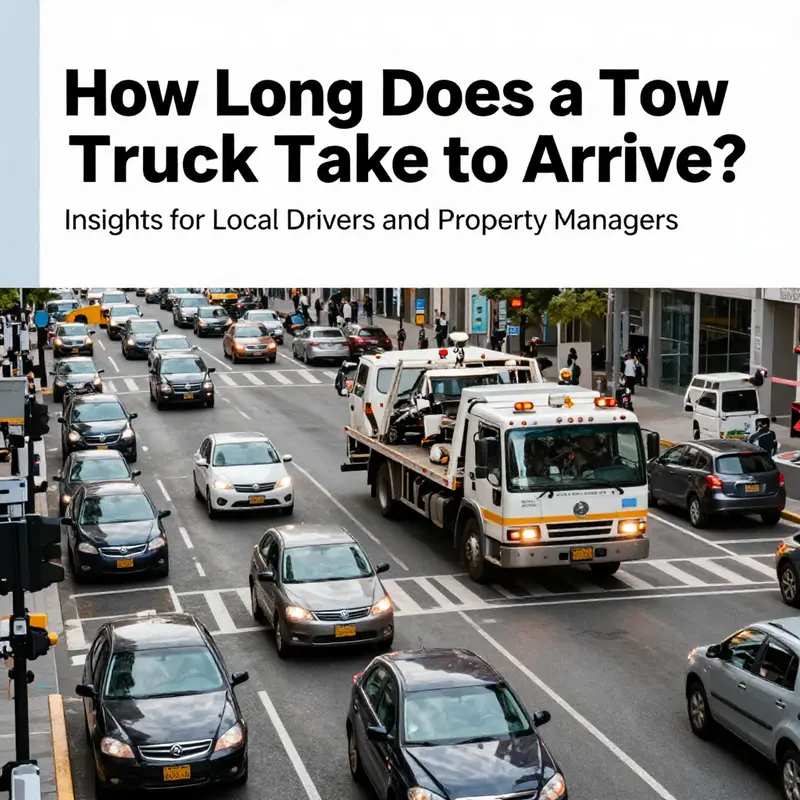
When a vehicle breaks down in a busy city street, the arrival time of a tow truck depends on many moving parts. Dispatch centers decide which asset to send based on proximity, traffic, and current workload. The result is a forecast that can change as new information comes in. Urban geometry such as narrow streets and construction zones can slow or speed up the response. Real time visibility on many platforms shows an ETA that updates as conditions change. You should position yourself in a safe waiting area and stay reachable by phone in case the driver needs to confirm location. In peak hours, waits can extend, while in light traffic the ETA can compress. Overall, the typical urban window is built from proximity, traffic patterns, and how the dispatcher assigns the next available asset.
Between Dust Roads and Delays: Reading the Real Timetable for Tow Trucks in Remote Terrains
When a vehicle breaks down far from the nearest city lights, the clock begins a quiet, stubborn countdown. In the moment of immobilization, a traveler often asks the same question: how long will it take for help to arrive? In remote locations, the answer is rarely a single, neat number. It is a shifting balance of distance, demand, weather, infrastructure, and the quiet math of the local service network. The plain truth is that time to arrival in rural areas is not a fixed road sign but a moving target that reflects both geography and systems—how many tow fleets are nearby, how far they must travel, and what the road conditions will allow on the day of the breakdown. A broader look at rural tow response reveals a timetable defined less by clockwork than by the dynamics of place, and understanding those dynamics can shape both plans and expectations for travelers who find themselves far from urban towing hubs.
In conversations about roadside assistance, it is easy to default to an urban frame of reference. Cities pulse with density, roads, and dispatch centers that can more consistently connect a stranded motorist with a driver who is merely minutes away. In rural zones, the same dispatch logic faces a slower rhythm. A 2023 report by the American Automobile Association puts some of this into sharp relief: rural wait times average roughly six to twelve hours, with the sobering caveat that circumstances such as severe weather or large incidents can push waits past a full day. Those figures are more than a statistic. They are a lived reality for travelers who depend on a dependable safety net when paths grow quiet and remoteness stretches the sense of immediacy. The specific number on any given day will vary, but the general tendency in sparsely populated regions is toward longer responses, measured in hours rather than minutes, and sometimes in entire days when conditions align against the local support network.
This is not a narrative of inevitability, but of structure. Rural tow response is shaped by the distance between incidents and service providers, the layout of road networks, and the availability of tow assets at any given moment. In practical terms, an incident may occur hundreds of miles from the nearest fleet location, and the vehicle that answers the call may have to traverse long stretches on less-traveled routes. Road quality matters; unpaved or poorly maintained roads slow progress and increase wear on vehicles, which in turn can affect dispatch decisions and ETA estimates. The sparsity of providers means there is often fierce competition for a limited pool of capable operators, especially during peak travel seasons, harvests, or severe weather when many motorists are in need at once. Each of these factors compounds the others, creating a composite picture in which the arrival time is a function of place, time, and circumstance rather than a single universal rule.
Even with that sobering baseline, there is a countervailing truth. When a traveler is equipped with modern, on-demand roadside assistance options, the perceived transparency of the process can improve. Real-time ETAs, often presented after a booking is completed, give a sense of control even before a tow begins its journey. Yet here too the rural reality asserts itself. In markets where coverage is thin, the ETA may be less precise and more variable. A nearby provider might be alerted, but if the incident location lies off the main corridor or requires navigation through unpaved lanes, travel time can extend as the driver negotiates terrain that is unfamiliar or difficult to access. In other words, technology can illuminate the general shape of the timetable, but the exact line on the map tends to bend when the road narrows and weather turns the way forward uncertain.
These timing dynamics also have a human face. A dispatcher tasked with coordinating a fleet across broad geographies must weigh the urgency of a call against the realities of the landscape. When a breakdown occurs in a place where a single operator serves a large area, a sense of waiting is almost inevitable. If weather worsens or if multiple calls arrive simultaneously, the system may temporarily reallocate resources, prioritizing the most urgent or time-sensitive needs. The result is not indifference but a chain of decisions that keeps the larger network functioning through the unpredictability of rural travel. For the stranded driver, understanding this can shift anxiety into informed expectation. It is possible to gauge a rough window, but one must also recognize that window may shrink or expand with the weather, road conditions, and the cadence of the local service ecosystem.
The practical implications of those realities become particularly visible when daylight fades or when winter weather presses in. In remote regions, the elements themselves can act as a kind of additional dispatcher. Snow, ice, or heavy rain changes travel times, sometimes by the hour, sometimes more. A fleet that might otherwise respond within a half-day could be delayed by slick conditions, road closures, or a cold that tightens mechanical performance. The chain of effects is not just about speed; it is about reliability, predictability, and the emotional toll of waiting. The longer a breakdown persists in isolation, the more important it becomes to have a plan that anticipates that risk. Roadside kits, emergency contacts, and a basic understanding of the local geography can transform a potentially disorienting incident into a manageable delay rather than a crisis.
From a planning perspective, travelers who frequent rural routes often learn to embed resilience into their journeys. Knowing that a typical rural ETA may stretch into hours—or even after dark—encourages preparation that is prudent, not pessimistic. A charged phone, a portable charger, a thoughtful supply kit, and a pre-identified recovery plan can meaningfully affect the experience of a breakdown. For those who drive in winter climates or in regions where weather patterns are volatile, carrying extra layers, blankets, water, non-perishable snacks, and a small flashlight becomes more than comfort; it is a practical contingency for a situation where time is a fluctuating variable. Far from being an overly cautious habit, such preparation aligns with the longer, more variable rural timetable. In this sense, the question “how long does a tow truck take to arrive?” becomes twofold: we ask not only about the ETA but also about the safeguards we build around the journey so that the wait, however long, remains safe and survivable.
Within this framework, the role of technology and the availability of real-time information take on a nuanced significance. Modern on-demand roadside assistance platforms can provide ETA estimates after a booking, and some networks offer live-tracking features that let a caller observe the vehicle’s approach as it moves toward the scene. This visibility can reduce the psychological burden of waiting and help people coordinate with others who may be traveling behind or alongside them. Yet the rural gap remains tangible. ETA accuracy can degrade as one moves away from dense metropolitan corridors and into back roads and remote stretches where cell coverage, network reliability, and dispatcher visibility are less consistent. It is not a romanticizing of the old days to acknowledge that in many remote locales, a degree of uncertainty persists even as technology advances. The best approach is a blended one: use real-time information as a guide and couple it with practical, location-aware planning to manage the day’s risk.
For travelers who want to think proactively about these timelines, it helps to consider the broader network that supports rural towing. The efficiency of a rural response hinges on more than the moment of the call; it depends on the health of the fleets, the readiness of emergency protocols, and the collaboration among operators in a region. When a local fleet maintains standardized procedures for emergency response, it can shorten response times by reducing ambiguity and smoothing the handoffs between first responders, dispatch, and the driver en route. A robust approach to preparedness includes understanding how fleets prepare for contingencies: maintenance cycles that reduce breakdowns, routing strategies that prioritize accessibility to underserved areas, and training that emphasizes safety and efficiency under pressure. In practice, this translates into a quiet but persistent commitment to reliability that rural travelers can rely on, even when the clock seems reluctant to move.
The larger narrative, then, is not simply about the number on the ETA, but about how the road condition, distance, and local ecosystem shape that number. This is where the concept of resilience—both for the traveler and for the service network—becomes essential. Travelers who anticipate lengthy waits can design their trips with safer margins, especially when venturing into areas known for long travel times or poor coverage. Fleets, for their part, can emphasize predictable response patterns and clear communication with customers. The goal is not to erase uncertainty but to manage it with honesty and practical steps. That means service providers should be transparent about the potential range of arrival times in remote areas, while travelers should actively seek the most accurate ETA possible at booking and ask for updates if conditions shift.
In addition to planning, it is worth recognizing that rural delays often highlight the value of supplementary options. When possible, travelers may explore alternative sources of assistance in advance, such as local towing networks that operate within particular counties or regions. The concept of coordination among responders—across municipal lines, county lines, and private fleets—can reduce duplicative delays and accelerate the eventual arrival. There is a growing emphasis on emergency readiness that encompasses not only the vehicle or the driver in distress but the wider network that sustains mobility through challenging conditions. For fleets, this manifests as standardization in emergency readiness protocols, ensuring that regardless of where a breakdown occurs, the response adheres to consistent safety and service standards. For travelers, it translates into practical choices about whom to call, where to wait, and how to manage the short-term disruption while remaining prepared for the long wait that can accompany rural incidents. This dual perspective—fleet readiness and traveler preparedness—forms the backbone of a rational, resilient approach to rural towing.
As a final reflection, consider how information, expectation, and preparation intertwine. The rural timetable is not merely a function of miles traveled or minutes spent on a road; it is a narrative about how communities sustain mobility when geography stretches the limits of immediacy. In the quiet hours of a breakdown, the real value for a traveler lies in the ability to interpret the ETA through the lens of place, plan ahead with tangible precautions, and engage with a network that is as much about safety and reliability as it is about speed. When the question is asked—how long does a tow truck take to arrive in a remote location?—the answer is twofold. It is a measure of time, yes, but it is also a measure of preparedness and systemic coordination that together determine whether the wait is endured safely or becomes a source of stress. The rural timetable, then, invites a broader conversation about how we navigate distance, how we rely on others to bridge it, and how we can better frame the moment of breakdown as a solvable problem rather than a purely unfortunate delay.
For fleets seeking to strengthen their place in this landscape, practical steps exist. Emphasizing emergency readiness, standardization in operations, and clear, empathetic customer communication can transform a potentially exasperating wait into a manageable, predictable process. It is a reminder that the value of a tow service extends beyond the single act of recovery; it lies in the trust built through consistent performance in the most challenging settings. As you plan future road trips through rural terrain, consider how the combination of realistic timelines, proactive preparation, and a responsive service network can convert a daunting wait into a remembered, albeit challenging, part of the journey. If you want to learn how fleets approach emergency readiness and how those practices translate into faster, safer responses, explore resources such as the Fleet Emergency Response section of industry materials. Fleets Emergency Response.
External resource for further reading: For more detailed information on rural tow response times and emergency preparedness, see the American Automobile Association’s official insights at https://www.aaa.com.
Minutes to Help: Real-Time Tracking and the Predictable Arrival of Tow Truck Assistance
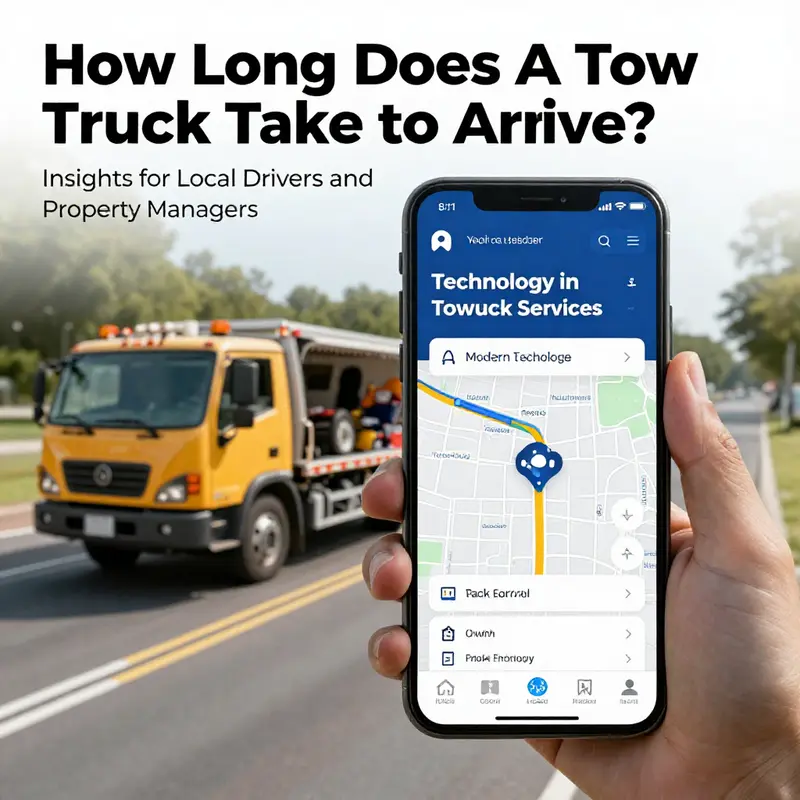
The moment your car falters on a busy street or winds up stranded along a quiet rural shoulder, the clock becomes an unsettling companion. Time stretches as you weigh danger, discomfort, and the practical need to get back on the road. In that precise scenario, the arrival time of tow truck assistance is not merely a number; it is a lifeline, a signal of when you can expect help to be on the scene, and in many cases, how you will maneuver your day for the next hour or two. The shift from rough guesswork to measurable precision has transformed roadside emergencies. Real-time tracking, integrated into modern dispatch systems, turns what used to be a vague estimate into an actionable forecast you can watch unfold on your phone. When you press the call button or tap the booking option, you are not just initiating a service; you are inviting a window into a living map where a vehicle is moving toward you, and that movement is updating every few moments as conditions and choices change on the road ahead.
That shift matters because the timing of a tow is inherently complex. It depends on where you are, how remote the location is, the time of day, prevailing traffic, the current demand for service, and the capacity of nearby fleets. In dense urban cores, the cycle from request to arrival can be compressed to a handful of minutes, especially when a truck is already in the vicinity or the streets permit swift routing. In rural or sparsely populated areas, the same request can require longer lead times as the system searches for the closest available unit, navigates country lanes, and accounts for long-distance travel. Yet even in those less predictable environments, the promise of real-time tracking offers a form of clarity that used to be uncommon in roadside help. Rather than waiting in uncertainty, you can see where a tow truck is, how far away it is, and whether there has been a deviation in the planned route. This visibility does more than calm nerves; it helps you and the dispatcher coordinate the moment of arrival with other plans you may have, from continuing to a safer spot to arranging a ride or a rental car if the situation requires it.
Behind the scenes, real-time arrival estimates come from a collaboration between portable positioning technology and intelligent dispatch logic. Global positioning data feeds every vehicle in the fleet, while each truck broadcasts its status and location back to the dispatch center. The system then computes the ETA by combining several factors: the truck’s current distance to your location, the road network constraints, prevailing traffic, potential delays caused by incidents or weather, and the truck’s service readiness. If a driver encounters a bottleneck—an accident on the interstate, a construction zone, or a detour—the algorithm can reroute in near real-time and adjust the ETA accordingly. The effect is a moving forecast rather than a fixed promise. You get updated well before the truck arrives, and you see the new ETA reflected in your app or text notification. This act of continuous refinement is what shifts a stressful unknown into a dynamic expectation you can manage with more confidence.
The practical value of this system extends beyond mere comfort. It tightens the link between the driver, the dispatcher, and the person waiting for assistance. When you can observe a vehicle’s progress, you can time your actions to maximize safety and minimize risk. If you’re on a busy highway, you can decide whether to stay inside your car or move to a safer location just off the shoulder, with your hazard lights on and your doors locked as a precaution. If you’re in a parking lot or side street, you can clear a path for the approaching tow by pulling over into a safer space or by notifying a family member who might come to assist once the truck is en route. The essence of real-time tracking is not merely seeing a dot on a map; it is a system that helps you coordinate your behavior with precision, reducing confusion and enabling calmer decision-making in the heat of the moment.
From the perspective of the operator, real-time ETA data is a powerful tool for optimizing response times and improving overall service quality. Dispatchers can allocate resources more efficiently when they know exactly where every unit is and how quickly it can be redeployed. If a truck is delayed by traffic or a temporary road closure, the system can automatically assign a nearby alternative unit or suggest a different route, sometimes even preemptively updating customers with a revised ETA before the driver calls in. This kind of nimble adaptability, though invisible to most users, is the backbone of a more predictable experience for those stranded at the roadside. It also helps with accountability. When a customer asks, “How long will it take?” the system can provide a defensible ETA grounded in real-time data, rather than a best-guess estimate that can drift with every mile driven by a human on the other end of the line.
One of the hallmarks of modern tracking-enabled services is the sense of proximity. The ETA commonly falls into a window—often quoted as a range rather than a fixed minute—because it reflects not only a single measurement but a spectrum of possibilities based on current conditions. In urban settings that window may be tight, perhaps within 15 to 30 minutes, signaling the abundance of nearby trucks and the efficiency of urban routing. In rural settings, that same window might stretch to 45 to 60 minutes or longer, reflecting both the scarcity of nearby units and longer travel distances. These ranges are not arbitrary; they arise from ongoing updates that occur as the system learns more about the live situation. If a truck relocates closer to you, the ETA compresses; if a detour becomes necessary, the ETA expands. The reality is that the number you see on your screen is the product of a constantly adjusting equation, a dynamic snapshot of the present rather than a forecast carved in stone.
Where real-time tracking makes the most difference is in how it reshapes expectations and planning. You no longer wait in passive suspense; you watch a process unfold, sometimes with near-constant updates that arrive via push notification or in-app messaging. The experience becomes more humane, less a clock-watching ordeal and more a sequence of concrete milestones. You learn when the truck has left its last waypoint, you see when it is approaching a critical point on the route, and you realize when it has arrived within your immediate vicinity. That sense of progression is not a luxury; it’s a practical aid that helps you decide when to step out to meet the arrival or when to stay put until the vehicle is in position. The ability to track is also a step toward transparency. When a provider can show you the route and the ETA, there is less room for ambiguity about why a delay occurred or how long you must wait. The information becomes a shared asset between customer and mobility provider, a common language built on GPS data and real-time routing.
Of course, real-time tracking does not erase the fundamental uncertainties that road travel imposes. Weather, traffic incidents, and infrastructure limitations can still lengthen the journey. A heavy rainstorm can slow proximal traffic and complicate access to a broken-down vehicle. A multi-car collision can divert several miles of lanes and force detours, changing the dynamics of multiple nearby calls for service. In those moments, the value of the system is not simply that the ETA improves, but that it adapts and communicates the change quickly. The best experiences in this space are those that preserve agency for the caller: you can decide whether to wait where you are, move to a safer location, or arrange alternative transport as the window shifts. The ETA becomes not just a number but a reliable signal that helps you calibrate your plans around a service that is actively working toward you, even as conditions outside the system’s control evolve.
The narrative of real-time tracking is also a reminder of the broader shift toward data-informed service in emergency and roadside assistance. The pipeline that makes a precise ETA possible rests on several layers: the vehicle’s live location, the accuracy of the road network data, the timeliness of the communication channel, and the responsiveness of dispatch operations. All of these layers must interact in harmony for the customer experience to feel seamless. When they do, the moment you realize you are not completely out of options becomes a moment of reassurance. You may still be dealing with a breakdown, but you will also be dealing with a service ecosystem that has embraced visibility as a core value. That transparency allows for better collaboration with responders, insurance providers, and friends or family who might be coordinating logistics from a distance. It creates a more robust safety net around a stressful event, one that respects the time and autonomy of the person waiting for help.
For readers seeking a more hands-on sense of how these systems operate, the practical takeaway is simple: when you book a tow or roadside service in the future, pay attention to the ETA you are given, and look for those apps or platforms that provide live tracking. The moment you see your truck on the map, you stand at the intersection of technology and service, where a complex orchestration of vehicles, data, and people converges to deliver timely assistance. You can also treat the experience as a learning moment about how fleets manage readiness and emergency response in real time. The more you understand that readiness—how fleets anticipate demand, how dispatch adapts to conditions, and how drivers are guided by live traffic information—the more you can appreciate why ETA windows shift in the ways they do and why a relatively short wait in a busy city can feel much more predictable than a longer, more uncertain wait in a sparse region.
If you want to connect this understanding to broader discussions about industry standards, you can explore discussions of readiness and standardization in heavy-duty rescue operations. The blog linked here provides context on the kinds of operational practices that enable fast, reliable mobilization during emergencies, reflecting a discipline that values clarity, speed, and coordination across teams. Santa Maria Tow Truck Blog
In sum, real-time tracking has reshaped the experience of waiting for a tow. It converts uncertainty into a navigable process and reframes the question “how long will it take?” into “here is how the journey unfolds and when I can expect to see help.” It is not a guarantee of instant arrival, but it is a guarantee of accountability and visibility. It is a recognition that the road to assistance is not a single moment but a sequence of events that can be observed, predicted, and adjusted in real time. That is the core value of the modern tow service: a responsive, transparent system that respects your time and your safety, even when the road ahead remains unpredictable.
External resource: https://apps.apple.com/app/drivelo-towing-and-roadside-assistance/id1598437978
null
null
Final thoughts
Tow truck arrival times can vary widely based on location, technology, and service providers. Urban areas typically see faster responses due to higher competition and proximity of resources. In contrast, remote locations present unique challenges that may lengthen wait times significantly. Embracing technology, such as real-time tracking apps, enhances transparency and can ease the nerves during challenging moments. Ultimately, understanding these factors is crucial for anyone who might need roadside assistance, from local drivers to auto shops and property managers. Being informed helps reduce anxiety and ensures you are prepared for unexpected roadside situations.