
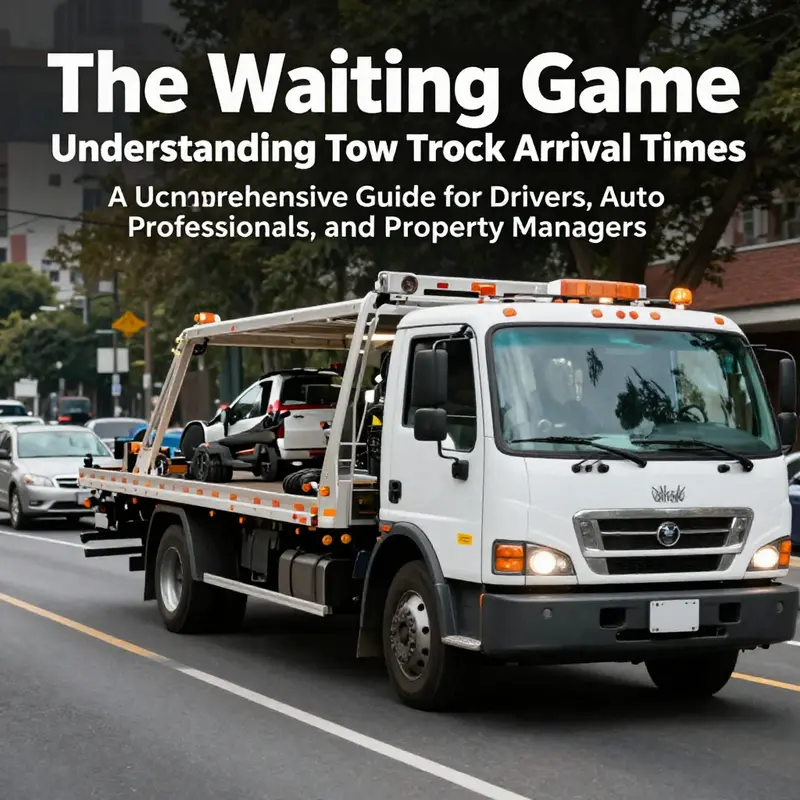
When a vehicle unexpectedly breaks down or encounters issues, time becomes a precious commodity. Knowing how long a tow truck takes to arrive can alleviate stress and help you plan effectively for roadside emergencies. Local drivers, car owners, auto repair shops, dealerships, property managers, and HOA administrators can all benefit from understanding the various factors influencing tow truck response times. This article is organized into five chapters to carefully explore these key elements: the factors influencing arrival times, the differences between urban and rural response times, the role of technology in reducing wait times, how real-time tracking enhances transparency, and strategies for improving response in emergencies. By the end, you will have a holistic understanding of how to effectively anticipate and react to towing situations.
null
null
Between City Blocks and Backcountry Roads: How Location Shapes Tow Truck Arrival Times
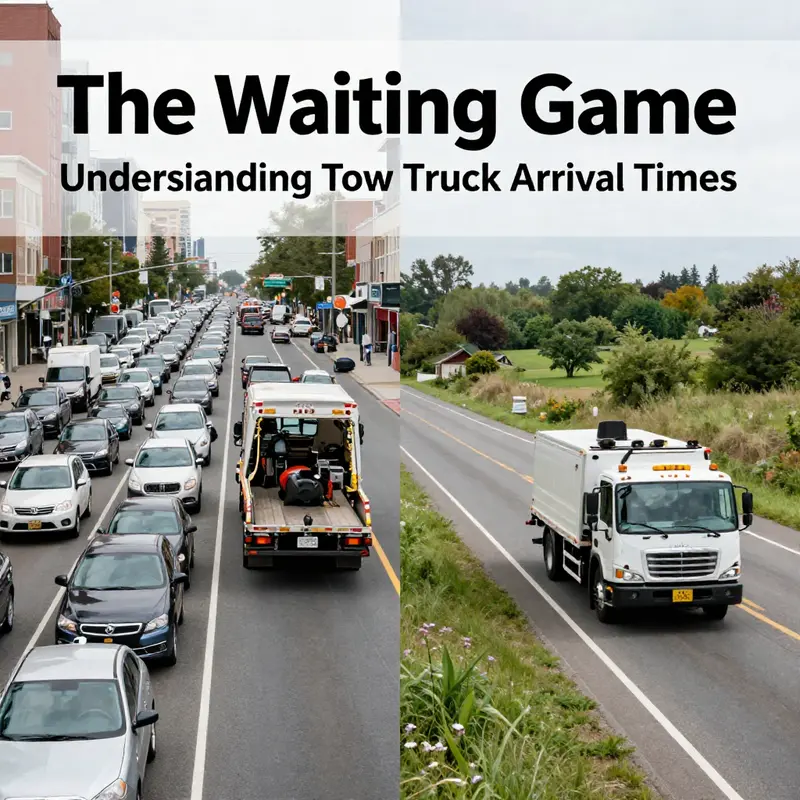
When you experience a breakdown or a flat tire, the clock becomes part of the problem. The question of how long a tow truck will take to arrive is not answered by a single universal number, but by a moving target shaped by where you are, how traffic behaves around you, and how the local network of responders is configured. A clear ETA is not an afterthought; it is the core of how roadside assistance plans manage expectations, reduce downtime, and get you back on the road safely. In urban centers, where the streets tighten into corridors of commerce and the rhythm of the day is a chorus of signals, wait times often hover in a relatively tight band. Dispatch systems prioritize rapid response for high-demand zones, and the trucks themselves are tuned for maneuverability through dense grids and narrow lanes. The urban landscape rewards fleets that optimize routing, stationing, and quick on-scene service, and those factors converge to offer many drivers a wait that feels manageable even during peak periods. The typical urban ETA commonly falls somewhere in the 30-to-60-minute range, with shorter windows possible in well-served neighborhoods and during late-night hours when the streets loosen their bustle. The equipment designed for tight city environments is usually compact and agile, able to thread through traffic and squeeze into tight pullouts or curbside spaces. In addition, many urban providers maintain round-the-clock availability, a feature that keeps the clock spinning in the right direction when midnight arrives and a roadside issue appears in the middle of a sleeping downtown. The continuity of service, the presence of nearby fleets, and the emphasis on rapid dispatch all contribute to a sense of reliability even in the midst of congestion and the inevitable unpredictability of city traffic.
Rural terrain presents a different choreography altogether. Population density is lower, and the distance between service centers can be measured in miles rather than blocks. Those longer distances translate into longer travel times, sometimes extending the wait beyond two hours, especially when the weather turns or road conditions worsen. In the countryside, the roads may be unpaved or steep, and the routes may require slower, more careful driving to preserve safety and protect equipment. Fewer towing vehicles per square mile mean that when a call comes in, the closest available truck might be a solid stretch away. The result is an arrival time that often reflects not just the speed of the driver but the geography of the landscape they must cross. Rural responders may also confront seasonal obstacles—mud from heavy rainfall, frost heaves after winter, or washouts along remote byways—that add another layer of delay. Taken together, the rural experience of tow arrivals typically carries a wider range, with two-hour waits not unheard of, particularly in remote regions or during periods of high demand elsewhere in the system. The difference between urban and rural realities is not simply about miles on a map; it is about how the network of service, terrain, and weather interact to shape every dispatch.
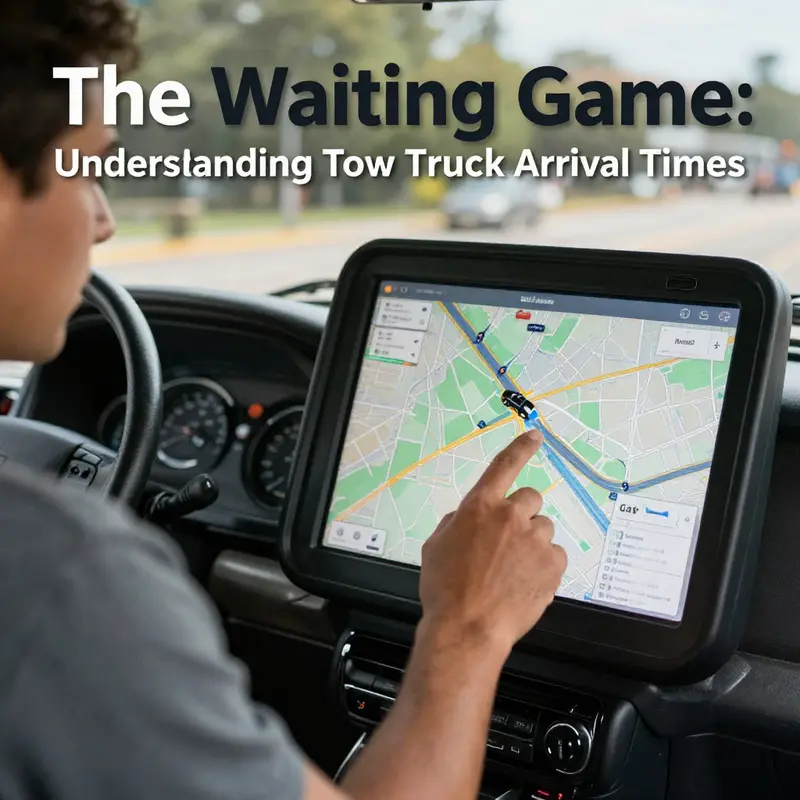
Against this backdrop, a trend that helps drivers regain certainty is the growing adoption of clear ETAs and real-time location tracking. For many roadside services, the moment you submit a request, you receive an estimated arrival time that reflects current conditions, the nearest available unit, and the likely route to your location. Real-time tracking then adds a layer of transparency, letting you watch the tow truck’s progress and receive updates as the driver closes in. The combination of an upfront ETA and live progress updates can dramatically reduce anxiety because you’re not left in the dark while you wait. Importantly, the promise behind these tools is transparency rather than a wandering approximation. When the system shows a truck en route with a projected arrival window, there is a genuine push to honor that window, and any adjustments are communicated clearly as early as possible. In practice, that means your wait is not merely a function of distance and traffic but of how well the dispatching system translates those factors into a dependable forecast. Of course, even the most sophisticated forecasting can meet contingencies—accidents, road closures, or a sudden spike in demand—that shift the math. The key is the visibility you receive and how quickly the dispatcher can recalibrate to keep you informed.
From a driver’s perspective, the texture of the wait is also shaped by how you present your location. Accurate, precise details—your mile marker, nearest cross street, unique landmarks, or even the color and direction of a vehicle you’re parked beside—can shave precious minutes off the response. If you’re in a city, pointing out a well-known intersection or a designated shoulder area on the main artery can help the dispatcher map a faster route and select a unit already in transit through that corridor. In rural settings, where addresses may be sparse and landmarks fewer, the same careful description becomes even more valuable. The more the driver can picture your position before arrival, the more efficient the approach becomes, and that efficiency matters more when every mile traveled adds up over time.
Yet beyond the mechanics of distance and route, the broader philosophy of service design matters. The industry trend toward real-time ETAs and continuous updates is underpinned by the aim to reduce downtime and the vulnerability that roadside incidents create. The promise of upfront timing, coupled with live tracking, supports a smoother experience for drivers, passengers, and bystanders alike. This is why many services invest in rapid booking and immediate dispatch, with contingencies for peak demand or weather-related disruptions. In places where rural roads can test patience with their longer horizons, the emphasis on planning ahead becomes even more critical. Drivers and fleets that recognize the importance of a predictable window for arrival also tend to offer guidance on when to call, what information to provide, and how to stay safe while waiting. For drivers who find themselves stranded, the knowledge that a clearly defined ETA exists, and that there is a mechanism to monitor progress, can transform a moment of vulnerability into a more controlled, manageable situation.
For readers seeking deeper insight into the practical organization of these services, there is value in exploring how providers prepare, deploy, and adjust in real time. The broader narrative across industry coverage emphasizes fleet readiness, emergency responsiveness, and continuous improvement in dispatch logic. You can explore related discussions at the Santa Maria Tow Truck blog, which offers perspectives on how fleets plan for emergencies, standardize responses, and integrate lessons learned into daily operations. Santa Maria Tow Truck blog
Ultimately, location remains the decisive factor in how long a tow truck will take to arrive. Urban areas benefit from a denser network of responders, tighter road layouts that favor quick maneuvers, and around-the-clock operations designed to reduce waiting. Rural areas confront longer distances, more challenging terrain, and fewer resources, which can stretch the clock. The practical effect is that the same question—how long will this take?—often yields different answers depending on where you are standing when you call. In both contexts, the shift toward transparency and real-time tracking is about giving you a clearer sense of the horizon, not masking the reality of delays. It is about turning uncertainty into information and uncertainty into a plan you can work with while you stay safe and visible on the roadside. As you move through this landscape, remember that the arrival time is not a single fixed moment but a forecast that improves as more data becomes available and as the network of responders adapts to the conditions of the moment.
External data sources echo this approach, offering broader benchmarks and guidelines for understanding urban and rural towing response times. For a nationwide perspective on how response times can vary with location, consult external research that aggregates real-world data on towing response windows and the factors that influence them. https://www.aa.com/roadside-assistance/towing-response-times
The Role of Technology in Reducing Tow Truck Arrival Time
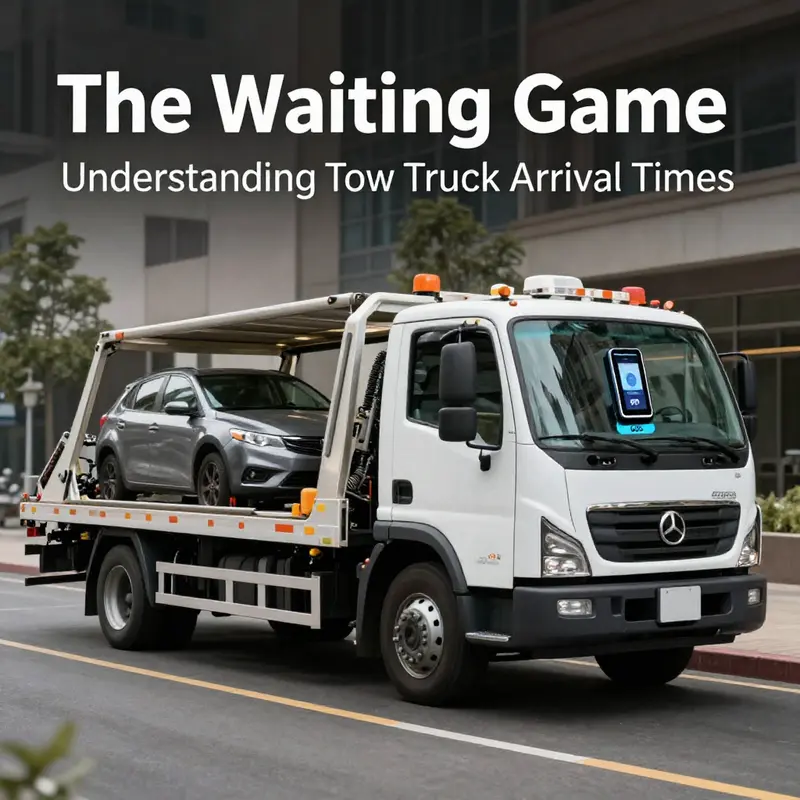
When a vehicle breaks down or is involved in a roadside incident, the clock starts at the moment the call is placed. The core question drivers want answered is simple: how quickly can a tow truck be there? Yet the answer is shaped by distance, time of day, weather, traffic, and the availability of nearby units. What has changed in recent years is how technology converges these variables into a reliable ETA and a streamlined dispatch process. Modern roadside assistance systems do more than simply summon a vehicle; they transform uncertainty into clarity, identify the closest unit, direct it, and guide it to the scene with precision. The result is not just faster service but safer service, with less time spent in unpredictable roadside conditions and more time spent in a secure environment.
At the heart of this transformation is real time location data. Global positioning satellites and on board trackers provide dispatchers with a precise snapshot of where every available tow unit sits. No more rough estimates based on road signs or generic zone mappings. When a request comes in, the dispatcher can determine the nearest and most capable unit, considering payload, equipment, and current workload. This level of precision makes the initial ETA more trustworthy. Rather than a vague window like within an hour, customers receive a concrete projection that can be updated as conditions shift. The clarity from precise location data reduces the cognitive load for drivers and passengers alike, easing anxiety during a roadside delay.
Beyond knowing where the tow truck is, technology optimizes the path it will take. Dynamic routing algorithms analyze real time traffic data, road closures, weather patterns, and incidents that could slow a trip. The path is not static but responsive, bending with the citys pulse to avoid congested corridors and slower alternatives. In urban environments every minute saved matters for safety and for the travelers well being. In rural or remote contexts, where distances can be longer and road conditions variable, intelligent routing can be the deciding factor between a long, uncertain wait and a dependable, timely arrival. The combination of precise location and adaptive routing means the dispatch system is not guessing; it is computing and constantly adjusting to the current state of the road.
The practical effect of these technologies is evident in the way ETAs evolve as a trip unfolds. When a request is placed, a projected ETA appears, giving the customer a baseline expectation. If traffic changes or a truck encounters a new obstacle, the system can revise the ETA in real time and push an update to the customer’s device. This transparency builds trust, especially during emergencies when every minute can feel stretched. Real time tracking does more than reassure the person waiting by the roadside; it helps the tow operator manage the scene more effectively. When the driver can see the incoming unit path and speed, they can prepare their own position on the shoulder, set out hazard markers, and coordinate with other responders or passersby to ensure safe access to the vehicle. In this sense, technology serves both ends of the service chain: it helps the customer know what to expect and helps the technician prepare to deliver service most efficiently upon arrival.
The safety benefits of accelerated and more reliable arrival times are substantial. When a vehicle breaks down, especially at night or on a busy highway, the risk to the driver increases with every passing minute spent waiting on the shoulder. A faster, well coordinated response reduces exposure to moving traffic and adverse weather conditions, and it can prevent further complications such as purse snatching by offering a clear, structured scene for responders. The dispatcher’s ability to estimate time to arrival helps keep the roadside area organized—cones placed, hazard lights activated, and bystanders directed away from traffic—leading to a safer outcome for everyone involved. This is not simply a matter of getting a car towed quickly; it is about orchestrating a safe and efficient service environment where urgency is matched with discipline and preparedness.
Of course, the efficacy of technology driven reductions in arrival time hinges on several practical factors. The quality and recency of data matter: stale traffic reports or weak GPS signals can degrade accuracy. The reliability of the cellular network to keep the driver’s device in constant communication with the dispatch center is essential, as is the fleet investment in capable hardware and software that can ingest and act on data in real time. Operators must balance speed with safety, ensuring that faster dispatch does not translate into reckless driving or unsafe routing. In addition, the human element remains critical. A skilled dispatcher interprets data, understands driver capabilities, and communicates clearly with the customer. The goal is not to rush but to minimize uncertainty while maintaining safety and compliance with traffic laws and industry standards. In that sense, technology is a tool that augments human judgment, enabling a more precise and mindful approach to emergency roadside assistance.
Standardization plays a sizable role in maximizing the benefits of technology driven reductions in arrival times. Uniform data formats, consistent reporting protocols, and interoperable systems across fleets allow for smoother coordination, especially in multi-vehicle incidents or situations requiring multiple service units. The industry has moved toward practices that emphasize emergency readiness, enabling fleets to respond with speed while maintaining rigor in safety and accountability. Readers familiar with fleet wide standards will recognize how such standardization improves predictability for customers and stability for the teams delivering aid.
Ultimately, the trajectory of arrival times in the towing industry is inseparable from the broader evolution of connected mobility. The same digital foundations that guide a ride hailing vehicle or a delivery courier now support a tow truck arriving at a potentially dangerous roadside scene. The ETA, the live tracking interface, and the intelligent routing decisions together create an experience that is not merely about speed but about trust, safety, and clarity under pressure. The result is a service model that respects the urgency of the moment while grounding it in data driven practices, standardization, and continuous improvement. As technology continues to mature, the ETA will become not just a forecast but a dependable guarantee that the moment a driver senses a problem on the road, help is already in motion, making every mile toward readiness a step toward safer roads for all.
Tow Time Unfolded: Real-Time Tracking, ETAs, and the Roadside Rescue Experience
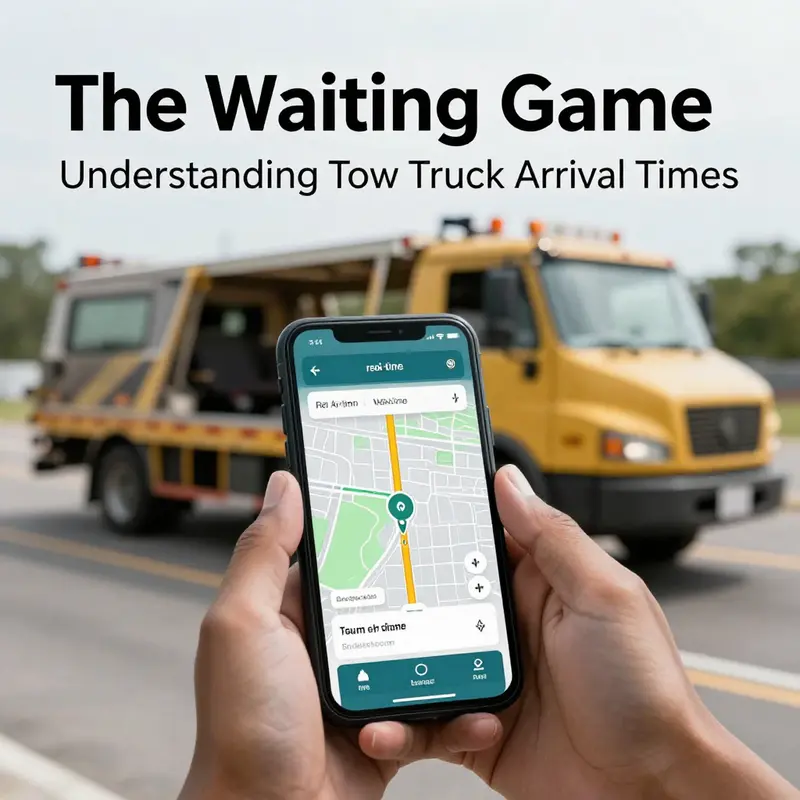
When you are stranded on the side of a highway or a quiet lane after a breakdown, the clock seems to tick louder than the engine. The road is busy or empty, and every decision feels amplified by the wait for help. Modern towing services try to make that wait clearer by sharing an upfront ETA and by updating it as conditions change. The system starts when you place a service request and a dispatcher assigns a nearby tow. The truck then moves toward your location while its position and ETA are shown on an app or a web dashboard. If traffic slows, or another incident blocks a route, the ETA shifts. You get notifications so you can plan, stay safe, and avoid unnecessary wandering.
The key factors shaping arrival times include proximity, traffic, weather, and fleet availability. In dense urban areas, a truck may reach you in 15 to 30 minutes because many vehicles are near and dispatch is fast. In rural regions, the wait can stretch to 45 minutes or more. The technology behind real time tracking lies in GPS enabled dispatch, mobile networks, and cloud routing. As the tow travels, you can watch a moving forecast that updates with every mile. This clarity helps you decide whether to wait in your vehicle, move to a safer spot, or coordinate another ride.
Beyond the numbers, the goal is safety and transparency. Upfront ETAs, proactive updates when delays occur, and a visible handoff when the tow arrives all contribute to a calmer experience. Real time tracking makes it possible to understand not just how long before the tow arrives, but why that timing may shift and how to respond to those shifts. If you want more technical depth, many roadside providers publish overviews of their tracking and ETA logic, including how GPS, networks, and routing data come together to produce timely updates.
In sum, the arrival time you see on screen is a dynamic readout of proximity, road conditions, and fleet activity. It is designed to help you stay safe, make informed choices, and complete your recovery with confidence.
null
null
Final thoughts
In summary, understanding how long a tow truck takes to arrive is not just about clock-watching; it’s about being prepared. Whether you’re a local driver facing an unexpected breakdown, an auto shop needing timely vehicle recovery, a property manager overseeing parking services, or administering HOA guidelines, recognizing the dynamics influencing arrival times can greatly enhance preparedness. The factors influencing these times include location, technology adoption, situational awareness, and efficient coordination by dispatch services. By leveraging real-time tracking and understanding effective response strategies, you can minimize downtime and tackle roadside emergencies effectively. Equip yourself with this knowledge, and you’ll be better prepared for whatever the road throws your way.