
Understanding the cost of tow trucks is crucial for a wide range of stakeholders, from local drivers to auto repair shops and property managers. To make informed decisions about purchasing or hiring towing services, it’s important to grasp the complexities of the market. This article delves into new and used tow truck costs, additional expenses that may arise, influencing factors, and the varying prices by type and capacity. Each chapter is designed to empower readers with knowledge tailored to their specific needs, ensuring that they can navigate the world of towing with confidence.
Buying New: A Practical Cost Guide to Tow Trucks and What Your Budget Really Buys
When you’re budgeting for a new tow truck, the sticker price is only the beginning. A well-chosen purchase aligns vehicle class, equipment, and operating expectations with the realities of everyday towing work. This chapter walks through the true cost picture for new tow trucks, explains why prices vary so widely, and highlights the hidden expenses owners often miss.
What counts as a tow truck depends on who will use it and what it must handle. Light-duty rollback and wheel-lift trucks are built for cars and small SUVs. Medium-duty wreckers bridge commercial and personal needs. Heavy-duty wreckers and rotators handle large commercial vehicles and complex recoveries. Each class carries a distinct price band, and within each band the final cost shifts with cab and chassis choices, towing gear, and factory or aftermarket options.
Base prices for factory-new units can be surprisingly spread out. Entry-level light-duty flatbeds commonly begin at a modest price for a complete truck, but well-equipped urban units often sit in a higher band. Commercial-grade medium-duty wreckers for daily roadside service and car carrier work sit clearly above light-duty models. Heavy-duty trucks, especially those with powerful hydraulic systems and reinforced frames, command a premium. The most advanced machines, rotator-style wreckers with 360-degree booms and multi-ton lift capability, start at a high price and can exceed that by a large margin when you add attachments, remote controls, and enhanced safety systems.
Beyond the factory number there are budget realities. New equipment needs installation of job-specific gear. Winches and hydraulic packages vary greatly in price and capability. Safety signaling, lighting arrays, and control consoles add costs. Electronic systems such as GPS, telematics, and fleet management software introduce recurring subscription fees. Undercarriage reinforcements, upgraded suspensions, and specialized storage for tools and accessories are common options that increase both purchase price and long-term maintenance needs.
Financing and insurance also shape the upfront commitment. Lenders price commercial vehicle loans based on vehicle class, intended use, and residual values. Insurance premiums reflect payload capacity, recovery type, and coverage limits, and can amount to a significant annual cost. Maintenance plans or extended warranties reduce repair risk but add to monthly expenses. When comparing quotes, factor in warranty scope and service networks. A lower purchase price can be outweighed by higher service costs over time.
Operational costs make a large portion of lifetime expense. Heavier rigs use more fuel and need heavier-duty fluids and brakes. Maintenance intervals for medium and heavy trucks are shorter and more expensive than for light trucks. Tires, brake systems, and heavy hydraulic components are wear items tied directly to usage patterns. If your operation includes highway recoveries or long-distance towing, fuel consumption and tire wear will eat into margins faster than in local runs.
Resale value is a practical part of budgeting. Some truck builds hold value well because of standardized equipment and broad market demand. Highly specialized configurations may be harder to resell and can depreciate faster. Standardization within a fleet helps preserve resale value. If you manage more than one truck, prioritizing common parts and shared maintenance routines reduces downtime and supports higher used-vehicle values.
Training and compliance are non-negotiable costs. Advanced machines demand certified operators. Safety training for winch operations, load securement, and incident response is essential. Regulatory compliance may require permits, special registration, or vehicle upgrades depending on local laws. Emergency lighting, signage, and tow operator certifications all create recurring expenses. Investing in operator skill reduces accident risk, lowers liability, and protects equipment value.
Custom options deserve scrutiny. Winch capacity, boom reach, and control layouts directly affect what the truck can do. Choose equipment that matches the tasks you expect, not every feature available. Overbuilding a truck increases purchase and operating costs without proportional revenue benefits. Conversely, underbuilding limits your service range and can cost you in missed work. A pragmatic middle ground balances capability with running costs and the local market’s demand.
Warranty and service access matter more than many buyers realize. A strong warranty can cover high-cost hydraulic or drivetrain failures in early years. Easy access to skilled service technicians reduces downtime. Evaluate the dealer or supplier network and confirm parts availability. In areas with fewer service centers, plan for longer lead times and higher logistic costs for repair parts.
Buying new can make sense when vehicle reliability and downtime avoidance are priorities. New trucks typically require less immediate maintenance and can be tailored to a fleet’s needs. If you decide new is right, prepare to invest in proper spec’ing. Select the right chassis and engine size for the anticipated loads. Specify duty-rated cooling and brakes for repeated heavy towing. Prioritize a robust frame and high-quality hydraulic systems. These choices push purchase prices higher, but they reduce the risk of early damage and expensive repairs.
Used trucks present an alternative for tighter budgets. Well-maintained used flatbeds and wreckers appear at lower price points. But condition varies, and costly repairs can negate initial savings. When evaluating used options, insist on full maintenance history, a structural inspection for frame and boom integrity, and an assessment of hydraulic health. A trusted technician should perform load tests and inspect electrical and braking systems.
Operational planning affects how quickly a truck pays for itself. Estimate revenue per tow, average calls per day, and average distance. Include seasonal demand swings in the projection. Factor in the cost of training, compliance, and insurance into per-job costs. When you account for all expenses, price paid per job defines return on investment, and it can be surprisingly long for high-end machines.
Finally, consider fleet-level strategies. Standardizing equipment reduces spare parts inventory and training needs. Run common hydraulic fittings and compatible winch models across the fleet. Centralized maintenance programs extend component life and provide predictable service costs. Such strategies are especially valuable for agencies and larger operators focused on emergency readiness. For more on preparing fleets for consistent response and maintenance, see this resource on fleet standardization and emergency readiness.
For buyers wanting a market snapshot, manufacturers and industry overviews provide helpful pricing ranges and specifications. These sources can give a realistic sense of new-truck price bands and common configurations. Consult those resources when forming a final budget.
External reference: https://www.towtrucks.com/new-tow-truck-prices-overview/
From Pickup to Powerhouse: Navigating the Used Tow Truck Market and What It Really Costs
Used tow trucks offer a compelling path to expanding a fleet without stepping straight into new-truck price tags. They balance lower upfront costs with the reality that age, wear, and provenance all shape reliability and ongoing expense. The market is not a single price list but a spectrum defined by what the unit is built to do, how much work it has already clocked, and how much preventive care it has received. For buyers, a clear eye on these variables can turn a second-hand purchase into a dependable workhorse rather than a costly worry. In the current landscape, you’ll typically encounter several tiers of used units, each tied to a distinct mission profile and set of expectations about performance, downtime, and total ownership costs. At the base are general-purpose, light-to-midweight units designed for everyday load handling and short-distance recovery. These are often configured as flatbeds or wheel-lifts and are favored by smaller operators or startups aiming to cover routine roadside assistance and urban tows. Prices for a well-maintained, compact flatbed of this class tend to cluster around a 3-ton to 4-ton range, with typical listings in the vicinity of roughly thirty thousand dollars, give or take, depending on mileage, maintenance history, and local market conditions. When you see figures in that neighborhood, it reflects a balance of utility and reliability without the premium features seen in heavier machines.
Beyond the light-duty class sits the heavy end of the used market. Here you’re looking at capacity up to 25 tons, with configurations that are designed for highway incidents, long-haul recovery, and complex extrications. The price band widens considerably in this tier because the equipment itself is more capable and the maintenance implications more significant. A used 25-ton flatbed or equivalent heavy-duty unit can range widely—from the mid-tens to the six-figure realm—depending on the crane or winch system, the crane reach, and the overall structural integrity of the chassis. Factors such as the rated capacity, hydraulic system condition, and the presence of advanced stabilization and safety features can push a acquisition from the lower end toward a much higher cost, even before freight and commissioning are added. It’s not unusual to see price anchors around twenty-something thousand dollars on the low side for a serviceable larger unit, climbing toward eighty to ninety thousand dollars for a carefully maintained machine with robust wear history and a solid service record. In practice, buyers find that the difference between a repair-prone unit and a dependable workhorse is often a matter of meticulous inspection and verified maintenance records.
Then there are recovery and commercial-spec machines, the true specialists. These are designed for the most demanding incidents, where operators need extended reach, heavy lifting, and sophisticated control systems. In used markets, such units are frequently purchased on a case-by-case basis, with pricing keyed to the customization level, the history of incidents they have supported, and the availability of spare parts and skilled technicians. Because these configurations may be tailored to a specific fleet’s workflow, sellers often provide pricing only upon request, accompanied by a detailed equipment roster and condition report. This emphasizes a broader truth about used tow trucks: the more specialized the capability, the more critical it is to verify the underlying condition with a professional inspection and a clear maintenance trail. As buyers compare options, they should weigh the incremental value of added lift capacity, extended reach, or faster recovery cycles against the accompanying maintenance and insurance costs that come with heavy-duty gear.
The numbers tell a part of the story, but the market dynamics shape the rest. Demand has shown steady resilience, aided in part by an appreciation for machines that can reliably handle common roadside tasks without the immediate need for a new-build budget. In many regions, units sourced from markets with a reputation for longevity—places known for well-maintained, serviceable fleets—remain especially attractive. While origin can influence perceived reliability and residual value, the true driver is documented maintenance and a verifiable usage history. Prospective buyers should look for transparency around service intervals, hydraulic system tests, and any evidence of structural upgrades or past accidents. A used unit is only as good as its upkeep, and a clear maintenance trail offers both peace of mind and a defensible valuation when negotiating.
As you weigh the economics, it’s important to remember that the sticker price is only part of the total ownership equation. Freight charges, import duties if you’re purchasing from overseas, and any needed modifications to meet local regulatory requirements all add to the bottom line. Warranty offers, even if limited, can also tilt the calculus in favor of one purchase over another by shifting some risk away from the fleet operator. Budgeting for after-sales support matters just as much as the price tag. A unit with strong supplier backing, readily available parts, and a clear service network can save weeks of downtime and a disproportionate share of maintenance costs over the life of the truck. In practice, buyers often begin with a base price spectrum aligned to the unit’s capacity and age, then layer in expectations for service, parts availability, and regional regulatory compliance to arrive at a realistic first-budget estimate.
For those who want more context on current market options and pricing, the landscape can feel opaque without direct sourcing and inspection. A fundamental step is to request a detailed condition report, which should include the vehicle’s hour meter (if applicable), mileage, codified service history, and a logged record of any major repairs or overhauls. It is equally important to assess the mechanical health of critical systems: the chassis frame, steering components, braking systems, hydraulic pumps, winches, and cranes. A practical inspection checklist helps; look for signs of uneven wear, frame welds that appear compromised, cracked gussets, or corrosion at structural joints. Check the hydraulic lines for leaks and the winch cable for fraying or kinks. Confirm that the crane control system is responsive and that all safety interlocks function as intended. The goal is to separate cosmetic improvements from genuine mechanical reliability, because maintenance history often predicts future reliability far more accurately than a glossy brochure.
Price guidance can be helpful, but context matters even more. For example, a 3-ton general-purpose flatbed with a clean service record and minimal downtime is typically priced around the mid-thirties when new; in the used market, that same capacity unit tends to settle near the upper range of the low tens to upper twenties if it has low hours, strong maintenance, and a clean accident history. A larger, heavily used heavy-duty unit with consistent service can be found for a broader spread. Some listings show values in the twenty-thousands for older, well-kept machines, while others push toward the upper end of the five- or six-figure range for units that have recently undergone refurbishment, include newer safety electronics, and carry documented uptime near standard operating hours for a fleet. The key is to translate those price points into an accurate forecast of ongoing costs: anticipated repairs, part availability, and the potential downtime associated with seasonal or urgent work. A unit may seem affordable upfront, but if it requires frequent hydraulic repairs or crane rebuilds, the long-term economics may tilt away from affordability.
A critical, often overlooked factor is the origin and support ecosystem for the used unit. Buyers increasingly value machines that come from origins with established service networks and readily available parts. This reduces the risk of long downtimes waiting for specialized components and can shorten the path to full operational readiness. Even within a well-priced unit, you should weigh the cost of import paperwork, freight, and any required pre-delivery inspections that your local regulations might necessitate. If a seller can pair the unit with a limited warranty—say a 12-month cover on major hydraulics or structural components—that can further mitigate the risk of high, unexpected repair bills. When evaluating a deal, consider not just the price but the total cost of ownership you anticipate over the first few years of operation, including maintenance, insurance, fuel, and potential license fees.
To help with decisions, buyers often turn to the broader market literature and supplier catalogs, then cross-check with real-world chatter from fleets in similar markets. An internal reference point is useful: a general-towing unit of modest capacity can deliver dependable service with prudent maintenance, while a larger, more capable unit demands a tighter maintenance regimen and a larger reserve for capital improvements as it ages. A thoughtful approach combines a careful inspection, a transparent maintenance history, and a disciplined forecast of recurring costs. When you align these pieces, the used-tow-truck option evolves from a speculative bargain into a strategic asset that can sustain a growing operation without straining cash flow.
For ongoing guidance on fleet readiness and best practices in acquisition, consider consulting fleet-management content from the site’s blog, which offers practical perspectives on upkeep, safety, and emergency-readiness planning. Santa Maria Tow Truck blog
External resource for price context and supplier details: https://www.alibaba.com/product-detail/Brand-New-Sinotruck-HOWO-6X4-10wheel1600722934242.html?spm=a2700.galleryofferlist.pproductGalleryList.1.6a3b5d2fDcVJwB
Beyond the Sticker Price: Calculating the True Cost of Owning and Operating a Tow Truck
When you plan to enter the tow-truck business or expand an existing fleet, the sticker price on a new rig can be the smallest piece of a much larger equation. As of early 2026, the market reflects a spectrum of configurations designed to tackle everything from urban recovery to long-haul, high-risk incidents. The price you see at the lot or on a supplier page is only the opening line of a longer financial story. To understand what it really costs to acquire and run a tow truck, you have to look at how capacity, technology, maintenance, and operating conditions fold into your bottom line. The initial price ranges are a useful guide. Light-duty tow trucks, built to handle sedans and small SUVs, can begin at about twelve thousand eight hundred dollars in basic configurations, often flatbed or wheel-lift designs that suit routine city calls and short-distance recoveries. These are the machines most often seen in local service areas, operating in tight spaces and keeping throughput steady. For mid-range and heavier work—vehicles with greater lifting power, crane capability, and enhanced recovery features—new models commonly sit in the thirty-two to thirty-five thousand dollar zone when they roll off the factory floor. Think of configurations that are designed for highway incidents, accident response, and the more demanding on-ramp, off-ramp environments. At the top end of the new market, the most capable rotator tow trucks command prices from roughly one hundred fifty thousand dollars up to three hundred thousand dollars or more. These high-end units, with rotating booms and substantial lift capacities, are reserved for overturns and extreme terrain where precise maneuvering and rapid deployment are critical. They reflect not just raw power, but the integration of advanced electronics, safety systems, and redundancies that keep operators and the public safer during complex recoveries. In practical terms, those pricing bands map to what you get in terms of capability, reliability, and the anticipated volume of work. Yet the decision to buy is rarely about a single vehicle. A growing fleet must balance acquisition cost with the useful life of the asset, the depreciation profile, and the cash flow required to sustain ongoing operations. That means a careful look at total cost of ownership, not just the purchase price. The market for used tow trucks adds another dimension. A well-maintained used flatbed can fall somewhere between twenty-five thousand and sixty thousand dollars, depending on age, mileage, equipment included, and overall mechanical condition. Older or highly specialized units can fall below twenty thousand, but those purchases carry higher risk in terms of reliability and the potential for expensive repairs. For any buyer, the age and condition of the winches, cranes, hydraulics, and safety systems become a central factor in estimating future repair costs and downtime. The price you pay upfront is only the beginning. Beyond the vehicle itself, there are ancillary costs that accumulate quickly and quietly. Equipment such as winches, dollies, axle pads, and safety gear may be added to the base price, and each item carries its own lifetime and maintenance schedule. A robust system of safety and compliance—light bars, audible warnings, GPS tracking, and fleet-management software—adds ongoing monthly or annual costs, even if you already own the truck. Then there is the reality of licensing and insurance. Commercial vehicle insurance that covers towing operations can run several thousand dollars per year, depending on location, driving records, the size of the fleet, and the scope of services offered. Maintenance is another major line in the budget. Taller, heavier machines drink more fuel, demand more frequent servicing, and require specialized technicians for routine inspections, oil changes, hydraulic work, and safety checks. All of these factors—fuel, maintenance, and the tangibles of equipment—compound over the life of the truck. When you put all these pieces together, a straightforward price tag becomes a more complex financial picture. The vehicle type and its weight class drive the core costs. Heavier rigs require stronger towing assemblies, more powerful hydraulics, and larger engines. The labor costs associated with operating and maintaining a heavy-duty fleet rise with the complexity of the equipment. Location and demand also matter. Urban areas can drive higher utilization rates and more rapid depreciation due to higher usage, but they can also mean longer wait times and increased fuel consumption as drivers navigate congested streets. Rural or remote areas may incur longer travel distances and higher travel costs to reach a job, even if the hourly rates are lower. Time of day remains a practical multiplier. Emergency or after-hours towing commands premium rates in many markets, sometimes up to double standard fees, to reflect the urgency and the sensory load on responders during tough conditions. The best way to approach pricing is to forecast around a total-cost perspective. If you are planning to enter the market or expand a fleet, you should model scenarios that include purchase or financing costs, insurance, licensing, ongoing maintenance, fuel, and the cost of any optional equipment that improves safety and efficiency. In turn, these numbers inform the pricing you offer clients and the margins you need to stay solvent through seasonal fluctuations. For those who want a structured guide, the broader landscape of towing costs emphasizes not only the raw price of the vehicle but also the services you bundle into a client engagement. Think about whether your operation emphasizes routine local calls, regional transfers, or high-stakes recovery work. Each focus changes the cost calculus. If you are examining a potential purchase, it helps to compare not only the price of a single unit but also the cost per mile of operation, the projected maintenance interval costs, and the anticipated revenue per call. A well-planned fleet strategy also allows for diversification—having both light-duty and heavy-duty specialist units can optimize utilization. In practice, a balanced mix supports a broad service footprint while spreading risk across different revenue streams. The decision to pursue new vs. used stock hinges on cash flow and risk tolerance. If immediate capabilities are essential and capital is available, a new unit offers the latest safety technology, longer warranty coverage, and potentially lower downtime. If cash preservation and shorter timelines matter more, a carefully selected used unit can fill a critical gap, provided it comes with a comprehensive inspection that confirms the integrity of the hydraulic systems, winch, and structural components. Pricing and procurement strategies should also consider financing options. Some buyers secure favorable terms by aligning purchase decisions with seasonal demand cycles or fleet upgrades tied to regulatory changes. In any case, it pays to inventory the ancillary costs alongside the sticker price and to maintain a forward-looking maintenance plan that minimizes unscheduled downtime. To deepen understanding of how these factors influence pricing in practice, you can explore broader guidance on how towing costs are composed and navigated. For context, see the extended discussion on Understanding Car Towing Costs. This external resource provides a framework for thinking about base fees, emergency charges, long-distance premiums, vehicle type impacts, and add-on services as you build a pricing strategy that reflects both market realities and your business goals. As you consider where your operation fits within the market, it is worth noting that real-world pricing will vary by supplier and region. Even within the same configuration, you may encounter differences in freight, delivery, and warranty terms, which can all shift the effective cost of ownership. If you want a practical starting point for benchmarking, begin with a clear specification list—weight class, lifting capacity, and essential features such as a crane, winch, and safe operation controls. Then compare at least three quotes that include not only the base price but delivery, installation, and required safety gear. In parallel, review the ongoing costs you will bear as the fleet ages: expected maintenance cycles, parts availability, and the reliability of service networks in your area. This approach helps you avoid surprises and makes it easier to present transparent, defensible pricing to customers. For readers seeking additional perspectives on how these choices play out in real operations, consider the broader material available on the Santamaria Tow Truck resource hub, which provides context on fleet standardization and emergency readiness. You can explore more at santamariatowtruck.com/blog/. Understanding the full cost picture empowers managers to price services competitively while preserving margins under varying demand. Finally, keep in mind that the numbers here reflect market snapshots and typical configurations from early 2026. If you need precise, real-time pricing for a specific region or configuration, contact multiple suppliers to obtain formal quotes that include all mandatory fees, delivery timelines, and after-sale support. For scholars and practitioners who want a structured reference, the Roadside Assistance cost framework offers a rigorous way to map base fees, surcharges, distance-based rates, and service add-ons. External resource: Understanding Car Towing Costs. https://www.roadside.com/towing-costs
Tow Costs Demystified: What Drives the Price From Flatbeds to Rotators
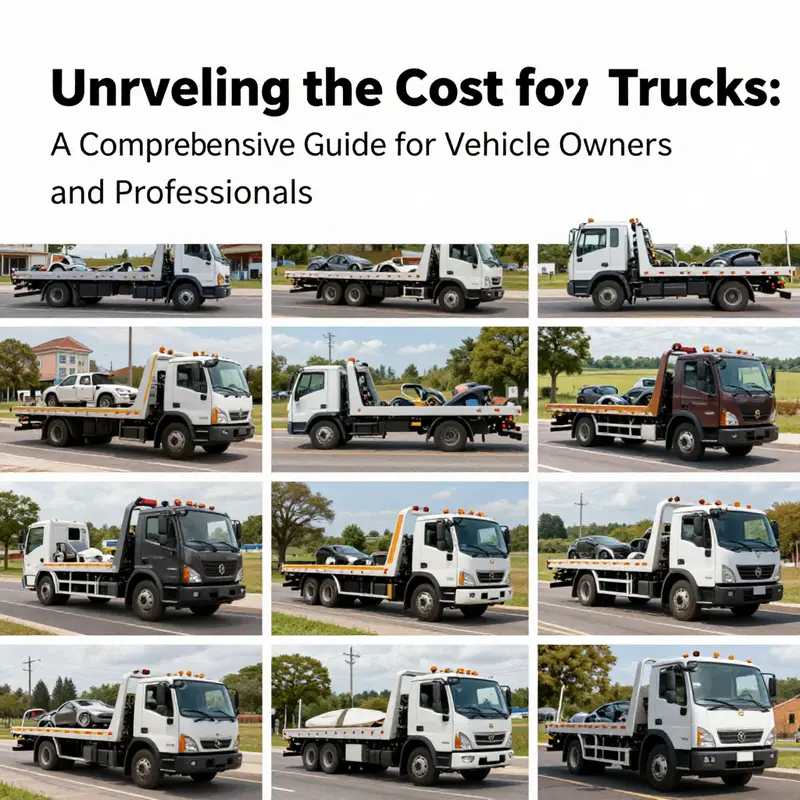
When a vehicle breaks down on a busy highway or a collision leaves a street littered with debris, the immediate impulse is to get help fast. Yet behind the urgency lies a web of price factors that can make a tow feel like a mystery purchase rather than a straightforward service. Towing is not a one-size-fits-all operation; it is a logistics task that scales with the type of vehicle, the distance to the recovery point, and the kind of gear required to move safely and efficiently. Understanding what drives the final price helps drivers brace for bills, negotiates more fairly, and clarifies the decision when a fleet owner is weighing the costs of owning versus outsourcing tow capacity. This chapter pulls back the curtain on the most influential cost levers, from the kind of tow truck used to the time of day when the call comes in, and it does so with current market context that reflects late 2025 and early 2026 trends. It is a window into why two tow jobs of similar distance can come with notably different price tags, depending on circumstances beyond the driver’s control.
The most conspicuous line item in the price ledger is the equipment itself. Tow trucks come in several broad families, each with its own cost silhouette. Light-duty tow trucks, designed to handle sedans and small SUVs, begin at relatively modest price points. Basic flatbed or wheel-lift configurations often start around $12,800 when purchased new. This price point serves many local towing outfits that operate in urban environments, where the volume of short hops can justify a compact, fuel-efficient roster. The next tier covers medium and heavy-duty tasks, where the vehicle needs greater heft, a more robust powertrain, and stronger recovery tools. New models in this category typically run roughly from $32,100 to $35,200, reflecting the added complexity of cranes, winches, and longer reach. These are the workhorses of highway recovery, capable of handling larger passenger vehicles and light commercial equipment in routine-to-advanced roadside scenarios.
At the peak of the spectrum sit rotator tow trucks, the most capable and costly of modern recovery gear. A rotator’s value is driven not only by its lifting capacity but by its rotating boom, which can reposition a vehicle without multiple hookups. The price here is substantial: many rotator configurations land in the $150,000 to $300,000+ range, depending on lift height, reach, stabilization features, and control systems. While not every incident requires a rotator, the advantage is clear for complex recoveries, overturned vehicles, or hazardous locations where precision and speed can reduce risk and liability for operators. It is this combination of high capability and specialized equipment that makes rotators among the most expensive single purchases a towing business can undertake. Conversely, the used-truck market offers relief for buyers with tighter budgets. A well-maintained used flatbed or wheel-lift unit is often priced between $25,000 and $60,000, with older or specialized units occasionally dipping below $20,000. The condition, mileage, and the extent of the equipment—like wheel lifts, dollies, or ground-rolling gear—strongly influence price and long-term maintenance costs.
But owning the truck is only part of the total equation. A fleet owner’s or operator’s cost picture grows with a bundle of necessary add-ons that keep the vehicle compliant, safe, and ready to respond. Equipment purchases may be complemented by winches in a wide price range, roughly $3,000 to $10,000 for a capable unit, along with add-ons such as tow dollies, axle pads, and a disciplined inventory of safety gear—cones, vests, and flares. Then there are safety and compliance systems that help a tow operation run reliably: light bars or warning lighting, sirens where legally required, GPS tracking, and fleet-management software that can optimize dispatch and route choices. Each of these items compounds the upfront cost and, more subtly, the ongoing operating expense.
Beyond the hardware, legitimate business costs shape the final bill in tow scenarios. Commercial insurance is a nontrivial annual anchor for operations, reflecting the risk profile of heavy equipment, roadside exposure, and the possibility of property damage or personal injury. Insurance premiums can add thousands each year and are a reminder that the apparent sticker price of a truck is only part of the annual financial picture. Maintenance and fuel form a second, ongoing load. Larger trucks burn more fuel and require more frequent routine servicing to ensure safety and reliability on the road. The consequences of neglect can show up as downtime, expensive repairs, or reduced payload efficiency, all of which push per-ride costs higher over the life of the equipment.
What ultimately governs the price of a tow isn’t simply the truck’s sticker price. It is the specific mission at hand. The vehicle type and weight directly influence how the job is performed. Heavier, bulkier vehicles demand stronger tows, heavier cables, and sometimes specialized gear to protect tires, transmissions, and undercarriages. Heavy trucks, commercial vans, or all-wheel-drive vehicles cannot be hauled with the same approach as a compact car; the labor, time, and equipment requirements escalate accordingly. This reality in turn feeds into the hourly or per-mile pricing that customers see, and it helps explain why a tow for a small sedan may be substantially cheaper than a rescue operation for a commercial vehicle in the same neighborhood.
Location matters as a multiplier, too. Urban settings carry higher base rates because of insurance, labor competition, and the cost of maintaining a ready fleet through dense traffic patterns. Rural areas, while perhaps offering lower base costs, pose a different challenge: longer drives to reach a disabled vehicle and longer distances between repair shops or impound lots. The geography of a tow comes with regulatory and logistical considerations, including paperwork, permissible towing routes, and in some cases local price controls, particularly around impounds or law-enforcement-related movements. These local realities can tilt the balance between a straightforward recovery and a more expensive, time-consuming operation.
Time of day and service urgency play a decisive role as well. Emergency or after-hours calls often command premium fees because the dispatcher must mobilize resources outside standard hours, manage higher labor costs, and expedite a response when every minute matters. The premium for after-hours service can easily add a quarter to half again the base rate, and accident scenes or hazardous locations frequently incur additional charges due to the specialized safety risk management required. The combination of distance, weight, urgency, and regulatory context creates a pricing landscape that can vary dramatically from one incident to the next, even when the distance traveled looks similar on paper.
For people who want to go beyond buying a truck and think about the long-term health of a towing operation, it’s useful to connect the dots between the cost of equipment and the business practices that support a fair, predictable pricing model. A well-planned fleet strategy often centers on standardizing equipment across the fleet to reduce maintenance complexity and training time. It also considers emergency-readiness in the sense of how quickly the fleet can mobilize, which gear is stocked for common scenarios, and how dispatch and route planning can minimize idle time. A practical step for operators who are mapping this path is to study the broader framework described in the industry literature on fleet standardization and emergency readiness. This is captured in resources that discuss how fleets deploy consistent equipment, training, and procedures to improve response times and pricing clarity. See the related material on fleet standardization and emergency readiness for a deeper look at how a tow business aligns hardware, personnel, and processes to reduce cost per tow while maintaining safety and compliance. fleet standardization and emergency readiness.
Even with the most robust planning, the numbers can still feel opaque to customers outside the industry. A practical approach to budgeting for towing needs—whether you’re an individual driver or a fleet operator weighing ownership versus outsourcing—begins with the recognition that distance is the most significant driver of price. A short five-mile tow may come with a base hook-up fee and a predictable per-mile rate that keeps the total well under a hundred dollars for a typical consumer. A longer haul, say fifty miles or more, quickly climbs into three figures, and that’s before adding after-hours surcharges or any extra mileage, which can push the bill higher. Some companies publish tiered distance brackets to give customers a sense of how the cost scales, but others still present a single base rate plus mileage. In every case, asking for a transparent, line-by-line estimate before the tow begins protects against surprise costs and gives customers the opportunity to compare quotes.
While the price tags on equipment are substantial, they must be weighed against the operational realities of a towing business. A new light-duty truck represents a substantial but reasonable investment for urban responders who need reliable performance and a modest footprint. A medium- or heavy-duty purchase is more appropriate for operators serving regional routes, with the capability to handle a wider spectrum of vehicles and accident scenes. A rotator, while expensive, becomes a strategic asset when the job requires lifting, rotating, and positioning vehicles in challenging environments. The used market offers a lower entry point for shops expanding capacity, though it carries greater risk related to wear, reliability, and maintenance history. In the end, the cost of tow service is a composite picture of asset investment, ongoing operating costs, and the strategic choices about when to own, when to lease, and when to subcontract.
For readers focused on the economics of the towing industry or the decision calculus of fleet ownership, it helps to frame the conversation around value rather than price alone. A lower upfront cost might come with higher maintenance risks or shorter remaining lifespan, while a higher upfront investment could yield dependable service, lower downtime, and a more predictable dispatch profile over years. The balance point varies by market, by vehicle mix, and by the capacity to manage ongoing maintenance and compliance. In every scenario, the objective remains the same: deliver safe, timely, legal, and cost-conscious service that protects motorists and reduces the total cost of ownership over the life of the fleet.
External resource: https://www.aaa.com/automotive/towing-costs
Tow Truck Cost Demystified: Reading Price Across Type, Capacity, and Use
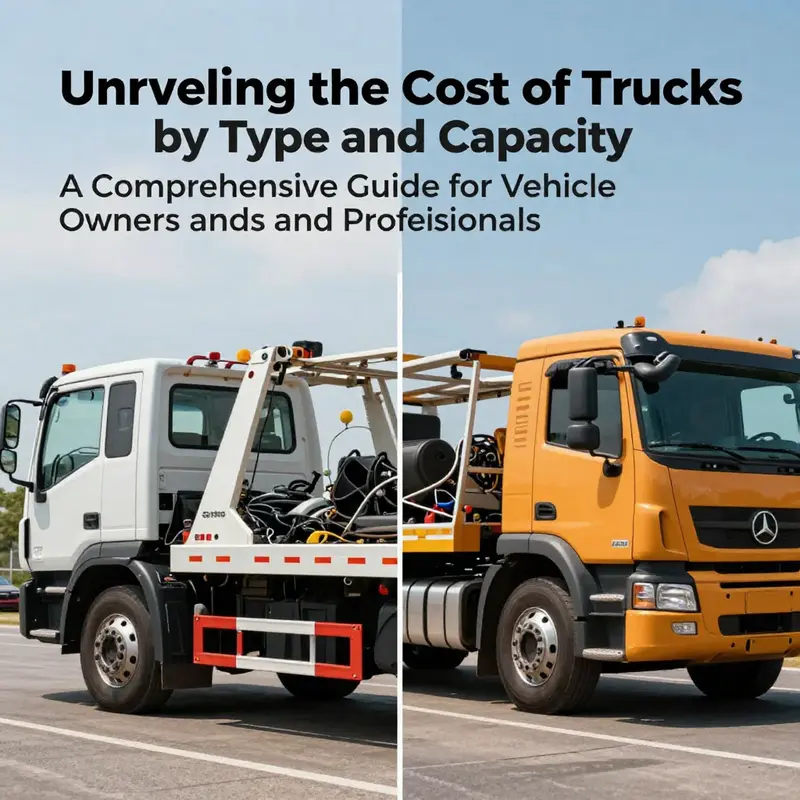
Price questions about tow trucks rarely have a single answer. The cost you encounter depends on the kind of vehicle, its lifting and pulling capacity, the design of the bed or crane, and the additional equipment that makes a unit ready for real-world recovery work. In practice, buyers move along a spectrum from compact, light-duty units suitable for urban calls to heavy-duty machines built to haul and recover large trucks on highways or at industrial sites. The numbers you see in market listings reflect this spectrum, and they can shift with regional demand, the time of day, and whether the truck is new or used. For someone evaluating what it might cost to outfit a small towing operation, a municipal fleet, or a roadside assistance service, it helps to anchor expectations to the broad categories of cost and to understand the logic behind the price levers rather than chasing a single sticker price.
When we map price to type, the first signal is size and capacity. Light-duty tow trucks, which typically handle sedans and small SUVs, sit on the lower end of the price curve. In many markets, new light-duty units commonly register in the range of twenty thousand to forty thousand dollars. This is not a hard floor everywhere—some entry-level configurations or promotions may dip below twenty thousand—but the mid to upper end of this band is where most buyers will find a combination of reliability, a hydraulic lift, an extendable boom, and basic recovery tooling that keeps daily operations efficient in urban settings. Moving up a notch, medium-duty tow trucks, designed for larger passenger vehicles, SUVs with heavier payloads, and light delivery vans, generally command a higher price. Those rigs typically fall in the forty-thousand to seventy-five-thousand-dollar zone for new configurations. It is not unusual for buyers to choose double-cab layouts, more robust winches, longer booms, and higher-rated axles in this category, all of which contribute to a noticeably improved recovery capability and service versatility.
The next tier—heavy-duty tow trucks—opens the door to the realm where stability under load, hydraulic power, and balanced weight distribution matter most for large vehicles, buses, and industrial assets. In most markets, new heavy-duty models fall from about seventy-five thousand dollars to well past one hundred fifty thousand dollars, especially when the equipment includes heavy lifting mechanisms, advanced safety and electronic controls, and specialized chassis configurations designed for highway and off-road tasks. While this range captures the bulk of new-order pricing, the premium end can climb even higher when manufacturers stack in features such as enhanced braking systems, integrated fleet management interfaces, and crane configurations that optimize multi-point lifting or overturn recovery under demanding conditions.
Alongside the traditional truck-and-crane combinations, flatbed tow trucks occupy a distinct position in the pricing landscape. Flatbeds are valued for their ability to transport vehicles without the risk of tire damage or undercarriage intrusion, which makes them a staple in professional fleets and dealership service. A new flatbed tow truck typically runs from about eighty thousand to one hundred sixty thousand dollars, with the bed size, lift capacity, and whether the build is standard or customized having a strong influence on the final figure. The higher end of that range usually corresponds to larger bed lengths, greater power for loading heavier or longer vehicles, and additional features such as drive-on/drive-off mechanisms or integrated alignment systems to reduce tire wear during transport.
Articulated tow trucks—those that combine a crane with a flatbed or dolly system for flexible recovery—sit at the top end of the price spectrum. These machines are engineered for versatile, multi‑step recoveries in challenging environments. New models often start around six figures and can extend toward the two-hundred-thousand-dollar mark or beyond, depending on crane reach, lifting capacity, electronics, and safety systems. The appeal here is not just raw lifting power; it is the ability to maneuver and stabilize awkward loads, re‑position the vehicle, and perform complex recoveries in tight or hazardous sites. That capability, in turn, justifies the higher upfront cost for fleets that need to handle a broad range of incidents with a single, adaptable platform.
The conversation about price is incomplete without addressing used tow trucks. A well-maintained, lightly used flatbed or wheel-lift unit can offer substantial savings compared with new machinery. Typical price ranges for used equipment vary with age, mileage, and condition, but a solid pre-owned flatbed or light-duty unit often lands in the twenty-five to sixty-thousand-dollar window. Older or specialized units can dip below twenty thousand, yet buyers should plan for a thorough inspection, possible component refreshes, and early maintenance costs that can offset initial savings. The decision to buy used vs. new hinges on risk tolerance, the reliability of the vehicle in service, and the availability of parts and service in the local market.
Beyond the sticker price, the total cost of ownership for tow trucks balloons with essential, ongoing expenses. The most visible recurring costs are fuel and routine maintenance, but these are amplified in larger trucks that require specialist service, more frequent tire and brake work, and tougher components. Equipment costs are not trivial either: high-quality winches, heavy-duty dollies or toe‑plates, axles pads, and safety gear can run into thousands, depending on the required performance level and compliance needs. Then there is the cost of safety and compliance systems—emergency lighting, sirens for some jurisdictions, GPS tracking, and fleet-management software that helps coordinate dispatches and monitor utilization. These systems add not only to the purchase price but to annual operating expenses through licensing, updates, and subscription fees.
Registration, insurance, and regulatory costs also shape the ultimate price tag. Tow truck operators often need commercial insurance with coverage suited to mobile service work, storage liability, and potential cargo or equipment coverage. The premiums can be substantial, particularly for fleets that operate across multiple jurisdictions or undertake high-risk recoveries. Maintenance cycles matter in this context as well. Larger trucks pull more fuel, require higher-capacity cooling systems, and demand regular inspections to avert costly downtime after a breakdown. A practical rule of thumb is to budget a conservative maintenance reserve that scales with vehicle size and annual mileage, since larger machines accumulate wear faster when they are deployed across varied scenarios—from congested city corridors to long highway runs.
Price is not the only determinant of value. Fleet managers and owners often weigh the expected utilization against the upfront investment. A lighter unit might excel on a routine local call speed, fuel efficiency, and lower annual maintenance cost but would fall short when faced with a heavy, multi-vehicle incident that requires a robust crane or a longer reach. Conversely, a highly capable heavy-duty or articulated unit offers performance headroom and the flexibility to tackle complex recoveries but will require careful scheduling to maximize return on investment and to justify the higher daily operating costs. In markets with high urban density and frequent call volumes, a more capable fleet may reduce downtime and drive greater overall productivity, which can tip the balance in favor of higher upfront costs.
Another layer of complexity comes from location and service timing. Urban areas with high demand can see premium pricing for after-hours or rapid-response towing, sometimes doubling standard rates. This reality should be anticipated when cost modeling for a fleet or a roadside assistance program. The same logic applies to longer-distance towing or cross-region dispatches, where travel time and fuel contribute to price variance. In rural or regional markets, while base rates might appear lower due to lower overhead, extended travel can quickly erode that advantage. The bottom line is that price ranges are guides, not guarantees, and actual quotes will reflect the specific staffing, equipment, and service commitments a business offers.
Building a reliable cost picture also means looking at how fleets prepare for emergencies and standardize equipment. The emphasis on readiness ties directly to budgeting, maintenance planning, and the ability to respond with appropriate tooling across a spectrum of incidents. For readers who want a practical lens on how fleets manage this balance, see Fleets Emergency Response for insights into how standardization and preparedness influence total cost of ownership and service outcomes. That link helps connect the numbers here to the real-world decision-making that fleets perform every day when evaluating purchase, lease, or upgrade options.
For those who want to anchor pricing in a broader market context, a careful review of external pricing resources can be helpful. Industry guides and market summaries point to a wide range in pricing, reflecting regional demand, equipment specifications, and the mix of new and used inventory. A comprehensive pricing guide from an industry site compiles model types, capacities, and typical price bands, offering a useful benchmark as buyers compare proposals from dealers and manufacturers. External references provide a broader perspective on where a given quote sits within the market, and they can help buyers negotiate confidently knowing the common baselines and the exceptional cases that push prices above or below the norm.
The practical takeaway is simple: when evaluating tow trucks, start with type and capacity, then layer in the equipment, safety, and compliance needs that make sense for your operation. A small urban service will justify a different mix than a regional fleet handling highway incidents and heavy loads. Price discovery should include a consideration of total cost of ownership, not just the initial price. And when in doubt, consult multiple sources and request detailed quotes that break out the chassis, bed or crane, winches, safety gear, and the ancillary systems you’ll rely on every day. This approach helps ensure that the chosen asset can meet the work profile, while the financial plan remains sustainable over the vehicle’s life cycle. For a broader discussion of how fleets align pricing with readiness and operation, refer to the linked internal resource on fleet standards and emergency response. It offers context on how equipment choices feed into daily operations and long-term budgeting.
External reference: For a deeper dive into model and capacity-based pricing, see Tow Truck World’s pricing guide: https://www.towtruckworld.com/tow-truck-pricing-guide
Final thoughts
Navigating the world of tow truck costs requires understanding various elements influencing pricing, from new and used options to additional expenses and vehicle types. Whether you are a car owner, an auto repair shop, or a property manager, these insights will empower you to make informed decisions. Recognizing the nuances in pricing will help you budget effectively and select the right towing solutions when needed.