

The role of a tow truck driver carries a significant impact on both local automotive services and emergency road situations. With the growing need for reliable towing services, understanding how much these vital professionals earn is essential for several stakeholders including local drivers, auto repair shops, dealerships, property managers, and HOA administrators. Across the globe, the earnings for tow truck drivers can differ substantially, influenced by factors such as geographic location, industry demand, and employment type. This article delves into the specific earnings of tow truck drivers in Canada, the United States, and Australia, exploring regional salary variations and the factors that contribute to their earnings. By gaining insights into these financial aspects, stakeholders can make informed decisions regarding towing services, partnerships, and employment opportunities.
Pay on the Road: How Tow Truck Drivers Earn Across Canada, Provinces, and Roles

When you hear the dispatch buzz and the muffled whirr of a tow truck engine waking at 2 a.m., pay is not just a single number. It’s a patchwork shaped by location, the type of assignment, and how a driver navigates the line between service and risk. In Canada, the average hourly wage for a tow truck driver hovers around the mid-teens, but those numbers hide a spectrum of realities that shift with the locale, the employer, and the nature of the work. As of December 11, 2025, the national average sits at about $17.75 per hour, based on hundreds of reported salaries. That single figure masks a landscape where some drivers earn in the high teens in one city and push into the twenty dollar range or higher in another, with owner-operators and specialized recovery roles climbing even further still. The picture becomes clearer when we move from national averages to regional details and the job types that actually exist on the road.
Consider the provincial and urban variations. In British Columbia, the baseline is modest by some standards, with many drivers earning around $17.85 per hour on average. Yet in a few cities, pay climbs noticeably. Richmond, for example, emerges as one of the higher-paying pockets in Canada, where average hourly wages have been reported near $24 per hour in recent data. This isn’t only about the city’s cost of living; it’s about demand, fleet size, and the type of towing work that dominates in a region with busy ports, dense traffic, and around-the-clock call volumes. Across the province, Vancouver and nearby cities often track close to the provincial average, but the rhythm of shifts—on-call nights, weekends, and holidays—can lift effective earnings through overtime or on-call differentials.
Ontario shows a similar delta. Thunder Bay consistently sits at the top of the national list in several surveys, with average hourly rates well above the national baseline. Ottawa also lands high, signaling that the capital’s commuter patterns and seasonal surges contribute to higher pay. In Western Canada, Edmonton tends to be strong as well, reflecting a robust industrial service sector that relies on rapid response for accidents and vehicle recoveries. Winnipeg’s numbers stay competitive, underscoring the demand in a market that blends urban callouts with rural hauling into the transportation ecosystem. Nova Scotia adds another layer of nuance: Halifax often reports higher pay relative to nearby Dartmouth, illustrating how metropolitan hubs can lift wage scales, even in a relatively small labor market. Dartmouth, by contrast, can be significantly below the provincial mean, reminding us that distance from urban demand matters just as much as the province’s general wage floor.
Beyond the regional averages lie concrete earnings stories that give color to the numbers. In Canada, a typical full-time tow operator can fall anywhere between roughly $40,000 and $97,000 per year depending on the employer and the scope of duties. A median figure around $60,000 is a useful benchmark for drivers who work a steady schedule in a mid-sized market and handle a mix of standard to heavy-duty towing. The gap between the mid-range and the ceiling often hinges on the structure of the job: fleet roles with predictable shifts versus owner-operator arrangements where the driver shoulders equipment costs, maintenance, insurance, and fuel, but can pursue higher-margin recoveries and specialized services. In some instances, an experienced driver in a high-demand region might push toward six figures, especially when vehicle recovery involves complex, multi-axle operations or long-distance towing.
Hourly pay, of course, is not the whole story. Some firms pay above the average hourly wage, with rates climbing into the mid-to-high $20s or even exceeding $30 per hour for tasks requiring specialized equipment, rapid response, or hazardous conditions. A few wage snapshots show the spectrum clearly: one firm might average around $26.50 per hour, another specialized service up near $32.80 per hour, and yet another setup offering pay that, combined with overtime, can yield substantially higher annual earnings for those willing to work demanding shifts. These figures reflect a mix of payroll models and the realities of on-call life: a tow driver’s schedule is rarely a tidy 9-to-5, and shifts often stretch into nights and weekends, increasing the opportunity for overtime pay or on-call premiums.
Then there is the possibility of owner-operator status. In that setup, a driver may control a small business that provides towing services to a fleet or to individuals. The upside is the potential to earn well above the typical wage if the operator can balance operating costs with volume and efficiency. It’s a model that rewards experience, relationship-building with clients, and the ability to navigate insurance, licensing, and maintenance with discipline. But it also carries risk: expenses like fuel, tires, wear and tear, and the costs of a heavy-duty vehicle could swallow parts of a margin that would otherwise appear as take-home pay for an employee. For some drivers, owner-operator status is a route to earning in the six-figure realm, assuming steady work and favorable contract terms. For others, it reinforces the message that earnings are deeply contingent on local demand and the reliability of the client base.
What do these figures mean for a person weighing a career in towing? They suggest that earnings in this profession are less about a single national number and more about a map of opportunity. In cities with dense traffic, a high volume of callouts, and a robust industrial footprint, hourly wages tend to be higher and the chance for overtime increases. In more rural areas, the base rate can be more modest, but the need for reliable service remains constant, sometimes making on-call work particularly lucrative when it comes to time-and-a-half or after-hours pay. The provincial landscape matters, too. Provincial minimum wages set floor levels, but towing jobs, almost everywhere, operate above those floors due to the specialized skills, risk, and irregular hours involved. As a result, the pay for a tow truck driver can be seen as a reflection of three dynamic forces: (1) market demand in a given urban center or region, (2) the nature of the job—whether it is a standard fleet assignment, a heavy-duty recovery, or a specialized service—and (3) the business model of the employer, whether a traditional fleet, a rapidly growing independent operation, or a longer-standing service with a regional footprint.
From a practical standpoint, what does this mean for someone entering the field or planning a move? It means starting with the data and then mapping it to personal circumstances. If you want a wage near the national average, look for steady shifts within a medium-sized city where call volumes are predictable and the fleet is well managed. If you’re aiming much higher, consider markets with consistent demand for heavy-duty towing, vehicle recovery, or disaster-resilience support, where the hours may be long but the payouts can reflect the extra effort. If you’re drawn to autonomy and the potential for higher earnings, the owner-operator path is worth investigating, provided you’re prepared to bear the responsibility for equipment, maintenance, licensing, insurance, and the business management side of things. And as with any career, ongoing training and the development of specialized skills—such as multi-axle disabled-vehicle recovery, winching in difficult terrain, or rapid response in emergency scenarios—can tilt the scales toward higher pay over time.
For readers seeking deeper context or personal stories that illustrate how these numbers play out, a visit to industry-focused conversations can be illuminating. In a broader sense, learning from ongoing discussions in the field can help you gauge what’s possible in your own locale. For readers who want to explore related insights and the daily realities of this line of work, a dedicated industry blog offers narratives that bridge the gap between numbers and experience. Santa Maria Tow Truck blog provides a window into the lived experiences of drivers, dispatch decisions, and the practicalities of managing a towing operation in a dynamic market. This kind of resource helps calibrate expectations and informs a practical approach to building a career in towing.
Taken together, the Canadian picture of tow truck driver earnings is a mosaic rather than a single portrait. The average sits in the mid-teens nationwide, but the paint is applied with broad strokes: higher wages in key urban markets, significant variation from city to city, and a meaningful split between traditional employee roles and owner-operator models. The numbers from recent years show both resilience and seasonality in the demand for towing services, a reality that means earnings can wax and wane with weather, road conditions, and the ebb and flow of traffic volume. If you’re weighing the field, think of pay as a function of location, type of service, and the business framework in which you work. The road to higher earnings isn’t about chasing a single salary target; it’s about aligning your skills, your work rhythm, and your location with opportunities that maximize the value you bring when the call comes in, night or day.
For those who want the most up-to-date snapshots, the market is always shifting with new job postings and changing regional demand. And as you consider moving between provinces or adjusting your specialization, remember that the numbers are best interpreted in context. They tell you what is possible, but they don’t tell you everything about daily life on the road—the sleep, the physical demands, the moments of relief between calls, or the satisfaction of helping someone in a tough situation. If you’re curious about the current range and how a specific area stacks up, it’s worth checking recent postings and speaking directly with local employers or drivers who know the terrain. And for a broader sense of how the industry is evolving—from fleet practices to emergency readiness strategies—explore the linked resources and the ongoing conversations that shape the work, one call at a time.
External resource for the latest salary ranges: https://ca.indeed.com/career/tow-truck-driver/salaries
How Much Does a Tow Truck Driver Earn in the United States?
The pay landscape for tow truck drivers in the United States combines predictable elements with a wide spread of variability, driven by location, employer type, and the exact duties of the job. When you scan job postings and salary surveys, a core figure pops out: the average hourly wage hovers around twenty dollars per hour. Specifically, a recent synthesis of Indeed salary reports shows an average hourly wage of 21.14, derived from roughly 4,000 salary postings collected over the past three years up to December 2025. That single figure travels with a reasonable level of confidence because it comes from a broad base of experiences, including roadside assistance, accident scene work, storage yard towing, and heavy-duty recovery. Translating that hourly rate into a yearly income for full-time work yields a practical portrait of earnings close to 80,000 dollars a year, a figure that aligns with the broader economy around semi-truck towing and heavy-duty recovery work in the United States. This is not a ceiling but a representative midpoint that sits between the lower extremes of on-call, part-time, or weekend-only work and the higher end of more demanding assignments and specialized fleets.
To add a broader frame of reference, consider the general trucking sector’s weekly base compensation. Across all truck-driving roles surveyed on Indeed, the average weekly base pay lands around 1,736 dollars. The range is wide, spanning from about 840 dollars at the lower end to as high as 3,588 dollars at the upper end. Though this broader figure covers a spectrum of driving duties—from local delivery to long-haul and specialized transport—it helps illuminate where tow truck driving sits in the labor marketplace. Tow work is typically less predictable and may involve irregular hours, on-call shifts, and exposure to hazardous conditions, all of which influence both the base pay and the total compensation package.
The numbers matter, but they tell only part of the story. The real-life earnings of a tow truck driver hinge on a combination of factors that a single national average cannot capture. Geography is a major driver. Urban areas with dense traffic, high accident rates, and 24/7 roadside demand tend to offer more opportunities for on-call rides, after-hours dispatches, and flexible shifts. Large metropolitan regions often come with higher posted rates to offset the cost of living, the intensity of workload, and the need to maintain a fleet of on-street responders. Conversely, rural or low-traffic regions may see steadier but lower demand, which can compress hourly wages and reduce opportunities for overtime or premium placements.
Within the United States, the type of employer and the nature of the towing tasks also shape earnings. A company that runs a mix of roadside assistance, accident recovery, and fleet support may offer a broader set of shift options and uniform pay scales, while independent operators or small local shops sometimes present more variance in pay, with opportunities for per-call bonuses or higher hourly rates on specialized calls. In some markets, heavy-duty towing—think large trucks, buses, or machinery—entails additional training and certification, and those qualifications often come with the possibility of higher hourly rates or per-job premiums. The combination of on-call time, night and weekend shifts, and the risk profile of work all feed into the final take-home figure.
Education, licensing, and safety credentials also influence earnings. Tow truck drivers who hold advanced certifications for heavy-duty recovery, winching, or hazardous materials response may access higher-tier assignments and premium dispatches. Some employers emphasize safety incentives, equipment familiarity, and rapid response times as part of bonus structures, which can lift effective earnings beyond the base hourly rate. The operational realities of towing—like the need to secure a scene quickly and safely, navigate traffic, manage passenger interactions, and document incidents for insurance and law enforcement—underscore that pay is not merely a function of time on the road but of skill, reliability, and risk management.
The compensation landscape is also shaped by the level of responsibility assumed by the driver. A tow operator who also supervises a small crew may earn more through supervisory pay or overtime on long jobs. Those who perform heavy-duty recovery or winching at difficult angles, winch-line maintenance, or specialized rigging can command higher rates. In addition, some employers structure pay to reward efficiency and volume—per-call pay for quick dispatches, incremental dispatch bonuses for fast turnarounds, or mileage-based pay in certain fleets. On the flip side, entry-level drivers or those working for smaller outfits may see slower pay growth as they accumulate experience and prove themselves on the road. This dynamic is common across many trades in the transportation sector.
Yet the raw numbers must be interpreted alongside the realities of work-life balance and risk. Tow truck work is intermittently demanding, with exposure to weather, traffic incidents, and potential hazards at scenes. The safety protocols required to mitigate those risks are not just a moral obligation but a practical driver of pay. Fleets that invest in robust safety training, modern equipment, and predictable dispatching often report better retention, higher job satisfaction, and, ultimately, more stable earnings for their drivers. The presence of a modern fleet, well-maintained tools, and a disciplined emergency-response framework can convert what looks like a volatile pay landscape into a more reliable earning trajectory over time.
For readers seeking a bridge to practical expectations, the numbers point to both opportunity and variability. The six-figure potential is not the typical path, but it is within reach for drivers who work in high-demand markets, accumulate advanced certifications, and consistently handle more complex calls. In many of these cases, drivers who stay with a single employer for several years may see incremental raises tied to experience, performance, and broader company pay scales. An important caveat, however, is the role of on-call requirements. A driver may remain on a stretched schedule during peak demand weeks, while quieter periods may bring fewer dispatches and steadier hours but with corresponding changes in overall earnings.
From a broader industry lens, the U.S. wage picture for tow truck drivers sits comfortably within the spectrum of skilled trades that prize practical know-how, reliability, and a calm, strategic approach to difficult roadside situations. Compared to general labor markets, towing combines hazard exposure with the satisfaction of delivering rapid solutions in moments of crisis. The payoff—in both money and professional pride—depends on a blend of location, employer strategy, and the willingness of the driver to engage in the often-unseen rhythms of emergency response work. The data from Indeed underscores a realistic expectation: about $21 per hour as a base, with meaningful upside in certain regions and with certain employers.
To connect this discussion to the lived experience of readers who might be weighing a tow truck career against other driving pathways, consider the broader context of the transportation sector in the United States. The same salary data set that covers tow truck work also illuminates the range of possible outcomes for drivers involved in delivery, regional trucking, and long-haul operations. Tow work tends to offer a mix of predictable dispatches with bursts of high activity, meaning earnings can scale with the immediacy and urgency of the work. For someone who values flexibility and variety, the transportation job market can be a compelling match, especially when shaped by careful career choices—such as targeting high-demand metropolitan zones, pursuing advanced lifting and recovery credentials, and seeking employers with transparent pay scales and strong safety cultures.
If you want a concrete touchstone for where to begin, a practical step is to compare postings in your target region and note the reported hourly rates, shift differentials, and any available overtime or per-call bonuses. The numbers aren’t a guarantee, but they provide a map of possible outcomes. For those curious about how a specific locale stacks up, exploring local wage data and talking to current drivers can reveal nuances that national averages cannot capture. And if you’re exploring the broader ecosystem of how tow truck operations align with safety and readiness, you can drill down into related topics on the internal resources that discuss fleet standardization and emergency readiness, as well as what to do when your truck is held hostage during a roadside encounter, which occasionally ties into the broader question of operational pay and risk. See the internal blog for more context on fleet practices and safety protocols.
For readers who want to anchor these numbers in real-world sources, the Indeed Salary Survey on Tow Truck Driver Pay in the U.S. (Updated December 2025) provides the most comprehensive, up-to-date snapshot of earnings and the distribution of pay across regions and job types. The data points are not guarantees of a fixed salary; they reflect the range of pay reported by thousands of drivers and the reality that compensation evolves with market demand and individual qualifications. External resources such as this offer a useful counterpoint to local anecdotes and help set realistic expectations for a career that sits at the intersection of service, risk, and rapid problem-solving. External resource: https://www.indeed.com/salaries/tow-truck-driver-salary
null

null
Regional Rates on the Road: Reading Tow Truck Earnings Across Regions
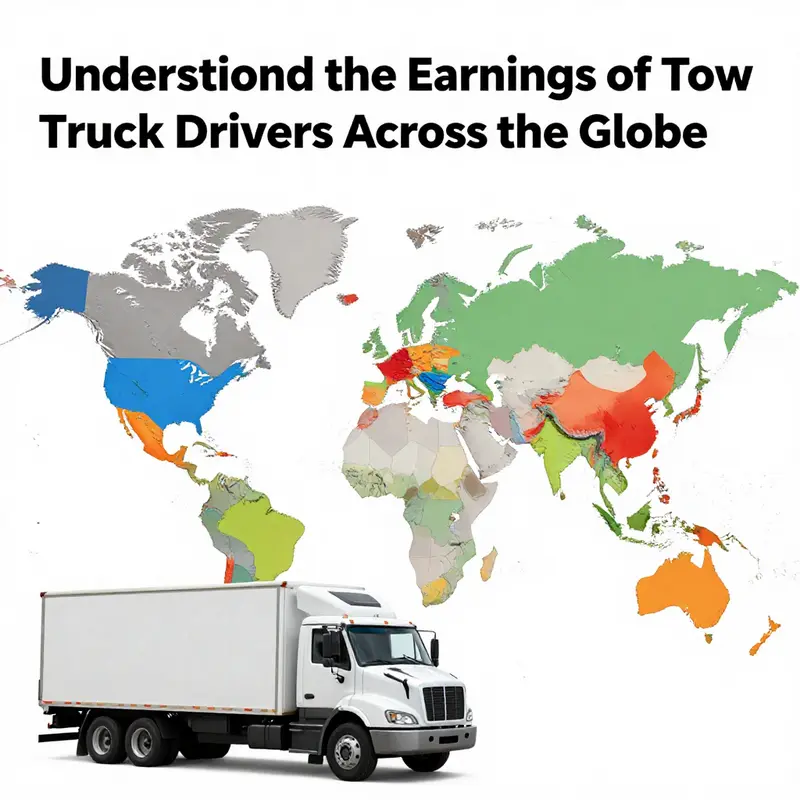
Tow truck work sits at an odd intersection of service, risk, and local economics. The numbers you hear about earnings are rarely a single flat rate; they look more like a map, with wages shaded by what a region needs, what its people can pay, and how often the roads demand a quick, reliable rescue. The central truth is simple: regional context matters as much as the role itself. A driver working in one city can earn more per hour than a colleague in a neighboring town, while another driver in a distant province might pull in more money per week due to different scheduling patterns and demand rhythms. This chapter follows that map, using widely reported data to illustrate how earnings diverge across regions, how those differences are shaped by living costs and market needs, and what a driver can do to translate regional nuances into better pay without losing the stability that comes from steady work. In the United States, the most recent snapshots show an average pay around the high teens to low twenties per hour, but the variation within the country is anything but uniform. The national average sits near the mid- to upper-twenty-dollar range in some contexts, but the real story is in the margins: urban hubs with dense traffic, high vehicle ownership, and constant emergency calls versus more sparsely populated areas where demand is lower but competition for each job is lighter. The overall message is practical: you cannot assume a single number will apply everywhere; instead you must understand the mix of demand, competition, and cost of living to gauge what a job in a given market might pay. This chapter uses the latest available data to map those differences and to offer insight into how a driver can navigate them with strategy rather than luck. For readers who want broader industry perspectives, the Santa Maria Tow Truck Blog provides a centralized space for ongoing discussions about market conditions and operational realities. See the Santa Maria Tow Truck Blog for more context on how market dynamics play out in real-world tow operations. https://santamariatowtruck.com/blog/
Across the United States, the headline figure is roughly $19.93 per hour on average, a value that aligns with thousands of recent job postings over the last three years. Yet averages can be deceptive. In big metropolitan markets—New York City, Los Angeles, Chicago, and their peers—drivers commonly earn more per hour or per job, especially during peak periods or emergencies when dispatch demand spikes and the probability of a faster turnaround increases. In such cities, the combination of high service demand and the willingness of customers to pay for urgent help can lift the effective earnings for a given shift. However, the flip side is impairing: higher living costs, more expensive vehicle maintenance, insurance, and the general expense baseline for workers who must travel to far-flung callouts within a dense service area. The math isn’t just about the rate per hour; it’s about how far that rate has to stretch to cover day-to-day expenses and the typical hours that a driver can secure over a pay period. In some cases, drivers in major urban centers also work more hours, taking advantage of overtime opportunities or peak-demand windows that, while taxing, can push take-home pay above the standard rate. Rural regions tell a different part of the story. Fewer calls on average can shrink weekly earnings, but the occasional high-rate assignment—perhaps a long-distance tow or a roadside service in a remote area—can boost pay per job. In regions where a single provider is scarce, drivers may encounter higher flat-rate fees for certain services, which translates into higher earnings per incident, even if the total number of calls remains modest. For many drivers, the decision to work in a rural or small-town setting is a deliberate trade-off: steadier, predictable call volume with moderate rates versus the possibility of larger per-job payouts when a nearby customer is willing to pay a premium for rapid service. These dynamics create a practical tapestry for someone evaluating the job as a long-term career, not just a quick payday.
If you shift focus to Canada, the pattern broadens but follows a familiar logic: national averages give a sense of scale, while local markets reveal the real range. In Canada, the national average hovers around $17.75 per hour, but the dispersion is pronounced. In British Columbia, for example, the typical pay is around $17.85 per hour, with notable city-by-city variations. Richmond, a hot market in BC, shows a significantly higher average of about $24.06 per hour, reflecting dense urban demand and the premium customers pay for quick service. Other large centers in BC and beyond—Vancouver, Victoria, Surrey, and North Vancouver—tend to cluster near the broader provincial average, yet pockets of higher earnings exist where demand spikes and capacity remains tight. Across the prairies and central Canada, several cities report strong earnings: Thunder Bay, Ontario, and Ottawa bring in the upper teens to mid-twenties per hour, and Edmonton, Alberta, sits near the mid-twenties per hour as a rule. Winnipeg also sits above the Canadian average at roughly $23 per hour, underscoring the regional variation that can occur even within a single country. The Atlantic region shows its own contrasts: Halifax pays better on average than Dartmouth, where wages lag the national Canadian average by a material margin. Halifax’s rate—around $27.39 per hour—highlights how coastal cities with busy transport networks and acute demand for on-call services can push earnings higher. It is not unusual for particular employers or regions within a province to offer even more, sometimes reaching toward the upper end of the $30s or higher, especially if the job involves complex rescues, hazardous conditions, or extended travel requirements. The takeaway for Canada is similar to the United States: the regional picture matters as much as the job title. In both countries, urban markets with dense vehicle traffic and a high frequency of incidents tend to offer greater earnings opportunities, while rural markets can be steadier in hours but slower in pay unless the operator commands premium rates or handles specialized, longer-distance work.
The numbers from the other side of the world reinforce that regional variation is a global constant in tow work. In Australia, for instance, the New South Wales market shows paid rates that translate to roughly $32.70 per hour when averaged over a standard 39-hour workweek, equating to about $1,264 per week. Australia’s model—an hourly wage expressed through a relatively stable but longer weekly schedule—illustrates how different regulatory and labor-market frameworks shape earnings. In this case, a strong wage floor and structured shift patterns help maintain a high hourly rate when averaged out, even as the workload fluctuates with seasonal demand and weather events. These cross-border comparisons are valuable reminders: the job pays more in some markets not merely because of higher base rates but because the surrounding costs, regulatory expectations, and service expectations push the price of timely roadside assistance higher. The idea that “regional variation” is merely a small bump on a national statistic is misleading; the practical effect is that a driver’s paycheck reflects a complex intersection of market demand, living costs, regulatory environments, and the available pool of towing service providers.
When one looks at the practical numbers tied to actual pay, the range becomes more tangible. In Canada, some operators report annual incomes in the range of fifty thousand to eighty thousand dollars for full-time work, especially in busy urban centers where call volumes are high and the demand for rapid response is consistently strong. In places like Surrey, BC, earnings can approach the upper end of the per-hour spectrum, with some roles paying as much as $39.50 per hour in favorable conditions or with specific on-call arrangements. Across provinces, this translates into a real mix: higher hourly rates compensate for busy urban corridors, while provincial or federal standards determine the minimum expectations and benefits that accompany the job. In the United States, the national average of about $19.93 per hour sits within a broader canvas where metropolitan hubs exceed that baseline while rural areas may fall below it. On average, a tech-enabled dispatch environment can help drivers optimize earnings by directing them toward high-demand windows and proximity-based opportunities, enabling more efficient matching of supply to urgent demand. The practical upshot is that the career earnings potential is not fixed; it unfolds through the driver’s ability to navigate the map—identifying when and where to work, the calls likely to come in, and the ability to adapt to sudden demand spikes in a given region. Even in markets with slower pace or lower density, strategic scheduling and relationship-building with local businesses can yield repeat work, stabilizing earnings across the week or month.
To translate these regional patterns into actionable guidance, drivers should view earnings as a function of three interlocking factors: market demand, cost of living, and efficiency. Demand is the most visible driver: urban centers with high traffic volumes, dense commercial activity, and frequent emergencies naturally create more dispatch opportunities. Cost of living matters because it shapes what is needed to maintain a reasonable standard of living; higher living costs can accompany higher pay, but not always the proportion needed to offset those costs. Efficiency comes from the driver’s ability to reduce downtime, optimize routes, and select the most financially advantageous calls. A driver who can consistently minimize idle time and maximize productive mileage will push earnings higher without increasing hours. In practice, this means a willingness to adapt: accepting more work during peak times, staying flexible about callout destinations, and using dispatch tools to anticipate where the next high-paying call might originate. It also means building local knowledge—understanding which lanes, neighborhoods, and service clusters yield the most reliable income—and nurturing professional relationships with local garages, insurers, and roadside assistance providers who prefer fast, trusted responders. While platform features can help, they are not a substitute for situational awareness and strategic planning. A well-informed driver will actively compare market conditions, watch weather patterns, and consider seasonal shifts that alter demand. Those who do so can effectively monetize regional dynamics rather than letting them dictate their income passively.
For readers seeking deeper context, the regional narrative is complemented by official labor-market statistics and ongoing industry trends. In the United States, the Bureau of Labor Statistics provides a formal framework for wages by occupation and region, which helps corroborate the macro patterns described here and can guide a driver’s budgeting and career planning. External resources can be a useful anchor when weighing a move to a new market or deciding whether to pursue additional certifications or specialized services that command premium rates. As a final note, the overall takeaway is clear: earnings vary by region, and the savvy driver uses that variation as a map rather than a trap. By understanding the local market, living costs, and the rhythm of demand, a tow truck operator can align work patterns with opportunities and improve lifetime earnings in a way that a single national average cannot capture. External data and local market intelligence together form the best compass for planning a viable, satisfying career in towing. For official regional wage data, see the U.S. Bureau of Labor Statistics and related industry analyses: BLS.
Earnings on the Move: How Experience, Location, and Market Demand Shape Tow Truck Pay

When people ask how much a tow truck driver earns, they expect a single number. But pay in this field is not a fixed dial tuned to one setting. It is a mosaic built from many pieces: experience, the place you work, the kind of calls you handle, and how often your schedule aligns with peak demand. Across borders and regions, the numbers drift with economic tides, but the underlying pattern remains consistent: those who gain efficiency, skill, and access to high-demand shifts tend to move up the pay ladder faster than newcomers who are still learning the ropes. In Canada, the national average hovers around the mid-teens to low-twenties per hour, and even here the gaps are pronounced. As of late 2025, the national hourly average is about $17.75, with British Columbia nudging slightly higher at roughly $17.85 per hour. In the most active pockets of the province, like Richmond, pay climbs noticeably, with reported averages around $24.00 per hour. That lift is not random; it reflects higher volume, more complex calls, and a cost of living that makes dispatchers push for compensation that mirrors the intensity of the workload. In other Canadian hubs, such as Thunder Bay and Ottawa, earnings top $25 per hour, while Edmonton and Winnipeg hover in the mid- to high-twenties at their best. The range is wide enough that a full-time driver in one city can feel the pinch of a lean week, while a colleague in a neighboring province racks up premium hours and overtime that tilt the annual take much higher. In the end, the Canadian picture shows the same arc that governs many trades: rate scales up with demand, and urban markets—where roads are busier and incidents more frequent—tend to offer higher floors than sparse rural regions. The practical upshot is this: if you are considering a tow career in Canada, looking at the local market dynamics is as important as the hourly rate figure itself. It matters not just what the needle says on a paycheck stub, but how many hours you can realistically work, how often you’re on call, and how reliably your employer can route you to high-volume periods.
Across the Atlantic, a different rhythm sets the tempo. In the United States, the national average sits a bit higher, around $21.14 per hour according to recent job postings compiled by major employment platforms. The variance from state to state can be substantial. Some states offer premium rates for late-night calls, high-traffic corridors, or incidents that demand specialized equipment and quick response times. The spectrum of pay in the U.S. aligns with broader labor-market patterns: urban centers facing congestion and higher living costs tend to sustain higher hourly wages, while rural areas may lag but offer steadier hours or more predictable dispatches. The U.S. data also underscore a broader labor-market reality: even when the hourly rate seems modest, the total compensation can be enhanced by overtime, on-call bonuses, and the opportunity to handle heavier, more technically demanding tasks.
Moving to the other side of the globe, Australia presents a different but equally telling snapshot. In New South Wales, tow truck drivers earn about $32.70 per hour when averaged over a standard week, corresponding to roughly $1,264 per week for a 39-hour schedule. This is a currency story as well as a workload one: higher hourly rates here reflect both cost of living and the specialized skill set demanded by complex emergency or heavy-duty recoveries, where the operator must be proficient with winching systems, safety protocols, and rapid scene management. In all these markets, the pattern repeats: the more specialized the work and the more reliable the response window, the greater the earning potential, even when the base hourly rate seems fixed.
Within Canada, provincial and city differences illuminate a second essential factor: the structure of the job itself. Not all tow truck work is created equal. Some roles emphasize rapid turnaround for roadside assistance, others focus on heavy rescue, and a few concentrate on long-distance transport or accident response that requires coordination with multiple agencies. Each niche has its own compensation dynamics. For example, in Nova Scotia, the contrast between Dartmouth and Halifax is stark: Dartmouth often trails the national average, while Halifax can offer markedly higher rates, reflecting greater demand in commercial and municipal fleets there. Across the country, the same general rule applies: urban cores with dense traffic, frequent incidents, and robust fleet networks tend to pay more, while small towns with fewer calls and tighter dispatch windows offer steadier but often lower pay. This is not a simple ladder of hourly wages; it is a web of schedules, shifts, and opportunities that can tilt the yearly total in surprising ways.
The experience factor is the other thread that threads through these regional tapestries. Entry-level drivers typically start with a lower floor, advancing as they master vehicle handling, safety protocols, and the art of rapid scene assessment. As drivers accumulate years on the road, they gain access to higher-demand shifts, more complex callouts, and relationships with dispatchers who keep the most lucrative windows open. Experience also translates into reliability: seasoned drivers develop the judgment to anticipate bottlenecks and to optimize routes, reducing downtime and increasing the number of successful recoveries per shift. In practice, this means paid opportunities accumulate not just because there is more work to do, but because the same driver can complete more high-value tasks within a shift. The result is a compounding effect: experience raises efficiency, which raises earnings potential, which in turn attracts more demanding assignments.
Another subtle but real lever is the operational model of the employer. Fleet-based models that schedule a driver across continuous shifts, with a well-structured on-call system and clear dispatch protocols, tend to stabilize earnings and offer more predictable overtime. Independent contractors or small outfits, by contrast, may present broader variability in pay due to fluctuating demand, pricing pressure, and the need to negotiate rates for each job. In markets where demand is volatile—such as after storms, during peak tourist seasons, or in regions with heavy commercial traffic—the difference between a reliable schedule and a sporadic one can translate into several extra dollars per hour or a more volatile monthly total. In both cases, the willingness to work during peak demand, night hours, weekends, and holidays can materially push earnings upward, as many dispatch operations compensate for the inconvenience with higher pay or guaranteed minimums.
This interplay of market dynamics is not purely theoretical. In a broader labor-market context, the U.S. Bureau of Labor Statistics tracks heavy- and tractor-trailer truck drivers, including tow truck operators, and shows a median annual wage of about $50,790 as of May 2023. While this statistic aggregates across a much larger workforce and mixes many roles, it serves as a baseline that helps readers interpret regional pay variations. The figure underscores that even at the national median, there is substantial room within the market for wage growth when one combines experience, specialization, and favorable local conditions. It also highlights that wages are food-for-thought for drivers planning a career path with steady advancement rather than a single hourly snapshot.
For readers weighing their options, the practical implication is straightforward: to estimate what you might earn as a tow truck driver, start with the local market rate and then add layers of context. Consider how a city’s traffic patterns, insurance costs, and the density of fleets affect the dispatch volume. Reflect on whether you prefer stable hours or the potential upsides of premium rates during peak times. And remember that the path to higher earnings often runs through gaining experience and leveraging specialized capabilities—winching, roadside repair, vehicle recovery from difficult scenes, or recovery of large or hazardous loads. The more you invest in skill development and reliability, the more value you create for the client and for the employer, and the more that value tends to be reflected in your compensation.
In addition to the financial calculus, there are practical steps that can help a driver position themselves for higher pay without chasing pay raises alone. One approach is to align with fleets that emphasize emergency-readiness and standardized procedures, which can improve dispatch efficiency and safety outcomes. This alignment also fosters predictable workflows, which in turn supports more consistent earnings. For readers who want to explore this dimension, a resource focused on fleet standardization and emergency readiness offers insight into how organizational practices influence on-the-ground pay — and it can be a stepping stone to higher-quality assignments. Fleet standardization and emergency readiness.
As readers look toward next steps, it helps to anchor expectations in the local context while recognizing the broader market dynamics. A driver in a high-demand urban center may legitimately expect higher hourly wages and more overtime opportunities, while a peer in a smaller town might enjoy steadier hours and a modest but reliable income. The key is to assess the mix of demand, cost of living, and personal capacity for handling demanding callouts. If you’re thinking about career planning or business strategy, consider how to diversify skills to capture a broader set of calls, pursue flexible scheduling to exploit premium periods, and build reliability that makes you a preferred choice for dispatch teams.
External resource for further context on wage trends across this field can be found in the U.S. Bureau of Labor Statistics data: https://www.bls.gov/oes/current/oes536011.htm.
Final thoughts
Understanding the earnings of tow truck drivers across different countries provides valuable insight into this critical profession. As demonstrated, salaries can fluctuate widely based on geographic location, demand, and specific operational circumstances. For local drivers, auto repair shops, dealerships, and property managers, this knowledge is not only informative but can guide hiring practices, service agreements, and partnerships. The towing industry remains a vital service, and its earned incomes reflect its importance to public safety and roadside assistance. Ultimately, ensuring fair compensation for these drivers can lead to improved services and greater reliability at unexpected moments.