
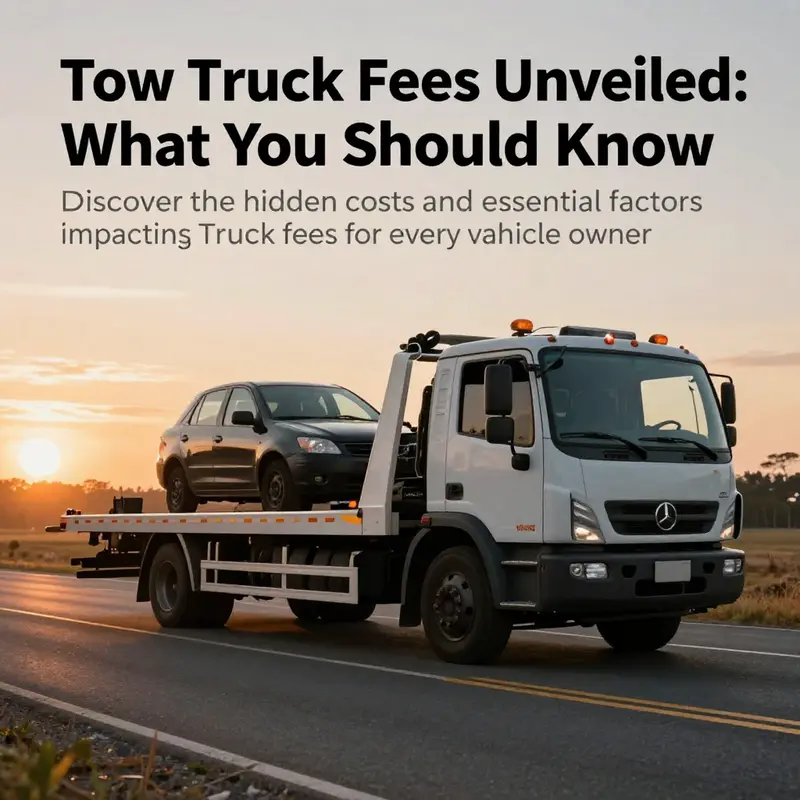
Understanding how much a tow truck fee can vary is essential to navigate the unexpected challenges of vehicle ownership and service. Whether you’re a local driver, auto shop owner, or property manager, knowing what drives these costs can save you from surprise charges. This exploration delves into the impact of distance, vehicle type, timing, location, and additional fees that collectively influence tow truck fees. By the end of this guide, you’ll be empowered to make informed decisions about towing services.
Tow Fees in Motion: How Distance Drives the Cost of a Tow
When a vehicle falters on the roadside, the arrival of a tow truck is both practical and pricy. The question, “how much is a tow truck fee?” tends to arrive with a cluster of variables that can feel overwhelming at first glance. Yet, at the heart of the matter sits a straightforward truth: distance matters, but it is far from the only driver. A clear understanding requires tracing how distance interacts with other realities—time of day, vehicle size, local market dynamics, and the quirks of the service you request. In practice, most pricing structures begin with a base fee, then layer on a per-mile charge for the distance actually towed. The base fee covers the truck’s deployment, the driver’s ready state, and the hook-up process, while the per-mile rate accounts for fuel, maintenance, wear on the rig, and the extra effort required for longer hauls. In urban settings, where traffic, call volume, and response expectations are high, that base is often higher and the mile rate tighter; in rural areas, the opposite often holds, with longer transport distances that push the total higher even if the base remains modest. The math is practical, but the experience can feel ambiguous, especially when a rescue is urgent and the clock is ticking. The objective, then, is not to memorize every potential number but to understand the logic of the pricing structure so you can anticipate the major cost drivers and ask for a reliable estimate before the driver leaves the scene.
Distance, as the most significant factor, is easy to conceptualize but easy to misread in practice. A short tow within a city corridor—say five miles or less—tends to cluster in the mid to upper hundreds. Typical ranges you’ll encounter are roughly $75 to $125, with some variability for the service level, whether you need immediate dispatch, or if there are obstacles like limited access, steep driveways, or a need for specialized equipment. When you stretch the distance to longer hauls—forty to fifty miles or more—the bill can rise quickly. A common model is a base hook-up fee plus a per-mile rate, often in a band from $2 to $5 per mile. If the distance crosses into the long-haul category, the total can easily exceed $300, particularly when combined with after-hours dispatch or the need for a flatbed rather than a wheel-lift. Some operators use a “hook and roll” approach, where a fixed hook-up fee begins the quote, and every mile beyond that incurs a separate rate. The relative impact of distance is not merely a matter of arithmetic; it also signals the level of resource utilization, such as the number of drivers on call, the type of equipment required, and the logistical challenges of coordinating a long move from a street to a repair shop, or from an impound lot to a designated repair facility.
Vehicle size and weight are the second big axis of cost. Heavier or larger vehicles demand more powerful tow trucks, more robust winches, and sometimes even additional crew for certain operations. A compact sedan can usually be handled with a standard tow rig and standard hooking methods, keeping the incremental cost modest. But when the ride involves a full-size pickup, a sport-utility vehicle with all-wheel drive, or a commercial van, the crew may need specialized equipment, additional straps and chains, and, in some cases, a different approach to protect the car’s frame and components. The result is not just higher labor costs but the potential for longer service times on site as the operator ensures secure, compliant loading and transport. This is one of the reasons two tows of the same distance can have noticeably different price tags depending on the vehicle type involved.
Time of day and location compound the distance effect in noticeable ways. Emergency or after-hours towing—a common requirement after a breakdown at night, on weekends, or during holidays—often carries a premium, sometimes termed a rush fee or after-hours surcharge. The rationale is straightforward: serving a vehicle outside regular business hours requires the team to rearrange calendars, sometimes prioritize less-than-ideal travel routes, and absorb the inconvenience of working when demand is high and options limited. In urban markets, such surcharges may be more common because the density of calls creates a need for rapid response and immediate charging to cover the overhead of keeping a crew on stand-by. In rural areas, the opposite dynamic can apply: even after-hours calls may take longer to fulfill, and the distance factor already pushes the price up; the logistics of traveling to remote locations add both time and fuel considerations that are factored into the quote.
Beyond the obvious numbers, there are additional fees that can shape the final tally, especially when the towing scenario overlaps with more complex transportation needs. While some of these are more typical in freight shipping than personal vehicle towing, they illuminate the broader economics of moving a heavy object from one point to another. A fuel surcharge can appear when fuel prices swing sharply; a waiting fee can arise if the driver must stay on site for a period beyond a grace window while arrangements are made at a shop or impound lot; and in some cases there can be a storage or yard fee if the vehicle must be held at a facility for a period of time. For long or multi-step operations, there may be a charge for specialized handling, such as securing a vehicle with non-standard mounting points, or accommodating a vehicle with a lower clearance that requires extra care to avoid damage during loading and unloading. These elements emphasize that the final price is the sum of many moving parts, not a single line item, and that a thorough quote should anticipate these potential add-ons before the driver departs. The overall picture is not one of mystery but of a structured set of levers that fleets pull to balance service quality, safety, and profitability.
To ground this discussion in everyday practice, consider a few illustrative scenarios that reflect typical price rhythms. A daytime tow of a compact car within an urban corridor often lands in a comfortable range, where the base fee is modest, the per-mile rate is predictable, and the need for rapid dispatch aligns with the policy of transparent, upfront estimates. If you factor in a request for immediate response, the price may rise modestly, but you still get a straightforward calculation: base plus miles, possibly with a small addition for the urgency. Contrast that with a longer rural tow, where a mid-sized SUV crosses a fifty-mile stretch to a repair shop. The base fee may be higher to account for the additional labor and equipment, the per-mile rate could be at the upper end, and the total will reflect the longer distance along less congested routes where fuel burn is more pronounced than in city streets. If that rural tow happens after hours, a further surcharge may appear, reinforcing the idea that timing and place matter as much as the miles traveled.
Then there are more nuanced situations. Imagine a scenario where a luxury or specialty vehicle requires careful handling and a specific kind of tow rig to avoid contact with sensitive components or to protect paint and trim. The operator may need a flatbed or a wheel-lift approach that entails different loading techniques, safety checks, and securing procedures. In such cases, the per-mile cost may be higher, and the base fee may reflect the specialized service level. The same logic applies to commercial fleets moving vans or trucks; the equipment and the crew are set up to handle heavier payloads, and the service may include additional coordination with dispatch centers, shop appointments, or fleet management systems. All these elements interplay with distance to produce a final figure that, while grounded in a clear pricing framework, can still surprise the unwary customer who focuses only on the mileage.
To navigate this landscape effectively, it helps to normalize the conversation around estimates and expectations. Always ask for an estimate before agreeing to service, and request an itemized breakdown that shows the base fee, per-mile charges, and any after-hours or special handling fees. Clarify what kind of tow will be used and why; for example, a flatbed is often preferred for fragile or lowered vehicles, while a wheel-lift configuration may be sufficient for standard sedans. If parking constraints, gated neighborhoods, or complex access points exist, ask the dispatcher to factor these into the plan and confirm whether any on-site obstacles will influence the final price. It is also prudent to discuss potential charges for waiting time or storage should the vehicle need to remain at a shop or yard beyond a short grace period. While these conversations can feel tedious in the moment, they often prevent unwelcome surprises when the bill arrives.
Another practical consideration is the option for an up-front contact that provides a written estimate or formal quote. A written document reduces ambiguity and creates a reference point if the distance-to-be-towed or the service level changes during the engagement. In some markets, operators publish their pricing structures or provide online calculators that estimate based on the start and end points, the vehicle type, and the service window. While the exact prices vary by region and provider, the underlying framework remains consistent: distance matters most, followed by vehicle class, timing, and access considerations. For readers who want a closer look at how this plays out in real-world operations, there are resources that reflect the broader sector’s thinking about distance-based pricing and the logic behind it. For a practical, operator-facing perspective, you can explore the discussions and guidance presented in the Santamaria Tow Truck blog, which offers insights into pricing decisions and service readiness. santamariatowtruck.com/blog/
As you plan or respond to a tow scenario, remember that a universal price does not exist. The market, the locale, the vehicle, and the timing combine to shape a unique quote for every call. The most reliable way to avoid sticker shock is to engage early, request a clear estimate, and consider the broader value of the service, including the safety and reliability that a professional tow brings when you are stranded or dealing with a stressful situation. In the end, distance is the loudest factor, but it is far from the only one. The price is almost always a function of miles plus the operational realities that surround those miles: how quickly a crew can be mobilized, how demanding the vehicle is to move, and how urgently the ride is needed. With that perspective, you can better gauge whether a quote feels fair and whether the service plan aligns with your immediate needs and longer-term peace of mind.
For readers seeking a broader framework beyond the immediate price tag, the literature on distance-based pricing provides a helpful lens. A comprehensive external resource offers a wider discussion of how different operators approach tow truck fees as distance scales, and it can help contextualize the numbers you encounter on a roadside call. External resource: https://www.towtruck.org/tow-truck-fees-distance-based-pricing
When Your Vehicle Determines the Bill: How Vehicle Type Drives Tow Truck Fees
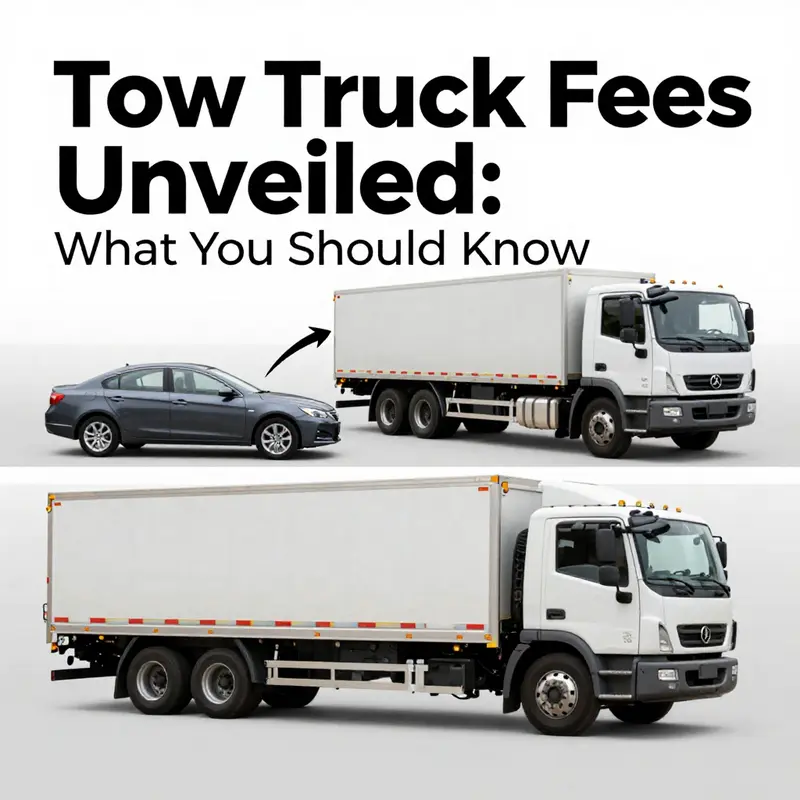
The price of a tow is rarely a single fixed number that applies to every car in every place. While distance remains the most visible driver of cost, the vehicle you drive can tilt the final bill in noticeable ways. In practical terms, the type of vehicle often dictates the towing method used, the equipment required, the time spent on the job, and the risk the operator must manage. All of these elements accumulate into a price that can surprise drivers who assume a single, standard rate applies to every tow. For people trying to forecast the expense in advance, understanding how vehicle type shapes the fee is essential. It helps you anticipate the range you’re likely to encounter and how to ask for a precise estimate before the tow begins.
A car that looks ordinary on the road can become a more complex job for a tow operator once it leaves the pavement. Luxury vehicles, high-performance coupes, and vehicles with delicate drivetrains demand a careful approach that protects expensive components and preserves value. This is not merely about keeping the car in one piece; it’s about risk management. Towing a high-end vehicle with a casual method increases the likelihood of accidental damage to transmission, suspension, or body panels. The higher the perceived risk, the more the operator might charge for specialized equipment, extra personnel, or longer setup times. Flatbed towing, which keeps the vehicle completely off the ground, is commonly chosen for these cars because it minimizes contact with tires, undercarriage, and drivetrain components. Flatbeds tend to carry a higher base rate and often a premium per mile, reflecting the greater care and equipment involved. In technical terms, the operation shifts from a wheel-lift or undercarriage approach to a method where the entire vehicle travels on the bed.
Luxury and high-value vehicles are not the only cases where the method changes the price. All-Wheel Drive (AWD) and Four-Wheel Drive (4WD) models pose special challenges even when they are not exceptionally luxurious. These vehicles store power in a drivetrain that can be damaged if towed with the wrong setup. The safest and most reliable way to transport AWD or 4WD vehicles is typically flatbed towing, which avoids rotating the driveshaft or forcing rated torque through a vulnerable drivetrain during loading or transport. Because this work requires precision, more time from trained operators, and often a specialized flatbed unit, the price jumps beyond a standard wheel-lift tow. It’s not merely about the vehicle’s sticker price; it’s about safeguarding the mechanical layout that makes AWD and 4WD work in the first place. From a budgeting standpoint, the incremental cost of this safer method is justified when you consider the potential headache of drivetrain damage, a claim you would rather avoid.
The wheel-lift approach—where one end of the car is lifted off the ground and towed—remains a practical and economical choice for many standard front-wheel-drive sedans and lighter vehicles. This method is well suited for urban environments where speed and efficiency translate into lower labor costs and quicker turnover. It reduces equipment complexity and often lowers the hourly rate or per-mile price, which makes it a common default for routine tows. However, this method is not universally appropriate. If the vehicle has front-end damage, a compromised undercarriage, or a higher center of gravity, lifting a wheel could exacerbate damage or create instability during transport. In those cases, operators may switch to a flatbed to distribute weight evenly and minimize contact with vulnerable points. The decision hinges on the vehicle’s condition and the operator’s assessment of risk, both of which feed back into the quote you receive. It’s a reminder that a tow is as much an assessment of the vehicle’s state as it is a mechanical operation.
When the vehicle is heavier or larger—think full-size pickups, large SUVs, or commercial vans—the towing equation shifts again. Heavy-duty or commercial vehicles require more capable equipment, higher lifting capacities, and often a dedicated rotator or integrated tow truck to manage the physical demands of hoisting, stabilizing, and transporting a heavy load. These capabilities aren’t freebies. They come with higher deployment costs, longer service times, and sometimes the need for a specialized crew. The result is a price that reflects not only the weight but the complexity of the job. Rotator tow trucks, in particular, can handle precarious recoveries and off-road retrievals, but they are specialized machines whose use signals a higher base rate, a higher per-mile charge, or both. For a business that operates around the clock, the added labor and risk management associated with heavy-duty towing are priced into the final bill.
Older four-by-fours and scrap vehicles add another layer of nuance. Insurers and service providers often treat these cases with heightened caution because their mechanical condition can be unpredictable. A rusted frame, seized components, or other visible wear can influence whether a flatbed remains the safest choice or if a wheel-lift approach will suffice. In some scenarios, a short-distance recovery might still be performed with a flatbed to minimize the risk of breakage during transport, even if the overall distance is small. In other cases, insurers may discourage certain methods due to liability concerns, which can translate into a higher quote to cover potential repairs or adjustments on the road. The key point is that vehicle condition is not a cosmetic factor; it directly informs the method and the cost. The professional performing the tow weighs the vehicle’s current state, the safest way to move it, and the financial risk if something were to go wrong, all of which are reflected in the estimate you receive.
The mechanics of the pricing model align with the methods chosen. Flatbed towing tends to be at the higher end of the price spectrum because it requires specialized equipment and careful handling. Wheel-lift towing offers a more economical option for many everyday vehicles, especially when the car is in good condition and the job presents straightforward loading. For heavy or delicate machines, rotator or integrated tow trucks are deployed, with corresponding fees that capture the complexity and the need for advanced hydraulics and skilled operators. These choices illustrate why two cars that are both in a similar geographic area can have very different tow bills. A luxury sedan miles away from an impound lot might cost more than a compact hatchback just because the first requires a flatbed and a higher level of meticulousness, even if the distance traveled is comparable.
Beyond the vehicle type and the chosen method, the broader pricing ecosystem still incorporates distance, time of day, and location. The distance is the most visible factor, but a vehicle’s type can intensify or mitigate the per-mile charges, base fees, or after-hours surcharges that often apply. A driver can find themselves paying a premium not just for the miles traveled but for the specialized handling the vehicle demands. After-hours service is a common example: if you call for a tow during the middle of the night or on a holiday, the operator will likely apply a rush fee or an emergency surcharge aimed at covering the labor and disruption associated with off-hours work. Location matters too; urban centers may have higher base rates due to demand and the higher cost of doing business in dense areas, while rural settings can trigger longer travel times to reach the nearest shop or impound lot, inflating the overall cost. Taken together, these factors intersect with vehicle type to shape the final figure you see on the invoice. A compact sedan towed on a standard wheel-lift in the city might come in at a lower base price than a high-end SUV towed on a flatbed across a region with heavy demand and after-hours service requirements.
From a practical budgeting standpoint, this means there is real value in understanding not just the distance to be traveled but what kind of vehicle is being moved. If you own or operate a fleet or if you’re responsible for a vehicle with a specialized drivetrain, you’ll do yourself a service by asking questions that reveal the likely method and its cost implications before the tow begins. A clear, written estimate that breaks down base fees, per-mile rates, and any surcharges for after-hours service or for the use of a flatbed or rotator can prevent surprises when the bill arrives. You can also use this knowledge to guide the discussion with the dispatcher. For instance, if your car is AWD and you know it’s in good mechanical shape, you might inquire whether wheel-lift towing is a viable option and what the price delta would be compared to a flatbed. If your vehicle is a valuable or high-performance model, you can request confirmation that a flatbed will be used and ask for the expected incremental cost. The goal is to arrive at a plan that protects the vehicle while providing the most cost-effective approach under the circumstances. In this context, the vehicle type isn’t just a feature of the car; it’s a signal about the safest and most economical path to transport.
For readers who want a broader, industry-grounded perspective on how these decisions play out in real-world operations, resources such as fleet standardization and emergency readiness discuss how providers align their equipment and procedures with vehicle types and service demands. This perspective underscores that the choice of tow method is part of a broader operational strategy rather than a one-off decision made in isolation. You can explore that discussion here: fleet standardization and emergency readiness.
In the end, the final tow bill is not a mystery wrapped in distance alone. It’s a composite of vehicle characteristics, the safest transport method for that specific car, the equipment deployed, and the operational realities of the moment. If you walk away with a clearer sense of the relationship between vehicle type and cost, you’ll be better prepared to navigate the call with a dispatcher, compare estimates with confidence, and avoid sticker shock when the tow is done. The interplay of method, vehicle condition, and geography doesn’t just determine what you pay; it informs the entire decision-making process behind every tow, from the moment the call is placed to the moment the car is safely offloaded at its destination. And while each chapter in this article will loop back to the overarching question of “how much is a tow truck fee,” this particular discussion makes it clear that vehicle type is a decisive factor—often a bigger influence than people expect when they’re planning a trip, a road trip emergency, or a routine roadside recovery.
For readers seeking further context on how cost factors are analyzed in the broader industry, an external resource offers a detailed framework of the drivers behind towing charges. This can help you compare perceptions of value with industry standards and pricing trends: https://www.towingindustry.org/industry-resources/towing-cost-factors.
Tow Fees: How Time and Place Drive the Price
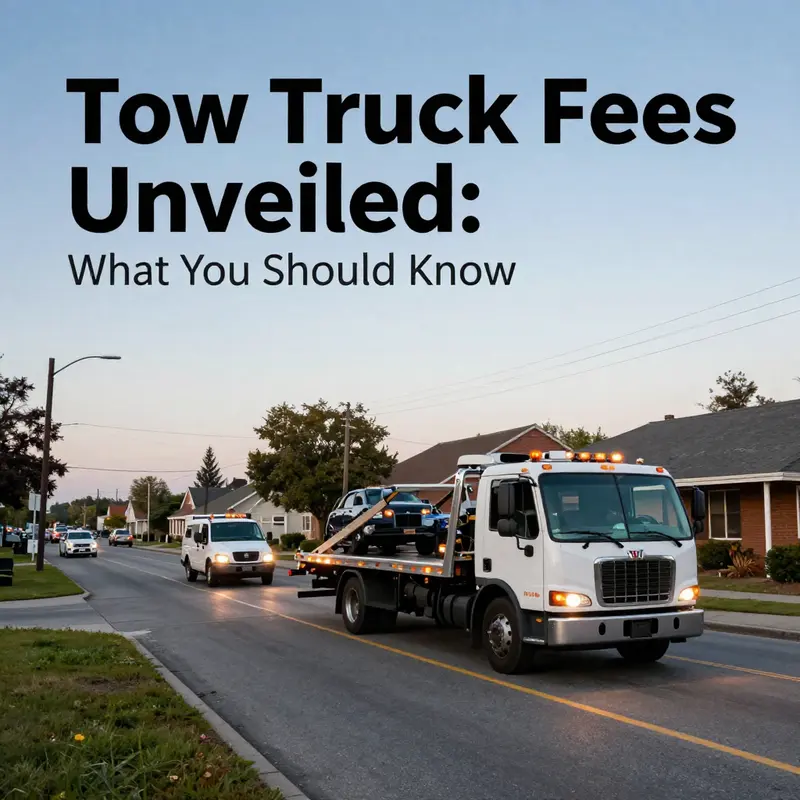
Tow pricing is rarely a single fixed number. Distance matters most, but the time of day, vehicle type, and location also push the final bill. A short tow in an urban area can be quite different from a long haul through rural roads. Most shops charge a base hookup fee plus a per-mile rate, with higher rates for after-hours calls and for heavier vehicles that require special equipment.
To protect yourself, ask for an itemized estimate upfront, clarify which charges are fixed (hookup) and which are variable (miles), and beware of post-tow charges such as storage if the vehicle cannot be released immediately. Being aware of the levers—distance, time, vehicle type, and location—helps you anticipate costs and avoid surprises.
null

null
Final thoughts
Navigating the complexities of tow truck fees can empower vehicle owners to make informed decisions when unexpected situations arise. By understanding how distance, vehicle type, time, location, and additional charges factor into the costs, you can mitigate surprises and ensure that you select a towing service aligned with your needs. Knowledge is your best tool when confronting the challenges of vehicle ownership and roadside assistance.