
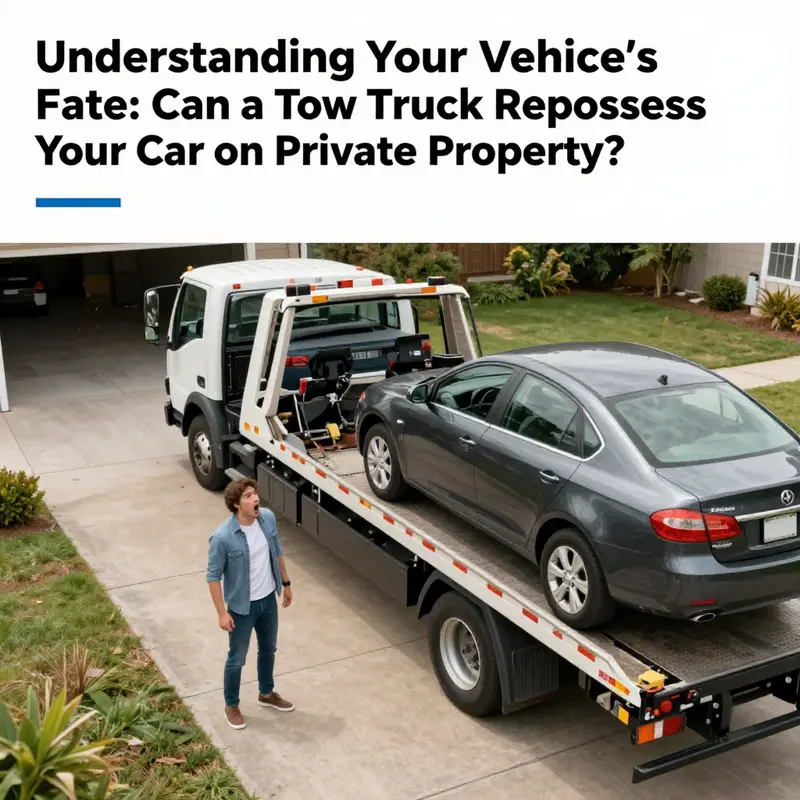
For many drivers and car owners, the thought of losing their vehicle to repossession can be daunting, especially when it occurs on private property. In today’s world where vehicles are often parked in residential driveways or garages, understanding the legalities surrounding repossession becomes crucial. This article aims to address essential questions on whether tow trucks can legally repossess your car from private property, exploring the conditions that allow this to happen, the role of state laws, and the consequences of wrongful repossession. With insights valuable for Local Drivers, Property Managers, Auto Dealers, and Repair Shops, this comprehensive guide is designed to empower you with knowledge and tips to navigate these complex situations effectively.
Repossession on Home Turf: Navigating the Realities of Private-Property Towings and What It Means for Borrowers
When a car loan goes behind on payments, the lender often has recourse to recover the vehicle. The usual image is a repossessor cruising along a public street, lights flashing, a dramatic chase scene in a parking lot. But the setting can shift to something quieter and more personal: a private driveway, a garage, or even a fenced backyard. The possibility that a tow truck could repossess a car from private property is not a mere rumor or a cinematic trope. It happens, but only under a framework of laws that vary from one state to the next. The core idea remains simple: the lender’s right to recover the collateral exists, but it is bounded by strict rules designed to protect property rights and prevent confrontations. The result is a careful balancing act where legality hinges on context, location, and the manner in which the vehicle is accessed and removed.
At the heart of the matter is the status of the loan. If a borrower defaults on an auto loan, the lender generally owns a security interest in the vehicle. That ownership right gives the lender leverage to repossess the vehicle if the terms of the loan allow it and if state law permits it. In many jurisdictions, this means the lender can initiate a repossession from private property when the vehicle is parked on a driveway or in a garage, particularly if the vehicle is abandoned, left unattended, or in clear violation of the loan terms. The word “abandoned” itself varies in meaning by state, but the practical implication is that a car left in place without a likely intention to return or with a default status may be targeted for repossession. The concept of a secured loan allows the creditor to retrieve the collateral in a manner that avoids unwarranted loss, yet it cannot become an excuse to bypass basic legal protections.
Yet the door is not always open to a private-property repossession. A web of regulatory guidelines and practical boundaries can restrict what an agent can or cannot do. The most widely cited boundary is the prohibition against breach of the peace. In plain terms, agents cannot use force, threaten violence, or otherwise intimidate a borrower to gain access to the vehicle. This is not just about polite conduct; it is a legal constraint intended to prevent confrontations that could escalate into dangerous situations. If the car is inside a secured area—such as a locked garage or a gated property—the agent typically cannot remove the car without permission or a court order. This constraint prevents a repossession from turning into a coercive intrusion, especially in private residences where safety and privacy concerns are high.
The boundaries surrounding private-property repossessions often intersect with licensing and regulatory oversight. In many states, repossession agents must hold a valid license and operate under guidelines issued by the state’s financial or motor-vehicle authorities. Licensing exists to standardize practices, reduce the risk of unlawful towing, and provide a path for recourse if a consumer believes a tow was unlawful. The practical effect is that a tow from private property is not an unregulated act; it is a procedure subject to both the lender’s contractual rights and the enforcement of state rules. For borrowers, this means understanding not only the loan documents but also the specific statutes that govern repossession actions where they live.
Regulatory guidelines emphasize one essential point: there can be meaningful differences from state to state. Some jurisdictions permit a repossession agent to remove a vehicle from private property if the vehicle is readily accessible and the action is conducted without breaching the peace. Other states require explicit permission from the property owner or a court order before any entry or removal can take place when the vehicle is on private residential property. These distinctions matter for anyone who owns a car, lends a car, or works in a role connected to loan servicing. They shape what is permissible on a driveway, inside a garage, or on leased private land. The broad takeaway is that there is no universal rule that covers every private-property scenario; the local law governs the conduct.
For borrowers, the most practical consequence of this framework is to protect yourself by knowing the rules that apply where you live. If you anticipate a risk of repossession—or if you already see a tow truck on or near your private property—keep in mind that the agent’s actions must align with the law. Signs of illegal towing, such as unannounced entry, improper access to a locked garage, or a tow conducted without proper paperwork, may indicate that something oversteps the boundaries. If you want to be proactive, you can consult local statutes or seek guidance from a consumer-law attorney who understands the nuances of your jurisdiction. Some guides and resources aim to help borrowers recognize warning signs and to understand the steps to take if a tow seems improper. For readers seeking extra context on recognizing questionable towing practices, you can explore practical guidance such as how to spot illegal towing key signs to know. Spot illegal towing key signs to know.
Even when a tow from private property is legally permissible, the process is not a free-for-all. A repossession agent must typically operate within a defined, orderly procedure. The vehicle may be removed from a driveway, but the agent cannot forcibly break into a locked garage or drag the car away from a secured storage area without consent or a court directive. The agent may handle the car with a reasonable level of care to avoid unnecessary damage, and they must reckon with any security arrangements on the property, such as alarms or locked gates. Because many repossessions involve smaller channels of access on residential property, the risk of disputes increases when the property is heavily protected by locks, cameras, or multiple occupants who disagree about the action taking place. In this sense, the private setting can complicate what would otherwise be a straightforward retrieval.
Another layer of complexity is the practical reality that a lot of repossession activity takes place on public property or in commercial parking facilities. When private property enters the picture, the agent’s ability to maneuver depends not just on the law but on the physical layout of the property and the cooperation of residents or owners. A driveway that opens onto a public street may present a different risk profile than a garage nestled behind a secured door. In either case, the agent must respect the property rights of the owner and the occupant and comply with applicable trespass and property laws. The result is that even though a car might be accessible, it does not automatically translate into an open-and-shoot removal. The act remains bounded by permissions, notices, and the overarching legal framework.
This legal mosaic places a responsibility on both borrowers and lenders. Borrowers should understand that default under an auto loan does not automatically imply a reckless invasion of private space. Lenders and their agents must still navigate a labyrinth of laws, ensuring that every action is supported by the appropriate authorization, licensing, and a careful interpretation of the “breach of the peace” standard. In practice, that means clear communication about the timing and location of a potential repossession, an opportunity for the borrower to address the default if possible, and, when appropriate, formal notices or court processes to obtain access when a private property setting complicates the straightforward removal of collateral.
For individuals who want to be prepared, the most effective approach is to educate themselves about the specific repossession rules in their state, maintain organized loan documentation, and keep lines of contact open with the lender. If a vehicle is parked on private property and a repossession seems likely, shore up any possible defenses or contingencies—such as addressing late payments, arranging a payment plan, or negotiating a voluntary surrender in a controlled setting—before a tow arrives. If a tow does occur and you believe it was unlawful, document everything: the time, location, who was present, any notices given, and the exact steps of the removal. This record can be essential when seeking recourse or pursuing a legal remedy.
In the end, the question of whether a tow truck can repossess your car on private property hinges on state law, the specifics of the loan agreement, and the manner in which the repossession is carried out. The possibility exists, but it is never a blanket right to access any private space without constraint. The law invites a careful, informed approach that balances the lender’s interest in recovering collateral with the borrower’s right to be free from unlawful intrusion. For readers who want to explore broader context about private-property repossessions, a comprehensive external resource provides an in-depth examination of the legal landscape and the nuances that can shape individual outcomes: https://www.carinterior.com/can-a-tow-truck-repo-your-car-on-private-property/.
null
null
Private Property Repossessions and the Law: Navigating Tow Away Rules
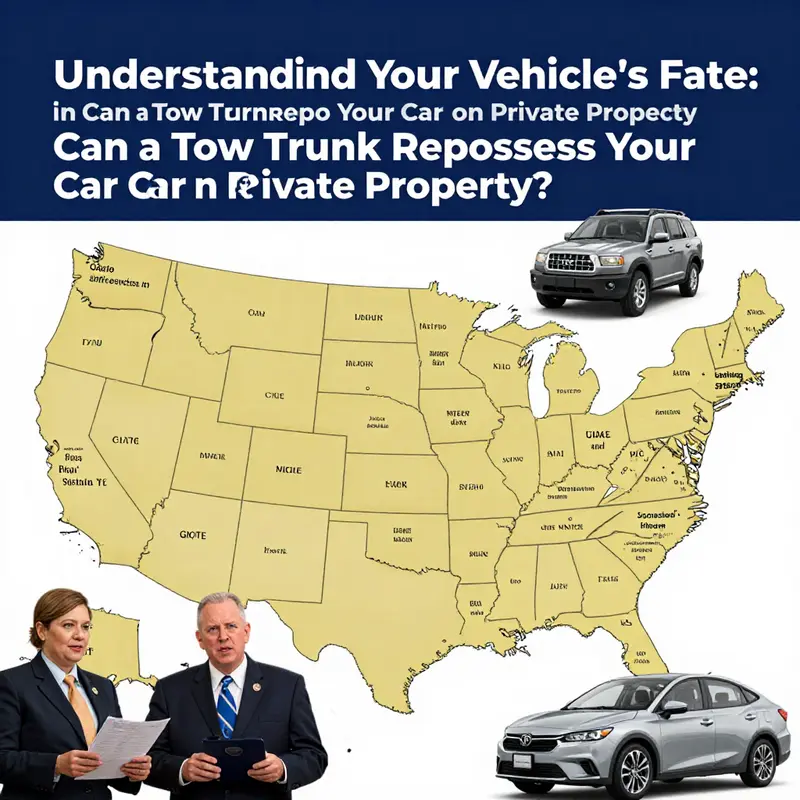
When a debtor’s car sits on private property, whether a tow is lawful depends on state statutes, local ordinances, and the property owner’s policies. Most states require that the property owner authorize the tow and that the operator complies with licensing, notice requirements, and safety standards. The action cannot be executed through force or intimidation, and many jurisdictions prohibit removal without proper notice and a documented basis to tow. Property owners should post clear signs, obtain consent, and use licensed tow operators to protect themselves from liability. Consumers and debtors, in turn, have recourse through impound procedures, payment arrangements, and remedies if a tow is improper. While laws vary widely, the common thread is balance: facilitating lawful recovery of collateral while protecting privacy and safety on private property.
The Hidden Toll: How Wrongful Private-Property Repossession Reframes a Community’s Sense of Security
When a tow truck arrives at a private residence to haul away a vehicle, the moment can feel like a sudden intrusion into a space that should feel safe and private. The consequences of a wrongful repossession on private property extend far beyond the loss of a car or an item of value. They ripple through daily routines, financial stability, and the relationships between neighbors, property owners, and the professionals tasked with debt recovery. This chapter examines those consequences in a way that respects the nuance of state-by-state law while grounding the discussion in the lived experience of people who find themselves on the wrong end of an entry into a driveway or a garage. It also anchors the discussion in the broader legal framework that governs these actions and offers practical guidance for readers who may find themselves navigating a similar crisis, or who may be advising others who do.
A property owner who discovers a vehicle has vanished from a driveway or private lot often experiences an immediate, jarring mix of shock and confusion. The loss is not just monetary; it is practical and existential. A vehicle may be a lifeline for commuting to work, for transporting children, or for caring for an aging relative. The sudden removal can disrupt schedules, create missed opportunities, and force expensive alternatives—rideshares, rental cars, or public transit—at a moment when the household budget is already stretched thin. In families with two or more vehicles, the experience can feel like a choice between keeping one car or losing both. The emotional impact can be just as real: the sense of violation, the perception of being targeted, and the anxiety that the next knock on the door might bring another mistake or another misstep by someone who may not have all the facts.
Financial hardship grows from that initial shock in several concrete ways. Even if the car is eventually found to be in the right place, the days immediately after a suspected repossession often involve late fees, towing charges, storage fees, and the potential for higher insurance premiums if the incident triggers a broader financial review. If the vehicle is held for ransom, so to speak, while disputes unfold, the owner may also face interest accrual on the underlying debt during a period when cash flow is already tight. And if the vehicle is permanently lost to a lien or sale, the household loses a key asset that might have been used to bridge a temporary gap or to support a critical purchase—such as a reliable second car for a worker who has returned to a full-time schedule after a layoff.
The emotional toll should not be underestimated. The sense of vulnerability in one’s own yard can erode trust not only in the institutions charged with debt collection but also in the social fabric of the neighborhood. The experience may spark fears about neighbors’ and strangers’ actions, and it can lead to a heightened sense of surveillance and insecurity. The stress can spill over into sleep, focus, and decision-making at work or in school for both adults and children in the household. When a repossession occurs on private property, the event becomes a story that is told and retold within the home, shaping perceptions of safety and control over one’s space long after the vehicle is recovered or relinquished.
Beyond the personal costs, wrongful repossession on private property invites legal consequences that may be costly and time-consuming for the party responsible. If a court finds that the repossession violated state or federal laws, the entity or person who performed the action can face civil liability for damages, including the value of the property taken, lost income, and even emotional distress. Civil actions may come with attorney’s fees and court costs, multiplying the financial burden of a mistake that could have been prevented with careful adherence to due process and proper notice. In some situations, criminal charges can accompany civil claims when trespass, unlawful entry, or the use of force is involved. The possibility of criminal exposure underscores the principle that the private nature of a home does not render it a free zone for self-help repossession, regardless of the status of the debt.
Regulatory and reputational consequences add another layer of risk for the repossession industry. Agencies tasked with consumer protection and industry oversight may scrutinize practices that appear to disregard due process or that lack adequate documentation. A company found to have engaged in unlawful repossession practices can face fines, suspensions, or other sanctions that hinder its ability to operate and erode public trust. The social contract between lenders, repossession agents, and the public rests on a shared expectation that debt recovery is conducted lawfully and transparently, with respect for the property and person of the debtor. When that contract is breached, the broader system loses legitimacy in the eyes of many observers.
The legal framework surrounding private-property repossession is not monolithic. It recognizes a tension between lenders’ rights to recover property and residents’ right to peaceful enjoyment of their homes. At the federal level, protections embedded in the Fair Debt Collection Practices Act and related state lien laws establish guardrails intended to prevent self-help repossession without appropriate notice or court authorization. A landmark strand of this framework, reinforced by oversight bodies and periodic audits, emphasizes that recovery actions conducted inside a debtor’s residence require special procedures and, often, judicial involvement. The Consumer Financial Protection Bureau’s findings in recent years highlight that improper repossession remains a common complaint among consumers, with recurring issues rooted in nontransparent processes and a failure to observe due process. While not a universal prohibition, the CFPB’s stance makes clear that private-property repossession cannot hinge on a quick entry and a swift removal; it must align with recognizable legal steps intended to protect both sides of the debt equation.
For property owners who believe a wrongful repossession occurred, the path to resolution often begins with documentation. Collecting photographs of the scene, notes about the timing, and any communications from the repossession company or the creditor can help establish a factual record. When possible, obtaining a copy of the notice or any court order related to the repossession can be decisive. The burden often lies with the party conducting the repossession to show that due process was followed, that there was a legitimate basis for the action, and that no unlawful entry or force was used. Understanding the exact rules in one’s state is critical because some jurisdictions permit a private-party repossession from private property under certain conditions, while others require explicit permission or a court order before any entry is allowed. Because the legal landscape differs so markedly by location, informed action and timely legal advice are essential in any alleged wrongful repossession scenario.
Property owners should also be mindful of practical steps that can prevent or mitigate harm going forward. First, know the boundaries of your property and ensure your property is clearly marked if needed, which can aid in distinguishing legitimate from suspicious activity. Second, if you observe a tow vehicle on your property, do not engage with the driver in a confrontational setting. Instead, document what you can and contact your attorney or the creditor to verify the legitimacy of the action. Third, maintain a careful record of all communications with the creditor or the repossession agency, including times, dates, and the content of conversations. This kind of paper trail can be invaluable if the matter proceeds to dispute resolution or requires court intervention. And finally, seek professional guidance before making any public statements or decisions that could complicate a dispute, such as posting about the incident on social media or sharing it with neighbors in a way that could inflame tensions.
On a more technical level, the private-property aspect of repossession rests on a spectrum of permissible behaviors that can feel personal and subjective in the moment. Some jurisdictions allow a repossession agent to remove property from private property if the vehicle is abandoned, left unattended, or in clear violation of loan terms, provided they avoid trespass, damage, or threats. Other states impose a higher standard, requiring explicit permission or even a court order for actions inside a private residence. The variance matters: it means that two identical incidents in different states can have opposite legal outcomes. For readers and practitioners, this is a reminder that legal risk assessment around repossession is not only about whether debt is owed but about where the debt is owed and where the property sits when the action occurs. The nuanced interplay between state law, local ordinances, and dealer or agency policies creates a complex web a reader should navigate with care.
In practical terms, one can think of the right to repossess as a power that must be exercised with restraint. Repossession agents are expected to maintain proper documentation, provide notice when required, and avoid force or trespass. The failures around these points are often at the root of wrongful repossession claims. To protect themselves, property owners should educate themselves about their rights and pursue recourse when there is evidence the process was mishandled. This is not merely about getting the car back; it is about preserving personal safety, protecting the privacy of the home, and ensuring that debt collection practices do not erode trust in the broader system.
For readers who want a practical frame of reference that can help them spot signs of potentially illegal activity, resources exist that distill these concerns into actionable indicators. For instance, you can consult the guide on illegal towing and key signs to know, which highlights common red flags such as lack of proper notice, unclear authorization, or suspicious timing. Recognizing these signals can empower property owners to document the incident thoroughly and seek timely legal counsel. See the guide here: spot illegal towing—key signs to know.
Looking beyond individual incidents, the overarching takeaway is that wrongful repossession on private property carries consequences that touch people, property, and the legitimacy of debt-recovery practices. The consequences are not abstract; they map onto daily life, financial security, and the integrity of the system designed to resolve debt disputes. A well-functioning framework requires vigilance from all sides: property owners who understand their rights, lenders and agencies that adhere to due process, and a public that holds institutions accountable when lines between enforcement and intrusion blur. When those lines are respected, repossession serves its intended purpose without compromising the sanctity of homes or the safety of neighborhoods. When they are not, the costs multiply quickly—from civil damages and criminal exposure to damaged reputations and eroded community trust.
For further information on protections and avenues for redress, readers can consult the Consumer Financial Protection Bureau’s resources on repossession and rights. These materials outline the due-process expectations and the standards that creditors and repossession agents should follow to avoid unlawful practices. As a practical matter, keeping a careful record, seeking timely legal counsel, and understanding the specific rules in your state are the best defenses against wrongful repossession and the cascading consequences that can follow.
External resource: https://www.consumerfinance.gov/owning-a-home/repossessions/
Behind Closed Gates: When a Tow Repossesses Your Car on Private Property
Doors humming with the quiet of a typical morning, a driveway or a garage can feel like a sanctuary from the world of debt and repossession. Yet private property is not always immune to the steps a creditor may take when a loan goes unpaid. The idea that a tow truck can simply roll up to a private driveway and haul a car away feels dramatic, almost cinematic, but the reality is more nuanced and deeply rooted in state law, property rights, and the concept of the peaceably conducted repossession. The questions that arise—can a tow truck repossess on private property, what boundaries exist, and how can a car owner protect themselves—demand a careful, grounded explanation. This chapter seeks to illuminate those boundaries in a way that is practical and precise, tying the scenario back to everyday experiences while anchoring the discussion in the broader topic of whether a tow can repossess a car on private property.
At the heart of the matter is the idea of lawful access. Lenders and repossession agencies act on the premise that a vehicle secured by a lien is the lender’s collateral. When a debtor defaults, a creditor may pursue recovery. The setting—whether a public street, a parking lot, or a private driveway—does not automatically bar repossession if the vehicle is on private property and the agent has lawful access. The crucial qualifiers are tied to consent, notice, and the absence of unlawful force. In other words, a repossession on private property hinges less on the location than on the lawful conditions surrounding access and the manner in which the vehicle is removed. The car must be subject to a lien, and the repossession must be conducted without breaching the peace. A simple phrase undergirds the entire process: do no harm, do not trespass, and do not escalate beyond what the law permits.
What counts as lawful access can vary by state. Some jurisdictions assume that if a vehicle is on private property and in default, a repossession agent may proceed, provided the action remains peaceful. Others require explicit permission from the property owner or a court order, particularly when the property is a private residence. The variability is not a loophole so much as a reminder that private property rights intersect with contract law in complex ways. A lender may argue that the vehicle is the debtor’s collateral and that access to it on private property does not automatically require a different standard than access on a public street. A debtor, for their part, may argue that the property’s boundaries—such as a locked garage, a gated driveway, or a residence—place the vehicle in a more protected space where entry becomes an issue of trespass or breach of the peace. Both perspectives highlight a central point: the method and location of removal matter, but they do not automatically resolve into a single right or prohibition.
The notion of “peaceful conduct” is more than a phrase—it is a legal standard intended to prevent escalation. Repossession agents cannot force entry, threaten, or cause a confrontation. They cannot break into a locked garage or climb over fences if doing so would constitute trespass or breach of the peace. They cannot enter a home or stage a scene inside a private residence as part of the repossession. These boundaries are not merely procedural; they are protections for privacy and safety. A breach of the peace can transform what might otherwise be a routine repossession into a civil or criminal matter, potentially giving the debtor grounds for legal recourse and limits on the lender’s remedies. The practical implication is that if the boundary between private property and public access is crossed, the repossession may be deemed illegal, inviting remedies for the vehicle’s return or damages.
State laws complicate the picture further. Some states require the repossession agent to provide notice before the action, creating a window for the debtor to address the default or to arrange alternatives. Other states permit more immediate action when default is clear, especially if the vehicle is unattended and the lien is enforceable. Still others rely on a court order for repossession from private property, reflecting a stronger protection for homeowners in residential settings. The spectrum prevents a one-size-fits-all answer and instead urges car owners to be proactive about understanding their own state’s regulations and the terms of their loan or lease agreements. In many cases, the exact route to repossession—whether through a private driveway or a public street—will hinge on how far the creditor is willing to go under local law and what paperwork or notices are required to do so.
To protect themselves, individuals should focus on knowledge and preparation. Begin with a close reading of the loan or lease agreement, emphasizing what happens in default and what the lender is allowed to do regarding the vehicle’s location. Understanding any state-specific protections for private property is essential. When possible, seek guidance from a consumer protection office or an attorney versed in debt and repossession law. The goal is to recognize when a tow from private property is legally permissible and when it crosses into a zone where the debtor has recourse. In practical terms, homeowners and borrowers should remain aware of the property’s access rules. If a vehicle sits behind a locked gate or within a private garage, the circumstances become more delicate, and the likelihood of a peaceful, lawful repossession depends heavily on state doctrine and the precise language of the contract.
For individuals who want concrete awareness in the moment, a few actions can reduce risk of confusion or mistaken police action. First, observe the property’s signage and any posted notices related to towing or private access. Some properties may have explicit prohibitions or conditions about vehicle removal, which can alter the ability of a lender to act. If the vehicle is commonly seen on private property, be mindful of any notices that govern post-default actions or owner authorization. Second, know your rights regarding permission to enter the property. If a homeowner or occupant has not given permission, or if a gate is locked, a repossession attempt may be more likely to generate a dispute centered on trespass or breach of the peace. Third, maintain clear records. Take photos of the vehicle, its location, any signage, and the surrounding area if a repossession occurs. Documentation can be critical in the event of a dispute or if you believe the tow was improper.
When a wallet-sized reality hits—your car is being taken from private property—harmonizing restraint with action becomes crucial. Do not interfere physically with the process. Do not threaten or escalate. Instead, note the time, the company or agent’s name, and any identifying markers of the property involved. Immediately contact the lender or the repossession agency to confirm the status of the account and the legality of the action. If you sense the act may be unlawful—perhaps due to a locked garage being accessed without consent or a breach of the peace—local authorities may be called to verify the conditions of the removal and to document what occurred. The response should be measured and informed, not reactive or aggressive. The objective is to protect your vehicle, your safety, and your rights, while also avoiding a confrontation that could complicate the situation further.
Beyond the immediate incident, the chapter’s broader message rests on the idea that knowledge of law and clear communication can prevent or minimize disputes over private-property repossession. If the notice requirements are onerous or the property’s access rules are unclear, seeking legal counsel or lodging a formal complaint may be warranted. The practical upshot for readers is that private property does not automatically shield a vehicle from repossession, but it does require careful navigation through state regulations, contractual terms, and the boundaries set by property ownership. It also implicates a larger question about how to reconcile the lender’s right to recover collateral with the debtor’s right to privacy and security in their own home or in spaces they control.
For readers who want to explore practical signs of illegal towing or to learn how to spot potential misuse of private-property access, consider reviewing guidance on private-towing practices. You can learn more about identifying improper actions at Spot Illegal Towing: Key Signs to Know. The goal is not to accuse without basis but to empower property owners and drivers with the information needed to respond appropriately if a tow seems unsupported by law or procedure. When in doubt, the safest course is to verify the lender’s authority, confirm compliance with state requirements, and seek professional advice before taking action that could complicate a legal situation.
If you believe your vehicle was wrongfully towed from private property, there are avenues for recourse. Start by gathering documents that show ownership, liens, and the loan terms, along with any correspondence from the lender. Obtain a copy of any towing notice and the permit or authorization claimed by the agent. Contact the property owner or manager to determine whether permission was granted for the tow. If appropriate, file a complaint with your state consumer protection agency and, where necessary, consult an attorney who specializes in debt collection and repossession. The aim is not only to recover the vehicle but also to clarify the rules that govern these actions so that future cases can proceed with fewer ambiguities. For the careful reader, this is a reminder that private property introduces a layer of complexity to repossession, but it does not erase the lender’s rights or the debtor’s protections. The balance is achieved through clarity, lawful practice, and an understanding of the specific laws that Govern private-property repossession in your state.
External resources provide additional context and practical guidance beyond the chapter’s scope. For a broader discussion of private-property repossession and the conditions under which a tow can occur, see this external resource: https://www.carinterior.com/tow-truck-repo-your-car-private-property/ .
Final thoughts
Understanding the nuances of vehicle repossession, especially on private property, is essential for all car owners and drivers. By being aware of the laws in your state, the conditions under which a tow truck can repossess your vehicle, and the importance of understanding your rights, you can better protect yourself from unlawful actions. Remember, having the right information can mean the difference between a wrongful repossession and a peaceful resolution. Stay informed, and always know your rights—the road ahead is yours to navigate.