
For local drivers and property managers, the unpredictability of needing a tow truck can bring both urgency and confusion. Whether you’ve had a breakdown, a parking issue, or need to assist someone else’s vehicle, understanding the costs associated with tow truck services is crucial. This guide examines the various elements that dictate pricing, including base fees and distance, the type of vehicle, and the impact of time and location. By breaking down these key factors, drivers, auto repair shops, dealerships, and property managers can navigate this essential service with confidence, ensuring they make informed decisions that can save time and money.
Tow Truck Pricing Demystified: Base Fees, Distance, and the Real Cost
Tow pricing is built from a few core pieces that appear in almost every quote: a base dispatch fee, a distance-based charge, and various supplements that reflect time of day, vehicle type, and local rules. The base fee covers the cost of the call, dispatch, and initial setup, and it acts as the anchor for the whole bill. In many markets that base is around $50, though it can be higher in places with higher labor costs or stricter regulations. The per-mile rate then scales with distance, often applying after an initial block included in the base fee. For example, many providers include the first 5–10 miles in the base, with an additional range around $1.50 to $2.50 per mile thereafter. Vehicle type matters: compact cars typically incur lower base and mile charges than SUVs or trucks, and specialized equipment (flatbeds, rotators, or extra labor) adds to the total. Timing and location matter as well: late-night or holiday dispatches frequently add surcharges, and urban settings can push up both base and mile costs due to parking, storage, and regulatory considerations. Regulators in some regions also cap or guide prices to protect consumers, while others let market forces set the range of quotes. Finally, there can be hidden costs such as storage fees for towed vehicles, secondary tow charges, or deadhead fees if a job is cancelled after dispatch. The practical takeaway is to request a written quote that breaks down the base charge, the distance charges, any surcharges, storage, and prospective secondary-tow costs, and to ask how distance is calculated. With that information, you can compare apples-to-apples across providers and avoid sticker shock at the curb.
Tow Truck Economics: How Vehicle Type and Recovery Complexity Shape the Price of a Tow
When a tow is needed, the price tag is rarely a single, simple number. It is a moving target that shifts with the vehicle being moved, the way it is recovered, and the distance between roadside and repair bay. The pricing landscape rests on a few persistent anchors: the type and size of the vehicle, the complexity of the recovery, the distance traveled, and the time of day or location of the service. It is a layered calculation that can feel opaque at first glance, but when you disentangle the factors, a pattern emerges. A straightforward tow for a small car in a routine roadside breakdown will look very different from a complex, night-time recovery of a commercial vehicle from a ditch or a rollover, possibly involving heavy-duty equipment and multiple crews. Understanding this nuance helps consumers anticipate what they may pay and why the bill can climb quickly if a tow crosses into the realm of heavy-duty recovery or long-distance transport.
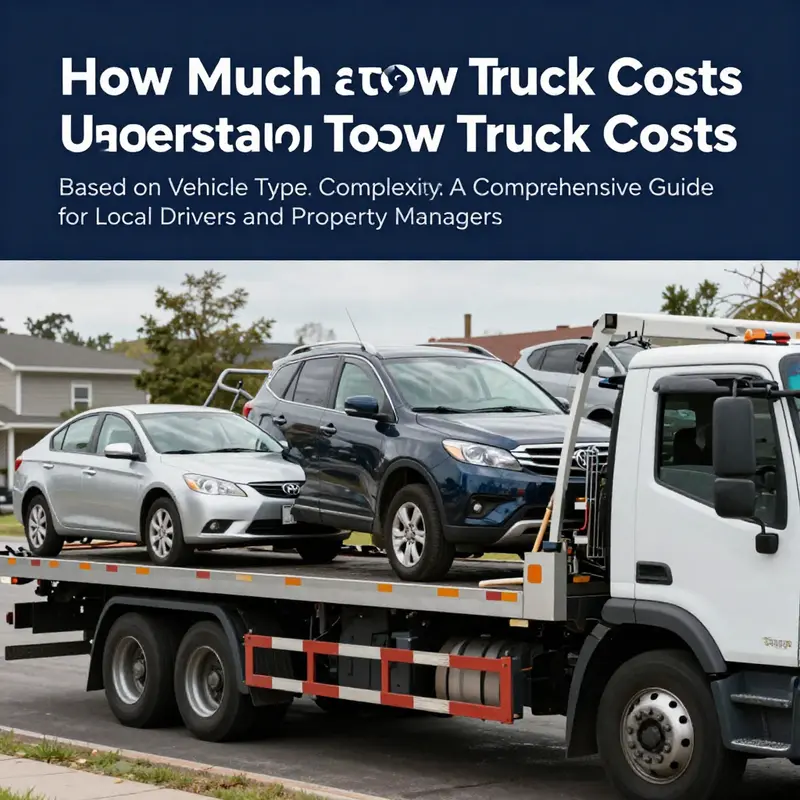
Vehicle type is perhaps the most visible driver of cost. A tow service must select the right equipment to protect the vehicle and ensure safe handling. A standard passenger car weighs far less than an SUV, a van, or a commercial truck. That difference matters not only in the strength of the winch and the capacity of the tow truck itself, but also in the risk calculus a technician performs at the scene. The lighter, smaller car can often be moved with a basic tow setup and a standard flatbed or wheel-lift. A mid-size SUV or a light-duty truck begins to stretch the equipment load, requiring more powerful trucks or a larger flatbed. For trucks, SUVs, and other heavier vehicles, the job may call for specialized attachments, more secure tie-downs, and sometimes a rotator or crane when the vehicle is badly damaged or difficult to reach. As the size and weight increase, so does the price, and not just because the job takes longer. The equipment is more expensive to deploy and maintain, and the operator must allocate additional crew time to ensure a safe operation. In many markets, this reality translates into a graduated pricing ladder: the typical small car bears a lower base and per-mile rate, while larger vehicles slide into higher base fees and higher per-mile charges. The practical consequence is simple: the price for moving a compact sedan is often markedly lower than the price for recovering a heavy-duty truck or performing a recovery operation that involves multiple recovery lines, winching, or a crane.
The complexity of the tow multiplies costs in ways that are sometimes hard to foresee from a distance. Simple pulls from a clear, accessible roadside are one thing; complex recoveries are another. If a car is stuck in a ditch, off the road, or involved in an accident, the operator may have to attach winches, rig locking devices, or stabilize the vehicle before it can be loaded. A blanket-rule assumption might be that a standard tow is a few hundred dollars, but once you add recovery, winching, or stabilization, the price can move into the higher range. The use of specialized equipment—a rotator for heavy or awkward recoveries, a crane for lifting foundered vehicles, or a tilt-bed with hydraulic precision—dramatically increases both the time on scene and the resource cost. It is not uncommon for the most complicated recoveries to extend beyond the realm of a typical tow into a service that requires multiple hours, more than one operator, and careful coordination with safety checks to protect people and assets.
Distance remains a second vital variable, and its impact is often felt even in markets with fixed dispatch fees. The model most operators use is a base charge for the initial distance, followed by per-mile or per-kilometer rates. In some markets, particularly those with dense urban centers and heavy traffic, the base fee for a short tow may be substantial even for a brief haul. In other markets, especially where competition is steep and labor costs lower, the base fee can be modest, while the per-mile charge accumulates over longer distances. The practical implication is that you may encounter a similar-looking job described as a short tow in one city and a longer, more expensive journey in another simply because the distance bands and local pricing rules differ. For long interstate tows, the total cost will reflect not only the mileage but also highway tolls, fuel, and labor time, all of which add up quickly. When a vehicle must travel hundreds of kilometers, the base rate may be dwarfed by the mileage and the complexity of keeping a heavy-duty operation safe and efficient over a long stretch.
Time of day and location contribute a third layer of variability. Many tow operators apply surcharges for services rendered outside regular business hours, during holidays, or in high-demand periods. A common pattern is a surge of 30 to 50 percent for late-night or holiday calls, reflecting the increased risk, reduced staffing, and the opportunity cost of serving emergency needs at those times. Urban centers with high demand, crowded road networks, and strict traffic regulations often see higher baseline prices compared with rural or suburban areas. And regulatory frameworks in some regions can cap or structure pricing in meaningful ways. For instance, a city or province might establish maximum charges for certain tow types or require written quotes and itemized invoices. The effect is a pricing environment that rewards consumers who plan ahead and compare quotes, while also providing a framework that helps ensure services are delivered fairly.
Hidden costs can surprise the unwary. A storage facility may hold a vehicle for a period after the tow, and daily storage fees can accumulate quickly. If a tow trip requires moving a car from a parking lot to a repair facility, that additional pull adds a second towing charge that many drivers do not anticipate. Specialized equipment, such as a crane or a tilt-bed with a tilting function, adds a premium not only for the equipment itself but for the advanced operator skill required. A lesser-known, yet still common, fee is a deadhead charge—applied when a truck is dispatched and subsequently canceled, or when the technician must return to base without having completed a service, which can hoist the final price by 50 percent of the base rate or a minimum threshold if the base rate is low. Each of these charges sits in the same price ecosystem, and together they create a final bill that can be far higher than the initial estimate if not carefully managed.
From a consumer’s vantage point, there is a practical strategy to manage expectations and prepare for the end result. Start by recognizing that a single number may not tell the full story. Ask for a written quote before a service begins, preferably with a breakdown of the base dispatch fee, distance charges, time-of-day surcharges, and any potential fees for special equipment or storage. If the scene involves a vehicle that is not easily moved, discuss the possibility of a staged plan: what the plan is for loading, what equipment will be used, and what alternatives exist if conditions change. A good dispatcher can explain how the charges accumulate and provide a transparent, itemized invoice once the job is completed. This approach helps avoid sticker shock when the final bill arrives and gives the customer a logical frame for understanding why the numbers look the way they do.
In today’s environment, several guiding numbers recur across markets, though they must be read as regional benchmarks rather than universal truths. A simple tow of a compact car from a roadside breakdown is commonly cited as costing roughly $75 to $125 in many markets, especially where a short hop along the nearest accessible road is the operative scenario. This range reflects the basic dispatch fee, the vehicle’s size, and a conservative distance. When the recovery grows in complexity or the vehicle’s size increases, the price quickly climbs. Heavy-duty towing, involving large trucks, commercial vehicles, or intricate recoveries, can range from $300 to more than $1,000, depending on the circumstances. And specialized services—such as winching, multi-vehicle recoveries, or transporting a disabled vehicle over long distances—further elevate the price point above the standard tow. These figures are not just anecdotes but are informed by industry patterns and professional experience across diverse geographies. In the United States, the American Automobile Association (AAA) provides a widely cited benchmark: the average national cost for a standard tow hovered around $100 in 2025, with room to double or triple depending on the factors outlined above. These figures underscore an important reality: price is a function of risk, effort, and distance, not a fixed per-mile model that applies to every job.
One of the more counterintuitive aspects of tow pricing is how the same core service can be priced quite differently depending on the local regulations and market structure. In some regions, a government-regulated pricing scheme can set explicit caps for certain tow types, offering consumers a degree of protection against dramatic spikes during emergencies. In others, free-market dynamics dominate, with prices driven by immediate supply and demand, the day’s traffic conditions, and the operator’s willingness to take on the job. These regulatory and market differences are not merely bureaucratic footnotes; they shape the actual experience a motorist has when a tow is needed. It is common for pricing to follow a pattern that places lower base costs in markets with higher competition and more predictable demand, while higher prices appear where labor costs are steeper or road conditions create additional operational risk. The result is a landscape in which a single scenario—say, a late-night tow for a small car—can land anywhere on a spectrum from moderate to significantly above-average, simply based on where the service is performed.
For readers seeking a deeper sense of average costs and the broader context, a trusted external resource offers a national perspective on towing costs. It is worth consulting comprehensive industry analyses to calibrate expectations against local realities. The reference point provided by AAA, which aggregates cost data from across the country, remains a widely used benchmark for understanding typical charges, as well as the variability that can accompany any given tow scenario. In addition to national averages, consumers should be mindful of the practical realities at the scene: the need for prompt service, the potential for additional pulls or repositioning, and the likelihood that the final invoice will include multiple line items reflecting the work performed and the resources deployed. This is not merely a matter of dollars and cents; it is a question of safety, reliability, and the practical logistics of moving a vehicle from a roadside to a repair facility with the least risk and the greatest efficiency.
To keep the narrative grounded in the realities most people will face, consider a few representative scenarios. A simple tow of a compact car from a roadside breakdown might fall in the $75 to $125 range in many markets where a short-distance tow is feasible and the road environment is straightforward. In contrast, a heavy-duty tow involving a large truck or a complex recovery operation can easily range from $300 to over $1,000, particularly when it requires extended labor on scene, multiple equipment configurations, or specialized operators. Specialized services, like winching, multi-vehicle recoveries, or transporting a disabled vehicle over a long distance, can push costs even higher. While these numbers are indicative, they capture the essential truth: the price of a tow is not a fixed fee; it is a function of the job’s physics, logistics, and risk. The same roadside call can yield very different invoices depending on the vehicle type, the complexity of the recovery, and the operational choices made at the scene.
As you read this, the mind naturally asks about the value of planning and how to approach the quote stage most effectively. If you anticipate a tow, the most prudent step is to request a written quote before service begins and to seek an itemized explanation of every charge. A professional operator will be prepared to walk you through the base dispatch fee, the distance component, any time-of-day or location surcharges, and the potential costs associated with specialized equipment or storage. If the scene demands a more elaborate operation, ask about what triggers additional charges and whether there is a cap or a worst-case scenario to prevent the bill from growing unwieldy. In this regard, the document you receive should read like a map of the work to be done and the resources needed to execute it safely and efficiently. It is more than a price tag; it is a plan for getting you back on the road with as little risk as possible while ensuring the safety of the operator, your property, and nearby motorists.
The discussion above should not be read as a guarantee of specific prices in every case. Markets vary, regulations shift, and the particular constraints at a given time—traffic conditions, weather, and incident severity—will always have a say in the final figure. Still, the core principles hold: vehicle type and size set the baseline costs, recovery complexity pushes the premium higher, distance adds mileage charges and toll considerations, and timing along with location layers in surcharges and regulatory guardrails. Understanding these forces equips drivers to better anticipate price ranges, compare quotes, and make informed decisions when they need a tow service most. For the next chapter, we will connect these pricing realities to the practical steps of selecting a tow provider, reading a quote, and protecting yourself from unexpected charges while navigating a stressful situation. Along the way, you’ll encounter a concrete reminder of the broader discipline at work in heavy-response operations: effective standardization in heavy-duty rescue operations, which helps explain why some costs are predictable even when the job is tough. standardization in heavy-duty rescue operations.
External resource: For a national perspective on towing costs and the factors that shape them, see AAA’s Towing Costs page: https://www.aaa.com/automotive/towing-costs
Time, Distance, and Dollars: Decoding Tow Truck Costs Across Places and Hours
A roadside incident pulls every sense to alert mode, and the first thought often centers on safety and getting a car to a shop. The second thought, for many, is the price tag attached to the tow. In practice, tow truck costs are not a single fixed rate but a mosaic built from several interacting factors. To understand what you might pay, it helps to imagine the price as a moving target shaped by time, terrain, and the specifics of the job. This chapter unfolds that landscape in a way that connects the dots between urban centers, sprawling highways, and distant routes, without losing sight of the everyday decision a driver faces when a vehicle breaks down or is involved in an accident. It is not merely about slapping a number on the bill; it is about recognizing what changes the number, how to plan for those changes, and how to guard against surprises when the dispatcher or the shop becomes the closest link between you and a safe arrival at your destination. Readers who want more region specific guidance can turn to local resources such as the Santa Maria Tow Truck blog for practical context and on the ground insights. Santa Maria Tow Truck blog.
The base of the pricing pyramid sits in a simple, undeniable fact: the closer the target is to the tow operator, the smaller the initial outlay tends to be. In many urban environments, a small car towed a short distance in the city can start at a base fee that sits roughly between 200 and 300 in the local currency for the first 5 to 10 kilometers. When translated into widely used currencies like dollars, that base figure often corresponds to roughly 40 to 45 USD for a compact car over a short urban hop. The exact numbers depend on the city, the company, and the time of day, but the principle endures: a short, local tow carries a substantially smaller base than a longer pull across town or out of town. In some large and rapidly developing markets, local pricing is structured in a similar way but expressed in the local unit of account. For instance, in major metropolitan centers with regulated or semi regulated pricing structures, a base blank for brief urban moves may be framed as a regional base plus a small per kilometer charge after the initial distance, ensuring the model remains fair across different road configurations and traffic patterns.
When the distance grows, the math shifts in a predictable, if sometimes painful, manner. On highways or arterial routes where the tow truck must cover longer stretches, a common approach is a base fee for the initial distance, followed by a per kilometer charge. A typical pattern for a small car might include a base fee for the first 10 kilometers, after which a per kilometer rate applies. In a cross border or cross regional context, the base amount might be cited in the local currency equivalent, and the per kilometer rate translated into the same unit for clarity. For example, a base of around 280 currency units for 10 kilometers is not unusual, with an additional per kilometer charge after that distance. Larger vehicles—SUVs, vans, or light trucks—tend to carry higher base fees and higher per kilometer rates. The logic is straightforward: bigger or heavier vehicles require more powerful equipment, more fuel, and greater operator skill, all of which contribute to the ticket.
Longer journeys beyond city limits escalate the price even more, once you factor in fuel, tolls, and the possibility of needing twice the manpower or a different class of equipment. In some calculations, a tow across a longer distance, up to several hundred kilometers, might accumulate a total cost that seems substantial when viewed as a single line item. For instance, estimates for a 700 kilometer trip within a large country can range from a few hundred to several hundred currency units, depending on the exact routes and road conditions, and not including potential surcharges or storage. The point is clear: distance compounds cost, and the farther the journey, the more opportunity there is for variation in the final bill.
The weight and configuration of the client vehicle dictate another axis of cost. The size and weight of the vehicle influence the equipment chosen and the complexity of the operation. A mid size sedan can usually be handled by standard light duty tow gear, though even this category will see a price lift when a longer distance is involved. By contrast, larger vehicles such as SUVs, vans, or light trucks demand more robust equipment and often a larger crew. In some cases, the base fee for a larger vehicle can be 20 to 50 percent higher than that of a standard sedan, with the per kilometer rate again reflecting the extra load. If a vehicle is not simply towed but requires recovery from an awkward location or is overturned and needs specialized handling, the price can spike sharply. A rotator tow truck or crane equipped unit, designed for more complex recoveries, commands premium rates because of both the equipment and the expertise required to operate safely under demanding conditions. Those subscriptions to specialty work are not common, but they appear in the market whenever heavy duty recovery becomes necessary, and they can push a bill into the range of several hundred to thousands of dollars, depending on the circumstances.
The city or region where the tow occurs also matters in a fundamental way. The same job in two different places can result in markedly different totals because of regional pricing norms, regulatory caps, and labor costs. In large metropolitan areas, prices are often higher due to higher living costs, congestion, and the demand for rapid service. Rural or smaller area operations may present lower base fees, but the travel time becomes longer, and the dispatcher might add a travel surcharge to reflect the extra time spent on the road. Some regions implement formal price caps or guidelines to prevent gouging, while others rely on market dynamics. In a recent regulatory development, a 2026 price cap was introduced in Inner Mongolia to limit the maximum charge for a single tow to a benchmark figure that consumers can anticipate, a reminder that policy decisions can shape the price floor as well as the price ceiling. The upshot is that location matters as much as distance, and readers should expect notable variation from one place to another.
Even after the base and distance are established, the final number often includes a variety of additional charges. Hidden costs can lurk in plain sight, and awareness of these can prevent a surprising end to the bill. Parking or storage fees may be levied if a vehicle must be kept at a depot or storage lot while arrangements are made for repair or further transport. Those daily storage charges can range from modest to significant, with rates often cited in the low tens to the low hundreds of currency units per day. If the tow involves a step beyond a simple pickup, such as moving the vehicle from a parking lot to a repair facility, a second tow may be billed as a separate line item. Specialized equipment like a tilt bed or a crane can drive costs higher still, while a deadhead fee may appear if the operator dispatches to the scene but the job is canceled after dispatch. In some markets the policy is clear and explicit, in others it is invisible until the bill arrives. A prudent approach is to seek a written quote that itemizes each of these potential charges and to confirm the conditions under which they apply before service begins.
The case for precision grows stronger when a vehicle experiences additional complications. If an accident or a complex recovery is involved, the operator might deploy a rotator or crane to upright or extract the vehicle safely. The cost for such equipment reflects not only the heavy investment in the machinery, but also the specialized training and coordination required to manage complex scenes, particularly in crowded urban areas or hazardous sites. The price may escalate quickly as the job scales in difficulty. It is not merely the equipment that matters; it is the scale of the operation, the number of personnel on site, and the time required to complete the task. In some markets, the presence of a high end unit means the ability to handle demanding recoveries is readily available, but the associated charge can be steep, often comparing with the price range of the more routine services when viewed in total. The message remains consistent: plan for the possibility of escalation when the scenario involves complexity, and ensure expectations are aligned with the likely costs at every stage of the process.
Beyond the mechanics of the bid, the timing of the request can tilt the final math. Time of day is a straightforward determinant; late night hours and holiday periods commonly carry surcharges. A typical pattern is a 30 to 50 percent increase during off hours or peak demand times, a compensation structure that reflects the premium for 24 hour readiness and faster response. The reason for these surcharges is practical: drivers and crews must be on standby, specialized routes may be busier, and the opportunity cost of turning away other work rises when a tow is urgent. The regional Chinese examples show how subtly time and location interplay with base pricing, and how a quiet rural town differs from a bustling border city in the same country. In the global context, the same logic applies even if the numbers are denominated differently. The principle holds: time, demand, and locale shape the cost of roadside assistance just as much as the distance traveled. A separate but related factor is the regulatory environment and local policy that can cap or constrain pricing. For example, a formal regulation in a large region can set a maximum charge for a single tow, while other areas leave prices to the open market. In both cases, the consumer benefits when the price is clear up front and backed by a written quote that outlines the base rate, distance, time of day, location, and any additional charges.
In practice, the total bill can exceed the initial estimate by a wide margin if the situation requires specialized equipment or a longer recovery. A typical short urban tow might remain within the 40 to 50 USD range for the base service, but longer distances, complicated recoveries, or after hour work can push the final figure well above 200 or 300 USD, sometimes many times higher. It is entirely possible for a straightforward scenario to become expensive if the vehicle cannot be collected easily, if it must be moved multiple times, or if it sits in storage awaiting repair appointment. The central message for a consumer is not to fear the uncertainty but to manage it through proactive steps that reduce the likelihood of an unwelcome surprise. The simplest, and most effective, step is to insist on a written quote before any work begins. The quote should spell out the base rate, the distance to be covered, the rate per kilometer (or mile), surcharges for time of day or holidays, and any potential additional charges such as storage, secondary towing, or specialized equipment. A little diligence up front can spare a great deal of confusion later and can empower a driver to compare competing bids with confidence rather than guesswork.
For readers seeking practical guidance on region specific pricing dynamics, a resource that consolidates local experience and practical considerations can be helpful. Some readers may find region-specific guidance in the Santa Maria Tow Truck blog, which offers grounded commentary on local response times, pricing norms, and common scenarios. Santa Maria Tow Truck blog.
When a tow is unavoidable, the decision becomes not merely about price but about value. The value question has several angles. First is the reliability of the response: how quickly the tow can reach you, how fast the vehicle is loaded, and how smoothly the operation goes. These elements influence the total cost in a subtle but real way, because a slower or less efficient operation can increase labor hours, fuel consumption, and the potential for additional tolls or route adjustments. Second is the risk management angle: for example, the possibility of secondary towing, where a vehicle is moved first to a parking area and then to a repair shop. If the initial tow is efficient but a second tow is necessary, the overall price can rise sharply. Third is the safety dimension: a well trained crew with appropriate equipment reduces the risk of additional damage during loading or transport, and while this does not always translate into a lower bill, it can save money in the long run by preventing further repairs or disputes about fault or damage. For drivers who feel overwhelmed by the complexity of the bill, the best course is to ask questions, request a breakdown, and ensure that the quote includes all anticipated costs with clear explanations. In many cases, potential buyers or renters of tow services will compare quotes across multiple providers, but they should also consider the intangible benefits of experience, equipment readiness, and reputational reliability that can be attached to those numbers when safety and timely service are priority concerns.
Finally, the broader context of transport policy and industry practice offers a reminder that prices are not static and may shift with regulation, technology, and market dynamics. The growth of heavier duty rescue operations, the adoption of standardized procedures, and the emergence of emergency response fleets all influence cost indirectly by shaping efficiency and readiness. The reference points from the major markets show that while the core pricing mechanisms—base fees, distance charges, and surcharges—remain constant in their logic, the exact numbers will always reflect the local economy, regulatory framework, and operator practices. In sum, tow truck prices are a function of distance, vehicle type, timing, location, and the complexity of the recovery. A good approach for any consumer is to seek clarity early, understand what drives the bill, and prepare for the possibility that the total could move beyond the initial estimate as the scene evolves. The more you know about the factors that influence price, the better you can protect yourself from surprise charges, and the more effective you will be at ensuring that roadside assistance serves as a lifeline rather than a source of financial stress. For those who want a broader view of the topic beyond personal budgeting, exploring external resources on towing practices and safety can provide additional context about how the industry operates and how pricing interacts with safety and service standards. See an external overview on towing costs for broader context: Towing – Wikipedia.
Final thoughts
Understanding the components that contribute to tow truck pricing can reduce the stress and uncertainty faced when dealing with vehicle issues. By being informed about base fees, vehicle types, additional complexities, and the impact of time and location on costs, local drivers, auto repair shops, and property managers can make practical and financial decisions regarding towing services. Recognizing these factors prepares you for unexpected vehicle troubles, ensuring that you can swiftly navigate the challenges without incurring unnecessary expenses.