
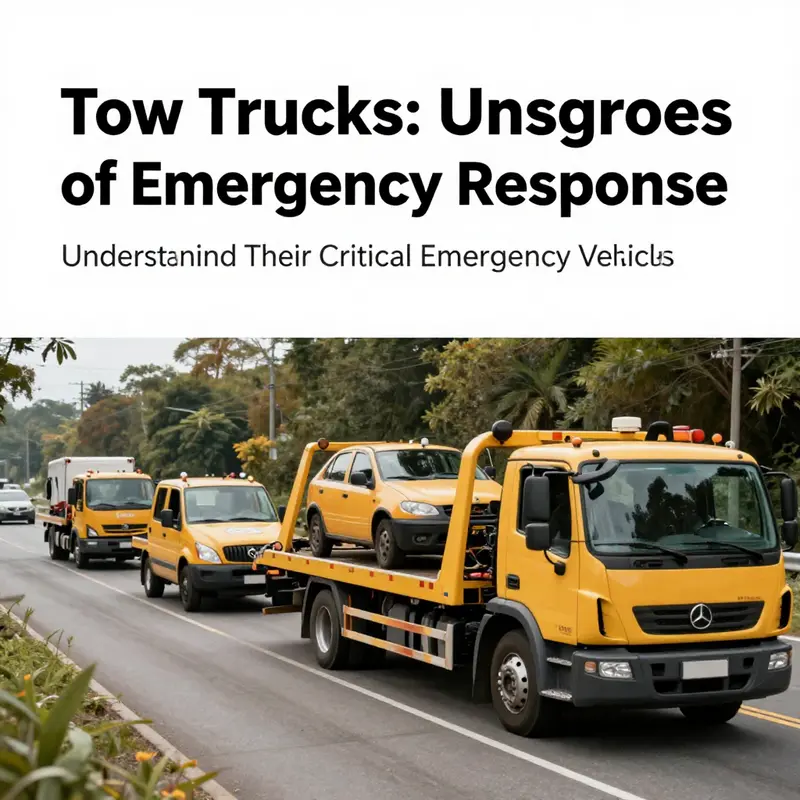
Tow trucks often operate quietly in the background but play an essential role in our emergency response system. Their value becomes especially evident during roadside crises, vehicle breakdowns, and hazardous driving conditions. This article delves into whether tow trucks are classified as emergency vehicles, highlighting their operational duties, legal definitions, and public perceptions. Each chapter will provide deeper insights into how—with their unique design and purpose—tow trucks serve the community and support safety on our roads.
Tow Trucks at the Threshold of Public Safety: Reframing the Question of Emergency Vehicle Status
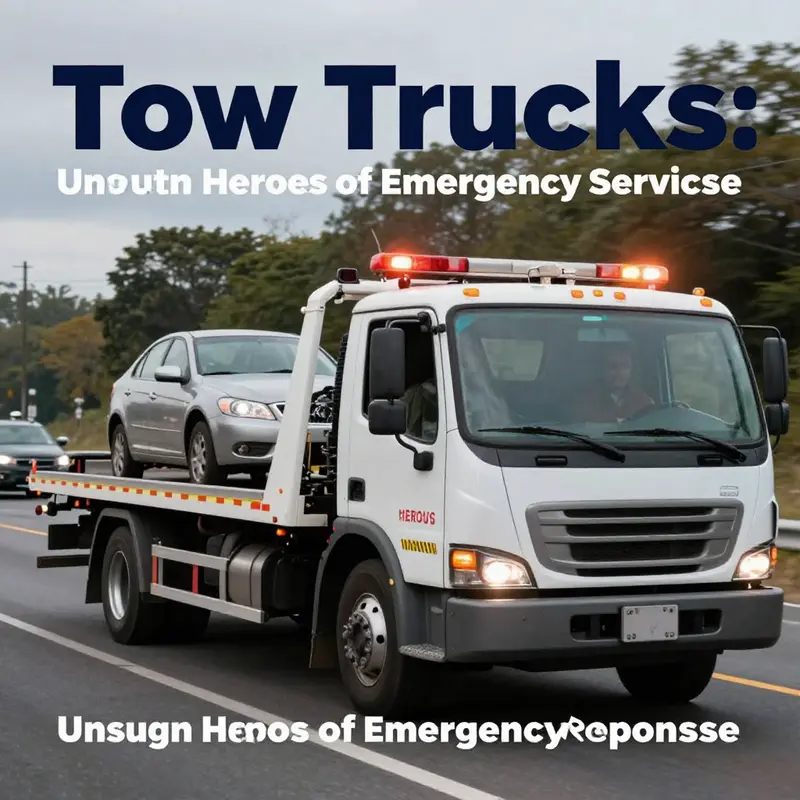
When a highway becomes a moving puzzle of rubber, steel, and risk, the people and machines designed to restore order occupy a critical but often underappreciated niche. Tow trucks stand at the threshold of public safety, not as flash-lit heroes in the same sense as police cruisers or ambulances, but as essential partners in every incident where vehicles fail, roads clog, or lives could be placed in jeopardy. The core question—are tow trucks emergency vehicles?—maps onto a broader inquiry about how we define emergency response itself. The answer is nuanced, and it reveals a larger truth about public safety: it depends on function, on jurisdiction, and on the seamless coordination that keeps scenes safe and roads open. In practice, tow trucks fulfill a proactive and reactive duty that is central to incident management, even if they do not always wear the same ceremonial badge as other emergency responders. Their work reduces risk, accelerates clearance, and clears a path for police, fire, and medical personnel to do their jobs more effectively. Seen this way, tow trucks are not merely support staff in the shadows; they are active participants in the safety architecture that governs modern travel and commerce.
To understand their place, one must distinguish between legal classifications and operational realities. Most people know that emergency vehicles typically include police cars, fire apparatus, and rescue ambulances—vehicles granted certain privileges to travel with lights and sirens in routine and urgent travel. Tow trucks, by contrast, usually do not have routine access to sirens or flashing lights, except in specific, limited emergency statutes or local ordinances. The legal framework varies from place to place, with some jurisdictions designating certain tow operations as emergency services under particular conditions or programs. This distinction matters, because it affects how quickly a towing crew can reach a scene, how they coordinate with other responders, and how the public perceives their role in the rapidly evolving dynamics at a roadside incident. Yet the operational reality in many regions is clear: when a crash blocks lanes, when a broken-down vehicle blocks the shoulder, or when a vehicle leaves the roadway and becomes a hazard, tow operators are among the first professionals to arrive, and they often arrive alongside police and fire crews to begin the delicate work of scene assessment, hazards reduction, and clearance.
The practical function of towing in emergencies runs deeper than simple vehicle removal. In the immediate aftermath of a collision or breakdown, the scene is a living system in which the safety of motorists, responders, and tow personnel depends on rapid assessment and disciplined action. A wrecked car can pose fuel risks, electrical hazards, or unstable loads. A stalled truck can create a bottleneck that invites secondary crashes and chain reactions. The tow operator’s task is not merely to haul away damaged vehicles; it is to stabilize the environment, extract the hazards, and restore the corridor for emergency access. In this sense, tow trucks perform an essential service that mirrors the mission of traditional emergency responders: preserving life, reducing harm, and maintaining public welfare in moments of disruption. When traffic flow is preserved, it reduces exposure to danger for responders and the general public alike, and it prevents the incident from escalating into a broader crisis.
Across the spectrum of tow equipment, the specialized capabilities of different machines reflect the varying demands of roadside recovery. Standard wreckers cradle heavy loads and provide simple winching capabilities, but some scenes call for much more. Hydraulic cranes reach upward to stabilize and lift overturned or heavily damaged vehicles. Self-loading systems and slide-back bed configurations enable rapid recovery in constrained spaces where a traditional rollback or flatbed would be impractical. In the hands of trained operators, these tools are not about spectacle but about precision and safety. They must work in concert with flashing lights, traffic cones, and the careful choreography that keeps other road users at a safe distance. This complex dance requires more than mechanical skill; it requires an understanding of traffic patterns, weather conditions, and the human psychology of drivers who encounter a slowed freeway or a closed ramp.
In many places, a formal designation exists for emergency tow operations under specific programs or statutes. These programs may grant limited emergency status to certain tow units, allowing a more rapid response to incidents that threaten public safety. Even when such status is not granted, the coordination between tow operators and other agencies is well established in modern incident management. Tow trucks are included in emergency service rosters, because their presence is integral to the restoration of normalcy after a crash or blockage. They operate under a coordinated command structure that integrates police, fire, EMS, traffic management authorities, and roadside service providers. The goal is not to blur the boundaries of professional responsibility, but to ensure that the entire system can react quickly, share information, and allocate resources where they are most needed. The practical payoff of this integration is measurable: clearer roadways, fewer secondary incidents, and faster access for responders who may be dealing with injuries, fires, or hazardous materials.
This interconnected approach is reflected in policy documents and guidance that recognize tow trucks as essential partners in emergency response. Consider the overarching idea of traffic incident management (TIM), a framework that embodies the collaborative ethos at the heart of professional road safety. TIM emphasizes rapid scene assessment, timely clearance, and safe, efficient transportation through the incident scene. Tow operators contribute at every stage—from arrival and initial hazard reduction to vehicle recovery and final roadway reopening. They work with responders to establish safe zones, determine the best equipment for the job, and implement secure load handling that protects both the rescuers and the vehicle occupants. The procedural language of TIM reinforces a simple truth: the faster a lane can be reopened, the lower the risk of additional crashes, and the safer the entire corridor becomes for all travelers.
The visibility of tow trucks at accident scenes often shapes public perception of emergency response as well. In the immediate aftermath of a collision, drivers observe not only the responders but also the heavy machinery drawing into the lane. The image can be powerful: a convoy of responders, a wrecker arriving with purpose, the hum of hydraulic systems, the careful placement of lights that carve out a safe operating envelope. This visibility matters, because it conveys a sense of order and safety to bystanders who may be anxious or frustrated by delays. It also signals to motorists that responders are managing risks and that the roadway will be restored. In this sense, tow operators contribute to the psychological dimension of emergency response, offering reassurance through competence and predictability, even as the scene confronts the unpredictable realities of traffic crashes, weather, and mechanical failure.
To advocate for a precise categorization might risk obscuring the essential truth: whether or not a tow truck carries sirens, its role in maintaining mobility is fundamental to public safety. In jurisdictions that grant them emergency status during specific conditions, tow trucks gain a formal voice in the incident command system, with clear lines of communication to police, fire, and EMS. In others, they operate under strict protocols but with the same end in mind—the rapid, safe removal of hazards that threaten life and limb. Either way, the strategic function remains: tow operators are the connective tissue that links accident occurrence to scene clearance, and their efficiency directly affects the time-to-clearance metric that is so critical to road safety.
The distinction between de facto emergency support and formal emergency designation often boils down to standards and training. A well-run towing operation aligns its practices with established safety standards, ensuring that recovery work adheres to high levels of risk assessment, equipment maintenance, and crew readiness. Cross-training with police, fire, and EMS enhances mutual understanding and communication on the ground. That level of standardization is not merely bureaucratic; it translates into tangible safety gains for responders and for the people who depend on highways for work, medical access, and daily life. A cited body of guidance, including mechanistic references to tow operations as part of emergency response, supports the view that these vehicles are indispensable to a functioning public safety ecosystem. Even when tow trucks do not wield sirens as a matter of policy, they move within a framework that treats recovery as an emergency operation with life-saving implications.
The broader narrative here is not one of replacing traditional emergency vehicles, but of recognizing the synergistic relationship that makes modern emergency response possible. Police vehicles create space, direct traffic, and protect the scene; fire apparatus manage life safety hazards, including fires and hazardous materials; EMS teams deliver medical care and triage. Tow trucks, in this architecture, do what they do best: retrieve, remove, and restore. They clear the lane, stabilize the hazard, and allow the other responders to do their critical work without impediment. This collaborative model reduces the risk of secondary crashes, speeds up ambulance routes to the injured, and decreases exposure time for all responders on site. When these elements come together, the distinction between a traditional emergency vehicle and a recovery vehicle becomes less a matter of badge and more a matter of function within a unified mission: protecting lives, preserving property, and safeguarding traffic flow in moments of instability.
The practical implication for policymakers, fleets, and the traveling public is straightforward. Acknowledge the essential role of tow trucks in emergency response, invest in operator training and equipment standards, and ensure that dispatch and incident command systems accommodate their participation. Public communication can emphasize that the aim is not to redefine every vehicle’s category but to optimize the efficiency and safety of the entire response ecosystem. This approach also aligns with proactive risk management, as consistent procedures and interoperable protocols matter most at the moments when every second counts. In that sense, tow trucks are not merely auxiliary devices in a road incident; they are a bridging force that connects incident occurrence with the resources necessary to restore normalcy for millions of daily travelers. Their presence at the scene, whether formally designated as emergency units or operating under standard mobilization procedures, remains a testament to the value of coordination, preparedness, and shared commitment to public safety.
For readers who seek a practical takeaway, the takeaway is clear: treating tow operations as an integrated element of emergency response improves outcomes. This means ongoing training in recovery techniques for heavy and light-duty units, routine equipment inspections, and the cultivation of established radio and incident-scene protocols that align with police, fire, and EMS operations. It also means recognizing the public safety benefits of rapid removal of damaged vehicles and obstructions, which reduces exposure to traffic risks for bystanders and responders alike. In jurisdictions where explicit emergency status is granted for certain tow operations, it is a positive development that formalizes what is already happening on the ground—the urgent, coordinated action that keeps roads open and people safe.
In this light, the question of “Are tow trucks emergency vehicles?” becomes less about legal labels and more about systemic capability. Tow trucks are, in practice, emergency response assets. They contribute directly to life safety and to the efficiency of the entire incident-management process. They are indispensable to the mission of keeping public spaces safe, navigable, and predictable in the wake of disruption. Their role reinforces a fundamental truth about public safety: every part of the system—police, fire, EMS, and recovery specialists—has a critical function. When each component works in concert, the whole becomes stronger than the sum of its parts. Tow trucks, with their specialized equipment, trained operators, and readiness to respond, embody that collective strength and, in doing so, deserve recognition as integral members of the emergency response family.
To link this discussion back to practical resources and the everyday realities of operators on the road, fleets that emphasize emergency-readiness and standardized procedures navigate these complexities more smoothly. A framework that connects fleet readiness with emergency response outcomes helps ensure that recovery work aligns with the fastest possible clearance while maintaining the highest safety standards. The emphasis on standardization in heavy-duty rescue operations, along with the broader emphasis on emergency-response fleets, illustrates how a well-prepared towing operation can elevate public safety outcomes when disasters strike. For the reader seeking to explore industry perspectives on these themes further, the broader landscape includes conversations about fleet standardization, readiness, and the evolving role of tow operators as central participants in multi-agency responses. A comprehensive approach to training, equipment, and coordination can transform tow operations from a reactive service into a proactive pillar of incident management, reinforcing the sense that, in truth, tow trucks are emergency vehicles in a practical and operational sense even if the badge differs.
In sum, the status of tow trucks as emergency vehicles is best understood through the lens of function and system-wide impact rather than through a narrow legal checklist. They are the operational glue that binds hazard stabilization to rapid clearance, the enablers of safe, efficient incident management, and the visible, steady presence that reassures the traveling public. Their contribution is not optional; it is foundational to the safety, mobility, and resilience of modern transportation networks. As the incident management ecosystem evolves, the conversation about tow trucks will continue to advance toward a more integrated and standardized model—one that recognizes their indispensable role while preserving the safety and clarity of the broader emergency response framework. For those who study or work in this field, the takeaway is practical: invest in the readiness, training, and coordination that empower tow operators to do their jobs safely and quickly, because doing so enhances the entire system’s capacity to protect people, property, and pace on the roads we all share.
External reference: https://www.nhtsa.gov/vehicle-safety/tow-trucks-and-emergency-response
Internal resource: Fleets Emergency Response
Tow Trucks on the Edge: Legal Definitions, Privileges, and the Emergency Vehicle Question
Tow trucks occupy a curious space in the public safety landscape. They are neither police cars, fire engines, nor ambulances, nor do they carry the explicit mandate to save lives in the same way medical or firefighting units do. Yet in traffic incidents, on congested highways, and during severe weather, tow trucks perform critical, life-impacting work. The question of whether they are emergency vehicles does not yield to a single, universal yes or no. Instead, it unfolds through a nuanced reading of legal definitions, jurisdictional privileges, and the operational realities of road rescue and recovery. In this sense, the status of tow trucks as emergency vehicles is best understood as a spectrum—one that stretches from formal classifications to functional roles in crisis response. The spectrum helps explain why tow operators are routinely counted among the partners of police, fire, and EMS at the worst moments on the road, even as their formal status remains distinct in most statutes and regulatory schemes.
To grasp the landscape, it helps to begin with the core distinction that governs emergency vehicle status. In most places, emergency vehicles are defined by a legal framework that emphasizes the vehicle’s primary mission and its authority to command the flow of traffic. Police cars, fire apparatus, and ambulances are traditionally categorized as emergency vehicles because their primary objectives center on life safety, incident stabilization, and public protection. They carry the right of way in urgent missions, and their operators routinely use sirens and flashing lights to alert other roadway users. Tow trucks rarely fit this mold by design. Their primary function is response to a breakdown, accident, or recovery operation rather than medical intervention, law enforcement, or fire suppression. This fundamental distinction drives the core legal status: tow trucks are generally classified as commercial or service vehicles rather than formal emergency vehicles with universal right-of-way authority. The distinction, however, does not strip tow trucks of their essential emergency-related roles. It simply frames the discussion in terms of legal category rather than operational necessity.
Nevertheless, the practical reality at crash scenes and along busy highways is more complex. Jurisdictions recognize a range of privileges that allow tow operators to operate safely and effectively during emergencies. In some states, emergency scene management requires rapid clearance of hazards, and designated tow operators may be granted limited privileges, such as the use of emergency lighting or, in rare cases, heightened right-of-way in controlled manners. Amber lights, blue lights, or other signaling devices may be approved for use by tow operators when they are actively engaged in recovering a disabled vehicle, removing debris, or stabilizing a hazard. These allowances are carefully regulated. They are not blanket permissions to exceed all traffic controls at will; instead, they are targeted permissions designed to reduce additional risk and protect responders and motorists. The regulatory balance aims to preserve safety without creating parallel traffic lanes that could complicate an already tense scene. The practical effect is that a tow operator can be more visible and, therefore, more predictable to other drivers during a recovery operation, while still operating within a framework that keeps the operation anchored to standard traffic laws and incident command structures.
The Washington State Department of Licensing offers a clear illustration of how these concepts cohere in policy. It defines an “emergency tow truck” as a motor vehicle specially designed and constructed principally for the purpose of recovery and/or towing. This definition acknowledges the special role tow trucks can play in emergency contexts without subsuming them into the formal emergency vehicle category. This approach mirrors broader regulatory philosophy: public safety benefits are enhanced when trained tow operators are integrated into the response ecosystem, but legal classification remains distinct to reflect the vehicle’s primary function. The key takeaway is that emergency status can be situational and jurisdiction-specific. Tow trucks may operate with emergency lighting or limited right-of-way under certain circumstances, yet they remain, in the formal sense, separate from police, fire, and EMS vehicles. The practical implication is a dual reality: legally separate, but operationally indispensable during multi-agency responses.
This dual reality feeds into the broader regulatory framework that governs traffic safety and incident management. In the United States, the National Highway Traffic Safety Administration (NHTSA) provides guidelines and policy influence that shape state and local rules. NHTSA’s attention to tow trucks and emergency operations reflects a recognition that recovery assets are integral to reducing scene times, lowering secondary crash risk, and safeguarding responders. While NHTSA does not grant tow trucks universal emergency vehicle status, its guidance helps states craft policies that align with best practices for traffic incident management, recovery operations, and interagency coordination. The practical effect is a layered system in which tow trucks operate under a legal framework that supports safe and efficient recovery, while retaining a distinct legal classification and set of privileges. This layered approach is essential for clarifying responsibilities during complex scenes where multiple agencies converge to restore safety and mobility.
Operationally, the role of tow trucks in emergencies revolves around a few core functions: scene assessment, hazard removal, vehicle recovery, and traffic stabilization. When a crash blocks a lane or a vehicle becomes a hazard in a travel lane, promptly removing that vehicle clears the scene and reduces the risk of secondary incidents. Recovery work often involves winching, towing from ditches or off-road locations, and the urgent need to move damaged vehicles to a safe location where investigators and insurance processes can proceed. In these moments, visibility, predictable behavior, and adherence to safety protocols are paramount. The visibility afforded by emergency lighting serves not as a claim to privilege but as a practical signal to approaching drivers that a recovery operation is in progress and that extra caution is warranted. Operators trained in incident scene safety coordinate with police, fire, and EMS to ensure that the area is secured, that traffic is redirected appropriately, and that personnel have secure zones to work within. In short, the tow truck’s contribution to public safety is most visible at the point of hazard mitigation and lane clearance, where every minute saved translates into reduced exposure for responders and motorists alike.
A crucial dimension of this discussion is fleet readiness and standardization. If tow fleets are to function effectively alongside formal emergency services, they must operate with a consistent level of training, equipment, and procedures. The concept of emergency readiness within a tow fleet encompasses more than just having the right tools; it includes protocols for radio communications, incident reporting, and adherence to command structures that govern traffic incident management. It also means aligning with broader safety standards so that when a tow crew arrives at an incident, their actions are predictable to responders and the public. The goal is a seamless, well-coordinated response where each component, including the tow fleet, knows its role and executes it with discipline. This is not a matter of redefining the legal status of tow trucks, but of ensuring that their operations contribute to the overall safety architecture without introducing confusion or risk on the roadway.
To illustrate how this translates into practice, consider the conversation around fleet standardization and emergency readiness. Within the broader field, many operators emphasize standardized equipment kits, consistent signaling practices, and uniform crew procedures. Such standardization supports interoperability on the scene and fosters trust with other agencies. It also minimizes the chance that a recovery operation diverges from established safety norms under the pressure of a crisis. For readers looking to explore these ideas in greater depth, the discussion on fleet-standardization-emergency-readiness offers insights into how fleets can align their readiness with public safety objectives without compromising their legal status as service vehicles. Integrating standardized practices helps ensure that tow operations contribute to a safe and efficient incident management process and that they can scale their response in line with the complexity of the scene.
The broader question of whether tow trucks are emergency vehicles is thus best understood as a matter of context and jurisdiction. In formal terms, they are typically not emergency vehicles with universal right-of-way privileges. In practice, however, they are indispensable partners in emergency response, and many jurisdictions grant targeted privileges to support safe and rapid scene clearance. The result is a complementary system in which tow operators bring technical recovery capabilities, experience in hazard mitigation, and disciplined adherence to safety protocols to bear on incidents that threaten public safety. The relationships among responders—police, fire, EMS, and towing—are built on clear expectations about roles, communication channels, and shared safety goals. When these elements align, the outcome is a more resilient roadway environment where traffic disruptions are minimized, responders are protected, and the general public is safer.
In reflecting on this landscape, it is important to keep faith with the real-world purpose of tow operations. The question is not simply one of semantics but of public safety outcomes. Legal definitions shape the privileges and responsibilities that accompany the tow operator’s presence at an incident. Operational practices, governed by standards and interoperability, ensure that those privileges translate into safer, more efficient recovery work. The end result is a traffic system that respects the important distinction between roles while embracing the practical necessity of collaboration. The most important takeaway for readers is this: even when tow trucks do not carry the formal badge of an emergency vehicle, their collaboration with police, fire, and EMS at incident scenes stands as a critical pillar of modern road safety. Their work preserves lives indirectly, by reducing exposure at the scene, accelerating clearance times, and restoring mobility in the wake of disruption.
For those who want to explore practical implications further, consider looking into how fleets prepare for and execute emergency readiness in real-world operations. A well-prepared fleet operates with a disciplined set of procedures that harmonize with incident command systems while preserving the distinct legal status of tow operations. This approach reinforces the idea that the emergency response ecosystem works best when all participants understand their roles, respect one another’s authority, and share a commitment to safety above all else. As a closing reflection, the question of whether tow trucks are emergency vehicles becomes less about a single label and more about a collective capability: a capability that helps keep traffic moving, protects responders, and supports the communities that depend on timely and professional roadside assistance.
External resource for further context: For authoritative guidance, see the National Highway Traffic Safety Administration’s discussion of tow trucks and emergency operations: https://www.nhtsa.gov/vehicle-safety/tow-trucks-and-emergency-operations
Tow Trucks in the Safety Web: Public Perception, Legal Status, and the Quiet Strength of Emergency Roadside Response
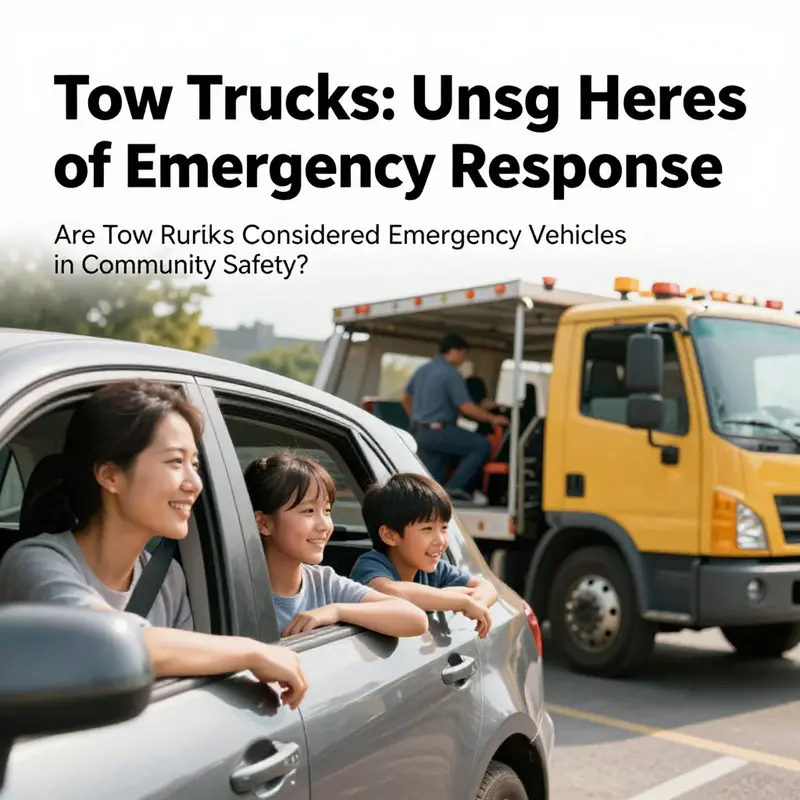
When a roadside incident unfolds, the scene can feel chaotic, with flashing lights, sirens in the distance, and at the center a vehicle that seems to stand apart from the traditional emergency trio of police, fire, and medical units. Yet tow trucks, often overlooked in quick judgments about “emergency vehicles,” carry a different kind of weight in the public safety ecosystem. They are not always labeled as emergency services in the strict legal sense, and they do not always enjoy the same rights of way or the same emergency lighting privileges as police cars or ambulances. But to interpret their role as only that of a recovery crew is to miss a larger truth: in road rescue and recovery operations, tow trucks function as essential partners whose timely presence can prevent further harm, restore mobility, and sustain public order. Their contribution is not merely logistical; it is a critical thread in the fabric of community safety.
The public perception of tow trucks sits at the intersection of everyday experience and formal regulation. For drivers who encounter a disabled vehicle on a crowded highway, the sight of a tow truck arriving swiftly can feel like a calm voice in the storm—an indicator that the roadway is about to become safer, not more dangerous. Tow operators often arrive quickly, assess hazards, clear the path, and set in motion the sequence that removes impediments to traffic flow. In many cases, their actions prevent secondary accidents that can arise from slow reactions, sudden lane changes, or lingering debris. This practical impact—reducing exposure to danger for motorists, responders, and displaced drivers alike—contributes to a broad public image of tow trucks as indispensable members of the roadside safety network.
From a legal and policy vantage point, the distinction between emergency status and emergency function matters. Some jurisdictions define an emergency tow truck with specificity, recognizing a vehicle that is specially designed for recovery or towing as serving an emergency role within a broader system. In Washington State, for example, the definition of an emergency tow truck underscores the official recognition of these vehicles in recovery operations, even if they do not bear the same statutory labels as police cars or fire engines. This nuance matters for operations on busy roads, where the presence of an emergency tow vehicle signals a managed response to a disruption rather than a routine highway service call. The difference between formal designation and functional necessity can shape how responders coordinate, how traffic is diverted, and how the public understands the lane-clearing choreography that unfolds at the edge of danger.
Yet the on-the-ground reality for many communities is that tow trucks are deeply woven into emergency response rosters and mutual-aid networks. They are often deployed alongside police, fire, and medical services in multi-agency responses. At an accident scene, their role extends beyond removing damaged vehicles; they help create space for investigators, enable emergency crews to operate more safely, and facilitate the rapid reestablishment of traffic corridors. This collaborative function highlights a central truth: public safety is not a single act but a sequence of coordinated actions, and tow trucks occupy a key position in that sequence. They can provide immediate, practical stabilization—everything from blocking lanes to securing hazardous materials, from stabilizing a rollover to relocating a vehicle from a ditch—while other units address medical care, crime, or fire.
To understand how communities perceive these vehicles, it helps to look at the everyday realities of tow operators who work under the pressure of time and the unpredictability of the road. In winter storms, for instance, tow operators might be among the first responders to reach stranded motorists, performing basic roadside assistance such as jump-starts or battery checks that can turn a perilous delay into a safer exit from danger. In urban centers, where traffic bottlenecks can cascade into gridlock, the swift removal of a single obstructing vehicle can avert hours of delay and exhaust. In all these scenarios, public perception tends to translate efficiency into safety. People notice when a tow crew arrives with well-coordinated equipment, when debris is cleared in a way that minimizes the risk of another collision, and when traffic control measures are visibly reducing exposure to risk.
The public sees tow trucks as a bridge between incident and resolution. This perception is reinforced when government agencies—police departments, fire services, transportation authorities, and public works divisions—own and operate tow assets as part of a cohesive safety strategy. When a city or region harnesses its own fleet to support incident management, it demonstrates a practical policy aim: to minimize downtime, protect lives, and maintain the continuity of essential mobility. The integration of tow operations into public safety rosters signals not a redefinition of emergency services but an expansion of their efficiency. Roadways, after all, are dynamic environments where risk shifts with speed, weather, and vehicle density. A well-timed tow response can turn a potential focal point of danger into a controlled, orderly space for responders to work.
Public education plays a role, too. Citizens often learn the basics of what to expect at an accident scene through outreach, training, and media coverage. A roadside incident is not only about the emergency itself but about how the surrounding system responds. When drivers understand that tow operators can rapidly clear lanes, restrain hazards, and reestablish a flow of traffic, they become allies in the safety mission rather than passive bystanders. This awareness fosters respect for the complexity of coordination at the edge of danger. It also helps motorists anticipate what may seem like a routine tow operation—the loading and securing of a vehicle, the setting of lights and flares, the management of bystanders—and recognize that these steps are part of a larger protocol designed to protect people, not just property.
In this light, the chapter on public perception is less about drawing hard lines between “emergency vehicle” and “non-emergency service” and more about acknowledging the interconnected roles that keep roadways safe. Tow trucks might not carry the same statutory privileges as police cars, but their everyday contributions to traffic management, hazard mitigation, and rapid incident stabilization render them an essential node in the safety network. Their presence signals order in the midst of disorder and demonstrates how the safety system relies on specialized capacities that come from both public agencies and private practitioners working in concert. The public thus absorbs a coherent narrative: tow trucks are not the front-line lifesavers in a medical sense, but they are critical enablers of safety, efficiency, and orderly movement when people need it most.
This chapter does not pretend to erase the nuance between legal designation and operational reality. It is, however, an invitation to recognize that public safety is a spectrum, with tow trucks occupying a stable and important rung. The spectrum includes rapid response, hazard reduction, and traffic management as core functions that complement the more visible rescue efforts performed by police, fire, and EMS. In the end, the public’s confidence in road safety rests on the reliability of every actor on that spectrum. Tow operators who harmonize with local protocols—who understand when to wait for a larger clearing operation and when to act decisively to clear a lane—become, in the public’s eyes, not just service providers but trusted stewards of community safety.
The practical takeaway for communities and policymakers is clear. If safety is a shared responsibility, then the labeling of a vehicle as an emergency unit should reflect its actual duty to preserve life and protect the public in time-sensitive situations. An emergency tow truck’s specialized purpose—recovery and/or towing in service of incident management—merits recognition within the emergency framework, even if it does not redefine every rule of the road. And as cities plan for future resilience—whether through standardization of heavy-duty rescue operations or through broader emergency-readiness initiatives—it is prudent to acknowledge the strategic role that tow fleets play in maintaining mobility, reducing risk, and supporting responders across agencies.
Tow operators and the communities they serve are bound by shared interests: to arrive quickly, to work safely, and to restore order with minimal disruption. The public, in turn, benefits from a transparent, well-coordinated approach that explains not only what tow trucks do but why they matter when seconds count and when the road is a shared corridor of risk and relief. For those seeking to explore how fleets incorporate emergency-readiness principles into their standard operating procedures, the broader discussion of standardization and readiness offers a useful frame. In those conversations, the idea that a tow fleet is more than a roadside helper emerges: it becomes a deliberate element of a robust emergency response architecture.
As these dynamics unfold, it helps to ground the narrative in a sense of continuity. Tow trucks are not strangers at the scene of distress; they are part of a system designed to absorb impact, minimize harm, and return people to safety and mobility as quickly as possible. The public’s perception, shaped by experience and informed by policy, supports this view when communities can articulate the purpose and limits of emergency status in practical terms. That articulation matters because it guides how drivers interact with responders, how authorities allocate resources, and how the public understands the sequence of actions that unfold after a crash, a breakdown, or a severe weather event. In this sense, the presence of tow trucks at the edge of danger is not merely a logistical fact but a signal of coordinated care—that safety is something that can be mobilized in real time through a network of trained professionals and disciplined operations.
For readers who want to anchor these ideas in concrete practice, one example of how fleets contextualize emergency readiness can be found in ongoing discussions about standardization in heavy-duty rescue operations and the alignment of tow assets with emergency-response goals. The interplay between policy, training, and day-to-day execution reveals the depth of planning required to keep roads safe. In turn, this depth helps explain why public perception often views tow trucks as integral to community safety, even as the legal labels remain nuanced. When communities understand this nuance, they can support a more coherent safety strategy—one that recognizes the tow operator as a trained professional who fulfills a critical obligation: to restore order, safeguard lives, and make the return to normal traffic possible again, swiftly and with care.
Internal link for readers seeking more on how fleets integrate emergency-readiness into their operations can be found in the discussion of coordinated response frameworks at the company site, which outlines how emergency-response principles translate into everyday practice: Fleets Emergency Response. This resource illustrates how a fleet-oriented approach complements public agencies, reinforcing the idea that tow operations are a connective tissue within the broader safety system.
For a broader overview of tow trucks and their roles in public safety, including historical context and a general functional description, see the open-resource overview at the encyclopedia entry: https://en.wikipedia.org/wiki/Tow_truck
Final thoughts
In conclusion, tow trucks embody essential components of emergency response, even if they do not fit into the typical mold of life-saving vehicles like ambulances or fire trucks. Their ability to quickly assist and recover vehicles in distress plays a crucial role in community safety and traffic management. Understanding the nuances behind their classification as emergency vehicles helps appreciate the extensive support they provide when things go wrong on our roads.