
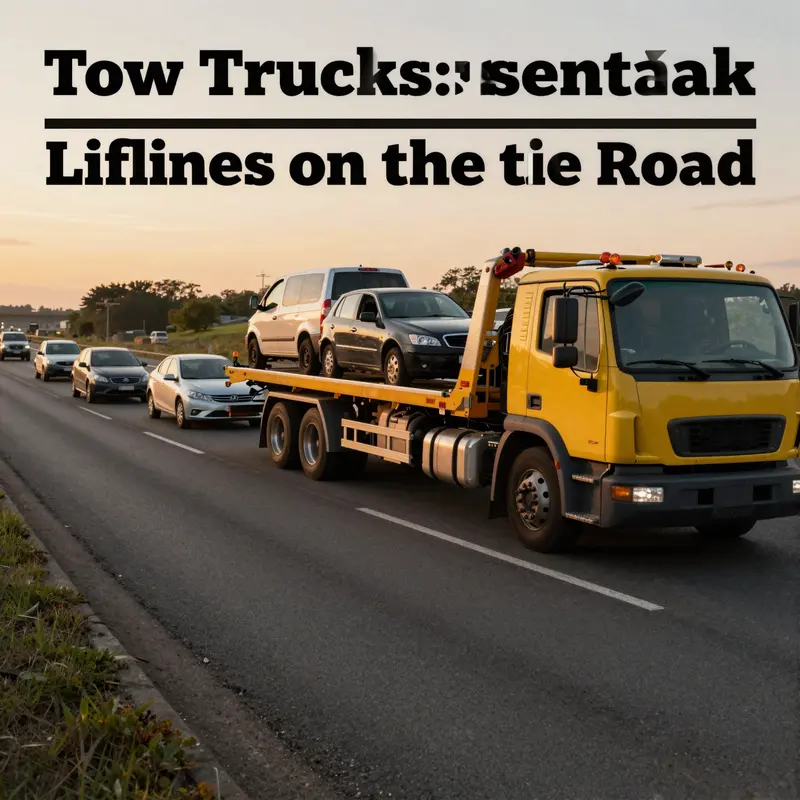
When a vehicle breaks down or is involved in an accident, tow trucks become critical first responders on the road. This article delves into how tow trucks function as emergency vehicles, safeguarding public safety and maintaining traffic flow in challenging situations. We’ll explore their significance in roadside assistance, their pivotal role in accident recovery, and the regulatory frameworks that classify them as emergency vehicles. Understanding these facets equips local drivers, car owners, auto repair professionals, and property managers with insights into the invaluable service tow trucks provide.
Roadside First Responders: How Tow Trucks Operate as Emergency Vehicles
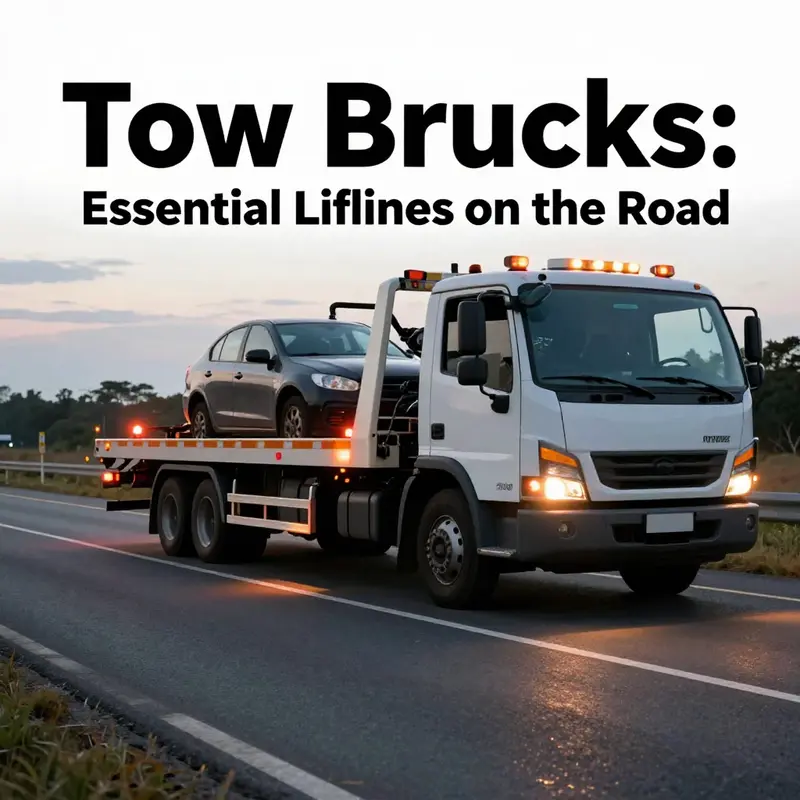
Tow trucks act as frontline emergency vehicles on our roads. Their presence keeps highways moving and scenes safer. When a crash, breakdown, or obstruction occurs, tow trucks do more than move cars. They stabilize hazards, recover damaged vehicles, and help prevent secondary collisions. This chapter traces the practical, operational, and safety roles of tow trucks within roadside assistance. It explains how equipment, training, dispatch, and legal recognition combine to make tow operators essential emergency responders.
Tow trucks respond to incidents with a clear purpose: remove danger and restore travel. That goal shapes every decision made on scene. Operators assess risk quickly. They create safe work zones. They position vehicles to protect people and traffic. They use lights, cones, and signage to warn approaching motorists. Those routine actions reduce crash risk and let other emergency responders work. Police and fire crews often rely on tow professionals to clear lanes. Traffic management teams depend on them to reopen critical routes.
Modern tow trucks come equipped to handle complex recoveries. Flatbeds allow whole-vehicle removals without extra stress on frames. Wheel-lift systems can quickly remove smaller vehicles. Heavy-duty rotators and hydraulic cranes recover large trucks and overturned trailers. Winches and snatch blocks provide controlled pulls from ditches and embankments. These tools let operators work in narrow shoulders, steep slopes, and icy conditions while minimizing vehicle damage. The right equipment, used properly, converts a chaotic scene into a manageable operation.
Skill and certification matter as much as gear. Many tow operators follow standardized training for vehicle recovery and scene safety. They learn how to stabilize wreckage, disconnect batteries, and secure fluid leaks. They practice winching techniques and risk assessment for suspended loads. Time-sensitive decisions routinely balance speed and safety. Certified training reduces the chance of further harm to a vehicle or a person. It also ensures operators can coordinate with firefighters, paramedics, and law enforcement without confusion.
Tow operators often become part of coordinated emergency response plans. Many agencies call on towing companies under formal contracts for incident clearance. Those agreements define response times, equipment standards, and operational protocols. They also outline communication channels during multi-agency responses. When a highway incident blocks traffic, a prearranged tow provider arrives to recover vehicles and clear lanes. This arrangement shortens roadway closures and limits the public’s exposure to risk.
Dispatch systems connect callers, emergency services, and tow fleets. A centralized dispatcher triages calls and directs the nearest qualified tow. Advanced systems use GPS, service history, and equipment type to match needs. If a disabled semi needs a rotator, the system flags a heavy-duty operator. If a vehicle requires a flatbed, dispatch sends the appropriate unit. Faster, better matches reduce scene time and help stabilize traffic flow sooner.
Communication protocols on scene prevent mistakes. Operators relay critical details to first responders. They report vehicle positions, fluid spills, and structural instability. They confirm whether airbags deployed and if fuel leaks are present. Clear, concise radio or phone communication prevents redundant actions and coordinates safe vehicle removal. In complex incidents, a single point of contact keeps operations efficient and fewer mistakes occur.
Tow trucks also play a rescue role in certain conditions. In inclement weather, operators traverse icy or flooded roads to recover stranded motorists. They may lift vehicles from ditches or remove cars from dangerous positions. Some towing professionals carry basic rescue gear. They may support fire and medical teams during extrication or patient transfer by stabilizing vehicles. In remote locations, tow crews often provide the first practical help until additional responders arrive.
Legal recognition of tow trucks as emergency vehicles varies, but their functional role is clear. Laws often grant them use of emergency lights and certain privileges while performing incident response duties. Regulations typically require visible markings, specific lighting, and adherence to safe operating procedures when using these privileges. Agencies that contract tow services often demand proof of insurance, certifications, and compliance with local safety codes before granting emergency access to roadways.
On multi-lane highways, the presence of a tow truck reduces the time a lane stays blocked. Rapid clearance lowers collision risk for passing traffic. Studies show that quick removal of disabled vehicles cuts the likelihood of secondary crashes. Tow trucks are the key mechanism for that removal. Their speed matters, but not at the expense of safety. Training ensures operators move vehicles promptly and properly.
Industry standards guide many towing operations. Associations and transportation agencies publish best practices for scene safety, vehicle recovery, and personnel protection. Those standards emphasize durable protective clothing, high-visibility markings, and the correct placement of cones and lights. They also recommend procedures for coordinating with police and fire services. Adhering to those standards elevates towing from a service task to an organized emergency function.
Technology further integrates tow trucks into emergency operations. Fleet telematics provide real-time location and status updates. Digital platforms route calls using live traffic data and predicted arrival times. On-scene, digital checklists and communications apps sync actions between responders. Video feeds from dash cams and helmet cameras document scene conditions. That documentation supports after-action reviews and insurance processes. Technology shortens response cycles and clarifies decision-making for all parties.
Safety culture within towing organizations affects outcomes. Companies that prioritize training, equipment maintenance, and worker safety see better incident results. Safety-minded fleets standardize procedures across vehicles. They maintain winches, recoveries, and lights to ensure readiness. They rotate drivers through drills and reviews. This culture reduces on-scene errors and prevents injuries. Operators who respect safety protocols protect themselves, victims, and other commuters.
Tow trucks also face specific operational challenges. Night operations increase risk from reduced visibility. Weather complicates winching and stabilization. Large commercial vehicles require specialized equipment and crews. Each condition demands unique tactics. Experienced operators adapt quickly, choosing the safest method for each recovery. Their judgment under pressure often determines whether an incident resolves smoothly.
Insurance and liability shape the formal role of tow providers. Clear contractual terms outline responsibilities during recovery operations. When a tow operator is under contract with police or transportation agencies, liability expectations are often spelled out. That legal clarity encourages standardized approaches to scene safety and equipment usage. It also clarifies who takes responsibility for vehicle damage during tow or recovery.
Ethics and customer care are intrinsic to emergency towing. Operators must balance speed with respect for vehicle owners. Handling a damaged car requires empathy and professionalism. Tow crews often explain processes to motorists and provide updates about timing and location. That communication reduces anxiety and increases cooperation. Ethical behavior increases public trust in towing as an emergency service.
Coordination with traffic incident management programs magnifies the effect of tow trucks. Many regions include towing in their incident management plans. These programs prioritize rapid clearance to reduce congestion and improve safety. Tow operators who participate in these programs train alongside other responders. They follow shared protocols for traffic control, scene stabilization, and communication. This coordination shortens clearance times and improves outcomes for everyone.
Tow operators must also navigate public perception and regulatory scrutiny. Clearing a roadway quickly is widely appreciated. But questions sometimes arise about billing, vehicle damage, or improper towing. Transparent contracts, clear signage, and documented procedures help reduce disputes. Many jurisdictions require licensing and enforce standards to prevent predatory practices. When operators adhere to rules and communicate openly, public confidence grows.
Continuous improvement drives emergency towing forward. Agencies and towing companies analyze incidents to find efficiencies. They study response time, scene duration, and safety incidents. Training evolves to address new vehicle technologies and heavier commercial rigs. Equipment standards shift as new recovery tools emerge. This cycle of learning improves safety and response effectiveness.
Tow trucks do more than haul disabled vehicles. They restore safe travel, stabilize hazardous scenes, and support rescue operations. Their combination of equipment, training, and operational discipline makes them indispensable in roadside emergencies. In many jurisdictions, formal recognition and contractual integration reflect that reality. Tow operators serve as vital partners in emergency response and traffic management.
For fleets seeking to improve readiness, establishing standardized training and equipment protocols pays off. Fleets that integrate into regional emergency plans and offer consistent, certified services gain quicker dispatch access and improved reputations. If you want to learn how fleets prepare for incident response and maintain readiness, explore resources on fleet coordination and emergency readiness with a focus on operational standardization and training in fleet contexts: fleet emergency response.
Industry references underscore the role of towing in roadside assistance. For additional official guidance on emergency vehicles and broader emergency response classifications, consult roadside assistance resources and standards such as those provided by national automotive associations: https://www.aaa.com/roadside-assistance/.
Lifelines on the Road: Tow Trucks as Essential Emergency Responders in Accident Recovery
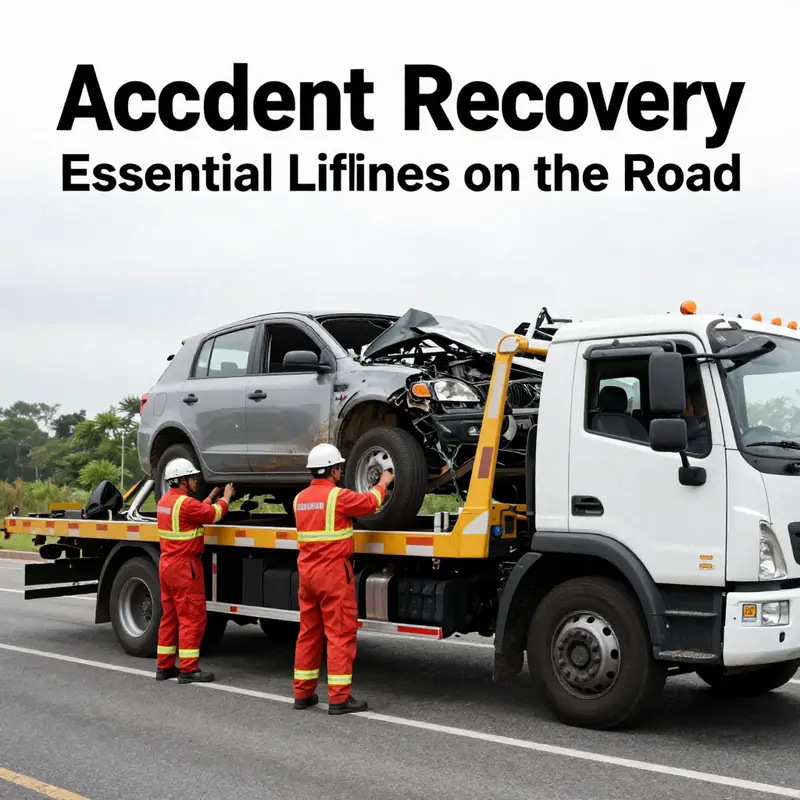
The highway is a living artery of movement, a system that carries people, goods, and stories from one place to another. Yet when the flow is interrupted by a breakdown, a minor collision, or a vehicle disabled in a hazardous lane, the road reveals a different kind of lifeline—the tow truck. These vehicles, once seen simply as a means to remove a car from the shoulder, operate as integral parts of an emergency response ecosystem. They are deployed not only to recover property but to preserve life, to restore traffic flow, and to reduce the risk of further harm in moments when seconds count and safety depends on swift, coordinated action. In the broader conversation about what constitutes an emergency vehicle, tow trucks occupy a singular space: they are responders who translate plans into action at the edge of danger, where the outcome hinges on the operator’s training, the vehicle’s capabilities, and the readiness of the entire response network that includes police, fire, and transportation agencies. This chapter follows the trajectory from the roadside incident to the cleared roadway, revealing how tow trucks function as emergency assets, the equipment and tactics that define accident recovery, and the standards that guide crews toward consistent, safe, and efficient performance.
At the heart of any accident recovery operation is the recognition that the scene is not merely a single vehicle in distress but a dynamic, evolving environment. A disabled car may lie across the lane, tangled in debris, or overturned, blocking the flow of traffic and creating a cascade of risks for oncoming motorists, responders, and bystanders. Tow trucks arrive with a purpose that blends care with capability. They are designed to navigate the complexity of post-crash scenarios, where stability must be reestablished before vehicles can be moved, reoriented, and transported to repair facilities. The equipment carried on board ranges from heavy-duty hoists and hydraulic systems to stabilizing gear and wheel-lift mechanisms, each element calibrated to protect the integrity of the vehicles involved and to minimize secondary damage during removal. In this sense, the tow truck is not just a vehicle towed away a problem but a carefully engineered tool of safety, deployed by technicians trained to assess risks, set up safe work zones, and execute a sequence that reduces exposure for everyone on the roadway.
The clinical precision of accident recovery hinges on choosing the right configuration for the scene. Among the options available, the articulated tow truck stands out for its maneuverability and reach. A jointed chassis pairs with a rotating boom, enabling operators to approach from angles that would be impractical for rigid designs. In tight, uneven, or debris-strewn environments—common at crash sites—the ability to pivot and extend reach without requiring wide clearance translates into faster recoveries and fewer ancillary hazards. The 360-degree rotation of the boom expands access to vehicles trapped behind obstacles or partially buried under wreckage. Operators speak of reduced reliance on secondary equipment and shorter timelines from arrival to removal, a reduction that matters when roadways must be reopened to prevent traffic buildup and additional collisions. This is more than mechanical advantage; it is a strategic asset in preserving the order of the roadway and the safety of all road users.
Another widely used configuration in accident recovery is the self-loader tow truck, sometimes called an automatic or quick-loader wrecker. Its design prioritizes speed and ease of operation, enabling a crew member to engage loading operations from the cab, often with one or two manipulations of a control system. For urban scenes where every second is precious, the self-loader can rapidly lift a vehicle onto the bed, especially for lighter cars or trucks that have not sustained catastrophic damage. The technology behind these units emphasizes efficiency, reducing the manual handling that can slow down recovery and limiting the exposure of rescuers to traffic and hazards. While self-loaders excel in rapid response for lighter vehicles, heavier or more complex crashes may demand additional hydraulic leverage or alternative configurations. Still, the fact remains that this class of tow truck brings a level of speed to the recovery process that can significantly shorten the time a lane remains blocked, curbing the risk of secondary incidents that often accompany congestion after a crash.
Wheel-lift tow trucks occupy a third, complementary niche in accident recovery. They lift a single axle or selected wheels, preserving the vehicle’s structural integrity and reducing the risk of cosmetic or mechanical damage during removal. This becomes especially important when the vehicle is of high value, newer design with delicate underbody components, or when the owner’s insurance considerations require careful handling. The wheel-lift approach minimizes contact with the vehicle’s body, which is particularly valuable for luxury models or vehicles with sensitive driveline arrangements. At a scene where the priority is damage control and preservation of the vehicle’s value, wheel-lift capabilities offer a controlled, precise method to clear an obstruction without introducing new harm. Operators must balance the subtle art of lifting with the science of weight distribution, ensuring that every movement is intentional and gentle enough to avoid further destabilization of the vehicle or the surrounding debris.
These different configurations do not exist in isolation. They are part of an integrated system designed to adapt to the variability of real-world incidents. The operator’s choices—whether to deploy an articulated unit for challenging access, a self-loader for speed, or a wheel-lift for delicacy—reflect a deeper understanding of the incident, the road geometry, and the constraints imposed by weather, traffic, and lighting conditions. Tow operators bring to the scene more than mechanical know-how; they bring a procedural mindset shaped by emergency response training. This training, which often aligns with protocols used by law enforcement, fire departments, and state transportation agencies, emphasizes scene safety, risk assessment, and coordination with other responders. It involves pre-incident planning and post-incident reporting, ensuring that the event is documented for accountability and learning. In many jurisdictions, certified operators participate in continuing education that covers highway safety, traffic control, and rescue techniques, reinforcing the view that tow trucks are not only service providers but active participants in the emergency services network.
The effectiveness of accident recovery also depends on how the operation is organized on the ground. Responders must establish a temporary workspace that shields workers from traffic, stabilizes damaged vehicles, and prevents additional movement of wreckage that could injure responders. Barriers, cones, and high-visibility lighting are deployed to create a protected zone, and communications are maintained with dispatch and other agencies to coordinate with police investigations, fire department assessments, and traffic management centers. The role of the tow crew extends into crowd and scene management as motorists slow to observe the work or rubberneck, generating a secondary hazard that can rival the original incident. The ability to communicate clearly, to interpret signals from law enforcement and safety officers, and to adapt plans as the scene evolves is as critical as the mechanical operation itself. In this sense, being an emergency vehicle means carrying a dual burden: the responsibility to recover property efficiently and the obligation to safeguard lives by controlling the environment around the crash site.
Public safety integration is not an abstract concept but a practical, everyday function of tow operations. Local and state agencies rely on standardized procedures that guide how tow crews route to a scene, how they stage and protect the work area, and how they document the recovery. These standards help ensure consistency across departments and jurisdictions, which is crucial when multiple agencies converge on a single incident. In training sessions and field exercises, operators practice horizon scanning—the ability to anticipate changes in traffic patterns, weather shifts, or new hazards as the scene develops. They also learn to manage the tension between rapid restoration of lanes and the necessity to maintain high safety margins during every lift and tow. The emphasis on both speed and safety is not a contradiction; it is the core philosophy that defines modern accident recovery. The NHTSA and other national safety bodies recognize tow trucks as critical elements within the emergency services ecosystem, not merely as ancillary support. Their inclusion in emergency vehicle classifications reflects a broader understanding of how essential recovery operations are to traffic safety and public welfare. For readers seeking formal guidance, official guidelines and definitions are available through national resources that discuss tow trucks as part of accident recovery and emergency response.
In practice, the real-world effectiveness of tow trucks emerges through the choreography of teams. The operator, the spotter, the safety officer, and any assisting personnel must function as a cohesive unit. Each person brings a distinct responsibility—from assessing vehicle stabilization to guiding operators with hand signals or radio communications, from ensuring that bystanders stay clear of the danger zone to verifying that the recovered vehicle is loaded securely for transport. When several agencies are involved, a unified command structure helps prevent duplication of effort and ensures that critical decisions—such as the safest pathway to haul a wrecked vehicle and the optimal sequence for loading—are made promptly and with full accountability. This level of coordination is made possible by the presence of standardized practices across the industry, practices that have evolved in response to the accumulation of field experience, the demands of different road environments, and the needs of diverse vehicle types. In a sense, the tow truck becomes a testbed for safety protocol: each recovery operation is a chance to apply learned lessons, refine procedures, and demonstrate how a well-trained crew can balance urgency with caution. Those who study and work in this field understand that every lift is a micro-institutional lesson in safety, every repositioning a demonstration of how constraints—such as a narrow shoulder or a slippery surface—must be converted into practical, disciplined action.
As the scene clears and traffic resumes its natural rhythm, the recovery operation tiles into memory as a moment when planning, technique, and teamwork converged into a successful outcome. But the chapter does not end there. The lessons of accident recovery extend beyond the immediate scene to inform fleet management, readiness, and resilience. Best practices in fleet standardization, safety protocols, and emergency-readiness planning become the scaffolding upon which faster, safer responses can be built. A fleet designed for emergency readiness emphasizes not only the most capable equipment but also the cultivation of human expertise, the maintenance of rigorous maintenance schedules, and the readiness to deploy in a coordinated manner with other responders. In this sense, tow trucks are more than tools for roadside repair; they are moving nodes of a broader emergency network, capable of rapid, reliable service that keeps roads safer for everyone who uses them. The connections among equipment, training, and policy create a virtuous circle: improved tools support better training; enhanced training leads to better execution; reliable execution reinforces the value of standardized protocols and better coordination with public safety agencies. In turn, this strengthens public confidence in the safety and reliability of road travel, underscoring the essential status of tow trucks within the emergency vehicle family.
For those who want to explore how fleets prepare for emergencies at a systemic level, many operators and agencies have documented approaches to standardization and readiness. A practical angle lies in how fleets integrate emergency response into their daily operations, ensuring that staffing, equipment, and procedures align with the realities of road networks and the unpredictable cadence of incidents. The emphasis on standardization helps reduce variability in performance, making it easier to train new operators, to audit practice, and to sustain safety across the service area. When a roadway incident occurs, the first responder at the scene can rely on a well-prepared fleet that has already considered fuel management, tire wear, hydraulic fluid monitoring, calibration of lifting systems, and redundancy in critical components. The result is a service that not only meets the immediate need of removing a disabled vehicle but also reinforces the resilience of the entire highway system. Such resilience matters more as the climate, traffic volumes, and urban development patterns push the boundaries of what emergency responses must handle. The more predictable and standardized the operation, the more quickly crews can adapt to the ever-changing demands on the road, maintain safety margins, and protect the public.
From the perspective of street-level safety and the broader public good, tow trucks form a bridge between everyday mobility and the extraordinary demands of emergencies. They remind us that emergency response is not solely about flashy rescues or urgent medical interventions; it is also about the patient, disciplined, and highly skilled work of clearing lanes, removing hazards, and returning the road to a safe, usable state. The operator’s boots-on-the-ground expertise is complemented by the vehicle’s design: strong stabilizers, robust winches, and intelligent hydraulics that respond to changing loads and delicate handling requirements. Put together, these elements produce a kind of engineering empathy: a recognition that a vehicle, to be moved safely, must be treated as an object worthy of careful planning and precise execution. This ethic—careful planning, disciplined execution, and respect for the unpredictable human and mechanical factors on the road—frames the tow operator as an essential member of the emergency services family, one who operates at the intersection of public safety, traffic management, and vehicle repair.
To connect this professional reality with the everyday experiences of travelers, it is helpful to consider the arc from alarm to resolution. A motorist may call for help after a breakdown or after a collision, and the responder’s role begins with triage—assessing hazards, identifying the safest approach to scene, and communicating travel implications to dispatch and highway operators. The recovery operation then unfolds along a continuum: stabilization of the wrecked vehicle and the surrounding environment; securing the vehicle so that it can be moved without compromising its structure or the road surface; positioning the tow unit so that loading can proceed with minimal disruption to traffic flow; and finally, transporting the vehicle to a repair facility or impound lot. This progression is not linear but iterative. Operators adapt as the scene evolves, as other responders move to address fire risks or fluid spills, or as weather and light conditions shift the plan. In every moment, the aim remains the same: restore safety and mobility as swiftly and as safely as possible. The fact that tow trucks can accomplish this while maintaining the dignity and integrity of the vehicles involved speaks to a profession that has matured alongside our roadways, evolving in response to new vehicle technologies, changing traffic patterns, and the ever-present need to balance speed with safety.
In closing, the role of tow trucks in accident recovery transcends their traditional image as roadside helpers. They are emergency vehicles in the most practical sense: instruments of safety deployment, coordinators of complex scenes, and steadfast allies in the mission to keep traffic moving and lives intact. The adaptability of their two principal strengths—the specialized hardware on the truck and the trained judgment of the operator—allows them to meet diverse scenarios with confidence. Whether using an articulated system to reach a compromised vehicle, a self-loader for rapid urban recoveries, or a wheel-lift to protect a delicate chassis, tow teams demonstrate that emergency response is a holistic practice. It interweaves engineering, procedure, and human judgment in a way that emphasizes speed, precision, and caution in equal measure. As the road network continues to evolve, the value of tow trucks as emergency responders will only grow, underscoring their essential status within the safety and resilience framework that supports modern transportation. For those who want to examine standardized approaches to managing these critical fleets, resources that document emergency-readiness practices provide guidance on how to organize, train, and equip tow operations for maximum effectiveness in the field. See also the internal resource on fleet readiness and emergency response as a model for how to align equipment, training, and procedures in a way that keeps roads safer and more reliable. Fleets Emergency Response.
External resources for formal guidelines and definitions of tow trucks as part of the emergency services ecosystem are available through national safety authorities. For a comprehensive overview, readers can consult official materials that discuss the role of tow trucks in accident recovery and emergency response, including how these vehicles fit into broader public-safety strategies and road-clearing operations. This external reference reinforces the view that tow trucks are integral components of emergency vehicle infrastructure, essential for maintaining roadway accessibility and public safety across varied conditions and jurisdictions.
External resource: https://www.nhtsa.gov/vehicle-safety/tow-trucks-and-accident-recovery
Clearing the Road Ahead: Tow Trucks, Regulation, and Emergency-Response Mobility
Tow trucks play a pivotal though often overlooked role in emergency response. While not universally designated as emergency vehicles like ambulances or fire apparatus, they operate in critical moments to remove disabled vehicles, clear lanes, and enable responders to reach the injured. Regulators and agencies balance practical needs with safety, offering pathways for tow operators to participate in emergencies when properly trained and coordinated with public safety entities. The FMCSA and NHTSA provide guidance that tow fleets may perform emergency functions under certain conditions and with formal relationships to law enforcement, fire, or EMS. Effective integration relies on joint training, interoperable communications, standardized equipment, and scene safety practices that reduce responder exposure and minimize secondary incidents. The overarching aim is to preserve roadways during crises by leveraging private towing capacity within a clear command structure, rather than rebranding tow trucks as universal emergency vehicles. Differences across jurisdictions persist, but the trend is toward greater standardization, formal partnerships, and liability clarity to sustain reliable, lawful, and rapid recovery of traffic flow. This chapter highlights the need for readiness, crossagency coordination, and shared standards so tow operations can support public safety without compromising safety or legitimacy.
Final thoughts
Tow trucks play an indispensable role as emergency vehicles on our roads, serving the vital functions of roadside assistance and accident recovery. Their ability to quickly respond to emergencies not only helps restore order but also enhances the safety of all road users. With a clear understanding of their importance and the regulations governing them, local drivers, vehicle owners, and community managers can appreciate the crucial services provided by these vehicles and the professionals behind the wheel.