
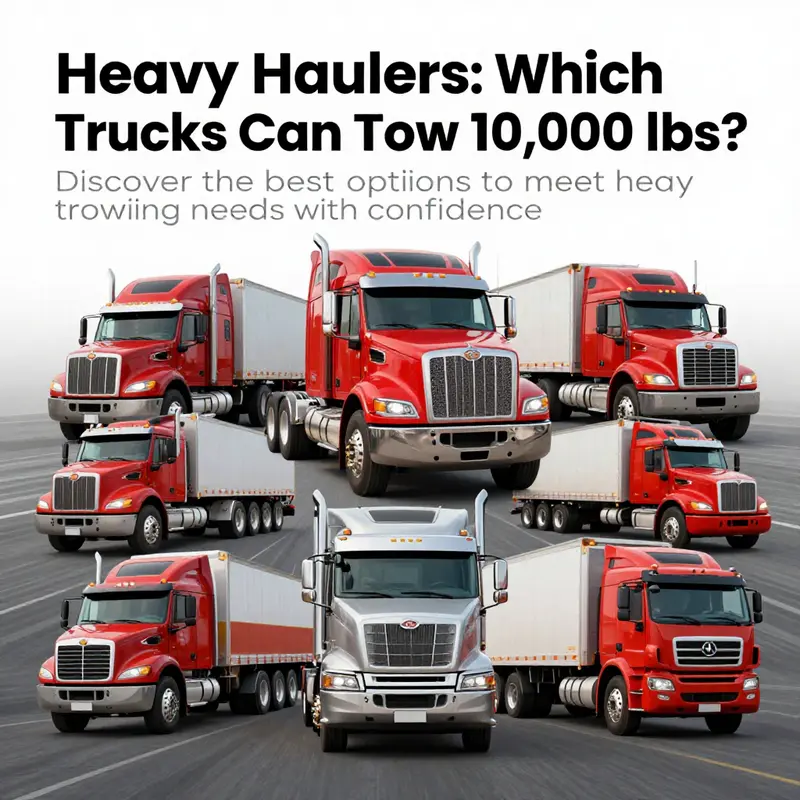
When it comes to towing heavy loads, having the right truck by your side is crucial. Whether you’re a local driver needing to haul equipment, an auto repair shop seeking dependable options for customer vehicles, or a property manager with unique towing needs, it’s important to understand which trucks are equipped to handle a 10,000 lbs towing capacity. This article explores four key categories of trucks: heavy-duty, medium-duty, light-duty, and tractor-trailers. Each chapter offers insights into their capabilities, helping you make an informed decision that ensures safety and efficiency in your towing tasks.
Tow Thresholds: How Heavy-Duty and Medium-Duty Trucks Meet the 10,000-Pound Benchmark
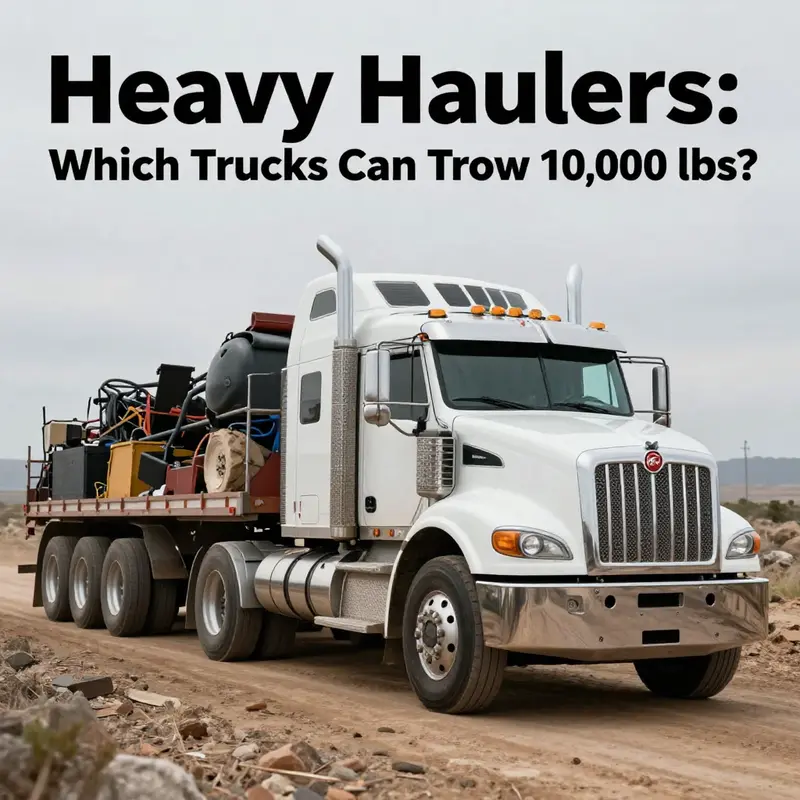
Towing a full 10,000 pounds is a practical milestone that separates routine passenger-grade hauling from the heavier side of commercial and industrial transportation. In the world of trucks, this figure isn’t just a number; it signals a set of engineered capabilities built to move substantial freight with stability, control, and safety. The discussion often begins with the categories of trucks that are most likely to meet or exceed that mark. Heavy-duty workhorses, especially those classified as Class 8, are the backbone of long-haul trailers, equipment transport, and heavy-duty recovery operations. Their design achieves a balance of raw torque, sustained power, and a chassis that can withstand rolling loads for miles at a stretch. Yet the question of what it takes to tow up to 10,000 pounds is not purely about raw strength. It hinges on a careful alignment of ratings, configurations, and the trailer’s characteristics, all of which must be understood by anyone who plans to tow such weight regularly.
At the core of any towing decision lies the relationship between the vehicle’s rated towing capacity and the specifics of the trailer and load being moved. Towing capacity is more than a single figure; it is the culmination of several interacting factors, including engine torque, transmission gearing, cooling capacity, suspension design, braking systems, and the robustness of the hitch and connections. When a truck is asked to pull 10,000 pounds, the towing capacity becomes a ceiling that must consider the trailer’s weight, the tongue weight placed on the hitch, and how the load shifts during acceleration, braking, and cornering. This is where the distinction between different truck classes matters. Heavy-duty trucks deliver the reliability and control needed for consistent, repeatable towing of heavier loads, particularly when the operation involves long distances, uneven terrain, or demanding climates. Their frames are typically reinforced, their suspensions tuned for stability under load, and their braking systems calibrated to manage higher kinetic forces. All of these features contribute to a towing experience that feels precise rather than precarious, especially when the load is near the upper end of 10,000 pounds.
Beyond the heavy-duty realm, there is a space for medium-duty trucks, commonly categorized in Classes 6 and 7. These vehicles can also bridge the gap to the 10,000-pound mark, particularly when equipped with appropriate towing packages and configurations. Medium-duty trucks bring a blend of maneuverability, payload capacity, and cost efficiency that can be appealing for regional hauls, construction sites, and service operations where a full Class 8 rig would be overkill. The capability to tow 10,000 pounds with a medium-duty platform depends on several variables: the maximum gross vehicle weight rating (GVWR), the trailer’s gross vehicle weight rating (GVWR) for the combination, the presence of a tow package that enhances cooling and torque delivery, and the reliability of braking systems designed to manage the heavier trailer. In practice, many operators discover that a well-equipped Class 6 or Class 7 truck can perform a 10,000-pound tow with margins to spare, provided the trailer is properly loaded and the operation remains within legal and safe limits.
The landscape for towing this weight also includes light-duty configurations, though these are far less common as steady workhorses for 10,000 pounds. Some light-duty platforms, particularly older or specialty variants with higher GVWR, can be configured to approach that capacity, but doing so is less about the inherent design and more about the specific spec sheet and how the vehicle is prepared. A high GVWR on a lighter chassis does not automatically translate to a safe, repeatable 10,000-pound tow; it must be supported by towing-focused features such as reinforced frames, enhanced cooling, and a chassis that maintains stability under heavy tongue load. For most practical purposes, if your goal is consistent towing of 10,000 pounds, the weight-bearing reliability and braking performance of heavier-duty platforms—whether heavy- or medium-duty—offer a more predictable and safer path than pushing a light-duty design toward the same threshold.
In addition to the vehicle itself, the trailer is a crucial partner in these calculations. A trailer’s weight, distribution, and braking influence the overall towing performance. The tongue weight—the portion of the trailer’s weight that actually sits on the hitch—typically falls in the range of 10 to 15 percent of the combined trailer weight. Too little tongue weight can make the setup unstable and prone to trailer sway; too much tongue weight can overload the hitch and reduce steering responsiveness. Achieving the optimal balance requires attention to hitch class, weight distribution hitching systems, and, often, a braking system on the trailer. When a heavy-duty or capable medium-duty truck is paired with a trailer designed for 10,000 pounds or more, those design features work in concert, providing a safer, more controlled towing experience. The dynamics change further if the vehicle is tasked with hill starts, long climbs, or rapid deceleration; these scenarios test the cooling systems, braking power, and the engine’s ability to sustain torque without overheating or an unhealthy drop in performance.
The language of ratings is precise and sometimes confusing. Tow ratings refer to how much weight the vehicle can pull under specific test conditions. Payload ratings refer to how much weight the vehicle can carry in its cabin and bed while remaining within GVWR. Gross combined weight rating (GCWR) is the total allowable weight of the vehicle plus the trailer and cargo. It is entirely possible for a vehicle to have a GCWR that sets the upper limit for towing a given trailer, even when its nominal towing capacity is higher or lower depending on the configuration. A generator on a trailer or a heavy piece of equipment can push the total weight beyond what a simple “towing capacity” figure might imply, so drivers must always compare the trailer’s weight and the tongue weight to the vehicle’s GCWR. In practical terms, this means a truck rated to tow 10,000 pounds will still require careful planning to ensure the entire combination remains within safe, legal boundaries. It is not a license to exceed any rating; it is the maximum performance envelope under controlled conditions.
The design philosophy that enables these capacities centers on several key components. The chassis and frame are built to endure heavy loads, with high-strength steel or reinforced structures that resist flexing under stress. The engines in these trucks typically produce substantial torque at low to mid-range RPMs, which helps to start moving heavy loads smoothly and maintain momentum on grades. Transmission systems are paired with gearing that preserves torque delivery while allowing fuel efficiency on long hauls. Braking systems are enhanced with larger discs, more robust calipers, and, in many cases, trailers with their own electric or hydraulic brakes that synchronize with the towing vehicle’s braking performance. Suspension systems are tuned to keep the vehicle stable when the load shifts, especially on uneven pavement, and to avoid harshness that could wear mechanical components or reduce control.
Seasoned operators recognize that experience matters as much as machinery. The operation of vehicles capable of towing 10,000 pounds demands training, situational awareness, and a measured approach to safety. Setting up a tow involves more than attaching a trailer. It requires checking the hitch, wiring, and brakes on both trailer and tow vehicle, confirming proper tire pressure and wheel torque, and verifying that the load is secured. It also involves planning for margins of safety: keeping extra room for stopping distances, accounting for weather and road conditions, and being mindful of regulations that govern heavier combinations. For heavy-duty work, crews often undergo formal training in weight management, trailer braking, and safe coupling procedures to reduce the risk of incidents on the road or at the work site. Even with a capable truck, a responsible operator treats the 10,000-pound threshold as a limit that demands careful, disciplined practice rather than a casual level of performance.
To illustrate how these principles manifest in practice, one can compare the variety of configurations that make 10,000 pounds feasible. In a heavy-duty allocation, the combination of a fortified frame, a high-torque engine, a reinforced suspension, and a robust braking system can confidently handle the weight across long stretches and through challenging terrain. A medium-duty configuration can also achieve this threshold when equipped with a dedicated towing package that enhances cooling and torque delivery, and when the trailer is loaded with stability in mind. In rare cases, certain light-duty configurations might push toward 10,000 pounds, but such instances are exceptions rather than the rule and require meticulous attention to weight distribution and equipment support. In all cases, the trailer’s own design—its brakes, axles, and suspension—plays a decisive role in how safe and predictable the overall towing experience will be.
The practical implication for fleet managers and private operators alike is clear. If 10,000 pounds represents a frequent requirement, the safe, predictable route is to select a heavy-duty or suitably equipped medium-duty platform and to implement a comprehensive approach to load management and safety. This means choosing the right hitch, ensuring the trailer has proper braking capacity, verifying tire ratings, and maintaining the mechanical health of the tow vehicle with routine inspections focused on the drivetrain, cooling systems, and suspension components. It also means planning routes with the known performance envelope in mind, incorporating checking points for weather, road grade, and load stability. In that spirit, many operators develop standard operating procedures that cover pre-tow checks, hitch alignment, and emergency protocols should a situation arise where the weight or conditions demand a reevaluation of the setup. The result is not just compliance with rating guidelines, but a disciplined approach that prioritizes safety, efficiency, and reliability for every heavy load.
For readers seeking a deeper dive into the broader ecosystem surrounding heavy-duty towing, including ongoing industry insights and practical how-tos, a related resource at santamariatowtruck.com/blog/ offers a steady stream of context-rich material. This reservoir can support readers who want to connect the technical considerations described here with real-world operations, maintenance practices, and regulatory updates that shape how 10,000-pound towing tasks are planned and executed in everyday work. santamariatowtruck.com/blog/
From the perspective of design philosophy to the realities of road performance, the 10,000-pound towing threshold is more than a single number. It is a confluence of engineering, operation, and safety culture that defines how trucks are selected, configured, and utilized in more demanding hauling roles. Fleet operators who align their equipment with this threshold often find that the extra capability translates into greater reliability, smoother operation, and the confidence to take on projects that would be impractical with lighter machinery. The careful attention to rating logic, the choice between heavy- and medium-duty configurations, and the emphasis on proper load management all contribute to a towing program that remains safe, compliant, and efficient over time. In the end, the 10,000-pound mark serves as a meaningful guidepost—one that helps drivers, technicians, and managers choose the right tool for the job and approach each tow with the discipline that heavy loads require.
External reference for further technical context and specifications: https://www.sinotruk.com/en/products/Howo-heavy-duty-trucks.html
Balancing Power and Precision: How Medium-Duty Trucks Reach a 10,000-Pound Towing Benchmark
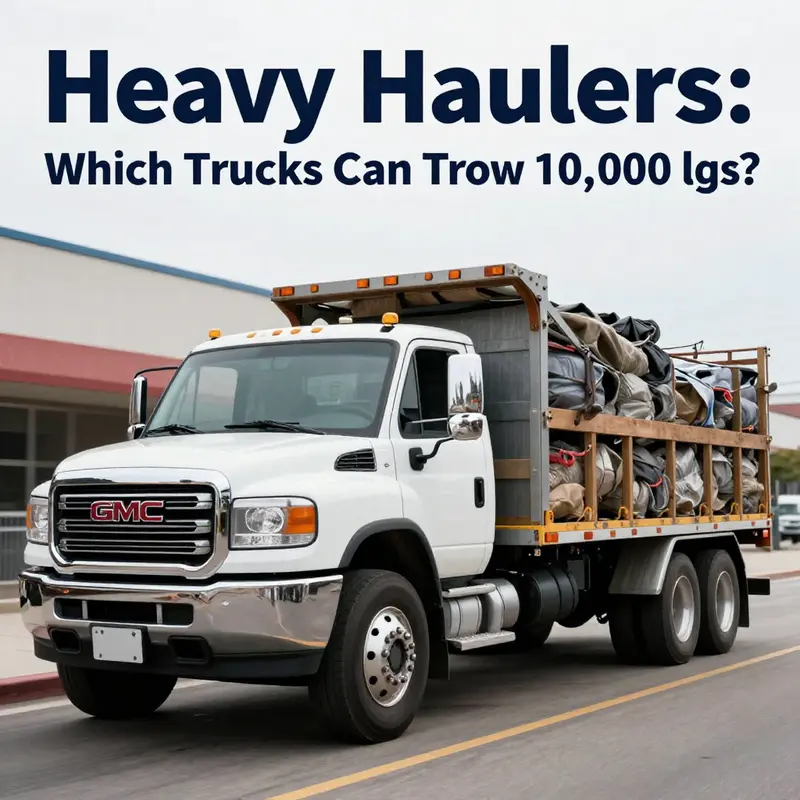
Medium-duty trucks occupy a unique niche in the spectrum of commercial transportation. They are designed to carry sizable payloads and to haul substantial trailers with a level of agility and efficiency that heavier rigs struggle to match. The GVW range for these vehicles typically sits between 2,500 and 7,000 kilograms, roughly 5,500 to 15,400 pounds. It is within the upper end of this band that towing capacities approach the 10,000-pound mark, a threshold that demands not only robust steel but a carefully integrated system of components and configurations. When a medium-duty platform is equipped with heavy-duty axles, reinforced suspensions, and a powertrain tuned for steady torque delivery, 10,000 pounds of trailer mass can become a practical, repeatable outcome rather than a rare exception. This is especially true for operators who require a nimble tool for regional distribution, construction logistics, and site-to-yard transfers—where the ability to move large trailers without stepping up to a full heavy-duty rig translates into meaningful cost, efficiency, and flexibility benefits.
The practical reality behind that 10,000-pound towing capability rests on a set of design decisions that begin with the frame and axle architecture. A medium-duty chassis is typically built to withstand frequent loading and unloading, with attention to rigidity and fatigue resistance that support steady handling under load. The axle configuration, frequently featuring reinforced rear assemblies, plays a pivotal role in how weight is distributed to the trailer and how reliably the vehicle can stop and steer when fully loaded. The right gearing and axle ratio are equally important; they shape the engine’s torque delivery and maintain adequate trailer braking response without sacrificing daily drivability in urban or suburban routes. Braking systems must be up to the task, not only to stop the loaded rig safely but to modulate the load transfer during deceleration and hill descents, a critical factor when towing heavier trailers through mixed terrain and weather.
Beyond the mechanical skeleton, the engine and its calibration contribute a quiet but essential influence. Medium-duty powertrains are tuned to provide sustained torque at moderate engine speeds, which is comforting when pulling heavy trailers from a standstill or maintaining momentum on a grade. This is not merely about raw horsepower; it is about the meaningful combination of torque, lubrication, cooling, and electronic control that allows the engine to deliver consistent performance while maintaining fuel efficiency and engine life. The cab-to-trailer experience matters too. A well-integrated braking and stability system helps the vehicle communicate with the trailer, stabilizing sway tendencies and ensuring predictable responses when steering inputs are required to navigate tight lanes, construction zones, or urban corridors.
What makes this 10,000-pound ceiling more than a number is the recognition that tow ratings on a medium-duty chassis are contingent on multiple layers of specification working in concert. The drivetrain in these trucks is often paired with a transmission capable of holding power across a range of speeds, preserving momentum on ramps and during overtaking while not forcing the driver to hunt for gears in stop-and-go traffic. The frame construction, sometimes described as a full-length or robust ladder-type frame, helps maintain alignment and reduces flex at the hitch under load. The suspension, reinforced for highway and off-road job sites, helps keep tires in contact with the road and reduces the risk of trailer instability when encountering uneven pavement or off-camber surfaces. The tires themselves, selected for load rating and grip, complete the chain of reliability that turns a theoretical 10,000-pound capability into something that operators can depend on during back-to-back trips between a shop floor and a job site.
In practice, medium-duty platforms capable of towing around 10,000 pounds tend to find their best expression in mid-sized fleets or contractor operations where urban maneuverability, lower operating costs, and shorter cycle times matter. These operators often need to shuttle large trailers, equipment, or specialized cargo over regional distances, where a heavier, full-fledged heavy-duty truck would be overkill both in upfront cost and in daily running expenses. A medium-duty configuration that reaches the upper end of its tow rating provides a concrete balance: it remains nimble enough to traverse city streets, loading docks, and tight job sites while still delivering the strength and control needed to manage substantial trailers on the highway. In other words, the 10,000-pound target is less about a single grand achievement and more about a reliable capability that can be reproduced across a typical workweek.
The broader market context mirrors this practical blend of capability and efficiency. Small to midsize enterprises, service providers, and regional logistics outfits increasingly favor medium-duty platforms when their workflows include regular transfers of heavy trailers but not continuous, high-volume long-haul towing. These customers benefit from a cargo payload opportunity that doesn’t force a trade-off with fuel economy or compounded maintenance costs. The ability to pair a strong, stable platform with a relatively compact footprint translates into better fuel efficiency per mile and easier maneuvering around dense industrial parks and municipal streets. It also supports a lower total cost of ownership compared with heavier, more specialized vehicles, a consideration that resonates with fleets managing multiple vehicles across varied job sites. In this context, the 10,000-pound towing capacity becomes a practical ceiling rather than an aspirational target, signaling a well-considered engineering choice designed to match real-world workflows.
From a configuration standpoint, the story of achieving 10,000 pounds begins with clear, verifiable specifications. Operators should prioritize chassis strength, axle stiffness, and a transmission setup that can sustain durable torque delivery without excessive heat or wear. It is essential to confirm that the hitch system and trailer coupling are chosen to support the load with appropriate safety margins and that the braking system is matched to the trailer’s mass and braking requirements. The vehicle’s ballast—payload capacity, ballast distribution within the cargo area, and the free space available for accessories such as tool racks or on-site equipment—must be considered in tandem with the trailer’s load profile. Without this careful accounting, the advertised towing capacity may prove theoretical rather than practical, a gap that introduces risk on the road and at the shop.
The practical decision to pursue a 10,000-pound towing capability with a medium-duty chassis is further influenced by regulatory and safety frameworks that govern commercial towing. Operators must ensure compliance with local and national standards, including weight ratings for combined vehicle and trailer, braking requirements, lighting and signaling for towed units, and periodic inspection schedules. These rules shape not only what a truck can tow on a given day but how consistently it can do so across weather changes, road conditions, and fluctuating trailer configurations. For fleets, the discipline of aligning vehicle specs with regulatory constraints is part of the operational discipline that supports reliability and risk management. It is precisely this alignment—between engineering capability and regulatory reality—that makes medium-duty platforms a rational choice for teams seeking to balance capacity with control.
In the narrative of model selection, medium-duty trucks that approach the 10,000-pound boundary are typically described in terms of three practical attributes: the strength of the rear axle and its mounting, the rigidity and durability of the frame, and the reliability of the braking and traction systems when towing heavy trailers. Operators should view these attributes as a triad rather than as separate boxes to check. The best configurations deliver consistent, predictable performance in everyday conditions and under the occasional heavy-load scenario. This reliability is born from engineering that considers not only peak capability but also the duty cycle—the number of cycles of loading and unloading, the heat generated during braking, and the long-term wear on suspension components. Safety margins are built into the design so that the tow rating can be maintained even as the truck ages, provided maintenance is kept current and weight distribution is managed according to best practices.
For professionals seeking further practical guidance, industry literature and fleet management resources emphasize the strategic value of medium-duty platforms that can reliably meet or exceed high-tow requirements without compromising maneuverability or operating costs. In markets where urban density and site constraints demand more versatile transport solutions, these trucks provide a compelling intersection of capability and efficiency. They enable operators to consolidate tasks—delivering materials, moving heavy equipment, and transporting long trailers—without switching to a dedicated heavy-duty tractor. The ability to cover multiple roles from a single platform keeps fleets lean and responsive, a factor that becomes especially meaningful in tight delivery windows and on-site schedules where delays multiply costs.
Internal links can be a practical way to broaden understanding of how these principles translate into real-world fleet practices. For readers seeking broader industry perspectives or case studies, our blog offers narratives on fleet standardization, emergency readiness, and how to manage the realities of towing in varying conditions. You can explore these discussions at the following internal resource: santamariatowtruck.com/blog/.
As operators weigh the choice between compact, mid-sized, and heavier configurations, the decision to target a 10,000-pound tow with a medium-duty platform rests on a clear-eyed assessment of route patterns, site requirements, and regulatory boundaries. The calculation goes beyond instantaneous capability and toward sustainable performance across a fleet’s life cycle. It involves balancing payload capacity with tow mass, assessing likely trailer types, and evaluating how frequently trailers will be deployed in more demanding environments. The long-term value lies in selecting a configuration that remains robust under repeated cycles of loading and unloading, that offers predictable braking and steering behavior, and that preserves the resale value of the truck as equipment needs evolve. In this way, the 10,000-pound figure is not a ceiling to be pressed against but a practical target that marks a boundary of tested capability, carefully integrated into a medium-duty platform designed for real-world hauling.
External resource: https://www.fuso.com.sg/trucks/canter/
Straining the Pickup: Why 10,000 Pounds Lands Outside Light-Duty Towing and What It Really Takes
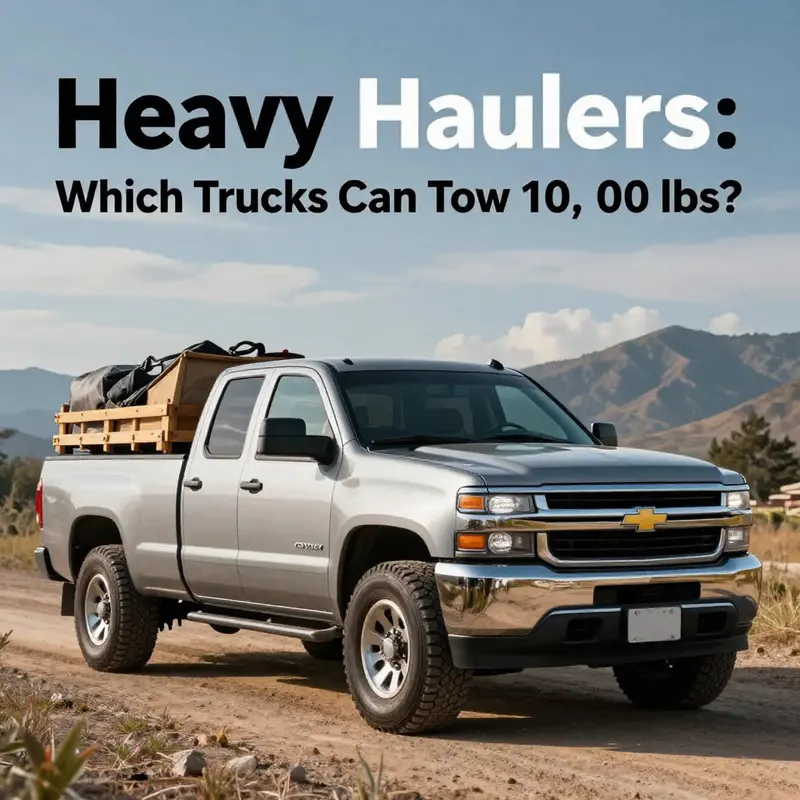
Towing a trailer or load of ten thousand pounds is a benchmark that circulates in conversations about trucks with plenty of bravado. Yet when you pull back the curtain, the reality is more nuanced. Light-duty trucks, defined by their lower curb weight, modest payload ratings, and compact frames, are often showcased as capable everyday performers. But the exact same combination of engine torque, driveline architecture, and frame strength that helps you pull a heavy load also imposes limits that show up in fuel economy, ride quality, and engine temperature. The question “can a light-duty truck tow 10,000 pounds?” deserves a careful answer that distinguishes marketing promises from engineering realities. At its core, towing capacity is not a single number you can apply to every situation. It is a controlled rating, derived from a set of conditions that include the trailer’s weight, the distribution of that weight, the road grade, ambient temperature, and the vehicle’s own configuration. To approach ten thousand pounds with any confidence you must respect those conditions and the cumulative constraints they impose on the truck’s performance. In practice, the rare instances where a light-duty platform might be pushed toward or near that mark are exceptions rather than the rule. Those exceptions typically involve combinations of heavy-duty towing packages, well-matched hitches and brakes, meticulous weight distribution, and favorable terrain. But even with these upgrades, a true and repeatable ten-thousand-pound tow is best described as outside the standard design envelope of light-duty trucks. The distinction matters because the difference between a maximum towing rating and the conditions under which that rating was determined can be substantial. Ratings are not a blanket permission to haul any load of that size at any time. They are limits demonstrated under controlled tests. Real-world conditions rarely replicate those idealized tests exactly. This is why many owners who see a high advertised rating still experience sagging performance, brake fade, or steering concerns on long pulls with trailers that approach or exceed their stated limits. Understanding this nuance helps buyers, operators, and fleets align expectations with safety, reliability, and cost efficiency over the long haul. A transparent framework for thinking about 10,000 pounds begins with the vocabulary that governs towing capacity and the related concepts that sit alongside it. The vehicle’s Gross Vehicle Weight Rating, or GVWR, and its Gross Combined Weight Rating, or GCWR, set the boundaries for what the truck can safely carry and pull. The GVWR is the maximum weight of the vehicle with everything on board, including passengers, fuel, cargo, and all attachments. The GCWR, meanwhile, is the maximum allowed combined weight of the vehicle and the trailer and its cargo. To calculate whether a given trailer can be pulled, you have to compare the trailer’s gross weight and its tongue weight to the vehicle’s GCWR and the hitch’s rating. A trailer’s tongue weight—the downward force the hitch exerts on the hitch point—must also be considered, because the towing package and hitch geometry influence steering, braking, and suspension behavior. In a practical sense, this means that a light-duty chassis with a modest GVWR can be pushed toward higher tow figures, but only if the trailer’s weight distribution, braking duties, and the truck’s engine and transmission architecture can handle the overhead without compromising safety. The difference between capability and repeated reliability matters when you’re dealing with a 10,000-pound load. A high-torque engine helps, and so does a transmission that can manage heat and torque conversion across long pulls. But even with those elements, the capacity to move that weight with control is bounded by suspension design, axle strength, and the cooling system’s ability to sustain performance. On the road, the practical implications of attempting such a haul with a light-duty platform become visible in several patterns. First, payload and tow ratings are often correlated: the higher the potential tow load, the stricter the limits on payload. You might find a configuration where you can tow near 8,000 to 9,000 pounds under favorable conditions, yet the same setup carries little more than a few hundred pounds of passengers and cargo without compromising the vehicle’s handling, braking effectiveness, and engine cooling. Second, long, heavy pulls with a near-limit trailer require sustained engine output. When the engine and transmission operate near their thermal thresholds, protection systems can engage, reducing performance to maintain safe temperatures. You can feel this as slower acceleration, slower hill climbs, and, ultimately, a sense that the truck is working harder than expected to keep pace with even a modest journey. Third, braking demand multiplies with weight. A trailer of substantial mass requires more brake force, and the truck’s brakes and electronic stability controls must blend with trailer brakes to maintain control. If the braking system cannot dissipate heat efficiently, fade becomes a risk, especially on grades or during repeated stops. All of these factors loop back to the fundamental point: for consistent, safe towing of 10,000 pounds, a light-duty vehicle—by design and by typical configuration—stretches beyond its standard operating envelope. The most responsible takeaway for readers considering this goal is simple: consult the vehicle’s official documentation, including the owner’s manual and the door jamb sticker, which typically lists the GCWR and the maximum tow rating under specified conditions. This is not purely bureaucratic caution. It is a practical, engineering-informed check that protects you from overloading the drivetrain, the suspension, and the braking system, and it protects other road users as well. If the wishlist includes towing at or near ten thousand pounds with any degree of repetition or across varying terrains, the prudent path is to pivot toward medium- or heavy-duty configurations. These classes of trucks, by design, are engineered with heavier frames, more robust axles, and higher-rated suspensions, all of which contribute to a greater margin of safety and a more predictable towing experience. When discussing light versus heavy or medium duty, it is useful to think in terms of intended use rather than isolated numbers. A light-duty platform excels at daily driving, reasonable highway fuel economy, and occasional heavy payloads within a more modest envelope. It is, in effect, optimized for versatility rather than maximal towing prowess. A medium- or heavy-duty vehicle, in contrast, sacrifices some urban nimbleness and efficiency for the ability to maintain stability, acceleration, and braking performance when towing heavy trailers on long hauls. The difference is not merely a matter of horsepower or torque, though those attributes matter. It is the combination of frame rigidity, driveline tolerance, cooling capacity, braking system design, and overall vehicle dynamics under load. To approach ten thousand pounds with confidence, you also need to consider the trailer itself. The trailer’s weight distribution, hitch type, braking configuration, and even its tongue weight can alter the required tow rating. A trailer with well-distributed weight, proper hitching, and full trailer brakes will behave differently than one with uneven load, a marginal hitch, and no trailer brakes. These details influence both safety and efficiency. That is why the decision to tow near or at 10,000 pounds with a light-duty truck is rarely just a matter of picking a higher payload option or a more powerful engine. It requires a holistic assessment: how much of the truck’s rated GCWR is being consumed by the trailer, how the weight is distributed, how much heat the drivetrain will accumulate on a typical trip, and whether the braking system can manage the full load comfortably while maintaining steering control and stability. For readers who are evaluating options, a practical approach centers on conservative planning. Start with the most conservative GCWR and towing rating in your vehicle’s documentation and then compare it to the trailer’s weight under fully loaded conditions. If the numbers reveal a relationship that pushes the limits, look toward configurations that increase the margin of safety, such as a heavier-duty platform or a trailer design that reduces tongue weight without sacrificing payload. The goal is to keep the system within the frame’s tested and approved operating window, not to chase a best-case scenario that only exists under ideal testing conditions. When the intent is to rely on a vehicle for regular heavy towing, it helps to build a knowledge base that includes not only the sticker values but also practical testing results gathered from real-world experiences. In this sense, a responsible operator learns to pay attention to the signs of strain: the way the engine responds when pulling a long grade, the speed at which the transmission shifts through gears, the level of heat in the radiator and transmission cooler, and the behavior of the braking system during repeated stops. These cues are not mere anecdotes; they are signals that the vehicle is near its practical limit. To support readers who are navigating these decisions, a connection to broader sources of information can be helpful. For ongoing reading, the Santa Maria Tow Truck blog offers deeper explorations of towing considerations and best practices, including how to evaluate equipment, plan routes, and handle emergencies on the road. You can find more context and practical guidance there as you compare different configurations and reflect on your own needs. Santa Maria Tow Truck blog. Keeping in mind the cautions outlined here, the path to reliable, safe towing at or near 10,000 pounds remains best pursued with a medium- or heavy-duty platform for repeatable performance, especially on longer trips or uneven terrain. The dialogue about capability versus reliability is not only about what a vehicle can do in a controlled test; it is about what it should do in everyday work, under a variety of conditions, with a human operator who values safety, efficiency, and vehicle longevity. If your work or hobby requires pulling that kind of load with regularity, the most prudent course is to plan for a solution designed around higher mechanical tolerance and better thermal management. In the end, the discussion returns to a simple but essential aim: match the vehicle’s rated capabilities to the realities of the job. The margin between a comfortable tow and a risky overload is determined by the numbers on the spec sheet, the weight distribution of your trailer, and the conditions of your routes. Light-duty trucks are excellent for many tasks, but when 10,000 pounds is part of the daily ask, the more robust choices in the spectrum of medium- and heavy-duty design emerge as the responsible, reliable path. For readers who want a concise reference to the key considerations discussed here, the broader industry explanation of truck towing capacity offers useful context about how ratings are established and how to interpret them in a practical setting. External resources can provide a broader frame for these concepts and the science behind them. Fleet News UK articulates these considerations with a focus on practical guidelines and the logic behind towing ratings, which can help readers understand why the 10,000-pound target remains most safely associated with stronger chassis configurations. You can explore their explanation here: https://www.fleetnews.net/industry-news/truck-towing-capacity-explained
Why Tractor-Trailers Define the 10,000‑Pound Towing Benchmark
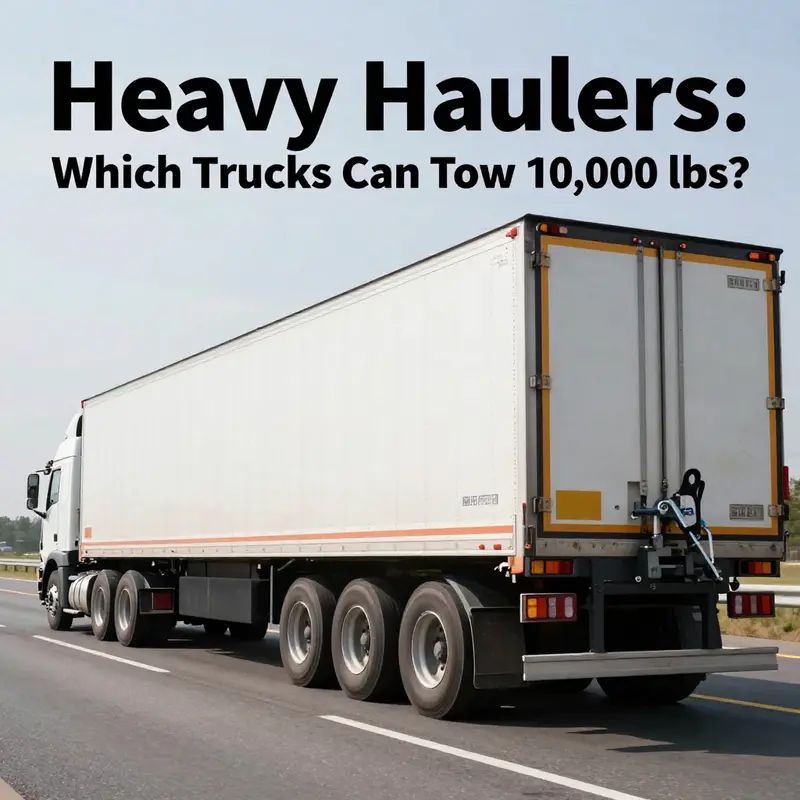
Understanding the 10,000‑pound standard and how tractor‑trailers meet it
Tractor‑trailers are the default reference when anyone talks about towing capacities measured in the tens of thousands of pounds. Their design prioritizes pulling heavy loads over long distances, and the components that control towing performance are engineered to match. When a tractor‑trailer is described as meeting a 10,000‑pound towing standard, that figure is a conservative, practical benchmark. It signals that key systems — frame, axles, brakes, hitch, and driveline — are built to manage sustained, heavy loads without compromising safety or reliability.
The 10,000‑pound mark often appears in industry specifications for medium‑duty tractors and trailers. It is not an arbitrary number; it sits at the intersection of component capability and operational need. Many loading tasks on construction sites, farms, and regional freight runs require hauling cargo in that neighborhood. Meeting this standard means a vehicle can pull a fully loaded utility trailer, open flatbed, or specialty equipment trailer under routine conditions while leaving a margin for dynamic forces during braking, acceleration, and cornering.
At the heart of any tractor‑trailer’s towing capability are its weight ratings. Gross Vehicle Weight Rating (GVWR) and Gross Combination Weight Rating (GCWR) determine legal and safe operational limits. GVWR sets the maximum weight for each unit — tractor or trailer — including cargo, fuel, and occupants. GCWR establishes the maximum combined weight of tractor, trailer, and load. A tractor‑trailer pairing that comfortably accommodates a 10,000‑pound trailer load will have matching axle ratings, suspension geometry, and a drivetrain sized to handle both the static weight and the transient loads encountered on the road.
Beyond published ratings, several mechanical systems make meeting a 10,000‑pound standard possible. Strong frames and reinforced fifth wheels distribute loads into the tractor chassis. Heavy‑duty axles and properly rated tires carry weight and resist deflection. Suspension components — whether multi‑leaf springs or air suspensions — control ride height and load transfer. Braking systems, often air‑actuated on commercial tractors, are scaled to bring heavy combinations to a stop safely and repeatedly. Cooling systems, torque reserves in the engine, and transmission gear ratios provide the necessary power to move heavy loads without overheating or premature wear.
Trailer design matters as much as the tractor. Open trailers built for heavy equipment tend to offer fewer constraints on load placement. They allow cargo to be loaded directly over axles for ideal weight distribution. This access makes it easier to satisfy tongue weight guidelines and axle load limits. Enclosed trailers provide security and protection from the elements, but they sometimes include additional structure that reduces payload capacity or concentrates weight in ways that affect handling. Matching trailer type to cargo and expected loads is critical to maintain compliance with a 10,000‑pound guideline.
Operators also need to understand weight distribution rules. Towing 10,000 pounds is not just about total mass. Where that mass sits relative to axle centers, the tractor’s fifth wheel, and the trailer tongue can change handling dramatically. Properly distributed weight keeps the trailer stable, reduces sway, maintains steering control, and avoids overloading any single axle. Tongue weight should fall within manufacturer recommendations, typically a percentage of the trailer’s loaded weight. If too little weight rests on the hitch, the trailer can oscillate. If too much bears down on the hitch, the tractor’s front axle may lift and steering will be compromised.
Legal and regulatory concerns shadow every heavy tow. Bridge formulae, state axle weight limits, and federal gross weight restrictions shape what loads can legally travel certain routes. A tractor‑trailer that satisfies a 10,000‑pound towing standard still needs route planning to avoid overweight citations or infrastructure damage. Special permits may be required for loads that exceed standard axle ratings or for runs that cross restricted bridges. Operators must plan routes and document compliance with weight and securement rules.
Securing cargo is a non‑negotiable element of meeting a towing standard. Heavy cargo must be anchored to prevent shifting during transit. Shifting loads can suddenly change axle loads and make a combination unsafe, even if it started within rated limits. Use rated chains, straps, and tie‑downs appropriate to the load. Ensure anchor points on both trailer and cargo are rated for the forces likely to occur. When carrying heavy, tall, or irregular cargo, consider additional measures such as edge protectors, load stabilizers, and proper blocking and bracing.
Operational technique influences safety as much as hardware. Drivers hauling loads at or near 10,000 pounds should adopt conservative driving habits. Anticipate stops, limit speed on curves, and increase following distances. Manage braking to avoid repeated hard stops that heat and fade brakes. Use lower gears for sustained grades to preserve brakes and keep engine cooling under control. Pretrip inspections should focus on hitch security, lighting, tire condition and pressure, brake adjustment, and secure tie‑downs.
Routine maintenance keeps a tractor‑trailer reliably within its towing standard. Inspect axles and suspension for wear or deformation. Check brake linings, drums, and air systems. Monitor tire tread and sidewalls for damage and maintain recommended pressures. Lubricate fifth wheel components and examine the frame for cracks or corrosion. Cooling system inspections are especially important when routinely pulling heavy loads; coolant level, hoses, and radiator condition protect the engine from overheating under sustained load.
Technology has improved the predictability and safety of heavy towing. Electronic braking systems, anti‑lock brakes, and trailer stability control add layers of protection against wheel lockup and sway. Load sensors and tire pressure monitoring systems give operators early warnings of issues before they escalate. Telematics and fleet‑level monitoring allow managers to enforce maintenance schedules and driving practices that preserve towing capability and reduce downtime.
Choosing the right tractor and trailer pair goes beyond meeting a numerical standard. Consider duty cycle and operating environment. Work that involves frequent short moves with heavy loads stresses brakes and driveline differently than long highway hauls. Offroad or construction site use requires added ground clearance and rugged tires. Urban deliveries may require tighter turning radii and different axle configurations. Matching vehicle configuration to mission keeps the system within safe operating margins and prolongs component life.
Fleet operations benefit from consistent standards and vehicle matching. Standardizing equipment around known towing capabilities simplifies training, maintenance, and parts logistics. It also eases route planning and compliance. Fleets that adopt a clear towing standard reduce the chance of mismatched tractor‑trailer pairings or overloaded runs. For guidance on aligning equipment standards and emergency readiness, see this resource on fleet standardization and emergency readiness.
Risk management is integral to heavy towing. Insure appropriate coverage for the cargo, the vehicle, and third‑party liabilities. Train drivers on securement best practices and emergency procedures. Keep a clear record of weight tickets, inspections, and maintenance. Establish a protocol for responding to mechanical issues on the road, including safe places to stop and procedures for transferring loads if necessary.
Finally, real‑world use clarifies why the 10,000‑pound benchmark matters. It is large enough to cover many industrial and commercial tasks, while remaining accessible to a wide range of medium‑duty tractors and trailers. It stands as a practical dividing line between light commercial work and truly heavy hauling that requires specialized heavy‑duty tractors or multiple‑axle combinations. Tractor‑trailers are designed around such thresholds to provide predictable performance and safety, balancing capacity, maneuverability, and legal limits.
When planning to tow around 10,000 pounds, think systemically. Match tractor ratings to trailer ratings. Pay attention to weight distribution, secure cargo properly, and follow regulatory limits. Maintain vehicle systems and adopt conservative driving techniques. The hardware is capable; success depends on thoughtful vehicle selection, careful loading, and disciplined operation.
For a deeper dive into the specifications and performance characteristics of trailers designed around the 10,000‑pound standard, consult manufacturer documentation and industry guidance. A detailed technical specification for a representative tractor‑trailer model can be found here: https://www.trucktrailer.com/7cx5-trailer-specifications
Final thoughts
Selecting the right vehicle for towing 10,000 lbs is vital for safety and efficiency. Understanding the differences between heavy-duty, medium-duty, light-duty trucks, and tractor-trailers allows drivers, repair shops, and property managers to make informed choices. Each class offers unique advantages tailored to various towing needs. By equipping yourself with this knowledge, you can ensure that your trucking operations run smoothly, whether for personal, commercial, or property management purposes.