
Towing is a critical function for many truck owners, whether you’re transporting gear for work, equipment for events, or personal belongings for a move. Understanding what your truck can tow is essential for safety and productivity. This guide breaks down vital elements like towing capacity, legal considerations, and key specifications your vehicle must meet. By grasping these concepts, local drivers, auto repair professionals, and property managers can make informed decisions, ensuring that they tow safely and efficiently without incurring extra costs or risking accidents. Each chapter will provide valuable insights into understanding your truck’s towing potential, equipping you with the knowledge you need to optimize your towing tasks.
Tow Wise: Reading Your Truck’s Capacity, Balancing Load, and Safe Hauling
Towing with a pickup, a heavier half-ton chassis, or a capable work truck is more than just hitching up and driving away. It is a careful conversation between the vehicle and the load it bears, a balance of strength, safety, and foresight. The question at the heart of every tow is not merely how much the truck can pull, but how much it can pull without compromising control, braking, steering, or the long-term health of the drivetrain. To tow well, you must learn to read the numbers your truck provides and translate them into a plan you can execute on every trip. And that starts with the basics: the ratings published by the manufacturer, the actual weight of the truck when it is loaded, and the weight that the trailer will introduce into the equation. The most reliable way to begin is to locate the official towing and payload specifications in the owner’s manual or on the manufacturer’s site. There you will find three critical figures: the Gross Combined Weight Rating (GCWR), the maximum trailer weight the truck can pull, and the maximum tongue weight the hitch will accept. GCWR is the ceiling for the total weight of the truck and its trailer combined. It is the sum of everything the vehicle, including its fuel, passengers, cargo, and the trailer, can legally carry and tow at once. The maximum trailer weight is a guideline for how heavy the trailer itself can be while the truck remains within GCWR. The maximum tongue weight represents the downward force the trailer hitch imposes on the rear axle—typically a portion of the trailer’s total weight, commonly around ten to fifteen percent, depending on the design. These numbers are not abstractions; they are the guardrails that determine safe operation. Exceed them, and the margin for error vanishes—brake response can slow, tires heat up, the suspension can bind, and steering can feel disconnected. The practical upshot is that safe towing begins with respect for the manufacturer’s published limits, not with a rough guess or the allure of a larger payload. Once you have the official GCWR, the maximum trailer weight, and the tongue weight, the next step is to understand how the truck’s own weight interacts with a trailer. GVW, or gross vehicle weight, measures what the truck weighs by itself, loaded with fuel, passengers, and cargo, but before it hooks to a trailer. Towing capacity, by contrast, is the maximum weight the truck can pull beyond its own weight. If your truck has a GVW of 5,000 pounds and a stated towing capacity of 8,000 pounds, the total combined weight—the truck plus the trailer and its contents—must remain within the GCWR, which would be 13,000 pounds in that scenario. That arithmetic may feel dry, yet it is the bedrock of safe towing. The moment you push past the GCWR, you invite the risk of brake fading, transmission stress, and loss of control in storms, on grades, or during sudden maneuvers. In practice, this means that if you are planning to tow a trailer near the higher end of your truck’s capability, you must also consider the weight that will be added by gear, cargo, and fuel. The math is not simply a single number; it is a running tally you carry into every trip. When discussing trailers, the type of cargo drives choices about distribution, hitch type, and braking needs. Dry vans, utility trailers, and enclosed cargo trailers share common concerns: weight distribution, tire loading, and the compatibility of the hitch with your truck’s capacity. Heavier trailers—like those designed for boats, cars, or horses—demand extra attention to how weight is spread across axles and how the hitch keeps the trailer aligned with the truck. This is not a matter of preference so much as physics: weight left to right or front to back shifts stability, changing how quickly you can stop and how well the trailer tracks behind you. A trailer’s axle rating and braking system must be compatible with the truck’s towing setup. If the trailer’s brakes do not engage when the truck’s brakes are applied, or if the trailer’s wheels carry more load than the tires can manage, control can deteriorate rapidly under braking or on a downhill grade. The trailer’s own tires, brakes, and wiring should be in serviceable condition and match the trailer’s weight. In this light, even a well-built towing plan begins with a careful inspection of the hitch and hitch components: the hitch class, the ball size, the coupler, the wiring harness, and the braking arrangement. The ball height is more than a matter of aesthetics—it influences weight transfer and tongue load. If the ball is too high or too low, the trailer will ride in an imbalanced way, reducing steering precision and increasing sway. The wiring of the trailer must reliable feed the lights and brakes, allowing other drivers to anticipate your turns, lane changes, and stops. In some places, legal requirements regulate the towing setup. These rules cover maximum trailer length and width, the presence of lights, brakes, and safety chains, and even the allowable speed while towing. States and provinces may also require a trailer brake controller when the trailer weight exceeds a certain threshold. In many regions, that threshold hovers around a few thousand pounds. The precise rule varies, so confirming local regulations is essential to staying compliant and safe on the road. The process of planning a tow also benefits from using a trustworthy online calculator. A calculator tailored to your exact truck model and configuration can translate the numbers in your manual into a practical plan for your trip. It can help you see how different payloads, trailer weights, and tongue weights influence the GCWR and your overall safety margins. The value of such tools lies in their ability to reflect the real-world consequences of your loading choices. They remind you that your truck’s capacity is not a fixed bar but a dynamic envelope defined by the vehicle’s condition, the weather, and the road. Even with a high-capacity truck, many drivers underestimate the impact of weight distribution on performance. That is why the simplest step you can take to improve safety is to ensure the trailer’s load is balanced, the hitch is matched to the trailer, and the tongue weight remains within recommended percentages. A practical approach is to load the trailer so that roughly 10 to 15 percent of the trailer’s weight sits on the hitch, ensuring enough rear axle loading to maintain stability without overloading the hitch or rear suspension. If you anticipate crossing a scale or operating on hilly terrain, margin matters. A margin-conscious plan helps you avoid last-minute weight shifts that can alter handling, increase stopping distances, or tax the engine and transmission. The narrative of safe towing also includes a steady, proactive mindset about maintenance. Regular inspections of brakes, tires, and suspension, as well as the integrity of couplings, electrical connections, and lighting, form a continuous safety loop. Even the best-tuned tow setup loses some effectiveness when components fail or wear. For instance, brake performance degrades with heat, tire pressure declines with load, and a worn hitch can introduce unwanted play that unsettles the trailer at speed. The overarching message remains consistent: safety arises from alignment between the truck’s stated capabilities, the trailer’s physical characteristics, and the specific conditions of the journey. When in doubt about the legality or safety of a given load, err on the side of caution and consult manufacturer guidelines. For the most up-to-date guidance on the limits and requirements applicable to your specific configuration, consider looking at the broader body of guidance that covers towing and payload. Practical planning also means understanding how and when to seek additional equipment or assistance. If your load approaches or exceeds the practical limits of a standard pickup or light-duty truck, you may need a heavier-duty chassis or a specialized rig, and you might consider professional guidance to select the right hitch system, braking options, and weight distribution gear. The decision to tow is not only about maximum weight; it is about ensuring the vehicle remains predictable, controllable, and well within the margins that the manufacturer built into the platform. In this light, the journey toward safe towing becomes a habit of careful checking, precise loading, and disciplined driving. It is a discipline that honors the intent behind every rating—the GCWR, the maximum trailer weight, and the tongue weight—while recognizing that every trip carries its unique set of variables. When you apply that discipline consistently, you reduce the risk of brake failure, overheating, or loss of control, even in demanding conditions. Remember that safety is the quiet partner of power: the capacity to tow well is not a license to ignore limits but a promise to respect them, every mile of the way. For readers who want a deeper look at how laws and safety standards intersect with towing, a related resource offers a broader view of legal requirements and common warning signs to watch for on the road. A practical reminder for every tow is to stay mindful of the signs of trouble that can arise when a trailer is not properly managed. If you encounter situations that feel unstable or unfamiliar on the highway, you can reference guidance on recognizing unsafe towing conditions, including indicators of improper weight distribution or hitch failure. This awareness is part of the everyday discipline that keeps towing safe and predictable. See the linked article for a concise checklist of signs and actions that can help you spot potential issues early. Spot Illegal Towing: Key Signs to Know. For a broader sense of where to turn next for practical, model-agnostic towing guidance, you can explore the general blog hub that hosts a wide range of hands-on discussions about tow setups, safety, and compliance. External resources and manufacturer guides provide authoritative context for the numbers you see in your manual and on the dashboard. In particular, as you grow more confident in reading capacity and planning loads, you may wish to consult official channels that publish updated towing guides and payload capacities for a range of trucks, regardless of specific brand naming. These resources reinforce the lesson that the path to safe towing is paved with accurate data, careful loading, and a conservative approach to margins and legality. External reference: https://www.ford.com/trucks/superduty/
Tow Truths: Decoding Your Truck’s Towing Specs for Safer Hauls
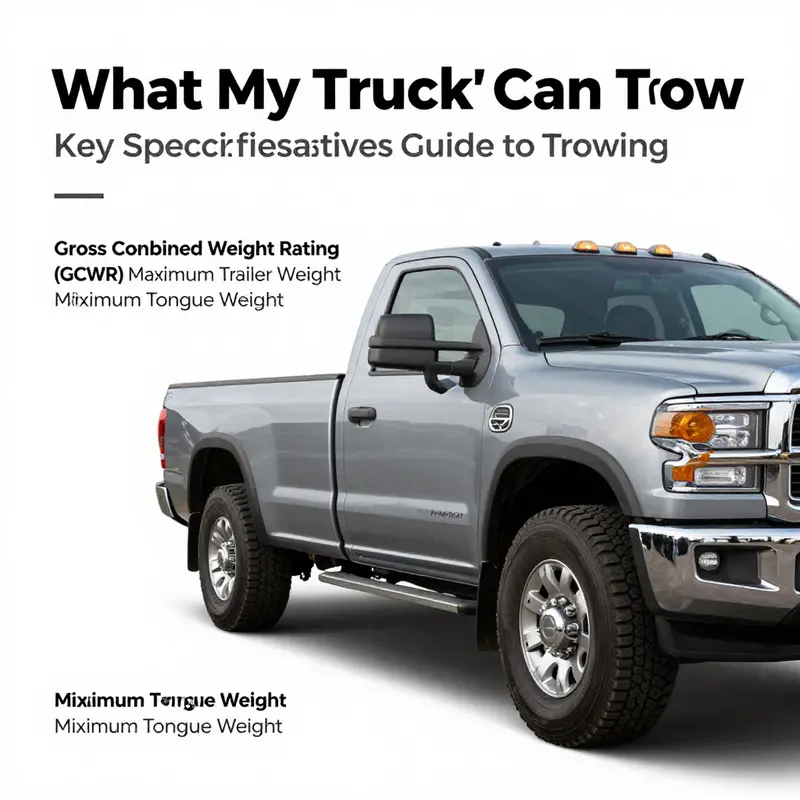
Reading your truck’s towing capacity is less about guesswork and more about reading a set of numbers that tell you what the vehicle can handle safely. The question “what can my truck tow?” often gets reduced to a single number, but the truth lies in a small bundle of ratings that work together to determine safe limits. The most important rule is simple: never exceed the numbers that the manufacturer publishes. Those numbers exist because towing places unusual stresses on brakes, transmission, cooling systems, and steering geometry. The goal is a controlled, predictable pull that keeps you and everyone else on the road safe. To understand why that matters, you need to know the core specifications and how they relate to the actual weight you’ll be hauling, behind and beyond the truck itself. This is where the terms GCWR, GVWR, payload, and towing capacity come into play, and where the difference between the weight of the truck and the weight of the load becomes clear once you translate the numbers into a real-world equation.
At the heart of towing capacity is the Gross Combined Weight Rating, or GCWR. This figure represents the maximum allowable weight of the truck plus the trailer and everything on and in the trailer. It is a ceiling that considers the vehicle’s structural limits along with the dynamics of towing. In practical terms, GCWR is the guardrail that keeps the entire system from overloading the engine, transmission, suspension, and brakes as a single unit. Pushing past GCWR means the brakes may overheat, the transmission could shed lines of critical gear, and steering control can deteriorate when you need it most. It is the most inclusive constraint because it accounts for the interaction between truck and trailer and how both contribute to the total weight on the road.
A closely related and equally important figure is the GVWR, or Gross Vehicle Weight Rating. GVWR is the maximum weight the truck itself is designed to carry safely when fully loaded, including the vehicle’s own weight, fuel, passengers, and cargo. It does not include the trailer; it is a ceiling for what the truck can carry on its own. This distinction matters because the payload—the amount of weight you can carry in the truck itself—subtracts from the payload available for a given towing scenario. In other words, even if your GCWR would allow a heavy trailer, if you exceed the GVWR by loading the truck with people and gear, you can’t legally or safely tow to that hypothetical maximum.
Payload capacity sits right under the GVWR and is the practical limit for how much cargo you can carry in the bed or cab in addition to the truck’s own weight. Payload is where the rubber meets the road in everyday work: tools, equipment, passengers, and any additional freight must fit within that envelope. The trick in towing is recognizing that payload capacity and towing capacity are not independent; they interact. If you plan to haul a heavy trailer, you must ensure there is enough payload left for passengers and cargo in the cab so you don’t violate the GVWR or push the truck into a heavier, riskier operating state.
Towing capacity, or the maximum trailer weight, is the figure most people notice first. It is the ceiling for how heavy a trailer your truck can pull, behind the hitch, while considering the truck’s own weight and the trailer’s weight. The towing capacity is often the most straightforward number on a spec sheet, but it is not the sole determinant of what you should tow. Real-world towing also depends on hitch type, axle ratio, transmission cooling, and the presence or absence of trailer brakes. A truck can have a high towing capacity on paper, yet if the trailer lacks brakes or the hitch is not engineered to handle that weight, the combination can become unstable and unsafe on the road.
To bring these concepts into a practical frame, imagine a heavy-duty pickup with a baseline curb weight of about six to seven thousand pounds, a GVWR that allows a payload of roughly three to four thousand pounds, and a GCWR that supports a total weight in the mid to high twenties of thousands of pounds when towing. The exact numbers shift with configuration, but the principle holds: you must compare the trailer’s weight to the GCWR minus the current vehicle weight, and you must also ensure the trailer’s own axle, brakes, and hitch are up to the task. The general approach is to use the GCWR as the cap, but where the numbers collide with the trailer’s axle rating or tongue weight requirements, you take the stricter limit. That is, you tow within the smaller of the two limits—the one dictated by the truck’s overall capacity and the trailer’s own design.
A critical but often overlooked piece of the puzzle is hull weight distribution and tongue weight. The tongue weight is the downward force the trailer’s hitch exerts on the truck’s rear axle. This weight is typically recommended to be in the range of about 10 to 15 percent of the trailer’s total weight. Keeping tongue weight within this window helps preserve steering feel and braking effectiveness. If the tongue weight is too light, sway and jackknife risks rise; if it is too heavy, you compress the rear suspension and shift too much weight toward the truck’s rear axle, which can degrade braking and handling. Both extremes threaten safe operation, especially during lane changes, braking, and maneuvering at highway speeds.
Choosing the right trailer for your truck is more than matching weight numbers. It requires attention to axle ratings, tire load capacity, and the trailer’s braking system. A trailer that is too heavy for a given axle rating may not distribute weight correctly, leading to wheel and tire failures. Braking on the trailer matters, too. In many regions, once the trailer’s weight crosses a threshold (often around 3,000 pounds, though this can vary by jurisdiction), trailer brakes become a legal necessity and a safety imperative. Without proper trailer brakes, the towing combination can behave unpredictably under braking, placing excessive heat and wear on the truck’s braking system and risking loss of control.
The hitch you select to connect trailer and truck is not a mere afterthought. Hitches come in several classes, each designed for a range of trailer weights. A properly matched Class II or III hitch, for example, can support mid-range towing needs, while Class IV and Class V hitches are built for heavier work and must be paired with compatible wiring, safety chains, and sometimes a dedicated braking system on the trailer. In towing conversations, this is where the concept of weight distribution comes alive. A weight-distribution hitch is a common solution for heavier trailers. It helps balance the load between the front and rear axles, slightly reducing the rear-end squat that often accompanies heavy towing. The result is more predictable steering and a reduction in sway as you traverse uneven surfaces or cross wind. For any substantial towing operation, a weight-distribution hitch is a practical investment that can dramatically improve stability and control, particularly during highway cruising or climbing hills.
Beyond the vehicle and the hitch, the trailer itself must be ready for the task. The trailer’s axle rating, tire load capacity, and braking system all need to be compatible with the truck’s capacities. If you’re considering a heavier trailer, ensure that its wheels and brakes are up to the job and that the tongue weight will not overwhelm the rear suspension or the hitch connection. It is also wise to consider the trailer’s own braking force in relation to the truck’s stopping power. A trailer without adequate braking can force the tow vehicle to absorb the majority of the stopping burden, which raises the risk of wheel lockup, sway, and loss of control in emergency braking situations. In this careful balancing act, the correct combination of trailer design, hitch class, and load distribution becomes the difference between a confident, safe tow and a perilous drive.
Legality also informs safe towing. In many regions there are limits on trailer length and width, as well as requirements for lights, brakes, safety chains, and speed restrictions when towing. The rules are designed to standardize the behavior of heavy combinations on public roads and to ensure trailer braking and signaling systems communicate predictably with the tow vehicle. Some jurisdictions require trailer brakes once the trailer exceeds a specific weight threshold. The practical upshot is straightforward: always check your local or state regulations before you head out. This is not an optional step; it is part of responsible towing and a hedge against fines or legal complications that can complicate what should be a simple haul.
In practice, a reliable approach to determining what your truck can tow begins with the manufacturer’s official documentation. The owner’s manual and the vehicle specifications page contain the GCWR, GVWR, and the maximum trailer weight rating that apply to your exact configuration. These numbers are frame-level constraints, but they are also dynamic: depending on engine choice, drivetrain, and options, you may see key figures shifted. It is not unusual for a given model line to present variations between a lighter cab and a heavy-duty cab, or between two different axle configurations, all of which alter your practical towing limit. That is why the most trustworthy source for precise figures is the manufacturer’s towing guide or payload and towing capacity page for your vehicle, accessible on the official website. This is where you translate the numbers into a concrete plan for what you tow and how you tow it.
To translate the spec sheet into action, you begin with the GCWR and the current weight on the truck. If your GCWR is 22,000 pounds and your loaded truck weighs 7,000 pounds, the maximum combined trailer weight you can legally tow, in theory, is 15,000 pounds. But you must also compare that with the trailer’s own rating—the maximum trailer weight the hitch and the drivetrain are designed to pull. If the trailer’s weight rating, based on its axles and braking capacity, sits at 12,000 pounds, then your actual tow limit is 12,000 pounds. This is the safer ceiling. Then apply tongue weight: a 12,000-pound trailer requires 1,200 to 1,800 pounds of tongue weight, depending on the trailer’s specific distribution, to keep the setup stable and predictable. From there, ensure the payload remains within the truck’s GVWR, so you’re not overloading the chassis itself when you load passengers and gear and still attempt to tow. The process boils down to a simple rule of thumb: the lower of the GCWR-based trailer limit and the trailer’s axle and braking capacity governs what you can tow, while the tongue weight guideline helps you manage stability.
This interplay is why towing calculators and reference guides are valuable. They can take your exact truck configuration and the trailer’s weight distribution into account to deliver a practical, safe recommendation. While a calculator can be a helpful check, the final word still rests on the manufacturer’s published ratings. And when in doubt, err on the side of a lighter load or a trailer with safer, more forgiving weight distribution. It is better to tow less than to push the limits and risk overheating a transmission, wearing out brakes, or compromising steering control. When you structure a tow around the numbers rather than around a guess, you gain confidence, you protect the investment in your truck, and you improve safety for every mile you travel with a trailer behind you.
For readers seeking additional practical guidance, the broader takeaway is that you should locate your vehicle’s GCWR and towing capacity in the owner’s manual or on the manufacturer’s official specification sheet for your exact configuration. Use those values as your baseline. Then inspect your trailer’s axle rating, tire load capacity, and braking system to ensure they align with your truck’s capabilities. Finally, confirm that the tongue weight aligns with the recommended percentage so that the load remains balanced and predictable on the road. As you gather these pieces, remember to factor in legal requirements and the realities of driving conditions, which can add strain beyond the numbers on the page. When you approach towing with this level of careful consideration, you’ll find that your truck’s true capability emerges not just as a number but as a practical, repeatable process you can rely on every time you hitch up.
In the end, the best habit is to treat towing as a calculated operation rather than a guess. Keep a running checklist: verify GCWR and GVWR in the owner’s manual, confirm the trailer’s weight and tongue weight, align hitch class with the load, ensure trailer brakes and safety chains are in place, and respect local towing laws. If you stay within these guidelines, your towing experience will be safer, more predictable, and more enjoyable, whether you’re moving equipment, transporting gear, or bringing a utility trailer along for a day at the job site. And when you want to go deeper, you can consult the official resources provided by manufacturers for model-specific guidance, including payload and towing capacity. For additional practical insights, see the Santa Maria Tow Truck blog. https://santamariatowtruck.com/blog/
To broaden the picture with an authoritative external reference, consult the official manufacturer towing guidance for your vehicle’s chassis, which offers model-specific figures and recommendations. Official manufacturer towing guidance
null

null
Final thoughts
Understanding what your truck can tow is more than just a number—it’s about ensuring safety, compliance, and efficiency. By familiarizing yourself with your vehicle’s towing capacity and adhering to legal requirements, you can navigate the complexities of towing with confidence. Whether for personal use or professional needs, being informed helps in selecting the right trailer and load, ultimately leading to more successful towing experiences. By taking these steps, you’ll not only protect your vehicle but also ensure a smooth and safe journey on the road.