

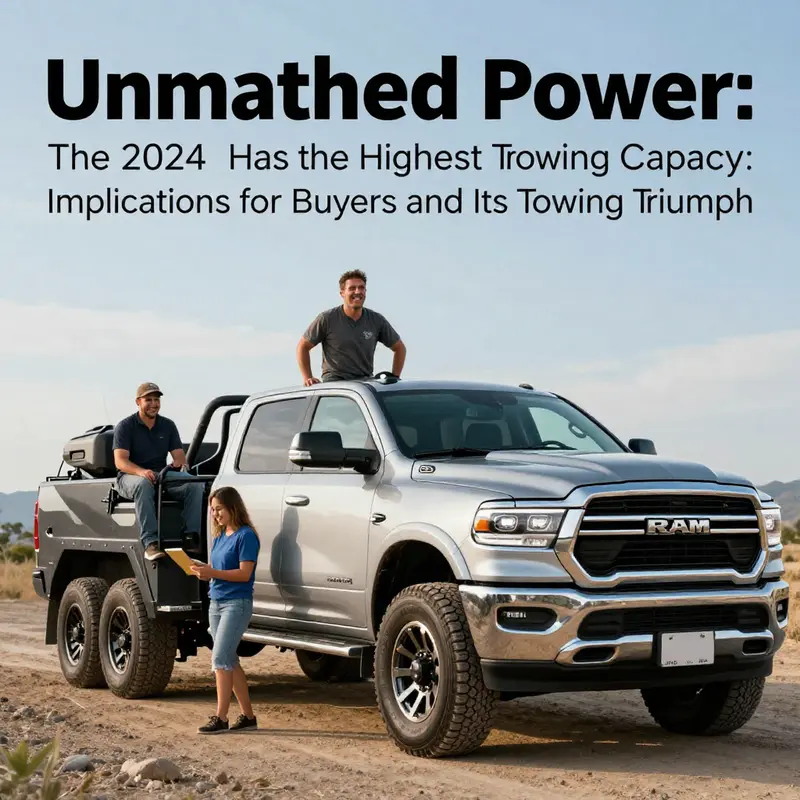
For local drivers, auto repair shops, property managers, and HOA administrators, knowing which truck can handle the toughest towing jobs is crucial. The 2024 Ram 3500 Heavy Duty takes the lead with a whopping towing capacity of 36,000 pounds when properly equipped. This powerful capability makes it the pinnacle of heavy-duty trucks designed for serious hauling. Understanding its features, engine specifications, and what it offers compared to competitors can empower buyers to make informed decisions. Each chapter will delve into the Ram 3500’s uniqueness, its competitive edge, and what features enhance its towing performance—all aimed at equipping you with essential knowledge in the truck marketplace.
Tow Champions Revealed: The Engineering Secrets Behind the Highest Towing Capacities in Heavy-Duty Trucks
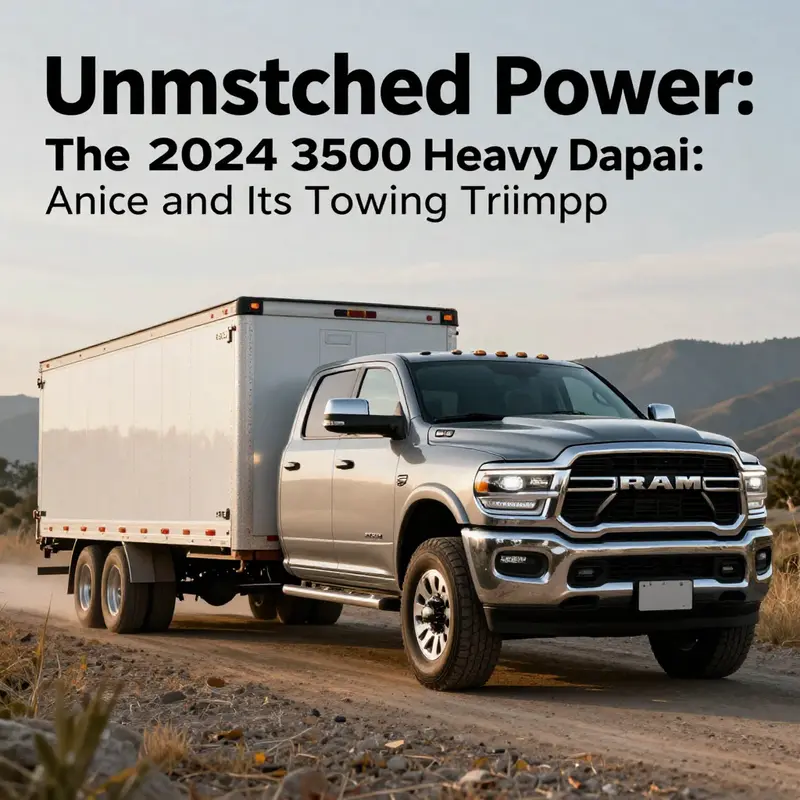
Pursuing the truck with the highest towing capacity invites a closer look at what makes a weighty pull possible rather than simply chasing a number. In the realm of heavy-duty pickups, the upper end of the towing spectrum sits in the mid-30,000-pound range when a truck is configured with the right package and equipment. That lofty figure is not a singular product’s boast but the result of a carefully engineered system where frame strength, suspension stiffness, powertrain torque, and control systems work in concert. The truly capable vehicle in this class is the result of deliberate choices across multiple subsystems, each tuned to keep a heavy load moving safely and predictably over long distances and challenging terrain. The idea behind the pinnacle of tow capacity is that the whole machine—frame, axles, brakes, cooling, and drivetrain—must coexist with a trailer that is properly matched to the truck’s capabilities. When people reference the top end of towing in this segment, they are talking about a configuration that maximizes real-world performance, not a single component.
A robust frame is the foundation. The frame is built to resist bending and twisting under heavy pull, maintaining alignment and stability as forces transfer from the hitch to the wheels. Alongside this backbone, a heavy-duty suspension system is designed to control the weight without sacrificing too much ride quality. The rear axle plays a central role, often featuring gearing that multiplies torque for stronger starts and steady climbs. These structural choices determine how well the truck can translate extreme engine power into forward movement while keeping the chassis aligned with the road. The aim is not only to move a large trailer but to do so with predictable steering and consistent braking response, even as forces shift with road grade, wind, and payload.
Powertrain philosophy follows suit with a focus on torque rather than peak horsepower alone. In the most capable configurations, engineers prefer a high-torque diesel-style concept that preserves pulling power at low RPMs. The goal is to deliver maximum turning force when the engine is turning slowly, which makes it easier to coax heavy loads up grades or off the line without excessive throttle. The transmission that accompanies this powertrain is built for durability, with robust clutches, reinforced gear sets, and a cooling system designed to withstand long pulls. When a vehicle can sustain its pull without warming the drivetrain to unsafe temperatures, the operator gains steadier control and confidence over the entire journey. The interplay between engine and transmission matters; a refined torque delivery curve reduces the need for abrupt throttle or late gear shifts that could destabilize a heavy trailer.
Configuration is more than engine and frame. To claim the upper limits of towing, manufacturers often bundle equipment that enhances cooling, strength, and braking. Beyond the engine and case, a towing package might include enhanced engine cooling, upgraded electrical systems, and a transmission cooler designed for sustained loads. The rear axle ratio is selected to balance launch performance with steady, high-tow efficiency. The hitch and weight-distribution considerations are not afterthoughts; the proper hitch design and trailer braking system are essential to maintain control under load. In practice, the official rating reflects a specific configuration and a carefully matched trailer, rather than a universal capability that applies in every situation. This is a reminder that maximum tow capacity becomes meaningful only when paired with appropriate trailer equipment and proper weight distribution.
The practical implications of these design choices extend into the field. Heavy hauls demand more than raw power—they require reliable braking, steady cooling, and a predictable response from the steering system. Braking technology, for example, must contend with the added momentum of a loaded trailer. Some setups incorporate enhanced braking control to manage trailer sway and maintain directional stability at highway speeds. Trailers with properly adjusted brakes and weight distribution contribute to safer, more controlled deceleration. In addition, stability control systems help dampen the oscillations that can arise when a heavy trailer encounters a gust of wind or a sudden lane change by the vehicle ahead. The result is a towing experience that remains within the operator’s sense of predictability, even when the load tests the limits of what the vehicle can handle.
For readers who plan around capacity, the distinction between towing capacity and practical daily use becomes clear. The number on the window sticker represents the maximum under a specific set of conditions. Real-world towing—especially over long distances or in demanding environments—often yields lower results due to factors such as trailer weight, weather, road grade, and the need for frequent braking. The takeaway is not a warning to avoid heavy pulls, but a reminder to match the trailer and load to the vehicle’s capabilities and to perform due diligence in maintenance, inspections, and load distribution. After all, an optimized combination—not just a powerful engine—is what makes the difference between a single high-number claim and consistent, repeatable performance across jobs and seasons.
The broader value of understanding this top-end capability extends to professional practice and fleet planning. In contexts where large trailers and heavy equipment move between sites, clear knowledge of what a vehicle can handle enables smarter scheduling, safer operations, and more efficient asset utilization. It also informs decisions about fleet standardization and emergency-readiness protocols. For practitioners who want to dive deeper into the policy and planning side of heavy towing, there are resources focused on standardization and readiness that knit together vehicle capability with operational requirements. Fleet standardization and emergency readiness resources. This perspective helps align maintenance cycles, driver training, and load planning with actual capabilities rather than theoretical numbers.
Of course, the precise value a given truck can tow depends on many factors, including the availability of a properly matching trailer and the equipment used to ensure safety and control. If you seek official, model-specific data and configurations, the manufacturer’s documentation remains the best source. It provides the formal numbers, the required equipment, and the exact conditions under which the peak capacity is achievable. For those who want to verify the latest figures and explore configuration options, consult the official site that presents towing specifications and powertrain choices in a rigorous, hands-on way: https://www.ramtrucks.com
Tow Power Unmasked: The Edge of the 36,000-Pound Barrier in Heavy-Duty Trucks
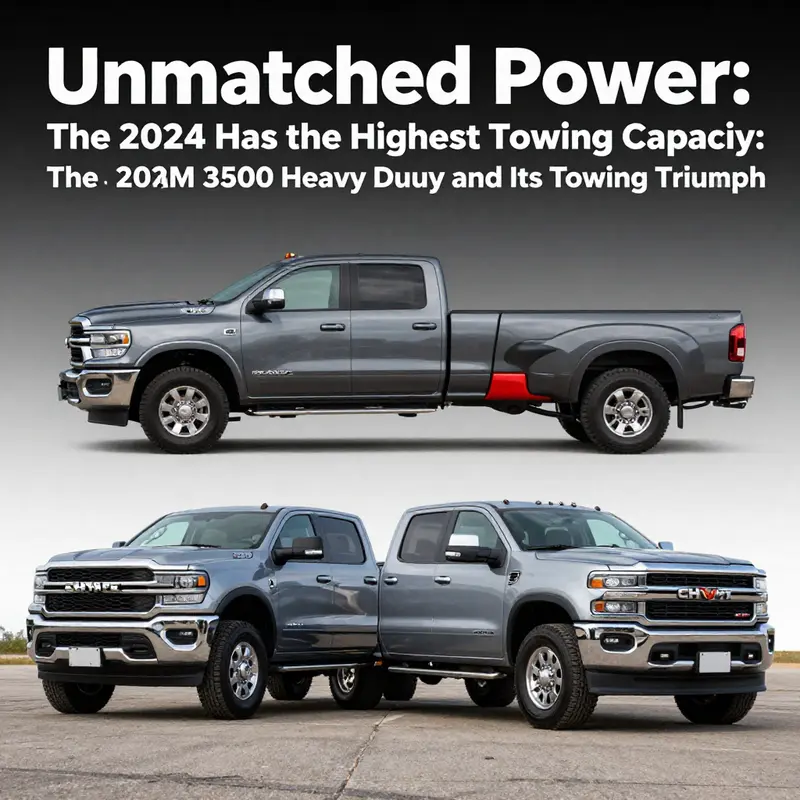
Across the landscape of full-size pickups, the question of which truck can pull more than any other tends to hinge on one crucial detail: the configuration. The number that defines towing capacity is not a single fixed figure but a ceiling that appears only when the truck is paired with the right drivetrain, rear axle ratio, suspension setup, and, most importantly, the appropriate tow package. In the heavier end of the market, that ceiling edges well into the mid-30,000s—numbers that put extreme hauling within reach for certain outfits and tasks. Yet those numbers are not simply stamped on a badge; they are earned through a careful balance of power, stability, and control. When a vehicle is prepared for maximum towing, it becomes a tool capable of moving large, unwieldy trailers, heavy equipment, or sizable industrial loads with a degree of confidence that only a tuned system can deliver. That is the core idea behind the current heavyweight competition for the towing crown: the pursuit of the highest possible number, but with the practical caveat that the best-numbered truck is not always the most useful on every jobsite or highway corridor.
Among the top contenders in this category, one model is frequently cited for its extreme capacity when the right options are selected. In its heavy-duty configuration, the max tow figure can cross the important threshold of thirty-six thousand pounds and may even push beyond that mark in some setups. The question then shifts from “which truck is capable?” to “which specific configuration delivers the highest, most reliable tow for the job at hand?” That distinction matters because the same truck that achieves an impressive number with a max trailer tow package may not be the most efficient choice for daily duties or for operators who balance payload, braking, and fuel economy alongside raw pulling power. The narrative of towing leadership in this segment, therefore, becomes a nuanced comparison rather than a simple ranking.
Another well-positioned player in this space shares a similar story. In its most capable heavy-duty form, it sits close to the top tier, delivering towing performance that challenges the leaders when equipped appropriately. The margins here are tight, and the differences often come down to a handful of key specifications: the engine option, the axle ratio, and the presence or absence of trailer brakes, stabilizing features, or air-spring suspensions that improve control under heavy tongue weight. These are not trivial details; they translate directly into how well the truck handles giant trailers on the highway, how quickly it accelerates when fully loaded, and how cleanly it stops when the road pitches upward or downward. The broader picture is that the towing crown in this class is a moving target, highly dependent on exact build sheets, and reflective of the fact that the best number is not a universal standard but a function of purpose-built configurations.
Beyond these extreme configurations, the conversation also encompasses the more common, non-extreme end of the spectrum. For everyday heavy-duty use, a few models still offer impressive capacity without forcing a buyer to chase the ultimate tow figure. A popular heavy-duty option can reach towing totals around the mid-thirties, provided the buyer selects the appropriate engine, gearing, and hitching gear. The landscape then broadens to include high-powered still-capable light-duty and mid-range vehicles that push well past fourteen thousand pounds in towing. A standout example within this tier is the light-duty line’s flagship powertrain paired with a specialized towing package, which can deliver up to fourteen thousand pounds of trailer mass. This is a remarkable capability for a vehicle that remains easier to live with day to day than its heavier siblings. Likewise, certain full-size options in the same family offer around twelve thousand seven hundred pounds when paired with a robust towing setup, delivering a blend of performance, efficiency, and maneuverability that appeals to a broad swath of drivers who need serious capability without stepping into the heaviest weight class.
When parsing these numbers, it helps to keep three realities in mind. First, the phrase “maximum towing capacity” assumes the vehicle is properly equipped—an important qualifier that unlocks the upper echelons of capability. Second, the headline number typically reflects a specific combination of drivetrain and hitching hardware, not a standard spec you’ll encounter on every trim. Third, the real-world experience of towing depends on more than just sheer pull. Payload capacity, stability, braking, cooling, and tire performance all contribute to how a truck performs when the trailer is in tow and the road demands control and precision. These factors matter as much as the raw height of the number. In practice, buyers who chase the top figure often concurrently evaluate the stability and reliability that come with that power, recognizing that a higher number is meaningful only if it translates into predictable, controllable towing under real conditions.
To widen the lens a bit, the landscape also includes options that serve as credible, high-capacity tools for users who do not need the absolute maximum. For those who tow heavy but not quite at the extreme limit, the capability of a renowned model in its proper package still makes it a compelling choice. The emphasis for these buyers tends to be a blend: robust towing number, solid payload capacity for gear and crew, reasonable efficiency, and a strong support network for maintenance and parts. The practical takeaway is that the best choice depends as much on the mission profile as on the headline figure. If the job involves frequent heavy tows along varying terrain, the confidence that comes with proven high-tow configurations can outweigh a marginal difference in theoretical maximums.
For readers seeking broader context on how these numbers translate into real-world decision-making, a deeper dive into towing considerations is available on the Santa Maria Tow Truck blog, which explores how operators weigh power, stability, and payload when selecting a vehicle for demanding tasks. https://santamariatowtruck.com/blog/
Ultimately, the pursuit of the highest towing capacity remains a nuanced competition. The heavyweight end of the market clearly shows it is possible to push past the thirty-six-thousand-pound line with properly chosen equipment and configuration. The leading figures in this category exemplify what is achievable when powertrain strength, axle gearing, braking capacity, and hitching technology align in service of extreme towing. Yet for many buyers, the most practical choice is not the single highest number but the best balance across power, control, efficiency, and total cost of ownership. In that sense, the industry’s highest-tow champion is less a lone winner than a reflection of how well a truck can be tuned to the user’s needs—how its design accommodates the realities of real-world hauling, not just the thrill of a peak specification. For readers who want current, in-depth comparisons and spec-by-spec analyses, trusted industry outlets remain a valuable resource for confirming the latest numbers and the conditions under which they apply. As always, the official manufacturer pages and up-to-date testing from respected automotive outlets provide the foundation for choosing the right tool for the job.
External resources for broader context on the subject of towing capabilities include Car and Driver’s comprehensive coverage of trucks, which offers detailed tests and comparisons to complement the numbers cited here: https://www.caranddriver.com/trucks
Tow Mastery and the Power Equation: How Engines, Transmissions, and Chassis Define the Heaviest Haul
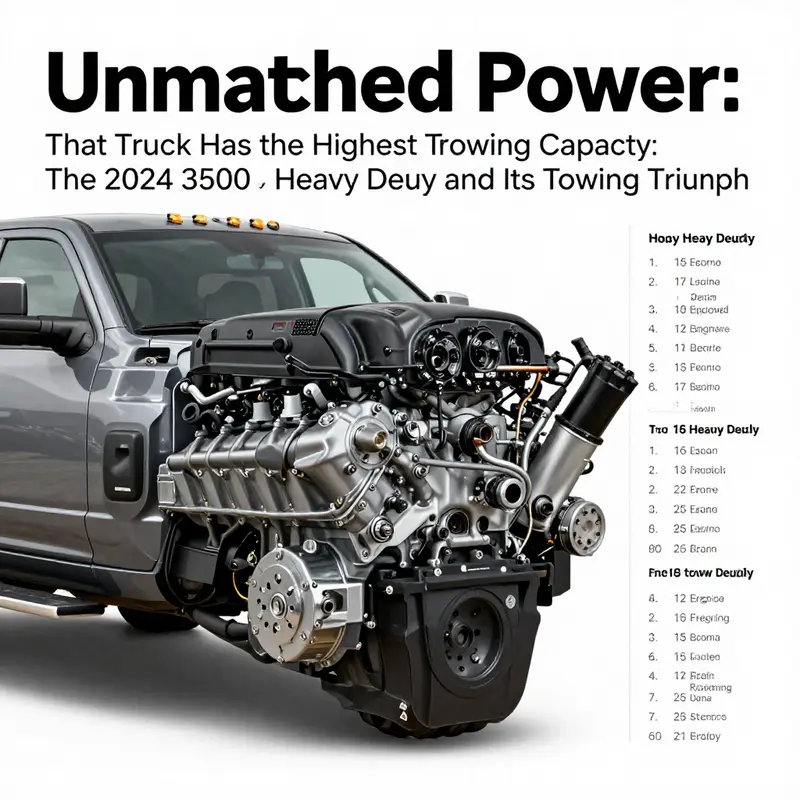
Tow capacity is not a single number that you simply pick from a catalog. It is a conversation between power, balance, and reliability that unfolds over the miles. The truck that can pull the heaviest loads is the product of choices made in several systems that must work together: the powertrain, the gears that translate power to the axle, the frame and suspension that keep the vehicle stable, and the cooling and control systems that prevent heat from wearing components down during long hauls. When engineers design a heavy-haul machine, they optimize these elements to ensure the truck can not only lift the weight off the hitch but also maintain control, steerability, and predictable behavior across a range of conditions. This is why the highest towing capacity is not simply about raw torque or the number on a brochure; it is about the total package that makes the extreme load feel manageable rather than heroic and risky. In the current market, the leading configuration pushes toward a peak around thirty-seven thousand pounds, provided every rating condition is met and every piece of equipment intended for that job is in place. And behind that number lies a carefully tuned chain of engineering decisions that protect powertrains, frames, and drivers alike.
At the heart of the equation is the engine’s torque. Torque is the force that turns the wheels when a trailer is trying to move the entire combination from rest. In the most capable deployments, torque figures exceed a thousand pound-feet, with horsepower near four hundred. This power matters most when starting from a stop, when pulling away from a light on a grade, or when the trailer’s center of gravity shifts as you climb a hill. A high-torque, turbocharged design typically delivers a very broad torque curve, which helps when you hold a heavy load at varying speeds. The engine’s job is not only to deliver raw force; it is to deliver that force reliably across a broad operating window. If the torque falls away as rpm drops, you can feel the difference in how the rig behaves at low speed, especially on steep ramps or in windy conditions. The best engines in this class combine robust initial response with steady midrange torque that can be tapped on demand, rather than requiring a precise, delicate throttle input to keep the rig moving. In practical terms, this means you can accelerate into traffic, climb grades, and hold a steady throttle when a trailer’s weight tries to pull you backward. It also means the engine runs closer to its ideal thermal envelope, reducing fuel consumption spikes and heat buildup during long pulls.
Power alone does not translate into maximum tow by itself. The transmission system plays a pivotal role in turning that torque into controlled motion. An ideal heavy-haul setup uses a transmission designed to manage extreme torque while preserving smoothness and durability. A broad gear range lets the truck stay in the most efficient band across varied speeds and grades, while advanced logic can downshift preemptively to maintain momentum on long climbs. The gearing interacts with the axle ratio to deliver the right balance: enough torque at the wheels for starting and slow-speed control, and enough gearing to avoid overworking the engine at higher speeds. In addition to the hardware, software and torque-management strategies help the system maintain stability. Drive modes geared toward towing can tune throttle response, stance, and anti-sway controls, ensuring that the power delivery doesn’t surprise the driver when the trailer begins to wag or push at the hitch. When you read a tow rating, ask whether the spec reflects a complete drivetrain package that includes the transmission, a matching axle setup, and the electronic controls that govern towing safety and efficiency.
The chassis and suspension are the stage on which the heavy-haul drama plays out. A reinforced frame—built to resist bending under the extra load—and a suspension system that can absorb the dynamic forces from a long trailer are essential to maintaining a straight, stable pull. The goal is not a stiffer ride for its own sake but a controlled one for the trailer and the tow vehicle alike. A well-trimmed cooling system is part of this strategy, because high-tensity towing can raise engine and transmission temperatures into ranges where efficiency drops and components wear prematurely. In practice, this means more substantial radiators, dedicated transmission coolers, and airflow enhancements that keep air moving through the core as speeds fluctuate and wind shifts the hull of the trailer. Some models use modern independent suspensions or air-ride options to improve payload handling and reduce sway; others rely on heavy-duty leaf-spring setups designed for predictable weight distribution. All of these choices affect how the truck feels when it is pulling the heaviest loads and how much reserve the powertrain has left when the highway grades stretch into the distance.
Ratings tell a story, but the real story involves how you use a truck with that rating. Actual towing depends on payload, which eats into the available headroom for the trailer, and on axle ratio and transmission configuration, which determine how much of the engine’s torque can reach the ground. Trailer weight distribution matters as well; an unevenly balanced load can place more torque on the hitch and destabilize the vehicle’s response. Road conditions, elevation, and wind all influence how close you get to the stated maximum. For everyday work, drivers learn to respect these limits by planning routes with gentle grades, gradually ramping up to highway speeds, and keeping the trailer properly loaded and aligned. A strong rule of thumb is to verify the exact configuration in the towing guide for your intended setup, because even a little change in hitch type or payload can alter the usable capacity by several thousand pounds. This is why the best buyer’s guides emphasize both the published ceiling and the practical, install-specific rating you can safely achieve with your chosen equipment and cargo.
From a market perspective, the premium capacity at the top end comes from a carefully engineered package that combines a high-torque powerplant, a durable transmission, and a frame that can resist repeated loading. The leading option in the current class demonstrates how much of a difference a well-muited drive train and supporting systems can make when you are trying to approach the ceiling. The next tier of contenders—placed just a few thousand pounds behind the leader—still offers substantial capability with strong engine output and reinforced mechanicals, though the precise limits vary with configuration and with the availability of optional upgrades. A third group provides significant capacity as well, but with trade-offs in daily usability, ride quality, and often price. Across all these families, the common thread is that the highest ratings are the result of integration: a torque-rich engine, a transmission that can harness it, axle trains designed for heavy loads, and a chassis built to endure heat and stress. When you read the numerical figure in a brochure, remember that it represents the maximum under a defined set of conditions; the true value lies in how the truck behaves when the trailer, the road, and the driver all demand stable coordination.
For prospective buyers, the practical takeaway is straightforward: look beyond the top figure and study the entire towing stack. Identify how the engine responds in real-world speeds, how the transmission handles long climbs, and how the cooling strategy performs in heat and time. Check the hitch options and whether a weight-distributing system is included or available, as well as sway control features that can reduce the risk of instability. It is also wise to assess the typical payload you carry and how that interacts with the trailer mass. A using-to-work approach—driving in typical conditions, testing in varied terrains, and following the manufacturer’s guidance—will reveal how much of the published ceiling you can actually utilize. For ongoing context and practical updates from the field, you can consult industry resources at the Santa Maria Tow Truck Blog. Santa Maria Tow Truck Blog. The article here aims to distill the core drivers of towing capability, helping readers think through how the different parts of the truck contribute to the overall performance.
Ultimately, the highest tow rating is the result of a holistic engineering choice. A very strong torque profile is valuable, but it is only one of several critical components that enable safe, dependable heavy hauling: a stiff, durable frame; an effective cooling strategy; a transmission and gearing that maintain the right speed and control; and a suspension system that keeps the line straight. The modern heavy-haul truck is a product of collaboration among these systems, and its reputation rests on how well they work together over the life of hard work and long miles. If you want to confirm the numbers and compare configurations, refer to the manufacturer’s official specifications for the exact setup you’re considering, available at the specified source: https://www.ramtrucks.com/.
Tow-Weight Crown: How Modern Trucks Compete for the Highest Towing Capacity
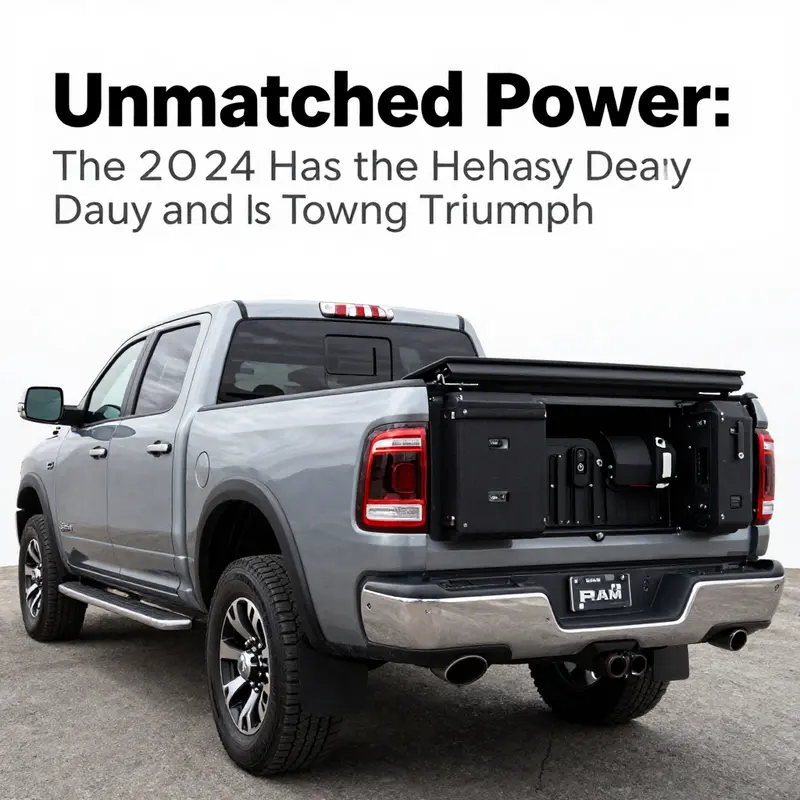
Towing capacity is more than a number on a spec sheet; it is the practical expression of how a heavy-duty vehicle translates power, chassis rigidity, thermal management, and braking into controlled movement behind a trailer. In factory tuned maximum configurations, the strongest setups can approach the mid 30,000 pounds range when a precise combination of hitch, drivetrain settings, cooling, and weight balance is used. The electric segment adds a different kind of challenge and advantage, delivering instant torque and sophisticated stability systems that can pull sizable loads too, though the raw weight of the battery can reduce the figure somewhat. Across the spectrum, the highest tow figures come from a harmonized package that integrates engine or motor, transmission, frame, suspension, brakes, and cooling into a single design.
On the heaviest end, peak capability often emerges when a heavy duty work truck is paired with the right trailer and a validated hitching setup. In well tuned, properly equipped form, some trucks can tow up to 36,000 pounds, a threshold that marks the practical ceiling in many configurations. This is not universal, but reflects durable torque, cooling headroom, braking control, and a stiff chassis able to keep the rig planted. In contrast, the electric pickup designed for daily work and mid range hauls tends to cap around 14,000 pounds today, driven by battery weight and thermal constraints. Between these extremes lies a broad middle ground where fleets optimize for payload, stability, and real world usability.
To understand what makes a given configuration capable, focus on the elements that convert raw power into controlled motion behind a trailer. Torque matters, but torque alone does not build reliability. A robust frame resists flex and maintains alignment under heavy loads. The powertrain must deliver torque quickly and sustain it as speed drops and trailer inertia rises. Clever gearing, efficient cooling, and proper lubrication help. When the grade rises or the wind increases, torque becomes meaningful only if cooling keeps temperatures safe and the braking system translates load to braking force smoothly. The trailer brake controller modulates tow vehicle braking and can reduce sway. The hitch choice matters as well; class 4 or higher receivers allow heavy towing and with reinforced rear axles and stability control, the trailer tends to track rather than push the truck.
Electric versus internal combustion is a dialogue worth watching. Electric tow rigs can offer near instant torque and precise control to move a heavy trailer with confidence, and advanced stability features can improve traction and steering. Yet the additional weight of a large battery and the need to manage pack temperatures during long pulls place different demands on the vehicle. In practice, electric designs tend to emphasize predictable steady pull and refined handling, while traditional diesel or gas platforms maximize raw tow capacity by prioritizing load bearing strength and cooling headroom.
Across the field there are common features that enable high tow capacity. Strong motors and multiple powerplants can provide immediate torque. A reliable integrated trailer brake controller helps distribute braking. The class 4 hitch remains a staple for heavy towing. Adaptive or active suspension helps keep the trailer tongue weight from lifting the rear and helps manage pitch under acceleration and deceleration. The drivetrain thermal management system, reinforced axles, and robust cooling work together to prevent heat soak and fatigue on long pulls.
Ultimately a maximum rating is a ceiling not a daily reality. Real world towing depends on trailer weight, tongue weight, distribution, grade, wind, and driver technique. To maximize reliability, operators should plan for heat, longer braking distances, and payload in excess of the bare tow rating. It is common to see builders encourage upgrading brakes and cooling when chasing the highest numbers, and to pair a matching trailer to ensure stability and control during long hauls.
Developments in electrified towing power continue to broaden what is practical on road. The focus remains on balancing torque, stability, energy management, and range while preserving predictable behavior behind a heavy trailer. When evaluating options for serious towing work, look beyond the headline number to how the system performs in real world conditions across miles of highway and back roads.
Tow Power Reimagined: The 14,000-Pound Benchmark and the Electrified Shift in High-Tow Trucks
When the industry measures a truck’s value, towing capacity remains one of the most consequential figures. It represents more than a number; it signals how a vehicle fits into essential workflows, whether that means hauling heavy trailers to regional job sites, towing equipment to remote work zones, or supporting fleet operations that demand predictable, real-world performance. In the current market, the top towing figure belongs to an electric pickup whose rating reaches 14,000 pounds when properly equipped. This is a milestone that expands the traditional boundaries of what an electric powertrain can accomplish in a segment long defined by diesel torque and heavy-duty diesel architecture. It challenges the long-standing assumption that the most demanding towing tasks must ride on a combustion engine to succeed. Instead, the data point marks a shift toward a broader math of capability, where instant torque, efficient energy management, and sophisticated traction control converge to deliver strength without the familiar sounds and vibrations associated with older powertrains. The practical implication is clear: buyers who rely on high-tow performance now have a credible electric option that can meet or exceed many expectations that previously only a combustion-powered platform could satisfy.
To a buyer whose work is defined by the weight of what is pulled, the 14,000-pound ceiling offers more than reassurance. It promises a workhorse that can respond quickly to shifting loads, with immediate torque delivery that helps with loading and maneuvering heavy trailers in tight spaces. The quiet, steady pull of an electric drivetrain can translate into a smoother on-ramp for routes where acceleration under load matters, reducing the stress on both the truck and the trailer system. But the story is not merely about raw draw. It also speaks to resilience—about maintaining steady performance across a range of temperatures, terrains, and duty cycles. The ability to sustain high-tow effort over a full workday depends on more than peak capability; it rests on how well the system distributes power, manages heat, and coordinates with stability systems designed to keep a loaded rig predictable. In this light, the top figure becomes a baseline for evaluating overall design quality rather than a standalone testament to strength.
From a buyer’s perspective, the appeal extends beyond the moment of tie-downs and hitch pins. Electric propulsion offers advantages that can influence total cost of ownership, a central consideration for fleets and individual operators alike. The promise of fewer moving parts, reduced routine maintenance, and potential energy savings can translate into lower ongoing expenses. For many prospective buyers, the friction points of traditional ownership—fuel costs, routine oil changes, and scheduled diesel maintenance—appear more manageable when weighed against the backdrop of an electric powertrain that can deliver the same or higher towing capability. The calculus, however, remains nuanced. Payload capacity, range under load, charging time, and charging availability all factor into the decision. A vehicle that can tow 14,000 pounds may still require careful planning to ensure that the energy budget aligns with daily routes and timetables. The conversation, therefore, must balance strength with practical limits, recognizing that the best choice is often the one that fits a specific use case rather than the aspirational maximum alone.
The market response to this development has been instructive. It reveals a broader trend: electrification is moving from a niche option to a mainstream consideration for heavy-duty tasks. The entry of electric models into high-tow segments is prompting conversations about how manufacturers design powertrains, batteries, and chassis platforms to handle the load more efficiently. With more entrants entering the electric truck space, the sector is racing to improve battery density, motor efficiency, and control strategies that optimize both payload and towing dynamics. This competition accelerates technology in ways that benefit buyers across the spectrum, from individual contractors to fleet operators seeking to standardize performance metrics and maintenance practices. The implications extend to service networks and aftersales support, where OEMs and independent providers must adapt to a broader mix of propulsion systems while maintaining the same level of reliability customers expect from a high-tow workhorse.
Yet the shift toward electrification in the heavy-tow arena is not solely about power and torque curves. It also invites a reexamination of how buyers evaluate what they need from a truck. If a vehicle can haul more weight than before, does that change the way a fleet assigns tasks, or the way a contractor plans a job around available equipment? In some cases yes, because greater tow capacity can expand the set of feasible job configurations, enabling a single vehicle to perform tasks that previously required assistance from multiple units. This potential flexibility can lower capital intensity and simplify logistics. In other cases, it highlights the importance of accurate payload management and chassis tuning. The most capable platform is only as good as its ability to stay stable under load, to distribute weight effectively, and to keep suspension and tires within their design envelopes. The best buyers will seek out trucks whose hardware and software are tuned to deliver predictable, repeatable results when the trailer is fully loaded.
The evolution also reshapes the conversation around incentives and policy. Electric powertrains often come with compelling total-cost-of-ownership narratives, including tax incentives, reduced maintenance costs, and potential grid-related benefits tied to fleet deployment. These considerations can tip the balance for a buyer who is weighing a large purchase between a traditional diesel configuration and a modern electric alternative. The narrative surrounding incentives is not just about the sticker price; it encompasses long-term operational costs and the broader environmental footprint of a fleet. While incentives can soften upfront costs, they are just one piece of a broader ecosystem that includes charging infrastructure, downtime for recharging, and the availability of service networks with competency in electrified propulsion.
For readers seeking a practical anchor, the latest data point about top towing figures underscores the importance of evaluating a truck through a holistic lens. Buyers should ask not only how much a vehicle can pull, but how reliably it can pull, how it behaves under load, and how well it integrates with the work patterns of a team or a fleet. The optimal choice will align with a company’s mission, not just its needs for raw capacity. In this sense, the 14,000-pound benchmark is less a finish line than a starting line. It signals what is possible and invites a careful, context-driven assessment of how a heavy-duty truck fits into daily operations, maintenance regimes, and the broader transition toward electrified work vehicles. As the market evolves, those who approach the decision with a clear view of their practical requirements will identify choices that balance peak capability with durability, efficiency, and long-term value.
For further context and to explore more about the shifting landscape of high-tow electrified trucks, readers can refer to the general resource aggregator for industry insights, such as the Santa Maria Tow Truck Blog, which provides ongoing coverage of heavy-duty trends and field-tested perspectives. Santa Maria Tow Truck Blog.
External reference: https://www.ford.com/trucks/f-150-lightning/specs/.
Final thoughts
The 2024 Ram 3500 Heavy Duty stands as a benchmark for towing strength and capability, designed for those who require serious performance. Its unrivaled towing capacity of 36,000 pounds not only highlights its robust engine and advanced features but also fits seamlessly into the lives of drivers, property managers, and businesses that depend on reliability. As the market evolves, understanding these vehicles empowers potential buyers to make informed decisions tailored to their needs. Equip yourself with knowledge, and consider the Ram 3500 for your next heavy-duty truck investment.