
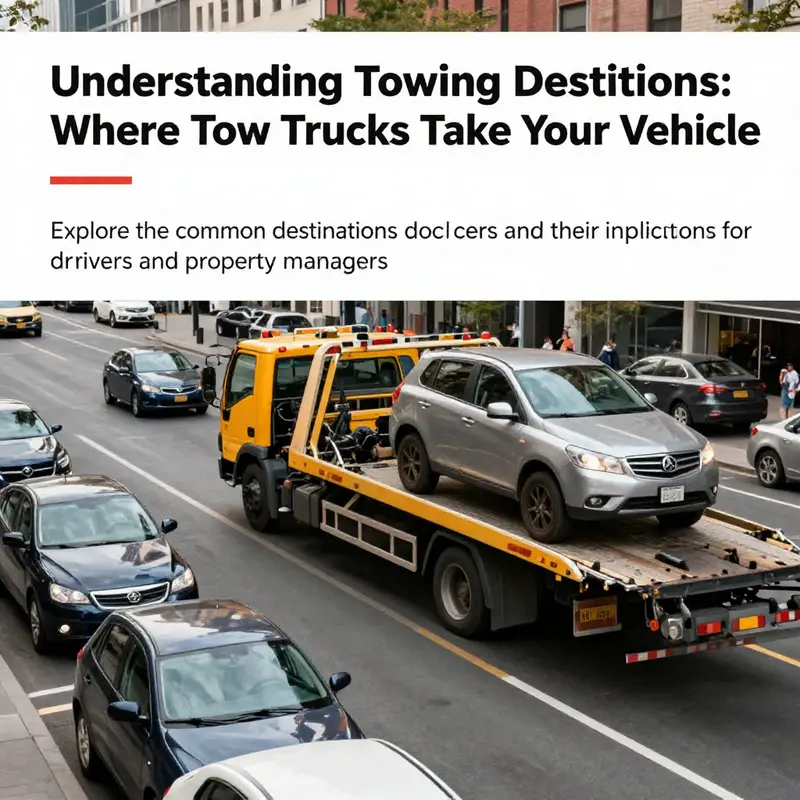
Understanding where tow trucks take vehicles after they have been towed is crucial for local drivers, property managers, and auto repair shops alike. Whether it’s an impound yard due to parking violations, a repair shop for mechanical breakdowns, or a salvage yard following an accident, each destination plays a vital role in vehicle recovery and local regulations. This article demystifies the main towing destinations, shedding light on what to expect after your vehicle has been towed and how each situation may impact you.
Tow to the Lockup: Understanding Impound Yards and the First Stop for Towed Cars
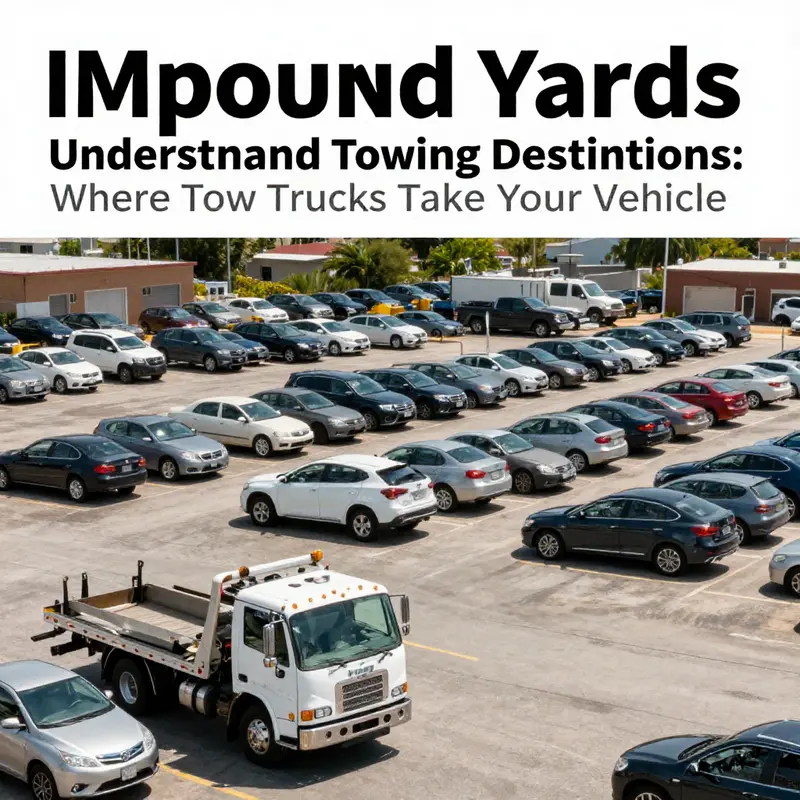
When a vehicle is hauled away from a street or curb, the sight of the tow truck vanishing into the distance often leaves the owner with more questions than answers. The immediate aftertaste of a tow is not the roadside but the impound yard, the secured lot where a towed car rests under watchful eyes, waiting for its owner to sort out the paperwork, fines, and fees that decide whether the vehicle will be released, repaired, or eventually sold. This chapter follows the ordinary arc of that journey, tracing how a car ends up at an impound yard, what that destination means in practical terms, and how the process of retrieval unfolds for a driver who suddenly finds themselves navigating unfamiliar municipal rules and costs. The path from curb to lockup is not arbitrary; it is shaped by laws, enforcement practices, and the narrow line between parking violation consequences and a vehicle s broader fate on the street.
To understand why impound yards are the default stopping point for certain tow situations, it helps to distinguish between the kinds of removals drivers may encounter. When a car is towed for illegal parking the clearest scenario tied to the chapter s focus the intent is not to remove a vehicle for repair or salvage but to remove it from a location where it creates an immediate hazard or obstruction. In these cases, the towing company is acting under authority granted by municipal code or private property agreements. The car is transported to an impound yard, a facility staffed and secured to hold vehicles that have been removed because they violate parking restrictions, block driveways, or fail to pay required meters and parking fees. The dictionary sense of impoundment that a vehicle has been taken away and placed somewhere from which the driver must pay to recover it fits this situation in a clear and utilitarian way. The impound yard becomes the controlled staging ground where the consequences of a parking violation are realized in physical form.
The impound yard is a specialized component of a broader towing ecosystem. It is not merely a random repository but a facility designed to manage, store, and when appropriate, process vehicles that no longer belong on the street for a particular period. Municipalities may own or contract impound yards, and private operators may run them under licenses and contractual terms. The yard s existence serves several essential purposes. First, it provides a predictable location where enforcement agencies know a removed vehicle will be found and secured. Second, it creates a barrier between a street scene and the vehicle s potential reintroduction to curb space, which helps prevent further violations or abuse of on street parking rules. Third, it creates a clear pathway for owners to reclaim their property by presenting proof of ownership and paying the associated fees. The impound yard thus acts as a practical, regulated hinge between a tow and the eventual resolution of a dispute or a lapse in the offending situation.
The day to day experience of an impound yard reflects its dual character as both a custody facility and a customer service point. The yard may be fenced and monitored, with entry controlled by gate procedures and identification checks. Inside, rows of vehicles may be parked in orderly lots, their license plates visible through windshields, their keys sometimes secured in a separate office where staff log each arrival and track the vehicle s status. The staff who manage impound operations carry out a careful, clerical job as well as a logistical one. They document the tow, assign an impound lot number, and prepare a release record once the owner proves ownership and pays what is owed. This is a space where the abstract rules of parking enforcement meet the concrete realities of vehicle ownership. The owner s ability to recover depends on a straightforward set of steps: prove you own the car, identify yourself, and settle the charges that the city or private operator has accrued during the period of impoundment.
The question of who administers the impound yard matters as well. City operated impounds are typically tied to the local police or parking enforcement division, and the rules governing them may be described in municipal codes and public facing guides. Private impounds operate under business licenses and contracts with the city or county, but still must comply with stipulated hours, fee schedules, and retention times. These differences can affect the way a tow unfolds in real life. For instance, a vehicle towed for a parking violation may be held in a city impound for a set period, after which the proprietor can be notified and can begin the retrieval process. If a private impound is involved, the terms could differ in the days of storage or the exact release charges. In all cases, the release hinges on evidence of ownership and the payment of fees accrued during the hold.
What qualifies as a legitimate tow to an impound yard, and what does not, is often coded in public safety and traffic regulations. A common scenario is the vehicle being parked in a restricted area or in a manner that blocks a driveway or other critical access point. Another frequent trigger is nonpayment of parking meters or posted fees. A tow may also occur if a vehicle is left in a space designated by the city or the property owner as reserved or prohibited. In all these cases, the result is a tow to the impound yard where the car remains until the owner addresses the violation through the proper channels. It is essential for drivers to know that while the tow is legitimate, there are safeguards in place to protect their rights. The owner can contest the tow by following established procedures, and in many jurisdictions, the impound yard will operate with a predictable fee structure and a clear timeline for release.
The process of reclaiming a towed vehicle is a sequence of practical steps that emphasizes evidence and payment. The initial contact is usually with the impound yard itself or a dispatcher who can verify which lot holds the vehicle and what documentation is required. The most basic requirement on arrival is proof of ownership. This is typically your vehicle title or registration, which links you to the car. In many jurisdictions a valid government issued photo ID is also necessary. The goal of these checks is straightforward to ensure that the person asking for release is indeed the owner or an authorized agent. The document checks prevent mistaken or fraudulent releases and help maintain the security and integrity of the yard. In parallel with verification, the returning driver will face a fee structure. There is almost always a release fee, which is a standard charge for processing the return. In addition, there are storage fees that accrue for each day the vehicle remains in the yard. The longer a car sits in impound, the more expensive the recovery becomes, and that reality is a central part of the incentive structure behind timely retrieval.
The precise number of days a vehicle sits in impound and the total cost of release can vary widely by location. Some cities implement a tiered storage fee that increases with each day, others have a flat daily rate, and a few impose a maximum cap after a certain period, at which point the vehicle might be subject to disposal or auction under lien laws. The rules governing storage and disposition are not simply a matter of math; they reflect policy choices designed to balance the rights of owners with the needs of public space and street management. For a person facing an impound, the financial calculation can be daunting. The combined effect of towing charges and daily storage can mount quickly, especially if retrieval is delayed by administrative steps or disputes about the tow itself. Even in straightforward cases, the financial shock can be substantial, underscoring why timely action is often the best approach.
One practical aspect of retrieval that deserves emphasis is the requirement to establish ownership. The process is typically straightforward, yet it serves as a critical safeguard against mistaken releases. The owner must show documents that verify their connection to the car usually the vehicle title or registration documents and a government issued photo ID. If the vehicle is owned jointly or if an agent is reclaiming on behalf of the owner, additional documentation may be required to prove that authorization. In some jurisdictions, a letter of authorization from the owner might be enough, but the safe course is to have the owner present the paperwork in person or to designate a properly documented agent with the required powers. The goal is to prevent a neighbor from reclaiming a car without ownership credentials, a safeguard that helps protect the vehicle and the broader public space.
The narrative of reclaiming a vehicle also involves the mechanics of payment. The impound yard will typically accept several forms of payment for example cash, credit or debit cards, or other accepted methods dictated by local regulations. Some yards may require that all fees be paid in full before the vehicle is released, while others may offer partial payment arrangements or pay at release policies depending on the jurisdiction and the particular case. The key takeaway is that the retrieval hinges on completing the financial transactions and presenting the required documentation. Once the payment is processed and verified, the owner can receive the vehicle keys, any license plates that were removed, and a proof of release. The physical handover of the car typically signifies the end of the impound phase, but it can also introduce a new set of practical considerations, such as verifying that the vehicle s condition remains as observed at the time of tow, and ensuring no essential paperwork has been forgotten in the rush of the moment.
An implicit, ongoing theme of the impound process is the careful balance between prompt enforcement and fair treatment of the owner. The enforcement arm relies on timely removal to maintain street safety and order, but the owner deserves clarity and access to due process. Municipal guides and public facing resources designed to clarify the process such as where towed vehicles are held, how to retrieve them, and what fees apply are not mere bureaucratic niceties. They are essential tools for people who may be dealing with the stress of an unexpected tow. For instance, many cities publish comprehensive guides that give owners a practical map of the impound journey from start to end. These guides help demystify the steps, offer practical tips on what to bring, and spell out the typical cost structure. Understanding where the vehicle is held, what fees accrue, and what documentation is needed can transform a moment of confusion into a manageable process.
There is also a broader cautionary dimension to the impound landscape. The threat of additional penalties, the possibility of the car being held longer than anticipated, and the risk of miscommunication with the towing company or the enforcing agency all underscore the importance of staying informed. A useful way to stay ahead is to consult official city resources and where relevant the impound yard s own published procedures. In some places, the guidance can be found on city transportation or public safety websites, sometimes supplemented by brochures or FAQ pages designed to help residents understand when and why a tow to an impound is warranted. The goal of these resources is not merely procedural clarity but also to help residents avoid unnecessary costs and delays.
The example case often helps readers grasp the practicalities of the impound process. Consider a scenario where a car is parked illegally in a city zone without a valid meter payment. The tow is executed, and the vehicle is hauled to a secure impound lot. The subsequent steps would involve contacting the impound to confirm the vehicle s location, presenting proof of ownership and identification, and paying the release and storage fees to retrieve the car. In some jurisdictions the owner might be able to argue for a reduced storage fee if there are extenuating circumstances, such as a delay in obtaining the necessary documentation. However, the baseline rule remains the more quickly you respond to the tow and resolve the fines the less money you will be required to pay overall. The practical implication for drivers is straightforward stay aware of local towing guidelines, know the steps for retrieval, and keep your contact information up to date with the city to receive notices when a vehicle is towed.
The information and guidance shared here align with the kind of official resources many readers might seek. For instance, the City of Los Angeles Department of Transportation offers a comprehensive guide that details where towed vehicles are held, how to retrieve them, and the applicable fees. This resource serves as a practical benchmark for understanding impound procedures in a major urban center and can offer a blueprint for readers seeking similar information in their own communities. As with any public facing guidance, the specifics locations hours and fee schedules will vary by jurisdiction, but the general architecture of the impound experience remains consistent tow hold verify ownership pay release and recover.
If you are trying to anticipate or navigate the process, an awareness of the practical signs that a tow has occurred can be as valuable as understanding the formal steps. A vehicle may be moved without warning in certain situations, especially if enforcement personnel observe a clear violation. For people who want to be proactive several signs can indicate the likelihood of an imminent tow meters that are malfunctioning signs that have been obscured or altered or obvious blocking of a driveway or access point. Each of these indicators compounds the potential for a tow to be initiated. The sooner you recognize the signs and act accordingly by moving the vehicle or clarifying the situation with the parking enforcement agency the less likely you are to endure the fees that follow. For readers who want to be prepared resources like Spot Illegal Towing Key Signs to Know offer practical field tested guidance on recognizing the precursors to a tow and avoiding the impound phase altogether when possible.
Throughout this discussion a central theme remains constant the impound yard is not a punishment in isolation but a pragmatic node in the broader system of street management and traffic safety. It is a place where the consequences of a violation intersect with the responsibilities of vehicle ownership. It is where a car s curbside status becomes a tangible asset or liability to be managed by the owner. It is where the process of accountability in terms of both the law and personal responsibility reaches a visible legal endpoint in the form of a release, a payment, or a decision about disposition. And for those who must eventually reclaim their vehicle it is the threshold to a second phase the practical often hurried effort to resume daily life with a transportation lifeline restored or in other cases the sober realization that the car s future requires repair, sale, or different transportation arrangements.
The broader narrative of where tow trucks take cars extends beyond the impound yard itself. In the light of the topics covered in this chapter, the next logical steps in the story involve what happens when a vehicle does not meet the conditions for release or when it has become impracticable to recover. The road from impound to repair shop, or to a salvage yard, or to a dealership for service or sale, is a continuation of the same story a chain of possible endpoints shaped by need, cost, and circumstance. The impound yard stands as the critical first waypoint in this chain, the place where the parking violation is transformed into a controlled, documented, and navigable process. It is a topic that sits at the intersection of everyday street life and municipal governance reminding us that a tow is not simply a mechanical act but a social and administrative event that distills the day s traffic, law, and daily mobility into a single, consequential moment.
For readers who want to delve deeper into the practicalities and to connect the theory with real world practice, public facing resources and official guidelines provide an essential compass. The example of Los Angeles approach highlighted here for its clarity and accessibility serves as a model of how cities translate complex rules into actionable steps for residents. The legal and logistical details will inevitably vary from one city to another, but the shared structure a tow to an impound yard retrieval through proof of ownership and payment and ongoing management of storage fees forms a universal scaffolding that helps explain why tow trucks take cars to impound yards in the first place. Understanding this pathway can empower drivers to respond effectively when a tow is necessary, and to advocate for themselves within the local rules that govern parking enforcement and the handling of impounded vehicles.
External resource: Los Angeles Department of Transportation Towed Vehicle Information https://www.lacity.org/transportation/towed-vehicles
null
null
Final Mile to the Recycler: How Tow Trucks Channel Cars to Salvage Yards After Accidents and Total Losses
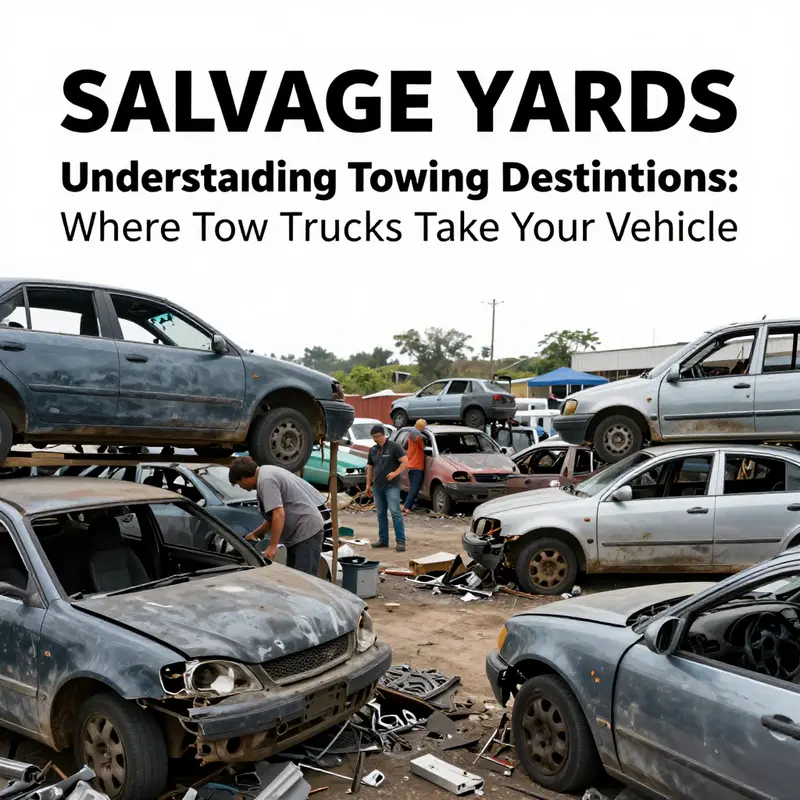
When a tow truck arrives at an accident scene or a roadside breakdown, its final destination is not always visible in the moment. Cars end up in a spectrum of places—impound lots, repair shops, private garages, or, in cases where the vehicle has suffered severe damage, salvage yards. This chapter follows the trajectory of a car that has crossed the line from usable transport to a candidate for dismantling and recycling. It delves into the practical, regulatory, and environmental factors that determine why a tow truck might deliver a damaged vehicle to a salvage yard rather than to another repair facility, and how salvage yards operate as a crucial node in the broader automotive ecosystem. In doing so, it weaves together the technical realities of towing, the economic calculus of repair versus salvage, and the stewardship responsibilities that undergird the second life of car components.
The moment of truth frequently arrives at the point of decision after a collision or a breakdown: is the car repairable in a way that makes financial sense, or is the cost of fixing it prohibitive compared with the vehicle’s value? The answer is seldom one-dimensional. Insurance assessments, liability determinations, and the owner’s preferences all factor into the final destination. When a vehicle is deemed a total loss by an insurer, the path to a salvage yard becomes the standard route. A total loss means that the estimated cost of repairs would exceed the current market value of the car, or that the vehicle cannot be restored to a safe, roadworthy condition within reasonable cost parameters. In such cases, the salvage option offers a pragmatic bridge between the immediate danger posed by a wreck and the longer-term goal of extracting value from scrap.
Tow operators carry not just a vehicle from point A to point B but also a record of the journey: accident details, destination orders, and a ledger of the car’s condition upon arrival. The decision to move a vehicle straight to a salvage yard is often guided by instructions from the insurer or the vehicle owner, and it may be influenced by the yard’s capacity, proximity, and the expected value of salvageable components. Some yards are known for their specialized intake processes that move high-volume cases swiftly through the gate, while smaller facilities may handle a mix of salvage and repair-oriented intake. In all cases, the aim is to minimize risk and maximize the opportunity for parts reuse and material recycling. For readers who want a practical sense of towing logistics, a glance at the broader towing landscape—such as the ongoing discussions in the trade blog—can provide useful context about how operators plan routes, schedule arrivals, and coordinate with yards or repair facilities. See the Santa Maria Tow Truck blog for broader industry insights that illuminate the day-to-day realities of taking cars to their next stop. the Santa Maria Tow Truck blog.
The road from the collision site to a salvage yard is not a straight line. It passes through a series of checks and approvals that ensure the vehicle’s fate aligns with legal, financial, and environmental requirements. Police or accident investigators might determine whether a car is safe to move on public roadways or if it should be collected by a tow carrier and transported with precautions. Insurance paperwork often establishes whether the vehicle is to be stored pending a claim decision or moved directly to salvage. In cases where the owner has already surrendered the title or provided explicit authorization for salvage, the process moves more quickly, but not without careful documentation. These administrative steps are essential because salvage yards operate within a tightly regulated framework designed to prevent title fraud, improper disposal, and unsafe dismantling.
Once a tow arrives at a salvage yard, the intake process begins in earnest. A skilled yard staff member assesses the vehicle’s exterior condition, signs of major mechanical failure, and the potential safety hazards posed by fluids or compromised structural integrity. This initial assessment helps determine the order in which vehicles are processed and the parts worth extracting. In many modern salvage facilities, the intake is supported by digital inventory systems that track vehicle details—make, model, year, trim—and pair them with a live catalog of available parts. The use of digital inventories enables buyers, mechanics, and auto enthusiasts to locate specific components with precision, reducing the time and cost of sourcing replacement parts. The importance of accurate matching cannot be overstated; the smallest variation in a part’s specifications can render it incompatible with another vehicle, so yards invest heavily in cataloging accuracy. A reference point from the salvage yard sector illustrates how such systems function in practice, offering a look at fast-moving, real-time parts availability that helps explain why some cars yield a rich harvest of salvageable components while others provide fewer opportunities for reuse. In this context, salvage yards are not merely dumps for wrecked vehicles; they are dynamic warehouses that connect damaged cars to a marketplace for usable parts and recycled materials.
As the car sits within the yard’s gates, the disassembly process begins or is planned. A typical disassembly workflow prioritizes safety and value: technicians isolate fluids, remove the battery, and begin the careful extraction of engine components, drivetrain units, and electronic modules. The goal is to recover parts that retain market value and to separate what can be recycled from what must be disposed of in an environmentally responsible manner. The exact sequence hinges on the vehicle’s condition and the yard’s standards, but the overarching logic remains consistent: recover the pieces that can be rehomed into other cars, and responsibly manage the rest to minimize waste. This is where the environmental dimension of salvage yards becomes most evident. The fluids—fuel, oil, coolant, and refrigerants—are drained and processed by licensed facilities to prevent contamination. Metals are sorted, stripped, and prepared for smelting, while plastics, glass, and other materials are recycled or repurposed as feasible. The environmental argument for salvage yards rests on the principle that even a wrecked car can contribute to reducing the demand for new raw materials, lowering energy consumption, and curbing the emissions associated with manufacturing new components. In the broader discourse on sustainability, salvage yards occupy a practical middle ground where economic utility and ecological responsibility converge.
Within the disassembly ecosystem, the importance of precise vehicle specification becomes clear. Even minor variations—such as trim differences, engine options, or regional model distinctions—can determine whether a component fits or if a substitute must be sourced from a different vehicle family. This specificity is a central reason why salvage yards lean heavily on detailed inventories and why buyers often search for exact matches by year, make, model, and trim. The digital tools that support these searches are not mere conveniences; they are the connective tissue that ensures components flow from wrecked cars to the vehicles that will continue to use them. As a result, the salvage yard becomes a living database, where each arrival adds to a growing ledger of potential reuse. The practical upshot for the consumer is that, depending on the yard’s efficiency and inventory depth, a failed repair might still lead to a functional, lower-cost alternative through salvaged parts. This is the essence of the salvage economy: maximizing value from what might otherwise become waste, and enabling more affordable repair pathways by reusing viable components instead of manufacturing new ones.
The environmental and economic dimensions are complemented by a broader societal role salvage yards play within the automotive ecosystem. They bridge the gap between the point of loss and the recuperation of value, and they supply repair shops, independent mechanics, and enthusiasts with access to a broad spectrum of parts that would otherwise be difficult to source. For a repair shop, sourcing a used engine, transmission, or electronic control module from a salvage yard can be a cost-effective option that keeps a vehicle on the road longer and reduces the total cost of ownership for the consumer. For a private individual, salvage parts can be a pathway to a DIY repair that would be financially out of reach if purchased new. In all cases, the salvage yard’s inventory and workflow enable a secondary market that sustains a circular economy around the automobile. The yard acts as a crucial intermediary—an intermediary that quietly, efficiently, and often invisibly, keeps older vehicles functional, reduces waste, and preserves the value that remains in a car after collision or failure.
Yet the salvage yard is not without its tensions. The regulatory landscape that governs vehicle salvage seeks to balance safety, consumer protection, and environmental stewardship with the practical desire to extract value from damaged assets. Licensing requirements, environmental compliance, and enforcement against illicit activity are all part of the yard’s operating environment. The shadows of concern highlighted in research reports—such as questions about illicit transactions or improper disposal—underscore why regulation and oversight matter. When a car arrives at a salvage yard, it is the responsibility of the yard to ensure the vehicle is properly documented, that titles are handled correctly, and that no salvage is conducted without proper authorization. The goal is to prevent theft, fraud, or unsafe disposal practices while maintaining a steady stream of salvaged components that can be repurposed for future cars. This regulatory frame does not dampen the salvage yard’s usefulness; it defines a safety net that protects owners, buyers, and the public while preserving the environmental and economic benefits of salvage.
There is also a human dimension to this system. Car owners who face total losses or who choose to salvage parts for personal use experience a lifecycle that begins at the roadside and ends in a yard where their vehicle becomes a resource for others. The emotional arc—the sense of loss from a wreck, the pragmatism of salvage, and the relief of a cost-effective repair option—resides alongside the mechanical and regulatory elements of the process. The yard’s staff, mechanics, and administrators become stewards of this transition, guiding vehicles through intake, assessment, disassembly, and ultimately reclamation. For those who are curious about the day-to-day realities of these operations, the practicalities of towing, storage, and intake logistics reveal how a salvage yard manages thousands of arrivals with a disciplined attention to safety, efficiency, and compliance. In this context, even the term salvage ceases to be merely a label; it becomes a description of a continuous, functionally organized system where the wreckage of today becomes the resource for tomorrow.
An evolving facet of salvage yards is the integration of remote cataloging and online search capabilities. In today’s market, buyers do not stroll through rows of cars to find a hood or a door; they query digital catalogs that correlate vehicle specifications with the exact parts in stock. The efficiency gains from such systems have ripple effects across the automotive aftermarket. They speed up the replacement process and reduce downtime for repair shops and private owners alike. The more precise the catalog, the faster customers can locate a compatible part, confirm availability, and arrange a purchase or pickup. This modernization has a direct impact on the value proposition of salvage yards: it allows smaller yards to compete by offering fast, accurate access to parts and to broaden the geographic reach of buyers who can source components from afar. It is a reminder that salvage yards are not antiquated back-alleys but technologically enabled nodes that connect damaged cars to ongoing road use and environmental sustainability.
The environmental benefits of salvage yards extend beyond the immediate reclaiming of parts. By diverting materials from landfills, salvage yards contribute to a more efficient use of metals, plastics, and fluids, and they align with broader waste-reduction initiatives that prioritize recycling and reuse. The dismantling and sorting processes are designed to maximize material recovery while minimizing harmful byproducts. There are rigorous workflows for handling fluids and chemicals, and yards may partner with licensed facilities to ensure proper processing. The net effect is a reduction in the demand for virgin raw materials and a decrease in energy consumption associated with producing new parts. In a world attentive to climate and resource stewardship, salvage yards occupy a principled space where economic incentives and environmental benefits converge, helping drive a more sustainable automotive lifecycle. For readers who want to explore a concrete example of how salvage yards operate with advanced tracking and responsibly manage the deconstruction process, reference material from industry profiles illustrates the practical application of these principles and the role of technology in modern salvage operations. A useful external resource that highlights these practices can be found at WHI Northside Salvage, which details how salvage yards systematically organize inventories to support efficient dismantling and recycling. (External link: https://www.whinorthside.com)
As this chapter has sketched, the destination of a towed car can reveal much about the state of the vehicle, the intentions of the owner, and the broader systems that keep cars on the road in one form or another. When the decision is made to send a vehicle to a salvage yard, the car enters a lifecycle stage designed to extract the greatest possible value from what remains. It becomes a repository of potential: engines, transmissions, control modules, sensors, and countless other components that can be cleaned, tested, and repurposed for use in other cars. The salvage yard thus functions as a kind of library of automotive parts, where every wreck contributes to a catalog of options for future repairs and rebuilds. It is a system that embodies pragmatism and resilience, one that recognizes that even a damaged vehicle can serve a second life and reduce the environmental footprint of the automotive industry.
For readers seeking a broader view of the transportation ecosystem, it is valuable to consider how salvage yards interplay with other destinations described in earlier chapters—impound lots for illegal or improper parking, repair shops for mechanical failures, and dealerships for service or resale. Each path serves a distinct purpose, and each responds to different signals: legal compliance, mechanical feasibility, and market demand. Understanding these pathways clarifies not just where tow trucks take cars, but why those destinations vary from case to case. The salvage yard is the end of one journey and, in many cases, the beginning of another. It marks the transition from a vehicle’s status as a single asset to its status as a collection of reusable resources, each with a potential buyer, a repair application, or a recycling opportunity. In this sense, the salvage yard is not a dead end but a crossroads—one that preserves value, protects the environment, and sustains the broader network that keeps cars moving, one way or another.
Ultimately, the chain of custody for a towed vehicle is a story of balance. It weighs the car’s present condition, the owner’s needs, the insurer’s decision, the yard’s capacity, and the environmental obligations of handling a damaged asset. It is a balancing act that yields a practical outcome: salvage where appropriate, safe repair where feasible, and responsible disposal when neither option serves the long-term interests of safety, economy, or the planet. This balance, maintained through careful procedure and regulated oversight, enables salvage yards to fulfill their role in the automotive lifecycle while reinforcing the shared commitments that underwrite modern transportation. For those who want to pursue further reading on salvage yard operations, the discussion in the external resource introduced above provides a complementary perspective on how these facilities manage inventory, compliance, and environmental responsibility across the industry.
Final thoughts
In conclusion, knowing where tow trucks take your vehicle is beneficial for every driver and property manager. Understanding the implications of each destination—from impound yards and repair shops to salvage yards—can help you navigate the complexities of vehicle towing. As a car owner or property manager, being informed about these processes not only saves time and money but also empowers you to make better decisions in unexpected situations. Always stay informed, and you’ll be prepared to respond effectively if your vehicle is towed.